


Reusable Industrial Packaging Market Outlook
The reusable industrial packaging market was valued at $25 billion in 2024 and is projected to reach $40 billion by 2033, growing at a CAGR of 5.5% during the forecast period 2025-2033. This market is witnessing significant growth due to the increasing demand for sustainable packaging solutions across various industries. The shift towards eco-friendly practices and the need to reduce carbon footprints are driving the adoption of reusable packaging. Industries such as food and beverage, pharmaceuticals, and chemicals are increasingly opting for reusable packaging to enhance supply chain efficiency and reduce waste. The market is also benefiting from technological advancements that improve the durability and functionality of reusable packaging products.
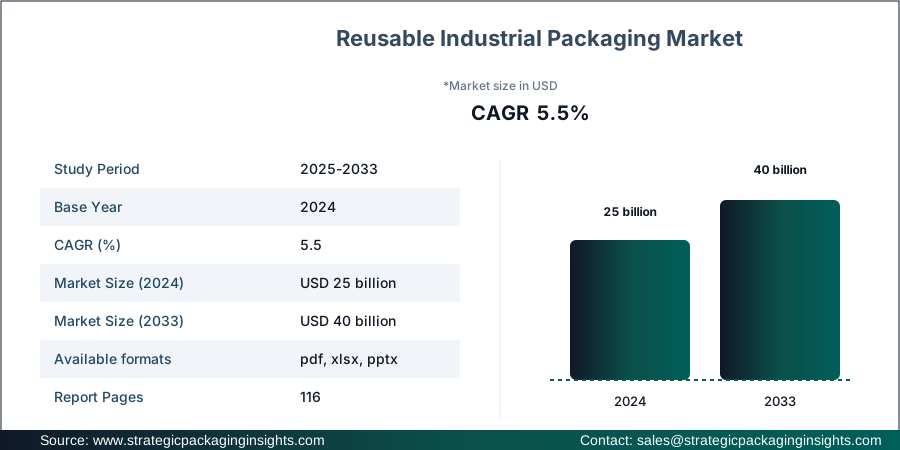
However, the market faces challenges such as high initial costs and the need for a robust reverse logistics system. Regulatory frameworks promoting sustainability and waste reduction are expected to provide growth opportunities, but they also impose compliance costs on manufacturers. Despite these challenges, the market holds significant potential for growth, driven by the increasing awareness of environmental issues and the benefits of reusable packaging. Companies are investing in research and development to create innovative products that meet the evolving needs of end-users, further propelling market growth.
Report Scope
| Attributes | Details |
| Report Title | Reusable Industrial Packaging Market Size, Future Growth and Forecast 2033 |
| Material | Plastic, Metal, Wood, Others |
| Product Type | Pallets, Drums, Intermediate Bulk Containers, Crates, Others |
| End-User Industry | Food & Beverage, Pharmaceuticals, Chemicals, Automotive, Others |
| Base Year | 2024 |
| Historic Period | 2017-2023 |
| Forecast Period | 2025-2033 |
| Number of Pages | 116 |
| Customization Available | Yes* |
Opportunities & Threats
The reusable industrial packaging market presents numerous opportunities, particularly in the realm of sustainability. As global awareness of environmental issues grows, industries are under pressure to adopt greener practices. This shift is creating a demand for packaging solutions that are not only reusable but also recyclable and biodegradable. Companies that can innovate in this space stand to gain a competitive edge. Additionally, the rise of e-commerce and the need for efficient logistics solutions are driving demand for durable and reusable packaging that can withstand multiple shipping cycles. This trend is particularly pronounced in the food and beverage and pharmaceutical sectors, where packaging integrity is crucial.
Another significant opportunity lies in the development of smart packaging solutions. With advancements in IoT and sensor technologies, there is potential to integrate tracking and monitoring capabilities into reusable packaging. This can enhance supply chain transparency and efficiency, providing added value to end-users. Companies that invest in smart packaging technologies can differentiate themselves in the market and tap into new revenue streams. Furthermore, government initiatives promoting sustainable practices and offering incentives for eco-friendly packaging solutions are expected to boost market growth.
Despite these opportunities, the market faces threats from the high initial investment required for reusable packaging solutions. The cost of developing and implementing a reverse logistics system can be prohibitive for some companies, particularly small and medium-sized enterprises. Additionally, the market is subject to fluctuations in raw material prices, which can impact profitability. The need to comply with varying regulations across different regions also poses a challenge, as companies must navigate complex legal landscapes to ensure compliance. These factors can hinder market growth and limit the adoption of reusable packaging solutions.
Drivers & Challenges
The primary driver of the reusable industrial packaging market is the increasing emphasis on sustainability and environmental conservation. As industries strive to reduce their carbon footprints, there is a growing demand for packaging solutions that minimize waste and promote reuse. This trend is supported by regulatory frameworks that encourage sustainable practices and impose penalties for non-compliance. Additionally, the economic benefits of reusable packaging, such as cost savings from reduced material usage and waste disposal, are driving adoption across various sectors. The food and beverage industry, in particular, is a major contributor to market growth, as companies seek to enhance their sustainability credentials.
Technological advancements are also playing a crucial role in driving market growth. Innovations in materials and design are enhancing the durability and functionality of reusable packaging products, making them more attractive to end-users. The development of smart packaging solutions, which incorporate tracking and monitoring capabilities, is further boosting market demand. These technologies enable companies to optimize their supply chains and improve operational efficiency, providing a competitive advantage. As a result, companies are increasingly investing in research and development to create innovative products that meet the evolving needs of their customers.
However, the market faces several challenges that could impede growth. One of the main challenges is the high initial cost of reusable packaging solutions, which can be a barrier to adoption for some companies. The need for a robust reverse logistics system to manage the collection and redistribution of packaging adds to the complexity and cost. Additionally, the market is subject to fluctuations in raw material prices, which can impact profitability. Companies must also navigate a complex regulatory landscape, as different regions have varying requirements for packaging materials and waste management. These challenges require companies to adopt strategic approaches to mitigate risks and capitalize on market opportunities.
Market Share Analysis
The reusable industrial packaging market is characterized by a competitive landscape with several key players vying for market share. The market is dominated by a mix of established companies and emerging players, each offering a range of products and solutions to meet the diverse needs of end-users. The competitive environment is driven by factors such as product innovation, pricing strategies, and customer service. Companies are focusing on expanding their product portfolios and enhancing their distribution networks to gain a competitive edge. Strategic partnerships and collaborations are also common, as companies seek to leverage each other's strengths to enhance their market presence.
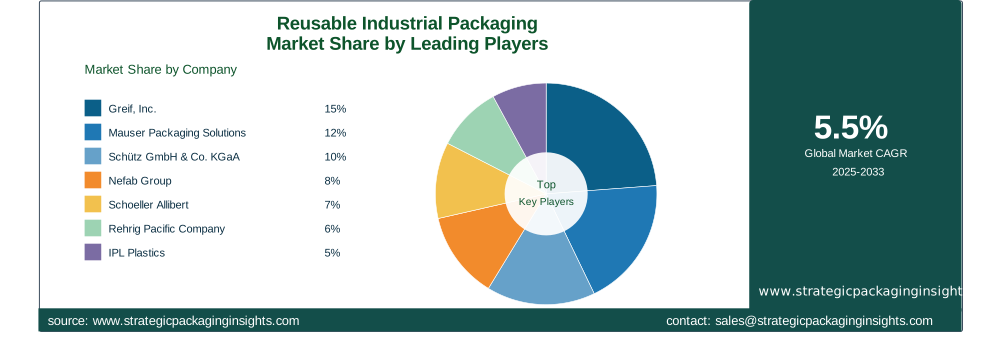
Some of the major companies in the reusable industrial packaging market include Greif, Inc., Mauser Packaging Solutions, Schütz GmbH & Co. KGaA, and Nefab Group. Greif, Inc. is a leading provider of industrial packaging products and services, with a strong focus on sustainability and innovation. The company offers a wide range of reusable packaging solutions, including drums, intermediate bulk containers, and pallets. Mauser Packaging Solutions is another key player, known for its comprehensive portfolio of reusable packaging products and services. The company is committed to sustainability and has implemented several initiatives to reduce its environmental impact.
Schütz GmbH & Co. KGaA is a global leader in the production of industrial packaging, with a strong emphasis on quality and innovation. The company offers a range of reusable packaging solutions, including intermediate bulk containers and drums, designed to meet the needs of various industries. Nefab Group is a leading provider of packaging solutions, with a focus on reducing environmental impact and optimizing supply chains. The company offers a range of reusable packaging products, including crates and pallets, and has a strong presence in the automotive and electronics industries.
Other notable companies in the market include Schoeller Allibert, Rehrig Pacific Company, and IPL Plastics. Schoeller Allibert is a leading provider of returnable packaging solutions, with a focus on innovation and sustainability. The company offers a range of products, including crates, pallets, and containers, designed to meet the needs of various industries. Rehrig Pacific Company is known for its innovative packaging solutions and commitment to sustainability. The company offers a range of reusable packaging products, including pallets and containers, designed to enhance supply chain efficiency. IPL Plastics is a leading provider of sustainable packaging solutions, with a focus on innovation and customer service.
Key Highlights
- The reusable industrial packaging market is projected to grow at a CAGR of 5.5% from 2025 to 2033.
- Increasing demand for sustainable packaging solutions is driving market growth.
- Technological advancements are enhancing the durability and functionality of reusable packaging products.
- The food and beverage industry is a major contributor to market growth.
- High initial costs and the need for a robust reverse logistics system are key challenges.
- Regulatory frameworks promoting sustainability are providing growth opportunities.
- Companies are investing in research and development to create innovative products.
- Strategic partnerships and collaborations are common in the competitive landscape.
- Smart packaging solutions are emerging as a key trend in the market.
Top Countries Insights
In the reusable industrial packaging market, the United States holds a significant share, with a market size of $5 billion and a CAGR of 6%. The country's strong focus on sustainability and waste reduction, coupled with stringent regulatory frameworks, is driving demand for reusable packaging solutions. The presence of major players and technological advancements further bolster market growth. Germany is another key market, with a size of $3 billion and a CAGR of 5%. The country's robust manufacturing sector and emphasis on eco-friendly practices are key growth drivers. The government’s support for sustainable initiatives and the presence of leading packaging companies contribute to market expansion.
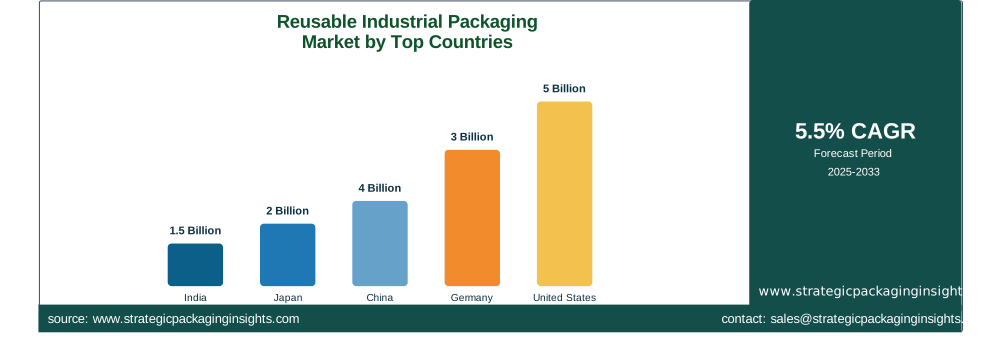
China is experiencing rapid growth in the reusable industrial packaging market, with a market size of $4 billion and a CAGR of 8%. The country's booming e-commerce sector and increasing industrialization are driving demand for durable and reusable packaging solutions. Government policies promoting sustainability and the reduction of plastic waste are also contributing to market growth. In Japan, the market is valued at $2 billion, with a CAGR of 4%. The country's focus on technological innovation and efficient supply chain management is driving demand for advanced reusable packaging solutions. The presence of leading technology companies and a strong emphasis on quality further support market growth.
India is emerging as a key market for reusable industrial packaging, with a market size of $1.5 billion and a CAGR of 7%. The country's growing industrial sector and increasing awareness of environmental issues are driving demand for sustainable packaging solutions. Government initiatives promoting waste reduction and the adoption of eco-friendly practices are also contributing to market growth. The presence of a large number of small and medium-sized enterprises and the increasing adoption of e-commerce are further boosting demand for reusable packaging solutions.
Evolving Market Dynamics (2018-2024) and Strategic Foresight (2025-2033)
| Metric | 2018-2024 | 2025-2033 |
|---|---|---|
| CAGR | 4.5% | 5.5% |
| Market Size Evolution | $20 billion to $25 billion | $25 billion to $40 billion |
| Segment Distribution Shifts | High demand in food & beverage | Increased demand in pharmaceuticals |
| Regional Contribution Changes | Dominance of North America | Rising share of Asia Pacific |
| Technological Impact Factors | Basic durability improvements | Integration of smart technologies |
| Client Demand Transformations | Focus on cost reduction | Emphasis on sustainability |
Reusable Industrial Packaging Market Segments Insights

Material Analysis
The material segment of the reusable industrial packaging market is dominated by plastic, metal, and wood, each offering unique benefits and applications. Plastic is the most widely used material due to its lightweight, durability, and cost-effectiveness. It is particularly popular in the food and beverage industry, where hygiene and safety are paramount. Metal packaging, on the other hand, is favored for its strength and ability to withstand harsh conditions, making it ideal for the chemical and automotive industries. Wood packaging is commonly used for heavy-duty applications, offering robustness and ease of handling. The market is witnessing a trend towards the use of recycled materials, driven by environmental concerns and regulatory pressures.
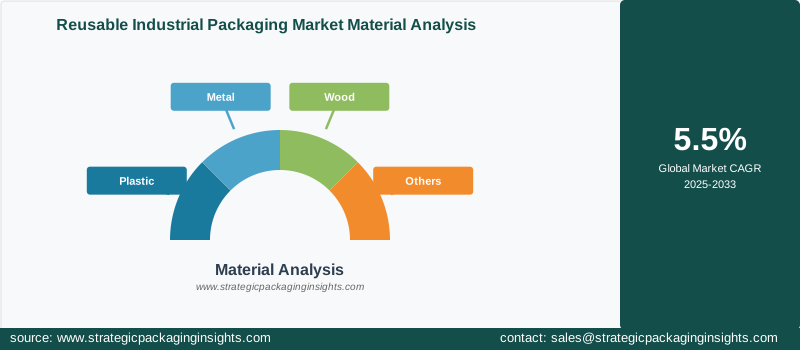
Plastic packaging is expected to maintain its dominance in the market, driven by continuous innovations in material science that enhance its properties. The development of biodegradable and recyclable plastics is gaining traction, offering a sustainable alternative to traditional materials. Metal packaging is also experiencing growth, supported by advancements in coating technologies that improve corrosion resistance and extend product lifespan. Wood packaging is benefiting from the increasing demand for eco-friendly solutions, with companies exploring sustainable sourcing and production methods. The material segment is characterized by intense competition, with companies investing in research and development to create innovative products that meet the evolving needs of end-users.
Product Type Analysis
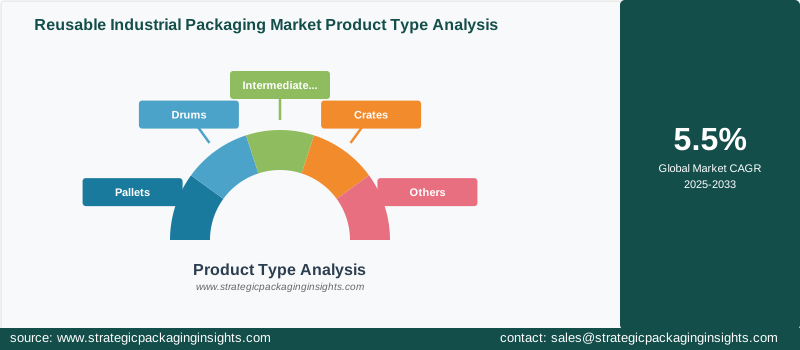
The product type segment of the reusable industrial packaging market includes pallets, drums, intermediate bulk containers (IBCs), crates, and others. Pallets are the most widely used product type, offering versatility and ease of handling across various industries. They are particularly popular in the logistics and transportation sectors, where efficient stacking and storage are crucial. Drums are favored for the storage and transportation of liquids and hazardous materials, offering durability and safety. IBCs are gaining popularity due to their ability to store large volumes of materials, making them ideal for the chemical and pharmaceutical industries. Crates are commonly used for the transportation of fragile and perishable goods, offering protection and stability.
The market is witnessing a trend towards the use of modular and collapsible packaging solutions, driven by the need for space optimization and cost reduction. Companies are investing in the development of innovative products that offer enhanced functionality and ease of use. The product type segment is characterized by a high degree of customization, with companies offering tailored solutions to meet the specific needs of end-users. The increasing adoption of automation and robotics in the packaging industry is also driving demand for standardized and compatible packaging solutions. The product type segment is expected to experience significant growth, supported by the rising demand for efficient and sustainable packaging solutions.
End-User Industry Analysis
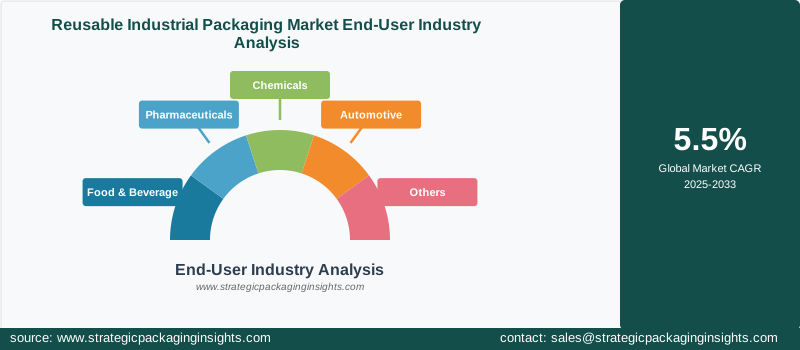
The end-user industry segment of the reusable industrial packaging market includes food and beverage, pharmaceuticals, chemicals, automotive, and others. The food and beverage industry is the largest end-user, driven by the need for safe and hygienic packaging solutions. The increasing demand for convenience foods and beverages is also contributing to market growth. The pharmaceutical industry is experiencing significant growth, supported by the need for secure and tamper-evident packaging solutions. The chemical industry is a major contributor to market demand, driven by the need for durable and safe packaging solutions for hazardous materials. The automotive industry is also experiencing growth, supported by the increasing demand for efficient and cost-effective packaging solutions.
The market is witnessing a trend towards the use of reusable packaging solutions in the e-commerce sector, driven by the need for efficient and sustainable logistics solutions. Companies are investing in the development of innovative products that offer enhanced functionality and ease of use. The end-user industry segment is characterized by a high degree of customization, with companies offering tailored solutions to meet the specific needs of end-users. The increasing adoption of automation and robotics in the packaging industry is also driving demand for standardized and compatible packaging solutions. The end-user industry segment is expected to experience significant growth, supported by the rising demand for efficient and sustainable packaging solutions.
Regional Market Intelligence
North America is the largest market for reusable industrial packaging, driven by the presence of major players and a strong focus on sustainability. The region is characterized by a high degree of innovation and technological advancement, with companies investing in the development of smart packaging solutions. Europe is another key market, supported by stringent regulatory frameworks and a strong emphasis on environmental conservation. The region is witnessing a trend towards the use of recycled materials, driven by environmental concerns and regulatory pressures. Asia Pacific is experiencing rapid growth, supported by the increasing industrialization and urbanization in the region. The presence of a large number of small and medium-sized enterprises and the increasing adoption of e-commerce are further boosting demand for reusable packaging solutions.
Latin America and the Middle East & Africa are emerging markets for reusable industrial packaging, supported by the increasing awareness of environmental issues and the need for sustainable packaging solutions. The regions are characterized by a high degree of customization, with companies offering tailored solutions to meet the specific needs of end-users. The increasing adoption of automation and robotics in the packaging industry is also driving demand for standardized and compatible packaging solutions. The regional market intelligence segment is expected to experience significant growth, supported by the rising demand for efficient and sustainable packaging solutions.
Reusable Industrial Packaging Market Segments
The Reusable Industrial Packaging market has been segmented on the basis ofMaterial
- Plastic
- Metal
- Wood
- Others
Product Type
- Pallets
- Drums
- Intermediate Bulk Containers
- Crates
- Others
End-User Industry
- Food & Beverage
- Pharmaceuticals
- Chemicals
- Automotive
- Others




