


Reusable Cold Chain Packaging Market Outlook
The Reusable Cold Chain Packaging market was valued at $4.30 billion in 2025 and is projected to reach $9.42 billion by 2034, growing at a CAGR of 9.1% during the forecast period 2026-2034. This market is witnessing significant growth due to the increasing demand for temperature-sensitive products across various industries, including pharmaceuticals, food and beverage, and biotechnology. The need for efficient and sustainable packaging solutions that ensure product integrity during transportation is driving the adoption of reusable cold chain packaging. Additionally, advancements in material technology, such as the development of phase change materials (PCM) and vacuum insulated panels (VIP), are enhancing the performance and efficiency of these packaging solutions, further propelling market growth.
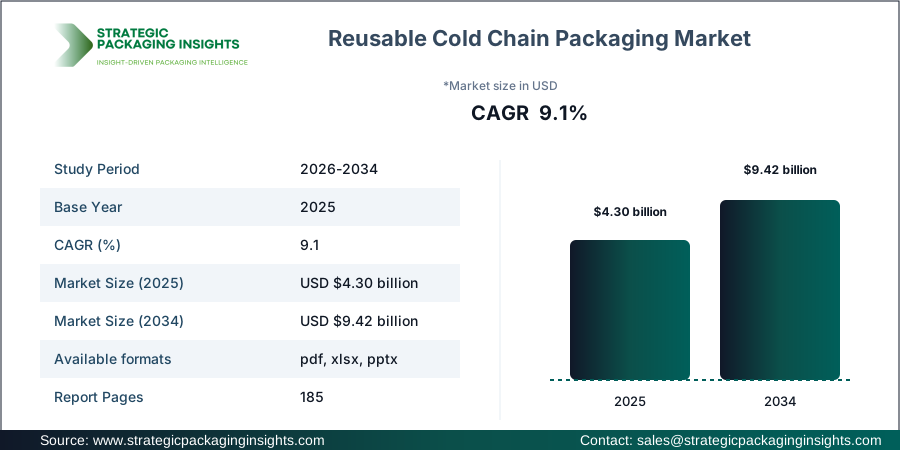
Despite the promising growth prospects, the reusable cold chain packaging market faces certain challenges that could hinder its expansion. High initial costs associated with reusable packaging solutions and the complexity of managing reverse logistics are some of the key restraints. Moreover, stringent regulatory requirements for packaging materials, especially in the pharmaceutical and food sectors, pose additional challenges for market players. However, the growing emphasis on sustainability and the increasing adoption of circular economy principles present significant growth opportunities. Companies are focusing on developing innovative, eco-friendly packaging solutions that not only meet regulatory standards but also reduce environmental impact, thereby enhancing their market position.
Report Scope
| Attributes | Details |
| Report Title | Reusable Cold Chain Packaging Market Size, Future Growth and Forecast 2034 |
| By Product Type | Insulated Shippers, Reusable Boxes, Pallet Shippers, Temperature-Controlled Containers |
| By Material Type | EPS, VIP, PCM, Recycled Plastic |
| By Application | Pharmaceuticals, Biologics, Food Delivery, Clinical Trials |
| By End Use | Healthcare, Food & Beverage, Logistics, Biotechnology |
| Region | Asia Pacific, North America, Latin America, Europe, Middle East & Africa |
| Base Year | 2025 |
| Historic Period | 2018-2024 |
| Forecast Period | 2026-2034 |
| Number of Pages | 185 |
| Customization Available | Yes* |
Opportunities & Threats
The reusable cold chain packaging market presents numerous opportunities for growth, primarily driven by the increasing demand for sustainable and efficient packaging solutions. As industries such as pharmaceuticals and food and beverage continue to expand globally, the need for reliable temperature-controlled packaging is becoming more critical. This demand is further amplified by the growing trend of online food delivery services, which require effective cold chain solutions to maintain product quality during transit. Additionally, the rise in biologics and specialty pharmaceuticals, which are highly sensitive to temperature fluctuations, is creating a substantial market for advanced reusable packaging solutions. Companies that can innovate and offer cost-effective, high-performance packaging options are likely to gain a competitive edge in this evolving market.
Another significant opportunity lies in the development of smart packaging technologies that incorporate IoT and sensor-based solutions. These technologies enable real-time monitoring of temperature and other critical parameters, ensuring the integrity of temperature-sensitive products throughout the supply chain. The integration of such technologies not only enhances the functionality of reusable cold chain packaging but also provides valuable data insights for optimizing logistics and reducing waste. As the demand for transparency and traceability in supply chains increases, companies that invest in smart packaging solutions are well-positioned to capitalize on this trend and expand their market share.
However, the market is not without its threats. One of the primary challenges is the high initial investment required for reusable packaging solutions, which can be a barrier for small and medium-sized enterprises. Additionally, the complexity of managing reverse logistics for reusable packaging can deter companies from adopting these solutions. The need for efficient tracking and management systems to ensure the timely return and reuse of packaging materials adds to the operational challenges. Furthermore, the market faces competition from single-use packaging solutions, which, despite their environmental impact, are often perceived as more convenient and cost-effective. Companies must navigate these challenges by demonstrating the long-term cost savings and environmental benefits of reusable packaging to encourage wider adoption.
Drivers & Challenges
The reusable cold chain packaging market is primarily driven by the increasing demand for temperature-sensitive products across various industries. The pharmaceutical sector, in particular, is a major driver, with the growing production and distribution of vaccines, biologics, and specialty drugs that require stringent temperature control. The food and beverage industry also contributes significantly to market growth, as the demand for fresh and frozen food products continues to rise globally. Additionally, the increasing focus on sustainability and environmental responsibility is encouraging companies to adopt reusable packaging solutions that reduce waste and carbon footprint. The development of advanced materials, such as phase change materials (PCM) and vacuum insulated panels (VIP), is further enhancing the performance and efficiency of reusable cold chain packaging, driving market expansion.
Another key driver is the growing trend of e-commerce and online food delivery services, which require reliable cold chain solutions to maintain product quality during transit. The rise of direct-to-consumer models in the pharmaceutical and food sectors is also boosting the demand for reusable packaging solutions that ensure product integrity and safety. Furthermore, regulatory requirements for packaging materials, particularly in the pharmaceutical and food industries, are pushing companies to invest in high-quality, compliant packaging solutions. As a result, the market is witnessing increased innovation and investment in the development of eco-friendly and efficient reusable cold chain packaging options.
Despite the positive drivers, the reusable cold chain packaging market faces several challenges that could impact its growth. One of the primary challenges is the high initial cost associated with reusable packaging solutions, which can be a barrier for small and medium-sized enterprises. Additionally, the complexity of managing reverse logistics for reusable packaging can deter companies from adopting these solutions. The need for efficient tracking and management systems to ensure the timely return and reuse of packaging materials adds to the operational challenges. Moreover, the market faces competition from single-use packaging solutions, which, despite their environmental impact, are often perceived as more convenient and cost-effective. Companies must navigate these challenges by demonstrating the long-term cost savings and environmental benefits of reusable packaging to encourage wider adoption.
Market Share Analysis
The reusable cold chain packaging market is characterized by a competitive landscape with several key players striving to enhance their market position through innovation and strategic partnerships. Cold Chain Technologies is a prominent player, known for its comprehensive range of temperature-controlled packaging solutions that cater to various industries, including pharmaceuticals and food. The company holds a significant market share due to its strong focus on research and development, which enables it to offer advanced and sustainable packaging solutions. Sonoco ThermoSafe is another major player, recognized for its innovative packaging technologies and extensive global network, which allows it to serve a diverse customer base effectively.
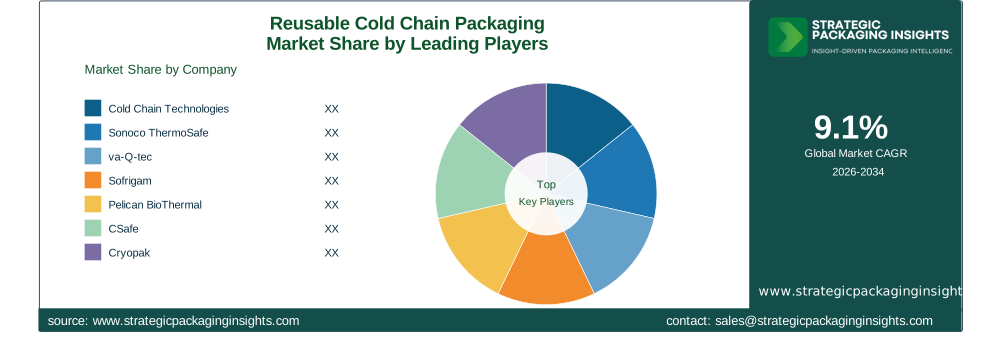
va-Q-tec is a leading provider of high-performance thermal packaging solutions, leveraging its expertise in vacuum insulation technology to offer efficient and reliable products. The company's strong emphasis on sustainability and innovation has helped it secure a substantial market share. Sofrigam, known for its expertise in designing and manufacturing temperature-controlled packaging solutions, is also a key player in the market. The company's focus on quality and customer satisfaction has enabled it to build a loyal customer base and maintain a competitive edge.
Pelican BioThermal is renowned for its durable and reusable temperature-controlled packaging solutions, catering to the pharmaceutical and life sciences industries. The company's commitment to sustainability and innovation has positioned it as a leader in the market. CSafe, with its advanced active and passive temperature-controlled packaging solutions, is another significant player, known for its focus on customer-centric solutions and global reach. Cryopak, Envirotainer, Softbox Systems, and Intelsius are also notable players in the market, each offering unique solutions and services that cater to the diverse needs of their customers.
These companies are continuously investing in research and development to enhance their product offerings and expand their market presence. Strategic partnerships and collaborations are common strategies employed by these players to strengthen their position in the market. The competitive landscape is further intensified by the entry of new players and the increasing demand for innovative and sustainable packaging solutions. As the market continues to evolve, companies that can effectively address the challenges and capitalize on the opportunities are likely to emerge as leaders in the reusable cold chain packaging industry.
Key Highlights
- The reusable cold chain packaging market is projected to grow at a CAGR of 9.1% from 2026 to 2034.
- Increasing demand for temperature-sensitive products is driving market growth.
- Advancements in material technology, such as PCM and VIP, are enhancing packaging efficiency.
- High initial costs and complex reverse logistics are key challenges for market players.
- Smart packaging technologies offer significant growth opportunities.
- Regulatory requirements in pharmaceuticals and food sectors are influencing packaging solutions.
- Key players are focusing on sustainability and innovation to gain a competitive edge.
Top Countries Insights
In the reusable cold chain packaging market, the United States stands out as a leading country, with a market size of approximately $1.2 billion and a CAGR of 8%. The country's robust pharmaceutical and food industries drive the demand for advanced cold chain solutions. Government regulations promoting sustainable packaging further boost market growth. In China, the market is valued at around $900 million, with a CAGR of 12%. The rapid expansion of the pharmaceutical sector and the growing e-commerce industry are key growth drivers. The government's focus on reducing carbon emissions and promoting eco-friendly packaging solutions also supports market expansion.
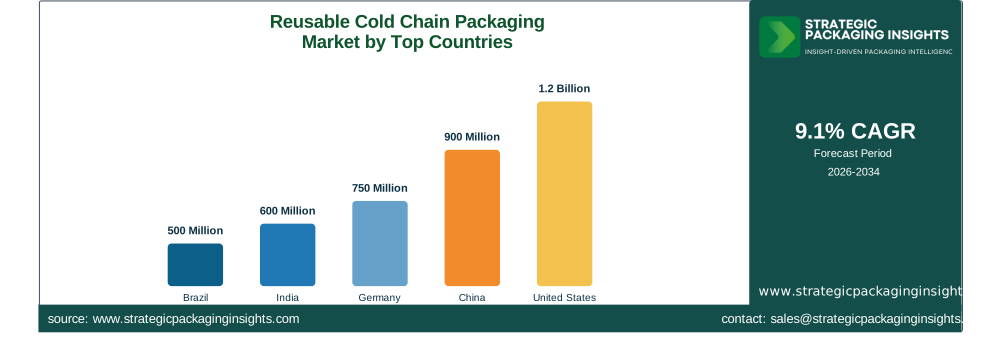
Germany, with a market size of $750 million and a CAGR of 7%, is a significant player in the European market. The country's strong emphasis on sustainability and innovation in packaging solutions drives demand. The presence of major pharmaceutical companies and a well-established logistics infrastructure further contribute to market growth. In India, the market is valued at $600 million, with a CAGR of 15%. The increasing demand for temperature-sensitive pharmaceuticals and the growth of the food delivery sector are key drivers. Government initiatives to improve cold chain infrastructure and promote sustainable packaging solutions also support market growth.
Brazil, with a market size of $500 million and a CAGR of 10%, is a prominent player in the Latin American market. The country's expanding pharmaceutical and food industries drive demand for reusable cold chain packaging solutions. Government policies promoting sustainable practices and investments in cold chain infrastructure further boost market growth. These countries represent significant opportunities for market players, with their unique growth drivers and challenges shaping the future of the reusable cold chain packaging market.
Reusable Cold Chain Packaging Market Segments Insights

Product Type Analysis
The product type segment of the reusable cold chain packaging market is diverse, encompassing insulated shippers, reusable boxes, pallet shippers, and temperature-controlled containers. Insulated shippers are widely used due to their ability to maintain temperature stability over extended periods, making them ideal for transporting pharmaceuticals and biologics. The demand for reusable boxes is also on the rise, driven by their cost-effectiveness and environmental benefits. These boxes are particularly popular in the food delivery sector, where maintaining product freshness is crucial. Pallet shippers, known for their large capacity and durability, are favored in logistics and supply chain operations, where bulk transportation of temperature-sensitive goods is required. Temperature-controlled containers, equipped with advanced technologies, offer precise temperature regulation, making them suitable for high-value and sensitive products.
The increasing focus on sustainability and cost-efficiency is driving innovation in this segment, with companies developing advanced materials and designs to enhance the performance of these products. The integration of smart technologies, such as IoT and sensors, is also gaining traction, enabling real-time monitoring and data collection to ensure product integrity throughout the supply chain. As industries continue to prioritize sustainability and efficiency, the demand for innovative and high-performance reusable cold chain packaging solutions is expected to grow, offering significant opportunities for market players.
Material Type Analysis
The material type segment of the reusable cold chain packaging market includes EPS, VIP, PCM, and recycled plastic. Expanded polystyrene (EPS) is widely used due to its excellent insulation properties and cost-effectiveness. However, the environmental impact of EPS is driving the demand for more sustainable alternatives. Vacuum insulated panels (VIP) offer superior thermal insulation and are gaining popularity in high-performance packaging solutions. Phase change materials (PCM) are also becoming increasingly popular, as they provide precise temperature control and are ideal for transporting temperature-sensitive pharmaceuticals and biologics. Recycled plastic is gaining traction as companies focus on sustainability and reducing their carbon footprint.
The development of advanced materials that offer enhanced performance and sustainability is a key trend in this segment. Companies are investing in research and development to create innovative materials that meet regulatory requirements and address environmental concerns. The growing emphasis on sustainability and the increasing adoption of circular economy principles are driving the demand for eco-friendly materials in the reusable cold chain packaging market. As a result, the material type segment is expected to witness significant growth, offering opportunities for companies that can develop innovative and sustainable solutions.
Application Analysis
The application segment of the reusable cold chain packaging market is diverse, encompassing pharmaceuticals, biologics, food delivery, and clinical trials. The pharmaceutical sector is a major driver of demand, with the increasing production and distribution of temperature-sensitive drugs and vaccines. The biologics segment is also experiencing significant growth, driven by the rise of personalized medicine and the need for precise temperature control during transportation. The food delivery sector is another key application area, with the growing trend of online food delivery services driving the demand for reliable cold chain solutions. Clinical trials, which require strict temperature control to ensure the integrity of samples and products, also contribute to market growth.
The increasing focus on sustainability and efficiency is driving innovation in this segment, with companies developing advanced packaging solutions that meet the specific needs of each application. The integration of smart technologies, such as IoT and sensors, is also gaining traction, enabling real-time monitoring and data collection to ensure product integrity throughout the supply chain. As industries continue to prioritize sustainability and efficiency, the demand for innovative and high-performance reusable cold chain packaging solutions is expected to grow, offering significant opportunities for market players.
End Use Analysis
The end-use segment of the reusable cold chain packaging market includes healthcare, food & beverage, logistics, and biotechnology. The healthcare sector is a major driver of demand, with the increasing production and distribution of temperature-sensitive pharmaceuticals and biologics. The food & beverage industry also contributes significantly to market growth, as the demand for fresh and frozen food products continues to rise globally. The logistics sector is another key end-use area, with the growing trend of e-commerce and online food delivery services driving the demand for reliable cold chain solutions. The biotechnology sector, which requires precise temperature control for the transportation of sensitive products, also contributes to market growth.
The increasing focus on sustainability and efficiency is driving innovation in this segment, with companies developing advanced packaging solutions that meet the specific needs of each end-use area. The integration of smart technologies, such as IoT and sensors, is also gaining traction, enabling real-time monitoring and data collection to ensure product integrity throughout the supply chain. As industries continue to prioritize sustainability and efficiency, the demand for innovative and high-performance reusable cold chain packaging solutions is expected to grow, offering significant opportunities for market players.
Reusable Cold Chain Packaging Market Segments
The Reusable Cold Chain Packaging market has been segmented on the basis ofBy Product Type
- Insulated Shippers
- Reusable Boxes
- Pallet Shippers
- Temperature-Controlled Containers
By Material Type
- EPS
- VIP
- PCM
- Recycled Plastic
By Application
- Pharmaceuticals
- Biologics
- Food Delivery
- Clinical Trials
By End Use
- Healthcare
- Food & Beverage
- Logistics
- Biotechnology
Region
- Asia Pacific
- North America
- Latin America
- Europe
- Middle East & Africa




