


Returnable Plastic Crate Market Outlook
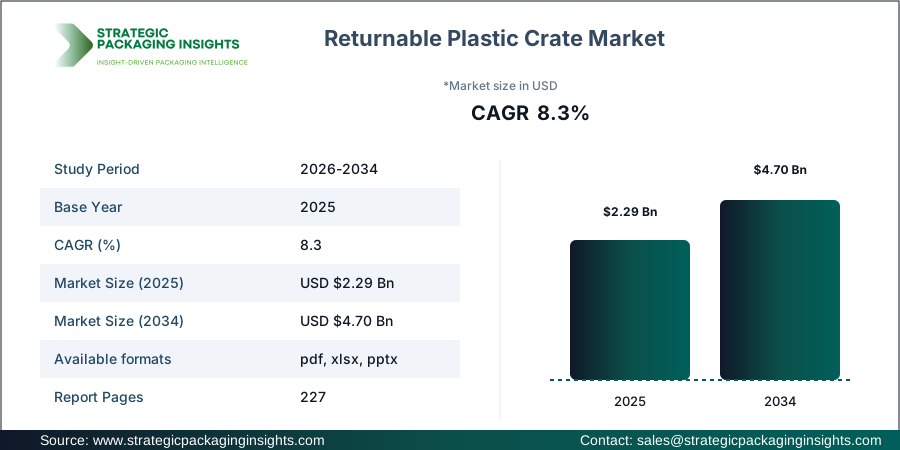
The Returnable Plastic Crate market was valued at $2.29 billion in 2025 and is projected to reach $4.70 billion by 2034, growing at a CAGR of 8.3% during the forecast period 2026-2034. This market is witnessing significant growth due to the increasing demand for sustainable and cost-effective packaging solutions across various industries. The adoption of returnable plastic crates is driven by their durability, lightweight nature, and ability to reduce packaging waste, making them an ideal choice for industries such as agriculture, retail, and logistics. The market is also benefiting from technological advancements in material science, which have led to the development of more robust and versatile crate designs. As businesses continue to prioritize sustainability and efficiency, the demand for returnable plastic crates is expected to rise, further propelling market growth.
Report Scope
| Attributes | Details |
| Report Title | Returnable Plastic Crate Market Size, Future Growth and Forecast 2034 |
| By Product Type | Foldable Crates, Stackable Crates, Nestable Crates |
| By Material Type | HDPE, PP, Recycled Plastic |
| By Application | Fresh Produce, Dairy, Bakery, Retail Logistics |
| By End Use | Retailers, Food Processors, Logistics, Agriculture |
| Region | Asia Pacific, North America, Latin America, Europe, Middle East & Africa |
| Base Year | 2025 |
| Historic Period | 2018-2024 |
| Forecast Period | 2026-2034 |
| Number of Pages | 227 |
| Customization Available | Yes* |
Opportunities & Threats
One of the significant opportunities in the Returnable Plastic Crate market lies in the growing emphasis on sustainability and environmental conservation. As global awareness regarding environmental issues increases, industries are shifting towards eco-friendly packaging solutions. Returnable plastic crates, being reusable and recyclable, align perfectly with this trend, offering businesses a sustainable alternative to traditional packaging methods. Additionally, the rise of e-commerce and the need for efficient supply chain management present lucrative opportunities for the market. The demand for durable and reliable packaging solutions in the logistics and retail sectors is expected to drive the adoption of returnable plastic crates, providing a significant boost to market growth.
Another opportunity for the market is the increasing focus on cost reduction and operational efficiency. Returnable plastic crates offer a cost-effective solution for businesses by reducing the need for single-use packaging materials and minimizing waste disposal costs. The ability to reuse these crates multiple times not only lowers packaging expenses but also enhances supply chain efficiency. As companies strive to optimize their operations and reduce costs, the demand for returnable plastic crates is likely to increase, creating new growth avenues for market players.
However, the market faces certain restraining factors, such as the initial investment required for purchasing returnable plastic crates. While these crates offer long-term cost savings, the upfront cost can be a barrier for small and medium-sized enterprises. Additionally, the lack of awareness and understanding of the benefits of returnable plastic crates among certain industries may hinder market growth. To overcome these challenges, market players need to focus on educating potential customers about the advantages of using returnable plastic crates and providing flexible financing options to facilitate adoption.
Drivers & Challenges
The primary driver of the Returnable Plastic Crate market is the increasing demand for sustainable packaging solutions. As environmental concerns continue to rise, businesses are seeking ways to reduce their carbon footprint and minimize waste. Returnable plastic crates offer an eco-friendly alternative to traditional packaging methods, as they can be reused multiple times and are recyclable at the end of their lifecycle. This aligns with the growing trend of sustainability and corporate social responsibility, driving the adoption of returnable plastic crates across various industries.
Another key driver is the need for efficient supply chain management. Returnable plastic crates provide a durable and reliable packaging solution that can withstand the rigors of transportation and handling. Their lightweight nature and stackable design make them ideal for optimizing storage space and reducing transportation costs. As businesses strive to improve their supply chain efficiency and reduce operational costs, the demand for returnable plastic crates is expected to increase, further fueling market growth.
Despite the positive growth prospects, the market faces challenges such as the high initial investment required for purchasing returnable plastic crates. While these crates offer long-term cost savings, the upfront cost can be a barrier for small and medium-sized enterprises. Additionally, the lack of awareness and understanding of the benefits of returnable plastic crates among certain industries may hinder market growth. To overcome these challenges, market players need to focus on educating potential customers about the advantages of using returnable plastic crates and providing flexible financing options to facilitate adoption.
Market Share Analysis
The competitive landscape of the Returnable Plastic Crate market is characterized by the presence of several key players who are actively engaged in product innovation and strategic partnerships to strengthen their market position. Companies such as IFCO, Schoeller Allibert, ORBIS Corporation, Brambles, and Tosca are leading the market with their extensive product portfolios and strong distribution networks. These companies are focusing on expanding their product offerings and enhancing their production capabilities to meet the growing demand for returnable plastic crates.
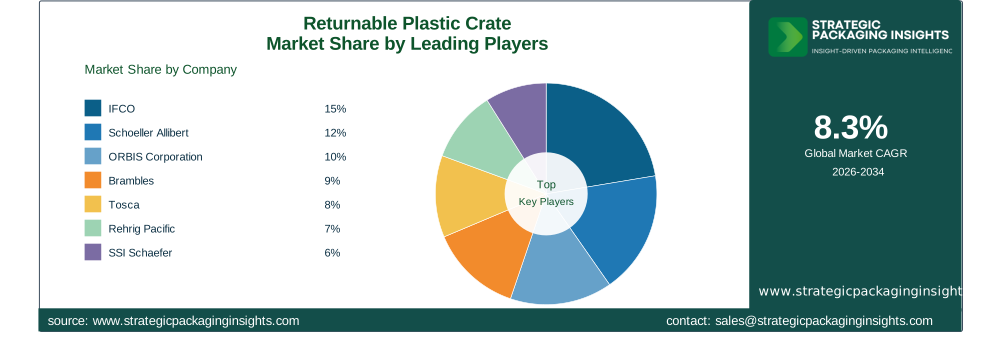
IFCO, a prominent player in the market, holds a significant market share due to its comprehensive range of reusable packaging solutions and strong presence in the global market. The company is known for its innovative crate designs and commitment to sustainability, which have helped it maintain a competitive edge. Schoeller Allibert, another key player, is recognized for its extensive product portfolio and focus on product innovation. The company's emphasis on research and development has enabled it to introduce advanced crate designs that cater to the evolving needs of various industries.
ORBIS Corporation, a subsidiary of Menasha Corporation, is a leading provider of reusable packaging solutions, including returnable plastic crates. The company's strong focus on customer satisfaction and operational efficiency has contributed to its success in the market. Brambles, a global supply chain logistics company, is known for its CHEP brand, which offers a wide range of reusable packaging solutions, including returnable plastic crates. The company's extensive global network and commitment to sustainability have helped it maintain a strong market presence.
Tosca, a leading provider of reusable packaging solutions, is known for its innovative crate designs and focus on sustainability. The company's strong emphasis on customer-centric solutions and operational efficiency has contributed to its success in the market. Other notable players in the market include Rehrig Pacific, SSI Schaefer, IPL Plastics, Craemer Group, and Myers Industries, each of which holds a significant market share and is actively engaged in product innovation and strategic partnerships to strengthen their market position.
Key Highlights
- The Returnable Plastic Crate market is projected to grow at a CAGR of 8.3% from 2026 to 2034.
- Increasing demand for sustainable packaging solutions is driving market growth.
- Technological advancements in material science are enhancing crate durability and versatility.
- The rise of e-commerce is boosting demand for efficient supply chain management solutions.
- High initial investment costs pose a challenge for small and medium-sized enterprises.
- Key players are focusing on product innovation and strategic partnerships to strengthen their market position.
- Asia Pacific is expected to witness significant growth due to increasing industrialization and urbanization.
- Returnable plastic crates offer cost-effective solutions by reducing packaging waste and disposal costs.
- Growing awareness of environmental issues is driving the adoption of eco-friendly packaging solutions.
Top Countries Insights
In the Returnable Plastic Crate market, the United States holds a significant market share, driven by the increasing demand for sustainable packaging solutions and the presence of key market players. The market in the U.S. is expected to grow at a CAGR of 7%, supported by government initiatives promoting environmental conservation and the adoption of eco-friendly packaging solutions. The rise of e-commerce and the need for efficient supply chain management are also contributing to market growth in the country.
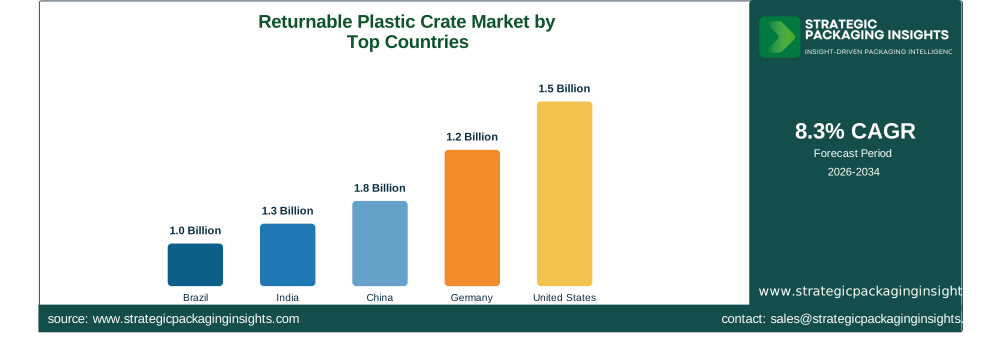
Germany is another key market for returnable plastic crates, with a strong focus on sustainability and environmental conservation. The market in Germany is projected to grow at a CAGR of 6%, driven by the increasing demand for durable and reliable packaging solutions in the logistics and retail sectors. The country's stringent environmental regulations and emphasis on reducing packaging waste are further supporting market growth.
China is expected to witness significant growth in the Returnable Plastic Crate market, with a projected CAGR of 10%. The country's rapid industrialization and urbanization are driving the demand for efficient packaging solutions, while government initiatives promoting sustainable practices are further boosting market growth. The increasing adoption of returnable plastic crates in the agriculture and logistics sectors is also contributing to market expansion in China.
India is another promising market for returnable plastic crates, with a projected CAGR of 9%. The country's growing population and increasing demand for fresh produce and dairy products are driving the need for efficient packaging solutions. Government initiatives promoting sustainable practices and the adoption of eco-friendly packaging solutions are further supporting market growth in India.
Brazil is also witnessing growth in the Returnable Plastic Crate market, with a projected CAGR of 8%. The country's expanding agriculture sector and increasing demand for efficient supply chain management solutions are driving the adoption of returnable plastic crates. Government initiatives promoting environmental conservation and the use of sustainable packaging solutions are further contributing to market growth in Brazil.
Returnable Plastic Crate Market Segments Insights

Product Type Analysis
The Returnable Plastic Crate market is segmented by product type into foldable crates, stackable crates, and nestable crates. Foldable crates are gaining popularity due to their space-saving design and ease of storage, making them ideal for industries with limited storage space. These crates offer flexibility and convenience, as they can be easily folded when not in use, reducing storage costs and optimizing warehouse space. The demand for foldable crates is expected to increase as businesses seek efficient and cost-effective packaging solutions.
Stackable crates, on the other hand, are known for their durability and ability to withstand heavy loads, making them suitable for industries such as agriculture and logistics. These crates offer stability and protection for goods during transportation, reducing the risk of damage and ensuring product safety. The demand for stackable crates is driven by the need for reliable and robust packaging solutions that can withstand the rigors of transportation and handling.
Nestable crates are also gaining traction in the market due to their space-saving design and ease of handling. These crates can be nested when empty, reducing storage space and transportation costs. The demand for nestable crates is expected to grow as businesses seek efficient and cost-effective packaging solutions that offer flexibility and convenience. The increasing adoption of nestable crates in the retail and logistics sectors is further driving market growth.
Material Type Analysis
The Returnable Plastic Crate market is segmented by material type into HDPE, PP, and recycled plastic. HDPE (High-Density Polyethylene) is the most commonly used material for returnable plastic crates due to its durability, lightweight nature, and resistance to impact and chemicals. The demand for HDPE crates is driven by their ability to withstand harsh environmental conditions and provide long-lasting performance, making them ideal for industries such as agriculture and logistics.
PP (Polypropylene) is another popular material used in the production of returnable plastic crates. PP crates offer excellent chemical resistance and are known for their strength and durability. The demand for PP crates is driven by their ability to provide reliable and robust packaging solutions for various industries, including food processing and retail logistics. The increasing adoption of PP crates in the food and beverage industry is further contributing to market growth.
Recycled plastic is gaining popularity as a sustainable alternative to traditional materials, driven by the growing emphasis on environmental conservation and sustainability. The demand for recycled plastic crates is expected to increase as businesses seek eco-friendly packaging solutions that align with their sustainability goals. The use of recycled plastic in the production of returnable plastic crates not only reduces environmental impact but also offers cost savings, making it an attractive option for businesses.
Application Analysis
The Returnable Plastic Crate market is segmented by application into fresh produce, dairy, bakery, and retail logistics. The fresh produce segment holds a significant market share, driven by the increasing demand for efficient and reliable packaging solutions that ensure the freshness and quality of perishable goods. Returnable plastic crates offer excellent ventilation and protection for fresh produce, reducing spoilage and extending shelf life.
The dairy segment is also witnessing growth in the adoption of returnable plastic crates, driven by the need for durable and hygienic packaging solutions that ensure product safety and quality. These crates offer excellent insulation and protection for dairy products, reducing the risk of contamination and spoilage. The increasing demand for dairy products and the need for efficient supply chain management are further driving market growth in this segment.
The bakery segment is another key application area for returnable plastic crates, driven by the need for reliable and robust packaging solutions that ensure the safe transportation and storage of bakery products. These crates offer excellent protection and stability for bakery goods, reducing the risk of damage and ensuring product quality. The increasing demand for bakery products and the need for efficient supply chain management are further contributing to market growth in this segment.
End Use Analysis
The Returnable Plastic Crate market is segmented by end use into retailers, food processors, logistics, and agriculture. The retailers segment holds a significant market share, driven by the increasing demand for efficient and cost-effective packaging solutions that enhance supply chain efficiency and reduce operational costs. Returnable plastic crates offer durability and reliability, making them an ideal choice for retailers seeking to optimize their operations and reduce packaging waste.
The food processors segment is also witnessing growth in the adoption of returnable plastic crates, driven by the need for hygienic and reliable packaging solutions that ensure product safety and quality. These crates offer excellent protection and insulation for food products, reducing the risk of contamination and spoilage. The increasing demand for processed food products and the need for efficient supply chain management are further driving market growth in this segment.
The logistics segment is another key end-use area for returnable plastic crates, driven by the need for durable and reliable packaging solutions that ensure the safe transportation and storage of goods. These crates offer excellent protection and stability for goods during transportation, reducing the risk of damage and ensuring product safety. The increasing demand for efficient supply chain management solutions and the need for cost-effective packaging solutions are further contributing to market growth in this segment.
Returnable Plastic Crate Market Segments
The Returnable Plastic Crate market has been segmented on the basis ofBy Product Type
- Foldable Crates
- Stackable Crates
- Nestable Crates
By Material Type
- HDPE
- PP
- Recycled Plastic
By Application
- Fresh Produce
- Dairy
- Bakery
- Retail Logistics
By End Use
- Retailers
- Food Processors
- Logistics
- Agriculture
Region
- Asia Pacific
- North America
- Latin America
- Europe
- Middle East & Africa




