


Returnable Glass Bottle Market Outlook
The Returnable Glass Bottle market size was valued at USD $3.31 Billion in 2025 and is anticipated to reach USD $6.03 Billion by 2035, growing at a CAGR of 5.70% during the forecast period according to Strategic Packaging Insights.
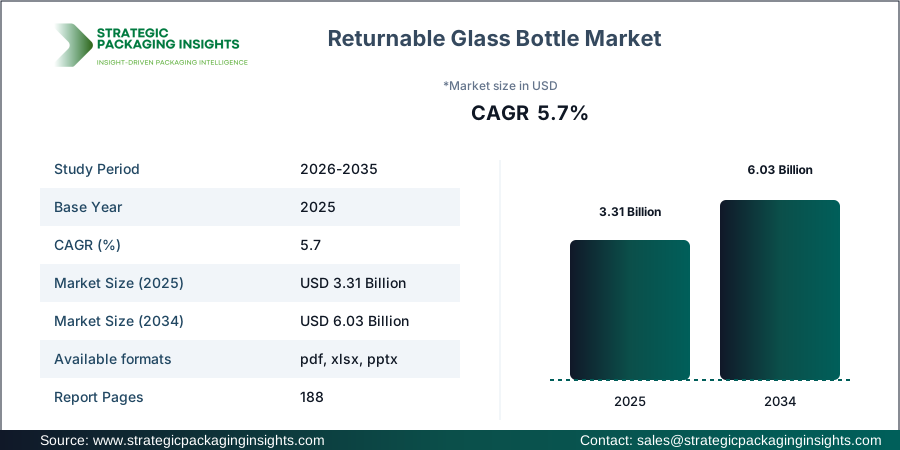
The most impactful market driver is the increasing emphasis on sustainability and environmental responsibility, which is encouraging both consumers and manufacturers to adopt returnable glass bottles. Government regulations promoting recycling and reducing plastic waste are further propelling the market. For instance, the European Union's directives on packaging waste are pushing companies to adopt more sustainable packaging solutions, including returnable glass bottles.
Report Scope
| Attributes | Details |
| Report Title | Returnable Glass Bottle Market Projected to Scale to 6.03 Billion by 2035, Assesses Strategic Packaging Insights |
| By Grade | Type I, Type II, Type III |
| By Capacity | Below 50 ml, 50–200 ml, 201–500 ml, 501–1000 ml, Above 1000 ml |
| By Bottle Type | Beer Bottles, Soft Drink Bottles, Wine Bottles, Milk Bottles, Water Bottles, Juice Bottles, Other Beverage Bottles |
| By Application | Alcoholic Beverages, Non-Alcoholic Beverages, Dairy Products, Food Products, Pharmaceuticals, Cosmetics and Personal Care, Household Products |
| By End Use | Food and Beverage, Pharmaceuticals, Cosmetics and Personal Care, Household, Industrial |
| By Reuse Model | Deposit Return Systems, Closed-Loop Refill Systems, Open-Loop Reuse Systems, Retailer Take-Back Programs |
| By Distribution Channel | Direct Sales, Distributors, Retail, Foodservice, Beverage Producers |
| By Region | North America, Europe, Asia-Pacific, Latin America, Middle East and Africa |
| Base Year | 2025 |
| Historic Period | 2018-2024 |
| Forecast Period | 2026-2035 |
| Number of Pages | 188 |
| Customization Available | Yes* |
Market Trends Analysis
Returnable glass bottles are witnessing a resurgence due to growing environmental concerns and consumer preference for sustainable packaging. The trend towards reducing single-use plastics is driving demand for glass bottles, which are perceived as more eco-friendly. Additionally, advancements in glass manufacturing technology are enhancing the durability and design flexibility of returnable glass bottles, making them more attractive to both consumers and brands.
Another significant trend is the adoption of deposit return systems (DRS) and closed-loop refill systems, which are gaining traction in regions like Europe and North America. These systems incentivize consumers to return bottles for reuse, thereby reducing waste and promoting circular economy practices. As a result, companies are investing in infrastructure to support these systems, which is expected to drive market growth further.
Industry Transformation Analysis
The returnable glass bottle industry is undergoing significant transformation with increased automation and digitalization in manufacturing processes. Companies are investing in advanced technologies to improve production efficiency and reduce costs. The integration of IoT and AI in manufacturing is enabling real-time monitoring and predictive maintenance, enhancing operational efficiency.
Moreover, the value chain is evolving with a focus on sustainability. Companies are collaborating with suppliers to ensure the use of recycled materials and are optimizing logistics to reduce carbon footprints. The shift towards localized production to minimize transportation emissions is also notable. These changes are expected to enhance the competitiveness of returnable glass bottles in the packaging market.
Trends & Disruptions Impacting Customers' Customers
Downstream customers, particularly in the food and beverage industry, are increasingly prioritizing sustainability and eco-friendly packaging solutions. This shift is driven by consumer demand for environmentally responsible products and regulatory pressures to reduce packaging waste. As a result, companies are seeking packaging solutions that align with these values, such as returnable glass bottles, which offer a sustainable alternative to single-use plastics.
This change in consumer behavior is influencing product demand and innovation in the returnable glass bottle market. Companies are focusing on developing bottles with enhanced durability and aesthetic appeal to meet consumer expectations. Additionally, the demand for customized and branded glass bottles is rising, providing opportunities for differentiation and premium pricing. These trends are expected to drive market growth and create new opportunities for manufacturers and suppliers.
Returnable Glass Bottle Market Ecosystem
The returnable glass bottle market ecosystem involves a complex interplay of raw material suppliers, manufacturers, distributors, and recyclers. The procurement of raw materials such as silica sand, soda ash, and limestone is critical for glass production. Manufacturers are focusing on optimizing production processes to enhance efficiency and reduce energy consumption.
Distribution plays a vital role in ensuring timely delivery of bottles to end-users, with logistics companies optimizing routes to minimize carbon emissions. Recycling is a key component of the ecosystem, with companies investing in infrastructure to collect and process used bottles for reuse. These ecosystem relationships are crucial for maintaining a sustainable supply chain and meeting the growing demand for returnable glass bottles.
Analyst Perspective
Analyst Perspective: The returnable glass bottle market is poised for significant growth driven by sustainability initiatives and regulatory pressures.
The most important structural change is the shift towards circular economy practices, which is reshaping the industry landscape. Companies are investing in recycling infrastructure and closed-loop systems to enhance sustainability and reduce waste.
Market participants should focus on developing innovative bottle designs and enhancing production efficiency to capitalize on growth opportunities. Monitoring regulatory developments and consumer preferences will be crucial for maintaining competitiveness in this evolving market.
Opportunities & Threats
The returnable glass bottle market presents significant opportunities for growth, particularly in regions with strong regulatory support for sustainable packaging. The increasing consumer preference for eco-friendly products is driving demand for returnable glass bottles, providing opportunities for manufacturers to expand their product offerings and capture new markets.
Technological advancements in glass manufacturing are enabling the production of lighter and more durable bottles, reducing transportation costs and enhancing product appeal. Companies that invest in these technologies can gain a competitive edge and capitalize on the growing demand for sustainable packaging solutions.
However, the market also faces threats from raw material volatility and supply chain disruptions. The availability and cost of key raw materials such as silica sand and soda ash can impact production costs and profitability. Companies need to develop strategies to mitigate these risks and ensure a stable supply chain.
Regulatory uncertainty and competition from alternative packaging materials pose additional challenges. The introduction of new regulations or changes in existing ones can impact market dynamics, while competition from materials like aluminum and plastic can affect market share. Companies must stay informed about regulatory developments and adapt their strategies accordingly.
Drivers & Challenges
One of the primary drivers of the returnable glass bottle market is the growing consumer awareness and demand for sustainable packaging solutions. As environmental concerns rise, consumers are increasingly opting for products that minimize waste and reduce carbon footprints. This shift in consumer behavior is encouraging manufacturers to adopt returnable glass bottles, which are perceived as eco-friendly and sustainable.
Regulatory mandates promoting recycling and reducing plastic waste are also driving market growth. Governments worldwide are implementing policies to encourage the use of sustainable packaging materials, including returnable glass bottles. These regulations are pushing companies to innovate and invest in sustainable packaging solutions to comply with environmental standards.
Despite these drivers, the market faces challenges such as high production costs and logistical complexities associated with returnable glass bottles. The manufacturing process for glass bottles is energy-intensive, leading to higher production costs compared to alternative packaging materials. Additionally, the logistics of collecting, cleaning, and redistributing returnable bottles can be complex and costly, posing challenges for manufacturers and distributors.
Packaging Market Economics
The economics of returnable glass bottles are influenced by several factors, including raw material costs, energy consumption, and logistics. The cost of raw materials such as silica sand, soda ash, and limestone can fluctuate, impacting production costs. Energy consumption is a significant factor in glass manufacturing, with companies seeking ways to reduce energy usage and lower costs.
Logistics play a crucial role in the economics of returnable glass bottles, as the transportation and distribution of bottles can be costly. Companies are optimizing logistics to reduce transportation costs and improve efficiency. Additionally, the cost of collecting, cleaning, and redistributing returnable bottles is a key consideration for manufacturers and distributors.
Packaging Value Chain & Cost Analysis
The value chain for returnable glass bottles involves several tiers, including raw material procurement, glass manufacturing, distribution, and recycling. At the Tier-3 level, raw materials such as silica sand, soda ash, and limestone are sourced for glass production. Tier-2 involves the manufacturing of glass bottles using advanced forming and annealing processes.
Tier-1 focuses on the distribution of bottles to end-users, with logistics companies optimizing routes to minimize carbon emissions. Downstream activities include the collection and recycling of used bottles, which are processed for reuse. The value chain is influenced by factors such as substrate lead times, capacity utilization, and logistics costs, which impact the overall cost structure and profitability of returnable glass bottles.
Unit Economics & Substrate Cost Analysis
The unit economics of returnable glass bottles are shaped by raw material costs, energy consumption, and logistics. The cost of raw materials such as silica sand, soda ash, and limestone is a significant factor in the overall cost structure. Energy consumption during the manufacturing process also impacts unit economics, with companies seeking ways to reduce energy usage and lower costs.
Logistics costs, including transportation and distribution, are critical considerations for manufacturers and distributors. Companies are optimizing logistics to reduce transportation costs and improve efficiency. Additionally, the cost of collecting, cleaning, and redistributing returnable bottles is a key factor in the unit economics of returnable glass bottles.
Packaging Regulatory & Sustainability Analysis
The regulatory landscape for returnable glass bottles is shaped by policies promoting recycling and reducing plastic waste. In the European Union, directives on packaging waste are encouraging the use of sustainable packaging solutions, including returnable glass bottles. These regulations are driving companies to adopt more sustainable practices and invest in recycling infrastructure.
In the United States, the Environmental Protection Agency (EPA) is promoting recycling and waste reduction initiatives, which are influencing the adoption of returnable glass bottles. Companies are also responding to consumer demand for sustainable packaging by developing eco-friendly products and implementing closed-loop systems to enhance sustainability.
Strategic Mergers, Acquisitions & Capacity Expansions
Recent strategic developments in the returnable glass bottle market include mergers, acquisitions, and capacity expansions by key players. Companies are investing in new manufacturing facilities and expanding existing ones to meet the growing demand for returnable glass bottles. For example, Ardagh Group S.A. has announced plans to expand its production capacity in Europe to cater to the increasing demand for sustainable packaging solutions.
In addition, companies are forming strategic partnerships to enhance their capabilities and expand their market presence. For instance, Verallia has partnered with local recycling companies to improve its recycling infrastructure and support the circular economy. These strategic developments are expected to drive market growth and enhance the competitiveness of returnable glass bottles in the packaging industry.
Strategic Action Directives
Brand Packaging Engineers & Sustainability Directors should focus on material selection and recyclability to enhance the sustainability of returnable glass bottles. Integrating post-consumer recycled (PCR) content can improve environmental performance and meet regulatory requirements.
Converter Operations & Extrusion Leads should optimize line speed and tooling to improve production efficiency and reduce costs. Managing PCR variability and capacity utilization is crucial for maintaining competitiveness in the market.
Procurement & Material Sourcing Managers should diversify suppliers and secure resin contracts to mitigate supply chain risks. Price indexing and PCR contracts can help manage cost fluctuations and ensure a stable supply of raw materials.
Investors should monitor capacity expansions and strategic partnerships to identify growth opportunities in the returnable glass bottle market. Understanding market concentration and technology advancements can inform investment decisions and enhance returns.
Market Share Analysis
The returnable glass bottle market is characterized by a competitive landscape with several key players vying for market share. Companies such as Ardagh Group S.A., Vetropack Group, and Vidrala S.A. are prominent players in the market, leveraging their extensive manufacturing capabilities and global presence to maintain a competitive edge.
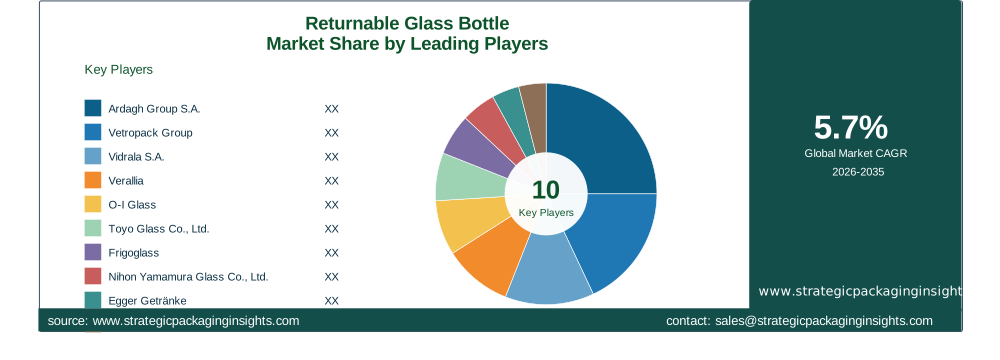
Ardagh Group S.A. is a leading player in the returnable glass bottle market, with a strong presence in Europe and North America. The company is focused on expanding its production capacity and enhancing its sustainability initiatives to meet the growing demand for eco-friendly packaging solutions.
Vetropack Group is another key player, known for its innovative glass packaging solutions and commitment to sustainability. The company is investing in advanced manufacturing technologies to improve production efficiency and reduce environmental impact.
Vidrala S.A. is a major player in the European market, offering a wide range of glass packaging solutions for various industries. The company is focused on expanding its market presence through strategic acquisitions and partnerships, enhancing its competitive position in the returnable glass bottle market.
Key Highlights
- Largest Region: Europe
- Fastest-Growing Region: Asia Pacific
- Largest Segment: Food and Beverage
- Fastest-Growing Segment: Non-Alcoholic Beverages
- Base-year market size: USD 3.31 Billion
- Forecast-year market size: USD 6.03 Billion
- CAGR: 5.70%
- Important application: Alcoholic Beverages
- Major end-use industry: Food and Beverage
- Major market driver: Sustainability initiatives
Regional Insights
The returnable glass bottle market is witnessing significant growth across major regions, with Europe being the largest market due to strong regulatory support for sustainable packaging. Asia Pacific is the fastest-growing region, driven by increasing consumer awareness and demand for eco-friendly products.
North America
In North America, the returnable glass bottle market is driven by consumer demand for sustainable packaging solutions and regulatory initiatives promoting recycling. The region is witnessing increased adoption of deposit return systems, which are encouraging the use of returnable glass bottles.
The food and beverage industry is a major end-user, with companies focusing on sustainable packaging to meet consumer expectations. The presence of key players such as Ardagh Group S.A. and O-I Glass is contributing to market growth in the region.
Europe
Europe is the largest market for returnable glass bottles, supported by strong regulatory frameworks promoting recycling and sustainability. The European Union's directives on packaging waste are driving the adoption of returnable glass bottles, with companies investing in recycling infrastructure to meet regulatory requirements.
The food and beverage industry is a key driver of demand, with companies focusing on sustainable packaging solutions to enhance brand image and meet consumer expectations. The presence of major players such as Vetropack Group and Vidrala S.A. is contributing to market growth in the region.
Asia Pacific
Asia Pacific is the fastest-growing region in the returnable glass bottle market, driven by increasing consumer awareness and demand for eco-friendly products. The region is witnessing significant investments in manufacturing infrastructure and recycling facilities to support market growth.
The food and beverage industry is a major end-user, with companies focusing on sustainable packaging solutions to meet consumer expectations. The presence of key players such as Nihon Yamamura Glass Co., Ltd. is contributing to market growth in the region.
Latin America
In Latin America, the returnable glass bottle market is driven by increasing consumer demand for sustainable packaging solutions and regulatory initiatives promoting recycling. The region is witnessing increased adoption of deposit return systems, which are encouraging the use of returnable glass bottles.
The food and beverage industry is a major end-user, with companies focusing on sustainable packaging to meet consumer expectations. The presence of key players such as Frigoglass is contributing to market growth in the region.
Middle East & Africa
The returnable glass bottle market in the Middle East & Africa is driven by increasing consumer awareness and demand for eco-friendly products. The region is witnessing significant investments in manufacturing infrastructure and recycling facilities to support market growth.
The food and beverage industry is a major end-user, with companies focusing on sustainable packaging solutions to meet consumer expectations. The presence of key players such as AGI Glaspac is contributing to market growth in the region.
Returnable Glass Bottle Market Segments Insights

By Grade Analysis
The returnable glass bottle market is segmented by grade into Type I, Type II, and Type III. Type I bottles are primarily used in the pharmaceutical industry due to their high chemical resistance and durability. Type II bottles are commonly used for food and beverage applications, offering a balance between cost and performance. Type III bottles are used for general-purpose applications, providing an economical option for various industries.
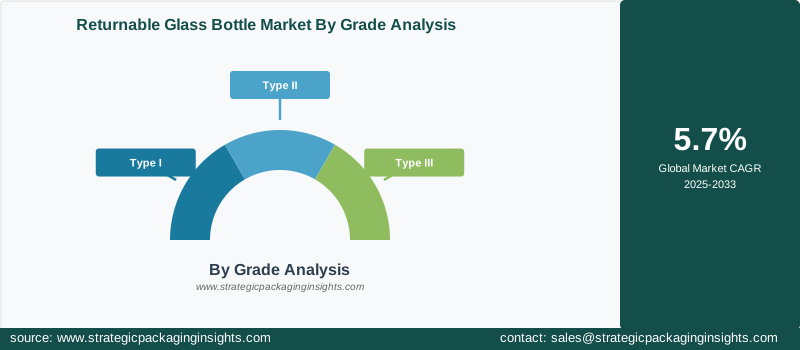
The demand for Type I bottles is driven by the pharmaceutical industry's stringent quality requirements, while Type II and Type III bottles are witnessing growth due to increasing demand from the food and beverage sector. Companies are focusing on enhancing the performance and sustainability of these bottles to meet industry standards and consumer expectations.
By Capacity Analysis
The returnable glass bottle market is segmented by capacity into Below 50 ml, 50-200 ml, 201-500 ml, 501-1000 ml, and Above 1000 ml. Bottles with a capacity of 201-500 ml are the most popular, driven by demand from the beverage industry for single-serve and multi-serve packaging solutions. Bottles with a capacity of 501-1000 ml are also witnessing growth, particularly in the alcoholic beverage segment.
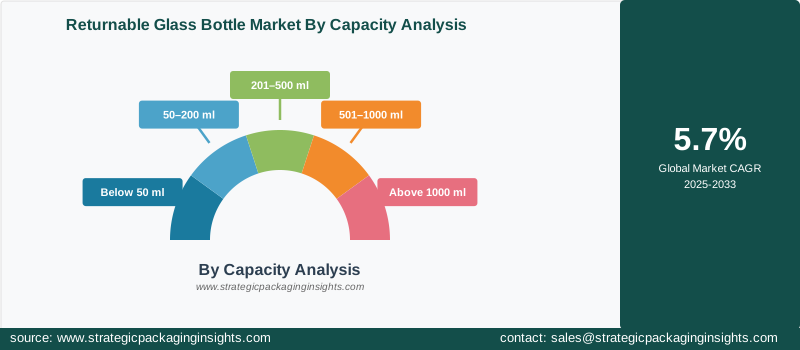
The demand for smaller bottles (Below 50 ml and 50-200 ml) is driven by the cosmetics and personal care industry, where packaging aesthetics and convenience are key considerations. Larger bottles (Above 1000 ml) are used in industrial and household applications, providing cost-effective packaging solutions for bulk products.
By Bottle Type Analysis
The returnable glass bottle market is segmented by bottle type into Beer Bottles, Soft Drink Bottles, Wine Bottles, Milk Bottles, Water Bottles, Juice Bottles, and Other Beverage Bottles. Beer bottles are the largest segment, driven by the global popularity of beer and the increasing demand for sustainable packaging solutions in the beverage industry.
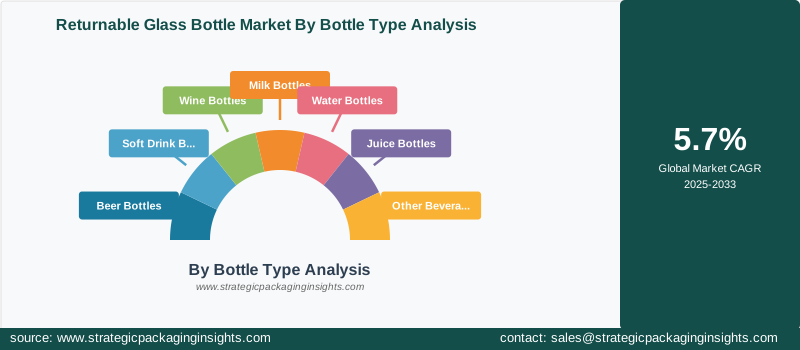
Wine bottles are also witnessing significant growth, supported by the premiumization trend in the wine industry and the increasing consumer preference for glass packaging. Soft drink and juice bottles are gaining traction due to the growing demand for non-alcoholic beverages and the shift towards healthier drink options.
By Application Analysis
The returnable glass bottle market is segmented by application into Alcoholic Beverages, Non-Alcoholic Beverages, Dairy Products, Food Products, Pharmaceuticals, Cosmetics and Personal Care, and Household Products. The alcoholic beverages segment is the largest, driven by the global demand for beer, wine, and spirits, which are traditionally packaged in glass bottles.
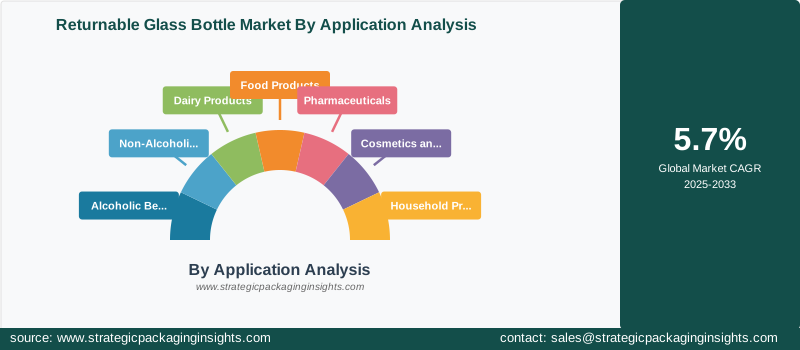
The non-alcoholic beverages segment is witnessing rapid growth, supported by the increasing demand for soft drinks, juices, and functional beverages. The cosmetics and personal care segment is also growing, driven by the demand for premium packaging solutions that enhance product appeal and brand image.
By End Use Analysis
The returnable glass bottle market is segmented by end use into Food and Beverage, Pharmaceuticals, Cosmetics and Personal Care, Household, and Industrial. The food and beverage industry is the largest end-user, driven by the demand for sustainable packaging solutions and the increasing consumer preference for glass bottles.
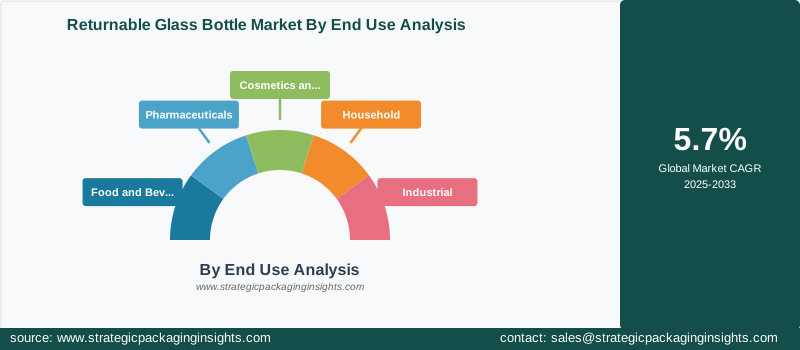
The pharmaceuticals segment is witnessing growth due to the demand for high-quality packaging solutions that meet stringent regulatory requirements. The cosmetics and personal care segment is also growing, supported by the demand for premium packaging solutions that enhance product appeal and brand image.
By Reuse Model Analysis
The returnable glass bottle market is segmented by reuse model into Deposit Return Systems, Closed-Loop Refill Systems, Open-Loop Reuse Systems, and Retailer Take-Back Programs. Deposit return systems are the most popular, driven by regulatory support and consumer incentives to return bottles for reuse.
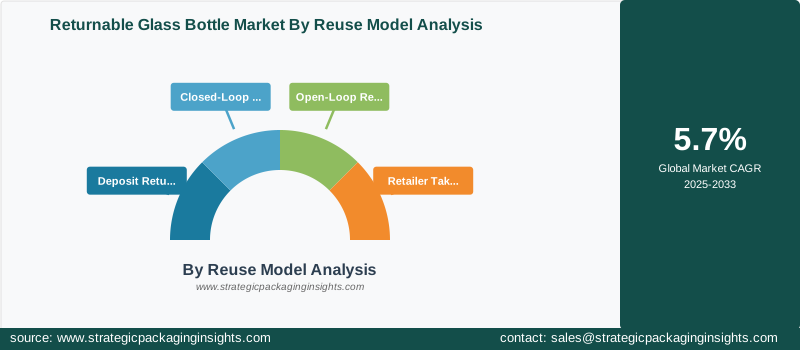
Closed-loop refill systems are gaining traction, particularly in regions with strong regulatory frameworks promoting sustainability. Retailer take-back programs are also witnessing growth, supported by the increasing demand for convenient and eco-friendly packaging solutions.
By Distribution Channel Analysis
The returnable glass bottle market is segmented by distribution channel into Direct Sales, Distributors, Retail, Foodservice, and Beverage Producers. Direct sales and distributors are the most popular channels, driven by the demand for efficient and cost-effective distribution solutions.
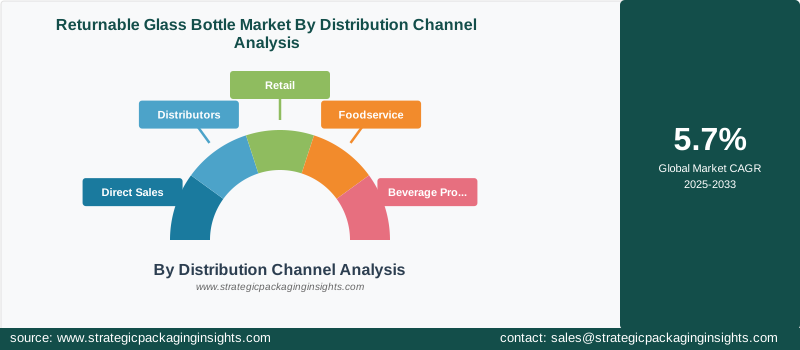
The retail channel is witnessing growth, supported by the increasing consumer demand for sustainable packaging solutions and the shift towards eco-friendly products. The foodservice channel is also growing, driven by the demand for convenient and sustainable packaging solutions in the food and beverage industry.
Returnable Glass Bottle Market Segments
The Returnable Glass Bottle market has been segmented on the basis ofBy Grade
- Type I
- Type II
- Type III
By Capacity
- Below 50 ml
- 50–200 ml
- 201–500 ml
- 501–1000 ml
- Above 1000 ml
By Bottle Type
- Beer Bottles
- Soft Drink Bottles
- Wine Bottles
- Milk Bottles
- Water Bottles
- Juice Bottles
- Other Beverage Bottles
By Application
- Alcoholic Beverages
- Non-Alcoholic Beverages
- Dairy Products
- Food Products
- Pharmaceuticals
- Cosmetics and Personal Care
- Household Products
By End Use
- Food and Beverage
- Pharmaceuticals
- Cosmetics and Personal Care
- Household
- Industrial
By Reuse Model
- Deposit Return Systems
- Closed-Loop Refill Systems
- Open-Loop Reuse Systems
- Retailer Take-Back Programs
By Distribution Channel
- Direct Sales
- Distributors
- Retail
- Foodservice
- Beverage Producers
By Region
- North America
- Europe
- Asia-Pacific
- Latin America
- Middle East and Africa




