


Resealable Packaging Bag Market Outlook
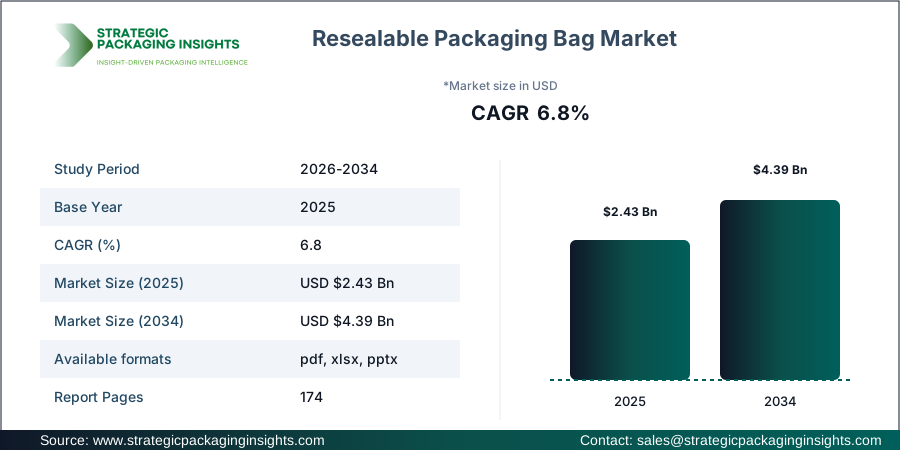
The Resealable Packaging Bag market size was valued at USD 2.43 billion in 2025 and is anticipated to reach USD 4.39 billion by 2034, growing at a CAGR of 6.8% during the forecast period according to Strategic Packaging Insights. The market is witnessing robust growth driven by increasing consumer demand for convenience and sustainability in packaging solutions. Companies like Amcor and Mondi are leading the charge by innovating in materials and closure technologies, which cater to the evolving needs of both consumers and manufacturers. The rise in e-commerce and the growing preference for flexible packaging solutions are further propelling market expansion, as these bags offer enhanced product protection and extended shelf life.
One of the most impactful drivers of the Resealable Packaging Bag market is the increasing regulatory focus on reducing plastic waste and promoting sustainable packaging solutions. Governments worldwide are implementing stringent regulations to curb plastic pollution, which is pushing manufacturers to adopt eco-friendly materials and designs. For instance, the European Union's directive on single-use plastics is encouraging companies to innovate in biodegradable and compostable packaging solutions. This regulatory push is not only fostering innovation but also creating new growth opportunities for companies like Berry Global and ProAmpac, who are investing heavily in sustainable packaging technologies.
Report Scope
| Attributes | Details |
| Report Title | Resealable Packaging Bag Market Size, Future Growth and Forecast 2034 |
| By Material Type | Plastic Laminates, Paper Laminates, Mono-Material Films, Compostable Films |
| By Closure Type | Zipper, Slider, Press-to-Close, Spout |
| By Application | Snacks, Pet Food, Coffee, Personal Care |
| By End Use | Food & Beverage, FMCG, Retail, Healthcare |
| Region | Asia Pacific, North America, Latin America, Europe, Middle East & Africa |
| Base Year | 2025 |
| Historic Period | 2018-2024 |
| Forecast Period | 2026-2034 |
| Number of Pages | 174 |
| Customization Available | Yes* |
Sustainability & Circular Economy Analysis
Sustainability initiatives are significantly reshaping the Resealable Packaging Bag market, with a strong emphasis on recyclable materials and eco-friendly innovations. Companies are increasingly adopting lightweight packaging solutions to reduce material usage and carbon footprint. This shift is driven by consumer preferences for sustainable products and regulatory pressures to minimize environmental impact. The integration of recyclable and compostable films is becoming a standard practice, as seen with industry leaders like Constantia Flexibles and UFlex, who are pioneering in sustainable material innovations.
The circular economy is influencing packaging design and manufacturing processes, encouraging companies to focus on waste reduction strategies and extended producer responsibility (EPR). This approach not only aligns with environmental goals but also enhances brand reputation and market competitiveness. Packaging manufacturers are investing in advanced technologies to improve recyclability and reduce waste, thereby meeting the growing demand for sustainable packaging solutions. These efforts are supported by ESG initiatives that prioritize environmental stewardship and social responsibility.
Regulatory compliance and consumer sustainability preferences are driving investment decisions and supply chain strategies in the packaging industry. Companies are increasingly focusing on reducing their carbon footprint and enhancing supply chain resilience through localization and strategic partnerships. This trend is evident in the actions of companies like Glenroy and Coveris, who are optimizing their operations to align with sustainability goals. As a result, the Resealable Packaging Bag market is poised for long-term growth, driven by the convergence of sustainability trends and consumer demand for eco-friendly packaging solutions.
Packaging Value Chain & Supply Chain Analysis
The packaging value chain is a complex ecosystem involving raw material sourcing, packaging converters, manufacturers, and logistics providers. Efficient supply chain management is crucial for maintaining competitiveness in the Resealable Packaging Bag market. Companies like ePac Flexible Packaging and Huhtamaki are focusing on optimizing their procurement strategies and inventory management to ensure a steady supply of raw materials and minimize production disruptions. This approach not only enhances operational efficiency but also reduces costs and improves market responsiveness.
Raw material availability and transportation are critical factors influencing the overall performance of the packaging market. The reliance on global sourcing for materials like plastic laminates and paper laminates necessitates robust logistics and distribution channels. Companies are increasingly forming strategic partnerships with suppliers and logistics providers to enhance supply chain resilience and ensure timely delivery of products. This collaborative approach is essential for maintaining a competitive edge in a rapidly evolving market landscape.
Brand owners and retailers play a pivotal role in the packaging value chain, driving demand for innovative and sustainable packaging solutions. The integration of recycling networks and waste management systems is becoming increasingly important as companies strive to meet regulatory requirements and consumer expectations. By investing in advanced packaging machinery and technologies, manufacturers can improve production capabilities and deliver high-quality products that meet the diverse needs of end-users. This focus on innovation and sustainability is key to achieving long-term success in the Resealable Packaging Bag market.
Opportunities & Threats
The Resealable Packaging Bag market presents numerous opportunities for growth, driven by the increasing demand for convenience and sustainability in packaging solutions. The rise of e-commerce and online retailing is creating a significant demand for flexible packaging options that offer enhanced product protection and extended shelf life. Companies like Amcor and Mondi are capitalizing on this trend by developing innovative resealable packaging solutions that cater to the needs of both consumers and manufacturers. Additionally, the growing awareness of environmental issues is driving demand for eco-friendly packaging materials, providing opportunities for companies to differentiate themselves through sustainable product offerings.
Another opportunity lies in the expanding applications of resealable packaging bags across various industries, including food and beverage, FMCG, and healthcare. The versatility of these bags makes them suitable for a wide range of products, from snacks and pet food to personal care items and pharmaceuticals. This broad application scope is attracting investments from packaging manufacturers and converters, who are keen to tap into the growing demand for resealable packaging solutions. Furthermore, advancements in material technology and closure systems are enabling companies to offer more innovative and user-friendly packaging options, enhancing their competitive position in the market.
Despite the promising growth prospects, the Resealable Packaging Bag market faces several threats, including regulatory challenges and fluctuating raw material prices. Stringent regulations on plastic usage and waste management are compelling companies to invest in sustainable packaging solutions, which can increase production costs and impact profitability. Additionally, the volatility in raw material prices, particularly for plastics and laminates, poses a significant risk to manufacturers, who must navigate these challenges to maintain cost-effectiveness and market competitiveness. Companies must adopt strategic procurement and inventory management practices to mitigate these risks and ensure long-term success in the market.
Drivers & Challenges
The Resealable Packaging Bag market is driven by several key factors, including the growing demand for convenience and sustainability in packaging solutions. Consumers are increasingly seeking packaging options that offer ease of use, product protection, and environmental benefits. This trend is prompting companies like Berry Global and ProAmpac to innovate in material technology and closure systems, enhancing the functionality and sustainability of their packaging products. The rise of e-commerce and online retailing is also driving demand for flexible packaging solutions that can withstand the rigors of transportation and provide extended shelf life for products.
Another significant driver is the increasing regulatory focus on reducing plastic waste and promoting sustainable packaging solutions. Governments worldwide are implementing stringent regulations to curb plastic pollution, which is pushing manufacturers to adopt eco-friendly materials and designs. This regulatory push is fostering innovation and creating new growth opportunities for companies that invest in sustainable packaging technologies. Additionally, the growing awareness of environmental issues among consumers is driving demand for eco-friendly packaging options, further propelling market growth.
However, the Resealable Packaging Bag market also faces several challenges, including the volatility in raw material prices and the complexity of regulatory compliance. Fluctuations in the prices of plastics and laminates can impact production costs and profitability, posing a significant risk to manufacturers. Companies must adopt strategic procurement and inventory management practices to mitigate these risks and ensure cost-effectiveness. Additionally, navigating the complex regulatory landscape requires significant investment in research and development to develop compliant and sustainable packaging solutions. Companies must balance these challenges with the need to innovate and meet consumer demands for convenience and sustainability.
Market Share Analysis
The competitive landscape of the Resealable Packaging Bag market is characterized by the presence of several key players, including Amcor, Mondi, Berry Global, ProAmpac, and Constantia Flexibles. These companies are leading the market through their innovative product offerings and strategic investments in sustainable packaging solutions. Amcor, for instance, is known for its extensive range of flexible packaging products and its commitment to sustainability, which has helped it maintain a strong market position. Similarly, Mondi's focus on eco-friendly materials and advanced closure technologies has enabled it to capture a significant share of the market.
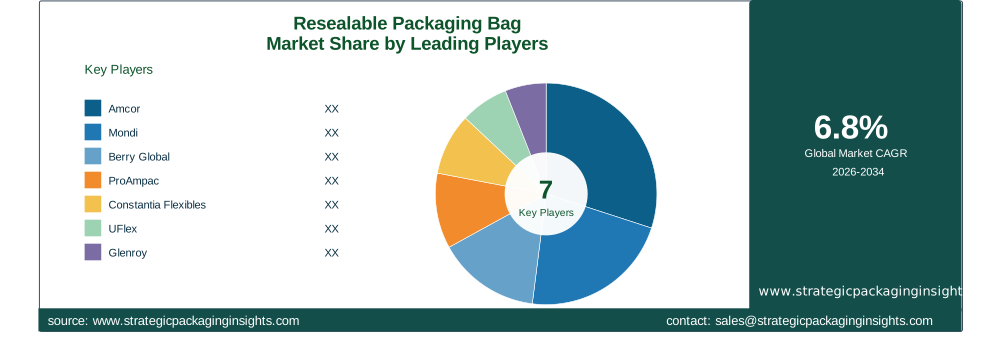
Berry Global is another major player in the market, renowned for its comprehensive portfolio of resealable packaging solutions and its emphasis on innovation and sustainability. The company's strategic acquisitions and partnerships have further strengthened its market presence, allowing it to expand its product offerings and reach new customer segments. ProAmpac, with its focus on customer-centric solutions and sustainable packaging innovations, has also carved out a significant niche in the market, catering to the diverse needs of its clients across various industries.
Constantia Flexibles, UFlex, and Glenroy are also key players in the Resealable Packaging Bag market, each bringing unique strengths and capabilities to the table. Constantia Flexibles is known for its high-quality flexible packaging solutions and its commitment to sustainability, while UFlex's focus on innovation and customer satisfaction has helped it build a strong market presence. Glenroy, with its expertise in flexible packaging and its emphasis on sustainability, is well-positioned to capitalize on the growing demand for eco-friendly packaging solutions.
Other notable companies in the market include Coveris, ePac Flexible Packaging, and Huhtamaki, each of which has made significant contributions to the development and growth of the Resealable Packaging Bag market. Coveris, with its focus on innovation and sustainability, has established itself as a leading provider of flexible packaging solutions, while ePac Flexible Packaging's emphasis on digital printing and customization has enabled it to cater to the specific needs of its clients. Huhtamaki, with its global presence and diverse product offerings, continues to be a key player in the market, driving innovation and growth through its commitment to sustainability and customer satisfaction.
Key Highlights
- Market Size: The Resealable Packaging Bag market was valued at USD 2.43 billion in 2025 and is projected to reach USD 4.39 billion by 2034.
- Growth Rate: The market is expected to grow at a CAGR of 6.8% during the forecast period.
- Leading Companies: Key players include Amcor, Mondi, Berry Global, ProAmpac, and Constantia Flexibles.
- Material Innovation: Increasing use of eco-friendly materials like compostable films and mono-material films.
- Regulatory Impact: Stringent regulations on plastic usage are driving innovation in sustainable packaging solutions.
- Regional Growth: Asia Pacific is expected to witness the highest growth rate, driven by rising consumer demand and regulatory support.
- Application Expansion: Growing applications in food & beverage, FMCG, and healthcare sectors.
Resealable Packaging Bag Market Segments Insights

By Material Type Analysis
The Resealable Packaging Bag market is segmented by material type into plastic laminates, paper laminates, mono-material films, and compostable films. Plastic laminates continue to dominate the market due to their durability and cost-effectiveness. However, there is a growing shift towards eco-friendly materials like compostable films and mono-material films, driven by increasing consumer awareness and regulatory pressures. Companies like Amcor and Mondi are investing in research and development to innovate in sustainable materials, offering products that meet both environmental standards and consumer preferences. This trend is expected to drive significant growth in the eco-friendly segment over the forecast period.
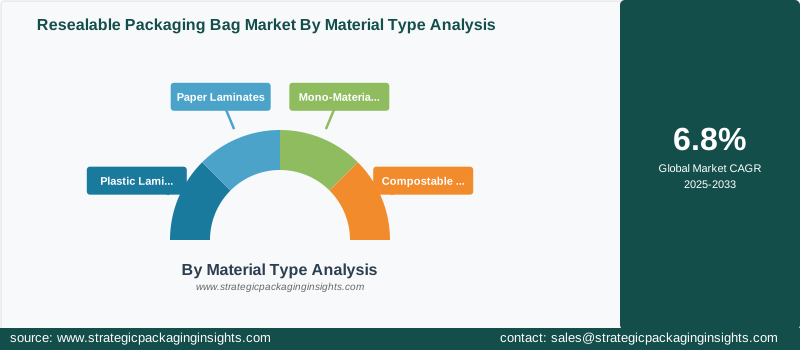
Paper laminates are also gaining traction in the market, particularly in regions with stringent environmental regulations. The demand for paper-based packaging solutions is being fueled by the growing emphasis on recyclability and biodegradability. Manufacturers are focusing on enhancing the barrier properties of paper laminates to improve their functionality and expand their application scope. This segment is expected to witness steady growth as companies continue to innovate in material technology and design to meet the evolving needs of consumers and regulatory requirements.
By Closure Type Analysis
The closure type segment of the Resealable Packaging Bag market includes zipper, slider, press-to-close, and spout closures. Zipper closures are the most popular due to their ease of use and ability to provide a secure seal, making them ideal for a wide range of applications. Companies like Berry Global and ProAmpac are leading the market with their innovative zipper closure designs that enhance convenience and functionality. The slider closure segment is also experiencing growth, driven by its user-friendly design and suitability for larger packaging formats.
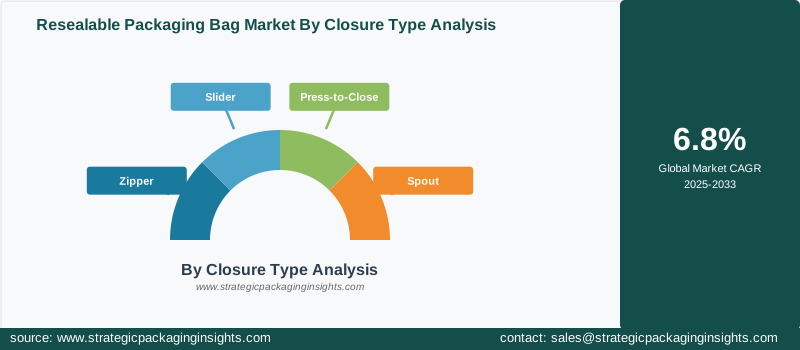
Press-to-close closures are gaining popularity in the market, particularly in the food and beverage sector, where they offer a cost-effective and reliable sealing solution. The spout closure segment is primarily used in liquid packaging applications, providing a convenient and mess-free dispensing option. As consumer demand for convenience and functionality continues to rise, manufacturers are focusing on developing advanced closure systems that cater to diverse application needs. This trend is expected to drive growth in the closure type segment over the forecast period.
By Application Analysis
The Resealable Packaging Bag market is segmented by application into snacks, pet food, coffee, and personal care. The snacks segment holds a significant share of the market, driven by the increasing demand for convenient and portable packaging solutions. Resealable packaging bags offer enhanced product protection and extended shelf life, making them ideal for snack products. Companies like Constantia Flexibles and UFlex are focusing on developing innovative packaging solutions that cater to the specific needs of the snacks segment, driving growth in this application area.
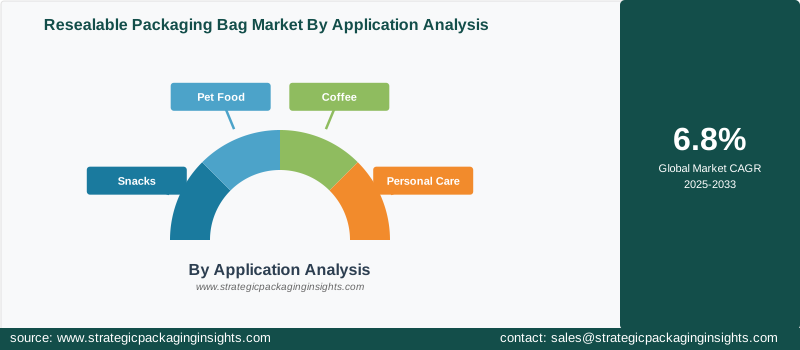
The pet food segment is also experiencing robust growth, fueled by the rising pet ownership and the demand for convenient and resealable packaging options. Resealable packaging bags provide a practical solution for pet food storage, maintaining freshness and preventing spillage. The coffee segment is witnessing steady growth, driven by the increasing consumption of coffee and the demand for packaging solutions that preserve flavor and aroma. The personal care segment is also expanding, with resealable packaging bags offering a convenient and hygienic solution for a wide range of products.
By End Use Analysis
The end-use segment of the Resealable Packaging Bag market includes food & beverage, FMCG, retail, and healthcare. The food & beverage sector is the largest end-use segment, driven by the increasing demand for convenient and sustainable packaging solutions. Resealable packaging bags offer enhanced product protection and extended shelf life, making them ideal for a wide range of food and beverage products. Companies like Glenroy and Coveris are focusing on developing innovative packaging solutions that cater to the specific needs of this sector, driving growth in the end-use segment.
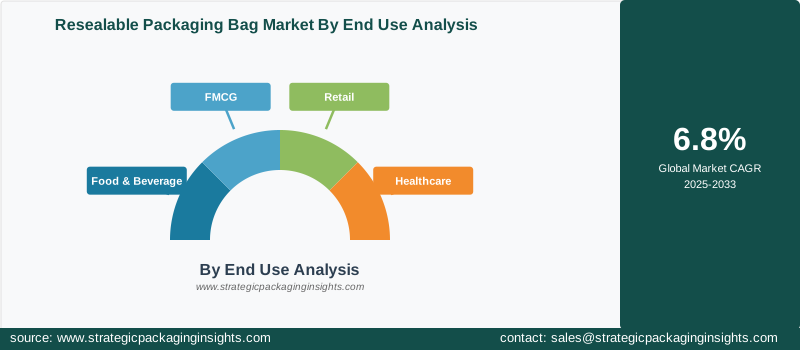
The FMCG sector is also a significant contributor to the market, with resealable packaging bags offering a practical and cost-effective solution for a wide range of consumer goods. The retail sector is witnessing steady growth, driven by the increasing demand for convenient and portable packaging solutions. The healthcare sector is also expanding, with resealable packaging bags offering a hygienic and secure solution for pharmaceutical and medical products. As consumer demand for convenience and sustainability continues to rise, manufacturers are focusing on developing advanced packaging solutions that cater to diverse end-use needs.
Resealable Packaging Bag Market Segments
The Resealable Packaging Bag market has been segmented on the basis ofBy Material Type
- Plastic Laminates
- Paper Laminates
- Mono-Material Films
- Compostable Films
By Closure Type
- Zipper
- Slider
- Press-to-Close
- Spout
By Application
- Snacks
- Pet Food
- Coffee
- Personal Care
By End Use
- Food & Beverage
- FMCG
- Retail
- Healthcare
Region
- Asia Pacific
- North America
- Latin America
- Europe
- Middle East & Africa




