


Refill-at-Home and Refill-in-Store Packaging Collection and Reuse Market Outlook
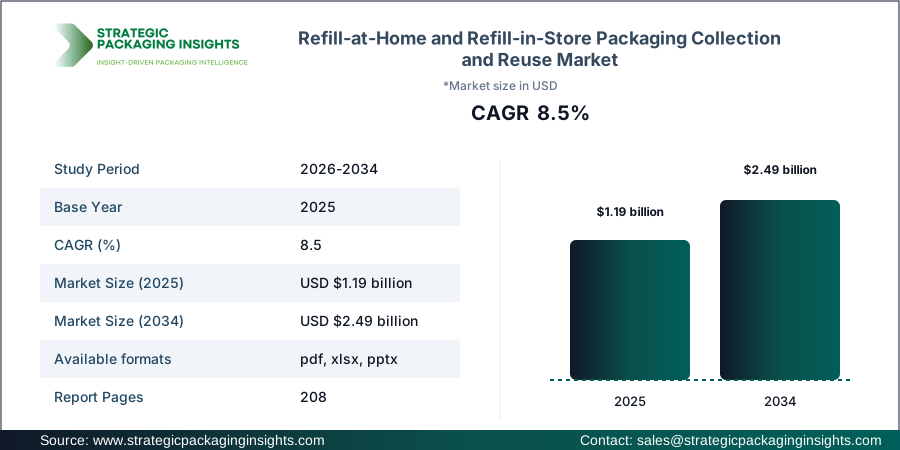
The Refill-at-Home and Refill-in-Store Packaging Collection and Reuse market was valued at $1.19 billion in 2025 and is projected to reach $2.49 billion by 2034, growing at a CAGR of 8.5% during the forecast period 2026-2034. This market is gaining traction due to increasing consumer awareness about environmental sustainability and the need to reduce plastic waste. The shift towards circular economy models is driving demand for refillable packaging solutions, as consumers and businesses alike seek to minimize their environmental footprint. The market is also being propelled by technological advancements in packaging materials and designs, which enhance the convenience and appeal of refillable products. As more companies adopt sustainable practices, the refill packaging market is expected to witness significant growth, with major players investing in innovative solutions to capture a larger share of this burgeoning market.
Despite the promising growth prospects, the market faces several challenges, including regulatory hurdles and the need for significant infrastructure investments to support widespread adoption of refill systems. Additionally, consumer behavior and preferences pose a challenge, as convenience and ease of use remain critical factors in purchasing decisions. However, the potential for growth remains substantial, as governments and organizations worldwide implement policies and initiatives to promote sustainable packaging solutions. The market's growth potential is further bolstered by the increasing availability of eco-friendly packaging materials and the development of efficient refill systems that cater to diverse consumer needs. As the market evolves, companies that can effectively address these challenges and capitalize on emerging opportunities are likely to thrive in the competitive landscape.
Report Scope
| Attributes | Details |
| Report Title | Refill-at-Home and Refill-in-Store Packaging Collection and Reuse Market Size, Future Growth and Forecast 2034 |
| Refill Model | At-Home Refill, In-Store Refill, Subscription Refill |
| Packaging Type | Refill Pouches, Refill Pods, Reusable Bottles |
| Application | Home Care, Personal Care, Beverages, Food |
| End Use | FMCG Brands, Retailers, Consumers |
| Region | Asia Pacific, North America, Latin America, Europe, Middle East & Africa |
| Base Year | 2025 |
| Historic Period | 2018-2024 |
| Forecast Period | 2026-2034 |
| Number of Pages | 208 |
| Customization Available | Yes* |
Opportunities & Threats
The Refill-at-Home and Refill-in-Store Packaging Collection and Reuse market presents numerous opportunities for growth and innovation. One of the most significant opportunities lies in the increasing consumer demand for sustainable and eco-friendly packaging solutions. As awareness about environmental issues continues to rise, consumers are actively seeking products that align with their values, creating a strong market for refillable packaging options. Companies that can effectively communicate the environmental benefits of their products and offer convenient, user-friendly solutions are well-positioned to capture a significant share of this growing market. Additionally, advancements in packaging technology and materials present opportunities for companies to develop innovative refill systems that enhance the consumer experience and drive adoption.
Another opportunity in the market is the potential for collaboration between brands, retailers, and packaging manufacturers to create integrated refill systems that streamline the consumer experience. By working together, these stakeholders can develop standardized refill solutions that are easy to use and widely accessible, further driving market growth. The rise of e-commerce and direct-to-consumer sales channels also presents opportunities for companies to reach a broader audience and offer personalized refill solutions that cater to individual consumer preferences. As the market continues to evolve, companies that can leverage these opportunities and adapt to changing consumer demands are likely to succeed in the competitive landscape.
However, the market also faces several threats that could hinder its growth. One of the primary threats is the potential for regulatory challenges, as governments around the world implement policies and regulations aimed at reducing plastic waste and promoting sustainable packaging solutions. Companies must navigate these complex regulatory environments and ensure compliance with local and international standards to avoid potential fines and reputational damage. Additionally, the market faces competition from traditional packaging solutions, which may be more cost-effective and convenient for consumers. To overcome these challenges, companies must invest in research and development to create innovative, cost-effective refill solutions that offer a compelling value proposition to consumers.
Drivers & Challenges
The Refill-at-Home and Refill-in-Store Packaging Collection and Reuse market is driven by several key factors that are shaping its growth trajectory. One of the primary drivers is the increasing consumer awareness about environmental sustainability and the need to reduce plastic waste. As consumers become more conscious of their environmental impact, they are actively seeking products that align with their values, driving demand for refillable packaging solutions. Additionally, the shift towards circular economy models is encouraging businesses to adopt sustainable practices and invest in refill systems that minimize waste and promote resource efficiency. This trend is further supported by government initiatives and policies aimed at reducing plastic waste and promoting sustainable packaging solutions.
Another significant driver of the market is the technological advancements in packaging materials and designs, which are enhancing the convenience and appeal of refillable products. Innovations in packaging technology are enabling companies to develop user-friendly refill systems that cater to diverse consumer needs, driving adoption and market growth. The rise of e-commerce and direct-to-consumer sales channels is also contributing to the market's growth, as companies can reach a broader audience and offer personalized refill solutions that cater to individual consumer preferences. As the market continues to evolve, companies that can effectively leverage these drivers and adapt to changing consumer demands are likely to succeed in the competitive landscape.
Despite the promising growth prospects, the market faces several challenges that could hinder its development. One of the primary challenges is the need for significant infrastructure investments to support widespread adoption of refill systems. Companies must invest in the development of efficient refill systems and distribution networks to ensure the availability and accessibility of refillable products. Additionally, consumer behavior and preferences pose a challenge, as convenience and ease of use remain critical factors in purchasing decisions. To overcome these challenges, companies must invest in research and development to create innovative, cost-effective refill solutions that offer a compelling value proposition to consumers. By addressing these challenges and capitalizing on emerging opportunities, companies can position themselves for success in the competitive refill packaging market.
Market Share Analysis
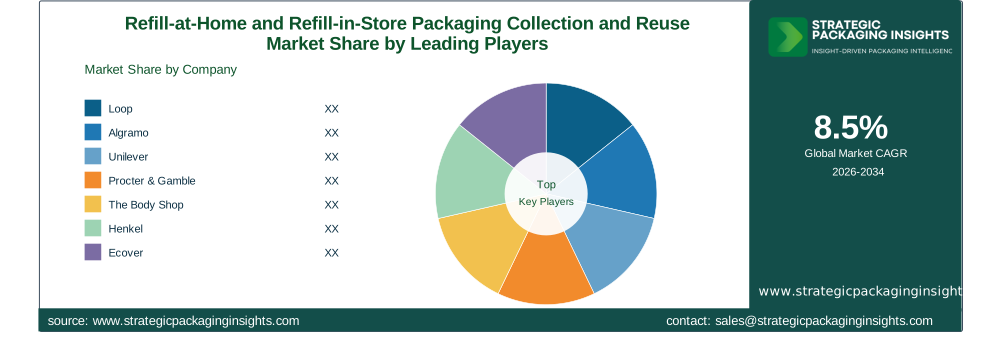
The competitive landscape of the Refill-at-Home and Refill-in-Store Packaging Collection and Reuse market is characterized by the presence of several key players who are actively investing in innovative solutions to capture a larger share of this burgeoning market. Companies such as Loop, Algramo, Unilever, Procter & Gamble, The Body Shop, Henkel, Ecover, SC Johnson, Coca-Cola, and PepsiCo are leading the charge in developing sustainable packaging solutions that cater to the growing demand for refillable products. These companies are leveraging their extensive resources and expertise to create user-friendly refill systems that enhance the consumer experience and drive adoption.
Loop, a leading player in the market, is known for its innovative approach to sustainable packaging solutions. The company has developed a circular shopping platform that allows consumers to purchase products in reusable packaging, which is then collected, cleaned, and refilled for future use. This model not only reduces waste but also offers a convenient and seamless shopping experience for consumers. Similarly, Algramo is making waves in the market with its smart dispensing systems that enable consumers to purchase products in refillable containers, reducing packaging waste and promoting sustainability.
Unilever and Procter & Gamble, two of the largest consumer goods companies in the world, are also making significant strides in the refill packaging market. Both companies have launched initiatives to reduce plastic waste and promote sustainable packaging solutions, including the development of refillable product lines and partnerships with retailers to create integrated refill systems. The Body Shop, a well-known beauty brand, has also embraced the refill trend, offering consumers the option to refill their favorite products in-store, reducing packaging waste and promoting environmental sustainability.
Other notable players in the market include Henkel, Ecover, SC Johnson, Coca-Cola, and PepsiCo, all of whom are investing in sustainable packaging solutions to meet the growing demand for refillable products. These companies are leveraging their extensive resources and expertise to develop innovative refill systems that cater to diverse consumer needs, driving adoption and market growth. As the market continues to evolve, companies that can effectively address the challenges and capitalize on emerging opportunities are likely to thrive in the competitive landscape.
Key Highlights
- The market is projected to grow from $1.19 billion in 2025 to $2.49 billion by 2034, at a CAGR of 8.5%.
- Increasing consumer awareness about environmental sustainability is driving demand for refillable packaging solutions.
- Technological advancements in packaging materials and designs are enhancing the convenience and appeal of refillable products.
- Government initiatives and policies aimed at reducing plastic waste are supporting market growth.
- Collaboration between brands, retailers, and packaging manufacturers is creating integrated refill systems that streamline the consumer experience.
- The rise of e-commerce and direct-to-consumer sales channels is expanding the market reach.
- Key players in the market include Loop, Algramo, Unilever, Procter & Gamble, The Body Shop, Henkel, Ecover, SC Johnson, Coca-Cola, and PepsiCo.
Top Countries Insights
In the Refill-at-Home and Refill-in-Store Packaging Collection and Reuse market, the United States stands out as a leading country, with a market size of approximately $450 million and a CAGR of 9%. The country's growth is driven by strong consumer demand for sustainable packaging solutions and the presence of major players like Loop and Procter & Gamble, who are actively investing in innovative refill systems. Government initiatives aimed at reducing plastic waste and promoting sustainable practices further support market growth in the United States.
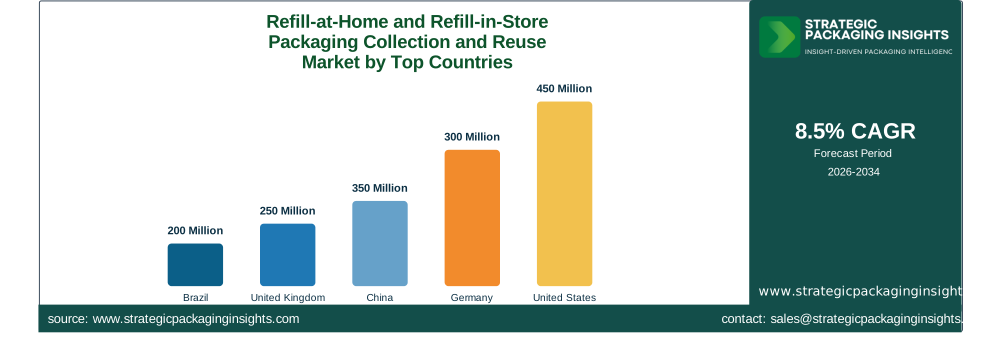
Germany is another key player in the market, with a market size of around $300 million and a CAGR of 8%. The country's strong environmental regulations and consumer awareness about sustainability are driving demand for refillable packaging solutions. Companies like Henkel and Ecover are leading the charge in Germany, offering innovative refill systems that cater to the growing demand for eco-friendly products.
In the Asia Pacific region, China is emerging as a significant market for refillable packaging, with a market size of approximately $350 million and a CAGR of 10%. The country's rapid urbanization and increasing consumer awareness about environmental issues are driving demand for sustainable packaging solutions. Companies like Coca-Cola and PepsiCo are investing in refill systems to capture a larger share of this growing market.
The United Kingdom is also a notable player in the market, with a market size of around $250 million and a CAGR of 7%. The country's strong consumer demand for sustainable products and government initiatives aimed at reducing plastic waste are driving market growth. Companies like The Body Shop and SC Johnson are leading the way in the UK, offering innovative refill solutions that cater to diverse consumer needs.
Finally, Brazil is an emerging market for refillable packaging, with a market size of approximately $200 million and a CAGR of 6%. The country's growing middle class and increasing consumer awareness about sustainability are driving demand for eco-friendly packaging solutions. Companies like Algramo are making significant strides in Brazil, offering smart dispensing systems that reduce packaging waste and promote sustainability.
Refill-at-Home and Refill-in-Store Packaging Collection and Reuse Market Segments Insights

Refill Model Analysis
The Refill Model segment of the Refill-at-Home and Refill-in-Store Packaging Collection and Reuse market is divided into at-home refill, in-store refill, and subscription refill. At-home refill is gaining popularity due to its convenience and ease of use, allowing consumers to refill products in the comfort of their homes. This model is particularly appealing to consumers who prioritize convenience and are looking for sustainable packaging solutions that align with their values. In-store refill, on the other hand, offers consumers the opportunity to refill their favorite products at designated retail locations, reducing packaging waste and promoting environmental sustainability. This model is gaining traction among environmentally conscious consumers who are looking for ways to reduce their environmental footprint.
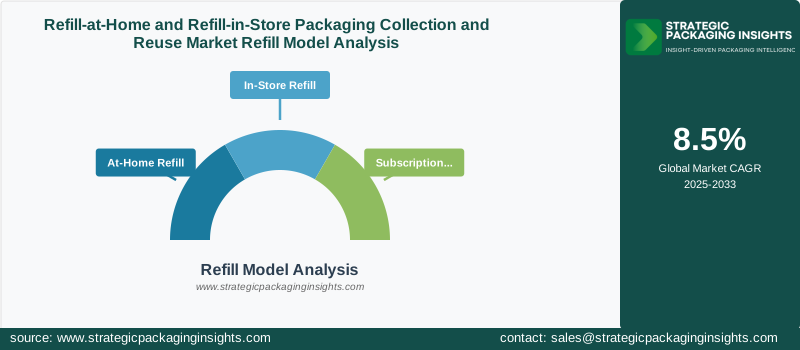
Subscription refill is another emerging trend in the market, offering consumers the convenience of having refillable products delivered directly to their doorstep. This model is particularly appealing to busy consumers who are looking for a hassle-free way to maintain their supply of essential products. Companies that can effectively leverage these refill models and offer innovative solutions that cater to diverse consumer needs are well-positioned to capture a significant share of the growing refill packaging market. As the market continues to evolve, companies that can adapt to changing consumer demands and offer convenient, user-friendly refill solutions are likely to succeed in the competitive landscape.
Packaging Type Analysis
The Packaging Type segment of the Refill-at-Home and Refill-in-Store Packaging Collection and Reuse market is divided into refill pouches, refill pods, and reusable bottles. Refill pouches are gaining popularity due to their lightweight and flexible design, which makes them easy to store and transport. These pouches are particularly appealing to consumers who are looking for convenient, eco-friendly packaging solutions that reduce waste and promote sustainability. Refill pods, on the other hand, offer a convenient and mess-free way to refill products, making them an attractive option for consumers who prioritize convenience and ease of use.
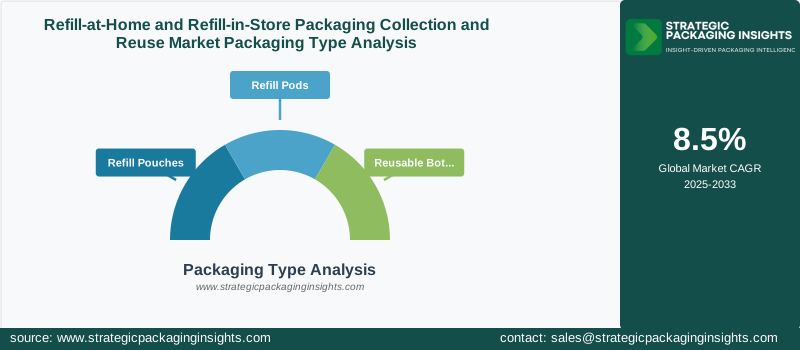
Reusable bottles are another popular packaging type in the market, offering consumers a durable and sustainable alternative to single-use plastic bottles. These bottles are particularly appealing to environmentally conscious consumers who are looking for ways to reduce their environmental footprint and promote sustainability. Companies that can effectively leverage these packaging types and offer innovative solutions that cater to diverse consumer needs are well-positioned to capture a significant share of the growing refill packaging market. As the market continues to evolve, companies that can adapt to changing consumer demands and offer convenient, user-friendly packaging solutions are likely to succeed in the competitive landscape.
Application Analysis
The Application segment of the Refill-at-Home and Refill-in-Store Packaging Collection and Reuse market is divided into home care, personal care, beverages, and food. Home care products, such as cleaning supplies and detergents, are a significant application area for refillable packaging solutions, as consumers look for ways to reduce waste and promote sustainability in their daily lives. Personal care products, such as shampoos and lotions, are also a key application area, as consumers seek eco-friendly alternatives to traditional packaging solutions.
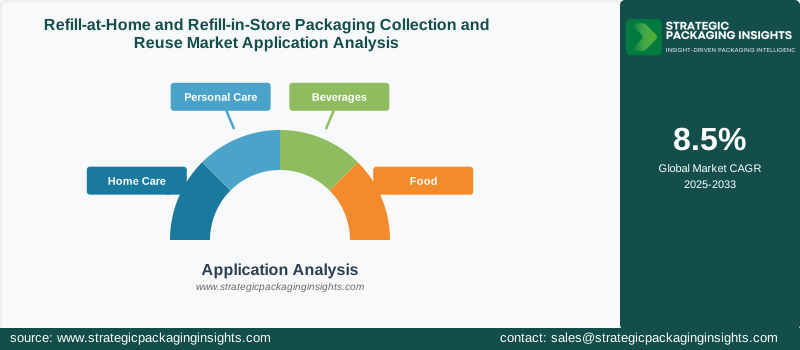
Beverages and food are emerging application areas for refillable packaging solutions, as companies look for ways to reduce packaging waste and promote sustainability in the food and beverage industry. Companies that can effectively leverage these application areas and offer innovative solutions that cater to diverse consumer needs are well-positioned to capture a significant share of the growing refill packaging market. As the market continues to evolve, companies that can adapt to changing consumer demands and offer convenient, user-friendly packaging solutions are likely to succeed in the competitive landscape.
End Use Analysis
The End Use segment of the Refill-at-Home and Refill-in-Store Packaging Collection and Reuse market is divided into FMCG brands, retailers, and consumers. FMCG brands are increasingly adopting refillable packaging solutions as part of their sustainability initiatives, as they look for ways to reduce packaging waste and promote environmental sustainability. Retailers are also playing a key role in the market, offering consumers the opportunity to refill their favorite products at designated retail locations, reducing packaging waste and promoting sustainability.
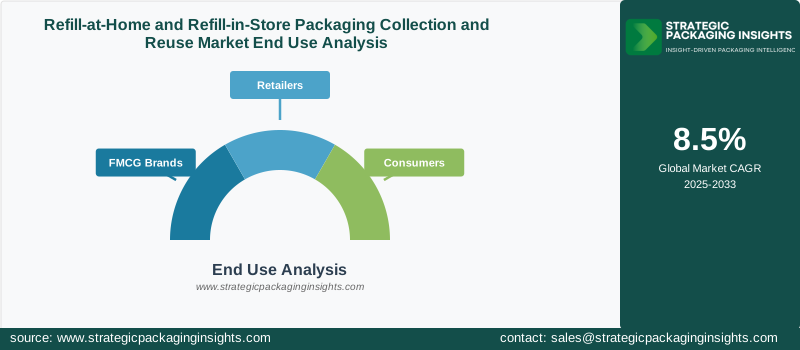
Consumers are a key driver of the market, as they seek eco-friendly alternatives to traditional packaging solutions and look for ways to reduce their environmental footprint. Companies that can effectively leverage these end-use segments and offer innovative solutions that cater to diverse consumer needs are well-positioned to capture a significant share of the growing refill packaging market. As the market continues to evolve, companies that can adapt to changing consumer demands and offer convenient, user-friendly packaging solutions are likely to succeed in the competitive landscape.
Refill-at-Home and Refill-in-Store Packaging Collection and Reuse Market Segments
The Refill-at-Home and Refill-in-Store Packaging Collection and Reuse market has been segmented on the basis ofRefill Model
- At-Home Refill
- In-Store Refill
- Subscription Refill
Packaging Type
- Refill Pouches
- Refill Pods
- Reusable Bottles
Application
- Home Care
- Personal Care
- Beverages
- Food
End Use
- FMCG Brands
- Retailers
- Consumers
Region
- Asia Pacific
- North America
- Latin America
- Europe
- Middle East & Africa




