


Reefer Container Market Outlook
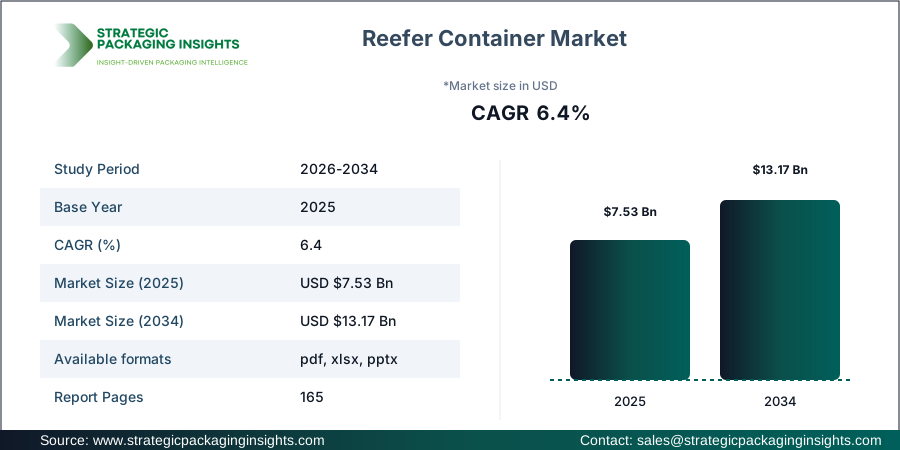
The Reefer Container market size was valued at USD 7.53 billion in 2025 and is anticipated to reach USD 13.17 billion by 2034, growing at a CAGR of 6.4% during the forecast period according to Strategic Packaging Insights. The market is witnessing robust growth driven by the increasing demand for temperature-sensitive goods, particularly in the food and pharmaceutical sectors. Companies like Maersk Container Industry and Carrier Transicold are at the forefront, innovating to meet the rising demand for efficient and reliable cold chain solutions. The expansion of global trade and the need for efficient logistics solutions are further propelling the market, with significant investments in advanced reefer technologies.
One of the most impactful drivers of the Reefer Container market is the stringent regulations on food safety and pharmaceutical transportation. Governments worldwide are enforcing stricter guidelines to ensure the safe transport of perishable goods, which is boosting the demand for advanced reefer containers. According to industry reports, the adoption of controlled atmosphere reefer containers is on the rise, as they offer enhanced preservation capabilities for sensitive cargo. This trend is supported by the increasing consumer preference for fresh and high-quality products, which is compelling companies to invest in state-of-the-art reefer technologies to maintain competitive advantage.
Report Scope
| Attributes | Details |
| Report Title | Reefer Container Market Size, Future Growth and Forecast 2034 |
| Container Type | Standard Reefer, Controlled Atmosphere Reefer, Cryogenic Reefer |
| Size | 20-Foot, 40-Foot, High Cube |
| Application | Food, Pharmaceuticals, Chemicals, Flowers |
| End Use | Shipping Lines, Logistics Providers, Food Exporters, Pharma Companies |
| Region | Asia Pacific, North America, Latin America, Europe, Middle East & Africa |
| Base Year | 2025 |
| Historic Period | 2018-2024 |
| Forecast Period | 2026-2034 |
| Number of Pages | 165 |
| Customization Available | Yes* |
Sustainability & Circular Economy Analysis
Sustainability initiatives are significantly shaping the reefer container market, with a strong focus on reducing carbon footprints and enhancing energy efficiency. Companies are increasingly adopting recyclable materials and eco-friendly innovations in container manufacturing to align with global environmental standards. The integration of lightweight materials not only reduces fuel consumption but also enhances the overall efficiency of transportation. As consumers become more environmentally conscious, there is a growing demand for sustainable packaging solutions, prompting manufacturers to invest in green technologies and sustainable practices.
The circular economy is influencing the reefer container market by encouraging the reuse and recycling of containers. Extended Producer Responsibility (EPR) policies are pushing companies to take accountability for the entire lifecycle of their products, including end-of-life disposal. This has led to the development of innovative waste reduction strategies and the adoption of reusable packaging solutions. Companies are also focusing on reducing their carbon footprint by optimizing supply chain operations and investing in renewable energy sources, which not only supports sustainability goals but also enhances long-term market competitiveness.
Regulatory compliance is a critical factor driving sustainability trends in the reefer container market. Governments are implementing stringent regulations to ensure that packaging materials meet environmental standards, which is influencing design and manufacturing decisions. Companies are investing in research and development to create eco-friendly materials that comply with these regulations while maintaining product integrity. This shift towards sustainable practices is not only beneficial for the environment but also offers a competitive edge in the market, as consumers increasingly prefer brands that demonstrate a commitment to sustainability.
Packaging Value Chain & Supply Chain Analysis
The reefer container market's value chain is complex, involving multiple stakeholders from raw material suppliers to end-users. Raw material sourcing is critical, as the quality and availability of materials directly impact production capabilities and costs. Packaging converters and manufacturers play a pivotal role in transforming raw materials into finished products, with a focus on innovation and efficiency. Companies like Thermo King and Daikin Industries are investing in advanced manufacturing technologies to enhance production efficiency and meet the growing demand for high-quality reefer containers.
Logistics and distribution channels are integral components of the reefer container supply chain, ensuring the timely and efficient delivery of products to end-users. Strategic partnerships between manufacturers, logistics providers, and retailers are essential for optimizing supply chain operations and enhancing market competitiveness. Companies are adopting advanced inventory management systems and procurement strategies to ensure a steady supply of materials and minimize disruptions. The localization of supply chains is also gaining traction, as companies seek to reduce transportation costs and enhance supply chain resilience.
Recycling networks are becoming increasingly important in the reefer container market, as companies strive to meet sustainability goals and comply with regulatory requirements. The integration of recycling processes into the supply chain not only supports environmental objectives but also offers cost-saving opportunities. Companies are exploring innovative recycling technologies and collaborating with recycling partners to enhance the efficiency of recycling operations. This focus on sustainability and supply chain optimization is driving long-term growth and competitiveness in the reefer container market.
Opportunities & Threats
The reefer container market presents significant opportunities for growth, driven by the increasing demand for temperature-controlled logistics solutions. The expansion of global trade and the rise in e-commerce are creating new avenues for market expansion, as companies seek efficient and reliable solutions for transporting perishable goods. The growing focus on food safety and quality is also driving demand for advanced reefer technologies, offering opportunities for innovation and differentiation. Companies that invest in research and development to create cutting-edge solutions are well-positioned to capitalize on these opportunities and gain a competitive edge in the market.
Technological advancements in reefer container design and manufacturing are opening up new opportunities for market players. The integration of IoT and smart technologies is enhancing the efficiency and reliability of reefer containers, offering real-time monitoring and control capabilities. This is particularly beneficial for industries such as pharmaceuticals and food, where precise temperature control is critical. Companies that leverage these technologies to offer innovative solutions are likely to see increased demand and market share. Additionally, the growing emphasis on sustainability is creating opportunities for companies to develop eco-friendly and energy-efficient reefer containers.
Despite the promising growth prospects, the reefer container market faces several challenges that could hinder its expansion. One of the primary restrainers is the high cost of advanced reefer technologies, which can be a barrier for small and medium-sized enterprises. Additionally, the market is subject to stringent regulatory requirements, which can increase compliance costs and complexity. Companies must navigate these challenges by investing in cost-effective solutions and ensuring compliance with regulatory standards. The volatility of raw material prices and supply chain disruptions also pose significant threats to market stability and growth.
Drivers & Challenges
The reefer container market is driven by several key factors, including the increasing demand for temperature-sensitive goods and the expansion of global trade. The rise in consumer preference for fresh and high-quality products is driving demand for advanced reefer technologies that ensure the safe and efficient transport of perishable goods. Companies like Maersk and CMA CGM are investing in innovative solutions to meet this demand and maintain a competitive edge. The growing focus on food safety and quality is also a significant driver, as companies seek to comply with stringent regulations and deliver superior products to consumers.
Technological advancements are playing a crucial role in driving the growth of the reefer container market. The integration of IoT and smart technologies is enhancing the efficiency and reliability of reefer containers, offering real-time monitoring and control capabilities. This is particularly beneficial for industries such as pharmaceuticals and food, where precise temperature control is critical. Companies that leverage these technologies to offer innovative solutions are likely to see increased demand and market share. Additionally, the growing emphasis on sustainability is driving companies to develop eco-friendly and energy-efficient reefer containers.
Despite the promising growth prospects, the reefer container market faces several challenges that could hinder its expansion. One of the primary challenges is the high cost of advanced reefer technologies, which can be a barrier for small and medium-sized enterprises. Additionally, the market is subject to stringent regulatory requirements, which can increase compliance costs and complexity. Companies must navigate these challenges by investing in cost-effective solutions and ensuring compliance with regulatory standards. The volatility of raw material prices and supply chain disruptions also pose significant threats to market stability and growth.
Market Share Analysis
The competitive landscape of the reefer container market is characterized by the presence of several key players, each striving to enhance their market share through innovation and strategic partnerships. Companies like Maersk Container Industry, Carrier Transicold, and Thermo King are leading the market with their advanced technologies and extensive product portfolios. These companies are investing heavily in research and development to create cutting-edge solutions that meet the evolving needs of the market. The focus on sustainability and energy efficiency is also driving competition, as companies seek to differentiate themselves through eco-friendly innovations.
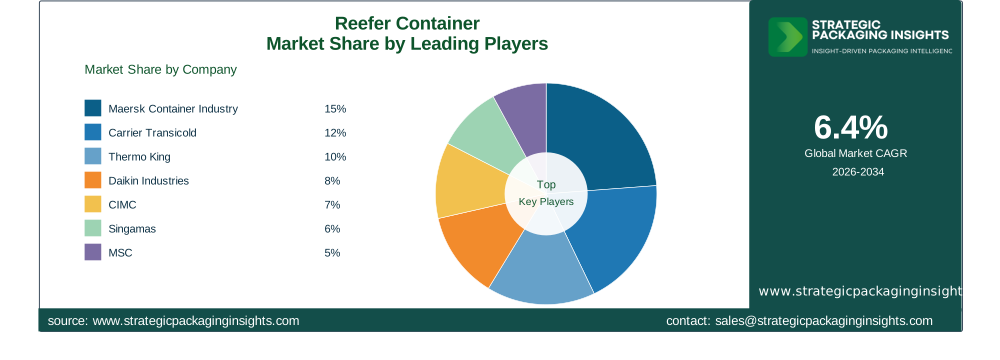
Maersk Container Industry is a prominent player in the reefer container market, known for its innovative solutions and commitment to sustainability. The company offers a wide range of products designed to meet the diverse needs of its customers, with a focus on energy efficiency and environmental responsibility. Carrier Transicold is another key player, renowned for its advanced refrigeration technologies and extensive global presence. The company is dedicated to providing reliable and efficient solutions that enhance the quality and safety of perishable goods during transportation.
Thermo King is a leading provider of temperature-controlled transportation solutions, offering a comprehensive range of products and services to meet the needs of various industries. The company's commitment to innovation and customer satisfaction has earned it a strong reputation in the market. Daikin Industries is also a major player, known for its cutting-edge technologies and focus on sustainability. The company's extensive product portfolio and global reach make it a formidable competitor in the reefer container market.
Other notable companies in the market include CIMC, Singamas, MSC, CMA CGM, and Hapag-Lloyd. These companies are leveraging their extensive industry experience and strategic partnerships to enhance their market position and drive growth. The focus on technological advancements and sustainability is a common theme among these players, as they seek to meet the growing demand for efficient and reliable reefer container solutions. The competitive landscape is expected to remain dynamic, with companies continuously innovating to maintain their competitive edge.
Key Highlights
- Market Size: The reefer container market was valued at USD 7.53 billion in 2025 and is projected to reach USD 13.17 billion by 2034.
- Growth Rate: The market is expected to grow at a CAGR of 6.4% during the forecast period.
- Leading Companies: Key players include Maersk Container Industry, Carrier Transicold, and Thermo King.
- Technological Advancements: Integration of IoT and smart technologies is enhancing container efficiency.
- Sustainability Focus: Companies are investing in eco-friendly and energy-efficient solutions.
- Regulatory Compliance: Stringent regulations are driving demand for advanced reefer technologies.
- Regional Insights: Asia Pacific is expected to witness significant growth due to expanding trade activities.
Reefer Container Market Segments Insights

Container Type Analysis
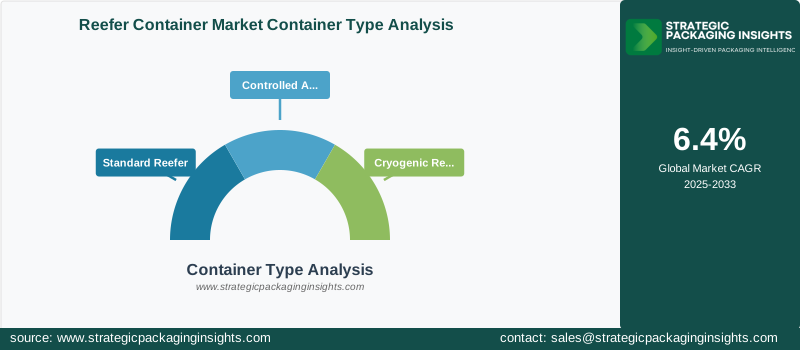
The reefer container market is segmented by container type into Standard Reefer, Controlled Atmosphere Reefer, and Cryogenic Reefer. Standard Reefer containers are widely used due to their versatility and cost-effectiveness, making them a popular choice for transporting a variety of perishable goods. However, the demand for Controlled Atmosphere Reefer containers is on the rise, driven by the need for enhanced preservation capabilities for sensitive cargo. These containers offer advanced features that maintain optimal conditions for perishable goods, ensuring their quality and safety during transportation. Cryogenic Reefer containers, although less common, are gaining traction in niche markets where ultra-low temperature control is required.
Companies like Maersk and Carrier Transicold are investing in the development of advanced reefer technologies to meet the evolving needs of the market. The focus on innovation and sustainability is driving competition, as companies seek to differentiate themselves through eco-friendly and energy-efficient solutions. The integration of IoT and smart technologies is also enhancing the efficiency and reliability of reefer containers, offering real-time monitoring and control capabilities. This is particularly beneficial for industries such as pharmaceuticals and food, where precise temperature control is critical.
Size Analysis
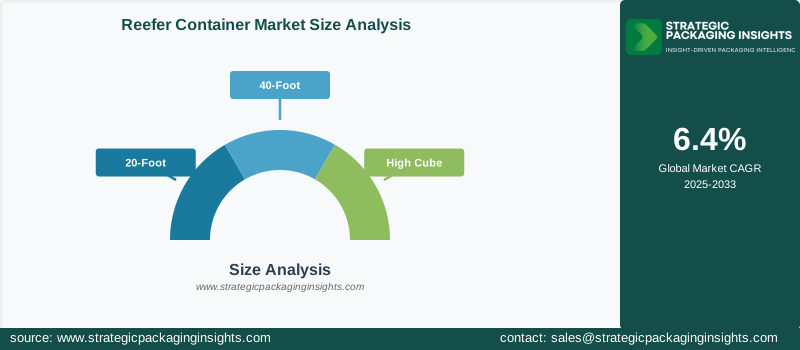
The reefer container market is segmented by size into 20-Foot, 40-Foot, and High Cube containers. The 40-Foot containers are the most popular choice due to their larger capacity and cost-effectiveness, making them ideal for transporting bulk quantities of perishable goods. High Cube containers are also gaining popularity, offering additional space for larger shipments. The demand for 20-Foot containers remains steady, particularly in regions where smaller shipments are more common. Companies are investing in the development of innovative container designs to enhance capacity and efficiency, meeting the diverse needs of their customers.
The focus on sustainability is influencing container design, with companies adopting lightweight materials and eco-friendly innovations to reduce fuel consumption and enhance transportation efficiency. The integration of advanced technologies is also enhancing the functionality of containers, offering features such as real-time monitoring and temperature control. This is driving demand for high-quality reefer containers that ensure the safe and efficient transport of perishable goods, meeting the growing needs of industries such as food and pharmaceuticals.
Application Analysis
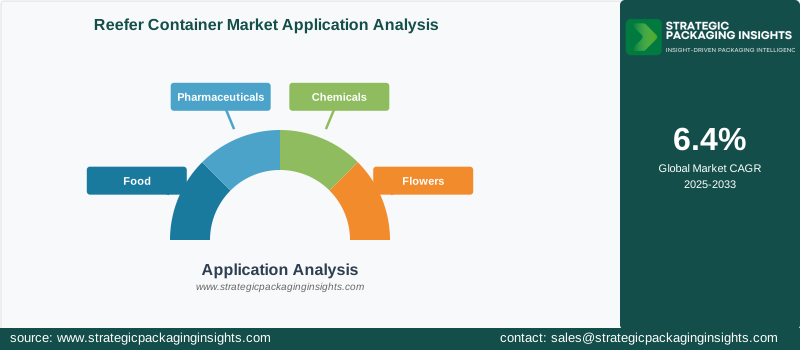
The reefer container market is segmented by application into Food, Pharmaceuticals, Chemicals, and Flowers. The food industry is the largest segment, driven by the increasing demand for fresh and high-quality products. The need for efficient and reliable cold chain solutions is also driving demand in the pharmaceutical industry, where precise temperature control is critical for maintaining the integrity of sensitive products. The chemicals and flowers segments are also experiencing growth, as companies seek advanced reefer technologies to ensure the safe transport of their products.
Companies are investing in the development of innovative solutions to meet the diverse needs of these industries, with a focus on sustainability and efficiency. The integration of IoT and smart technologies is enhancing the functionality of reefer containers, offering real-time monitoring and control capabilities. This is particularly beneficial for industries such as pharmaceuticals and food, where precise temperature control is critical. The growing emphasis on sustainability is also driving demand for eco-friendly and energy-efficient reefer containers, offering opportunities for innovation and differentiation.
End Use Analysis
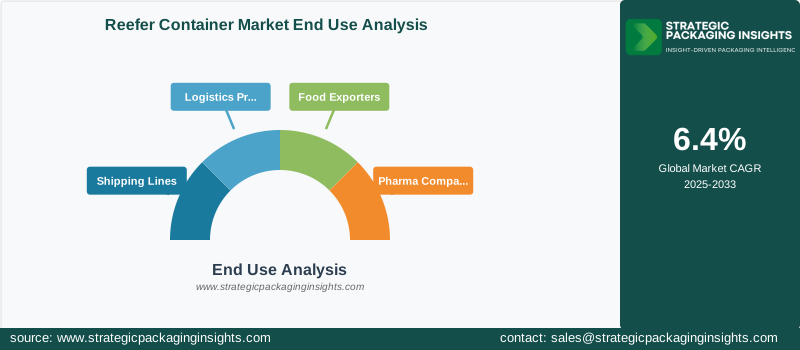
The reefer container market is segmented by end use into Shipping Lines, Logistics Providers, Food Exporters, and Pharma Companies. Shipping lines and logistics providers are the largest end-users, driven by the need for efficient and reliable cold chain solutions to meet the growing demand for temperature-sensitive goods. Food exporters and pharma companies are also significant end-users, as they seek advanced reefer technologies to ensure the safe and efficient transport of their products.
Companies are investing in the development of innovative solutions to meet the diverse needs of these end-users, with a focus on sustainability and efficiency. The integration of IoT and smart technologies is enhancing the functionality of reefer containers, offering real-time monitoring and control capabilities. This is particularly beneficial for industries such as pharmaceuticals and food, where precise temperature control is critical. The growing emphasis on sustainability is also driving demand for eco-friendly and energy-efficient reefer containers, offering opportunities for innovation and differentiation.
Reefer Container Market Segments
The Reefer Container market has been segmented on the basis ofContainer Type
- Standard Reefer
- Controlled Atmosphere Reefer
- Cryogenic Reefer
Size
- 20-Foot
- 40-Foot
- High Cube
Application
- Food
- Pharmaceuticals
- Chemicals
- Flowers
End Use
- Shipping Lines
- Logistics Providers
- Food Exporters
- Pharma Companies
Region
- Asia Pacific
- North America
- Latin America
- Europe
- Middle East & Africa




