


Recycled Plastic Products Market Outlook
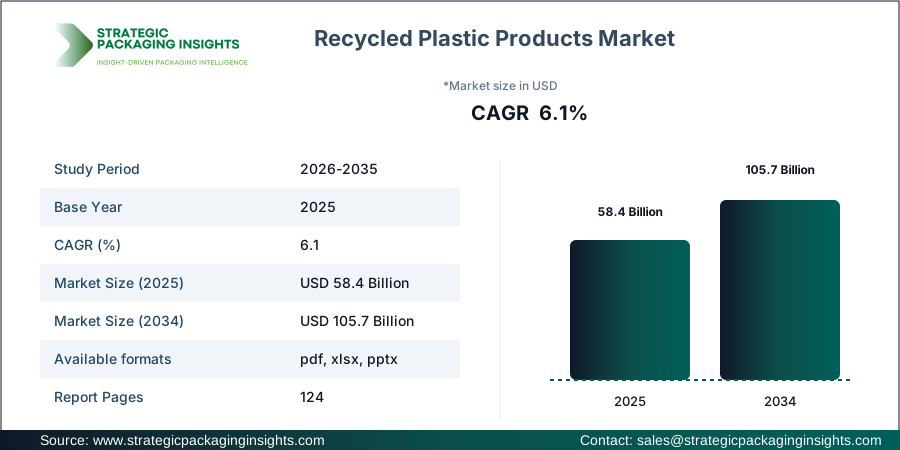
The Recycled Plastic Products market size was valued at USD $58.4 Billion in 2025 and is anticipated to reach USD $105.7 Billion by 2035, growing at a CAGR of 6.1% % during the forecast period according to Strategic Packaging Insights.
The increasing emphasis on sustainability and environmental conservation is a significant driver for the Recycled Plastic Products market. Governments and organizations worldwide are implementing regulations and initiatives to promote recycling and reduce plastic waste. For instance, the European Union's Circular Economy Action Plan aims to increase the use of recycled materials, thereby boosting demand for recycled plastic products. This regulatory push, combined with consumer awareness and corporate sustainability goals, is expected to drive market growth.
Report Scope
| Attributes | Details |
| Report Title | Recycled Plastic Products Market Projected to Scale to 105.7 Billion by 2035, Assesses Strategic Packaging Insights |
| By Product Type | Recycled Plastic Bottles, Recycled Plastic Containers, Recycled Plastic Bags, Recycled Plastic Films, Recycled Plastic Sheets, Recycled Plastic Pipes, Recycled Plastic Lumber, Recycled Plastic Furniture, Recycled Plastic Automotive Components, Other Recycled Plastic Products |
| By Plastic Type | Polyethylene Terephthalate (PET), High-Density Polyethylene (HDPE), Low-Density Polyethylene (LDPE), Polypropylene (PP), Polystyrene (PS), Polyvinyl Chloride (PVC), Other Plastics |
| By Recycling Process | Mechanical Recycling, Chemical Recycling, Solvent-Based Recycling, Pyrolysis-Based Recycling, Depolymerization |
| By Source | Post-Consumer Recycled Plastic, Post-Industrial Recycled Plastic, Pre-Consumer Recycled Plastic |
| By Application | Packaging, Building and Construction, Automotive, Consumer Goods, Textiles, Agriculture, Electronics, Household Products, Industrial Products |
| By End Use Industry | Food and Beverage, Consumer Goods, Construction, Automotive, Healthcare, Agriculture, Electronics, Industrial Manufacturing, Retail |
| By Product Form | Recycled Plastic Pellets, Recycled Plastic Flakes, Recycled Plastic Sheets, Recycled Plastic Rolls, Finished Plastic Products |
| By Grade | Food Grade, Industrial Grade, General Purpose Grade, Engineering Grade |
| By Region | North America, Europe, Asia-Pacific, Latin America, Middle East and Africa |
| Base Year | 2025 |
| Historic Period | 2018-2024 |
| Forecast Period | 2026-2035 |
| Number of Pages | 124 |
| Customization Available | Yes* |
Market Trends Analysis
The Recycled Plastic Products market is witnessing a shift towards more sustainable and eco-friendly solutions. Companies are increasingly adopting advanced recycling technologies such as chemical recycling and pyrolysis to enhance the quality and efficiency of recycled plastics. This trend is driven by the need to meet stringent regulatory requirements and consumer demand for sustainable products. Additionally, the integration of digital technologies in recycling processes is improving operational efficiency and traceability, further supporting market growth.
Another significant trend is the growing demand for recycled plastic products in the packaging industry. As brands and retailers strive to meet sustainability targets, there is a rising preference for packaging solutions made from recycled materials. This shift is encouraging manufacturers to innovate and develop new recycled plastic products that offer improved performance and aesthetics. The trend towards lightweighting and mono-material packaging is also influencing product development and procurement strategies in the industry.
Industry Transformation Analysis
The Recycled Plastic Products industry is undergoing a transformation driven by technological advancements and regulatory changes. The adoption of advanced recycling technologies is enhancing the quality and performance of recycled plastics, enabling their use in a wider range of applications. This technological shift is also facilitating the development of new business models, such as closed-loop recycling systems, which are gaining traction in the industry.
Regulatory frameworks are playing a crucial role in shaping the industry's evolution. Governments worldwide are implementing policies to promote recycling and reduce plastic waste, such as extended producer responsibility (EPR) schemes and recycling targets. These regulations are encouraging companies to invest in recycling infrastructure and technologies, leading to increased capacity and efficiency in the industry. The focus on sustainability is also driving collaboration across the value chain, with stakeholders working together to develop innovative solutions and improve recycling rates.
Trends & Disruptions Impacting Customers' Customers
Downstream customers, including packaging manufacturers and consumer goods companies, are increasingly prioritizing sustainability in their purchasing decisions. This shift is driven by consumer demand for eco-friendly products and regulatory pressures to reduce plastic waste. As a result, these companies are seeking suppliers that can provide high-quality recycled plastic products that meet their sustainability goals. This trend is influencing procurement strategies and driving innovation in product development.
The changing needs and expectations of downstream customers are impacting the demand for recycled plastic products. Companies are investing in research and development to create new products that offer improved performance and sustainability. This focus on innovation is opening up new market opportunities and driving competition in the industry. Suppliers that can offer reliable and high-quality recycled plastic products are well-positioned to capitalize on these opportunities and strengthen their market position.
Recycled Plastic Products Market Ecosystem
The Recycled Plastic Products market ecosystem involves a complex network of stakeholders, including waste collectors, recyclers, manufacturers, and distributors. The value chain begins with the collection and processing of plastic waste, which is then converted into recycled materials through various recycling processes. These materials are used to manufacture a wide range of products, which are distributed to end users across different industries.
Supply chain dependencies and material flows are critical factors in the market ecosystem. The availability and quality of raw materials, as well as the efficiency of recycling processes, directly impact the production and distribution of recycled plastic products. Capacity constraints and procurement relationships also play a significant role in determining market dynamics. As demand for recycled plastic products continues to grow, companies are investing in expanding their recycling capabilities and improving supply chain efficiency to meet customer needs.
Analyst Perspective
Analyst Perspective: The Recycled Plastic Products market is poised for significant growth, driven by regulatory mandates and consumer demand for sustainable solutions.
The most important structural change in the industry is the shift towards advanced recycling technologies, which are enhancing the quality and performance of recycled plastics. This technological advancement is creating new opportunities for product development and market expansion.
Companies, investors, and other market participants should closely monitor regulatory developments and technological innovations in the recycling sector. These factors will play a crucial role in shaping the competitive landscape and determining future growth opportunities in the market.
Opportunities & Threats
The Recycled Plastic Products market presents significant opportunities for growth, driven by increasing demand for sustainable solutions across various industries. The packaging sector, in particular, offers substantial potential for expansion, as companies seek to meet sustainability targets and reduce plastic waste. Additionally, advancements in recycling technologies are opening up new applications and markets for recycled plastic products, creating opportunities for innovation and product differentiation.
Technological advancements in recycling processes, such as chemical recycling and pyrolysis, are enhancing the quality and performance of recycled plastics. These innovations are enabling the development of new products and applications, expanding the market potential for recycled plastic products. Companies that invest in these technologies and develop innovative solutions are well-positioned to capitalize on emerging opportunities and gain a competitive edge in the market.
However, the market also faces several threats, including raw material volatility and regulatory uncertainty. Fluctuations in the availability and quality of plastic waste can impact the production and cost of recycled plastic products. Additionally, changes in regulatory frameworks and recycling targets can create challenges for companies in terms of compliance and operational efficiency.
Competition from virgin plastic products and alternative materials also poses a threat to the market. Companies must continuously innovate and improve the quality and performance of recycled plastic products to remain competitive. Furthermore, the high capital requirements for recycling infrastructure and technology investments can be a barrier to entry for new players in the market.
Drivers & Challenges
The Recycled Plastic Products market is driven by several key factors, including regulatory mandates and consumer demand for sustainable solutions. Governments worldwide are implementing policies to promote recycling and reduce plastic waste, such as extended producer responsibility (EPR) schemes and recycling targets. These regulations are encouraging companies to invest in recycling infrastructure and technologies, leading to increased capacity and efficiency in the industry. Additionally, consumer awareness and demand for eco-friendly products are driving companies to adopt sustainable practices and develop innovative recycled plastic products.
Technological advancements in recycling processes are also driving market growth. The development of advanced recycling technologies, such as chemical recycling and pyrolysis, is enhancing the quality and performance of recycled plastics, enabling their use in a wider range of applications. This technological shift is creating new opportunities for product development and market expansion, as companies seek to meet the growing demand for sustainable solutions.
Despite the positive drivers, the market faces several challenges, including raw material volatility and regulatory uncertainty. Fluctuations in the availability and quality of plastic waste can impact the production and cost of recycled plastic products. Additionally, changes in regulatory frameworks and recycling targets can create challenges for companies in terms of compliance and operational efficiency. Companies must navigate these challenges to remain competitive and capitalize on emerging opportunities in the market.
Packaging Market Economics
The economics of the Recycled Plastic Products market are influenced by several factors, including raw material costs, recycling process efficiency, and product demand. The cost of raw materials, such as plastic waste, can fluctuate based on availability and quality, impacting the overall cost of recycled plastic products. Additionally, the efficiency of recycling processes, such as mechanical and chemical recycling, plays a crucial role in determining production costs and product quality.
Conversion costs, including energy and labor, also impact the economics of the market. Companies must optimize their recycling processes to reduce costs and improve efficiency. The demand for recycled plastic products, particularly in the packaging sector, is driving investment in recycling infrastructure and technology, leading to increased capacity and production efficiency. As the market continues to grow, companies must balance cost considerations with sustainability goals to remain competitive.
Packaging Value Chain & Cost Analysis
The value chain for Recycled Plastic Products involves several key stages, including raw material collection, recycling process, product manufacturing, and distribution. Each stage plays a crucial role in determining the overall cost and efficiency of the market. The availability and quality of raw materials, such as plastic waste, directly impact the cost and quality of recycled plastic products. Efficient recycling processes, such as mechanical and chemical recycling, are essential for producing high-quality products at competitive costs.
Conversion costs, including energy, labor, and logistics, also play a significant role in the value chain. Companies must optimize their operations to reduce costs and improve efficiency. The demand for recycled plastic products, particularly in the packaging sector, is driving investment in recycling infrastructure and technology, leading to increased capacity and production efficiency. As the market continues to grow, companies must balance cost considerations with sustainability goals to remain competitive.
Unit Economics & Substrate Cost Analysis
The unit economics of Recycled Plastic Products are influenced by several factors, including raw material costs, recycling process efficiency, and product demand. The cost of raw materials, such as plastic waste, can fluctuate based on availability and quality, impacting the overall cost of recycled plastic products. Additionally, the efficiency of recycling processes, such as mechanical and chemical recycling, plays a crucial role in determining production costs and product quality.
Conversion costs, including energy and labor, also impact the unit economics of the market. Companies must optimize their recycling processes to reduce costs and improve efficiency. The demand for recycled plastic products, particularly in the packaging sector, is driving investment in recycling infrastructure and technology, leading to increased capacity and production efficiency. As the market continues to grow, companies must balance cost considerations with sustainability goals to remain competitive.
Packaging Regulatory & Sustainability Analysis
The regulatory landscape for Recycled Plastic Products is shaped by several key factors, including government policies, recycling targets, and sustainability goals. Governments worldwide are implementing policies to promote recycling and reduce plastic waste, such as extended producer responsibility (EPR) schemes and recycling targets. These regulations are encouraging companies to invest in recycling infrastructure and technologies, leading to increased capacity and efficiency in the industry.
Sustainability goals are also driving companies to adopt sustainable practices and develop innovative recycled plastic products. Consumer awareness and demand for eco-friendly products are influencing companies' sustainability strategies and product development efforts. As the market continues to grow, companies must navigate the regulatory landscape and align their sustainability goals with market demands to remain competitive.
Strategic Mergers, Acquisitions & Capacity Expansions
The Recycled Plastic Products market has witnessed several strategic developments in recent years, including mergers, acquisitions, and capacity expansions. Companies are investing in recycling infrastructure and technologies to enhance their capabilities and meet the growing demand for recycled plastic products. For example, Veolia and SUEZ have expanded their recycling operations to increase capacity and improve efficiency.
Partnerships and collaborations are also playing a crucial role in the market's growth. Companies are working together to develop innovative solutions and improve recycling rates. For instance, Loop Industries has partnered with major brands to develop sustainable packaging solutions using recycled plastics. These strategic developments are driving market growth and creating new opportunities for companies to expand their market presence and strengthen their competitive position.
Strategic Action Directives
Brand Packaging Engineers & Sustainability Directors: Focus on material selection and recyclability to meet sustainability goals. Consider integrating PCR materials into packaging designs to enhance sustainability credentials.
Converter Operations & Extrusion Leads: Optimize line speed and tooling to improve efficiency and reduce scrap. Address PCR variability to ensure consistent product quality and performance.
Procurement & Material Sourcing Managers: Diversify supplier base and secure resin contracts to mitigate supply chain risks. Consider price indexing and PCR contracts to manage cost fluctuations.
Investors: Monitor capacity expansions and technology investments in the recycling sector. Evaluate market concentration and competitive dynamics to identify growth opportunities and potential risks.
Market Share Analysis
The Recycled Plastic Products market is characterized by a diverse competitive landscape, with several key players operating across different segments. Companies such as Veolia, Waste Management, and SUEZ are leading the market with their extensive recycling capabilities and strong market presence. These companies are investing in advanced recycling technologies and expanding their operations to meet the growing demand for recycled plastic products.
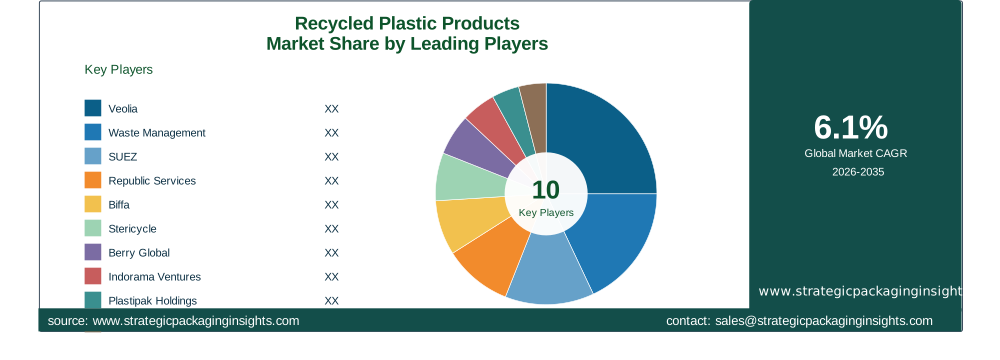
Other notable players in the market include Republic Services, Biffa, and Stericycle, which are focusing on enhancing their recycling infrastructure and capabilities. These companies are leveraging their expertise in waste management and recycling to expand their market presence and strengthen their competitive position. Additionally, companies like Berry Global and Indorama Ventures are investing in innovative recycling solutions and partnerships to drive market growth and capture new opportunities.
The competitive landscape is also influenced by the presence of specialized players such as MBA Polymers, KW Plastics, and PureCycle Technologies, which are focusing on developing high-quality recycled plastic products for specific applications. These companies are leveraging their technological expertise and industry knowledge to differentiate themselves in the market and capture niche opportunities.
Overall, the market is characterized by intense competition and a focus on innovation and sustainability. Companies are investing in research and development to create new products and applications, while also expanding their recycling capabilities to meet the growing demand for sustainable solutions. The competitive dynamics are expected to evolve as companies continue to invest in advanced recycling technologies and expand their market presence.
Key Highlights
- Largest Region: Asia Pacific
- Fastest-Growing Region: Asia Pacific
- Largest Segment: Packaging
- Fastest-Growing Segment: Packaging
- Base-year market size: USD 58.4 Billion
- Forecast-year market size: USD 105.7 Billion
- CAGR: 6.1%
- Important application: Packaging
- Major end-use industry: Consumer Goods
- Major market driver: Sustainability initiatives and regulatory mandates
Regional Insights
The Recycled Plastic Products market is experiencing significant growth across major regions, driven by increasing demand for sustainable solutions and regulatory mandates. Asia Pacific is the largest and fastest-growing region, with countries like China and India leading the market due to their large population and growing industrial base. The region's focus on sustainability and environmental conservation is driving demand for recycled plastic products, particularly in the packaging and construction sectors.
North America
North America is a key market for recycled plastic products, driven by strong regulatory frameworks and consumer demand for sustainable solutions. The United States and Canada are leading the market, with a focus on reducing plastic waste and promoting recycling. The region's advanced recycling infrastructure and technological capabilities are supporting market growth and innovation.
The demand for recycled plastic products in North America is driven by the packaging, automotive, and consumer goods sectors. Companies are investing in recycling technologies and infrastructure to meet the growing demand for sustainable solutions. The region's focus on sustainability and environmental conservation is expected to drive market growth in the coming years.
Europe
Europe is a significant market for recycled plastic products, driven by stringent regulatory frameworks and sustainability goals. The European Union's Circular Economy Action Plan is promoting the use of recycled materials and reducing plastic waste, driving demand for recycled plastic products. Countries like Germany, France, and the United Kingdom are leading the market, with a focus on innovation and sustainability.
The demand for recycled plastic products in Europe is driven by the packaging, construction, and automotive sectors. Companies are investing in advanced recycling technologies and partnerships to meet the growing demand for sustainable solutions. The region's focus on sustainability and environmental conservation is expected to drive market growth in the coming years.
Asia Pacific
Asia Pacific is the largest and fastest-growing region for recycled plastic products, driven by increasing demand for sustainable solutions and regulatory mandates. Countries like China and India are leading the market, with a focus on reducing plastic waste and promoting recycling. The region's large population and growing industrial base are driving demand for recycled plastic products, particularly in the packaging and construction sectors.
The demand for recycled plastic products in Asia Pacific is driven by the packaging, construction, and consumer goods sectors. Companies are investing in recycling technologies and infrastructure to meet the growing demand for sustainable solutions. The region's focus on sustainability and environmental conservation is expected to drive market growth in the coming years.
Latin America
Latin America is an emerging market for recycled plastic products, driven by increasing demand for sustainable solutions and regulatory mandates. Countries like Brazil and Mexico are leading the market, with a focus on reducing plastic waste and promoting recycling. The region's growing industrial base and focus on sustainability are driving demand for recycled plastic products, particularly in the packaging and construction sectors.
The demand for recycled plastic products in Latin America is driven by the packaging, construction, and consumer goods sectors. Companies are investing in recycling technologies and infrastructure to meet the growing demand for sustainable solutions. The region's focus on sustainability and environmental conservation is expected to drive market growth in the coming years.
Middle East & Africa
The Middle East & Africa is an emerging market for recycled plastic products, driven by increasing demand for sustainable solutions and regulatory mandates. Countries like South Africa and the United Arab Emirates are leading the market, with a focus on reducing plastic waste and promoting recycling. The region's growing industrial base and focus on sustainability are driving demand for recycled plastic products, particularly in the packaging and construction sectors.
The demand for recycled plastic products in the Middle East & Africa is driven by the packaging, construction, and consumer goods sectors. Companies are investing in recycling technologies and infrastructure to meet the growing demand for sustainable solutions. The region's focus on sustainability and environmental conservation is expected to drive market growth in the coming years.
Recycled Plastic Products Market Segments Insights

Recycled Plastic Bottles Analysis
The demand for recycled plastic bottles is driven by the packaging industry's focus on sustainability and reducing plastic waste. Companies are investing in advanced recycling technologies to improve the quality and performance of recycled plastic bottles, enabling their use in a wider range of applications. The growing consumer awareness and demand for eco-friendly products are also driving market growth.
Recycled plastic bottles are widely used in the food and beverage industry, where sustainability and regulatory compliance are key considerations. Companies are developing innovative solutions to meet the growing demand for sustainable packaging, creating new opportunities for market expansion. The focus on reducing plastic waste and promoting recycling is expected to drive demand for recycled plastic bottles in the coming years.
Recycled Plastic Containers Analysis
The demand for recycled plastic containers is driven by the packaging industry's focus on sustainability and reducing plastic waste. Companies are investing in advanced recycling technologies to improve the quality and performance of recycled plastic containers, enabling their use in a wider range of applications. The growing consumer awareness and demand for eco-friendly products are also driving market growth.
Recycled plastic containers are widely used in the food and beverage industry, where sustainability and regulatory compliance are key considerations. Companies are developing innovative solutions to meet the growing demand for sustainable packaging, creating new opportunities for market expansion. The focus on reducing plastic waste and promoting recycling is expected to drive demand for recycled plastic containers in the coming years.
Recycled Plastic Bags Analysis
The demand for recycled plastic bags is driven by the packaging industry's focus on sustainability and reducing plastic waste. Companies are investing in advanced recycling technologies to improve the quality and performance of recycled plastic bags, enabling their use in a wider range of applications. The growing consumer awareness and demand for eco-friendly products are also driving market growth.
Recycled plastic bags are widely used in the retail and consumer goods industries, where sustainability and regulatory compliance are key considerations. Companies are developing innovative solutions to meet the growing demand for sustainable packaging, creating new opportunities for market expansion. The focus on reducing plastic waste and promoting recycling is expected to drive demand for recycled plastic bags in the coming years.
Recycled Plastic Films Analysis
The demand for recycled plastic films is driven by the packaging industry's focus on sustainability and reducing plastic waste. Companies are investing in advanced recycling technologies to improve the quality and performance of recycled plastic films, enabling their use in a wider range of applications. The growing consumer awareness and demand for eco-friendly products are also driving market growth.
Recycled plastic films are widely used in the packaging and construction industries, where sustainability and regulatory compliance are key considerations. Companies are developing innovative solutions to meet the growing demand for sustainable packaging, creating new opportunities for market expansion. The focus on reducing plastic waste and promoting recycling is expected to drive demand for recycled plastic films in the coming years.
Recycled Plastic Sheets Analysis
The demand for recycled plastic sheets is driven by the construction industry's focus on sustainability and reducing plastic waste. Companies are investing in advanced recycling technologies to improve the quality and performance of recycled plastic sheets, enabling their use in a wider range of applications. The growing consumer awareness and demand for eco-friendly products are also driving market growth.
Recycled plastic sheets are widely used in the construction and automotive industries, where sustainability and regulatory compliance are key considerations. Companies are developing innovative solutions to meet the growing demand for sustainable materials, creating new opportunities for market expansion. The focus on reducing plastic waste and promoting recycling is expected to drive demand for recycled plastic sheets in the coming years.
Recycled Plastic Pipes Analysis
The demand for recycled plastic pipes is driven by the construction industry's focus on sustainability and reducing plastic waste. Companies are investing in advanced recycling technologies to improve the quality and performance of recycled plastic pipes, enabling their use in a wider range of applications. The growing consumer awareness and demand for eco-friendly products are also driving market growth.
Recycled plastic pipes are widely used in the construction and agriculture industries, where sustainability and regulatory compliance are key considerations. Companies are developing innovative solutions to meet the growing demand for sustainable materials, creating new opportunities for market expansion. The focus on reducing plastic waste and promoting recycling is expected to drive demand for recycled plastic pipes in the coming years.
Recycled Plastic Lumber Analysis
The demand for recycled plastic lumber is driven by the construction industry's focus on sustainability and reducing plastic waste. Companies are investing in advanced recycling technologies to improve the quality and performance of recycled plastic lumber, enabling their use in a wider range of applications. The growing consumer awareness and demand for eco-friendly products are also driving market growth.
Recycled plastic lumber is widely used in the construction and landscaping industries, where sustainability and regulatory compliance are key considerations. Companies are developing innovative solutions to meet the growing demand for sustainable materials, creating new opportunities for market expansion. The focus on reducing plastic waste and promoting recycling is expected to drive demand for recycled plastic lumber in the coming years.
Recycled Plastic Furniture Analysis
The demand for recycled plastic furniture is driven by the consumer goods industry's focus on sustainability and reducing plastic waste. Companies are investing in advanced recycling technologies to improve the quality and performance of recycled plastic furniture, enabling their use in a wider range of applications. The growing consumer awareness and demand for eco-friendly products are also driving market growth.
Recycled plastic furniture is widely used in the consumer goods and retail industries, where sustainability and regulatory compliance are key considerations. Companies are developing innovative solutions to meet the growing demand for sustainable products, creating new opportunities for market expansion. The focus on reducing plastic waste and promoting recycling is expected to drive demand for recycled plastic furniture in the coming years.
Recycled Plastic Automotive Components Analysis
The demand for recycled plastic automotive components is driven by the automotive industry's focus on sustainability and reducing plastic waste. Companies are investing in advanced recycling technologies to improve the quality and performance of recycled plastic automotive components, enabling their use in a wider range of applications. The growing consumer awareness and demand for eco-friendly products are also driving market growth.
Recycled plastic automotive components are widely used in the automotive and transportation industries, where sustainability and regulatory compliance are key considerations. Companies are developing innovative solutions to meet the growing demand for sustainable materials, creating new opportunities for market expansion. The focus on reducing plastic waste and promoting recycling is expected to drive demand for recycled plastic automotive components in the coming years.
Other Recycled Plastic Products Analysis
The demand for other recycled plastic products is driven by various industries' focus on sustainability and reducing plastic waste. Companies are investing in advanced recycling technologies to improve the quality and performance of recycled plastic products, enabling their use in a wider range of applications. The growing consumer awareness and demand for eco-friendly products are also driving market growth.
Other recycled plastic products are widely used in various industries, where sustainability and regulatory compliance are key considerations. Companies are developing innovative solutions to meet the growing demand for sustainable materials, creating new opportunities for market expansion. The focus on reducing plastic waste and promoting recycling is expected to drive demand for other recycled plastic products in the coming years.
Recycled Plastic Products Market Segments
The Recycled Plastic Products market has been segmented on the basis ofBy Product Type
- Recycled Plastic Bottles
- Recycled Plastic Containers
- Recycled Plastic Bags
- Recycled Plastic Films
- Recycled Plastic Sheets
- Recycled Plastic Pipes
- Recycled Plastic Lumber
- Recycled Plastic Furniture
- Recycled Plastic Automotive Components
- Other Recycled Plastic Products
By Plastic Type
- Polyethylene Terephthalate (PET)
- High-Density Polyethylene (HDPE)
- Low-Density Polyethylene (LDPE)
- Polypropylene (PP)
- Polystyrene (PS)
- Polyvinyl Chloride (PVC)
- Other Plastics
By Recycling Process
- Mechanical Recycling
- Chemical Recycling
- Solvent-Based Recycling
- Pyrolysis-Based Recycling
- Depolymerization
By Source
- Post-Consumer Recycled Plastic
- Post-Industrial Recycled Plastic
- Pre-Consumer Recycled Plastic
By Application
- Packaging
- Building and Construction
- Automotive
- Consumer Goods
- Textiles
- Agriculture
- Electronics
- Household Products
- Industrial Products
By End Use Industry
- Food and Beverage
- Consumer Goods
- Construction
- Automotive
- Healthcare
- Agriculture
- Electronics
- Industrial Manufacturing
- Retail
By Product Form
- Recycled Plastic Pellets
- Recycled Plastic Flakes
- Recycled Plastic Sheets
- Recycled Plastic Rolls
- Finished Plastic Products
By Grade
- Food Grade
- Industrial Grade
- General Purpose Grade
- Engineering Grade
By Region
- North America
- Europe
- Asia-Pacific
- Latin America
- Middle East and Africa




