


Recycled Ocean Plastic Packaging Market Outlook
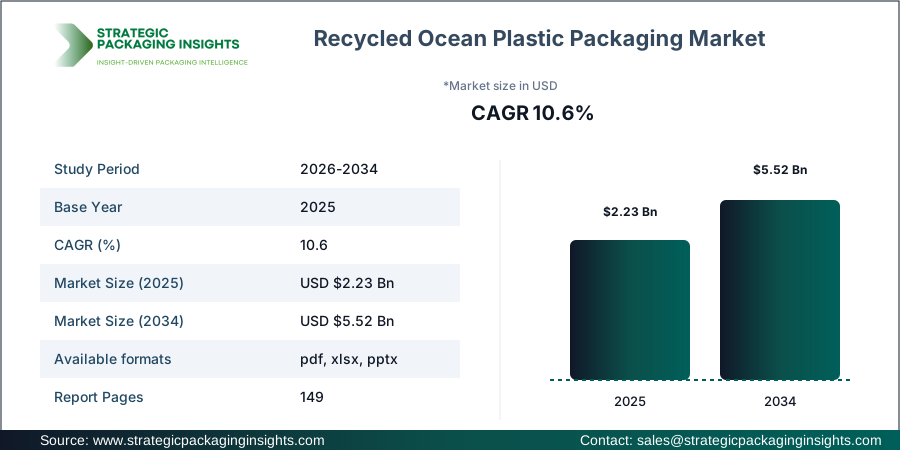
The Recycled Ocean Plastic Packaging market was valued at $2.23 billion in 2025 and is projected to reach $5.52 billion by 2034, growing at a CAGR of 10.6% during the forecast period 2026-2034. This market is driven by increasing environmental awareness and the urgent need to reduce oceanic plastic waste. The demand for sustainable packaging solutions is on the rise, with consumers and companies alike seeking eco-friendly alternatives. The market is also bolstered by technological advancements in recycling processes, which have made it more feasible to convert ocean waste into usable packaging materials. The growing support from governments and international organizations for initiatives aimed at cleaning the oceans further propels market growth.
However, the market faces challenges such as the high cost of recycling ocean plastics compared to traditional materials. Regulatory hurdles and the need for significant infrastructure investments also pose barriers to market expansion. Despite these challenges, the potential for growth remains substantial, driven by the increasing consumer demand for sustainable products and the ongoing innovations in recycling technologies. The market's growth potential is further enhanced by the increasing collaborations between companies and environmental organizations, aiming to create a circular economy for plastics.
Report Scope
| Attributes | Details |
| Report Title | Recycled Ocean Plastic Packaging Market Size, Future Growth and Forecast 2034 |
| By Material Source | Ocean-Bound Plastic, Marine Waste, Recovered Nets |
| By Packaging Type | Bottle, Film, Pouch |
| By Application | Food, Personal Care, Apparel |
| By End Use | Brand Owners, Retailers, Converters |
| Region | Asia Pacific, North America, Latin America, Europe, Middle East & Africa |
| Base Year | 2025 |
| Historic Period | 2018-2024 |
| Forecast Period | 2026-2034 |
| Number of Pages | 149 |
| Customization Available | Yes* |
Opportunities & Threats
The Recycled Ocean Plastic Packaging market presents numerous opportunities, particularly in the realm of innovation and technological advancement. Companies are investing heavily in research and development to improve the efficiency and cost-effectiveness of recycling processes. This includes the development of new technologies that can more effectively sort and process ocean plastics, making it easier to convert them into high-quality packaging materials. Additionally, there is a growing trend towards partnerships between packaging companies and environmental organizations, which can lead to innovative solutions and increased market penetration. The rising consumer awareness and demand for sustainable products also provide a significant opportunity for market growth, as more consumers are willing to pay a premium for eco-friendly packaging.
Another opportunity lies in the expansion of the market into emerging economies, where the demand for sustainable packaging is beginning to take hold. These regions offer untapped potential for growth, as they are increasingly adopting environmental regulations and sustainability practices. Companies that can establish a strong presence in these markets stand to benefit significantly from the growing demand for recycled ocean plastic packaging. Furthermore, the increasing support from governments and international bodies for ocean cleanup initiatives provides a favorable environment for market expansion.
Despite these opportunities, the market faces several threats that could hinder its growth. One of the primary threats is the high cost associated with the collection and recycling of ocean plastics. This cost is often higher than that of traditional plastic production, which can deter companies from investing in recycled ocean plastic packaging. Additionally, there are regulatory challenges that companies must navigate, as different regions have varying standards and requirements for recycled materials. The market also faces competition from other sustainable packaging solutions, such as biodegradable and compostable materials, which could limit the adoption of recycled ocean plastics.
Drivers & Challenges
The primary drivers of the Recycled Ocean Plastic Packaging market include the increasing environmental awareness among consumers and the growing demand for sustainable packaging solutions. As consumers become more conscious of the environmental impact of their purchasing decisions, they are increasingly seeking out products that are packaged in eco-friendly materials. This shift in consumer behavior is driving companies to adopt recycled ocean plastic packaging as a way to differentiate themselves in the market and appeal to environmentally conscious consumers. Additionally, the support from governments and international organizations for initiatives aimed at reducing oceanic plastic waste is providing a significant boost to the market.
Technological advancements in recycling processes are also a major driver of market growth. Innovations in sorting and processing technologies have made it more feasible to convert ocean waste into high-quality packaging materials, reducing the cost and increasing the efficiency of recycling operations. These advancements are enabling companies to produce recycled ocean plastic packaging at a competitive price point, making it more accessible to a wider range of consumers and businesses. Furthermore, the increasing collaborations between companies and environmental organizations are driving the development of new and innovative solutions for ocean plastic recycling.
However, the market faces several challenges that could impede its growth. One of the primary challenges is the high cost associated with the collection and recycling of ocean plastics. This cost is often higher than that of traditional plastic production, which can deter companies from investing in recycled ocean plastic packaging. Additionally, there are regulatory challenges that companies must navigate, as different regions have varying standards and requirements for recycled materials. The market also faces competition from other sustainable packaging solutions, such as biodegradable and compostable materials, which could limit the adoption of recycled ocean plastics.
Market Share Analysis
The competitive landscape of the Recycled Ocean Plastic Packaging market is characterized by the presence of several key players who are actively engaged in the development and production of sustainable packaging solutions. Companies such as Parley, Bureo, Oceanworks, Seaqual Initiative, Aquafil, Tide Ocean, Plastix, Waterhaul, The Ocean Cleanup, and Textil Santanderina are leading the charge in this market, leveraging their expertise and resources to drive innovation and growth. These companies are focused on developing new technologies and processes that can more effectively convert ocean waste into high-quality packaging materials, thereby reducing the environmental impact of plastic waste.
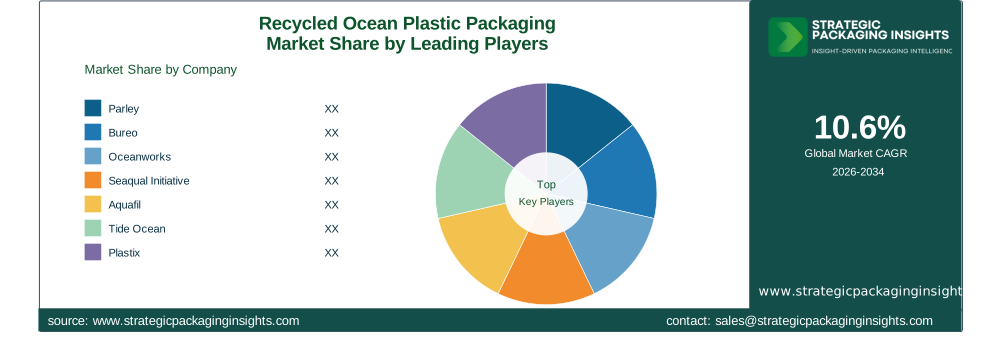
Parley is a prominent player in the market, known for its collaborations with major brands to create sustainable packaging solutions. The company has developed a range of products made from recycled ocean plastics, including packaging materials for consumer goods. Bureo is another key player, specializing in the collection and recycling of discarded fishing nets, which are then transformed into high-quality packaging materials. Oceanworks is focused on creating a global marketplace for recycled ocean plastics, connecting suppliers and buyers to facilitate the adoption of sustainable packaging solutions.
Seaqual Initiative is a collaborative community that works with various stakeholders to clean the oceans and transform marine litter into valuable resources. The company partners with brands and manufacturers to create products made from recycled ocean plastics, including packaging materials. Aquafil is a leading producer of regenerated nylon, which is used in a variety of applications, including packaging. The company is committed to sustainability and has developed innovative processes for recycling ocean plastics into high-quality materials.
Tide Ocean is focused on creating a circular economy for plastics, transforming ocean waste into valuable resources. The company works with various partners to develop sustainable packaging solutions that reduce the environmental impact of plastic waste. Plastix is a recycling company that specializes in converting discarded fishing gear into high-quality packaging materials. The company is committed to sustainability and works with various stakeholders to promote the adoption of recycled ocean plastics.
Key Highlights
- The Recycled Ocean Plastic Packaging market is projected to grow at a CAGR of 10.6% from 2026 to 2034.
- Key players in the market include Parley, Bureo, Oceanworks, Seaqual Initiative, and Aquafil.
- Technological advancements in recycling processes are driving market growth.
- Increasing consumer demand for sustainable packaging solutions is a major market driver.
- The market faces challenges such as high recycling costs and regulatory hurdles.
- Emerging economies present significant growth opportunities for market expansion.
- Collaborations between companies and environmental organizations are fostering innovation.
- Competition from other sustainable packaging solutions could limit market growth.
- Government support for ocean cleanup initiatives is boosting market potential.
- Innovations in sorting and processing technologies are enhancing recycling efficiency.
Top Countries Insights
In the Recycled Ocean Plastic Packaging market, the United States stands out as a leading country, with a market size of approximately $1.2 billion and a CAGR of 12%. The country's strong environmental regulations and consumer demand for sustainable products drive market growth. The U.S. government and various organizations actively support ocean cleanup initiatives, further boosting the market. However, challenges such as high recycling costs and competition from other sustainable packaging solutions persist.
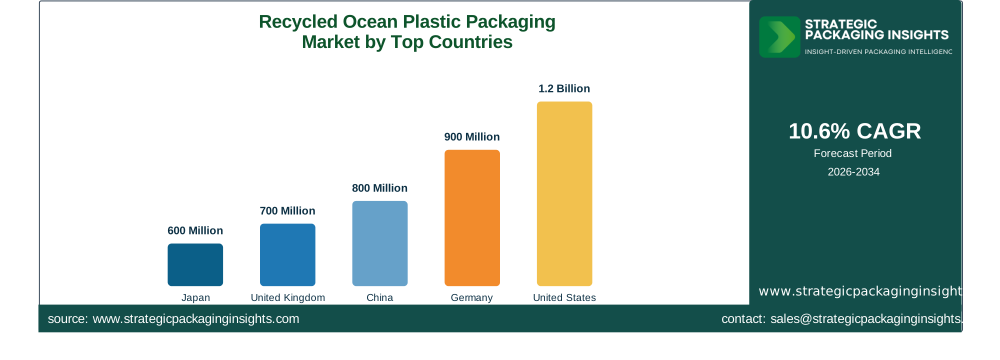
Germany is another key player in the market, with a market size of around $900 million and a CAGR of 9%. The country's stringent environmental policies and commitment to sustainability drive the adoption of recycled ocean plastic packaging. Germany's strong manufacturing sector and technological advancements in recycling processes also contribute to market growth. However, regulatory challenges and high costs remain obstacles to market expansion.
China, with a market size of approximately $800 million and a CAGR of 15%, is a rapidly growing market for recycled ocean plastic packaging. The country's large population and increasing consumer awareness of environmental issues drive demand for sustainable packaging solutions. China's government is also investing in ocean cleanup initiatives and supporting the development of recycling infrastructure, providing a favorable environment for market growth.
In the United Kingdom, the market size is estimated at $700 million, with a CAGR of 7%. The country's strong environmental regulations and consumer demand for sustainable products drive market growth. The UK government actively supports initiatives aimed at reducing oceanic plastic waste, further boosting the market. However, challenges such as high recycling costs and competition from other sustainable packaging solutions persist.
Japan, with a market size of around $600 million and a CAGR of 5%, is another significant player in the market. The country's commitment to sustainability and technological advancements in recycling processes drive the adoption of recycled ocean plastic packaging. Japan's strong manufacturing sector and consumer demand for eco-friendly products also contribute to market growth. However, regulatory challenges and high costs remain obstacles to market expansion.
Recycled Ocean Plastic Packaging Market Segments Insights

Material Source Analysis
The material source segment of the Recycled Ocean Plastic Packaging market is categorized into ocean-bound plastic, marine waste, and recovered nets. Ocean-bound plastic is a significant contributor to the market, driven by the increasing efforts to prevent plastic waste from entering the oceans. Companies are focusing on collecting and recycling plastics from coastal areas, which are then transformed into high-quality packaging materials. The demand for ocean-bound plastic is further fueled by the growing consumer awareness of the environmental impact of plastic waste and the increasing support from governments and organizations for ocean cleanup initiatives.
Marine waste, which includes a variety of discarded materials found in the ocean, is another important segment of the market. The recycling of marine waste into packaging materials is gaining traction, driven by technological advancements in sorting and processing technologies. These innovations have made it more feasible to convert marine waste into usable materials, reducing the environmental impact of plastic waste. The demand for marine waste is also supported by the increasing collaborations between companies and environmental organizations, which are working together to develop sustainable solutions for ocean plastic recycling.
Recovered nets, which are discarded fishing nets collected from the ocean, represent a growing segment of the market. The recycling of recovered nets into packaging materials is driven by the increasing awareness of the environmental impact of discarded fishing gear and the growing demand for sustainable packaging solutions. Companies are investing in the development of new technologies and processes that can more effectively convert recovered nets into high-quality materials, making it more accessible to a wider range of consumers and businesses. The demand for recovered nets is further supported by the increasing support from governments and international organizations for initiatives aimed at reducing oceanic plastic waste.
Packaging Type Analysis
The packaging type segment of the Recycled Ocean Plastic Packaging market is divided into bottles, films, and pouches. Bottles are a major segment of the market, driven by the increasing demand for sustainable packaging solutions in the beverage and personal care industries. Companies are focusing on developing bottles made from recycled ocean plastics, which offer a more environmentally friendly alternative to traditional plastic bottles. The demand for bottles is further fueled by the growing consumer awareness of the environmental impact of plastic waste and the increasing support from governments and organizations for ocean cleanup initiatives.
Films, which are used in a variety of packaging applications, represent another important segment of the market. The recycling of ocean plastics into films is gaining traction, driven by technological advancements in sorting and processing technologies. These innovations have made it more feasible to convert ocean waste into high-quality films, reducing the environmental impact of plastic waste. The demand for films is also supported by the increasing collaborations between companies and environmental organizations, which are working together to develop sustainable solutions for ocean plastic recycling.
Pouches, which are used in a variety of packaging applications, represent a growing segment of the market. The recycling of ocean plastics into pouches is driven by the increasing awareness of the environmental impact of plastic waste and the growing demand for sustainable packaging solutions. Companies are investing in the development of new technologies and processes that can more effectively convert ocean waste into high-quality pouches, making it more accessible to a wider range of consumers and businesses. The demand for pouches is further supported by the increasing support from governments and international organizations for initiatives aimed at reducing oceanic plastic waste.
Application Analysis
The application segment of the Recycled Ocean Plastic Packaging market is categorized into food, personal care, and apparel. The food industry is a major driver of the market, with companies increasingly adopting recycled ocean plastic packaging to meet the growing consumer demand for sustainable products. The demand for recycled ocean plastic packaging in the food industry is further fueled by the increasing awareness of the environmental impact of plastic waste and the growing support from governments and organizations for ocean cleanup initiatives.
The personal care industry is another important segment of the market, with companies focusing on developing packaging solutions made from recycled ocean plastics. The demand for recycled ocean plastic packaging in the personal care industry is driven by the increasing consumer awareness of the environmental impact of plastic waste and the growing demand for sustainable products. Companies are investing in the development of new technologies and processes that can more effectively convert ocean waste into high-quality packaging materials, making it more accessible to a wider range of consumers and businesses.
The apparel industry represents a growing segment of the market, with companies increasingly adopting recycled ocean plastic packaging to meet the growing consumer demand for sustainable products. The demand for recycled ocean plastic packaging in the apparel industry is further fueled by the increasing awareness of the environmental impact of plastic waste and the growing support from governments and organizations for ocean cleanup initiatives. Companies are investing in the development of new technologies and processes that can more effectively convert ocean waste into high-quality packaging materials, making it more accessible to a wider range of consumers and businesses.
End Use Analysis
The end-use segment of the Recycled Ocean Plastic Packaging market is divided into brand owners, retailers, and converters. Brand owners are a major driver of the market, with companies increasingly adopting recycled ocean plastic packaging to meet the growing consumer demand for sustainable products. The demand for recycled ocean plastic packaging among brand owners is further fueled by the increasing awareness of the environmental impact of plastic waste and the growing support from governments and organizations for ocean cleanup initiatives.
Retailers represent another important segment of the market, with companies focusing on developing packaging solutions made from recycled ocean plastics. The demand for recycled ocean plastic packaging among retailers is driven by the increasing consumer awareness of the environmental impact of plastic waste and the growing demand for sustainable products. Companies are investing in the development of new technologies and processes that can more effectively convert ocean waste into high-quality packaging materials, making it more accessible to a wider range of consumers and businesses.
Converters, which are companies that transform raw materials into finished packaging products, represent a growing segment of the market. The demand for recycled ocean plastic packaging among converters is driven by the increasing awareness of the environmental impact of plastic waste and the growing demand for sustainable packaging solutions. Companies are investing in the development of new technologies and processes that can more effectively convert ocean waste into high-quality packaging materials, making it more accessible to a wider range of consumers and businesses. The demand for recycled ocean plastic packaging among converters is further supported by the increasing support from governments and international organizations for initiatives aimed at reducing oceanic plastic waste.
Recycled Ocean Plastic Packaging Market Segments
The Recycled Ocean Plastic Packaging market has been segmented on the basis ofBy Material Source
- Ocean-Bound Plastic
- Marine Waste
- Recovered Nets
By Packaging Type
- Bottle
- Film
- Pouch
By Application
- Food
- Personal Care
- Apparel
By End Use
- Brand Owners
- Retailers
- Converters
Region
- Asia Pacific
- North America
- Latin America
- Europe
- Middle East & Africa




