


Recyclable Flexible Packaging Market Outlook
The Recyclable Flexible Packaging market size was valued at USD 28.64 Billion in 2025 and is anticipated to reach USD 58.92 Billion by 2034, growing at a CAGR of 8.4% during the forecast period according to Strategic Packaging Insights. This growth is driven by increasing consumer demand for sustainable packaging solutions and the rising awareness of environmental issues. Companies like Amcor plc and Mondi plc are leading the charge in developing innovative recyclable materials that meet both consumer expectations and regulatory requirements. The market is also benefiting from advancements in material science, which are enabling the production of more durable and versatile packaging options that are easier to recycle.
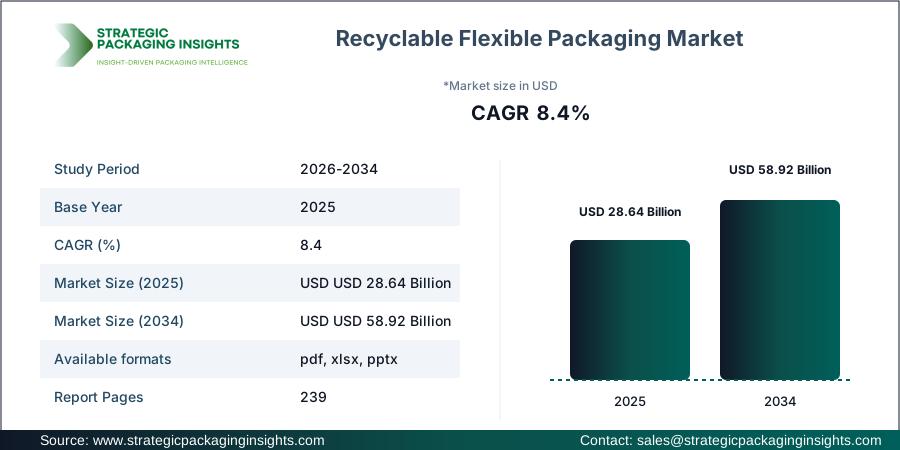
One of the most impactful drivers of the Recyclable Flexible Packaging market is the global push towards reducing plastic waste. Governments and environmental organizations are implementing stricter regulations and initiatives to promote recycling and reduce landfill waste. For instance, the European Union's directive on single-use plastics is compelling manufacturers to adopt recyclable materials. This regulatory environment is encouraging companies like Berry Global and Sealed Air Corporation to invest in research and development to create packaging solutions that are not only recyclable but also cost-effective and efficient. As a result, the market is poised for significant growth as more industries adopt sustainable packaging practices.
Report Scope
| Attributes | Details |
| Report Title | Recyclable Flexible Packaging Market Size, Future Growth and Forecast 2034 |
| By Material | Polyethylene (PE), Polypropylene (PP), Paper-Based Materials, Mono-Material Structures, Bio-Based Materials |
| By Packaging Type | Stand-Up Pouches, Flat Pouches, Bags, Films & Wraps, Sachets, Lidding Films |
| By Application | Food & Beverage, Pet Food, Healthcare & Pharmaceuticals, Personal Care & Cosmetics, Home Care, Industrial Packaging |
| By End User | Packaging Converters, Food Manufacturers, Consumer Goods Companies, Retail Brands, E-Commerce Companies |
| Region | Asia Pacific, North America, Latin America, Europe, Middle East & Africa |
| Base Year | 2025 |
| Historic Period | 2018-2024 |
| Forecast Period | 2026-2034 |
| Number of Pages | 239 |
| Customization Available | Yes* |
Sustainability & Circular Economy Analysis
Sustainability initiatives and circular economy practices are profoundly influencing the Recyclable Flexible Packaging market. The shift towards recyclable materials is driven by consumer demand for eco-friendly products and stringent environmental regulations. Companies are increasingly adopting lightweight packaging solutions that reduce material usage and transportation costs, thereby minimizing the carbon footprint. Innovations in eco-friendly materials, such as bio-based plastics and mono-material structures, are gaining traction as they offer enhanced recyclability and lower environmental impact. These trends are reshaping packaging design and manufacturing processes, encouraging companies to invest in sustainable technologies and practices.
Extended Producer Responsibility (EPR) is another critical factor driving the adoption of recyclable flexible packaging. Under EPR, manufacturers are responsible for the entire lifecycle of their products, including disposal and recycling. This has led to the development of waste reduction strategies and the implementation of recycling networks to ensure that packaging materials are effectively reused. Companies like Constantia Flexibles and Coveris are leading the way by integrating ESG initiatives into their business models, focusing on reducing waste and improving recyclability. These efforts are not only enhancing brand reputation but also ensuring long-term market competitiveness.
Consumer preferences for sustainable packaging are also influencing investment decisions and supply chain strategies. Retailers and brand owners are prioritizing suppliers that offer recyclable and eco-friendly packaging solutions. This shift is driving collaboration across the supply chain, from raw material sourcing to packaging converters and logistics providers. As a result, companies are focusing on regulatory compliance and sustainability certifications to meet consumer expectations and gain a competitive edge. The emphasis on sustainability is expected to continue shaping the market landscape, with companies investing in innovative solutions to meet evolving consumer demands and regulatory requirements.
Packaging Value Chain & Supply Chain Analysis
The packaging value chain and supply chain ecosystem are integral to the performance of the Recyclable Flexible Packaging market. Raw material sourcing is a critical component, with companies relying on sustainable materials like polyethylene (PE) and polypropylene (PP) to produce recyclable packaging. Packaging converters and manufacturers play a vital role in transforming these materials into finished products, utilizing advanced machinery and technologies to enhance production efficiency. Strategic partnerships with suppliers and logistics providers are essential for ensuring a seamless flow of materials and products across the supply chain.
Supply chain efficiency is crucial for maintaining competitiveness in the Recyclable Flexible Packaging market. Companies are adopting procurement strategies that prioritize local sourcing to reduce transportation costs and minimize environmental impact. Inventory management and supply chain resilience are also key considerations, with businesses implementing advanced technologies to optimize operations and mitigate risks. The availability of raw materials and production capabilities directly influences market performance, with companies like ProAmpac and Huhtamaki Oyj investing in capacity expansion to meet growing demand.
Global sourcing and distribution channels are essential for reaching diverse markets and expanding business opportunities. Brand owners and retailers rely on efficient logistics networks to deliver products to consumers promptly and cost-effectively. Recycling networks are also becoming increasingly important, with companies establishing partnerships to ensure the effective collection and processing of recyclable materials. These efforts are enhancing the overall sustainability of the supply chain and contributing to the long-term success of the Recyclable Flexible Packaging market. As the market continues to evolve, companies will need to focus on supply chain optimization and strategic collaborations to maintain a competitive edge.
Opportunities & Threats
The Recyclable Flexible Packaging market presents numerous opportunities for growth and innovation. One significant opportunity lies in the development of advanced materials that offer improved recyclability and performance. Companies are investing in research and development to create bio-based and mono-material structures that meet consumer demand for sustainable packaging. The increasing adoption of e-commerce is also driving demand for flexible packaging solutions that offer convenience and protection during transit. This trend is creating opportunities for companies to develop innovative packaging designs that cater to the unique needs of online retailers and consumers.
Another opportunity in the market is the expansion into emerging markets, where demand for sustainable packaging is on the rise. As consumers in these regions become more environmentally conscious, there is a growing need for recyclable packaging solutions that align with local regulations and consumer preferences. Companies that can effectively navigate these markets and offer tailored solutions are likely to gain a competitive advantage. Additionally, the increasing focus on circular economy practices is encouraging companies to explore new business models and partnerships that promote recycling and waste reduction.
Despite the opportunities, the Recyclable Flexible Packaging market faces several threats that could impact growth. One of the primary challenges is the high cost of developing and implementing sustainable packaging solutions. Companies must invest in new technologies and processes to produce recyclable materials, which can be costly and time-consuming. Additionally, the market is subject to regulatory changes that can create uncertainty and increase compliance costs. Companies must stay abreast of evolving regulations and adapt their strategies accordingly to mitigate these risks. The competitive landscape is also intensifying, with new entrants and existing players vying for market share, which could pressure pricing and profitability.
Drivers & Challenges
The Recyclable Flexible Packaging market is driven by several key factors that are shaping its growth trajectory. One of the primary drivers is the increasing consumer awareness of environmental issues and the demand for sustainable packaging solutions. Consumers are becoming more conscious of the environmental impact of packaging waste and are seeking products that align with their values. This shift in consumer preferences is encouraging companies to develop innovative packaging solutions that are recyclable and eco-friendly. Additionally, advancements in material science are enabling the production of high-performance recyclable materials that meet the needs of various industries.
Another significant driver of the market is the regulatory environment, which is promoting the adoption of recyclable packaging. Governments and environmental organizations are implementing policies and initiatives to reduce plastic waste and promote recycling. These regulations are compelling companies to invest in sustainable packaging solutions and adopt circular economy practices. The increasing focus on extended producer responsibility (EPR) is also driving companies to take responsibility for the entire lifecycle of their products, including disposal and recycling. This regulatory landscape is creating opportunities for companies to differentiate themselves by offering sustainable packaging solutions that comply with environmental standards.
Despite the positive drivers, the Recyclable Flexible Packaging market faces several challenges that could hinder its growth. One of the primary challenges is the high cost of developing and implementing sustainable packaging solutions. Companies must invest in new technologies and processes to produce recyclable materials, which can be costly and time-consuming. Additionally, the market is subject to regulatory changes that can create uncertainty and increase compliance costs. Companies must stay abreast of evolving regulations and adapt their strategies accordingly to mitigate these risks. The competitive landscape is also intensifying, with new entrants and existing players vying for market share, which could pressure pricing and profitability.
Market Share Analysis
The Recyclable Flexible Packaging market is characterized by a competitive landscape with several key players vying for market share. Companies like Amcor plc and Mondi plc are leading the market with their innovative packaging solutions and strong focus on sustainability. These companies have established themselves as leaders in the industry by investing in research and development to create advanced materials that meet consumer demand for eco-friendly packaging. Their commitment to sustainability and innovation has enabled them to capture a significant share of the market and maintain a competitive edge.
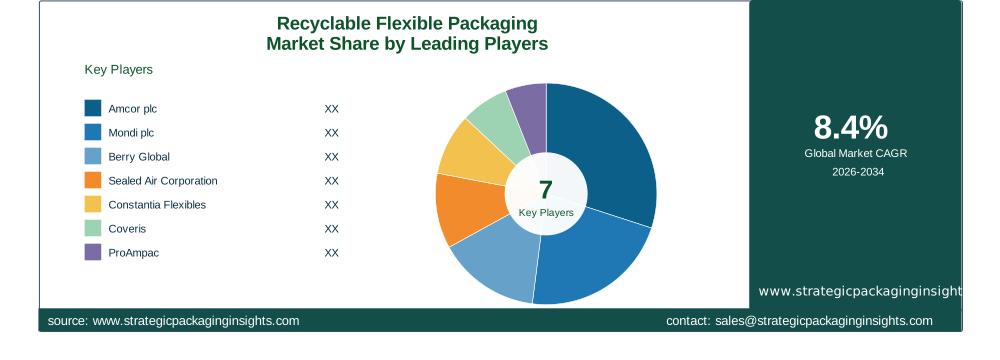
Berry Global and Sealed Air Corporation are also prominent players in the Recyclable Flexible Packaging market. These companies have a strong presence in the market, offering a wide range of packaging solutions that cater to various industries. Their focus on sustainability and circular economy practices has enabled them to differentiate themselves from competitors and capture a significant share of the market. Additionally, their strategic partnerships and collaborations with suppliers and logistics providers have enhanced their supply chain efficiency and market reach.
Constantia Flexibles and Coveris are other key players in the market, known for their innovative packaging solutions and commitment to sustainability. These companies have invested in advanced technologies and processes to produce high-performance recyclable materials that meet the needs of various industries. Their focus on regulatory compliance and sustainability certifications has enabled them to gain a competitive advantage and capture a significant share of the market. As the market continues to evolve, these companies are well-positioned to capitalize on emerging opportunities and maintain their leadership positions.
ProAmpac and Huhtamaki Oyj are also notable players in the Recyclable Flexible Packaging market. These companies have a strong focus on innovation and sustainability, offering a wide range of packaging solutions that cater to various industries. Their commitment to research and development and strategic partnerships has enabled them to capture a significant share of the market and maintain a competitive edge. As the market continues to grow, these companies are well-positioned to capitalize on emerging opportunities and maintain their leadership positions.
Key Highlights
- The Recyclable Flexible Packaging market is projected to reach USD 58.92 Billion by 2034, growing at a CAGR of 8.4%.
- Key players include Amcor plc, Mondi plc, Berry Global, and Sealed Air Corporation.
- Increasing consumer demand for sustainable packaging is driving market growth.
- Regulatory initiatives promoting recycling and waste reduction are influencing market dynamics.
- Advancements in material science are enabling the production of high-performance recyclable materials.
- Emerging markets present significant growth opportunities for recyclable packaging solutions.
- Companies are focusing on circular economy practices and extended producer responsibility (EPR).
Recyclable Flexible Packaging Market Segments Insights

By Material Analysis
The Recyclable Flexible Packaging market is segmented by material, with polyethylene (PE) and polypropylene (PP) being the most widely used materials. These materials are favored for their durability, flexibility, and recyclability, making them ideal for a wide range of packaging applications. Companies are investing in research and development to enhance the performance of these materials and improve their environmental impact. The demand for bio-based materials is also on the rise, driven by consumer preferences for sustainable packaging solutions. These materials offer a lower carbon footprint and are derived from renewable resources, making them an attractive option for environmentally conscious consumers.
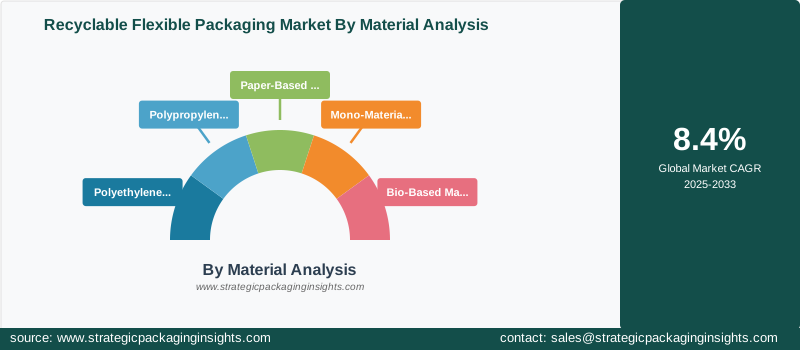
Paper-based materials are gaining traction in the market, offering a sustainable alternative to traditional plastic packaging. These materials are biodegradable and recyclable, making them an ideal choice for companies looking to reduce their environmental impact. The development of mono-material structures is also gaining momentum, as they offer enhanced recyclability and ease of processing. These materials are designed to be easily separated and recycled, reducing waste and promoting circular economy practices. As the market continues to evolve, companies are focusing on developing innovative materials that meet consumer demand for sustainable packaging solutions.
By Packaging Type Analysis
The Recyclable Flexible Packaging market is segmented by packaging type, with stand-up pouches and flat pouches being the most popular options. These packaging types offer convenience, versatility, and enhanced product protection, making them ideal for a wide range of applications. Companies are investing in advanced technologies to improve the performance and recyclability of these packaging solutions. The demand for films and wraps is also on the rise, driven by their ability to provide excellent barrier properties and extend the shelf life of products. These packaging types are widely used in the food and beverage industry, where product freshness and safety are paramount.
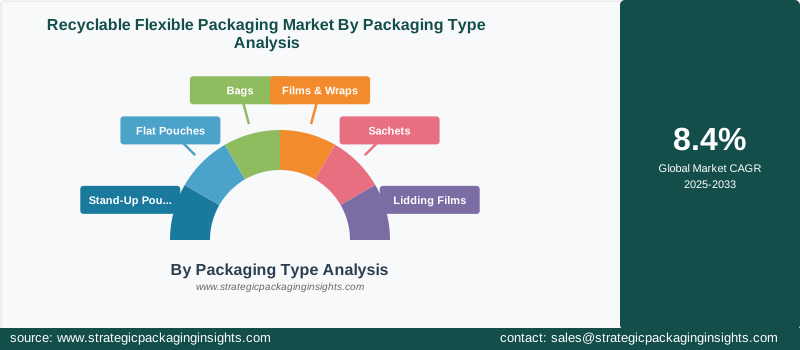
Bags and sachets are also popular packaging types in the market, offering convenience and ease of use for consumers. These packaging solutions are widely used in the personal care and healthcare industries, where product protection and hygiene are critical. Lidding films are gaining traction in the market, offering a sustainable alternative to traditional packaging solutions. These films are designed to be easily separated and recycled, reducing waste and promoting circular economy practices. As the market continues to evolve, companies are focusing on developing innovative packaging solutions that meet consumer demand for convenience and sustainability.
By Application Analysis
The Recyclable Flexible Packaging market is segmented by application, with the food and beverage industry being the largest end-user. This industry is driving demand for sustainable packaging solutions that offer convenience, product protection, and extended shelf life. Companies are investing in advanced technologies to develop packaging solutions that meet the unique needs of this industry. The healthcare and pharmaceuticals industry is also a significant end-user, requiring packaging solutions that offer product protection and hygiene. These industries are driving demand for high-performance recyclable materials that meet stringent regulatory requirements.
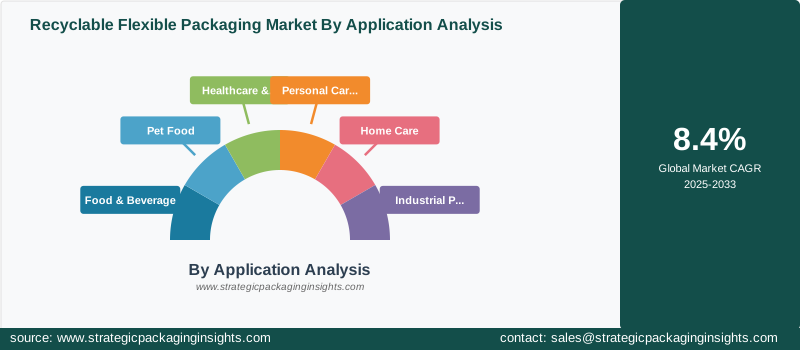
The personal care and cosmetics industry is another key end-user of recyclable flexible packaging, with companies seeking packaging solutions that offer convenience and sustainability. The demand for home care and industrial packaging solutions is also on the rise, driven by the need for durable and versatile packaging options. As the market continues to evolve, companies are focusing on developing innovative packaging solutions that meet the unique needs of various industries and align with consumer demand for sustainability.
By End User Analysis
The Recyclable Flexible Packaging market is segmented by end-user, with packaging converters and food manufacturers being the largest users. These companies are driving demand for sustainable packaging solutions that offer convenience, product protection, and extended shelf life. Consumer goods companies and retail brands are also significant end-users, requiring packaging solutions that align with consumer demand for sustainability and convenience. The demand for e-commerce packaging solutions is on the rise, driven by the increasing popularity of online shopping and the need for packaging solutions that offer protection during transit.
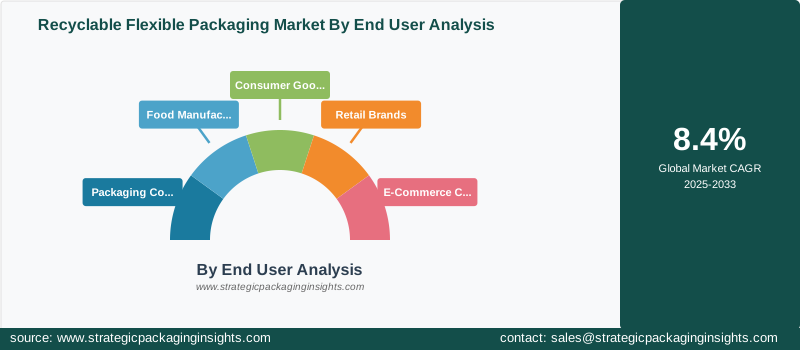
As the market continues to evolve, companies are focusing on developing innovative packaging solutions that meet the unique needs of various end-users. The emphasis on sustainability and circular economy practices is driving collaboration across the supply chain, with companies working together to develop packaging solutions that reduce waste and promote recycling. As consumer demand for sustainable packaging continues to grow, companies are investing in research and development to create innovative solutions that meet the needs of various end-users and align with regulatory requirements.
Recyclable Flexible Packaging Market Segments
The Recyclable Flexible Packaging market has been segmented on the basis ofBy Material
- Polyethylene (PE)
- Polypropylene (PP)
- Paper-Based Materials
- Mono-Material Structures
- Bio-Based Materials
By Packaging Type
- Stand-Up Pouches
- Flat Pouches
- Bags
- Films & Wraps
- Sachets
- Lidding Films
By Application
- Food & Beverage
- Pet Food
- Healthcare & Pharmaceuticals
- Personal Care & Cosmetics
- Home Care
- Industrial Packaging
By End User
- Packaging Converters
- Food Manufacturers
- Consumer Goods Companies
- Retail Brands
- E-Commerce Companies
Region
- Asia Pacific
- North America
- Latin America
- Europe
- Middle East & Africa




