


Recyclability Certified Labels and Adhesives Market Outlook
The Recyclability Certified Labels and Adhesives market was valued at $1.12 billion in 2025 and is projected to reach $1.88 billion by 2034, growing at a CAGR of 5.9% during the forecast period 2026-2034. This market is witnessing significant growth due to the increasing demand for sustainable packaging solutions across various industries. The shift towards eco-friendly products is driven by stringent environmental regulations and growing consumer awareness about sustainability. Companies are investing in research and development to create innovative, recyclable label and adhesive solutions that meet the evolving needs of end-users. The market is also benefiting from advancements in adhesive technologies that enhance the recyclability of packaging materials, thereby reducing environmental impact.
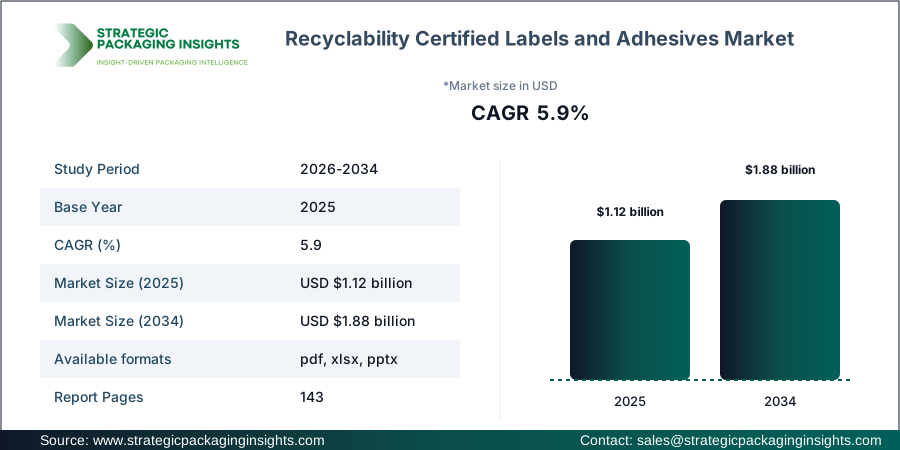
Despite the promising growth prospects, the market faces challenges such as high production costs and the complexity of recycling processes. Regulatory frameworks across different regions can also pose hurdles for market players, as compliance with diverse standards requires significant investment. However, the potential for growth remains substantial, particularly in emerging economies where industrialization and urbanization are driving demand for packaged goods. The market's expansion is further supported by collaborations between manufacturers and recycling companies to develop efficient recycling systems. As the industry continues to evolve, the focus on innovation and sustainability will be crucial in overcoming these challenges and capitalizing on growth opportunities.
Report Scope
| Attributes | Details |
| Report Title | Recyclability Certified Labels and Adhesives Market Size, Future Growth and Forecast 2034 |
| Type | Pressure-sensitive, Water-based, Hot Melt |
| End Use | Packaging, Paper, Textiles |
| Application | Food & Beverage, Retail, Industrial |
| Region | Asia Pacific, North America, Latin America, Europe, Middle East & Africa |
| Base Year | 2025 |
| Historic Period | 2018-2024 |
| Forecast Period | 2026-2034 |
| Number of Pages | 143 |
| Customization Available | Yes* |
Opportunities & Threats
The Recyclability Certified Labels and Adhesives market presents numerous opportunities, particularly in the realm of sustainable packaging. As consumers become more environmentally conscious, there is a growing demand for products that minimize ecological impact. This trend is driving companies to innovate and develop labels and adhesives that are not only recyclable but also enhance the recyclability of the entire packaging. The integration of advanced materials and technologies is opening new avenues for market players to differentiate their offerings and capture a larger market share. Additionally, the increasing adoption of circular economy principles by businesses worldwide is creating a favorable environment for the growth of recyclable labels and adhesives.
Another significant opportunity lies in the expansion of the market in emerging economies. As these regions undergo rapid industrialization and urbanization, the demand for packaged goods is rising, leading to increased consumption of labels and adhesives. Companies that can effectively tap into these markets by offering cost-effective and sustainable solutions are likely to gain a competitive edge. Furthermore, partnerships and collaborations with local players can facilitate market entry and expansion, providing access to new customer bases and distribution networks. The focus on sustainability and innovation will be key to unlocking these opportunities and driving market growth.
However, the market is not without its threats. One of the primary challenges is the high cost associated with the production of recyclable labels and adhesives. The development of advanced materials and technologies requires significant investment, which can be a barrier for smaller companies. Additionally, the complexity of recycling processes and the lack of standardized recycling infrastructure in some regions can hinder the market's growth. Companies must navigate these challenges by investing in research and development to create cost-effective solutions and collaborating with stakeholders to improve recycling systems. Addressing these threats will be crucial for sustaining growth and maintaining competitiveness in the market.
Drivers & Challenges
The primary drivers of the Recyclability Certified Labels and Adhesives market include the increasing demand for sustainable packaging solutions and the growing awareness of environmental issues among consumers. As governments worldwide implement stricter regulations to reduce plastic waste and promote recycling, companies are compelled to adopt eco-friendly practices. This has led to a surge in demand for recyclable labels and adhesives that comply with these regulations. Additionally, advancements in adhesive technologies are enabling manufacturers to develop products that enhance the recyclability of packaging materials, further driving market growth. The focus on sustainability is also encouraging companies to invest in research and development to create innovative solutions that meet the evolving needs of consumers.
Another significant driver is the rising demand for packaged goods in emerging economies. As these regions experience rapid industrialization and urbanization, the consumption of labels and adhesives is increasing. This presents a lucrative opportunity for market players to expand their presence and capture a larger market share. The growing adoption of circular economy principles by businesses is also contributing to the market's growth, as companies seek to minimize waste and maximize resource efficiency. By aligning their strategies with these trends, companies can capitalize on the growing demand for recyclable labels and adhesives and drive market expansion.
Despite the positive outlook, the market faces several challenges that could impede its growth. One of the primary challenges is the high cost of production associated with recyclable labels and adhesives. The development of advanced materials and technologies requires significant investment, which can be a barrier for smaller companies. Additionally, the complexity of recycling processes and the lack of standardized recycling infrastructure in some regions can hinder the market's growth. Companies must navigate these challenges by investing in research and development to create cost-effective solutions and collaborating with stakeholders to improve recycling systems. Addressing these challenges will be crucial for sustaining growth and maintaining competitiveness in the market.
Market Share Analysis
The Recyclability Certified Labels and Adhesives market is characterized by a competitive landscape with several key players vying for market share. Companies such as Avery Dennison, UPM Raflatac, 3M, Henkel, and Scapa are leading the market with their innovative product offerings and strong distribution networks. These companies are investing heavily in research and development to create advanced, sustainable solutions that meet the evolving needs of consumers. The focus on sustainability and innovation is driving competition among market players, as they seek to differentiate their products and capture a larger share of the market.
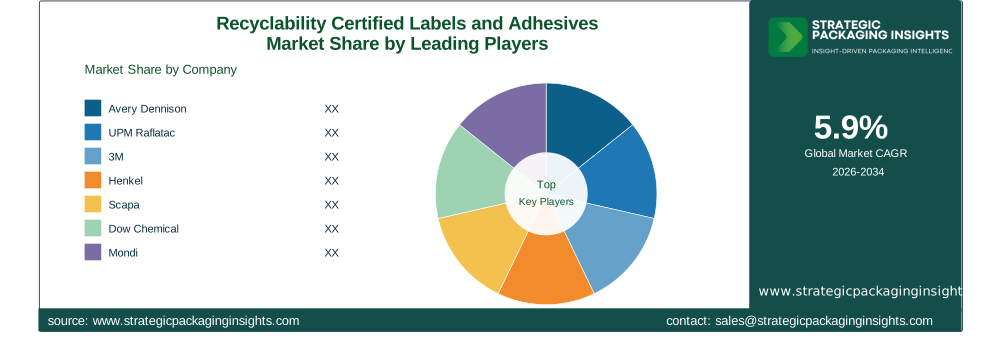
Avery Dennison is a prominent player in the market, known for its extensive range of recyclable labels and adhesives. The company is committed to sustainability and has implemented several initiatives to reduce its environmental impact. UPM Raflatac is another key player, offering a wide range of eco-friendly labeling solutions that enhance the recyclability of packaging materials. The company's focus on innovation and sustainability has helped it maintain a strong position in the market. 3M is also a major player, known for its advanced adhesive technologies that improve the recyclability of packaging materials. The company's commitment to sustainability and innovation has enabled it to capture a significant share of the market.
Henkel is a leading player in the market, offering a diverse range of recyclable adhesives that cater to various industries. The company's focus on sustainability and innovation has helped it maintain a competitive edge in the market. Scapa is another key player, known for its high-quality adhesive solutions that enhance the recyclability of packaging materials. The company's commitment to sustainability and innovation has enabled it to capture a significant share of the market. Dow Chemical is also a major player, offering a wide range of recyclable adhesives that cater to various industries. The company's focus on sustainability and innovation has helped it maintain a strong position in the market.
Mondi is a prominent player in the market, known for its extensive range of recyclable labels and adhesives. The company is committed to sustainability and has implemented several initiatives to reduce its environmental impact. CCL Industries is another key player, offering a wide range of eco-friendly labeling solutions that enhance the recyclability of packaging materials. The company's focus on innovation and sustainability has helped it maintain a strong position in the market. Sappi is also a major player, known for its advanced adhesive technologies that improve the recyclability of packaging materials. The company's commitment to sustainability and innovation has enabled it to capture a significant share of the market.
Key Highlights
- The Recyclability Certified Labels and Adhesives market is projected to grow at a CAGR of 5.9% from 2026 to 2034.
- Increasing demand for sustainable packaging solutions is driving market growth.
- Advancements in adhesive technologies are enhancing the recyclability of packaging materials.
- Emerging economies present significant growth opportunities for market players.
- High production costs and complex recycling processes are key challenges for the market.
- Key players include Avery Dennison, UPM Raflatac, 3M, Henkel, and Scapa.
- Companies are investing in research and development to create innovative, sustainable solutions.
- Partnerships and collaborations are facilitating market expansion in emerging regions.
- Regulatory frameworks and environmental regulations are influencing market dynamics.
- The focus on sustainability and innovation is driving competition among market players.
Top Countries Insights
In the Recyclability Certified Labels and Adhesives market, the United States stands out as a key player, with a market size of approximately $450 million and a CAGR of 6%. The country's strong regulatory framework promoting sustainable packaging and the presence of major industry players drive growth. The demand for eco-friendly packaging solutions is further fueled by consumer awareness and corporate sustainability initiatives. However, challenges such as high production costs and complex recycling processes persist, requiring continuous innovation and investment.
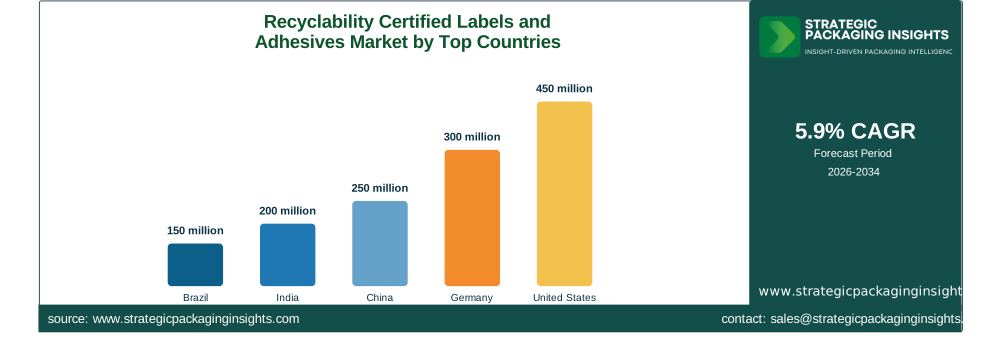
Germany is another significant market, with a market size of around $300 million and a CAGR of 5%. The country's stringent environmental regulations and commitment to sustainability drive demand for recyclable labels and adhesives. The presence of leading companies and a well-established recycling infrastructure further support market growth. However, the high cost of production and the complexity of recycling processes remain challenges that need to be addressed to sustain growth.
China, with a market size of approximately $250 million and a CAGR of 7%, presents significant growth opportunities. The country's rapid industrialization and urbanization drive demand for packaged goods, leading to increased consumption of labels and adhesives. Government initiatives promoting sustainable packaging and the adoption of circular economy principles further support market growth. However, the lack of standardized recycling infrastructure poses challenges that need to be addressed to fully capitalize on growth opportunities.
India, with a market size of around $200 million and a CAGR of 8%, is an emerging market with significant growth potential. The country's growing middle class and increasing demand for packaged goods drive market growth. Government initiatives promoting sustainable packaging and the adoption of circular economy principles further support market expansion. However, challenges such as high production costs and the lack of standardized recycling infrastructure need to be addressed to sustain growth.
Brazil, with a market size of approximately $150 million and a CAGR of 6%, is another key market. The country's growing demand for packaged goods and increasing awareness of environmental issues drive market growth. Government initiatives promoting sustainable packaging and the adoption of circular economy principles further support market expansion. However, challenges such as high production costs and the lack of standardized recycling infrastructure need to be addressed to sustain growth.
Recyclability Certified Labels and Adhesives Market Segments Insights

Type Analysis
The Recyclability Certified Labels and Adhesives market is segmented by type into pressure-sensitive, water-based, and hot melt adhesives. Pressure-sensitive adhesives are widely used due to their versatility and ease of application. They offer strong adhesion and are suitable for a variety of surfaces, making them a popular choice in the packaging industry. The demand for pressure-sensitive adhesives is driven by the increasing need for sustainable packaging solutions that enhance the recyclability of materials. Companies are investing in research and development to create innovative pressure-sensitive adhesives that meet the evolving needs of consumers.
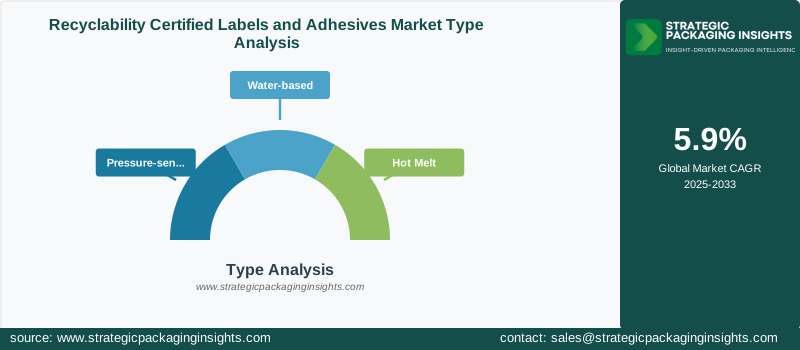
Water-based adhesives are gaining popularity due to their eco-friendly properties. They are free from volatile organic compounds (VOCs) and offer excellent adhesion, making them suitable for a wide range of applications. The demand for water-based adhesives is driven by the growing awareness of environmental issues and the need for sustainable packaging solutions. Companies are focusing on developing advanced water-based adhesives that offer superior performance and enhance the recyclability of packaging materials. The focus on sustainability and innovation is driving competition among market players, as they seek to differentiate their products and capture a larger share of the market.
Hot melt adhesives are also an important segment of the market, offering strong adhesion and fast setting times. They are widely used in the packaging industry due to their versatility and ease of application. The demand for hot melt adhesives is driven by the increasing need for sustainable packaging solutions that enhance the recyclability of materials. Companies are investing in research and development to create innovative hot melt adhesives that meet the evolving needs of consumers. The focus on sustainability and innovation is driving competition among market players, as they seek to differentiate their products and capture a larger share of the market.
End Use Analysis
The Recyclability Certified Labels and Adhesives market is segmented by end use into packaging, paper, and textiles. The packaging industry is the largest end-use segment, driven by the increasing demand for sustainable packaging solutions. The need for recyclable labels and adhesives is driven by the growing awareness of environmental issues and the need for sustainable packaging solutions. Companies are focusing on developing advanced labels and adhesives that offer superior performance and enhance the recyclability of packaging materials. The focus on sustainability and innovation is driving competition among market players, as they seek to differentiate their products and capture a larger share of the market.
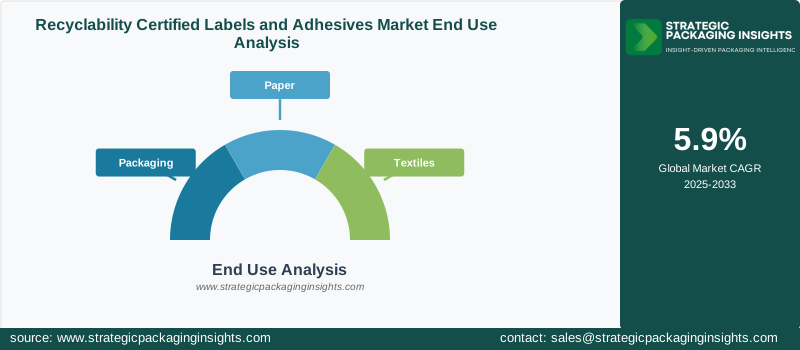
The paper industry is another important end-use segment, driven by the increasing demand for sustainable paper products. The need for recyclable labels and adhesives is driven by the growing awareness of environmental issues and the need for sustainable paper products. Companies are focusing on developing advanced labels and adhesives that offer superior performance and enhance the recyclability of paper products. The focus on sustainability and innovation is driving competition among market players, as they seek to differentiate their products and capture a larger share of the market.
The textiles industry is also an important end-use segment, driven by the increasing demand for sustainable textiles. The need for recyclable labels and adhesives is driven by the growing awareness of environmental issues and the need for sustainable textiles. Companies are focusing on developing advanced labels and adhesives that offer superior performance and enhance the recyclability of textiles. The focus on sustainability and innovation is driving competition among market players, as they seek to differentiate their products and capture a larger share of the market.
Application Analysis
The Recyclability Certified Labels and Adhesives market is segmented by application into food & beverage, retail, and industrial. The food & beverage industry is the largest application segment, driven by the increasing demand for sustainable packaging solutions. The need for recyclable labels and adhesives is driven by the growing awareness of environmental issues and the need for sustainable packaging solutions. Companies are focusing on developing advanced labels and adhesives that offer superior performance and enhance the recyclability of packaging materials. The focus on sustainability and innovation is driving competition among market players, as they seek to differentiate their products and capture a larger share of the market.
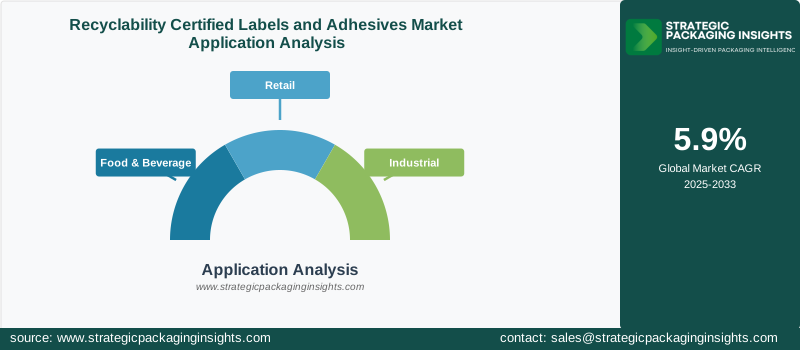
The retail industry is another important application segment, driven by the increasing demand for sustainable packaging solutions. The need for recyclable labels and adhesives is driven by the growing awareness of environmental issues and the need for sustainable packaging solutions. Companies are focusing on developing advanced labels and adhesives that offer superior performance and enhance the recyclability of packaging materials. The focus on sustainability and innovation is driving competition among market players, as they seek to differentiate their products and capture a larger share of the market.
The industrial sector is also an important application segment, driven by the increasing demand for sustainable packaging solutions. The need for recyclable labels and adhesives is driven by the growing awareness of environmental issues and the need for sustainable packaging solutions. Companies are focusing on developing advanced labels and adhesives that offer superior performance and enhance the recyclability of packaging materials. The focus on sustainability and innovation is driving competition among market players, as they seek to differentiate their products and capture a larger share of the market.
Recyclability Certified Labels and Adhesives Market Segments
The Recyclability Certified Labels and Adhesives market has been segmented on the basis ofType
- Pressure-sensitive
- Water-based
- Hot Melt
End Use
- Packaging
- Paper
- Textiles
Application
- Food & Beverage
- Retail
- Industrial
Region
- Asia Pacific
- North America
- Latin America
- Europe
- Middle East & Africa




