


Reconditioned Steel Drum Market Outlook
The reconditioned steel drum market was valued at $2.84 billion in 2025 and is projected to reach $4.97 billion by 2034, growing at a CAGR of 6.4% during the forecast period 2026-2034. This market is witnessing significant growth due to the increasing demand for sustainable and cost-effective packaging solutions across various industries. The reconditioned steel drums offer an eco-friendly alternative to new drums, reducing waste and conserving resources. The market is driven by the rising awareness of environmental sustainability and the stringent regulations imposed by governments worldwide to minimize industrial waste. Additionally, the cost-effectiveness of reconditioned drums compared to new ones is a major factor propelling market growth.
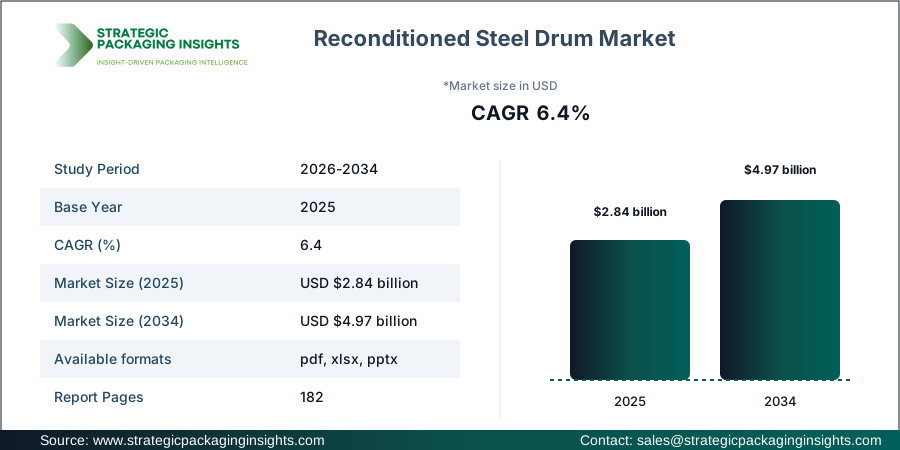
Despite the promising growth prospects, the reconditioned steel drum market faces certain challenges. The primary restraint is the stringent regulatory framework governing the reconditioning process, which requires compliance with specific standards to ensure safety and quality. Moreover, the market is highly competitive, with numerous players offering similar products, which can lead to price wars and reduced profit margins. However, the increasing focus on circular economy practices and the growing adoption of reconditioned drums in emerging economies present significant growth opportunities. The market is also expected to benefit from technological advancements in reconditioning processes, which enhance the durability and performance of reconditioned drums.
Report Scope
| Attributes | Details |
| Report Title | Reconditioned Steel Drum Market Size, Future Growth and Forecast 2034 |
| By Product Type | Reconditioned Tight-Head Drums, Reconditioned Open-Head Drums, Washed Drums |
| By Capacity | 30–55 Gallons, Above 55 Gallons |
| By Application | Chemicals, Oils, Solvents, Industrial Liquids |
| By End Use | Chemical Companies, Logistics, Waste Handlers, Industrial Users |
| Region | Asia Pacific, North America, Latin America, Europe, Middle East & Africa |
| Base Year | 2025 |
| Historic Period | 2018-2024 |
| Forecast Period | 2026-2034 |
| Number of Pages | 182 |
| Customization Available | Yes* |
Opportunities & Threats
The reconditioned steel drum market presents numerous opportunities, particularly in the realm of sustainability and environmental conservation. As industries worldwide strive to reduce their carbon footprint, the demand for eco-friendly packaging solutions like reconditioned steel drums is on the rise. These drums not only help in reducing waste but also contribute to resource conservation by extending the lifecycle of steel materials. Additionally, the cost-effectiveness of reconditioned drums compared to new ones makes them an attractive option for businesses looking to optimize their packaging expenses. The growing emphasis on circular economy practices further bolsters the market's growth prospects, as companies increasingly adopt reconditioned drums to align with sustainable business models.
Another significant opportunity lies in the expanding industrial sectors in emerging economies. As these regions experience rapid industrialization, the demand for efficient and sustainable packaging solutions is expected to surge. Reconditioned steel drums, with their durability and cost advantages, are well-positioned to capture a substantial share of this growing demand. Furthermore, advancements in reconditioning technologies are enhancing the quality and performance of reconditioned drums, making them more appealing to a broader range of industries. The integration of smart technologies in drum reconditioning processes, such as RFID tagging for better tracking and management, is also expected to drive market growth.
However, the market is not without its threats. One of the primary challenges is the stringent regulatory landscape governing the reconditioning of steel drums. Compliance with safety and quality standards is crucial, and any lapses can lead to significant penalties and reputational damage. Additionally, the market faces intense competition from alternative packaging solutions, such as plastic and composite drums, which offer similar benefits. The volatility in steel prices can also impact the cost dynamics of reconditioned drums, affecting their competitiveness in the market. Companies must navigate these challenges carefully to capitalize on the growth opportunities in the reconditioned steel drum market.
Drivers & Challenges
The reconditioned steel drum market is primarily driven by the increasing demand for sustainable packaging solutions. As environmental concerns continue to rise, industries are under pressure to adopt eco-friendly practices, and reconditioned steel drums offer a viable solution. These drums help reduce waste and conserve resources, aligning with the global push towards sustainability. Additionally, the cost-effectiveness of reconditioned drums compared to new ones is a significant driver, as businesses seek to optimize their packaging expenses. The growing awareness of the benefits of reconditioned drums, such as their durability and ability to withstand harsh conditions, further fuels market growth.
Another key driver is the expanding industrial sectors in emerging economies. As these regions undergo rapid industrialization, the demand for efficient and sustainable packaging solutions is expected to increase. Reconditioned steel drums, with their cost advantages and environmental benefits, are well-positioned to capture a significant share of this growing demand. Furthermore, advancements in reconditioning technologies are enhancing the quality and performance of reconditioned drums, making them more appealing to a broader range of industries. The integration of smart technologies in drum reconditioning processes, such as RFID tagging for better tracking and management, is also expected to drive market growth.
Despite the positive drivers, the reconditioned steel drum market faces several challenges. One of the primary challenges is the stringent regulatory landscape governing the reconditioning of steel drums. Compliance with safety and quality standards is crucial, and any lapses can lead to significant penalties and reputational damage. Additionally, the market faces intense competition from alternative packaging solutions, such as plastic and composite drums, which offer similar benefits. The volatility in steel prices can also impact the cost dynamics of reconditioned drums, affecting their competitiveness in the market. Companies must navigate these challenges carefully to capitalize on the growth opportunities in the reconditioned steel drum market.
Market Share Analysis
The reconditioned steel drum market is characterized by a competitive landscape with several key players vying for market share. Companies such as Greif, Mauser Packaging Solutions, and Schutz are among the leading players, leveraging their extensive industry experience and wide distribution networks to maintain a strong market presence. These companies focus on innovation and sustainability, continuously enhancing their product offerings to meet the evolving needs of their customers. Greif, for instance, is known for its commitment to sustainability and has implemented various initiatives to reduce its environmental impact, including the use of recycled materials in its products.
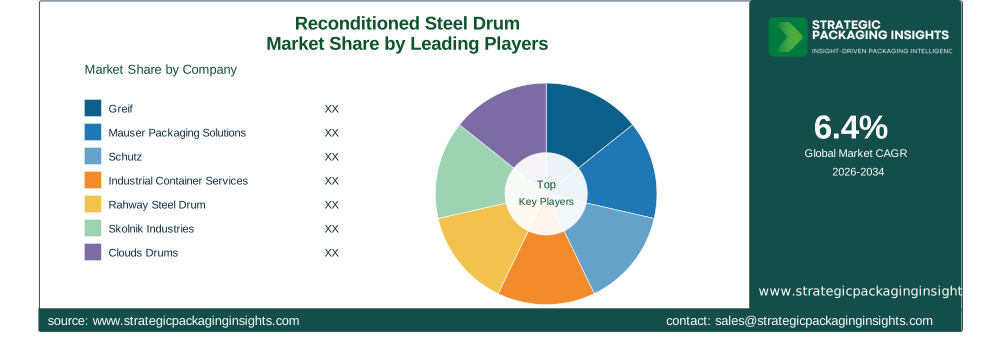
Mauser Packaging Solutions is another major player in the reconditioned steel drum market, offering a comprehensive range of packaging solutions to various industries. The company emphasizes innovation and quality, investing in advanced technologies to improve the performance and durability of its products. Schutz, on the other hand, is renowned for its high-quality reconditioned drums and has a strong presence in both developed and emerging markets. The company's focus on customer satisfaction and continuous improvement has helped it maintain a competitive edge in the market.
Industrial Container Services is a key player in the North American market, offering a wide range of reconditioned steel drums to various industries. The company is known for its commitment to quality and safety, ensuring that its products meet the highest standards. Rahway Steel Drum and Skolnik Industries are also prominent players, with a strong focus on customer service and product innovation. These companies leverage their extensive industry experience and technical expertise to deliver high-quality reconditioned drums that meet the specific needs of their customers.
Other notable players in the market include Clouds Drums, Peninsula Drums, Great Western Containers, and Drumbeaters. These companies focus on expanding their product portfolios and enhancing their distribution networks to capture a larger share of the market. The competitive landscape of the reconditioned steel drum market is dynamic, with companies continuously striving to differentiate themselves through innovation, quality, and customer service. As the market continues to grow, the competition is expected to intensify, with companies investing in new technologies and sustainable practices to maintain their market positions.
Key Highlights
- The reconditioned steel drum market is projected to grow at a CAGR of 6.4% from 2026 to 2034.
- Increasing demand for sustainable packaging solutions is a major driver of market growth.
- Stringent regulatory standards pose a challenge to market players.
- Advancements in reconditioning technologies are enhancing product quality and performance.
- Emerging economies present significant growth opportunities for market expansion.
- Key players are focusing on innovation and sustainability to maintain a competitive edge.
- The market faces competition from alternative packaging solutions such as plastic and composite drums.
- Volatility in steel prices can impact the cost dynamics of reconditioned drums.
- Integration of smart technologies in reconditioning processes is expected to drive market growth.
Top Countries Insights
In the reconditioned steel drum market, the United States holds a significant share, with a market size of approximately $1.2 billion and a CAGR of 5%. The country's strong industrial base and emphasis on sustainability drive the demand for reconditioned drums. Government regulations promoting eco-friendly practices further support market growth. However, the market faces challenges from stringent safety standards and competition from alternative packaging solutions.
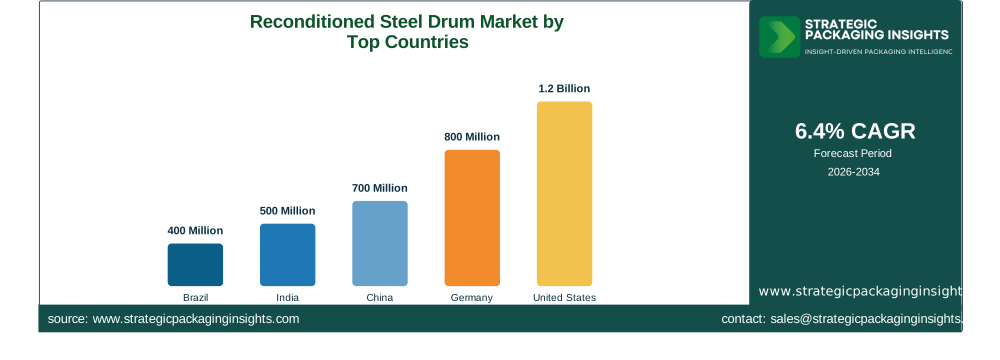
Germany is another key player in the market, with a market size of around $800 million and a CAGR of 4%. The country's advanced manufacturing sector and focus on environmental sustainability contribute to the demand for reconditioned steel drums. Innovations in reconditioning technologies and government incentives for sustainable practices are key growth drivers. However, the market faces challenges from high production costs and regulatory compliance requirements.
China, with its rapidly growing industrial sector, presents significant growth opportunities for the reconditioned steel drum market. The market size is estimated at $700 million, with a CAGR of 7%. The country's focus on industrial expansion and environmental conservation drives the demand for reconditioned drums. However, the market faces challenges from competition with low-cost alternatives and regulatory hurdles.
India is emerging as a promising market for reconditioned steel drums, with a market size of $500 million and a CAGR of 8%. The country's expanding industrial base and increasing awareness of sustainable practices drive market growth. Government initiatives promoting eco-friendly packaging solutions further support the market. However, challenges such as infrastructure limitations and regulatory compliance need to be addressed.
Brazil, with a market size of $400 million and a CAGR of 6%, is another key market for reconditioned steel drums. The country's growing industrial sector and focus on sustainability drive the demand for reconditioned drums. Government policies promoting environmental conservation and resource optimization are key growth drivers. However, the market faces challenges from economic volatility and competition from alternative packaging solutions.
Reconditioned Steel Drum Market Segments Insights

Product Type Analysis
The reconditioned steel drum market is segmented by product type into reconditioned tight-head drums, reconditioned open-head drums, and washed drums. Reconditioned tight-head drums are favored for their durability and ability to securely contain hazardous materials, making them ideal for industries dealing with chemicals and industrial liquids. The demand for these drums is driven by stringent safety regulations and the need for reliable containment solutions. Reconditioned open-head drums, on the other hand, offer versatility and ease of access, making them suitable for a wide range of applications, including the storage and transportation of solids and semi-solids. Washed drums are gaining popularity due to their cost-effectiveness and environmental benefits, as they reduce the need for new materials and minimize waste.
The competition within the product type segment is intense, with companies focusing on innovation and quality to differentiate their offerings. The growing emphasis on sustainability and resource optimization is driving the demand for reconditioned drums, as they offer an eco-friendly alternative to new drums. Additionally, advancements in reconditioning technologies are enhancing the performance and durability of these drums, making them more appealing to a broader range of industries. The integration of smart technologies, such as RFID tagging, is also expected to drive market growth by improving tracking and management capabilities.
Capacity Analysis
The reconditioned steel drum market is segmented by capacity into 30-55 gallons and above 55 gallons. The 30-55 gallons segment is the most popular, as it offers a balance between capacity and ease of handling, making it suitable for a wide range of applications. These drums are commonly used in industries dealing with chemicals, oils, and solvents, where efficient storage and transportation are crucial. The demand for drums in this capacity range is driven by the need for cost-effective and sustainable packaging solutions, as well as the growing emphasis on resource optimization.
The above 55 gallons segment is gaining traction, particularly in industries requiring bulk storage and transportation solutions. These drums offer the advantage of reduced handling and transportation costs, as they can accommodate larger volumes of materials. The demand for drums in this capacity range is driven by the expanding industrial sectors in emerging economies, where the need for efficient and sustainable packaging solutions is on the rise. The competition within the capacity segment is intense, with companies focusing on innovation and quality to differentiate their offerings and capture a larger share of the market.
Application Analysis
The reconditioned steel drum market is segmented by application into chemicals, oils, solvents, and industrial liquids. The chemicals segment is the largest, driven by the need for safe and reliable containment solutions for hazardous materials. Reconditioned steel drums offer the durability and security required for the storage and transportation of chemicals, making them a preferred choice for chemical companies. The demand for drums in this segment is driven by stringent safety regulations and the need for cost-effective and sustainable packaging solutions.
The oils and solvents segments are also significant, as these industries require efficient storage and transportation solutions for their products. Reconditioned steel drums offer the durability and reliability needed to safely contain oils and solvents, making them a popular choice for these applications. The demand for drums in these segments is driven by the growing emphasis on sustainability and resource optimization, as well as the need for cost-effective packaging solutions. The competition within the application segment is intense, with companies focusing on innovation and quality to differentiate their offerings and capture a larger share of the market.
End Use Analysis
The reconditioned steel drum market is segmented by end use into chemical companies, logistics, waste handlers, and industrial users. Chemical companies are the largest end users, as they require safe and reliable containment solutions for hazardous materials. Reconditioned steel drums offer the durability and security needed for the storage and transportation of chemicals, making them a preferred choice for chemical companies. The demand for drums in this segment is driven by stringent safety regulations and the need for cost-effective and sustainable packaging solutions.
The logistics and waste handlers segments are also significant, as these industries require efficient storage and transportation solutions for their products. Reconditioned steel drums offer the durability and reliability needed to safely contain and transport materials, making them a popular choice for these applications. The demand for drums in these segments is driven by the growing emphasis on sustainability and resource optimization, as well as the need for cost-effective packaging solutions. The competition within the end use segment is intense, with companies focusing on innovation and quality to differentiate their offerings and capture a larger share of the market.
Reconditioned Steel Drum Market Segments
The Reconditioned Steel Drum market has been segmented on the basis ofBy Product Type
- Reconditioned Tight-Head Drums
- Reconditioned Open-Head Drums
- Washed Drums
By Capacity
- 30–55 Gallons
- Above 55 Gallons
By Application
- Chemicals
- Oils
- Solvents
- Industrial Liquids
By End Use
- Chemical Companies
- Logistics
- Waste Handlers
- Industrial Users
Region
- Asia Pacific
- North America
- Latin America
- Europe
- Middle East & Africa




