


Ready to Drink (RTD) Packaging Market Outlook
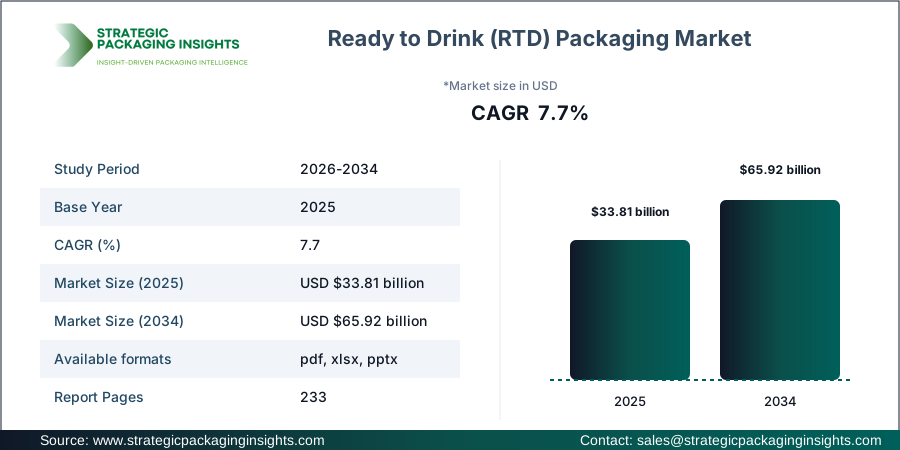
The Ready to Drink (RTD) Packaging market was valued at $33.81 billion in 2025 and is projected to reach $65.92 billion by 2034, growing at a CAGR of 7.7% during the forecast period 2026-2034. This market is experiencing robust growth driven by the increasing consumer preference for convenience and on-the-go consumption. The demand for RTD beverages, including tea, coffee, energy drinks, and cocktails, is surging, which in turn is boosting the need for innovative and sustainable packaging solutions. The market is also benefiting from advancements in packaging technology, which are enabling manufacturers to offer more durable, lightweight, and eco-friendly packaging options. The rise in health-conscious consumers is further propelling the demand for functional beverages, thereby expanding the RTD packaging market.
However, the market faces certain challenges, including stringent environmental regulations and the high cost of raw materials. The increasing focus on sustainability is pushing manufacturers to adopt eco-friendly packaging materials, which can be costlier than traditional options. Additionally, the market is highly competitive, with numerous players vying for market share, which can lead to price wars and reduced profit margins. Despite these challenges, the RTD packaging market holds significant growth potential, driven by the continuous innovation in packaging designs and materials, as well as the expanding distribution networks across emerging markets. The growing trend of premiumization in the beverage industry is also expected to create lucrative opportunities for market players.
Report Scope
| Attributes | Details |
| Report Title | Ready to Drink (RTD) Packaging Market Size, Future Growth and Forecast 2034 |
| By Packaging Type | Cans, PET Bottles, Cartons, Pouches |
| By Material Type | Aluminum, PET, Paperboard, Glass |
| By Application | Tea, Coffee, Energy Drinks, Cocktails, Functional Beverages |
| By End Use | Beverage Brands, Retailers, Foodservice |
| Region | Asia Pacific, North America, Latin America, Europe, Middle East & Africa |
| Base Year | 2025 |
| Historic Period | 2018-2024 |
| Forecast Period | 2026-2034 |
| Number of Pages | 233 |
| Customization Available | Yes* |
Opportunities & Threats
The Ready to Drink (RTD) Packaging market presents numerous opportunities for growth, primarily driven by the increasing consumer demand for convenience and portability. As lifestyles become more fast-paced, consumers are seeking beverages that can be consumed on-the-go, leading to a surge in demand for RTD packaging solutions. This trend is particularly prominent in urban areas, where busy schedules and long commutes necessitate convenient consumption options. Additionally, the rise of e-commerce and online grocery shopping is creating new avenues for RTD packaging, as consumers increasingly prefer home delivery of beverages. This shift in consumer behavior is prompting manufacturers to develop packaging that is not only convenient but also durable enough to withstand the rigors of shipping and handling.
Another significant opportunity lies in the growing trend towards health and wellness, which is driving the demand for functional beverages. Consumers are increasingly seeking beverages that offer health benefits, such as enhanced hydration, energy boosts, or nutritional supplements. This trend is creating a demand for innovative packaging solutions that can preserve the integrity and efficacy of these functional ingredients. Moreover, the increasing focus on sustainability is encouraging manufacturers to explore eco-friendly packaging options, such as biodegradable materials and recyclable designs. This shift towards sustainable packaging is not only meeting consumer demand but also helping companies comply with environmental regulations and reduce their carbon footprint.
Despite the promising opportunities, the RTD packaging market faces several threats, including the volatility of raw material prices and the stringent regulatory environment. The cost of materials such as aluminum and PET can fluctuate significantly, impacting the profitability of packaging manufacturers. Additionally, the increasing emphasis on sustainability is leading to stricter regulations regarding packaging waste and recyclability. Companies must invest in research and development to create packaging solutions that meet these regulatory requirements, which can be a costly and time-consuming process. Furthermore, the market is highly competitive, with numerous players offering similar products, leading to price competition and pressure on profit margins.
Drivers & Challenges
The primary drivers of the Ready to Drink (RTD) Packaging market include the growing consumer preference for convenience and the increasing demand for on-the-go beverages. As urbanization continues to rise, consumers are leading busier lifestyles, which is driving the demand for convenient beverage options that can be consumed anytime, anywhere. This trend is particularly evident among millennials and younger consumers, who prioritize convenience and portability in their purchasing decisions. Additionally, the rise of health-conscious consumers is fueling the demand for functional beverages, which in turn is boosting the need for innovative RTD packaging solutions that can preserve the quality and efficacy of these products.
Technological advancements in packaging are also playing a crucial role in driving market growth. Innovations such as lightweight materials, improved barrier properties, and enhanced shelf life are enabling manufacturers to offer more durable and sustainable packaging solutions. These advancements are not only meeting consumer demand for convenience and sustainability but also helping companies reduce costs and improve operational efficiency. Furthermore, the expansion of distribution networks, particularly in emerging markets, is providing new growth opportunities for RTD packaging manufacturers. As more consumers gain access to a wider variety of beverages, the demand for diverse and innovative packaging solutions is expected to increase.
However, the RTD packaging market faces several challenges, including the high cost of raw materials and the stringent regulatory environment. The volatility of raw material prices, particularly for aluminum and PET, can significantly impact the profitability of packaging manufacturers. Additionally, the increasing focus on sustainability is leading to stricter regulations regarding packaging waste and recyclability. Companies must invest in research and development to create packaging solutions that meet these regulatory requirements, which can be a costly and time-consuming process. Furthermore, the market is highly competitive, with numerous players offering similar products, leading to price competition and pressure on profit margins.
Market Share Analysis
The Ready to Drink (RTD) Packaging market is characterized by a highly competitive landscape, with several key players dominating the market. These companies are continuously striving to enhance their market position through strategic initiatives such as mergers and acquisitions, partnerships, and product innovations. The competitive rivalry in the market is intense, with companies focusing on expanding their product portfolios and improving their distribution networks to gain a competitive edge. The market is also witnessing a trend towards consolidation, as larger players acquire smaller companies to strengthen their market presence and expand their geographical reach.
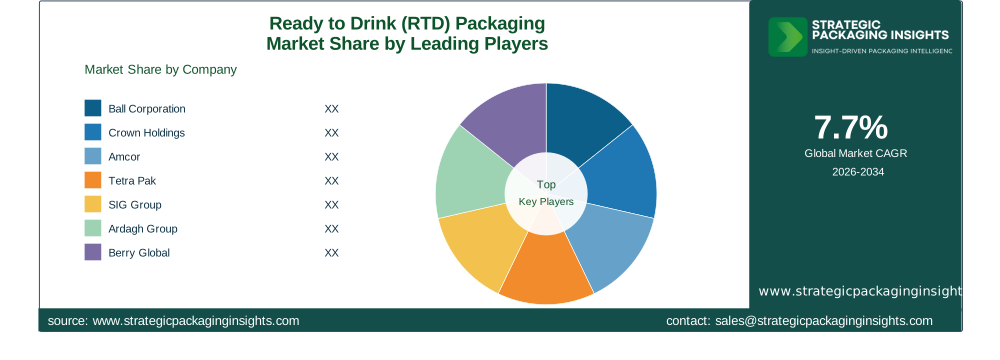
Ball Corporation is one of the leading players in the RTD packaging market, known for its innovative and sustainable packaging solutions. The company holds a significant market share, driven by its strong focus on research and development and its commitment to sustainability. Crown Holdings is another major player, offering a wide range of packaging solutions for the beverage industry. The company's extensive product portfolio and global presence have helped it maintain a strong market position. Amcor is also a key player in the market, known for its advanced packaging technologies and commitment to sustainability. The company's focus on innovation and customer-centric solutions has enabled it to capture a significant share of the market.
Tetra Pak is a prominent player in the RTD packaging market, offering a wide range of carton packaging solutions for the beverage industry. The company's strong focus on sustainability and innovation has helped it maintain a competitive edge in the market. SIG Group is another key player, known for its advanced aseptic packaging solutions. The company's commitment to innovation and sustainability has enabled it to capture a significant share of the market. Ardagh Group is also a major player in the market, offering a wide range of metal and glass packaging solutions for the beverage industry. The company's strong focus on sustainability and innovation has helped it maintain a competitive edge in the market.
Berry Global is a leading player in the RTD packaging market, known for its innovative and sustainable packaging solutions. The company's strong focus on research and development and its commitment to sustainability have helped it capture a significant share of the market. ALPLA is another major player, offering a wide range of plastic packaging solutions for the beverage industry. The company's extensive product portfolio and global presence have helped it maintain a strong market position. Plastipak is also a key player in the market, known for its advanced packaging technologies and commitment to sustainability. The company's focus on innovation and customer-centric solutions has enabled it to capture a significant share of the market.
Key Highlights
- The RTD packaging market is projected to grow at a CAGR of 7.7% from 2026 to 2034.
- Increasing consumer demand for convenience and on-the-go consumption is driving market growth.
- Technological advancements in packaging are enabling more durable and sustainable solutions.
- The rise of health-conscious consumers is boosting demand for functional beverage packaging.
- Stringent environmental regulations are pushing manufacturers towards eco-friendly packaging.
- The market is highly competitive, with key players focusing on innovation and sustainability.
- Emerging markets offer significant growth opportunities for RTD packaging manufacturers.
- Volatility in raw material prices poses a challenge to market profitability.
- The trend towards premiumization in the beverage industry is creating new opportunities.
- Expansion of distribution networks is providing new growth avenues for market players.
Top Countries Insights
In the Ready to Drink (RTD) Packaging market, the United States stands out as a key player, with a market size of approximately $12 billion and a CAGR of 6%. The country's robust demand for convenience and on-the-go beverages is a major growth driver, supported by a strong retail infrastructure and a high level of consumer spending. Additionally, the trend towards health and wellness is boosting the demand for functional beverages, further driving the need for innovative packaging solutions. However, the market faces challenges from stringent environmental regulations and the high cost of raw materials.
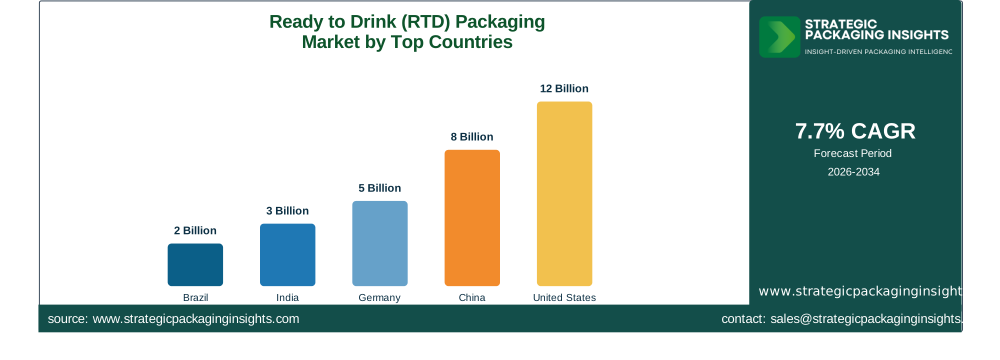
China is another significant market for RTD packaging, with a market size of around $8 billion and a CAGR of 10%. The country's rapid urbanization and growing middle class are driving the demand for convenient beverage options. Additionally, the increasing focus on sustainability is encouraging manufacturers to adopt eco-friendly packaging solutions. However, the market faces challenges from regulatory hurdles and the volatility of raw material prices. Despite these challenges, the market holds significant growth potential, driven by the expanding distribution networks and the rising demand for premium beverages.
Germany is a key market in Europe, with a market size of approximately $5 billion and a CAGR of 7%. The country's strong focus on sustainability and innovation is driving the demand for eco-friendly packaging solutions. Additionally, the rise of health-conscious consumers is boosting the demand for functional beverages, further driving the need for innovative packaging solutions. However, the market faces challenges from stringent environmental regulations and the high cost of raw materials. Despite these challenges, the market holds significant growth potential, driven by the expanding distribution networks and the rising demand for premium beverages.
India is an emerging market for RTD packaging, with a market size of around $3 billion and a CAGR of 12%. The country's rapid urbanization and growing middle class are driving the demand for convenient beverage options. Additionally, the increasing focus on sustainability is encouraging manufacturers to adopt eco-friendly packaging solutions. However, the market faces challenges from regulatory hurdles and the volatility of raw material prices. Despite these challenges, the market holds significant growth potential, driven by the expanding distribution networks and the rising demand for premium beverages.
Brazil is a key market in Latin America, with a market size of approximately $2 billion and a CAGR of 8%. The country's strong demand for convenience and on-the-go beverages is a major growth driver, supported by a strong retail infrastructure and a high level of consumer spending. Additionally, the trend towards health and wellness is boosting the demand for functional beverages, further driving the need for innovative packaging solutions. However, the market faces challenges from stringent environmental regulations and the high cost of raw materials. Despite these challenges, the market holds significant growth potential, driven by the expanding distribution networks and the rising demand for premium beverages.
Ready to Drink (RTD) Packaging Market Segments Insights

Packaging Type Analysis
The Ready to Drink (RTD) Packaging market is segmented by packaging type into cans, PET bottles, cartons, and pouches. Cans are a popular choice due to their durability, recyclability, and ability to preserve the taste and quality of beverages. The demand for cans is particularly strong in the energy drinks and carbonated beverages segments, where consumers prioritize convenience and portability. PET bottles are also widely used, especially for non-carbonated beverages like tea and coffee. They offer advantages such as lightweight, shatterproof properties, and transparency, which appeal to consumers seeking convenience and product visibility.
Cartons are gaining traction in the RTD packaging market, driven by their eco-friendly attributes and ability to preserve the freshness and quality of beverages. They are particularly popular in the functional beverages and dairy segments, where consumers prioritize sustainability and product integrity. Pouches are emerging as a versatile packaging option, offering benefits such as lightweight, flexibility, and ease of use. They are increasingly used for single-serve beverages and are popular among consumers seeking convenience and portion control. The growing trend towards premiumization in the beverage industry is also driving the demand for innovative and aesthetically appealing packaging solutions.
Material Type Analysis
The RTD packaging market is segmented by material type into aluminum, PET, paperboard, and glass. Aluminum is a preferred material for cans due to its lightweight, recyclability, and ability to preserve the taste and quality of beverages. The demand for aluminum packaging is particularly strong in the energy drinks and carbonated beverages segments, where consumers prioritize convenience and sustainability. PET is widely used for bottles, offering advantages such as lightweight, shatterproof properties, and transparency, which appeal to consumers seeking convenience and product visibility.
Paperboard is gaining traction in the RTD packaging market, driven by its eco-friendly attributes and ability to preserve the freshness and quality of beverages. It is particularly popular in the functional beverages and dairy segments, where consumers prioritize sustainability and product integrity. Glass is a traditional packaging material known for its premium appeal and ability to preserve the taste and quality of beverages. It is particularly popular in the premium beverages segment, where consumers prioritize quality and aesthetics. The growing trend towards sustainability and premiumization in the beverage industry is driving the demand for innovative and eco-friendly packaging solutions.
Application Analysis
The RTD packaging market is segmented by application into tea, coffee, energy drinks, cocktails, and functional beverages. The demand for RTD tea and coffee is driven by the increasing consumer preference for convenience and on-the-go consumption. These beverages are particularly popular among millennials and younger consumers, who prioritize convenience and portability in their purchasing decisions. Energy drinks are also a significant segment, driven by the growing demand for functional beverages that offer energy boosts and enhanced performance.
Cocktails are gaining popularity in the RTD packaging market, driven by the increasing consumer demand for convenience and premiumization. The trend towards premiumization in the beverage industry is creating new opportunities for innovative and aesthetically appealing packaging solutions. Functional beverages are also a significant segment, driven by the growing trend towards health and wellness. Consumers are increasingly seeking beverages that offer health benefits, such as enhanced hydration, energy boosts, or nutritional supplements. This trend is creating a demand for innovative packaging solutions that can preserve the integrity and efficacy of these functional ingredients.
End Use Analysis
The RTD packaging market is segmented by end use into beverage brands, retailers, and foodservice. Beverage brands are the primary end users of RTD packaging, driven by the increasing consumer demand for convenience and on-the-go consumption. These brands are continuously striving to enhance their market position through strategic initiatives such as mergers and acquisitions, partnerships, and product innovations. The competitive rivalry in the market is intense, with companies focusing on expanding their product portfolios and improving their distribution networks to gain a competitive edge.
Retailers are also significant end users of RTD packaging, driven by the growing trend towards e-commerce and online grocery shopping. Consumers increasingly prefer home delivery of beverages, prompting retailers to develop packaging that is not only convenient but also durable enough to withstand the rigors of shipping and handling. Foodservice is another significant end user, driven by the increasing consumer demand for convenience and on-the-go consumption. The growing trend towards premiumization in the beverage industry is also creating new opportunities for innovative and aesthetically appealing packaging solutions.
Ready to Drink (RTD) Packaging Market Segments
The Ready to Drink (RTD) Packaging market has been segmented on the basis ofBy Packaging Type
- Cans
- PET Bottles
- Cartons
- Pouches
By Material Type
- Aluminum
- PET
- Paperboard
- Glass
By Application
- Tea
- Coffee
- Energy Drinks
- Cocktails
- Functional Beverages
By End Use
- Beverage Brands
- Retailers
- Foodservice
Region
- Asia Pacific
- North America
- Latin America
- Europe
- Middle East & Africa




