


Push-back Racking System Market Outlook
The Push-back Racking System market was valued at $1.14 billion in 2025 and is projected to reach $1.82 billion by 2034, growing at a CAGR of 5.4% during the forecast period 2026-2034. This growth is driven by the increasing demand for efficient storage solutions in various industries, including logistics, FMCG, and automotive. The need for optimizing warehouse space and improving inventory management has led to the adoption of push-back racking systems, which offer high-density storage and easy access to stored goods. The market is also benefiting from technological advancements that enhance the functionality and efficiency of these systems, making them more attractive to end-users.
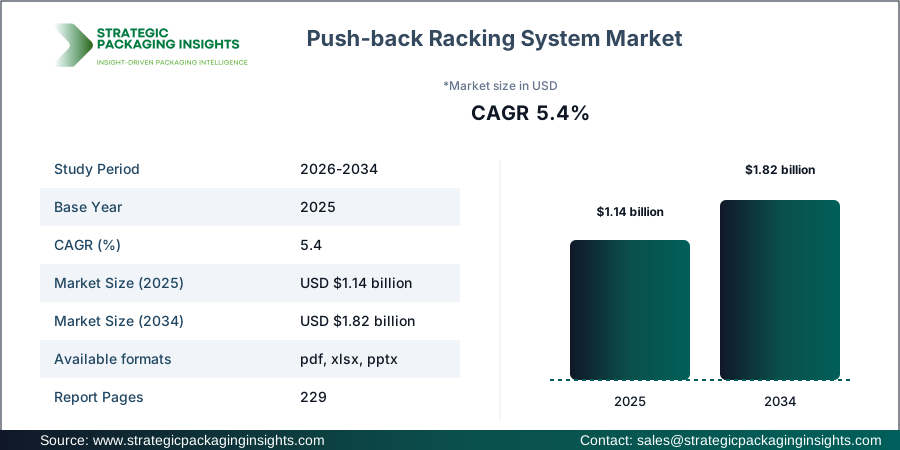
However, the market faces certain challenges, such as the high initial investment required for the installation of push-back racking systems. Additionally, the complexity of these systems can lead to increased maintenance costs, which may deter some potential buyers. Despite these challenges, the market holds significant growth potential, particularly in emerging economies where industrialization and urbanization are driving the demand for advanced storage solutions. Regulatory frameworks promoting efficient space utilization and sustainability are also expected to support market growth in the coming years.
Report Scope
| Attributes | Details |
| Report Title | Push-back Racking System Market Size, Future Growth and Forecast 2034 |
| By Product Type | two-deep systems, three-deep systems, high-density systems |
| By Load Capacity | light-duty, medium-duty, heavy-duty |
| By Application | warehouse storage, cold storage, manufacturing inventory, retail distribution |
| By End Use | logistics, FMCG, automotive, food & beverage |
| Region | Asia Pacific, North America, Latin America, Europe, Middle East & Africa |
| Base Year | 2025 |
| Historic Period | 2018-2024 |
| Forecast Period | 2026-2034 |
| Number of Pages | 229 |
| Customization Available | Yes* |
Opportunities & Threats
The push-back racking system market presents numerous opportunities for growth, particularly in the context of increasing e-commerce activities. As online retail continues to expand, the demand for efficient warehouse storage solutions is rising, creating a favorable environment for the adoption of push-back racking systems. These systems offer the advantage of maximizing storage space while allowing for easy access to goods, which is crucial for e-commerce operations that require quick order fulfillment. Additionally, the trend towards automation in warehouses is expected to drive the demand for advanced racking systems that can integrate seamlessly with automated material handling equipment.
Another significant opportunity lies in the growing emphasis on sustainability and green logistics. Companies are increasingly seeking storage solutions that not only optimize space but also reduce energy consumption and carbon footprint. Push-back racking systems, with their ability to enhance storage density and efficiency, align well with these sustainability goals. Furthermore, the development of innovative materials and designs that improve the durability and performance of these systems is likely to open new avenues for market expansion.
On the other hand, the market faces threats from the high costs associated with the installation and maintenance of push-back racking systems. These costs can be prohibitive for small and medium-sized enterprises, limiting the market's reach. Additionally, the availability of alternative storage solutions, such as pallet flow racks and drive-in racks, poses a competitive threat. These alternatives may offer similar benefits at a lower cost, making them attractive to cost-conscious buyers. The market must also contend with potential disruptions in the supply chain, which could impact the availability and pricing of raw materials used in the manufacturing of racking systems.
Drivers & Challenges
The primary drivers of the push-back racking system market include the increasing need for efficient space utilization in warehouses and distribution centers. As businesses strive to optimize their operations and reduce costs, the demand for high-density storage solutions is on the rise. Push-back racking systems offer a practical solution by allowing multiple pallets to be stored in a single lane, thereby maximizing storage capacity. This is particularly beneficial for industries with high inventory turnover, such as FMCG and automotive, where quick access to goods is essential.
Technological advancements are also playing a crucial role in driving market growth. The integration of smart technologies, such as IoT and AI, into racking systems is enhancing their functionality and efficiency. These technologies enable real-time monitoring and management of inventory, improving operational efficiency and reducing the risk of errors. Additionally, the development of modular and customizable racking solutions is catering to the diverse needs of end-users, further boosting market demand.
Despite these drivers, the market faces several challenges that could hinder its growth. One of the main challenges is the high initial investment required for the installation of push-back racking systems. This can be a significant barrier for small and medium-sized enterprises with limited budgets. Moreover, the complexity of these systems can lead to increased maintenance costs and the need for specialized training for personnel, adding to the overall cost of ownership. The market also faces competition from alternative storage solutions, which may offer similar benefits at a lower cost, posing a threat to the adoption of push-back racking systems.
Market Share Analysis
The push-back racking system market is characterized by a competitive landscape with several key players vying for market share. Companies such as Interlake Mecalux, Daifuku, SSI Schaefer, and Jungheinrich are among the leading players in the market, known for their innovative solutions and strong customer base. These companies have established a significant presence in the market through strategic partnerships, mergers, and acquisitions, as well as continuous investment in research and development to enhance their product offerings.
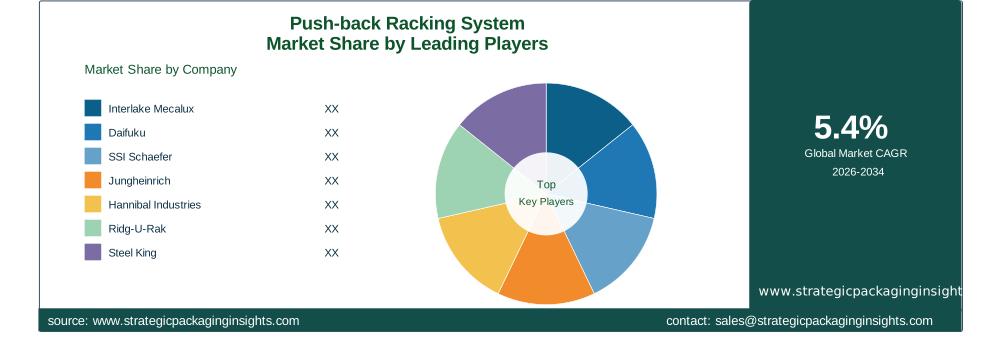
Interlake Mecalux is a prominent player in the market, known for its comprehensive range of racking solutions that cater to various industries. The company's focus on innovation and customer satisfaction has helped it maintain a strong market position. Similarly, Daifuku, a global leader in material handling systems, offers advanced push-back racking solutions that integrate seamlessly with automated systems, providing a competitive edge in the market.
SSI Schaefer is another key player, renowned for its high-quality racking systems and commitment to sustainability. The company's emphasis on eco-friendly solutions and efficient space utilization has resonated well with customers, contributing to its market success. Jungheinrich, with its extensive experience in intralogistics, offers a wide range of racking systems designed to meet the specific needs of different industries, further strengthening its market position.
Other notable companies in the market include Hannibal Industries, Ridg-U-Rak, Steel King, AR Racking, Frazier Industrial, and Constructor Group. These companies are known for their robust product portfolios and focus on customer-centric solutions. By leveraging their expertise and industry knowledge, they continue to expand their market presence and capture new opportunities in the growing push-back racking system market.
Key Highlights
- The push-back racking system market is projected to grow at a CAGR of 5.4% from 2026 to 2034.
- Increasing demand for efficient warehouse storage solutions is driving market growth.
- Technological advancements are enhancing the functionality and efficiency of racking systems.
- High initial investment and maintenance costs pose challenges to market growth.
- Emerging economies offer significant growth potential for the market.
- Key players are focusing on innovation and sustainability to maintain a competitive edge.
- The market is witnessing increased adoption of automated and smart racking solutions.
Top Countries Insights
In the push-back racking system market, the United States stands out as a key player, with a market size of approximately $350 million and a CAGR of 6%. The country's robust logistics and e-commerce sectors are major growth drivers, with companies seeking efficient storage solutions to manage increasing inventory volumes. Government policies promoting industrial automation and efficient space utilization further support market growth. However, challenges such as high installation costs and competition from alternative storage solutions persist.
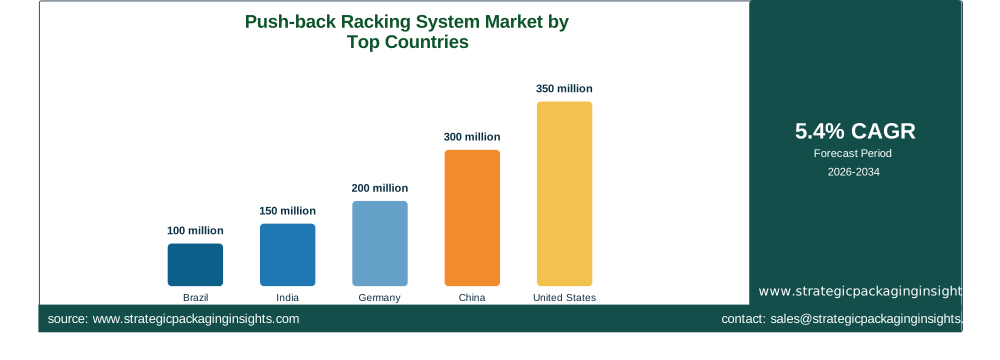
China is another significant market, with a market size of around $300 million and a CAGR of 7%. The country's rapid industrialization and urbanization are driving the demand for advanced storage solutions. The government's focus on modernizing logistics infrastructure and promoting sustainable practices is also contributing to market growth. However, the market faces challenges related to supply chain disruptions and fluctuating raw material prices.
Germany, with a market size of approximately $200 million and a CAGR of 5%, is a key market in Europe. The country's strong manufacturing sector and emphasis on efficiency and sustainability are driving the adoption of push-back racking systems. Government incentives for green logistics and energy-efficient solutions further support market growth. However, the market faces challenges from stringent regulations and high labor costs.
India, with a market size of around $150 million and a CAGR of 8%, offers significant growth potential. The country's expanding e-commerce sector and increasing investments in logistics infrastructure are key growth drivers. Government initiatives to promote industrial growth and improve supply chain efficiency are also contributing to market expansion. However, challenges such as inadequate infrastructure and regulatory hurdles persist.
Brazil, with a market size of approximately $100 million and a CAGR of 4%, is a notable market in Latin America. The country's growing retail and logistics sectors are driving the demand for efficient storage solutions. Government efforts to improve logistics infrastructure and promote sustainable practices are supporting market growth. However, economic instability and high import tariffs pose challenges to market expansion.
Push-back Racking System Market Segments Insights

Product Type Analysis
The push-back racking system market is segmented by product type into two-deep systems, three-deep systems, and high-density systems. Two-deep systems are popular for their simplicity and cost-effectiveness, making them suitable for small to medium-sized warehouses. These systems offer a balance between storage density and accessibility, catering to industries with moderate inventory turnover. Three-deep systems, on the other hand, provide higher storage density, making them ideal for larger warehouses and distribution centers. They are particularly favored in industries with high inventory turnover, such as FMCG and automotive, where quick access to goods is crucial.
High-density systems represent the most advanced segment, offering maximum storage capacity and efficiency. These systems are designed for large-scale operations and are often integrated with automated material handling equipment to enhance operational efficiency. The demand for high-density systems is driven by the need to optimize warehouse space and reduce operational costs. As businesses continue to seek ways to improve their storage capabilities, the high-density systems segment is expected to witness significant growth during the forecast period.
Load Capacity Analysis
Based on load capacity, the push-back racking system market is divided into light-duty, medium-duty, and heavy-duty systems. Light-duty systems are designed for storing lightweight goods and are commonly used in retail distribution and small-scale warehouses. These systems offer cost-effective storage solutions for businesses with limited space and budget constraints. Medium-duty systems cater to industries with moderate storage needs, such as manufacturing inventory and cold storage. They provide a balance between storage capacity and durability, making them suitable for a wide range of applications.
Heavy-duty systems are engineered to handle large and heavy loads, making them ideal for industries such as automotive and logistics. These systems are built to withstand the rigors of heavy-duty operations and offer enhanced durability and stability. The demand for heavy-duty systems is driven by the need for robust storage solutions that can accommodate large volumes of goods. As industries continue to expand their operations and increase their inventory levels, the heavy-duty systems segment is expected to experience substantial growth.
Application Analysis
The application segment of the push-back racking system market includes warehouse storage, cold storage, manufacturing inventory, and retail distribution. Warehouse storage is the largest application segment, driven by the increasing demand for efficient storage solutions in logistics and distribution centers. Push-back racking systems offer the advantage of maximizing storage space while allowing for easy access to goods, making them ideal for warehouse operations.
Cold storage is another significant application, where the need for efficient space utilization and temperature control is paramount. Push-back racking systems are well-suited for cold storage environments, as they allow for high-density storage and quick access to perishable goods. The manufacturing inventory segment is driven by the need for efficient storage solutions that can accommodate large volumes of raw materials and finished products. Retail distribution is also a key application, where the demand for quick order fulfillment and efficient inventory management is driving the adoption of push-back racking systems.
End Use Analysis
The push-back racking system market is segmented by end use into logistics, FMCG, automotive, and food & beverage. The logistics sector is the largest end-use segment, driven by the need for efficient storage solutions in warehouses and distribution centers. Push-back racking systems offer the advantage of maximizing storage space and improving inventory management, making them ideal for logistics operations.
The FMCG sector is another significant end-use segment, where the demand for quick access to goods and efficient inventory management is driving the adoption of push-back racking systems. The automotive industry is also a key end-use segment, where the need for robust storage solutions that can accommodate large volumes of parts and components is driving market growth. The food & beverage sector is driven by the need for efficient storage solutions that can accommodate large volumes of perishable goods and ensure quick access to products.
Push-back Racking System Market Segments
The Push-back Racking System market has been segmented on the basis ofBy Product Type
- two-deep systems
- three-deep systems
- high-density systems
By Load Capacity
- light-duty
- medium-duty
- heavy-duty
By Application
- warehouse storage
- cold storage
- manufacturing inventory
- retail distribution
By End Use
- logistics
- FMCG
- automotive
- food & beverage
Region
- Asia Pacific
- North America
- Latin America
- Europe
- Middle East & Africa




