


Pulp Liner Market Outlook
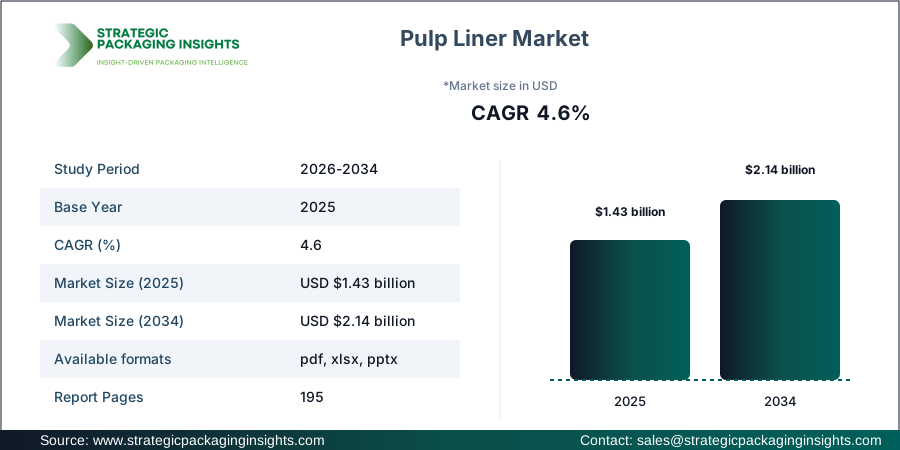
The pulp liner market was valued at $1.43 billion in 2025 and is projected to reach $2.14 billion by 2034, growing at a CAGR of 4.6% during the forecast period 2026-2034. This growth is driven by increasing demand for sustainable and eco-friendly packaging solutions across various industries. The pulp liner market is witnessing significant traction due to the rising awareness about environmental conservation and the need to reduce plastic waste. The shift towards biodegradable and recyclable materials in packaging is further propelling the market growth. Additionally, advancements in manufacturing technologies and the development of innovative pulp liner products are expected to enhance market expansion.
However, the market faces certain restraints, including the high cost of raw materials and the complex manufacturing processes involved in producing pulp liners. Regulatory challenges related to environmental compliance and the need for substantial investments in research and development are also potential barriers to market growth. Despite these challenges, the pulp liner market holds immense growth potential, driven by the increasing adoption of sustainable packaging solutions by major industries such as food and beverage, consumer goods, and industrial applications. The market is poised for significant expansion as companies continue to innovate and develop cost-effective and efficient pulp liner products.
Report Scope
| Attributes | Details |
| Report Title | Pulp Liner Market Size, Future Growth and Forecast 2034 |
| Coating | Coated, Uncoated |
| Application | Packaging, Industrial |
| End Use | Food & Beverage, Consumer Goods |
| Region | Asia Pacific, North America, Latin America, Europe, Middle East & Africa |
| Base Year | 2025 |
| Historic Period | 2018-2024 |
| Forecast Period | 2026-2034 |
| Number of Pages | 195 |
| Customization Available | Yes* |
Opportunities & Threats
The pulp liner market presents numerous opportunities for growth, primarily driven by the increasing demand for sustainable packaging solutions. As consumers become more environmentally conscious, there is a growing preference for biodegradable and recyclable materials, which is expected to boost the demand for pulp liners. The food and beverage industry, in particular, is a significant contributor to this demand, as companies seek to reduce their carbon footprint and comply with stringent environmental regulations. Additionally, the rise of e-commerce and online retailing has created a surge in demand for protective packaging solutions, further driving the growth of the pulp liner market.
Another opportunity lies in the development of innovative pulp liner products that offer enhanced performance and functionality. Manufacturers are investing in research and development to create pulp liners with improved strength, durability, and moisture resistance, catering to the diverse needs of various industries. The integration of advanced technologies, such as nanotechnology and bio-based materials, is expected to open new avenues for market growth. Furthermore, the expansion of the pulp liner market into emerging economies presents significant opportunities, as these regions witness rapid industrialization and urbanization, leading to increased demand for sustainable packaging solutions.
Despite the promising opportunities, the pulp liner market faces certain threats that could hinder its growth. One of the primary challenges is the high cost of raw materials, which can impact the profitability of manufacturers. Additionally, the complex manufacturing processes involved in producing pulp liners require significant investments in technology and infrastructure. Regulatory challenges related to environmental compliance and the need to adhere to stringent quality standards can also pose threats to market growth. Moreover, the presence of alternative packaging solutions, such as plastic and metal, could limit the adoption of pulp liners in certain applications.
Drivers & Challenges
The pulp liner market is driven by several key factors, including the increasing demand for sustainable and eco-friendly packaging solutions. As environmental concerns continue to rise, consumers and businesses alike are seeking alternatives to traditional packaging materials, such as plastic and metal. Pulp liners, being biodegradable and recyclable, offer a viable solution to this demand, driving their adoption across various industries. The food and beverage industry, in particular, is a major driver of market growth, as companies strive to reduce their environmental impact and comply with stringent regulations. Additionally, the rise of e-commerce and online retailing has created a surge in demand for protective packaging solutions, further propelling the growth of the pulp liner market.
Another significant driver of the pulp liner market is the advancement in manufacturing technologies and the development of innovative products. Manufacturers are investing in research and development to create pulp liners with enhanced performance and functionality, catering to the diverse needs of various industries. The integration of advanced technologies, such as nanotechnology and bio-based materials, is expected to open new avenues for market growth. Furthermore, the expansion of the pulp liner market into emerging economies presents significant opportunities, as these regions witness rapid industrialization and urbanization, leading to increased demand for sustainable packaging solutions.
Despite the promising drivers, the pulp liner market faces several challenges that could hinder its growth. One of the primary challenges is the high cost of raw materials, which can impact the profitability of manufacturers. Additionally, the complex manufacturing processes involved in producing pulp liners require significant investments in technology and infrastructure. Regulatory challenges related to environmental compliance and the need to adhere to stringent quality standards can also pose threats to market growth. Moreover, the presence of alternative packaging solutions, such as plastic and metal, could limit the adoption of pulp liners in certain applications.
Market Share Analysis
The competitive landscape of the pulp liner market is characterized by the presence of several key players, each striving to gain a significant share of the market. Companies such as Mondi, Smurfit Kappa, DS Smith, Stora Enso, and WestRock are among the leading players in the market, known for their extensive product portfolios and strong distribution networks. These companies are focusing on strategic initiatives, such as mergers and acquisitions, partnerships, and collaborations, to expand their market presence and enhance their product offerings. Additionally, they are investing in research and development to create innovative pulp liner products that cater to the evolving needs of consumers and industries.
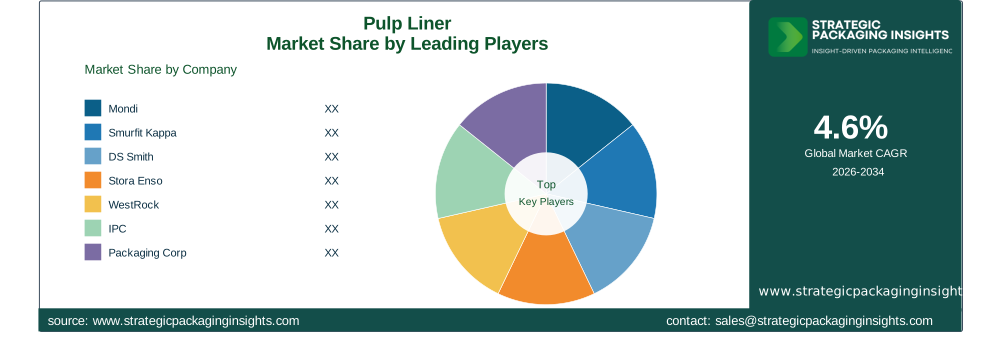
Mondi, a global leader in packaging and paper, holds a significant share of the pulp liner market, driven by its commitment to sustainability and innovation. The company offers a wide range of pulp liner products, catering to various industries, including food and beverage, consumer goods, and industrial applications. Smurfit Kappa, another major player, is known for its focus on sustainable packaging solutions and its extensive network of production facilities across the globe. The company's strong emphasis on research and development has enabled it to create innovative pulp liner products that meet the diverse needs of its customers.
DS Smith, a leading provider of sustainable packaging solutions, is also a prominent player in the pulp liner market. The company's focus on innovation and sustainability has helped it gain a competitive edge in the market. Stora Enso, a renewable materials company, is known for its commitment to sustainability and its extensive product portfolio, which includes a wide range of pulp liner products. WestRock, a global leader in packaging solutions, is also a key player in the market, known for its focus on innovation and customer-centric approach.
Other notable players in the pulp liner market include IPC, Packaging Corp, Georgia‑Pacific, Sonoco, and Sealed Air. These companies are focusing on expanding their market presence through strategic initiatives, such as mergers and acquisitions, partnerships, and collaborations. Additionally, they are investing in research and development to create innovative pulp liner products that cater to the evolving needs of consumers and industries. The competitive landscape of the pulp liner market is expected to remain dynamic, with companies striving to gain a significant share of the market through strategic initiatives and innovative product offerings.
Key Highlights
- The pulp liner market is projected to grow at a CAGR of 4.6% from 2026 to 2034.
- Increasing demand for sustainable and eco-friendly packaging solutions is driving market growth.
- The food and beverage industry is a major contributor to the demand for pulp liners.
- Advancements in manufacturing technologies are enhancing product performance and functionality.
- Emerging economies present significant growth opportunities for the pulp liner market.
- High cost of raw materials and complex manufacturing processes are potential challenges.
- Key players are focusing on strategic initiatives to expand their market presence.
- Innovative pulp liner products are being developed to cater to diverse industry needs.
- Regulatory challenges related to environmental compliance can impact market growth.
- The competitive landscape is characterized by the presence of several key players.
Top Countries Insights
In the pulp liner market, the United States stands out as a key player, with a market size of approximately $350 million and a CAGR of 5%. The country's strong focus on sustainability and environmental conservation is driving the demand for eco-friendly packaging solutions, including pulp liners. The presence of major food and beverage companies, coupled with stringent regulations on plastic usage, further boosts the market growth in the United States. Additionally, advancements in manufacturing technologies and the development of innovative pulp liner products are expected to enhance market expansion.
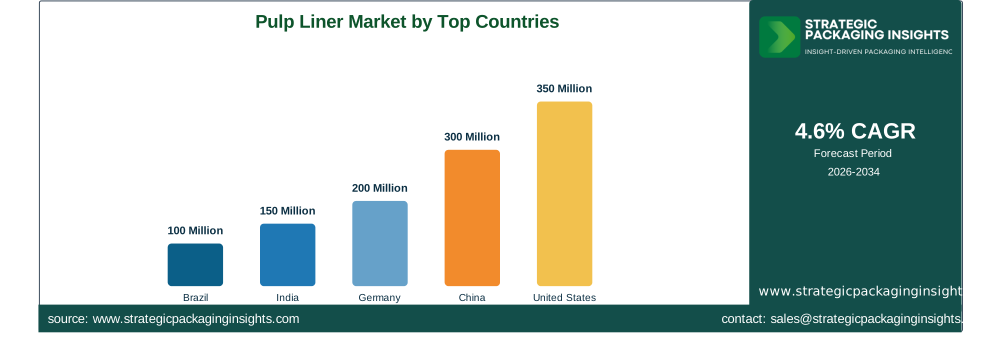
China is another significant market for pulp liners, with a market size of around $300 million and a CAGR of 6%. The country's rapid industrialization and urbanization have led to increased demand for sustainable packaging solutions. The government's initiatives to promote environmental conservation and reduce plastic waste are driving the adoption of pulp liners in various industries. Furthermore, the expansion of the e-commerce sector in China is creating a surge in demand for protective packaging solutions, further propelling the growth of the pulp liner market.
Germany, with a market size of approximately $200 million and a CAGR of 4%, is a key player in the European pulp liner market. The country's strong emphasis on sustainability and environmental protection is driving the demand for biodegradable and recyclable packaging materials. The presence of major packaging companies and the increasing adoption of eco-friendly packaging solutions in the food and beverage industry are contributing to market growth in Germany. Additionally, advancements in manufacturing technologies and the development of innovative pulp liner products are expected to enhance market expansion.
India, with a market size of around $150 million and a CAGR of 7%, is an emerging market for pulp liners. The country's rapid industrialization and urbanization have led to increased demand for sustainable packaging solutions. The government's initiatives to promote environmental conservation and reduce plastic waste are driving the adoption of pulp liners in various industries. Furthermore, the expansion of the e-commerce sector in India is creating a surge in demand for protective packaging solutions, further propelling the growth of the pulp liner market.
Brazil, with a market size of approximately $100 million and a CAGR of 5%, is a key player in the Latin American pulp liner market. The country's strong focus on sustainability and environmental conservation is driving the demand for eco-friendly packaging solutions, including pulp liners. The presence of major food and beverage companies, coupled with stringent regulations on plastic usage, further boosts the market growth in Brazil. Additionally, advancements in manufacturing technologies and the development of innovative pulp liner products are expected to enhance market expansion.
Pulp Liner Market Segments Insights

Coating Analysis
The coating segment of the pulp liner market is divided into coated and uncoated pulp liners. Coated pulp liners are gaining traction due to their enhanced durability and moisture resistance, making them suitable for a wide range of applications, particularly in the food and beverage industry. The demand for coated pulp liners is driven by the need for protective packaging solutions that can withstand varying environmental conditions. Manufacturers are focusing on developing innovative coating technologies to enhance the performance and functionality of pulp liners, catering to the diverse needs of consumers and industries.

Uncoated pulp liners, on the other hand, are preferred for applications where cost-effectiveness and biodegradability are the primary considerations. These liners are widely used in the packaging of consumer goods and industrial products, where the emphasis is on sustainability and environmental conservation. The demand for uncoated pulp liners is expected to grow as companies continue to seek eco-friendly packaging solutions that align with their sustainability goals. The coating segment of the pulp liner market is poised for significant growth, driven by the increasing demand for innovative and sustainable packaging solutions.
Application Analysis
The application segment of the pulp liner market is categorized into packaging and industrial applications. The packaging segment is the largest contributor to the market, driven by the increasing demand for sustainable and eco-friendly packaging solutions across various industries. The food and beverage industry, in particular, is a major driver of this demand, as companies strive to reduce their environmental impact and comply with stringent regulations. The rise of e-commerce and online retailing has also created a surge in demand for protective packaging solutions, further propelling the growth of the packaging segment.

Industrial applications of pulp liners are also witnessing significant growth, driven by the need for durable and moisture-resistant packaging solutions in various industrial sectors. The demand for pulp liners in industrial applications is expected to grow as companies continue to seek innovative and sustainable packaging solutions that cater to their specific needs. The application segment of the pulp liner market is poised for significant expansion, driven by the increasing adoption of pulp liners in both packaging and industrial applications.
End Use Analysis
The end-use segment of the pulp liner market is divided into food and beverage and consumer goods. The food and beverage industry is the largest end-user of pulp liners, driven by the increasing demand for sustainable and eco-friendly packaging solutions. The need to reduce plastic waste and comply with stringent environmental regulations is driving the adoption of pulp liners in the food and beverage industry. Additionally, the rise of e-commerce and online retailing has created a surge in demand for protective packaging solutions, further propelling the growth of the food and beverage segment.
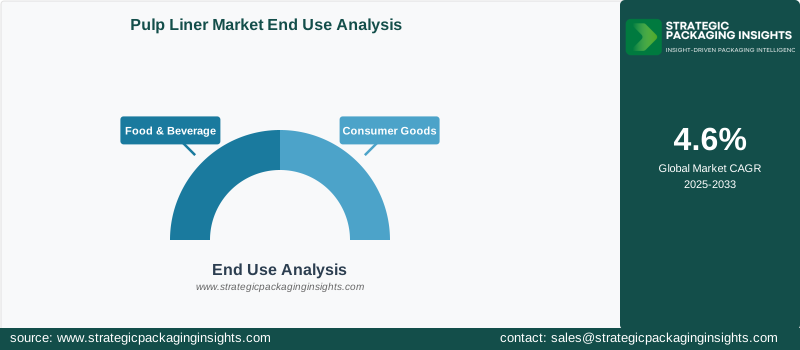
The consumer goods segment is also witnessing significant growth, driven by the increasing demand for sustainable packaging solutions that align with the sustainability goals of companies. The demand for pulp liners in the consumer goods segment is expected to grow as companies continue to seek innovative and eco-friendly packaging solutions that cater to their specific needs. The end-use segment of the pulp liner market is poised for significant expansion, driven by the increasing adoption of pulp liners in both the food and beverage and consumer goods industries.
Pulp Liner Market Segments
The Pulp Liner market has been segmented on the basis ofCoating
- Coated
- Uncoated
Application
- Packaging
- Industrial
End Use
- Food & Beverage
- Consumer Goods
Region
- Asia Pacific
- North America
- Latin America
- Europe
- Middle East & Africa




