


PSA Film Market Outlook
The PSA Film market was valued at $6.49 billion in 2025 and is projected to reach $11.32 billion by 2034, growing at a CAGR of 6.4% during the forecast period 2026-2034. This market is witnessing significant growth due to the increasing demand for pressure-sensitive adhesive films across various industries such as packaging, healthcare, automotive, and electronics. The versatility and efficiency of PSA films in providing strong adhesion without the need for heat or water make them highly desirable in these sectors. Additionally, advancements in film technology and the development of eco-friendly adhesive solutions are further propelling the market forward. The growing trend of lightweight and flexible packaging solutions is also contributing to the increased adoption of PSA films globally.
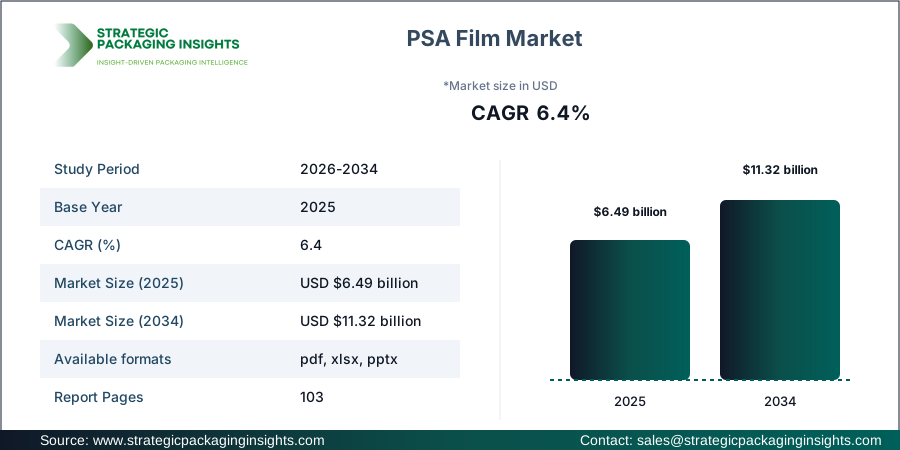
Despite the promising growth prospects, the PSA Film market faces certain challenges that could hinder its expansion. Regulatory constraints related to environmental concerns and the disposal of adhesive films pose significant hurdles for manufacturers. Moreover, the fluctuating prices of raw materials used in the production of PSA films can impact profit margins and market stability. However, the market holds immense potential for growth, driven by the rising demand for innovative and sustainable adhesive solutions. Companies are investing in research and development to create biodegradable and recyclable PSA films, which are expected to open new avenues for market expansion. The increasing focus on reducing carbon footprints and enhancing product performance is likely to drive the adoption of advanced PSA films in the coming years.
Report Scope
| Attributes | Details |
| Report Title | PSA Film Market Size, Future Growth and Forecast 2034 |
| Film Type | Acrylic PSA Films, Rubber PSA Films, Silicone PSA Films |
| Backing Material | PET, PP, PVC, Paper |
| Application | Labels, Tapes, Graphics, Medical Films |
| End Use | Packaging, Healthcare, Automotive, Electronics |
| Region | Asia Pacific, North America, Latin America, Europe, Middle East & Africa |
| Base Year | 2025 |
| Historic Period | 2018-2024 |
| Forecast Period | 2026-2034 |
| Number of Pages | 103 |
| Customization Available | Yes* |
Opportunities & Threats
The PSA Film market presents numerous opportunities for growth, primarily driven by the expanding applications in the healthcare and electronics sectors. In healthcare, PSA films are increasingly used in medical tapes and dressings due to their hypoallergenic properties and ease of use. The growing demand for wearable medical devices and the need for advanced wound care solutions are expected to boost the adoption of PSA films in this sector. Similarly, in the electronics industry, PSA films are used for bonding and sealing applications in devices such as smartphones, tablets, and other consumer electronics. The rapid technological advancements and the increasing trend of miniaturization in electronic devices are likely to create significant opportunities for PSA film manufacturers.
Another promising opportunity lies in the development of eco-friendly and sustainable PSA films. With the increasing awareness of environmental issues and the stringent regulations on plastic waste, there is a growing demand for biodegradable and recyclable adhesive solutions. Companies are focusing on developing PSA films that are not only effective but also environmentally friendly. This shift towards sustainable products is expected to drive innovation and open new markets for PSA films. Additionally, the rise of e-commerce and the growing demand for efficient packaging solutions present lucrative opportunities for PSA film manufacturers to expand their product offerings and cater to the evolving needs of the packaging industry.
However, the PSA Film market is not without its threats. One of the major challenges is the intense competition among key players, which can lead to price wars and reduced profit margins. The presence of numerous regional and international manufacturers increases the competitive pressure, making it crucial for companies to differentiate their products through innovation and quality. Furthermore, the volatility in raw material prices, particularly petroleum-based products, poses a significant threat to the market. Fluctuations in raw material costs can impact production expenses and affect the overall profitability of PSA film manufacturers. Companies need to adopt effective supply chain management strategies to mitigate these risks and maintain a competitive edge in the market.
Drivers & Challenges
The PSA Film market is primarily driven by the increasing demand for pressure-sensitive adhesive solutions across various industries. One of the key drivers is the growing need for efficient and reliable packaging solutions in the food and beverage industry. PSA films offer excellent adhesion properties, making them ideal for labeling and sealing applications. The rise of e-commerce and the increasing demand for packaged goods further fuel the demand for PSA films in the packaging sector. Additionally, the automotive industry is witnessing a surge in the use of PSA films for bonding and assembly applications, driven by the need for lightweight and durable materials. The growing trend of electric vehicles and the emphasis on reducing vehicle weight to enhance fuel efficiency are expected to boost the adoption of PSA films in the automotive sector.
Another significant driver is the advancements in adhesive technology, leading to the development of high-performance PSA films. Manufacturers are investing in research and development to create films with enhanced properties such as improved adhesion, temperature resistance, and durability. The introduction of innovative products, such as UV-curable PSA films and solvent-free adhesives, is expected to drive market growth. Moreover, the increasing focus on sustainability and the development of eco-friendly adhesive solutions are gaining traction in the market. The demand for biodegradable and recyclable PSA films is rising, driven by the growing awareness of environmental issues and the need for sustainable packaging solutions.
Despite the positive growth drivers, the PSA Film market faces several challenges that could impede its expansion. One of the major challenges is the stringent regulatory environment concerning the use of adhesives and their impact on the environment. Manufacturers need to comply with various regulations and standards related to the production and disposal of PSA films, which can increase operational costs and affect market growth. Additionally, the fluctuating prices of raw materials, particularly petroleum-based products, pose a significant challenge for manufacturers. The volatility in raw material costs can impact production expenses and affect the overall profitability of PSA film manufacturers. Companies need to adopt effective supply chain management strategies to mitigate these risks and maintain a competitive edge in the market.
Market Share Analysis
The PSA Film market is characterized by intense competition among key players, with several companies holding significant market shares. The competitive landscape is dominated by major players such as 3M, Avery Dennison, Nitto Denko, Tesa, Lintec, Scapa, Henkel, UPM Raflatac, Saint-Gobain, and Berry Global. These companies are focusing on expanding their product portfolios and enhancing their production capabilities to maintain their market positions. The presence of numerous regional and international manufacturers increases the competitive pressure, making it crucial for companies to differentiate their products through innovation and quality.
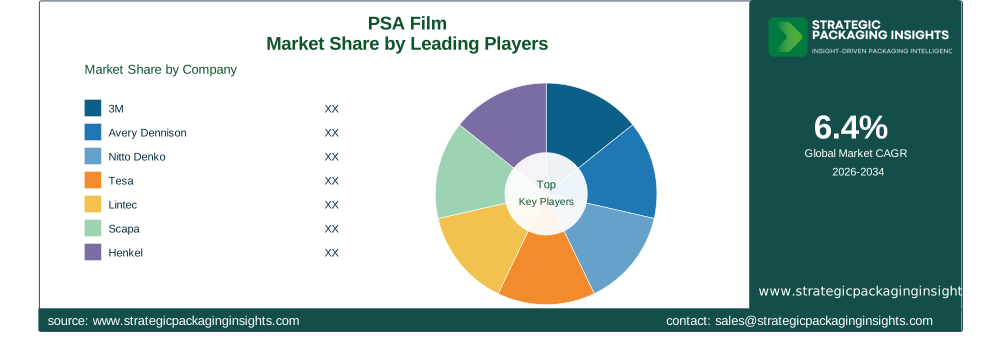
3M is one of the leading players in the PSA Film market, known for its extensive range of adhesive solutions and strong global presence. The company focuses on continuous innovation and product development to cater to the evolving needs of various industries. Avery Dennison is another major player, offering a wide range of pressure-sensitive adhesive films for applications in labeling, packaging, and graphics. The company's emphasis on sustainability and eco-friendly products has helped it gain a competitive edge in the market.
Nitto Denko and Tesa are also prominent players in the PSA Film market, known for their high-quality adhesive solutions and strong customer base. Nitto Denko focuses on developing advanced adhesive technologies and expanding its product offerings to meet the growing demand for PSA films. Tesa, on the other hand, emphasizes product innovation and customer-centric solutions to strengthen its market position. Lintec and Scapa are other key players, offering a diverse range of PSA films for various applications, including automotive, healthcare, and electronics.
Henkel, UPM Raflatac, Saint-Gobain, and Berry Global are also significant contributors to the PSA Film market. Henkel is known for its innovative adhesive solutions and strong focus on sustainability. The company's commitment to developing eco-friendly products has helped it gain a competitive advantage in the market. UPM Raflatac specializes in pressure-sensitive label materials and is recognized for its high-quality products and customer-centric approach. Saint-Gobain and Berry Global are also key players, offering a wide range of PSA films for applications in packaging, automotive, and electronics.
Key Highlights
- The PSA Film market is projected to grow from $6.49 billion in 2025 to $11.32 billion by 2034, at a CAGR of 6.4%.
- Key drivers include the rising demand for efficient packaging solutions and advancements in adhesive technology.
- Challenges include regulatory constraints and fluctuating raw material prices.
- Opportunities lie in the development of eco-friendly PSA films and expanding applications in healthcare and electronics.
- 3M, Avery Dennison, and Nitto Denko are among the leading players in the market.
- The automotive and packaging industries are major end-users of PSA films.
- Asia Pacific is expected to witness significant growth due to the increasing demand for PSA films in emerging economies.
- Companies are focusing on product innovation and sustainability to gain a competitive edge.
- The market is characterized by intense competition and the presence of numerous regional and international players.
Top Countries Insights
In the PSA Film market, the United States holds a significant share, driven by the strong demand for adhesive solutions in the packaging and automotive industries. The market size in the U.S. is substantial, with a CAGR of 5%. The country's focus on technological advancements and the presence of major players like 3M and Avery Dennison contribute to its market dominance. Additionally, the increasing demand for sustainable packaging solutions and the growth of the e-commerce sector are key drivers for the PSA Film market in the U.S.
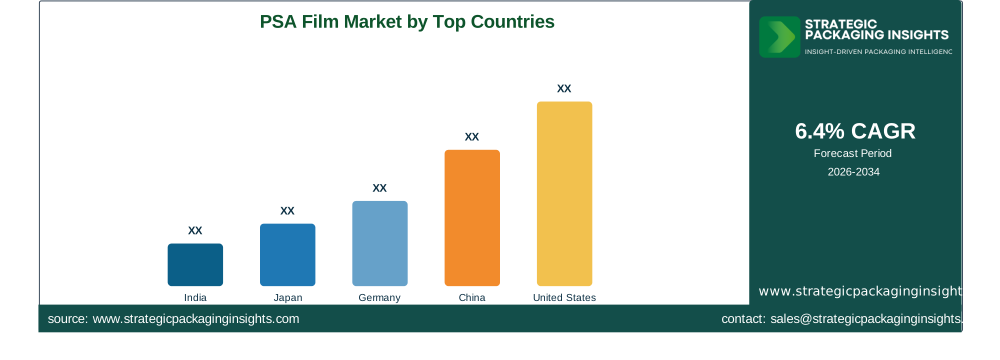
China is another major player in the PSA Film market, with a market size that continues to grow rapidly. The country's CAGR stands at 8%, driven by the expanding electronics and automotive industries. China's focus on innovation and the development of eco-friendly adhesive solutions are key factors contributing to its market growth. The government's initiatives to promote sustainable manufacturing practices and reduce carbon emissions further support the expansion of the PSA Film market in China.
Germany is a leading market for PSA films in Europe, with a CAGR of 6%. The country's strong automotive industry and the demand for high-performance adhesive solutions drive the market growth. Germany's emphasis on sustainability and the development of advanced adhesive technologies are key factors contributing to its market position. The presence of major players like Tesa and Henkel further strengthens the PSA Film market in Germany.
Japan is a significant market for PSA films in the Asia Pacific region, with a CAGR of 7%. The country's focus on technological advancements and the demand for high-quality adhesive solutions drive the market growth. Japan's emphasis on innovation and the development of eco-friendly products are key factors contributing to its market position. The presence of major players like Nitto Denko further strengthens the PSA Film market in Japan.
India is an emerging market for PSA films, with a CAGR of 9%. The country's growing packaging and automotive industries drive the market growth. India's focus on sustainable manufacturing practices and the development of eco-friendly adhesive solutions are key factors contributing to its market expansion. The government's initiatives to promote industrial growth and reduce carbon emissions further support the PSA Film market in India.
PSA Film Market Segments Insights

Film Type Analysis
The PSA Film market is segmented by film type into Acrylic PSA Films, Rubber PSA Films, and Silicone PSA Films. Acrylic PSA Films dominate the market due to their excellent adhesion properties and versatility across various applications. These films are widely used in the packaging and automotive industries, where strong and durable adhesion is required. The demand for Acrylic PSA Films is driven by their cost-effectiveness and ability to adhere to a wide range of surfaces. Additionally, the development of eco-friendly acrylic adhesives is expected to boost the market growth in this segment.
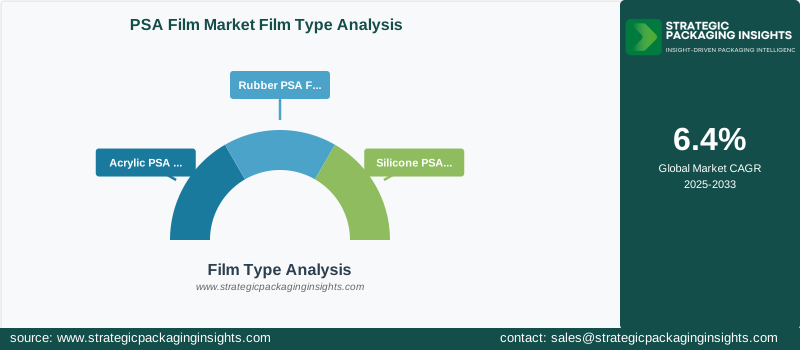
Rubber PSA Films are also gaining traction in the market, particularly in applications where high initial tack and peel strength are required. These films are commonly used in the electronics and healthcare industries, where reliable adhesion is crucial. The demand for Rubber PSA Films is driven by their ability to provide strong adhesion even in challenging environments. The development of advanced rubber adhesives with enhanced properties is expected to drive the market growth in this segment.
Silicone PSA Films are known for their excellent temperature resistance and durability, making them ideal for applications in the electronics and automotive industries. These films are used in bonding and sealing applications where high-performance adhesion is required. The demand for Silicone PSA Films is driven by their ability to withstand extreme temperatures and harsh environments. The development of innovative silicone adhesives with improved properties is expected to boost the market growth in this segment.
Backing Material Analysis
The PSA Film market is segmented by backing material into PET, PP, PVC, and Paper. PET is the most commonly used backing material due to its excellent dimensional stability and resistance to moisture and chemicals. PET-backed PSA films are widely used in the packaging and automotive industries, where durability and reliability are essential. The demand for PET-backed PSA films is driven by their ability to provide strong adhesion and withstand challenging environments. The development of eco-friendly PET materials is expected to boost the market growth in this segment.
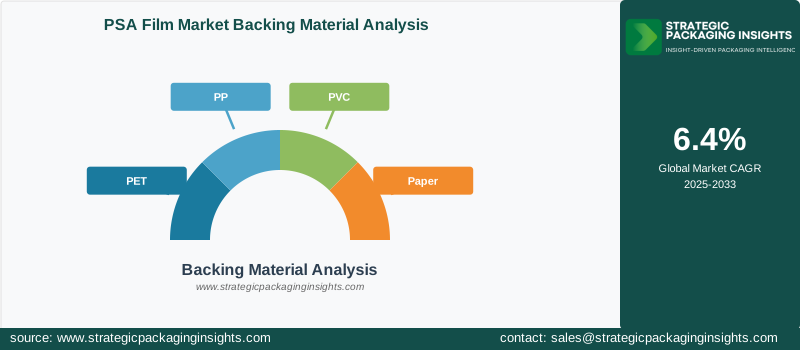
PP is another popular backing material, known for its flexibility and resistance to chemicals and moisture. PP-backed PSA films are commonly used in the healthcare and electronics industries, where flexibility and reliability are crucial. The demand for PP-backed PSA films is driven by their ability to provide strong adhesion and withstand challenging environments. The development of advanced PP materials with enhanced properties is expected to drive the market growth in this segment.
PVC is used as a backing material in applications where high durability and resistance to chemicals and moisture are required. PVC-backed PSA films are commonly used in the automotive and electronics industries, where reliable adhesion is crucial. The demand for PVC-backed PSA films is driven by their ability to provide strong adhesion and withstand challenging environments. The development of innovative PVC materials with improved properties is expected to boost the market growth in this segment.
Application Analysis
The PSA Film market is segmented by application into Labels, Tapes, Graphics, and Medical Films. Labels are the largest application segment, driven by the increasing demand for efficient and reliable labeling solutions in the packaging and healthcare industries. PSA films offer excellent adhesion properties, making them ideal for labeling applications where strong and durable adhesion is required. The demand for PSA films in the labels segment is driven by their ability to adhere to a wide range of surfaces and withstand challenging environments.
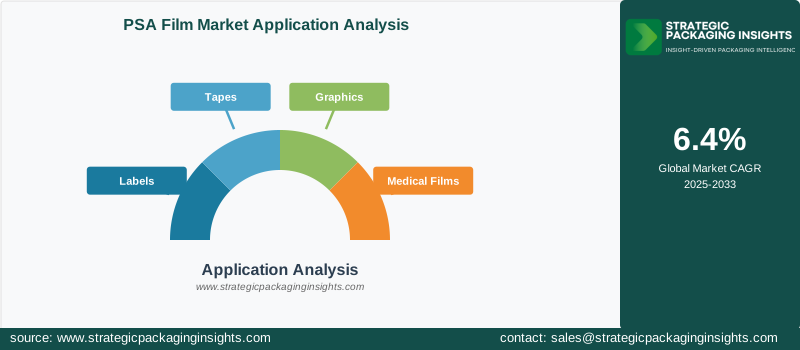
Tapes are another significant application segment, driven by the increasing demand for reliable bonding and sealing solutions in the automotive and electronics industries. PSA films offer excellent adhesion properties, making them ideal for tape applications where strong and durable adhesion is required. The demand for PSA films in the tapes segment is driven by their ability to provide strong adhesion and withstand challenging environments. The development of advanced tape solutions with enhanced properties is expected to drive the market growth in this segment.
Graphics is a growing application segment, driven by the increasing demand for high-quality and durable graphic solutions in the advertising and signage industries. PSA films offer excellent adhesion properties, making them ideal for graphic applications where strong and durable adhesion is required. The demand for PSA films in the graphics segment is driven by their ability to adhere to a wide range of surfaces and withstand challenging environments. The development of innovative graphic solutions with enhanced properties is expected to boost the market growth in this segment.
End Use Analysis
The PSA Film market is segmented by end use into Packaging, Healthcare, Automotive, and Electronics. Packaging is the largest end-use segment, driven by the increasing demand for efficient and reliable packaging solutions in the food and beverage industry. PSA films offer excellent adhesion properties, making them ideal for packaging applications where strong and durable adhesion is required. The demand for PSA films in the packaging segment is driven by their ability to adhere to a wide range of surfaces and withstand challenging environments.
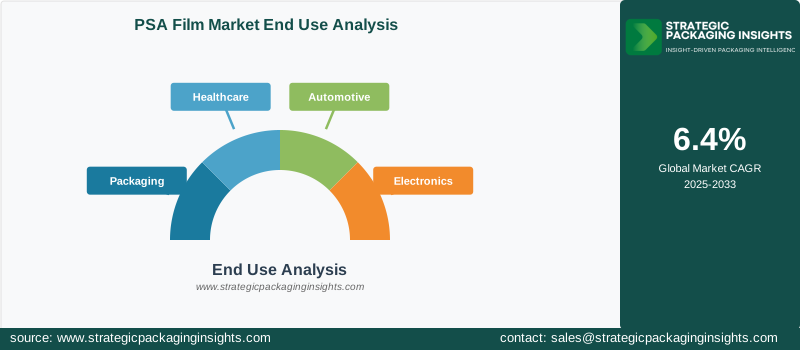
Healthcare is another significant end-use segment, driven by the increasing demand for advanced medical solutions and wearable devices. PSA films offer excellent adhesion properties, making them ideal for healthcare applications where strong and durable adhesion is required. The demand for PSA films in the healthcare segment is driven by their ability to provide reliable adhesion and withstand challenging environments. The development of innovative medical solutions with enhanced properties is expected to drive the market growth in this segment.
Automotive is a growing end-use segment, driven by the increasing demand for lightweight and durable materials in the automotive industry. PSA films offer excellent adhesion properties, making them ideal for automotive applications where strong and durable adhesion is required. The demand for PSA films in the automotive segment is driven by their ability to provide reliable adhesion and withstand challenging environments. The development of advanced automotive solutions with enhanced properties is expected to boost the market growth in this segment.
PSA Film Market Segments
The PSA Film market has been segmented on the basis ofFilm Type
- Acrylic PSA Films
- Rubber PSA Films
- Silicone PSA Films
Backing Material
- PET
- PP
- PVC
- Paper
Application
- Labels
- Tapes
- Graphics
- Medical Films
End Use
- Packaging
- Healthcare
- Automotive
- Electronics
Region
- Asia Pacific
- North America
- Latin America
- Europe
- Middle East & Africa




