


Printed Aluminium Foil Packaging Market Outlook
The Printed Aluminium Foil Packaging market was valued at $29.75 billion in 2025 and is projected to reach $43.62 billion by 2034, growing at a CAGR of 4.3% during the forecast period 2026-2034. This market is witnessing significant growth due to the increasing demand for sustainable and efficient packaging solutions across various industries. The versatility of printed aluminum foil in providing barrier protection, aesthetic appeal, and convenience is driving its adoption in sectors such as food and pharmaceuticals. The market is also benefiting from advancements in printing technologies, which enhance the quality and customization of packaging solutions.
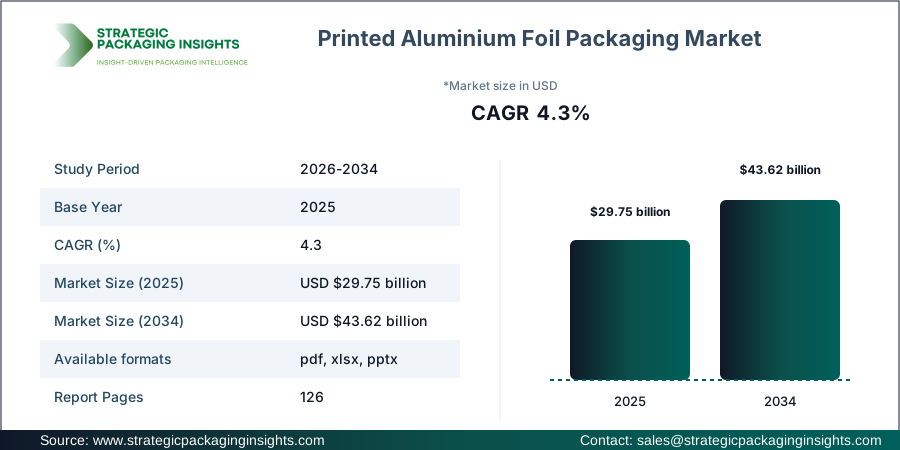
Despite the promising growth prospects, the market faces challenges such as fluctuating raw material prices and stringent environmental regulations. However, the potential for innovation in eco-friendly packaging solutions presents opportunities for market players to differentiate themselves. The increasing focus on reducing carbon footprints and enhancing recyclability is expected to drive the development of new products and technologies in the printed aluminum foil packaging market. Additionally, the growing trend of online food delivery and e-commerce is further boosting the demand for effective packaging solutions, providing a positive outlook for the market.
Report Scope
| Attributes | Details |
| Report Title | Printed Aluminium Foil Packaging Market Size, Future Growth and Forecast 2034 |
| By Product Type | printed foil rolls, foil wraps, foil lids, blister foil |
| By Application | food packaging, pharmaceutical packaging, dairy lids, confectionery |
| By Printing Technology | flexographic, gravure, digital |
| By End Use | food brands, pharma companies, converters, retailers |
| Region | Asia Pacific, North America, Latin America, Europe, Middle East & Africa |
| Base Year | 2025 |
| Historic Period | 2018-2024 |
| Forecast Period | 2026-2034 |
| Number of Pages | 126 |
| Customization Available | Yes* |
Opportunities & Threats
The printed aluminum foil packaging market is poised for growth, driven by the increasing demand for sustainable packaging solutions. As consumers become more environmentally conscious, there is a significant opportunity for companies to develop eco-friendly packaging options that reduce waste and improve recyclability. Innovations in biodegradable and compostable materials are expected to gain traction, providing a competitive edge to companies that invest in these technologies. Additionally, the rise of e-commerce and online food delivery services is creating new opportunities for printed aluminum foil packaging, as these sectors require durable and attractive packaging solutions to enhance customer experience.
Another opportunity lies in the customization and personalization of packaging. With advancements in digital printing technologies, companies can offer highly customized packaging solutions that cater to specific consumer preferences and brand identities. This trend is particularly relevant in the food and beverage industry, where packaging plays a crucial role in brand differentiation and consumer engagement. By leveraging digital printing, companies can create unique and eye-catching designs that enhance product appeal and drive sales.
However, the market also faces threats from regulatory challenges and fluctuating raw material prices. Stringent environmental regulations regarding packaging waste and recycling are putting pressure on companies to adopt sustainable practices. Compliance with these regulations can be costly and time-consuming, posing a threat to smaller players in the market. Additionally, the volatility in aluminum prices can impact the profitability of companies, as they may struggle to pass on cost increases to consumers. To mitigate these threats, companies need to invest in research and development to create cost-effective and compliant packaging solutions.
Drivers & Challenges
The primary driver of the printed aluminum foil packaging market is the growing demand for convenient and sustainable packaging solutions. Consumers are increasingly seeking packaging that not only preserves product quality but also aligns with their environmental values. Printed aluminum foil offers excellent barrier properties, protecting products from moisture, light, and contaminants, making it an ideal choice for food and pharmaceutical packaging. The ability to print high-quality graphics and information directly on the foil enhances its appeal, providing a competitive advantage to brands looking to differentiate themselves in the market.
Technological advancements in printing and packaging are also driving market growth. Innovations in flexographic, gravure, and digital printing technologies have improved the quality and efficiency of printed aluminum foil packaging. These advancements enable companies to produce high-resolution images and complex designs, meeting the increasing demand for visually appealing packaging. Furthermore, the development of new inks and coatings that enhance the durability and functionality of printed foil is expanding its applications across various industries.
Despite these drivers, the market faces challenges such as environmental concerns and competition from alternative packaging materials. The environmental impact of aluminum production and disposal is a significant challenge, as consumers and regulators push for more sustainable solutions. Companies need to invest in recycling initiatives and develop eco-friendly alternatives to address these concerns. Additionally, the market is facing competition from materials such as plastic and paper, which offer cost advantages and flexibility. To overcome these challenges, companies must focus on innovation and sustainability to maintain their competitive edge.
Market Share Analysis
The printed aluminum foil packaging market is characterized by a competitive landscape with several key players vying for market share. Companies such as Amcor, Constantia Flexibles, Hindalco, UFlex, Eurofoil, Symetal, Alufoil Products, Reynolds Consumer Products, Novelis, and All Foils are prominent players in this market. These companies are focusing on expanding their product portfolios and enhancing their production capabilities to meet the growing demand for printed aluminum foil packaging. Strategic partnerships and acquisitions are also common strategies employed by these companies to strengthen their market position and expand their geographical presence.
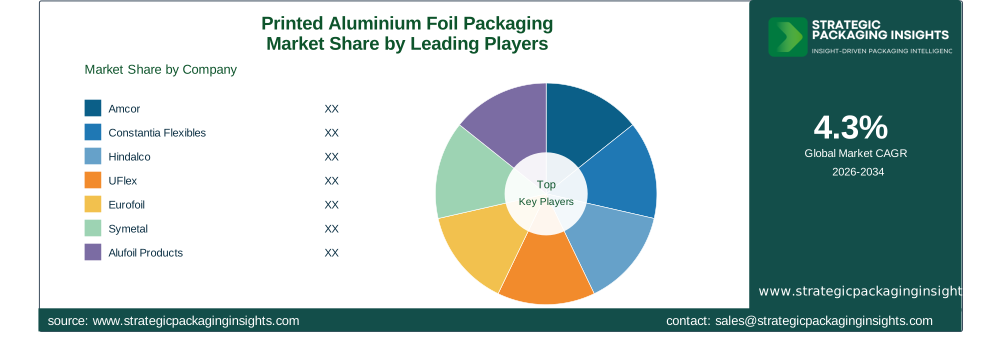
Amcor is a leading player in the printed aluminum foil packaging market, known for its innovative packaging solutions and commitment to sustainability. The company has a strong presence in the food and pharmaceutical sectors, offering a wide range of products that cater to diverse customer needs. Constantia Flexibles is another major player, with a focus on providing high-quality and customizable packaging solutions. The company's expertise in printing technologies and material science enables it to deliver innovative products that meet the evolving demands of the market.
Hindalco, a subsidiary of the Aditya Birla Group, is a key player in the aluminum foil packaging market, known for its extensive product range and strong distribution network. The company is investing in research and development to create sustainable packaging solutions that align with global environmental standards. UFlex, a leading flexible packaging company, is also making significant strides in the printed aluminum foil packaging market. The company's focus on innovation and customer-centric solutions has helped it establish a strong foothold in the market.
Other notable players include Eurofoil, Symetal, Alufoil Products, Reynolds Consumer Products, Novelis, and All Foils. These companies are leveraging their expertise in aluminum foil production and printing technologies to offer high-quality and cost-effective packaging solutions. The competitive landscape of the printed aluminum foil packaging market is dynamic, with companies continuously striving to enhance their product offerings and expand their market reach. As the demand for sustainable and innovative packaging solutions continues to grow, these companies are well-positioned to capitalize on emerging opportunities and drive market growth.
Key Highlights
- The printed aluminum foil packaging market is projected to grow from $29.75 billion in 2025 to $43.62 billion by 2034, at a CAGR of 4.3%.
- Increasing demand for sustainable and eco-friendly packaging solutions is driving market growth.
- Advancements in printing technologies are enhancing the quality and customization of packaging solutions.
- The food and pharmaceutical sectors are major end-users of printed aluminum foil packaging.
- Regulatory challenges and fluctuating raw material prices pose threats to market growth.
- Key players in the market include Amcor, Constantia Flexibles, Hindalco, and UFlex.
- Technological innovations in flexographic, gravure, and digital printing are expanding market applications.
- Customization and personalization of packaging are emerging trends in the market.
- Companies are focusing on strategic partnerships and acquisitions to strengthen their market position.
Top Countries Insights
In the printed aluminum foil packaging market, the United States is a leading player, with a market size of approximately $8.5 billion and a CAGR of 3%. The country's strong demand for packaged food and pharmaceuticals, coupled with advancements in printing technologies, is driving market growth. Government initiatives promoting sustainable packaging solutions are also contributing to the market's expansion. However, regulatory challenges related to packaging waste and recycling remain a concern for market players.
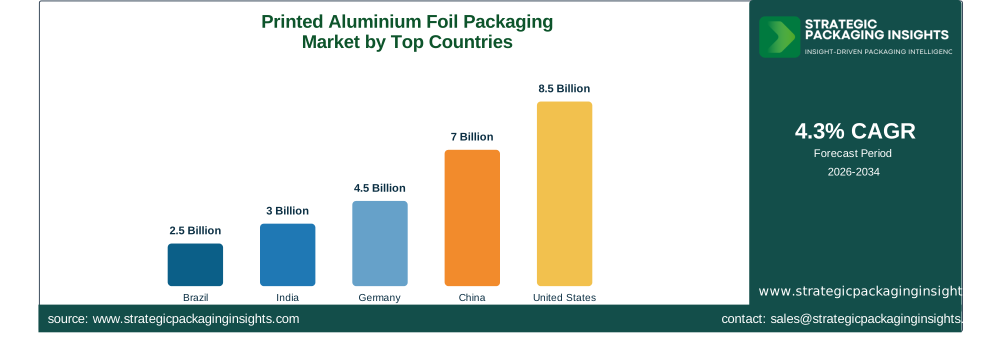
China is another significant market, with a market size of around $7 billion and a CAGR of 5%. The country's booming e-commerce sector and increasing consumer preference for convenient packaging solutions are key growth drivers. Additionally, government policies supporting the development of sustainable packaging materials are encouraging innovation in the market. However, competition from alternative packaging materials such as plastic and paper poses a challenge to market growth.
Germany, with a market size of approximately $4.5 billion and a CAGR of 4%, is a key player in the European market. The country's strong focus on sustainability and recycling is driving demand for eco-friendly packaging solutions. The presence of major packaging companies and advancements in printing technologies are also contributing to market growth. However, stringent environmental regulations and high production costs are challenges faced by market players.
India, with a market size of around $3 billion and a CAGR of 6%, is experiencing rapid growth in the printed aluminum foil packaging market. The country's expanding food and pharmaceutical sectors, along with increasing consumer awareness of sustainable packaging, are driving demand. Government initiatives promoting the use of eco-friendly materials are also supporting market growth. However, the lack of infrastructure for recycling and waste management remains a challenge.
Brazil, with a market size of approximately $2.5 billion and a CAGR of 4%, is a key player in the Latin American market. The country's growing food and beverage industry and increasing demand for convenient packaging solutions are driving market growth. However, economic instability and regulatory challenges related to packaging waste are concerns for market players. Despite these challenges, the market presents opportunities for companies to develop innovative and sustainable packaging solutions.
Printed Aluminium Foil Packaging Market Segments Insights

Product Type Analysis
The printed aluminum foil packaging market is segmented by product type into printed foil rolls, foil wraps, foil lids, and blister foil. Printed foil rolls are widely used in the food and pharmaceutical industries due to their excellent barrier properties and ease of use. The demand for foil wraps is driven by the growing trend of on-the-go consumption and the need for convenient packaging solutions. Foil lids are popular in the dairy and confectionery sectors, providing a secure seal and enhancing product shelf life. Blister foil is primarily used in pharmaceutical packaging, offering protection against moisture and contamination.
Advancements in printing technologies are enhancing the quality and customization of these products, allowing companies to offer unique and visually appealing packaging solutions. The increasing focus on sustainability is driving the development of eco-friendly alternatives, such as biodegradable and recyclable foil products. Companies are investing in research and development to create innovative products that meet the evolving demands of consumers and regulatory requirements. The competitive landscape is characterized by the presence of key players such as Amcor, Constantia Flexibles, and Hindalco, who are focusing on expanding their product portfolios and enhancing their production capabilities.
Application Analysis
The application segment of the printed aluminum foil packaging market includes food packaging, pharmaceutical packaging, dairy lids, and confectionery. Food packaging is the largest application segment, driven by the increasing demand for convenient and sustainable packaging solutions. The growing trend of online food delivery and e-commerce is further boosting the demand for printed aluminum foil packaging in this segment. Pharmaceutical packaging is another significant application, with blister foil being widely used to protect medications from moisture and contamination.
Dairy lids and confectionery packaging are also important application segments, with foil lids providing a secure seal and enhancing product shelf life. The demand for printed aluminum foil packaging in these segments is driven by the need for attractive and functional packaging solutions that enhance brand appeal and consumer engagement. Companies are leveraging advancements in printing technologies to offer customized and visually appealing packaging solutions that cater to specific consumer preferences and brand identities. The competitive landscape is characterized by the presence of key players such as UFlex, Eurofoil, and Symetal, who are focusing on innovation and sustainability to maintain their competitive edge.
Printing Technology Analysis
The printed aluminum foil packaging market is segmented by printing technology into flexographic, gravure, and digital printing. Flexographic printing is widely used due to its cost-effectiveness and ability to produce high-quality images on a variety of substrates. The demand for gravure printing is driven by its ability to produce high-resolution images and complex designs, making it ideal for premium packaging solutions. Digital printing is gaining traction due to its flexibility and ability to offer highly customized packaging solutions that cater to specific consumer preferences.
Advancements in printing technologies are enhancing the quality and efficiency of printed aluminum foil packaging, allowing companies to offer unique and visually appealing products. The increasing focus on sustainability is driving the development of eco-friendly inks and coatings that enhance the durability and functionality of printed foil. Companies are investing in research and development to create innovative printing solutions that meet the evolving demands of consumers and regulatory requirements. The competitive landscape is characterized by the presence of key players such as Alufoil Products, Reynolds Consumer Products, and Novelis, who are focusing on expanding their product portfolios and enhancing their production capabilities.
End Use Analysis
The end-use segment of the printed aluminum foil packaging market includes food brands, pharma companies, converters, and retailers. Food brands are the largest end-use segment, driven by the increasing demand for convenient and sustainable packaging solutions. The growing trend of online food delivery and e-commerce is further boosting the demand for printed aluminum foil packaging in this segment. Pharma companies are another significant end-use segment, with blister foil being widely used to protect medications from moisture and contamination.
Converters and retailers are also important end-use segments, with the demand for printed aluminum foil packaging driven by the need for attractive and functional packaging solutions that enhance brand appeal and consumer engagement. Companies are leveraging advancements in printing technologies to offer customized and visually appealing packaging solutions that cater to specific consumer preferences and brand identities. The competitive landscape is characterized by the presence of key players such as Amcor, Constantia Flexibles, and Hindalco, who are focusing on innovation and sustainability to maintain their competitive edge.
Printed Aluminium Foil Packaging Market Segments
The Printed Aluminium Foil Packaging market has been segmented on the basis ofBy Product Type
- printed foil rolls
- foil wraps
- foil lids
- blister foil
By Application
- food packaging
- pharmaceutical packaging
- dairy lids
- confectionery
By Printing Technology
- flexographic
- gravure
- digital
By End Use
- food brands
- pharma companies
- converters
- retailers
Region
- Asia Pacific
- North America
- Latin America
- Europe
- Middle East & Africa




