


Prescription Bottles Market Outlook
The Prescription Bottles market was valued at $4.94 billion in 2025 and is projected to reach $7.54 billion by 2034, growing at a CAGR of 4.8% during the forecast period 2026-2034. This market is driven by the increasing demand for safe and secure medication storage solutions, particularly in the healthcare sector. The rise in chronic diseases and the aging population are significant factors contributing to the growth of this market. Additionally, the trend towards personalized medicine and the increasing number of prescriptions dispensed are further propelling the demand for prescription bottles. The market is also benefiting from technological advancements in packaging materials, which enhance the safety and efficacy of pharmaceutical products.
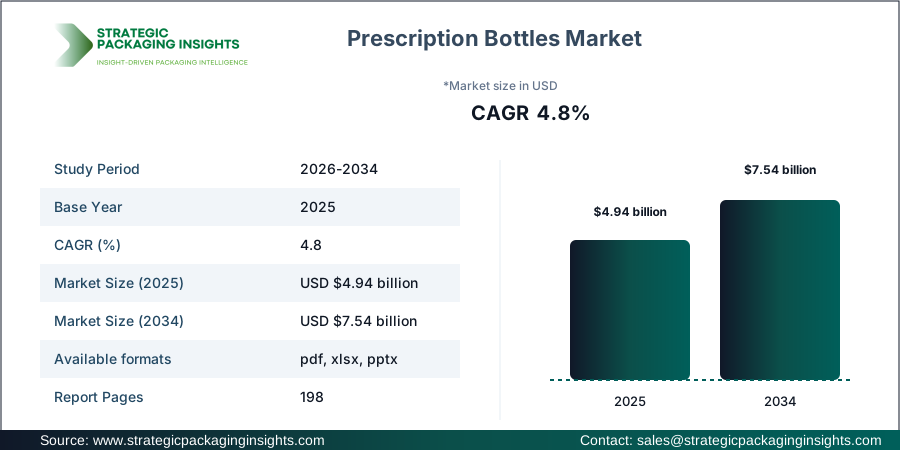
However, the market faces certain restraints, such as stringent regulatory requirements and environmental concerns related to plastic waste. The increasing focus on sustainability and the push for eco-friendly packaging solutions are challenging traditional prescription bottle manufacturers to innovate. Despite these challenges, the market holds significant growth potential, particularly with the development of biodegradable and recyclable materials. The ongoing research and development activities aimed at improving the functionality and safety of prescription bottles are expected to create new opportunities for market players. Furthermore, the expansion of healthcare infrastructure in emerging economies is likely to provide a substantial boost to the market.
Report Scope
| Attributes | Details |
| Report Title | Prescription Bottles Market Size, Future Growth and Forecast 2034 |
| Product Type | Plastic Prescription Bottles, Glass Prescription Bottles, Child-Resistant Bottles, Amber Bottles |
| Material Type | HDPE, PET, PP, Glass |
| Capacity | Below 60 ml, 60–120 ml, Above 120 ml |
| End Use | Pharmacies, Hospitals, Pharmaceutical Companies, Clinics |
| Region | Asia Pacific, North America, Latin America, Europe, Middle East & Africa |
| Base Year | 2025 |
| Historic Period | 2018-2024 |
| Forecast Period | 2026-2034 |
| Number of Pages | 198 |
| Customization Available | Yes* |
Opportunities & Threats
The Prescription Bottles market presents numerous opportunities, particularly with the growing emphasis on patient safety and medication adherence. The development of smart prescription bottles equipped with digital features such as reminders and dosage tracking is a promising area for innovation. These advanced bottles can significantly enhance patient compliance and reduce medication errors, thereby improving health outcomes. Additionally, the increasing adoption of telemedicine and online pharmacies is driving the demand for secure and tamper-evident packaging solutions, creating further opportunities for market growth. The expansion of healthcare services in developing regions also offers a lucrative market for prescription bottles, as these areas continue to invest in modernizing their healthcare infrastructure.
Another opportunity lies in the shift towards sustainable packaging solutions. With growing environmental concerns, there is a rising demand for eco-friendly prescription bottles made from biodegradable or recyclable materials. Companies that can offer sustainable packaging options without compromising on quality and safety are likely to gain a competitive edge in the market. Furthermore, the integration of advanced technologies such as RFID and NFC in prescription bottles can enhance supply chain transparency and improve inventory management, providing additional growth avenues for market players.
Despite the opportunities, the market faces threats from stringent regulatory requirements and the high cost of compliance. The pharmaceutical packaging industry is subject to rigorous regulations to ensure the safety and efficacy of medications, which can pose challenges for manufacturers. Additionally, the volatility in raw material prices, particularly for plastics, can impact the profitability of companies in this market. The increasing competition from generic drug manufacturers, who often seek cost-effective packaging solutions, also poses a threat to premium prescription bottle manufacturers. To mitigate these threats, companies need to focus on innovation and cost optimization strategies.
Drivers & Challenges
The Prescription Bottles market is primarily driven by the increasing prevalence of chronic diseases and the growing geriatric population. As the number of patients requiring long-term medication rises, so does the demand for prescription bottles. The healthcare industry's focus on improving patient safety and medication adherence is another significant driver. Prescription bottles play a crucial role in ensuring that medications are stored safely and dispensed accurately, reducing the risk of medication errors. The trend towards personalized medicine, which requires customized packaging solutions, is also contributing to market growth. Additionally, the rise of e-commerce and online pharmacies is boosting the demand for secure and tamper-evident packaging solutions.
Technological advancements in packaging materials and design are further driving the market. Innovations such as child-resistant closures and tamper-evident features enhance the safety and security of prescription bottles, making them more appealing to consumers and healthcare providers. The development of smart packaging solutions, which incorporate digital features for improved patient compliance, is another key driver. These innovations not only improve patient outcomes but also offer a competitive advantage to manufacturers. The increasing focus on sustainability and the demand for eco-friendly packaging solutions are also driving the market, as companies strive to reduce their environmental footprint.
However, the market faces several challenges, including stringent regulatory requirements and environmental concerns. The pharmaceutical packaging industry is heavily regulated to ensure the safety and efficacy of medications, which can pose challenges for manufacturers. Compliance with these regulations often requires significant investment in research and development, as well as quality control measures. Additionally, the environmental impact of plastic waste is a growing concern, prompting companies to explore sustainable packaging solutions. The high cost of raw materials, particularly for plastics, can also impact the profitability of companies in this market. To overcome these challenges, manufacturers need to focus on innovation and cost optimization strategies.
Market Share Analysis
The competitive landscape of the Prescription Bottles market is characterized by the presence of several key players, each striving to enhance their market share through innovation and strategic partnerships. Berry Global, a leading player in the market, is known for its extensive range of packaging solutions and its focus on sustainability. The company has been actively investing in research and development to introduce eco-friendly packaging options. Gerresheimer, another major player, is renowned for its high-quality glass and plastic packaging solutions. The company's strong focus on innovation and customer-centric approach has helped it maintain a significant market share.
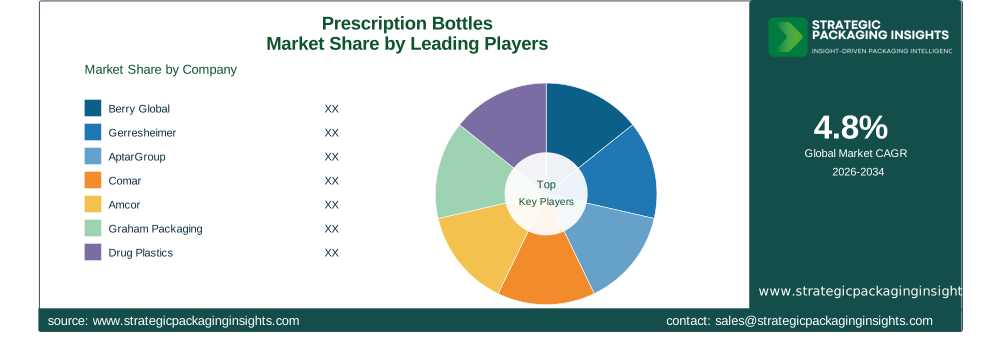
AptarGroup is a prominent player in the prescription bottles market, offering a wide range of dispensing solutions. The company's commitment to sustainability and innovation has enabled it to capture a substantial share of the market. Comar, known for its expertise in custom packaging solutions, has been expanding its product portfolio to cater to the growing demand for prescription bottles. Amcor, a global leader in packaging solutions, is recognized for its innovative and sustainable packaging offerings. The company's strategic acquisitions and partnerships have strengthened its position in the market.
Graham Packaging, a key player in the market, is known for its focus on sustainable packaging solutions. The company's commitment to reducing its environmental footprint has resonated well with consumers and healthcare providers. Drug Plastics, a leading manufacturer of plastic packaging solutions, has been expanding its product offerings to meet the evolving needs of the pharmaceutical industry. Alpha Packaging, known for its expertise in plastic packaging, has been focusing on innovation and quality to enhance its market share. CCL Container, a leader in aluminum packaging solutions, has been leveraging its expertise to offer high-quality prescription bottles.
Pretium Packaging, a prominent player in the market, is recognized for its focus on innovation and customer satisfaction. The company's extensive product portfolio and commitment to sustainability have helped it maintain a strong market presence. These companies, along with several others, are actively investing in research and development to introduce innovative and sustainable packaging solutions. The competitive landscape is expected to intensify as companies continue to focus on expanding their product offerings and enhancing their market presence.
Key Highlights
- The Prescription Bottles market is projected to grow from $4.94 billion in 2025 to $7.54 billion by 2034, at a CAGR of 4.8%.
- Increasing demand for safe and secure medication storage solutions is driving market growth.
- Technological advancements in packaging materials are enhancing the safety and efficacy of pharmaceutical products.
- Stringent regulatory requirements and environmental concerns are challenging traditional manufacturers.
- Opportunities exist in the development of smart prescription bottles with digital features.
- The shift towards sustainable packaging solutions is creating new growth avenues.
- Key players are focusing on innovation and strategic partnerships to enhance their market share.
- The expansion of healthcare infrastructure in emerging economies is boosting market growth.
- Companies are investing in research and development to introduce eco-friendly packaging options.
- The rise of e-commerce and online pharmacies is driving demand for tamper-evident packaging solutions.
Top Countries Insights
In the Prescription Bottles market, the United States holds a significant share, driven by its advanced healthcare infrastructure and high prescription drug consumption. The market size in the U.S. is substantial, with a CAGR of 5%. The country's focus on patient safety and medication adherence, along with the presence of major pharmaceutical companies, is driving demand for prescription bottles. Additionally, regulatory requirements for child-resistant and tamper-evident packaging are further boosting market growth.
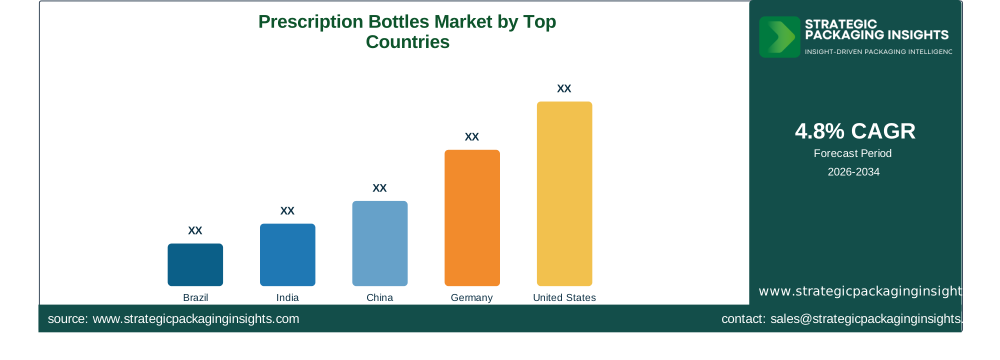
Germany is another key market, with a CAGR of 4%. The country's strong pharmaceutical industry and emphasis on quality and safety in packaging are driving demand for prescription bottles. The increasing prevalence of chronic diseases and the aging population are also contributing to market growth. Germany's focus on sustainability and the development of eco-friendly packaging solutions are expected to create new opportunities for market players.
China is experiencing rapid growth in the Prescription Bottles market, with a CAGR of 7%. The country's expanding healthcare infrastructure and increasing healthcare expenditure are driving demand for prescription bottles. The government's focus on improving healthcare access and the rising prevalence of chronic diseases are further propelling market growth. Additionally, the shift towards online pharmacies and e-commerce is boosting demand for secure packaging solutions.
India is another emerging market, with a CAGR of 6%. The country's growing pharmaceutical industry and increasing healthcare awareness are driving demand for prescription bottles. The government's initiatives to improve healthcare access and the rising prevalence of chronic diseases are contributing to market growth. Additionally, the focus on sustainable packaging solutions is expected to create new opportunities for market players.
Brazil is also witnessing growth in the Prescription Bottles market, with a CAGR of 5%. The country's expanding healthcare infrastructure and increasing healthcare expenditure are driving demand for prescription bottles. The government's focus on improving healthcare access and the rising prevalence of chronic diseases are further propelling market growth. Additionally, the shift towards online pharmacies and e-commerce is boosting demand for secure packaging solutions.
Prescription Bottles Market Segments Insights

Product Type Analysis
The Prescription Bottles market is segmented by product type into Plastic Prescription Bottles, Glass Prescription Bottles, Child-Resistant Bottles, and Amber Bottles. Plastic Prescription Bottles dominate the market due to their lightweight, durability, and cost-effectiveness. They are widely used in pharmacies and hospitals for dispensing medications. The demand for Child-Resistant Bottles is also increasing, driven by regulatory requirements and the need to prevent accidental ingestion by children. Amber Bottles are preferred for light-sensitive medications, as they provide protection from UV rays. The trend towards sustainable packaging is encouraging manufacturers to explore eco-friendly materials for prescription bottles.
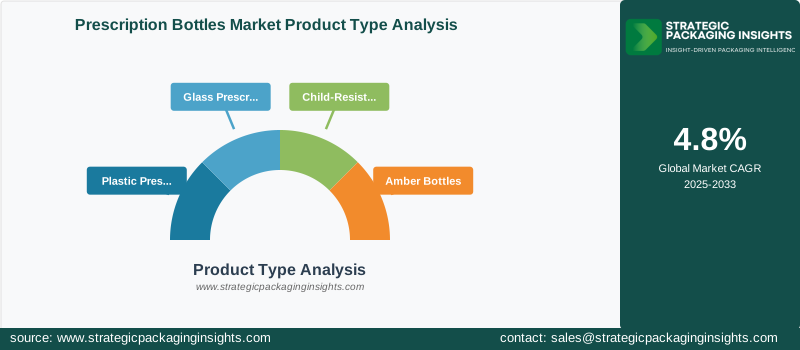
Glass Prescription Bottles are gaining popularity due to their inert nature and ability to preserve the integrity of medications. They are commonly used for liquid medications and are preferred by pharmaceutical companies for their premium appearance. The demand for glass bottles is expected to grow, driven by the increasing focus on sustainability and the shift towards eco-friendly packaging solutions. Manufacturers are investing in research and development to introduce innovative glass packaging solutions that meet the evolving needs of the pharmaceutical industry.
Material Type Analysis
The Prescription Bottles market is segmented by material type into HDPE, PET, PP, and Glass. HDPE is the most commonly used material for prescription bottles due to its high strength, chemical resistance, and cost-effectiveness. It is widely used for manufacturing child-resistant and tamper-evident bottles. PET is gaining popularity due to its clarity, lightweight, and recyclability. It is commonly used for liquid medications and is preferred by pharmaceutical companies for its premium appearance. The demand for PET bottles is expected to grow, driven by the increasing focus on sustainability and the shift towards eco-friendly packaging solutions.
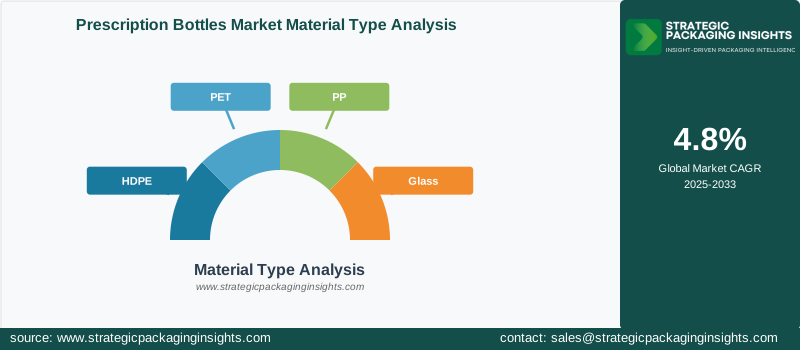
PP is another popular material for prescription bottles, known for its high chemical resistance and durability. It is commonly used for manufacturing child-resistant and tamper-evident bottles. The demand for PP bottles is expected to grow, driven by the increasing focus on patient safety and medication adherence. Glass is preferred for liquid medications and is gaining popularity due to its inert nature and ability to preserve the integrity of medications. Manufacturers are investing in research and development to introduce innovative glass packaging solutions that meet the evolving needs of the pharmaceutical industry.
Capacity Analysis
The Prescription Bottles market is segmented by capacity into Below 60 ml, 60-120 ml, and Above 120 ml. Bottles with a capacity of 60-120 ml are the most commonly used, as they are suitable for dispensing a wide range of medications. They are widely used in pharmacies and hospitals for dispensing medications. The demand for bottles with a capacity of Below 60 ml is also increasing, driven by the growing trend towards personalized medicine and the need for customized packaging solutions. These bottles are commonly used for dispensing small doses of medications and are preferred by pharmaceutical companies for their convenience and ease of use.
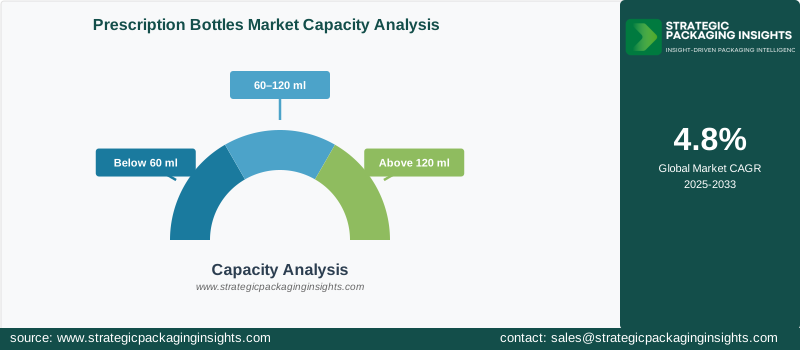
Bottles with a capacity of Above 120 ml are commonly used for liquid medications and are preferred by pharmaceutical companies for their ability to store larger quantities of medications. The demand for these bottles is expected to grow, driven by the increasing prevalence of chronic diseases and the need for long-term medication storage solutions. Manufacturers are investing in research and development to introduce innovative packaging solutions that meet the evolving needs of the pharmaceutical industry.
End Use Analysis
The Prescription Bottles market is segmented by end use into Pharmacies, Hospitals, Pharmaceutical Companies, and Clinics. Pharmacies are the largest end users of prescription bottles, as they are responsible for dispensing medications to patients. The demand for prescription bottles in pharmacies is driven by the increasing number of prescriptions dispensed and the growing focus on patient safety and medication adherence. Hospitals are another major end user, as they require prescription bottles for dispensing medications to patients. The demand for prescription bottles in hospitals is driven by the increasing prevalence of chronic diseases and the need for long-term medication storage solutions.
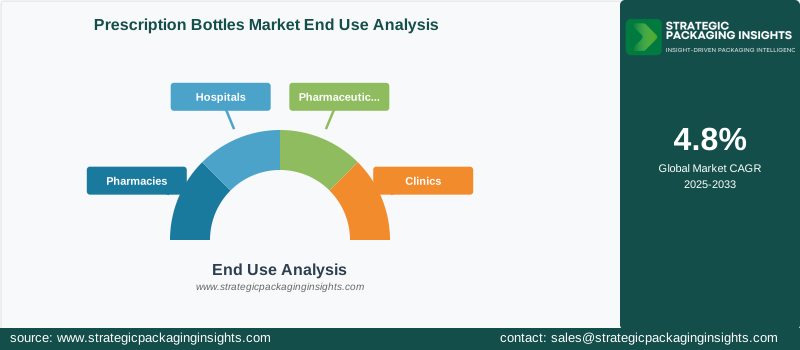
Pharmaceutical Companies are also significant end users of prescription bottles, as they require packaging solutions for their products. The demand for prescription bottles in pharmaceutical companies is driven by the increasing focus on patient safety and medication adherence. Clinics are another important end user, as they require prescription bottles for dispensing medications to patients. The demand for prescription bottles in clinics is driven by the increasing number of prescriptions dispensed and the growing focus on patient safety and medication adherence. Manufacturers are investing in research and development to introduce innovative packaging solutions that meet the evolving needs of the pharmaceutical industry.
Prescription Bottles Market Segments
The Prescription Bottles market has been segmented on the basis ofProduct Type
- Plastic Prescription Bottles
- Glass Prescription Bottles
- Child-Resistant Bottles
- Amber Bottles
Material Type
- HDPE
- PET
- PP
- Glass
Capacity
- Below 60 ml
- 60–120 ml
- Above 120 ml
End Use
- Pharmacies
- Hospitals
- Pharmaceutical Companies
- Clinics
Region
- Asia Pacific
- North America
- Latin America
- Europe
- Middle East & Africa




