


Prefillable Inhalers Market Outlook
The prefillable inhalers market was valued at $5.37 billion in 2025 and is projected to reach $12.46 billion by 2034, growing at a CAGR of 9.8% during the forecast period 2026-2034. This significant growth is driven by the increasing prevalence of respiratory diseases such as asthma and COPD, which are becoming more common due to rising pollution levels and lifestyle changes. The demand for efficient and user-friendly drug delivery systems is also propelling the market forward. Prefillable inhalers offer convenience and accuracy in dosage, which is crucial for chronic disease management. Additionally, technological advancements in inhaler design and functionality are enhancing patient compliance and treatment outcomes, further boosting market growth.
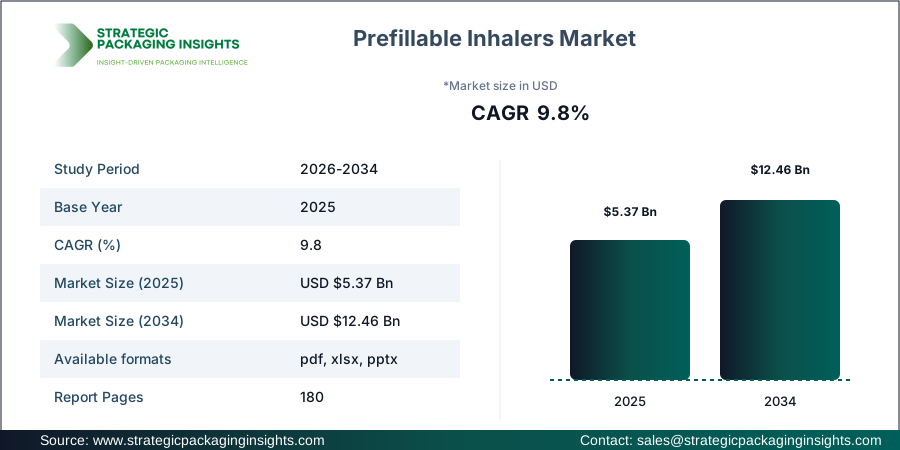
However, the market faces challenges such as stringent regulatory requirements and high costs associated with the development and manufacturing of advanced inhalers. Despite these hurdles, the market holds substantial growth potential due to the increasing focus on personalized medicine and the development of smart inhalers that provide real-time data to healthcare providers. These innovations are expected to improve patient adherence and optimize treatment regimens, thereby driving market expansion. Furthermore, the growing geriatric population, which is more susceptible to respiratory ailments, is anticipated to create additional demand for prefillable inhalers.
Report Scope
| Attributes | Details |
| Report Title | Prefillable Inhalers Market Size, Future Growth and Forecast 2034 |
| By Product Type | Prefilled MDIs, Prefilled DPIs, Soft Mist Inhalers |
| By Application | Asthma, COPD, Allergy, Respiratory Care |
| By Distribution Channel | Hospitals, Retail Pharmacies, Online |
| By End Use | Patients, Pharma Companies, Hospitals |
| Region | Asia Pacific, North America, Latin America, Europe, Middle East & Africa |
| Base Year | 2025 |
| Historic Period | 2018-2024 |
| Forecast Period | 2026-2034 |
| Number of Pages | 180 |
| Customization Available | Yes* |
Opportunities & Threats
The prefillable inhalers market presents numerous opportunities, particularly in the realm of technological advancements. The integration of digital health technologies with inhalers is a burgeoning trend, offering opportunities for companies to develop smart inhalers that can track usage patterns and provide feedback to both patients and healthcare providers. This innovation not only enhances patient adherence but also allows for personalized treatment plans, thereby improving overall health outcomes. Additionally, the increasing focus on sustainable and eco-friendly packaging solutions is opening new avenues for market players to differentiate their products and appeal to environmentally conscious consumers.
Another significant opportunity lies in the expansion of healthcare infrastructure in emerging markets. As countries in Asia Pacific and Latin America continue to develop their healthcare systems, there is a growing demand for advanced medical devices, including prefillable inhalers. Companies that can establish a strong presence in these regions stand to benefit from the increasing healthcare expenditure and the rising prevalence of respiratory diseases. Furthermore, strategic partnerships and collaborations with local distributors and healthcare providers can enhance market penetration and drive growth.
Despite the promising opportunities, the market is not without its threats. One of the primary challenges is the stringent regulatory landscape governing the approval and commercialization of inhalers. Compliance with varying regulations across different regions can be complex and time-consuming, potentially delaying product launches and increasing costs. Additionally, the high cost of research and development, coupled with the risk of product recalls due to manufacturing defects or adverse effects, poses a significant threat to market players. Companies must invest in robust quality control measures and stay abreast of regulatory changes to mitigate these risks.
Drivers & Challenges
The prefillable inhalers market is primarily driven by the rising prevalence of respiratory diseases such as asthma and COPD. These conditions are becoming increasingly common due to factors such as urbanization, pollution, and lifestyle changes, leading to a higher demand for effective treatment options. Prefillable inhalers offer a convenient and efficient means of delivering medication directly to the lungs, making them a preferred choice for both patients and healthcare providers. Additionally, the growing awareness of the importance of early diagnosis and management of respiratory conditions is further fueling market growth.
Technological advancements in inhaler design and functionality are also significant drivers of the market. Innovations such as dose counters, breath-actuated mechanisms, and digital connectivity are enhancing the usability and effectiveness of inhalers, improving patient adherence and treatment outcomes. These advancements are particularly important in the management of chronic conditions, where consistent medication adherence is crucial. Moreover, the increasing focus on personalized medicine and the development of smart inhalers that provide real-time data to healthcare providers are expected to drive further growth in the market.
However, the market faces several challenges, including the high cost of advanced inhalers and the complexity of regulatory compliance. The development and manufacturing of technologically advanced inhalers require significant investment, which can be a barrier for smaller companies. Additionally, the stringent regulatory requirements for approval and commercialization of inhalers can delay product launches and increase costs. Companies must navigate these challenges by investing in research and development, maintaining robust quality control measures, and staying abreast of regulatory changes to ensure compliance and minimize risks.
Market Share Analysis
The competitive landscape of the prefillable inhalers market is characterized by the presence of several key players who are actively engaged in product development, strategic collaborations, and mergers and acquisitions to strengthen their market position. Aptar Pharma, a leading provider of drug delivery systems, holds a significant share of the market due to its extensive product portfolio and strong focus on innovation. The company is known for its advanced inhaler technologies that enhance patient compliance and treatment efficacy.
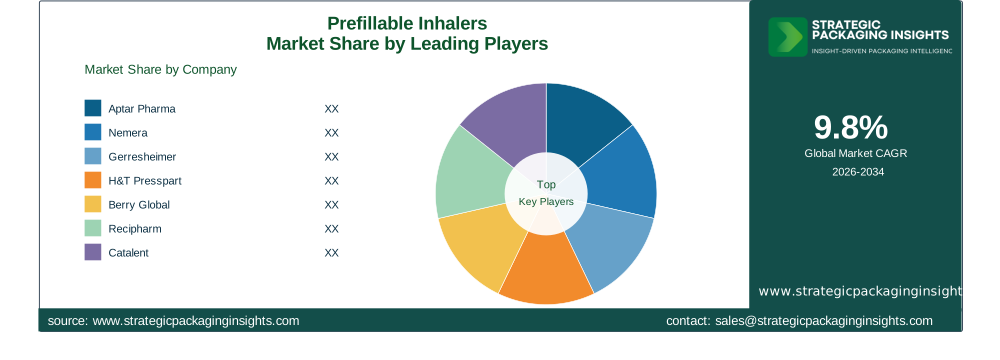
Nemera is another prominent player in the market, offering a wide range of inhalation devices designed to meet the needs of patients and healthcare providers. The company's commitment to quality and innovation has enabled it to capture a substantial share of the market. Gerresheimer, a global leader in pharmaceutical packaging, also holds a significant market share, leveraging its expertise in glass and plastic packaging solutions to offer high-quality inhalers that ensure accurate and reliable drug delivery.
H&T Presspart, a specialist in respiratory drug delivery systems, is known for its innovative solutions that enhance the performance and usability of inhalers. The company's focus on research and development has enabled it to maintain a competitive edge in the market. Berry Global, a leading provider of packaging solutions, has also made significant strides in the prefillable inhalers market, offering a range of products that cater to the diverse needs of patients and healthcare providers.
Other notable players in the market include Recipharm, Catalent, Teva Pharmaceutical, Chiesi Farmaceutici, and Bespak. These companies are actively engaged in expanding their product portfolios and enhancing their market presence through strategic partnerships and collaborations. Recipharm, for instance, is known for its comprehensive range of inhalation products and services, while Catalent is recognized for its expertise in drug delivery technologies. Teva Pharmaceutical, Chiesi Farmaceutici, and Bespak are also key players in the market, offering a range of inhalation products that cater to the needs of patients with respiratory conditions.
Key Highlights
- The prefillable inhalers market is projected to grow at a CAGR of 9.8% from 2026 to 2034.
- Technological advancements in inhaler design are enhancing patient compliance and treatment outcomes.
- Smart inhalers with digital connectivity are gaining popularity for personalized treatment plans.
- Emerging markets in Asia Pacific and Latin America offer significant growth opportunities.
- Stringent regulatory requirements pose challenges for market players.
- Key players are focusing on strategic collaborations and mergers to strengthen their market position.
- The increasing prevalence of respiratory diseases is driving demand for prefillable inhalers.
- Eco-friendly packaging solutions are becoming a key differentiator in the market.
- High R&D costs and regulatory compliance are major challenges for market players.
Top Countries Insights
In the prefillable inhalers market, the United States holds a significant share due to its advanced healthcare infrastructure and high prevalence of respiratory diseases. The market size in the U.S. is substantial, with a CAGR of 8% driven by technological advancements and increasing awareness of respiratory health. Government initiatives to improve healthcare access and the presence of major market players further bolster growth. However, regulatory challenges and high costs remain concerns for manufacturers.
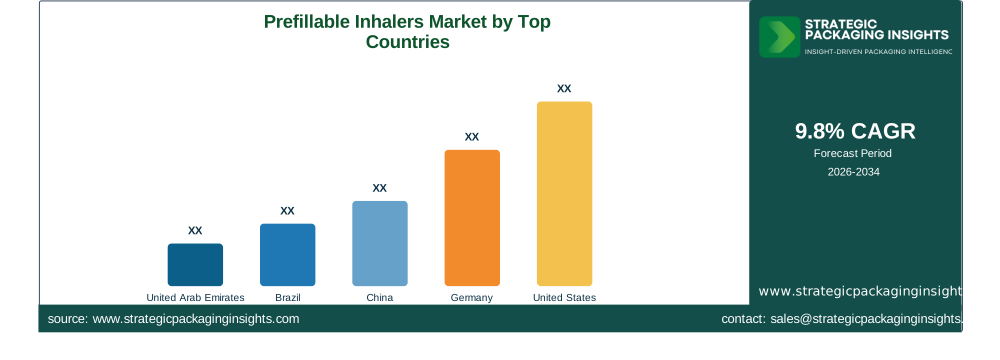
Germany is a key player in the European market, with a strong focus on innovation and quality in medical devices. The market in Germany is growing at a CAGR of 7%, supported by a robust healthcare system and increasing demand for advanced inhalation therapies. The country's emphasis on research and development, along with favorable reimbursement policies, drives market expansion. However, stringent regulatory requirements pose challenges for new entrants.
China represents a rapidly growing market in the Asia Pacific region, with a CAGR of 12%. The increasing prevalence of respiratory diseases, coupled with rising healthcare expenditure, fuels demand for prefillable inhalers. Government initiatives to improve healthcare infrastructure and the growing middle-class population contribute to market growth. However, regulatory hurdles and competition from local manufacturers present challenges.
Brazil is a significant market in Latin America, with a CAGR of 10%. The rising incidence of respiratory conditions and increasing healthcare awareness drive demand for inhalation therapies. Government efforts to expand healthcare access and improve treatment outcomes support market growth. However, economic instability and regulatory complexities pose challenges for market players.
The United Arab Emirates is an emerging market in the Middle East & Africa region, with a CAGR of 9%. The country's focus on healthcare modernization and increasing investment in medical infrastructure drive demand for advanced inhalation devices. The growing prevalence of respiratory diseases and government initiatives to improve healthcare access further support market growth. However, regulatory challenges and high costs remain concerns for manufacturers.
Prefillable Inhalers Market Segments Insights

Product Type Analysis
The prefillable inhalers market is segmented by product type into prefilled MDIs, prefilled DPIs, and soft mist inhalers. Prefilled MDIs (Metered Dose Inhalers) are widely used due to their ease of use and effectiveness in delivering medication directly to the lungs. These inhalers are particularly popular among patients with asthma and COPD, as they provide quick relief from symptoms. The demand for prefilled MDIs is driven by their portability, convenience, and the ability to deliver precise doses of medication. Additionally, advancements in inhaler technology, such as the integration of dose counters and breath-actuated mechanisms, are enhancing their usability and effectiveness.
Prefilled DPIs (Dry Powder Inhalers) are gaining traction due to their ability to deliver medication without the need for propellants, making them an environmentally friendly option. These inhalers are particularly beneficial for patients who have difficulty coordinating the actuation and inhalation required with MDIs. The demand for prefilled DPIs is driven by their ease of use, portability, and the growing awareness of environmental sustainability. Furthermore, the development of innovative DPI designs that enhance drug delivery efficiency and patient compliance is expected to drive market growth.
Soft mist inhalers are a relatively new addition to the market, offering a unique delivery mechanism that produces a fine mist of medication, allowing for better lung deposition and absorption. These inhalers are particularly beneficial for patients with severe respiratory conditions who require precise and efficient drug delivery. The demand for soft mist inhalers is driven by their ability to deliver medication more effectively, reducing the need for multiple doses and improving patient adherence. Additionally, the growing focus on personalized medicine and the development of smart inhalers with digital connectivity are expected to drive further growth in this segment.
Application Analysis
The prefillable inhalers market is segmented by application into asthma, COPD, allergy, and respiratory care. Asthma is one of the leading applications for prefillable inhalers, driven by the increasing prevalence of the condition and the need for effective management strategies. Prefillable inhalers offer a convenient and efficient means of delivering medication directly to the lungs, providing quick relief from asthma symptoms and improving overall treatment outcomes. The demand for inhalers in asthma management is further fueled by the growing awareness of the importance of early diagnosis and treatment adherence.
COPD (Chronic Obstructive Pulmonary Disease) is another significant application for prefillable inhalers, with the condition becoming increasingly prevalent due to factors such as smoking, pollution, and aging populations. Prefillable inhalers are a critical component of COPD management, providing patients with a reliable and effective means of controlling symptoms and preventing exacerbations. The demand for inhalers in COPD management is driven by the increasing focus on improving patient quality of life and reducing healthcare costs associated with hospitalizations and emergency care.
Allergy and respiratory care are also important applications for prefillable inhalers, with the growing prevalence of respiratory allergies and the increasing focus on preventive care driving demand. Prefillable inhalers offer a convenient and effective means of managing allergy symptoms and preventing respiratory complications. The demand for inhalers in allergy and respiratory care is further supported by the growing awareness of the importance of early intervention and the development of innovative inhaler designs that enhance drug delivery efficiency and patient compliance.
Distribution Channel Analysis
The prefillable inhalers market is segmented by distribution channel into hospitals, retail pharmacies, and online platforms. Hospitals are a major distribution channel for prefillable inhalers, as they are often the first point of contact for patients seeking treatment for respiratory conditions. The demand for inhalers in hospitals is driven by the increasing prevalence of respiratory diseases and the growing focus on improving patient outcomes through effective medication management. Additionally, hospitals often serve as key partners for pharmaceutical companies in clinical trials and product development, further driving demand for inhalers.
Retail pharmacies are another important distribution channel for prefillable inhalers, providing patients with convenient access to medication and healthcare advice. The demand for inhalers in retail pharmacies is driven by the increasing prevalence of respiratory conditions and the growing focus on improving patient adherence through education and support. Additionally, retail pharmacies often serve as key partners for pharmaceutical companies in marketing and distribution efforts, further driving demand for inhalers.
Online platforms are an emerging distribution channel for prefillable inhalers, offering patients convenient access to medication and healthcare information from the comfort of their homes. The demand for inhalers through online platforms is driven by the increasing prevalence of respiratory conditions and the growing focus on improving patient adherence through digital health solutions. Additionally, online platforms often serve as key partners for pharmaceutical companies in marketing and distribution efforts, further driving demand for inhalers.
End Use Analysis
The prefillable inhalers market is segmented by end use into patients, pharma companies, and hospitals. Patients are the primary end users of prefillable inhalers, with the increasing prevalence of respiratory conditions driving demand for effective and convenient treatment options. The demand for inhalers among patients is further fueled by the growing awareness of the importance of early diagnosis and treatment adherence, as well as the development of innovative inhaler designs that enhance drug delivery efficiency and patient compliance.
Pharma companies are another important end user of prefillable inhalers, with the increasing focus on developing innovative drug delivery systems driving demand for advanced inhaler technologies. The demand for inhalers among pharma companies is driven by the growing focus on improving patient outcomes through personalized medicine and the development of smart inhalers with digital connectivity. Additionally, pharma companies often serve as key partners for hospitals and healthcare providers in clinical trials and product development, further driving demand for inhalers.
Hospitals are also a significant end user of prefillable inhalers, with the increasing prevalence of respiratory conditions driving demand for effective medication management solutions. The demand for inhalers in hospitals is driven by the growing focus on improving patient outcomes through effective medication management and the development of innovative inhaler designs that enhance drug delivery efficiency and patient compliance. Additionally, hospitals often serve as key partners for pharmaceutical companies in clinical trials and product development, further driving demand for inhalers.
Prefillable Inhalers Market Segments
The Prefillable Inhalers market has been segmented on the basis ofBy Product Type
- Prefilled MDIs
- Prefilled DPIs
- Soft Mist Inhalers
By Application
- Asthma
- COPD
- Allergy
- Respiratory Care
By Distribution Channel
- Hospitals
- Retail Pharmacies
- Online
By End Use
- Patients
- Pharma Companies
- Hospitals
Region
- Asia Pacific
- North America
- Latin America
- Europe
- Middle East & Africa




