


Postage Stamp Paper Market Outlook
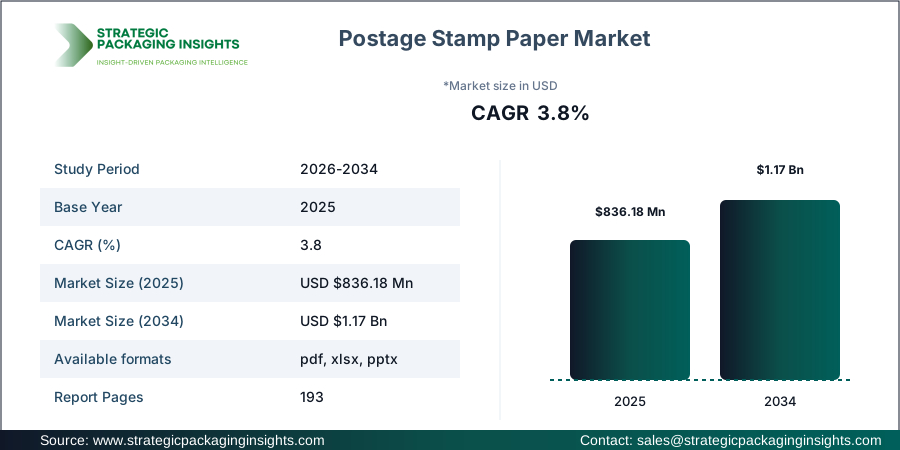
The Postage Stamp Paper market was valued at $836.18 million in 2025 and is projected to reach $1.17 billion by 2034, growing at a CAGR of 3.8% during the forecast period 2026-2034. This market is driven by the increasing demand for postal and philatelic stamps, which continue to hold cultural and historical significance. The rise in e-commerce and the need for secure postal services further bolster the demand for postage stamp paper. Additionally, the growing interest in philately as a hobby and investment avenue contributes to market growth. The market is also witnessing innovations in paper types and printing technologies, enhancing the security and aesthetic appeal of stamps.
However, the market faces challenges such as the digitalization of communication and the decline in traditional mail usage, which could restrain growth. Regulatory constraints and the need for compliance with international postal standards also pose challenges for manufacturers. Despite these hurdles, the market holds potential for growth through the development of eco-friendly and sustainable paper solutions, catering to the increasing environmental concerns. The integration of advanced security features in stamp papers to prevent counterfeiting is another area of opportunity for market players.
Report Scope
| Attributes | Details |
| Report Title | Postage Stamp Paper Market Size, Future Growth and Forecast 2034 |
| By Paper Type | Gummed Paper, Self-Adhesive Paper, Security Paper, Watermarked Paper |
| By Printing Type | Offset, Digital, Intaglio |
| By Application | Postal Stamps, Philatelic Stamps, Security Labels |
| By End Use | Postal Authorities, Security Printers, Government Agencies |
| Region | Asia Pacific, North America, Latin America, Europe, Middle East & Africa |
| Base Year | 2025 |
| Historic Period | 2018-2024 |
| Forecast Period | 2026-2034 |
| Number of Pages | 193 |
| Customization Available | Yes* |
Opportunities & Threats
The postage stamp paper market presents significant opportunities driven by the resurgence of interest in philately and the growing demand for collectible stamps. As more individuals and institutions recognize the value of stamps as historical artifacts and investment assets, the demand for high-quality, aesthetically pleasing stamp paper is on the rise. Additionally, the expansion of e-commerce and international trade necessitates reliable postal services, further driving the need for secure and durable postage stamp paper. Innovations in printing technologies, such as digital and intaglio printing, offer opportunities for manufacturers to enhance the security and visual appeal of stamps, catering to the evolving preferences of collectors and postal authorities.
Another opportunity lies in the development of eco-friendly and sustainable postage stamp paper. With increasing environmental awareness, there is a growing demand for paper products that minimize environmental impact. Manufacturers can capitalize on this trend by offering stamp paper made from recycled materials or using sustainable production processes. Furthermore, the integration of advanced security features, such as watermarks and holograms, can enhance the value proposition of postage stamp paper, addressing concerns related to counterfeiting and fraud.
Despite these opportunities, the market faces threats from the digitalization of communication and the decline in traditional mail usage. As more individuals and businesses opt for electronic communication methods, the demand for physical stamps and, consequently, stamp paper may decrease. Additionally, regulatory constraints and the need for compliance with international postal standards can pose challenges for manufacturers, potentially limiting market growth. To mitigate these threats, market players must focus on innovation and diversification, exploring new applications and markets for postage stamp paper.
Drivers & Challenges
The postage stamp paper market is driven by several key factors, including the enduring cultural and historical significance of stamps. As symbols of national identity and heritage, stamps continue to hold value for collectors and postal authorities alike. This cultural importance drives demand for high-quality stamp paper that can preserve the aesthetic and historical value of stamps. Additionally, the rise of e-commerce and international trade has increased the need for reliable postal services, further boosting demand for postage stamp paper. The integration of advanced security features in stamp paper, such as watermarks and holograms, also drives market growth by addressing concerns related to counterfeiting and fraud.
Technological advancements in printing methods, such as digital and intaglio printing, are another key driver of the market. These technologies enable manufacturers to produce stamps with enhanced security and visual appeal, catering to the evolving preferences of collectors and postal authorities. Furthermore, the development of eco-friendly and sustainable postage stamp paper aligns with the growing environmental awareness among consumers, providing additional growth opportunities for market players. By offering paper products that minimize environmental impact, manufacturers can tap into the increasing demand for sustainable solutions.
However, the market faces challenges such as the digitalization of communication and the decline in traditional mail usage. As more individuals and businesses opt for electronic communication methods, the demand for physical stamps and, consequently, stamp paper may decrease. Additionally, regulatory constraints and the need for compliance with international postal standards can pose challenges for manufacturers, potentially limiting market growth. To overcome these challenges, market players must focus on innovation and diversification, exploring new applications and markets for postage stamp paper.
Market Share Analysis
The competitive landscape of the postage stamp paper market is characterized by the presence of several key players, each contributing to the market's growth through innovation and strategic partnerships. Companies such as De La Rue, Fedrigoni, and Cartor Security Printing hold significant market shares, driven by their extensive experience and expertise in security printing and paper manufacturing. These companies leverage their technological capabilities to produce high-quality, secure stamp paper that meets the stringent requirements of postal authorities and collectors.

De La Rue, a leading player in the market, is renowned for its advanced security features and innovative printing technologies. The company's commitment to quality and security has earned it a strong reputation among postal authorities and collectors worldwide. Similarly, Fedrigoni, with its focus on sustainability and eco-friendly paper solutions, has positioned itself as a key player in the market, catering to the growing demand for environmentally responsible products.
Cartor Security Printing, known for its expertise in security printing, offers a wide range of stamp paper products that incorporate advanced security features such as watermarks and holograms. The company's emphasis on innovation and quality has enabled it to capture a significant share of the market. Other notable players include Joh. Enschedé, Giesecke+Devrient, and Security Papers Limited, each contributing to the market's growth through their unique offerings and strategic initiatives.
Joh. Enschedé, with its rich history and expertise in security printing, continues to be a prominent player in the market. The company's focus on innovation and quality has enabled it to maintain a strong presence in the market. Giesecke+Devrient, known for its advanced security solutions, offers a range of stamp paper products that cater to the evolving needs of postal authorities and collectors. Security Papers Limited, with its emphasis on quality and security, has established itself as a key player in the market, offering a wide range of stamp paper products that meet the stringent requirements of its customers.
Key Highlights
- The postage stamp paper market is projected to grow at a CAGR of 3.8% from 2026 to 2034.
- Key drivers include the cultural significance of stamps and the rise of e-commerce.
- Challenges include digital communication trends and regulatory constraints.
- Opportunities exist in eco-friendly paper solutions and advanced security features.
- De La Rue and Fedrigoni are leading players in the market.
- Technological advancements in printing methods are enhancing market growth.
- The market faces threats from declining traditional mail usage.
- Innovation and diversification are crucial for market players to succeed.
- Philately's resurgence is driving demand for collectible stamps.
- Compliance with international postal standards is a key challenge.
Top Countries Insights
In the postage stamp paper market, the United States stands out as a key player, with a market size of approximately $250 million and a CAGR of 4%. The country's strong postal infrastructure and the cultural significance of stamps drive demand. Additionally, the rise of e-commerce and international trade necessitates reliable postal services, further boosting the market. However, challenges such as digital communication trends and regulatory constraints must be addressed to sustain growth.
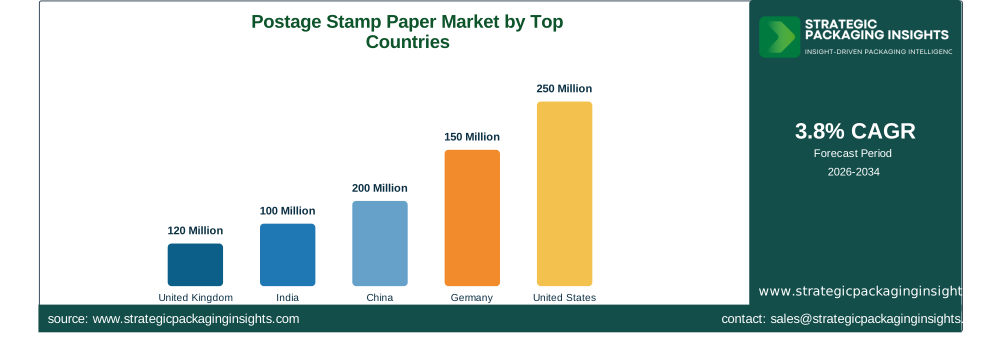
Germany, with a market size of around $150 million and a CAGR of 3%, is another significant player in the market. The country's rich philatelic history and strong demand for collectible stamps drive market growth. Additionally, Germany's emphasis on sustainability and eco-friendly paper solutions aligns with the growing environmental awareness among consumers, providing additional growth opportunities for market players.
China, with a market size of approximately $200 million and a CAGR of 5%, is a rapidly growing market for postage stamp paper. The country's expanding e-commerce sector and increasing international trade drive demand for reliable postal services. Additionally, China's focus on technological advancements in printing methods and security features enhances the market's growth potential.
India, with a market size of around $100 million and a CAGR of 6%, is another emerging market for postage stamp paper. The country's growing interest in philately and the expansion of its postal network drive demand. Additionally, India's emphasis on innovation and diversification provides opportunities for market players to explore new applications and markets for postage stamp paper.
The United Kingdom, with a market size of approximately $120 million and a CAGR of 3%, is a key player in the market. The country's rich philatelic history and strong demand for collectible stamps drive market growth. Additionally, the UK's focus on sustainability and eco-friendly paper solutions aligns with the growing environmental awareness among consumers, providing additional growth opportunities for market players.
Postage Stamp Paper Market Segments Insights

Paper Type Analysis
The postage stamp paper market is segmented by paper type into gummed paper, self-adhesive paper, security paper, and watermarked paper. Gummed paper, traditionally used for postage stamps, remains a popular choice due to its cost-effectiveness and ease of use. However, the demand for self-adhesive paper is on the rise, driven by its convenience and durability. Self-adhesive paper eliminates the need for moisture activation, making it a preferred choice for modern postal services. Security paper, with its advanced features such as watermarks and holograms, is gaining traction in the market, addressing concerns related to counterfeiting and fraud. Watermarked paper, known for its aesthetic appeal and security features, continues to hold value for collectors and postal authorities.
Manufacturers are focusing on innovation and diversification to cater to the evolving preferences of consumers and postal authorities. The development of eco-friendly and sustainable paper solutions is a key trend in the market, driven by increasing environmental awareness. Additionally, the integration of advanced security features in stamp paper enhances its value proposition, addressing concerns related to counterfeiting and fraud. By offering a wide range of paper types, manufacturers can tap into the growing demand for high-quality, secure postage stamp paper.
Printing Type Analysis
The postage stamp paper market is segmented by printing type into offset, digital, and intaglio printing. Offset printing, known for its high-quality output and cost-effectiveness, remains a popular choice for large-scale stamp production. However, digital printing is gaining traction in the market, driven by its flexibility and ability to produce small print runs with high precision. Digital printing enables manufacturers to offer customized and personalized stamps, catering to the evolving preferences of collectors and postal authorities. Intaglio printing, known for its intricate designs and security features, continues to hold value for high-security applications.
Technological advancements in printing methods are enhancing the security and visual appeal of stamps, driving market growth. Manufacturers are focusing on innovation and diversification to cater to the evolving preferences of consumers and postal authorities. The integration of advanced security features in stamp paper, such as watermarks and holograms, enhances its value proposition, addressing concerns related to counterfeiting and fraud. By offering a wide range of printing types, manufacturers can tap into the growing demand for high-quality, secure postage stamp paper.
Application Analysis
The postage stamp paper market is segmented by application into postal stamps, philatelic stamps, and security labels. Postal stamps, traditionally used for mailing purposes, remain a significant segment of the market. However, the demand for philatelic stamps is on the rise, driven by the resurgence of interest in stamp collecting as a hobby and investment avenue. Philatelic stamps, known for their aesthetic appeal and historical significance, continue to hold value for collectors and postal authorities. Security labels, used for authentication and anti-counterfeiting purposes, are gaining traction in the market, driven by the increasing need for secure and reliable postal services.
Manufacturers are focusing on innovation and diversification to cater to the evolving preferences of consumers and postal authorities. The development of eco-friendly and sustainable paper solutions is a key trend in the market, driven by increasing environmental awareness. Additionally, the integration of advanced security features in stamp paper enhances its value proposition, addressing concerns related to counterfeiting and fraud. By offering a wide range of applications, manufacturers can tap into the growing demand for high-quality, secure postage stamp paper.
End Use Analysis
The postage stamp paper market is segmented by end use into postal authorities, security printers, and government agencies. Postal authorities, traditionally the largest consumers of stamp paper, continue to drive demand for high-quality, secure postage stamp paper. Security printers, known for their expertise in security printing, are gaining traction in the market, driven by the increasing need for secure and reliable postal services. Government agencies, responsible for issuing stamps and other postal products, are also significant consumers of stamp paper, driving demand for high-quality, secure postage stamp paper.
Manufacturers are focusing on innovation and diversification to cater to the evolving preferences of consumers and postal authorities. The development of eco-friendly and sustainable paper solutions is a key trend in the market, driven by increasing environmental awareness. Additionally, the integration of advanced security features in stamp paper enhances its value proposition, addressing concerns related to counterfeiting and fraud. By offering a wide range of end-use applications, manufacturers can tap into the growing demand for high-quality, secure postage stamp paper.
Postage Stamp Paper Market Segments
The Postage Stamp Paper market has been segmented on the basis ofBy Paper Type
- Gummed Paper
- Self-Adhesive Paper
- Security Paper
- Watermarked Paper
By Printing Type
- Offset
- Digital
- Intaglio
By Application
- Postal Stamps
- Philatelic Stamps
- Security Labels
By End Use
- Postal Authorities
- Security Printers
- Government Agencies
Region
- Asia Pacific
- North America
- Latin America
- Europe
- Middle East & Africa




