


Post-Consumer Recycled Packaging Market Outlook
The Post-Consumer Recycled Packaging market size was valued at USD 58.75 billion in 2025 and is anticipated to reach USD 113.58 billion by 2034, growing at a CAGR of 7.6% during the forecast period according to Strategic Packaging Insights. The market is witnessing significant growth driven by increasing consumer awareness and demand for sustainable packaging solutions. Companies like Amcor and Berry Global are leading the charge by innovating in recycled materials and eco-friendly packaging designs. The shift towards sustainability is not just a trend but a necessity, as consumers and businesses alike are becoming more environmentally conscious. This has led to a surge in demand for post-consumer recycled materials, which are now being used extensively across various packaging types and applications.
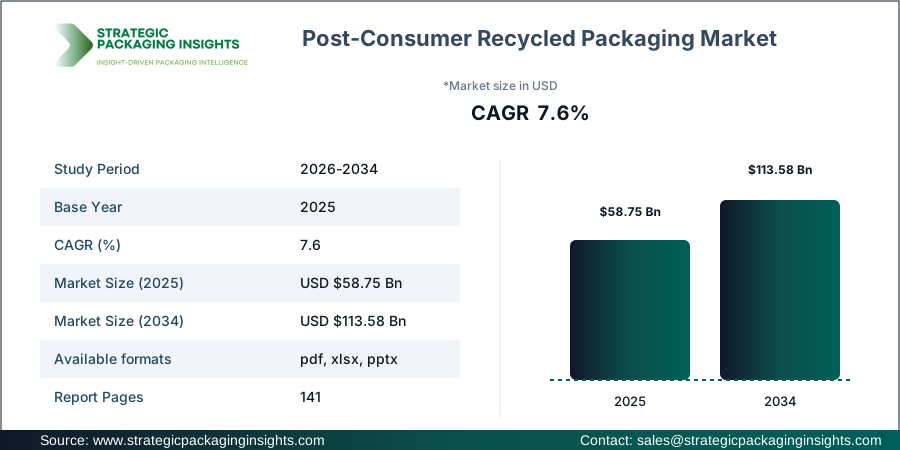
One of the most impactful drivers of this market is the stringent regulations and policies being implemented by governments worldwide to reduce plastic waste and promote recycling. For instance, the European Union's directive on single-use plastics and the U.S. Environmental Protection Agency's initiatives to increase recycling rates are pushing companies to adopt more sustainable practices. These regulations are not only encouraging the use of recycled materials but are also fostering innovation in packaging design and manufacturing processes. As a result, companies like Mondi and Sealed Air are investing heavily in research and development to create packaging solutions that meet these regulatory requirements while also appealing to eco-conscious consumers.
Report Scope
| Attributes | Details |
| Report Title | Post-Consumer Recycled Packaging Market Size, Future Growth and Forecast 2034 |
| By Material Type | rPET, rHDPE, Recycled Paperboard, Recycled Aluminum |
| By Packaging Type | Bottles, Pouches, Trays, Boxes |
| By Application | Food & Beverage, Personal Care, E-commerce, Household Products |
| By End Use | FMCG, Retail, Healthcare, Industrial |
| Region | Asia Pacific, North America, Latin America, Europe, Middle East & Africa |
| Base Year | 2025 |
| Historic Period | 2018-2024 |
| Forecast Period | 2026-2034 |
| Number of Pages | 141 |
| Customization Available | Yes* |
Sustainability & Circular Economy Analysis
Sustainability initiatives and circular economy practices are profoundly influencing the Post-Consumer Recycled Packaging market. The focus on recyclable materials and reusable packaging is driving innovation in eco-friendly material development. Companies are increasingly adopting lightweight packaging solutions to reduce material usage and transportation costs, thereby minimizing their carbon footprint. This shift is not only a response to consumer demand for sustainable products but also a strategic move to comply with stringent environmental regulations. As a result, packaging manufacturers are investing in advanced technologies to enhance the recyclability and sustainability of their products.
The integration of waste reduction strategies and ESG (Environmental, Social, and Governance) initiatives is becoming a critical component of business operations in the packaging industry. Companies are implementing extended producer responsibility (EPR) programs to ensure that their packaging materials are collected and recycled efficiently. This approach not only helps in reducing waste but also enhances brand reputation and customer loyalty. Furthermore, the emphasis on carbon footprint reduction is prompting companies to optimize their supply chain strategies, focusing on local sourcing and production to minimize transportation emissions.
These sustainability trends are reshaping packaging design, manufacturing, and investment decisions. Companies are prioritizing eco-friendly materials and innovative designs that align with consumer sustainability preferences. Regulatory compliance is also a key consideration, as governments worldwide are imposing stricter regulations on packaging waste. This has led to increased collaboration between packaging manufacturers, brand owners, and policymakers to develop sustainable solutions that meet regulatory requirements while maintaining market competitiveness. As a result, the Post-Consumer Recycled Packaging market is poised for significant growth, driven by the increasing demand for sustainable and circular economy practices.
Packaging Value Chain & Supply Chain Analysis
The packaging value chain and supply chain ecosystem are integral to the performance and competitiveness of the Post-Consumer Recycled Packaging market. Raw material sourcing is a critical component, with companies focusing on procuring high-quality recycled materials to ensure the durability and sustainability of their packaging products. Packaging converters and manufacturers play a vital role in transforming these materials into finished products, utilizing advanced machinery and technologies to enhance production efficiency and reduce waste.
Logistics and distribution channels are essential for ensuring the timely delivery of packaging products to brand owners and retailers. Efficient transportation and inventory management strategies are crucial for maintaining supply chain resilience and minimizing costs. Companies are increasingly adopting localization strategies to reduce transportation distances and emissions, thereby enhancing their sustainability credentials. Global sourcing is also a key consideration, with companies seeking to diversify their supply chains to mitigate risks associated with geopolitical tensions and trade disruptions.
Strategic partnerships and collaborations are becoming increasingly important in the Post-Consumer Recycled Packaging market. Companies are forming alliances with recycling networks and procurement specialists to secure a steady supply of recycled materials. These partnerships not only enhance supply chain efficiency but also foster innovation and competitiveness. As a result, packaging manufacturers, suppliers, distributors, and converters are working together to develop sustainable solutions that meet the evolving needs of consumers and regulators. This collaborative approach is driving the growth of the Post-Consumer Recycled Packaging market, positioning it as a key player in the global packaging industry.
Opportunities & Threats
The Post-Consumer Recycled Packaging market presents numerous opportunities for growth and innovation. One of the most significant opportunities lies in the increasing consumer demand for sustainable packaging solutions. As consumers become more environmentally conscious, they are seeking products that align with their values, driving companies to innovate and develop eco-friendly packaging options. This trend is particularly evident in the food and beverage and personal care sectors, where sustainable packaging is becoming a key differentiator for brands. Companies that can effectively leverage this demand by offering innovative and sustainable packaging solutions are likely to gain a competitive edge in the market.
Another opportunity in the market is the growing emphasis on regulatory compliance and sustainability initiatives. Governments worldwide are implementing stricter regulations to reduce plastic waste and promote recycling, creating a favorable environment for the growth of the Post-Consumer Recycled Packaging market. Companies that can navigate these regulatory requirements and develop packaging solutions that meet these standards are well-positioned to capitalize on this opportunity. Additionally, the increasing focus on circular economy practices and extended producer responsibility (EPR) programs is driving companies to adopt more sustainable business models, further enhancing their market competitiveness.
Despite the numerous opportunities, the Post-Consumer Recycled Packaging market also faces several threats. One of the primary challenges is the high cost of recycled materials compared to virgin materials. This cost disparity can impact the profitability of companies operating in the market, particularly those with limited resources. Additionally, the complexity of recycling processes and the lack of standardized recycling infrastructure in some regions can pose significant challenges for companies looking to expand their operations. To overcome these threats, companies must invest in research and development to improve the efficiency and cost-effectiveness of recycling processes, as well as collaborate with stakeholders to enhance recycling infrastructure and capabilities.
Drivers & Challenges
The Post-Consumer Recycled Packaging market is driven by several key factors, including increasing consumer awareness and demand for sustainable packaging solutions. As consumers become more environmentally conscious, they are seeking products that align with their values, driving companies to innovate and develop eco-friendly packaging options. This trend is particularly evident in the food and beverage and personal care sectors, where sustainable packaging is becoming a key differentiator for brands. Companies that can effectively leverage this demand by offering innovative and sustainable packaging solutions are likely to gain a competitive edge in the market.
Another significant driver of the market is the growing emphasis on regulatory compliance and sustainability initiatives. Governments worldwide are implementing stricter regulations to reduce plastic waste and promote recycling, creating a favorable environment for the growth of the Post-Consumer Recycled Packaging market. Companies that can navigate these regulatory requirements and develop packaging solutions that meet these standards are well-positioned to capitalize on this opportunity. Additionally, the increasing focus on circular economy practices and extended producer responsibility (EPR) programs is driving companies to adopt more sustainable business models, further enhancing their market competitiveness.
Despite the numerous drivers, the Post-Consumer Recycled Packaging market also faces several challenges. One of the primary challenges is the high cost of recycled materials compared to virgin materials. This cost disparity can impact the profitability of companies operating in the market, particularly those with limited resources. Additionally, the complexity of recycling processes and the lack of standardized recycling infrastructure in some regions can pose significant challenges for companies looking to expand their operations. To overcome these challenges, companies must invest in research and development to improve the efficiency and cost-effectiveness of recycling processes, as well as collaborate with stakeholders to enhance recycling infrastructure and capabilities.
Market Share Analysis
The competitive landscape of the Post-Consumer Recycled Packaging market is characterized by the presence of several key players, each striving to gain a larger share of the market. Companies like Amcor, Berry Global, and Mondi are leading the market with their innovative packaging solutions and strong focus on sustainability. These companies have established themselves as leaders in the industry by investing heavily in research and development to create eco-friendly packaging options that meet the evolving needs of consumers and regulators. Their commitment to sustainability and innovation has enabled them to maintain a competitive edge in the market.
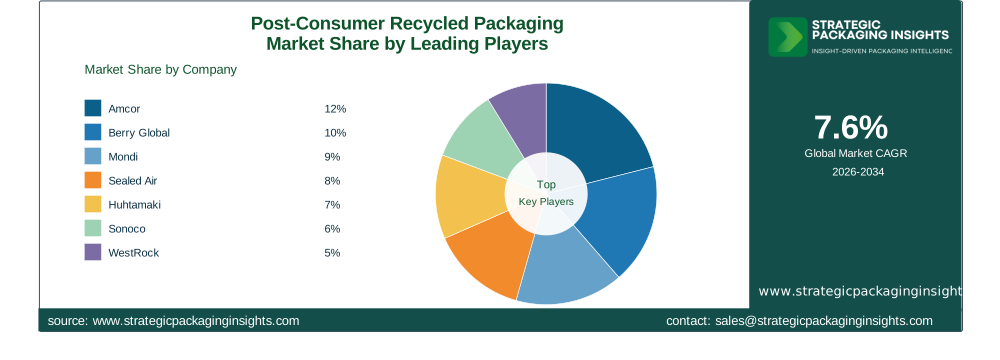
Sealed Air and Huhtamaki are also prominent players in the market, known for their advanced packaging technologies and sustainable solutions. These companies have a strong global presence and are continuously expanding their operations to cater to the growing demand for post-consumer recycled packaging. Their strategic partnerships and collaborations with other industry players have further strengthened their market position, allowing them to offer a wide range of packaging solutions to their customers.
Sonoco and WestRock are other key players in the market, recognized for their comprehensive range of packaging products and services. These companies have a strong focus on sustainability and are actively involved in various initiatives to promote recycling and reduce waste. Their extensive distribution networks and strong customer relationships have enabled them to maintain a significant market share and continue to grow their business in the post-consumer recycled packaging market.
Smurfit Kappa, DS Smith, and ProAmpac are also notable players in the market, known for their innovative packaging solutions and commitment to sustainability. These companies have a strong presence in the market and are continuously investing in new technologies and processes to enhance their product offerings and meet the evolving needs of their customers. Their focus on sustainability and innovation has enabled them to maintain a competitive edge in the market and continue to grow their business in the post-consumer recycled packaging market.
Key Highlights
- The Post-Consumer Recycled Packaging market is projected to reach USD 113.58 billion by 2034, growing at a CAGR of 7.6%.
- Increasing consumer demand for sustainable packaging solutions is driving market growth.
- Stringent regulations and policies are encouraging the use of recycled materials.
- Companies like Amcor and Berry Global are leading the market with innovative solutions.
- The food and beverage and personal care sectors are key drivers of demand.
- High cost of recycled materials poses a challenge for market players.
- Collaboration and partnerships are essential for enhancing market competitiveness.
Post-Consumer Recycled Packaging Market Segments Insights

By Material Type Analysis
The Post-Consumer Recycled Packaging market is segmented by material type, including rPET, rHDPE, recycled paperboard, and recycled aluminum. Each material type offers unique benefits and challenges, influencing its adoption in various packaging applications. rPET is widely used due to its excellent recyclability and versatility, making it a popular choice for packaging bottles and containers. Companies like Amcor and Berry Global are investing in advanced technologies to enhance the quality and performance of rPET packaging solutions, driving its demand in the market.
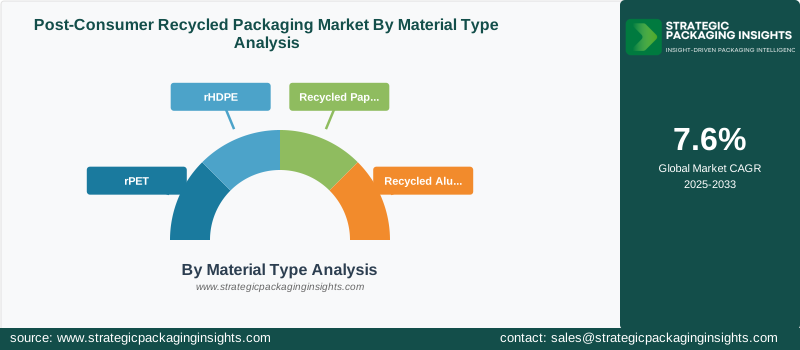
rHDPE is another significant material type, known for its durability and resistance to chemicals and moisture. It is commonly used in packaging applications for household products and personal care items. The demand for rHDPE is driven by the increasing focus on sustainability and the need for packaging solutions that can withstand harsh environmental conditions. Recycled paperboard and recycled aluminum are also gaining traction in the market, particularly in the food and beverage and e-commerce sectors, where lightweight and eco-friendly packaging solutions are in high demand.
By Packaging Type Analysis
The market is also segmented by packaging type, including bottles, pouches, trays, and boxes. Bottles are a dominant segment, driven by the demand for sustainable packaging solutions in the beverage and personal care industries. Companies are focusing on developing innovative bottle designs that enhance recyclability and reduce material usage. Pouches are gaining popularity due to their lightweight and flexible nature, making them ideal for packaging food and household products. The demand for pouches is further supported by the growing trend of convenience and on-the-go consumption.
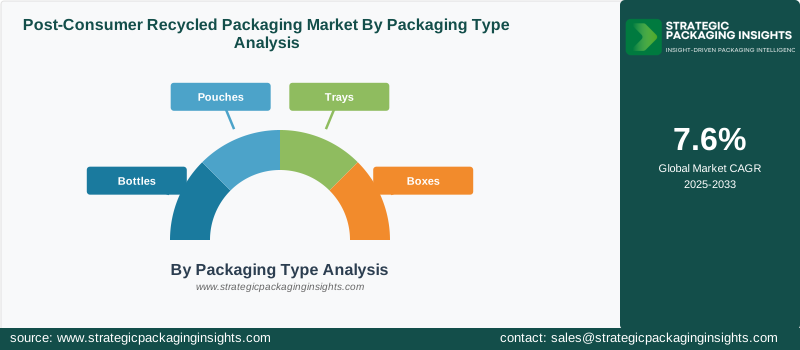
Trays and boxes are also significant segments in the market, particularly in the e-commerce and retail sectors. The increasing demand for sustainable packaging solutions in these sectors is driving the adoption of recycled trays and boxes. Companies are investing in advanced manufacturing technologies to produce high-quality and durable packaging solutions that meet the needs of consumers and regulators. The focus on sustainability and innovation is expected to drive the growth of these segments in the Post-Consumer Recycled Packaging market.
By Application Analysis
The Post-Consumer Recycled Packaging market is segmented by application, including food and beverage, personal care, e-commerce, and household products. The food and beverage sector is a major driver of demand, with companies seeking sustainable packaging solutions to meet consumer preferences and regulatory requirements. The increasing focus on health and wellness is also driving the demand for eco-friendly packaging solutions in the personal care sector, where consumers are seeking products that align with their values.
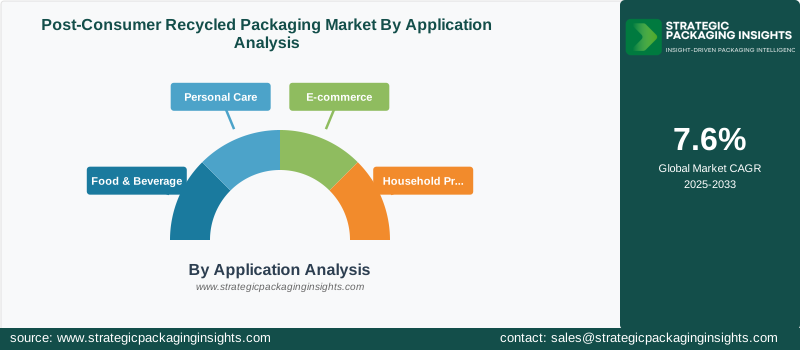
The e-commerce sector is another significant application segment, driven by the growing trend of online shopping and the need for sustainable packaging solutions that can withstand the rigors of transportation. Companies are investing in innovative packaging designs that enhance product protection and reduce material usage. The household products sector is also experiencing growth, with consumers seeking sustainable packaging solutions for everyday items. The focus on sustainability and innovation is expected to drive the growth of these application segments in the Post-Consumer Recycled Packaging market.
By End Use Analysis
The market is also segmented by end use, including FMCG, retail, healthcare, and industrial sectors. The FMCG sector is a major driver of demand, with companies seeking sustainable packaging solutions to meet consumer preferences and regulatory requirements. The increasing focus on health and wellness is also driving the demand for eco-friendly packaging solutions in the healthcare sector, where consumers are seeking products that align with their values.
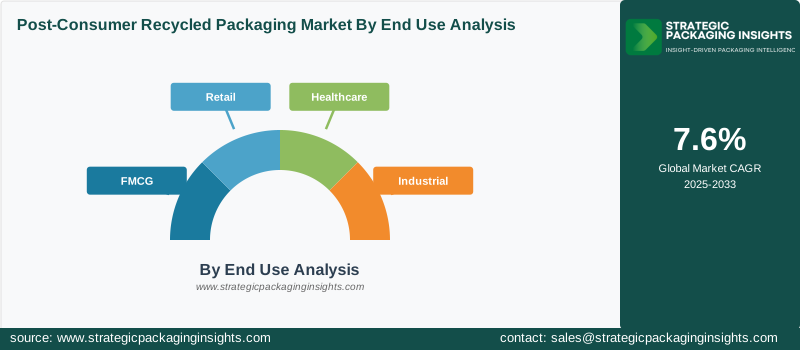
The retail sector is another significant end-use segment, driven by the growing trend of online shopping and the need for sustainable packaging solutions that can withstand the rigors of transportation. Companies are investing in innovative packaging designs that enhance product protection and reduce material usage. The industrial sector is also experiencing growth, with companies seeking sustainable packaging solutions for everyday items. The focus on sustainability and innovation is expected to drive the growth of these end-use segments in the Post-Consumer Recycled Packaging market.
Post-Consumer Recycled Packaging Market Segments
The Post-Consumer Recycled Packaging market has been segmented on the basis ofBy Material Type
- rPET
- rHDPE
- Recycled Paperboard
- Recycled Aluminum
By Packaging Type
- Bottles
- Pouches
- Trays
- Boxes
By Application
- Food & Beverage
- Personal Care
- E-commerce
- Household Products
By End Use
- FMCG
- Retail
- Healthcare
- Industrial
Region
- Asia Pacific
- North America
- Latin America
- Europe
- Middle East & Africa




