


Post-Consumer Recycled Content Verification Services Market Outlook
The Post-Consumer Recycled Content Verification Services market size was valued at USD 682.0 Million in 2025 and is anticipated to reach USD 2.36 Billion by 2034, growing at a CAGR of 14.8% during the forecast period according to Strategic Packaging Insights. This market is witnessing significant growth due to the increasing demand for sustainable packaging solutions and the rising awareness among consumers and businesses about the importance of recycling and reducing environmental impact. Companies like SCS Global Services and UL Solutions are at the forefront, providing comprehensive verification services that ensure the authenticity and integrity of recycled content claims. The market's expansion is further fueled by stringent regulations and standards that mandate the use of recycled materials in various industries, thereby driving the need for reliable verification services.
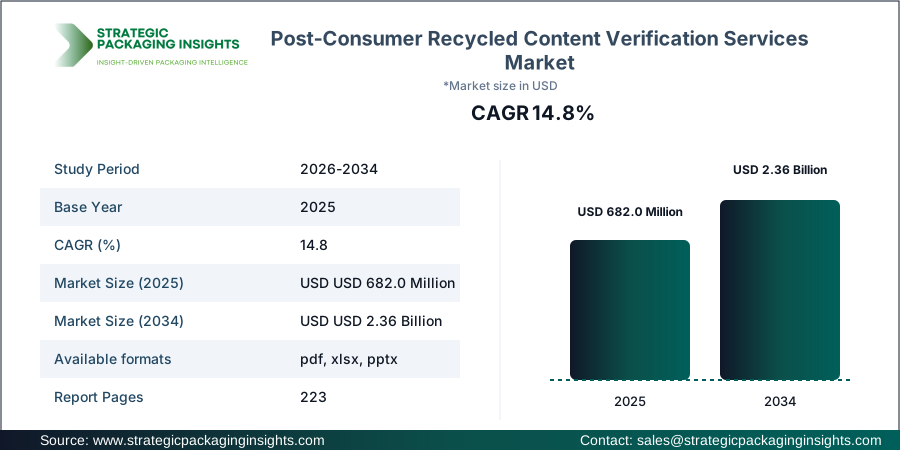
One of the most impactful drivers of this market is the growing emphasis on sustainability and circular economy practices. Governments and organizations worldwide are implementing policies and initiatives to promote the use of recycled materials and reduce waste. For instance, the European Union's Circular Economy Action Plan aims to increase the use of recycled content in packaging and other products, thereby boosting the demand for verification services. Additionally, consumer preferences are shifting towards eco-friendly products, compelling companies to adopt sustainable practices and verify their recycled content claims. This trend is supported by the increasing availability of advanced recycling technologies and the development of new certification standards, which enhance the credibility and transparency of recycled content verification processes.
Report Scope
| Attributes | Details |
| Report Title | Post-Consumer Recycled Content Verification Services Market Size, Future Growth and Forecast 2034 |
| By Verification Type | Post-Consumer Recycled (PCR) Content Verification, Mass Balance Verification, Chain of Custody Verification, Mechanical Recycling Verification, Chemical Recycling Verification |
| By Service | Certification & Auditing, Material Testing, Supply Chain Traceability, Regulatory Compliance Verification, Sustainability Reporting & Assurance |
| By Certification Standard | ISCC PLUS, SCS Recycled Content, UL Environmental Claim Validation, APR PCR Certification, Other Third-Party Standards |
| By End User | Packaging Manufacturers, Food & Beverage Companies, Consumer Goods Companies, Healthcare & Pharmaceutical Companies, Retail & E-commerce, Chemical & Polymer Manufacturers |
| Region | Asia Pacific, North America, Latin America, Europe, Middle East & Africa |
| Base Year | 2025 |
| Historic Period | 2018-2024 |
| Forecast Period | 2026-2034 |
| Number of Pages | 223 |
| Customization Available | Yes* |
Sustainability & Circular Economy Analysis
Sustainability initiatives and circular economy practices are profoundly influencing the packaging market, driving the demand for post-consumer recycled content verification services. As businesses strive to meet consumer expectations for eco-friendly products, they are increasingly adopting recyclable materials and reusable packaging solutions. This shift is not only reducing waste but also enhancing brand reputation and customer loyalty. Companies are investing in lightweight packaging and eco-friendly material innovations to minimize their carbon footprint and align with environmental, social, and governance (ESG) initiatives. These efforts are supported by regulatory frameworks that encourage waste reduction and promote the use of recycled materials, further boosting the demand for verification services.
The influence of sustainability trends extends to packaging design, manufacturing, and investment decisions. As companies prioritize eco-friendly practices, they are re-evaluating their supply chain strategies to ensure compliance with packaging regulations and extended producer responsibility (EPR) requirements. This involves collaborating with verification service providers to authenticate recycled content claims and enhance supply chain transparency. By integrating sustainability into their operations, businesses can achieve long-term market competitiveness and meet the growing demand for sustainable products. The emphasis on reducing carbon emissions and waste is also driving innovation in packaging materials and processes, creating new opportunities for growth and differentiation in the market.
Moreover, consumer sustainability preferences are reshaping the packaging industry, prompting companies to adopt more sustainable practices and invest in verification services. As consumers become more environmentally conscious, they are demanding greater transparency and accountability from brands. This has led to an increased focus on sustainability reporting and assurance, as companies seek to demonstrate their commitment to environmental stewardship. By leveraging verification services, businesses can validate their recycled content claims and build trust with consumers, ultimately enhancing their brand image and market position. The integration of sustainability into packaging strategies is not only a response to consumer demand but also a strategic move to ensure regulatory compliance and drive business growth in an increasingly competitive market.
Packaging Value Chain & Supply Chain Analysis
The packaging value chain and supply chain ecosystem are critical components of the post-consumer recycled content verification services market. Raw material sourcing plays a pivotal role in ensuring the availability of recycled materials for packaging production. Packaging converters and manufacturers are increasingly collaborating with verification service providers to authenticate the recycled content of their products, thereby enhancing their credibility and market appeal. The integration of advanced packaging machinery and technologies is also facilitating the efficient production of sustainable packaging solutions, further driving the demand for verification services.
Supply chain efficiency and raw material availability are key factors influencing the overall market performance and business competitiveness. Companies are adopting strategic procurement strategies and inventory management practices to ensure a steady supply of recycled materials and minimize production disruptions. Localization and global sourcing are also becoming important considerations, as businesses seek to optimize their supply chains and reduce transportation costs. By partnering with verification service providers, companies can enhance their supply chain resilience and ensure compliance with regulatory requirements, ultimately strengthening their market position and competitive advantage.
Logistics and distribution channels are integral to the successful implementation of post-consumer recycled content verification services. Efficient transportation and distribution networks are essential for delivering verified products to end-users and ensuring timely compliance with regulatory standards. Brand owners and retailers are increasingly relying on verification services to authenticate the recycled content of their products and meet consumer expectations for sustainability. Recycling networks and partnerships with verification service providers are also playing a crucial role in enhancing supply chain transparency and traceability, enabling companies to demonstrate their commitment to sustainability and build trust with consumers.
Opportunities & Threats
The post-consumer recycled content verification services market presents numerous opportunities for growth and innovation. One of the key opportunities lies in the increasing demand for sustainable packaging solutions across various industries. As businesses strive to meet consumer expectations for eco-friendly products, they are investing in verification services to authenticate their recycled content claims and enhance their brand reputation. This trend is supported by the growing availability of advanced recycling technologies and the development of new certification standards, which enhance the credibility and transparency of verification processes. Additionally, the expansion of regulatory frameworks and initiatives promoting the use of recycled materials is creating new opportunities for verification service providers to expand their offerings and capture a larger market share.
Another significant opportunity in the market is the rising emphasis on circular economy practices and waste reduction strategies. Companies are increasingly adopting sustainable practices and investing in verification services to align with environmental, social, and governance (ESG) initiatives and reduce their carbon footprint. This shift is driving innovation in packaging materials and processes, creating new opportunities for growth and differentiation in the market. By leveraging verification services, businesses can validate their recycled content claims and build trust with consumers, ultimately enhancing their brand image and market position. The integration of sustainability into packaging strategies is not only a response to consumer demand but also a strategic move to ensure regulatory compliance and drive business growth in an increasingly competitive market.
Despite the numerous opportunities, the market also faces certain threats and challenges. One of the primary challenges is the complexity and cost associated with implementing verification services. Companies may face difficulties in navigating the regulatory landscape and ensuring compliance with various certification standards. Additionally, the lack of standardized verification processes and the potential for fraudulent claims pose significant risks to the credibility and effectiveness of verification services. To overcome these challenges, businesses need to invest in robust verification systems and collaborate with trusted service providers to ensure the accuracy and reliability of their recycled content claims. By addressing these challenges, companies can mitigate risks and capitalize on the growing demand for sustainable packaging solutions.
Drivers & Challenges
The post-consumer recycled content verification services market is driven by several key factors, including the increasing demand for sustainable packaging solutions and the rising awareness among consumers and businesses about the importance of recycling and reducing environmental impact. Companies like SCS Global Services and UL Solutions are at the forefront, providing comprehensive verification services that ensure the authenticity and integrity of recycled content claims. The market's expansion is further fueled by stringent regulations and standards that mandate the use of recycled materials in various industries, thereby driving the need for reliable verification services. Additionally, the growing emphasis on sustainability and circular economy practices is encouraging businesses to adopt eco-friendly practices and invest in verification services to align with environmental, social, and governance (ESG) initiatives.
Another significant driver of the market is the increasing availability of advanced recycling technologies and the development of new certification standards. These advancements are enhancing the credibility and transparency of verification processes, enabling companies to validate their recycled content claims and build trust with consumers. The integration of sustainability into packaging strategies is not only a response to consumer demand but also a strategic move to ensure regulatory compliance and drive business growth in an increasingly competitive market. By leveraging verification services, businesses can achieve long-term market competitiveness and meet the growing demand for sustainable products.
Despite the numerous drivers, the market also faces certain challenges. One of the primary challenges is the complexity and cost associated with implementing verification services. Companies may face difficulties in navigating the regulatory landscape and ensuring compliance with various certification standards. Additionally, the lack of standardized verification processes and the potential for fraudulent claims pose significant risks to the credibility and effectiveness of verification services. To overcome these challenges, businesses need to invest in robust verification systems and collaborate with trusted service providers to ensure the accuracy and reliability of their recycled content claims. By addressing these challenges, companies can mitigate risks and capitalize on the growing demand for sustainable packaging solutions.
Market Share Analysis
The competitive landscape of the post-consumer recycled content verification services market is characterized by the presence of several key players, each striving to capture a significant share of the market. Companies like SCS Global Services, UL Solutions, and ISCC System are leading the market with their comprehensive verification services and strong brand reputation. These companies are leveraging their expertise and experience to provide reliable and credible verification services that meet the evolving needs of businesses and consumers. The market is also witnessing the entry of new players, further intensifying the competition and driving innovation in verification processes and technologies.
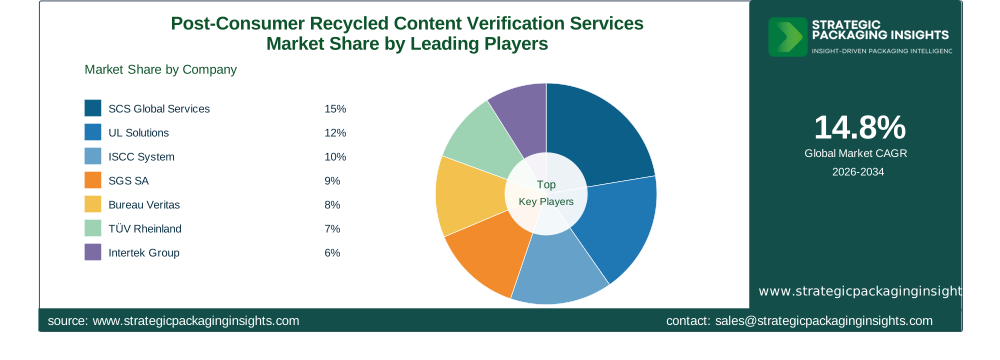
SCS Global Services is a prominent player in the market, known for its rigorous verification processes and commitment to sustainability. The company offers a wide range of services, including certification and auditing, material testing, and supply chain traceability, to help businesses authenticate their recycled content claims and enhance their brand reputation. UL Solutions is another key player, providing comprehensive verification services that ensure the authenticity and integrity of recycled content claims. The company's expertise in regulatory compliance and sustainability reporting makes it a trusted partner for businesses seeking to align with environmental, social, and governance (ESG) initiatives.
ISCC System is a leading provider of certification standards for recycled content verification, offering a range of services that help businesses meet regulatory requirements and demonstrate their commitment to sustainability. The company's focus on transparency and credibility has made it a preferred choice for businesses seeking reliable verification services. SGS SA and Bureau Veritas are also prominent players in the market, known for their extensive experience and expertise in verification services. These companies are leveraging their global presence and strong brand reputation to capture a significant share of the market and drive innovation in verification processes and technologies.
Other notable players in the market include TÜV Rheinland, Intertek Group, DEKRA, Control Union Certifications, DNV, LRQA, Eurofins Scientific, NSF, Association of Plastic Recyclers (APR), and TÜV SÜD. These companies are investing in advanced technologies and expanding their service offerings to meet the growing demand for verification services and capture a larger market share. The competitive landscape of the market is expected to remain dynamic, with companies continuously innovating and expanding their capabilities to meet the evolving needs of businesses and consumers. As the market continues to grow, companies that can provide reliable and credible verification services will be well-positioned to capture a significant share of the market and drive business growth.
Key Highlights
- Market Size: USD 682.0 Million in 2025, projected to reach USD 2.36 Billion by 2034.
- Growth Rate: CAGR of 14.8% during the forecast period.
- Leading Companies: SCS Global Services, UL Solutions, ISCC System, SGS SA, Bureau Veritas.
- Key Segments: Verification Type, Service, Certification Standard, End User.
- Region: Asia Pacific, North America, Latin America, Europe, Middle East & Africa.
- Market Drivers: Sustainability initiatives, regulatory compliance, consumer demand for eco-friendly products.
- Opportunities: Advanced recycling technologies, new certification standards, circular economy practices.
Post-Consumer Recycled Content Verification Services Market Segments Insights

By Verification Type Analysis
The verification type segment in the post-consumer recycled content verification services market is crucial for ensuring the authenticity and integrity of recycled content claims. This segment includes various verification types such as Post-Consumer Recycled (PCR) Content Verification, Mass Balance Verification, Chain of Custody Verification, Mechanical Recycling Verification, and Chemical Recycling Verification. Each verification type plays a significant role in validating the recycled content of products and ensuring compliance with regulatory standards. Companies are increasingly adopting these verification types to enhance their credibility and meet consumer expectations for sustainable products. The growing emphasis on sustainability and circular economy practices is driving the demand for reliable verification services, creating new opportunities for growth and innovation in this segment.
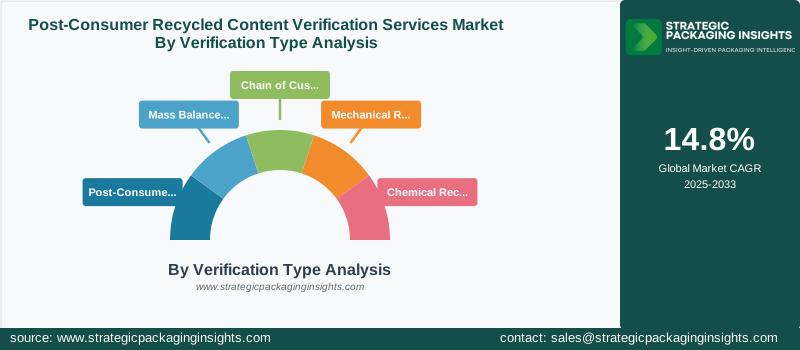
Post-Consumer Recycled (PCR) Content Verification is one of the most widely used verification types, providing businesses with a reliable method to authenticate their recycled content claims. This verification type is particularly important for packaging manufacturers and consumer goods companies, as it helps them demonstrate their commitment to sustainability and build trust with consumers. Mass Balance Verification and Chain of Custody Verification are also gaining traction, as they offer a comprehensive approach to tracking and verifying the recycled content of products throughout the supply chain. These verification types are essential for ensuring transparency and traceability, enabling companies to meet regulatory requirements and enhance their market position.
By Service Analysis
The service segment in the post-consumer recycled content verification services market encompasses a wide range of offerings, including Certification & Auditing, Material Testing, Supply Chain Traceability, Regulatory Compliance Verification, and Sustainability Reporting & Assurance. These services are essential for businesses seeking to authenticate their recycled content claims and enhance their brand reputation. Certification & Auditing services are particularly important, as they provide businesses with a reliable method to validate their recycled content claims and ensure compliance with regulatory standards. Material Testing and Supply Chain Traceability services are also gaining popularity, as they offer a comprehensive approach to verifying the recycled content of products and ensuring transparency throughout the supply chain.
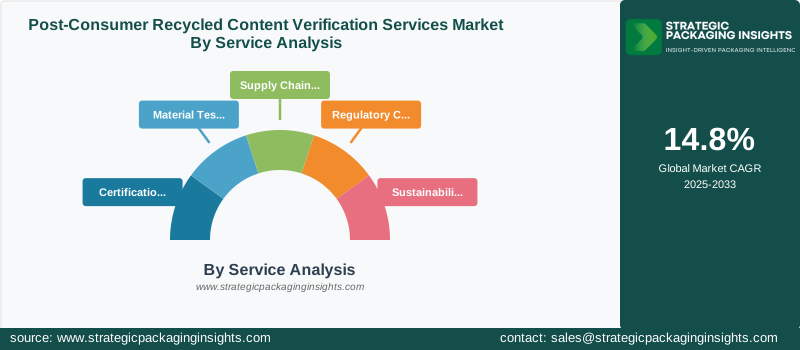
Regulatory Compliance Verification and Sustainability Reporting & Assurance services are critical for businesses seeking to align with environmental, social, and governance (ESG) initiatives and meet consumer expectations for sustainable products. These services help businesses navigate the complex regulatory landscape and ensure compliance with various certification standards, ultimately enhancing their market position and competitive advantage. The growing emphasis on sustainability and circular economy practices is driving the demand for these services, creating new opportunities for growth and innovation in the market. By leveraging these services, businesses can validate their recycled content claims and build trust with consumers, ultimately enhancing their brand image and market position.
By Certification Standard Analysis
The certification standard segment in the post-consumer recycled content verification services market is crucial for ensuring the credibility and transparency of verification processes. This segment includes various certification standards such as ISCC PLUS, SCS Recycled Content, UL Environmental Claim Validation, APR PCR Certification, and other third-party standards. Each certification standard plays a significant role in validating the recycled content of products and ensuring compliance with regulatory requirements. Companies are increasingly adopting these certification standards to enhance their credibility and meet consumer expectations for sustainable products. The growing emphasis on sustainability and circular economy practices is driving the demand for reliable verification services, creating new opportunities for growth and innovation in this segment.
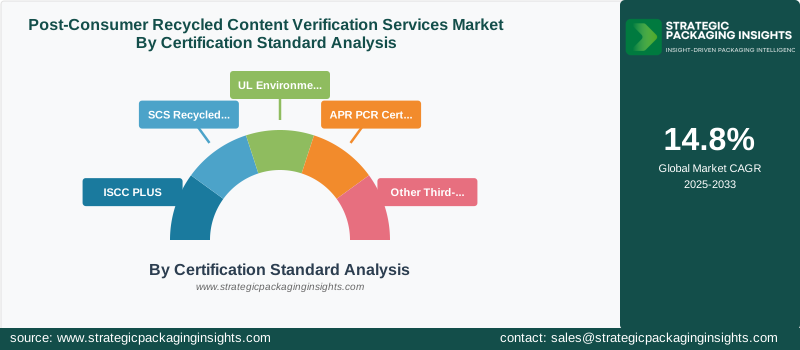
ISCC PLUS is one of the most widely recognized certification standards, providing businesses with a reliable method to authenticate their recycled content claims and ensure compliance with regulatory standards. This certification standard is particularly important for packaging manufacturers and consumer goods companies, as it helps them demonstrate their commitment to sustainability and build trust with consumers. SCS Recycled Content and UL Environmental Claim Validation are also gaining traction, as they offer a comprehensive approach to verifying the recycled content of products and ensuring transparency throughout the supply chain. These certification standards are essential for ensuring transparency and traceability, enabling companies to meet regulatory requirements and enhance their market position.
By End User Analysis
The end user segment in the post-consumer recycled content verification services market encompasses a wide range of industries, including Packaging Manufacturers, Food & Beverage Companies, Consumer Goods Companies, Healthcare & Pharmaceutical Companies, Retail & E-commerce, and Chemical & Polymer Manufacturers. Each end user plays a significant role in driving the demand for verification services, as they seek to authenticate their recycled content claims and enhance their brand reputation. Packaging manufacturers and consumer goods companies are particularly important end users, as they are at the forefront of adopting sustainable practices and investing in verification services to meet consumer expectations for eco-friendly products.
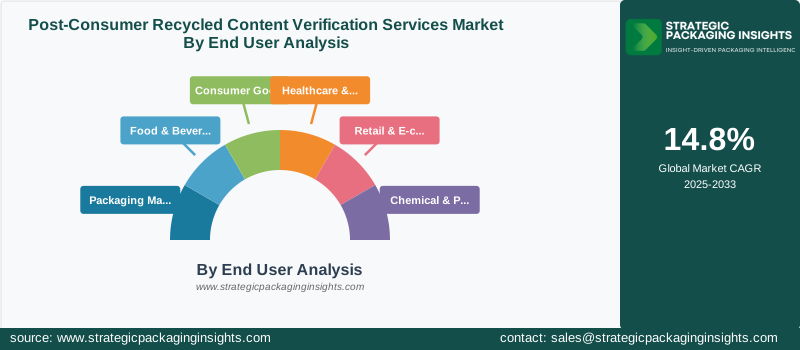
Food & Beverage Companies and Healthcare & Pharmaceutical Companies are also key end users, as they seek to align with environmental, social, and governance (ESG) initiatives and reduce their carbon footprint. These companies are increasingly adopting verification services to ensure compliance with regulatory standards and enhance their market position. Retail & E-commerce and Chemical & Polymer Manufacturers are also important end users, as they seek to demonstrate their commitment to sustainability and build trust with consumers. The growing emphasis on sustainability and circular economy practices is driving the demand for verification services across these industries, creating new opportunities for growth and innovation in the market.
Post-Consumer Recycled Content Verification Services Market Segments
The Post-Consumer Recycled Content Verification Services market has been segmented on the basis ofBy Verification Type
- Post-Consumer Recycled (PCR) Content Verification
- Mass Balance Verification
- Chain of Custody Verification
- Mechanical Recycling Verification
- Chemical Recycling Verification
By Service
- Certification & Auditing
- Material Testing
- Supply Chain Traceability
- Regulatory Compliance Verification
- Sustainability Reporting & Assurance
By Certification Standard
- ISCC PLUS
- SCS Recycled Content
- UL Environmental Claim Validation
- APR PCR Certification
- Other Third-Party Standards
By End User
- Packaging Manufacturers
- Food & Beverage Companies
- Consumer Goods Companies
- Healthcare & Pharmaceutical Companies
- Retail & E-commerce
- Chemical & Polymer Manufacturers
Region
- Asia Pacific
- North America
- Latin America
- Europe
- Middle East & Africa




