


Polyvinyl Chloride (PVC) Packaging Film Market Outlook
The Polyvinyl Chloride (PVC) Packaging Film market was valued at $13.56 billion in 2025 and is projected to reach $20.33 billion by 2034, growing at a CAGR of 4.6% during the forecast period 2026-2034. This growth is driven by the increasing demand for durable and versatile packaging solutions across various industries. PVC packaging films are favored for their excellent barrier properties, flexibility, and cost-effectiveness, making them ideal for a wide range of applications, including food packaging, consumer goods, and pharmaceuticals. The market is also benefiting from advancements in manufacturing technologies that enhance the quality and performance of PVC films, further boosting their adoption in diverse sectors.
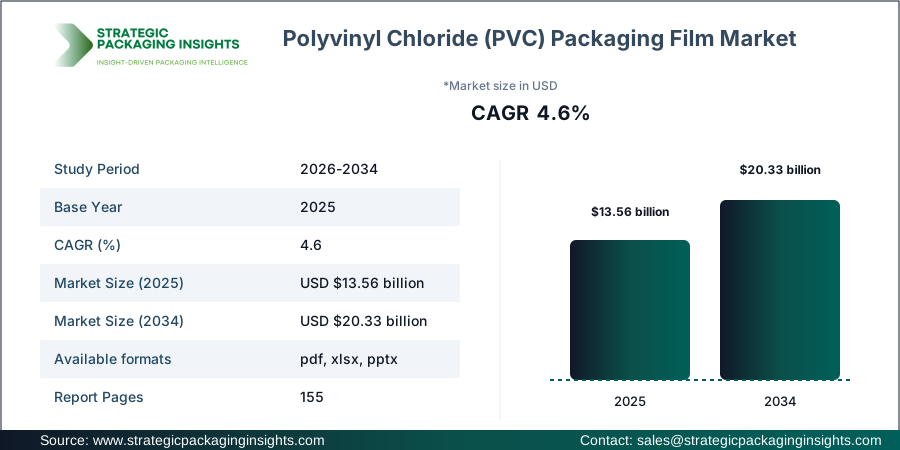
Despite the promising growth prospects, the PVC packaging film market faces certain challenges that could hinder its expansion. Environmental concerns related to the disposal and recycling of PVC materials pose significant restraints, as regulatory bodies worldwide are increasingly focusing on sustainable packaging solutions. However, the market holds substantial growth potential, particularly with the development of eco-friendly PVC alternatives and the implementation of recycling initiatives. These efforts are expected to mitigate environmental impacts and align with global sustainability goals, thereby opening new avenues for market players to explore and capitalize on.
Report Scope
| Attributes | Details |
| Report Title | Polyvinyl Chloride (PVC) Packaging Film Market Size, Future Growth and Forecast 2034 |
| By Product Type | Rigid PVC Film, Flexible PVC Film, Shrink PVC Film |
| By Application | Blister Packaging, Labels, Food Wrap, Consumer Goods |
| By Thickness | Thin, Medium, Heavy |
| By End Use | Pharma, Food, Retail, Converters |
| Region | Asia Pacific, North America, Latin America, Europe, Middle East & Africa |
| Base Year | 2025 |
| Historic Period | 2018-2024 |
| Forecast Period | 2026-2034 |
| Number of Pages | 155 |
| Customization Available | Yes* |
Opportunities & Threats
The PVC packaging film market presents numerous opportunities for growth, primarily driven by the rising demand for packaged food and beverages. As consumer lifestyles become busier, the need for convenient and safe packaging solutions has surged, positioning PVC films as a preferred choice due to their durability and protective qualities. Additionally, the pharmaceutical industry offers significant growth potential, with PVC films being extensively used in blister packaging to ensure product safety and extend shelf life. The ongoing trend towards sustainable packaging also presents opportunities for innovation, as manufacturers invest in developing biodegradable and recyclable PVC films to meet evolving consumer preferences and regulatory requirements.
Another opportunity lies in the expanding e-commerce sector, which has increased the demand for reliable packaging solutions that can withstand the rigors of transportation. PVC films, with their excellent strength and flexibility, are well-suited for this purpose, providing a lucrative market for manufacturers to tap into. Furthermore, technological advancements in film production, such as the development of multi-layered films with enhanced barrier properties, are expected to drive market growth by offering superior protection against moisture, oxygen, and other external factors.
However, the market is not without its threats. The growing environmental concerns associated with PVC materials pose a significant challenge, as consumers and regulatory bodies push for more sustainable alternatives. The potential health risks linked to certain additives used in PVC production also raise concerns, prompting manufacturers to explore safer and more environmentally friendly options. Additionally, the volatility in raw material prices can impact production costs and profit margins, posing a threat to market stability and growth.
Drivers & Challenges
The primary drivers of the PVC packaging film market include the increasing demand for flexible and durable packaging solutions across various industries. The food and beverage sector, in particular, is a major contributor to market growth, as PVC films offer excellent barrier properties that help preserve product freshness and extend shelf life. The pharmaceutical industry also plays a crucial role, with PVC films being widely used in blister packaging to ensure product safety and compliance with stringent regulatory standards. Additionally, the rise of e-commerce has fueled the demand for robust packaging solutions that can withstand the challenges of transportation, further driving the adoption of PVC films.
Technological advancements in film production are another key driver, as manufacturers continue to innovate and develop high-performance PVC films with enhanced properties. The introduction of multi-layered films with superior barrier capabilities has expanded the application scope of PVC films, making them suitable for a wider range of products and industries. Moreover, the growing focus on sustainability has led to the development of eco-friendly PVC alternatives, providing manufacturers with new opportunities to cater to environmentally conscious consumers and comply with evolving regulatory requirements.
Despite these drivers, the market faces several challenges that could impede its growth. Environmental concerns related to the disposal and recycling of PVC materials remain a significant hurdle, as regulatory bodies worldwide push for more sustainable packaging solutions. The potential health risks associated with certain additives used in PVC production also pose challenges, prompting manufacturers to explore safer alternatives. Additionally, fluctuations in raw material prices can impact production costs and profit margins, creating uncertainty and volatility in the market. To overcome these challenges, industry players must invest in research and development to create innovative and sustainable PVC solutions that meet consumer demands and regulatory standards.
Market Share Analysis
The competitive landscape of the PVC packaging film market is characterized by the presence of several key players who dominate the industry with their extensive product portfolios and strong market presence. Companies such as Klöckner Pentaplast, TekniPlex, and Berry Global are among the leading players, leveraging their expertise and technological capabilities to maintain a competitive edge. These companies focus on continuous innovation and strategic partnerships to expand their product offerings and strengthen their market position.
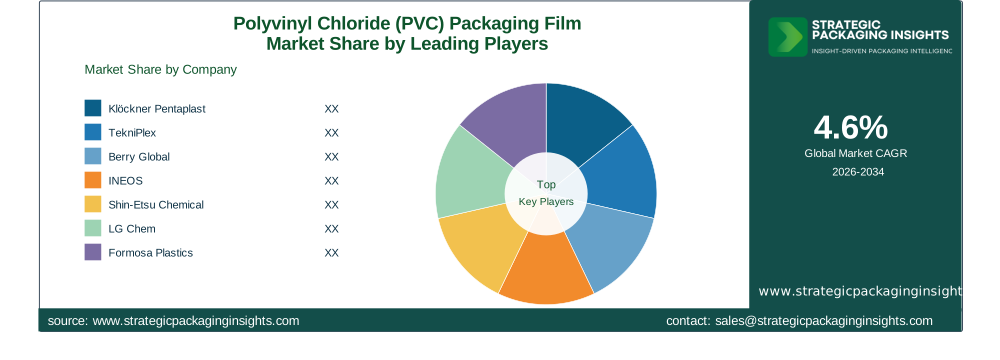
Klöckner Pentaplast, for instance, holds a significant market share due to its comprehensive range of PVC films catering to various applications, including food packaging, pharmaceuticals, and consumer goods. The company's commitment to sustainability and innovation has enabled it to develop eco-friendly PVC solutions that align with global environmental standards. Similarly, TekniPlex is a prominent player known for its advanced film technologies and focus on delivering high-quality packaging solutions to meet diverse customer needs.
Berry Global is another major player in the market, renowned for its extensive product portfolio and strong distribution network. The company's emphasis on research and development has resulted in the creation of innovative PVC films with enhanced properties, catering to the evolving demands of the packaging industry. Other notable companies include INEOS, Shin-Etsu Chemical, and LG Chem, each contributing to the market's growth through their technological advancements and strategic initiatives.
Formosa Plastics, Mitsubishi Chemical, Polyplex, and UFlex are also key players in the PVC packaging film market, each with a unique approach to addressing market demands and challenges. These companies focus on expanding their product offerings and enhancing their production capabilities to cater to a wide range of applications and industries. Their commitment to sustainability and innovation positions them well to capitalize on emerging opportunities and navigate the challenges posed by environmental concerns and regulatory pressures.
Key Highlights
- The PVC packaging film market is projected to grow from $13.56 billion in 2025 to $20.33 billion by 2034, at a CAGR of 4.6%.
- Key drivers include the rising demand for durable and flexible packaging solutions across food, pharmaceutical, and e-commerce sectors.
- Environmental concerns and regulatory pressures are significant challenges, prompting the development of eco-friendly PVC alternatives.
- Technological advancements in film production are expanding the application scope of PVC films.
- Major players include Klöckner Pentaplast, TekniPlex, Berry Global, and INEOS, among others.
- The market is witnessing increased investment in research and development to create innovative and sustainable PVC solutions.
- Asia Pacific is a key growth region, driven by rapid industrialization and increasing consumer demand for packaged goods.
- The pharmaceutical industry offers significant growth potential, with PVC films being extensively used in blister packaging.
- The expanding e-commerce sector is boosting demand for robust packaging solutions, further driving market growth.
Top Countries Insights
In the Polyvinyl Chloride (PVC) Packaging Film market, the United States stands out as a leading player, with a market size of approximately $3.5 billion and a CAGR of 3%. The country's robust food and beverage industry, coupled with a strong pharmaceutical sector, drives the demand for PVC films. Regulatory support for sustainable packaging solutions further propels market growth, as manufacturers invest in eco-friendly alternatives to meet evolving consumer preferences and compliance standards.
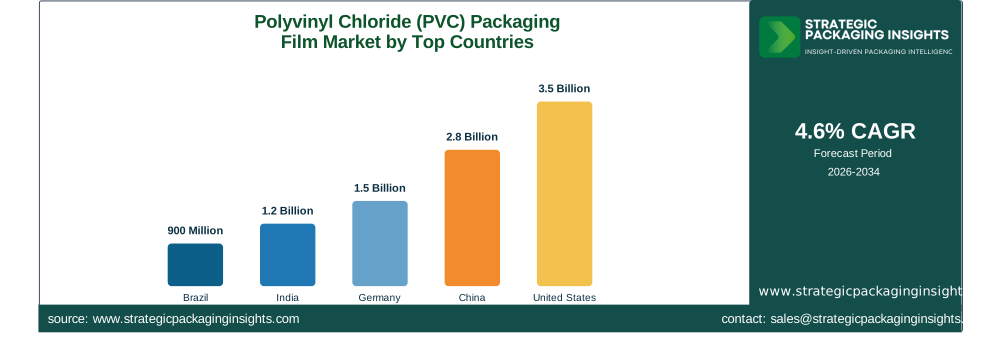
China is another significant market, with a current size of around $2.8 billion and a CAGR of 6%. The country's rapid industrialization and growing consumer base fuel the demand for packaged goods, positioning PVC films as a preferred choice for packaging solutions. Government initiatives promoting sustainable practices and the development of biodegradable PVC alternatives are key growth drivers, as manufacturers strive to align with environmental goals and regulatory requirements.
Germany, with a market size of approximately $1.5 billion and a CAGR of 4%, is a prominent player in the European region. The country's strong focus on sustainability and innovation drives the demand for advanced PVC films with enhanced properties. Regulatory support for eco-friendly packaging solutions and the presence of leading market players contribute to the market's growth, as manufacturers invest in research and development to create innovative and sustainable PVC solutions.
India, with a market size of around $1.2 billion and a CAGR of 7%, is a rapidly growing market for PVC packaging films. The country's expanding food and beverage industry, coupled with a burgeoning e-commerce sector, drives the demand for durable and flexible packaging solutions. Government initiatives promoting sustainable practices and the development of eco-friendly PVC alternatives are key growth drivers, as manufacturers strive to meet evolving consumer preferences and regulatory requirements.
Brazil, with a market size of approximately $900 million and a CAGR of 5%, is a key player in the Latin American region. The country's growing consumer base and increasing demand for packaged goods drive the market for PVC films. Regulatory support for sustainable packaging solutions and the development of biodegradable PVC alternatives are key growth drivers, as manufacturers invest in eco-friendly solutions to meet evolving consumer preferences and compliance standards.
Polyvinyl Chloride (PVC) Packaging Film Market Segments Insights

Product Type Analysis
The Polyvinyl Chloride (PVC) Packaging Film market is segmented by product type into rigid PVC film, flexible PVC film, and shrink PVC film. Rigid PVC films are widely used in applications requiring high durability and strength, such as blister packaging and consumer goods. Their excellent barrier properties and cost-effectiveness make them a preferred choice for manufacturers seeking reliable packaging solutions. Flexible PVC films, on the other hand, are favored for their versatility and adaptability, making them suitable for a wide range of applications, including food wrap and labels. The demand for shrink PVC films is also on the rise, driven by their ability to conform to the shape of packaged products, providing a secure and attractive packaging solution.
Technological advancements in film production have led to the development of high-performance PVC films with enhanced properties, expanding their application scope across various industries. The introduction of multi-layered films with superior barrier capabilities has further boosted the demand for PVC films, as manufacturers seek to provide superior protection against moisture, oxygen, and other external factors. Additionally, the growing focus on sustainability has led to the development of eco-friendly PVC alternatives, providing manufacturers with new opportunities to cater to environmentally conscious consumers and comply with evolving regulatory requirements.
Application Analysis
The application segment of the PVC packaging film market includes blister packaging, labels, food wrap, and consumer goods. Blister packaging is a major application area, driven by the pharmaceutical industry's demand for secure and tamper-evident packaging solutions. PVC films are extensively used in blister packaging to ensure product safety and compliance with stringent regulatory standards. The demand for labels is also significant, as PVC films offer excellent printability and durability, making them ideal for branding and product identification purposes.
Food wrap is another key application area, with PVC films being favored for their excellent barrier properties that help preserve product freshness and extend shelf life. The consumer goods sector also contributes to market growth, as PVC films provide a durable and attractive packaging solution for a wide range of products. The expanding e-commerce sector further boosts demand for PVC films, as manufacturers seek reliable packaging solutions that can withstand the challenges of transportation and ensure product integrity.
Thickness Analysis
The PVC packaging film market is segmented by thickness into thin, medium, and heavy films. Thin films are widely used in applications requiring flexibility and adaptability, such as food wrap and labels. Their lightweight nature and cost-effectiveness make them a preferred choice for manufacturers seeking efficient packaging solutions. Medium films offer a balance between strength and flexibility, making them suitable for a wide range of applications, including blister packaging and consumer goods.
Heavy films, on the other hand, are favored for their durability and strength, making them ideal for applications requiring high protection and barrier properties. The demand for heavy films is particularly strong in the pharmaceutical and food industries, where product safety and integrity are paramount. Technological advancements in film production have led to the development of high-performance PVC films with enhanced properties, expanding their application scope across various industries and driving market growth.
End Use Analysis
The end-use segment of the PVC packaging film market includes pharma, food, retail, and converters. The pharmaceutical industry is a major end-user, with PVC films being extensively used in blister packaging to ensure product safety and compliance with stringent regulatory standards. The food industry also contributes significantly to market growth, as PVC films offer excellent barrier properties that help preserve product freshness and extend shelf life.
The retail sector is another key end-user, with PVC films providing a durable and attractive packaging solution for a wide range of products. The expanding e-commerce sector further boosts demand for PVC films, as manufacturers seek reliable packaging solutions that can withstand the challenges of transportation and ensure product integrity. Converters also play a crucial role in the market, as they transform PVC films into finished products for various applications, driving demand for high-quality and innovative PVC solutions.
Polyvinyl Chloride (PVC) Packaging Film Market Segments
The Polyvinyl Chloride (PVC) Packaging Film market has been segmented on the basis ofBy Product Type
- Rigid PVC Film
- Flexible PVC Film
- Shrink PVC Film
By Application
- Blister Packaging
- Labels
- Food Wrap
- Consumer Goods
By Thickness
- Thin
- Medium
- Heavy
By End Use
- Pharma
- Food
- Retail
- Converters
Region
- Asia Pacific
- North America
- Latin America
- Europe
- Middle East & Africa




