


Polyvinyl Chloride Packaging Film Market Outlook
The Polyvinyl Chloride Packaging Film market size was valued at USD $8.2 Billion in 2025 and is anticipated to reach USD $11.9 Billion by 2035, growing at a CAGR of 3.8% during the forecast period according to Strategic Packaging Insights. The market is primarily driven by the increasing demand for durable and versatile packaging solutions in the food and pharmaceutical sectors. The adaptability of PVC films in various packaging formats, such as wraps, pouches, and blister packs, enhances their appeal across diverse applications.
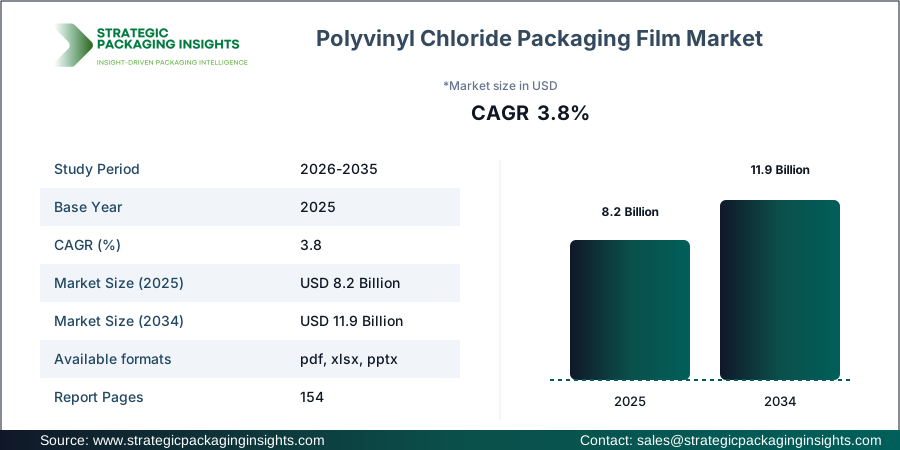
One of the most impactful drivers is the growing emphasis on food safety and shelf-life extension, which is propelling the demand for high-barrier PVC films. Regulatory bodies like the FDA and EFSA are increasingly focusing on packaging materials that ensure product integrity and consumer safety. This regulatory push, coupled with advancements in film technology, is expected to significantly boost the adoption of PVC packaging films in the coming years.
Report Scope
| Attributes | Details |
| Report Title | Polyvinyl Chloride Packaging Film Market Projected to Scale to 11.9 Billion by 2035, Assesses Strategic Packaging Insights |
| By Film Type | Rigid PVC Film, Flexible PVC Film, Clear PVC Film, Opaque PVC Film, PVC Shrink Film, PVC Cling Film |
| By Thickness | Below 50 Microns, 50–100 Microns, 101–200 Microns, Above 200 Microns |
| By Application | Food Packaging, Pharmaceutical Packaging, Consumer Goods Packaging, Industrial Packaging, Medical Packaging, Retail Packaging, Others |
| By Packaging Format | Wraps, Pouches, Bags, Blister Packs, Clamshells, Lidding Films, Labels, Others |
| By End User | Food and Beverage, Pharmaceuticals, Healthcare, Consumer Goods, Retail, Industrial, Others |
| By Region | Asia Pacific, North America, Latin America, Europe, Middle East & Africa |
| Base Year | 2025 |
| Historic Period | 2018-2024 |
| Forecast Period | 2026-2035 |
| Number of Pages | 154 |
| Customization Available | Yes* |
Market Trends Analysis
In recent years, the Polyvinyl Chloride Packaging Film market has witnessed a shift towards sustainability, with manufacturers exploring recyclable and biodegradable alternatives. This trend is driven by increasing consumer awareness and stringent environmental regulations. Companies are investing in R&D to develop PVC films with enhanced recyclability and reduced environmental impact, which is expected to influence procurement strategies and product development.
Another significant trend is the adoption of advanced printing and lamination technologies to enhance the aesthetic appeal and functionality of PVC films. The integration of digital printing solutions allows for high-quality graphics and customization, catering to brand owners' demand for differentiated packaging. This trend is likely to drive competitive positioning and market growth, as companies seek to offer innovative packaging solutions that meet evolving consumer preferences.
Industry Transformation Analysis
The Polyvinyl Chloride Packaging Film industry is undergoing a transformation with increased automation and digitalization in manufacturing processes. Film extrusion and converting operations are being optimized for higher efficiency and reduced waste, driven by the need for cost-effective production. This shift towards automation is expected to enhance operational efficiency and reduce lead times, providing a competitive edge to manufacturers.
Furthermore, the industry is witnessing a consolidation trend, with major players expanding their production capacities and acquiring smaller firms to strengthen their market position. This consolidation is aimed at achieving economies of scale and enhancing supply chain capabilities. As a result, the market is expected to see increased competition, with companies focusing on innovation and strategic partnerships to capture market share.
Trends & Disruptions Impacting Customers' Customers
Downstream customers, particularly in the food and pharmaceutical sectors, are increasingly prioritizing packaging solutions that offer enhanced safety and shelf-life. This shift is driven by consumer demand for fresh and safe products, as well as regulatory requirements for food safety. As a result, there is a growing demand for PVC films with superior barrier properties and compliance with food-contact regulations.
These changes are influencing product demand and innovation in the PVC packaging film market. Manufacturers are focusing on developing films that meet the stringent requirements of downstream customers, leading to increased investment in R&D and new product launches. This trend is expected to create market opportunities for companies that can offer high-performance packaging solutions, while also driving supplier requirements for quality and compliance.
Polyvinyl Chloride Packaging Film Market Ecosystem
The Polyvinyl Chloride Packaging Film market ecosystem involves a complex interplay of raw material suppliers, film producers, converters, and distributors. The procurement of high-quality PVC resin and additives is crucial for producing films with desired properties. Film production involves extrusion and calendaring processes, which are optimized for efficiency and quality.
Converters play a vital role in transforming films into various packaging formats through printing, lamination, and cutting. The distribution network ensures timely delivery of finished products to end users, while recycling initiatives focus on reducing the environmental impact of PVC films. These ecosystem relationships are critical for value creation and meeting the evolving demands of downstream customers.
Analyst Perspective
Analyst Perspective: The Polyvinyl Chloride Packaging Film market is poised for growth, driven by demand in food and pharmaceutical packaging sectors.
The most important structural change is the shift towards sustainable packaging solutions, with companies investing in recyclable and biodegradable PVC films. This trend is expected to drive innovation and competitive differentiation in the market.
Companies, investors, and suppliers should focus on sustainability initiatives and regulatory compliance to capture market opportunities. Monitoring advancements in film technology and consumer preferences will be crucial for strategic decision-making.
Opportunities & Threats
The Polyvinyl Chloride Packaging Film market presents significant opportunities for growth, particularly in the food and pharmaceutical sectors. The demand for high-barrier films that ensure product safety and extend shelf life is driving innovation and product development. Companies that can offer advanced packaging solutions with enhanced functionality and compliance with regulatory standards are likely to capture market share.
Technological advancements in film production and converting processes are creating opportunities for cost reduction and efficiency improvement. The integration of digital printing and lamination technologies is enabling manufacturers to offer customized and aesthetically appealing packaging solutions, catering to the evolving needs of brand owners and consumers.
However, the market faces threats from raw material price volatility and regulatory uncertainty. Fluctuations in PVC resin prices can impact production costs and profit margins, while stringent environmental regulations may require significant investments in sustainable packaging solutions. Companies need to adopt proactive strategies to mitigate these risks and ensure compliance with evolving regulatory requirements.
Additionally, competition from alternative packaging materials poses a threat to the PVC packaging film market. The growing preference for eco-friendly and biodegradable materials may lead to material substitution, affecting demand for PVC films. Companies need to focus on innovation and sustainability to maintain their competitive edge and address the challenges posed by changing consumer preferences and regulatory pressures.
Drivers & Challenges
The Polyvinyl Chloride Packaging Film market is driven by several key factors, including the increasing demand for durable and versatile packaging solutions in the food and pharmaceutical sectors. The adaptability of PVC films in various packaging formats, such as wraps, pouches, and blister packs, enhances their appeal across diverse applications. Additionally, the growing emphasis on food safety and shelf-life extension is propelling the demand for high-barrier PVC films.
Regulatory bodies like the FDA and EFSA are increasingly focusing on packaging materials that ensure product integrity and consumer safety. This regulatory push, coupled with advancements in film technology, is expected to significantly boost the adoption of PVC packaging films in the coming years. The market is also benefiting from technological advancements in film production and converting processes, which are driving efficiency and cost reduction.
However, the market faces challenges related to raw material price volatility and regulatory uncertainty. Fluctuations in PVC resin prices can impact production costs and profit margins, while stringent environmental regulations may require significant investments in sustainable packaging solutions. Companies need to adopt proactive strategies to mitigate these risks and ensure compliance with evolving regulatory requirements.
Packaging Market Economics
The economics of the Polyvinyl Chloride Packaging Film market are influenced by several factors, including raw material costs, conversion costs, and energy expenses. PVC resin pricing is a critical component, with fluctuations impacting overall production costs. Conversion costs, including extrusion, printing, and lamination, also play a significant role in determining the final product price.
Energy costs are another important consideration, as film production processes are energy-intensive. Companies are focusing on optimizing energy consumption to reduce costs and improve sustainability. Additionally, logistics and distribution expenses are crucial for ensuring timely delivery of finished products to end users. Efficient supply chain management is essential for maintaining competitive pricing and meeting customer demands.
Packaging Value Chain & Cost Analysis
The value chain for Polyvinyl Chloride Packaging Film involves several tiers, each contributing to the overall cost structure. Tier-3 includes resin synthesis and additive production, which are critical for ensuring the quality and performance of PVC films. Tier-2 involves film extrusion and substrate production, where efficiency and quality control are paramount.
Tier-1 encompasses converting, printing, and lamination processes, which add value by transforming films into various packaging formats. Downstream activities include co-packing, distribution, and recycling, which are essential for delivering finished products to end users and managing end-of-life processing. Capacity utilization and efficient logistics are crucial for optimizing costs and maintaining competitive pricing.
Unit Economics & Substrate Cost Analysis
The unit economics of Polyvinyl Chloride Packaging Film are influenced by several factors, including raw material costs, energy expenses, and conversion processes. PVC resin and feedstock prices are critical components, with fluctuations impacting overall production costs. Energy expenses are significant, as film production processes are energy-intensive.
Extrusion, printing, and lamination costs also contribute to the unit economics, with companies focusing on optimizing these processes to reduce costs and improve efficiency. Labor and logistics expenses are additional considerations, as efficient supply chain management is essential for maintaining competitive pricing and meeting customer demands. Companies are investing in technology and process improvements to enhance unit economics and remain competitive in the market.
Packaging Regulatory & Sustainability Analysis
The Polyvinyl Chloride Packaging Film market is subject to various regulatory and sustainability considerations. Packaging regulations, such as those enforced by the FDA and EFSA, focus on ensuring product safety and compliance with food-contact requirements. These regulations drive the demand for high-quality PVC films that meet stringent safety standards.
Sustainability is a growing concern, with companies exploring recyclable and biodegradable alternatives to traditional PVC films. Extended Producer Responsibility (EPR) and packaging taxes are influencing material choices and driving innovation in sustainable packaging solutions. Companies are investing in R&D to develop PVC films with enhanced recyclability and reduced environmental impact, aligning with consumer preferences and regulatory requirements.
Strategic Mergers, Acquisitions & Capacity Expansions
Recent strategic developments in the Polyvinyl Chloride Packaging Film market include mergers, acquisitions, and capacity expansions aimed at strengthening market position and enhancing capabilities. Companies like INEOS Group and Shin-Etsu Chemical Co., Ltd. have been actively expanding their production capacities to meet growing demand and achieve economies of scale.
Partnerships and collaborations are also playing a significant role in driving innovation and market growth. For instance, companies are investing in technology and R&D to develop advanced PVC films with enhanced functionality and sustainability. These strategic initiatives are expected to create new market opportunities and drive competitive differentiation in the coming years.
Strategic Action Directives
Brand Packaging Engineers & Sustainability Directors: Focus on material selection and recyclability to meet regulatory requirements and consumer preferences. Invest in R&D for sustainable packaging solutions.
Converter Operations & Extrusion Leads: Optimize line speed and tooling to enhance efficiency and reduce costs. Address PCR variability and capacity utilization to improve operational performance.
Procurement & Material Sourcing Managers: Diversify supplier base and secure resin contracts to mitigate price volatility. Focus on EPR exposure and sustainability initiatives to align with market trends.
Investors: Monitor capacity expansions and M&A activities to identify growth opportunities. Evaluate market concentration and technology advancements for strategic investment decisions.
Market Share Analysis
The Polyvinyl Chloride Packaging Film market is characterized by a competitive landscape with several key players vying for market share. Companies like INEOS Group, Shin-Etsu Chemical Co., Ltd., and Westlake Corporation are prominent players, leveraging their extensive production capacities and technological expertise to maintain a strong market position.
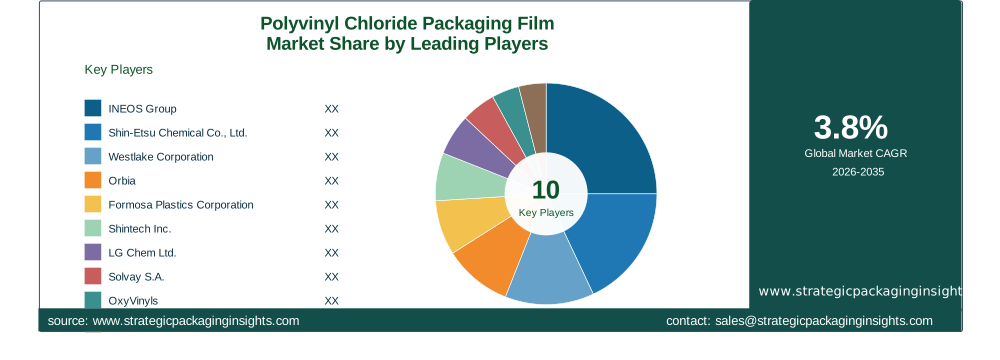
These companies are focusing on strategic initiatives such as capacity expansions, mergers, and acquisitions to enhance their market presence and achieve economies of scale. The competitive landscape is also influenced by technological advancements and sustainability initiatives, with companies investing in R&D to develop innovative and eco-friendly packaging solutions.
Regional players are also making significant contributions to the market, particularly in Asia Pacific and Europe, where demand for PVC packaging films is high. These players are focusing on expanding their production capacities and enhancing their distribution networks to capture market opportunities and meet the growing demand for high-quality packaging solutions.
Overall, the market is expected to witness increased competition, with companies focusing on innovation, sustainability, and strategic partnerships to gain a competitive edge. The ability to offer advanced packaging solutions that meet regulatory requirements and consumer preferences will be crucial for maintaining market share and driving growth in the coming years.
Key Highlights
- Largest Region: Asia Pacific
- Fastest-Growing Region: Asia Pacific
- Largest Segment: Food Packaging
- Fastest-Growing Segment: Pharmaceutical Packaging
- Base-year market size: USD 8.2 Billion
- Forecast-year market size: USD 11.9 Billion
- CAGR: 3.8%
- Important application: High-barrier films for food safety
- Major end-use industry: Food and Beverage
- Major market driver: Demand for durable and versatile packaging solutions
Regional Insights
The Polyvinyl Chloride Packaging Film market is globally segmented into major regions, including North America, Europe, Asia Pacific, Latin America, and the Middle East & Africa. Asia Pacific is the largest and fastest-growing region, driven by high demand in the food and pharmaceutical sectors. The region's robust manufacturing base and increasing consumer awareness of packaging safety contribute to its market dominance.
North America
In North America, the market is characterized by a strong focus on sustainability and regulatory compliance. The demand for PVC films is driven by the food and healthcare sectors, with companies investing in advanced packaging solutions to meet consumer preferences and regulatory standards. The region's well-established distribution networks and technological advancements support market growth.
Additionally, the presence of major players and ongoing R&D initiatives contribute to the region's competitive landscape. The market is expected to witness steady growth, with companies focusing on innovation and sustainability to capture market opportunities.
Europe
Europe is a significant market for Polyvinyl Chloride Packaging Film, driven by stringent environmental regulations and consumer demand for sustainable packaging solutions. The region's focus on recyclability and eco-friendly materials is influencing product development and procurement strategies.
Companies are investing in R&D to develop PVC films with enhanced recyclability and reduced environmental impact. The market is expected to grow steadily, with opportunities for companies that can offer innovative and compliant packaging solutions.
Asia Pacific
Asia Pacific is the largest and fastest-growing region in the Polyvinyl Chloride Packaging Film market, driven by high demand in the food and pharmaceutical sectors. The region's robust manufacturing base and increasing consumer awareness of packaging safety contribute to its market dominance.
Companies are expanding their production capacities and enhancing their distribution networks to meet the growing demand for high-quality packaging solutions. The market is expected to witness significant growth, with opportunities for companies that can offer advanced and sustainable packaging solutions.
Latin America
In Latin America, the market is driven by the growing demand for durable and versatile packaging solutions in the food and beverage sectors. The region's focus on product safety and shelf-life extension is influencing the demand for high-barrier PVC films.
Companies are investing in technology and process improvements to enhance product quality and meet consumer preferences. The market is expected to grow steadily, with opportunities for companies that can offer innovative and compliant packaging solutions.
Middle East & Africa
The Middle East & Africa region is characterized by a growing demand for PVC packaging films in the food and industrial sectors. The region's focus on sustainability and regulatory compliance is influencing product development and procurement strategies.
Companies are investing in R&D to develop PVC films with enhanced functionality and sustainability. The market is expected to witness steady growth, with opportunities for companies that can offer advanced and compliant packaging solutions.
Polyvinyl Chloride Packaging Film Market Segments Insights

By Film Type Analysis
The Polyvinyl Chloride Packaging Film market is segmented by film type, including Rigid PVC Film, Flexible PVC Film, Clear PVC Film, Opaque PVC Film, PVC Shrink Film, and PVC Cling Film. Each film type offers unique properties and applications, catering to diverse packaging needs across various industries.
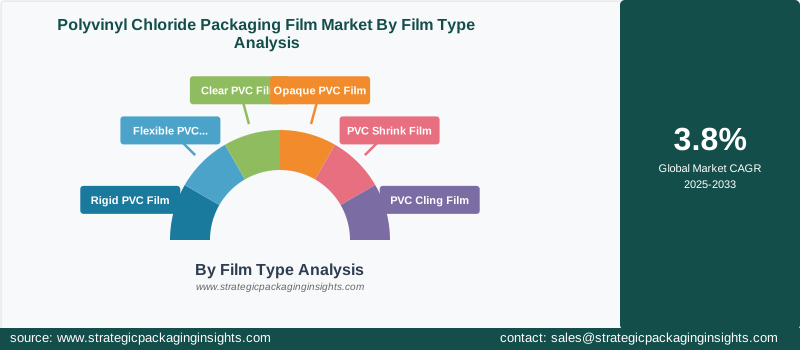
Rigid PVC Film is widely used in applications requiring durability and strength, such as clamshells and blister packs. Flexible PVC Film is favored for its versatility and ease of use in wraps and pouches. Clear PVC Film is popular for its transparency and aesthetic appeal, while Opaque PVC Film offers privacy and protection for sensitive products.
PVC Shrink Film and PVC Cling Film are used in applications requiring tight sealing and freshness preservation, such as food packaging. The demand for these film types is driven by their unique properties and the growing need for specialized packaging solutions in the food, pharmaceutical, and consumer goods sectors.
By Thickness Analysis
The market is also segmented by thickness, including Below 50 Microns, 50-100 Microns, 101-200 Microns, and Above 200 Microns. Each thickness category offers specific advantages and applications, catering to diverse packaging needs across various industries.
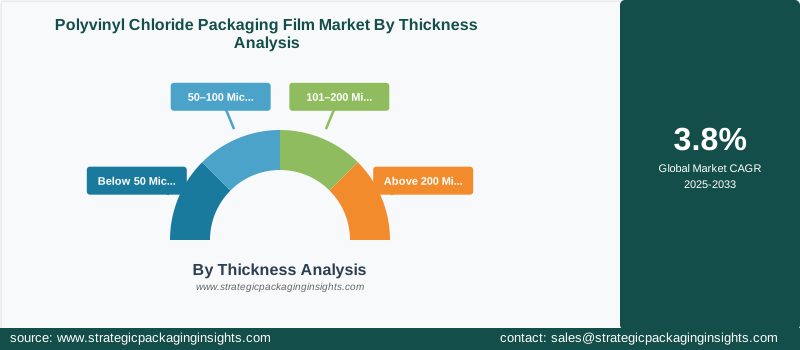
Films Below 50 Microns are favored for their lightweight and cost-effectiveness, making them suitable for applications such as wraps and pouches. Films in the 50-100 Microns range offer a balance of strength and flexibility, ideal for applications requiring durability and protection.
Films in the 101-200 Microns range are used in applications requiring enhanced strength and barrier properties, such as industrial and medical packaging. Films Above 200 Microns offer maximum durability and protection, suitable for heavy-duty applications in the industrial and consumer goods sectors.
By Application Analysis
The Polyvinyl Chloride Packaging Film market is segmented by application, including Food Packaging, Pharmaceutical Packaging, Consumer Goods Packaging, Industrial Packaging, Medical Packaging, Retail Packaging, and Others. Each application segment offers unique opportunities and challenges, driven by specific industry needs and consumer preferences.
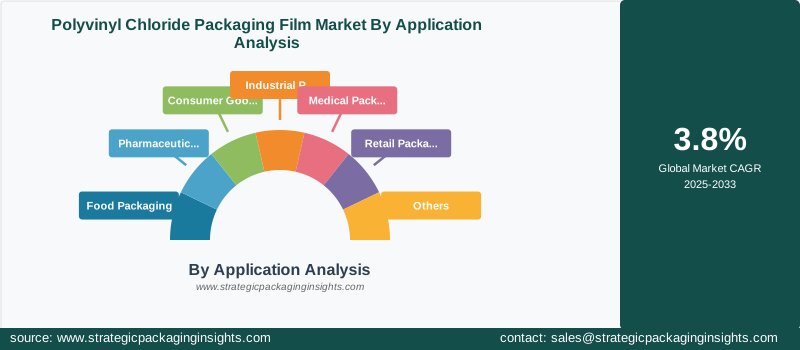
Food Packaging is the largest application segment, driven by the demand for high-barrier films that ensure product safety and extend shelf life. Pharmaceutical Packaging is the fastest-growing segment, driven by the need for compliance with regulatory standards and the demand for safe and secure packaging solutions.
Consumer Goods Packaging and Industrial Packaging are also significant segments, driven by the demand for durable and versatile packaging solutions. Medical Packaging and Retail Packaging offer opportunities for innovation and differentiation, with companies focusing on developing advanced and compliant packaging solutions to meet evolving consumer needs.
By Packaging Format Analysis
The market is segmented by packaging format, including Wraps, Pouches, Bags, Blister Packs, Clamshells, Lidding Films, Labels, and Others. Each packaging format offers unique advantages and applications, catering to diverse packaging needs across various industries.
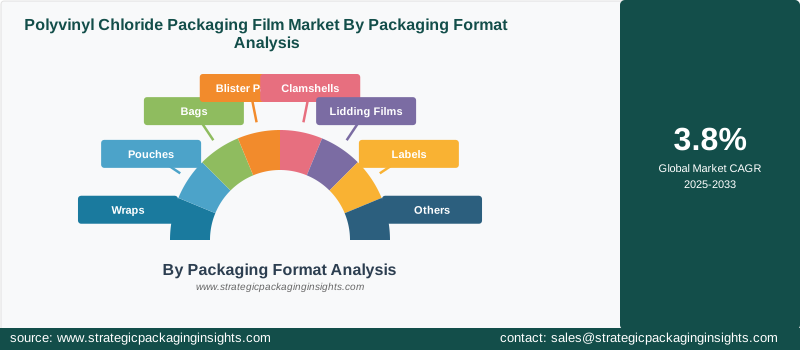
Wraps and Pouches are favored for their versatility and ease of use, making them suitable for applications such as food and consumer goods packaging. Bags and Blister Packs offer durability and protection, ideal for applications requiring strength and security.
Clamshells and Lidding Films offer maximum protection and aesthetic appeal, suitable for applications requiring high-barrier properties and visual differentiation. Labels and Other packaging formats offer opportunities for customization and branding, with companies focusing on developing innovative and aesthetically appealing packaging solutions to meet evolving consumer needs.
By End User Analysis
The market is segmented by end user, including Food and Beverage, Pharmaceuticals, Healthcare, Consumer Goods, Retail, Industrial, and Others. Each end-user segment offers unique opportunities and challenges, driven by specific industry needs and consumer preferences.
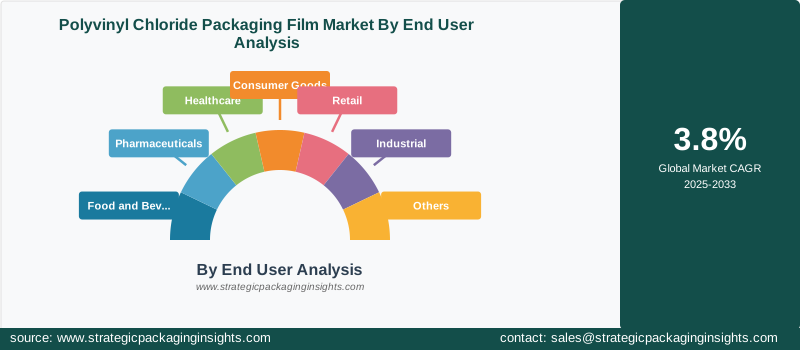
The Food and Beverage sector is the largest end-user segment, driven by the demand for high-barrier films that ensure product safety and extend shelf life. The Pharmaceuticals and Healthcare sectors are also significant segments, driven by the need for compliance with regulatory standards and the demand for safe and secure packaging solutions.
The Consumer Goods and Retail sectors offer opportunities for innovation and differentiation, with companies focusing on developing advanced and compliant packaging solutions to meet evolving consumer needs. The Industrial sector offers opportunities for growth, driven by the demand for durable and versatile packaging solutions.
Polyvinyl Chloride Packaging Film Market Segments
The Polyvinyl Chloride Packaging Film market has been segmented on the basis ofBy Film Type
- Rigid PVC Film
- Flexible PVC Film
- Clear PVC Film
- Opaque PVC Film
- PVC Shrink Film
- PVC Cling Film
By Thickness
- Below 50 Microns
- 50–100 Microns
- 101–200 Microns
- Above 200 Microns
By Application
- Food Packaging
- Pharmaceutical Packaging
- Consumer Goods Packaging
- Industrial Packaging
- Medical Packaging
- Retail Packaging
- Others
By Packaging Format
- Wraps
- Pouches
- Bags
- Blister Packs
- Clamshells
- Lidding Films
- Labels
- Others
By End User
- Food and Beverage
- Pharmaceuticals
- Healthcare
- Consumer Goods
- Retail
- Industrial
- Others
By Region
- Asia Pacific
- North America
- Latin America
- Europe
- Middle East & Africa




