


Polypropylene Woven Bag and Sack Market Outlook
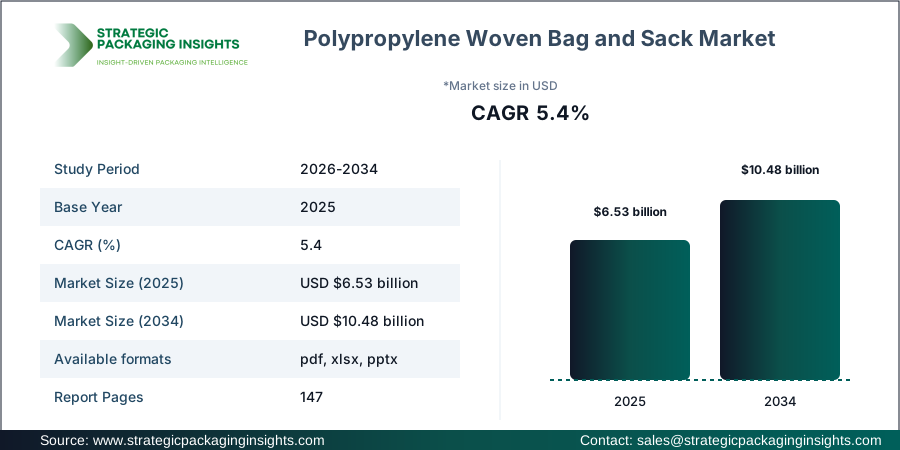
The Polypropylene Woven Bag and Sack market was valued at $6.53 billion in 2025 and is projected to reach $10.48 billion by 2034, growing at a CAGR of 5.4% during the forecast period 2026-2034. This market is driven by the increasing demand for durable and cost-effective packaging solutions across various industries such as agriculture, construction, and chemicals. The versatility of polypropylene woven bags and sacks, which offer high strength and resistance to wear and tear, makes them an ideal choice for transporting and storing bulk materials. Additionally, the growing focus on sustainable packaging solutions is further propelling the market, as these bags are recyclable and environmentally friendly. The market is also benefiting from technological advancements in manufacturing processes, which enhance the quality and efficiency of these products.
Report Scope
| Attributes | Details |
| Report Title | Polypropylene Woven Bag and Sack Market Size, Future Growth and Forecast 2034 |
| By Product Type | woven sacks, laminated sacks, valve bags |
| By Application | cement, fertilizers, grains, animal feed |
| By Coating Type | coated, uncoated, laminated |
| By End Use | agriculture, construction, food grains, chemicals |
| Region | Asia Pacific, North America, Latin America, Europe, Middle East & Africa |
| Base Year | 2025 |
| Historic Period | 2018-2024 |
| Forecast Period | 2026-2034 |
| Number of Pages | 147 |
| Customization Available | Yes* |
Opportunities & Threats
One of the significant opportunities in the Polypropylene Woven Bag and Sack market is the rising demand from the agricultural sector. As the global population continues to grow, the need for efficient and reliable packaging solutions for agricultural products such as grains, seeds, and fertilizers is increasing. Polypropylene woven bags and sacks offer excellent protection against moisture and pests, making them highly suitable for agricultural applications. Furthermore, the expansion of the e-commerce industry is creating new opportunities for the market, as these bags are increasingly used for packaging and shipping a wide range of products. The development of innovative products, such as bags with enhanced barrier properties and UV protection, is also expected to drive market growth.
Another opportunity lies in the growing demand for eco-friendly packaging solutions. With increasing awareness about environmental issues, consumers and businesses are seeking sustainable alternatives to traditional packaging materials. Polypropylene woven bags and sacks, being recyclable and reusable, are gaining popularity as an environmentally friendly option. Companies are investing in research and development to create biodegradable and compostable variants, which could further boost market demand. Additionally, the increasing adoption of these bags in emerging economies, where industrialization and urbanization are on the rise, presents significant growth potential for the market.
However, the market faces certain threats, such as the volatility in raw material prices. Polypropylene is derived from petroleum, and fluctuations in crude oil prices can impact the cost of production, affecting the overall profitability of manufacturers. Additionally, the presence of alternative packaging solutions, such as jute and paper bags, poses a challenge to market growth. These alternatives are often perceived as more environmentally friendly, which could hinder the adoption of polypropylene woven bags and sacks. Furthermore, stringent regulations regarding plastic usage and disposal in certain regions could also pose a threat to market expansion.
Drivers & Challenges
The primary driver of the Polypropylene Woven Bag and Sack market is the increasing demand for durable and cost-effective packaging solutions. These bags are known for their high tensile strength, resistance to moisture, and ability to withstand rough handling, making them ideal for transporting and storing bulk materials. The agricultural sector, in particular, is a major consumer of these bags, as they provide excellent protection for grains, seeds, and fertilizers. Additionally, the construction industry is driving demand for polypropylene woven bags and sacks, as they are used for packaging cement, sand, and other building materials. The growing focus on sustainable packaging solutions is also contributing to market growth, as these bags are recyclable and environmentally friendly.
Technological advancements in manufacturing processes are another key driver of the market. Innovations in weaving and coating technologies have improved the quality and efficiency of polypropylene woven bags and sacks, making them more competitive in the market. Manufacturers are investing in research and development to create products with enhanced properties, such as UV resistance and anti-slip features, to meet the evolving needs of consumers. The increasing adoption of automation in production processes is also boosting market growth, as it reduces production costs and improves product consistency.
Despite the positive growth prospects, the market faces several challenges. One of the main challenges is the volatility in raw material prices. Polypropylene is derived from petroleum, and fluctuations in crude oil prices can impact the cost of production, affecting the overall profitability of manufacturers. Additionally, the presence of alternative packaging solutions, such as jute and paper bags, poses a challenge to market growth. These alternatives are often perceived as more environmentally friendly, which could hinder the adoption of polypropylene woven bags and sacks. Furthermore, stringent regulations regarding plastic usage and disposal in certain regions could also pose a challenge to market expansion.
Market Share Analysis
The Polypropylene Woven Bag and Sack market is characterized by a competitive landscape with several key players vying for market share. Companies such as Mondi, LC Packaging, UFlex, Emmbi Industries, and Flexituff Ventures are prominent players in the market, each holding a significant share. Mondi, for instance, is known for its innovative packaging solutions and has a strong presence in the global market. LC Packaging, on the other hand, is recognized for its sustainable packaging products and has a wide distribution network across various regions. UFlex is a leading player in the flexible packaging industry and offers a diverse range of polypropylene woven bags and sacks.
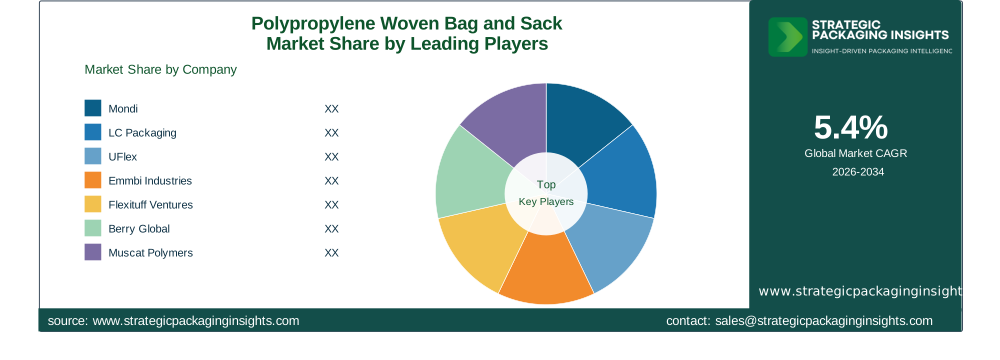
Emmbi Industries is another major player in the market, known for its high-quality products and strong focus on research and development. The company has a robust manufacturing infrastructure and a wide product portfolio, catering to various industries such as agriculture, construction, and chemicals. Flexituff Ventures is a well-established player in the market, offering a comprehensive range of packaging solutions, including polypropylene woven bags and sacks. The company has a strong presence in both domestic and international markets, with a focus on innovation and sustainability.
Berry Global is a key player in the market, known for its extensive product range and strong customer base. The company has a significant presence in the North American market and is expanding its operations in other regions. Muscat Polymers is another prominent player, offering a wide range of polypropylene woven bags and sacks for various applications. The company has a strong focus on quality and customer satisfaction, which has helped it establish a loyal customer base.
Knack Packaging is a leading manufacturer of polypropylene woven bags and sacks, known for its innovative products and strong distribution network. The company has a significant presence in the Indian market and is expanding its operations in other regions. Shree Tirupati Balajee is another key player in the market, offering a diverse range of packaging solutions for various industries. The company has a strong focus on sustainability and is investing in research and development to create eco-friendly products. Al-Tawfiq Company is a well-established player in the market, known for its high-quality products and strong customer base.
Key Highlights
- The Polypropylene Woven Bag and Sack market is projected to grow at a CAGR of 5.4% from 2026 to 2034.
- The market is driven by the increasing demand for durable and cost-effective packaging solutions across various industries.
- Technological advancements in manufacturing processes are enhancing the quality and efficiency of polypropylene woven bags and sacks.
- The agricultural sector is a major consumer of these bags, as they provide excellent protection for grains, seeds, and fertilizers.
- The growing focus on sustainable packaging solutions is contributing to market growth, as these bags are recyclable and environmentally friendly.
- Volatility in raw material prices and the presence of alternative packaging solutions pose challenges to market growth.
- Key players in the market include Mondi, LC Packaging, UFlex, Emmbi Industries, and Flexituff Ventures.
- The market is characterized by a competitive landscape with several key players vying for market share.
- Companies are investing in research and development to create innovative products with enhanced properties.
- The increasing adoption of automation in production processes is boosting market growth.
Top Countries Insights
In the Polypropylene Woven Bag and Sack market, China stands out as a leading country with a market size of approximately $2.5 billion and a CAGR of 7%. The country's robust manufacturing sector and increasing demand for packaging solutions in agriculture and construction are key growth drivers. Government initiatives promoting sustainable packaging and the adoption of advanced manufacturing technologies further bolster market growth. However, challenges such as environmental regulations and competition from alternative packaging materials persist.
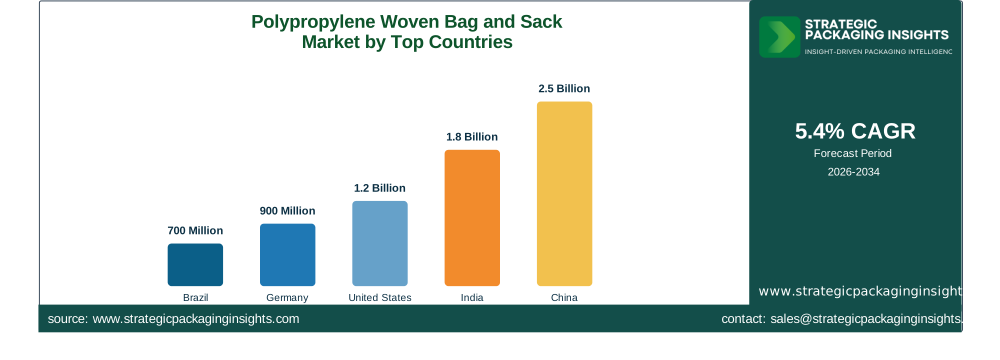
India is another significant player in the market, with a market size of around $1.8 billion and a CAGR of 6%. The country's growing agricultural sector and increasing industrialization drive demand for polypropylene woven bags and sacks. The government's focus on infrastructure development and favorable policies for the packaging industry support market expansion. However, fluctuations in raw material prices and competition from jute bags pose challenges to market growth.
The United States holds a substantial share in the market, with a market size of approximately $1.2 billion and a CAGR of 5%. The country's well-established agricultural and construction sectors drive demand for durable and cost-effective packaging solutions. Technological advancements in manufacturing processes and the increasing focus on sustainable packaging contribute to market growth. However, stringent regulations regarding plastic usage and disposal present challenges to market expansion.
Germany is a key market in Europe, with a market size of around $900 million and a CAGR of 4%. The country's strong industrial base and increasing demand for packaging solutions in the chemical and construction sectors drive market growth. The government's emphasis on sustainability and innovation in packaging technologies further supports market expansion. However, competition from alternative packaging materials and environmental regulations pose challenges to market growth.
Brazil is an emerging market in Latin America, with a market size of approximately $700 million and a CAGR of 5%. The country's growing agricultural sector and increasing demand for packaging solutions in the food and beverage industry drive market growth. Government initiatives promoting sustainable packaging and the adoption of advanced manufacturing technologies further bolster market expansion. However, economic instability and competition from alternative packaging materials present challenges to market growth.
Polypropylene Woven Bag and Sack Market Segments Insights

Product Type Analysis
The Polypropylene Woven Bag and Sack market is segmented by product type into woven sacks, laminated sacks, and valve bags. Woven sacks are the most widely used product type, owing to their high strength and durability. These bags are extensively used in the agricultural sector for packaging grains, seeds, and fertilizers. The demand for woven sacks is driven by their cost-effectiveness and ability to withstand rough handling during transportation and storage. Laminated sacks, on the other hand, offer enhanced barrier properties and are preferred for packaging moisture-sensitive products. The increasing demand for laminated sacks in the food and chemical industries is contributing to market growth. Valve bags are gaining popularity in the construction sector for packaging cement and other building materials, as they offer easy filling and efficient sealing.
The market for woven sacks is expected to witness significant growth during the forecast period, driven by the increasing demand from the agricultural and construction sectors. The development of innovative products with enhanced properties, such as UV resistance and anti-slip features, is further boosting market growth. Laminated sacks are also expected to experience substantial growth, as manufacturers focus on creating products with improved barrier properties and environmental sustainability. The demand for valve bags is anticipated to rise, driven by the growing construction industry and the need for efficient packaging solutions for bulk materials.
Application Analysis
The Polypropylene Woven Bag and Sack market is segmented by application into cement, fertilizers, grains, and animal feed. The cement industry is a major consumer of polypropylene woven bags and sacks, as these bags provide excellent protection against moisture and contamination. The increasing demand for cement in infrastructure development and construction projects is driving the growth of this segment. The agricultural sector is another significant application area, with polypropylene woven bags and sacks being used for packaging fertilizers, grains, and animal feed. The growing global population and the need for efficient packaging solutions for agricultural products are contributing to market growth.
The demand for polypropylene woven bags and sacks in the fertilizer segment is expected to witness substantial growth, driven by the increasing use of fertilizers in agriculture to enhance crop yield. The grains segment is also anticipated to experience significant growth, as these bags offer excellent protection against moisture and pests, ensuring the quality and safety of stored grains. The animal feed segment is expected to grow steadily, driven by the increasing demand for packaged animal feed in the livestock industry. The development of innovative products with enhanced barrier properties and environmental sustainability is further boosting market growth across these application segments.
Coating Type Analysis
The Polypropylene Woven Bag and Sack market is segmented by coating type into coated, uncoated, and laminated. Coated bags are widely used in the market, as they offer enhanced protection against moisture and contamination. These bags are preferred for packaging moisture-sensitive products such as fertilizers and chemicals. The demand for coated bags is driven by their ability to provide excellent barrier properties and extend the shelf life of packaged products. Uncoated bags, on the other hand, are cost-effective and are commonly used for packaging dry products such as grains and animal feed. The increasing demand for uncoated bags in the agricultural sector is contributing to market growth.
Laminated bags are gaining popularity in the market, as they offer superior barrier properties and are suitable for packaging a wide range of products. The demand for laminated bags is driven by their ability to provide excellent protection against moisture, UV rays, and other environmental factors. The increasing focus on sustainable packaging solutions is also contributing to the growth of the laminated bags segment, as manufacturers develop products with improved environmental sustainability. The market for coated, uncoated, and laminated bags is expected to witness significant growth during the forecast period, driven by the increasing demand for durable and cost-effective packaging solutions across various industries.
End Use Analysis
The Polypropylene Woven Bag and Sack market is segmented by end use into agriculture, construction, food grains, and chemicals. The agriculture sector is a major consumer of polypropylene woven bags and sacks, as these bags provide excellent protection for grains, seeds, and fertilizers. The increasing demand for efficient packaging solutions in agriculture is driving the growth of this segment. The construction industry is another significant end-use sector, with polypropylene woven bags and sacks being used for packaging cement, sand, and other building materials. The growing infrastructure development and construction projects are contributing to market growth.
The demand for polypropylene woven bags and sacks in the food grains segment is expected to witness substantial growth, driven by the increasing demand for packaged food grains in the global market. The chemicals sector is also anticipated to experience significant growth, as these bags offer excellent protection against moisture and contamination, ensuring the safety and quality of packaged chemicals. The development of innovative products with enhanced properties, such as UV resistance and anti-slip features, is further boosting market growth across these end-use segments. The increasing focus on sustainable packaging solutions is also contributing to market growth, as manufacturers develop products with improved environmental sustainability.
Polypropylene Woven Bag and Sack Market Segments
The Polypropylene Woven Bag and Sack market has been segmented on the basis ofBy Product Type
- woven sacks
- laminated sacks
- valve bags
By Application
- cement
- fertilizers
- grains
- animal feed
By Coating Type
- coated
- uncoated
- laminated
By End Use
- agriculture
- construction
- food grains
- chemicals
Region
- Asia Pacific
- North America
- Latin America
- Europe
- Middle East & Africa




