


Polymer-Based Prefilled Syringe Market Outlook
The Polymer-Based Prefilled Syringe market size was valued at USD $2.4 Billion in 2025 and is anticipated to reach USD $4.0 Billion by 2035, growing at a CAGR of 5.2% during the forecast period according to Strategic Packaging Insights.
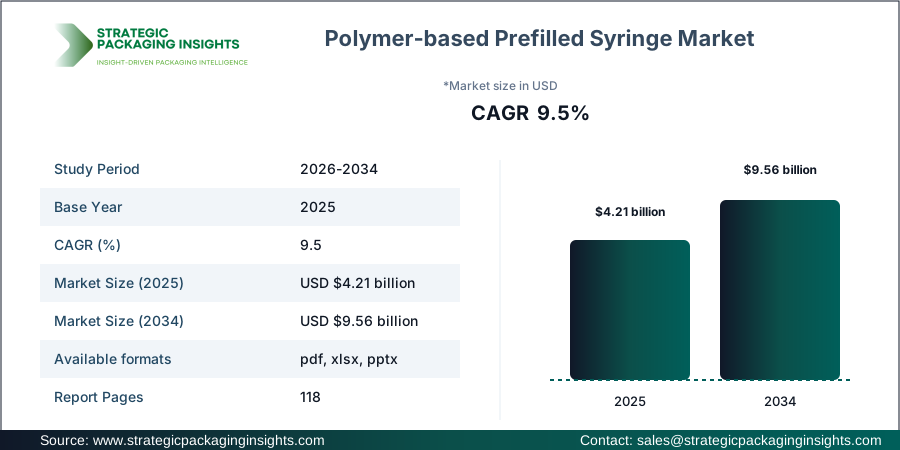
The most impactful market driver is the increasing demand for biologics and vaccines, which require precise and safe delivery systems. The rise in chronic diseases and the need for efficient drug delivery mechanisms further propel the market. Regulatory bodies like the FDA emphasize the importance of safe and effective drug delivery systems, which supports the growth of polymer-based prefilled syringes.
Report Scope
| Attributes | Details |
| Report Title | Polymer-Based Prefilled Syringe Market Projected to Scale to 4.0 Billion by 2035, Assesses Strategic Packaging Insights |
| By Material | Cyclic Olefin Polymer (COP), Cyclic Olefin Copolymer (COC) |
| By Capacity | Up to 5 ml, 6 ml to 20 ml, 21 ml to 40 ml, Above 40 ml |
| By Application | Biologics, Vaccines, Anticoagulants, Other Pharmaceutical Drugs |
| By End Use | Hospitals, Clinics, Ambulatory Surgery Centers, Research Laboratories, Drug Manufacturing, Clinical Research Centers |
| By Region | North America, Latin America, Europe, Asia-Pacific, Middle East and Africa |
| Base Year | 2025 |
| Historic Period | 2018-2024 |
| Forecast Period | 2026-2035 |
| Number of Pages | 202 |
| Customization Available | Yes* |
Market Trends Analysis
Polymer-based prefilled syringes are gaining traction due to their superior barrier properties and reduced risk of breakage compared to glass syringes. The shift towards self-administration of drugs is driving demand for user-friendly and safe syringe designs. Additionally, the healthcare industry's focus on reducing medication errors and improving patient compliance is fostering innovation in syringe technology. Automation and digital transformation in manufacturing processes are enhancing production efficiency and quality control, further supporting market growth.
Sustainability initiatives are influencing material choices, with a growing preference for recyclable and eco-friendly polymers. The adoption of cyclic olefin polymers (COP) and cyclic olefin copolymers (COC) is increasing due to their excellent chemical resistance and transparency. Regional demand shifts are evident, with Asia Pacific emerging as a key growth region due to expanding healthcare infrastructure and rising pharmaceutical production.
Industry Transformation Analysis
The polymer-based prefilled syringe industry is undergoing significant transformation with advancements in manufacturing technologies. The integration of automation and AI in production lines is enhancing operational efficiency and reducing costs. Companies are investing in capacity expansion to meet the growing demand, particularly in emerging markets. The shift towards localized production is reducing supply chain dependencies and improving market responsiveness.
Value-chain transformation is evident as companies focus on vertical integration to control quality and reduce lead times. The adoption of sustainable practices is becoming a competitive differentiator, with companies exploring bio-based polymers and recyclable materials. Regulatory influences are shaping industry standards, with a focus on safety, efficacy, and environmental impact. These changes are expected to drive long-term growth and innovation in the market.
Trends & Disruptions Impacting Customers' Customers
Downstream customers, including hospitals, clinics, and pharmaceutical companies, are increasingly prioritizing safety, efficacy, and ease of use in drug delivery systems. The growing prevalence of chronic diseases and the need for efficient treatment options are driving demand for advanced prefilled syringes. Regulatory compliance and sustainability are becoming critical factors in purchasing decisions, influencing the choice of materials and suppliers.
These changes are impacting product demand, with a shift towards innovative and eco-friendly syringe designs. Suppliers are required to meet stringent quality standards and offer competitive pricing to remain viable. The focus on patient-centric solutions is driving innovation and creating new market opportunities. Companies that can adapt to these evolving needs are likely to gain a competitive edge and capture a larger market share.
Polymer-Based Prefilled Syringe Market Ecosystem
The ecosystem of the polymer-based prefilled syringe market involves a complex interplay of raw material suppliers, resin producers, and manufacturers. High-quality polymers such as COP and COC are procured to ensure the syringes' safety and efficacy. Resin production involves creating materials with specific properties suitable for medical applications. Injection molding is a critical stage where syringe components are formed using advanced technologies.
Assembly and filling involve integrating syringe components and filling them with pharmaceutical products, ensuring sterility and precision. Distribution is managed through efficient logistics and supply chain networks to deliver syringes to hospitals, clinics, and other end users. Changes in the ecosystem, such as advancements in molding technologies and shifts towards sustainable materials, are impacting market dynamics and driving innovation.
Analyst Perspective
Analyst Perspective: The polymer-based prefilled syringe market is poised for significant growth due to increasing demand for biologics and vaccines.
The most important structural change is the shift towards sustainable materials and localized production, which is enhancing market resilience and reducing supply chain risks. Companies are focusing on innovation and capacity expansion to meet the growing demand, particularly in emerging markets.
Market participants should watch for advancements in material science and regulatory changes that could impact product development and market entry. The focus on sustainability and patient-centric solutions is expected to drive long-term growth and create new opportunities for companies in this space.
Opportunities & Threats
The polymer-based prefilled syringe market presents significant opportunities driven by the increasing demand for biologics and vaccines. The shift towards self-administration of drugs is creating a need for user-friendly and safe syringe designs. Companies that can innovate and offer advanced solutions are likely to capture a larger market share. The focus on sustainability and eco-friendly materials is opening new avenues for growth, with a preference for recyclable and bio-based polymers.
Technological advancements in manufacturing processes, such as automation and AI integration, are enhancing production efficiency and quality control. The expansion of healthcare infrastructure in emerging markets is providing new opportunities for market penetration. Companies that can adapt to regional demand shifts and offer competitive pricing are well-positioned to succeed.
However, the market faces threats from raw material volatility and regulatory uncertainty. The reliance on specific polymers like COP and COC can lead to supply constraints and pricing pressures. Regulatory changes and compliance requirements can impact product development and market entry. Companies must navigate these challenges to maintain competitiveness.
Competition is intensifying, with established players and new entrants vying for market share. The need for continuous innovation and investment in R&D is critical to stay ahead. High capital requirements and the complexity of manufacturing processes can pose barriers to entry for smaller companies. Companies must focus on strategic partnerships and capacity expansion to mitigate these threats.
Drivers & Challenges
The primary driver of the polymer-based prefilled syringe market is the increasing demand for biologics and vaccines, which require precise and safe delivery systems. The rise in chronic diseases and the need for efficient drug delivery mechanisms further propel the market. Regulatory bodies like the FDA emphasize the importance of safe and effective drug delivery systems, which supports the growth of polymer-based prefilled syringes. The shift towards self-administration of drugs is driving demand for user-friendly and safe syringe designs.
Technological advancements in manufacturing processes, such as automation and AI integration, are enhancing production efficiency and quality control. The focus on sustainability and eco-friendly materials is opening new avenues for growth, with a preference for recyclable and bio-based polymers. The expansion of healthcare infrastructure in emerging markets is providing new opportunities for market penetration.
However, the market faces challenges from raw material volatility and regulatory uncertainty. The reliance on specific polymers like COP and COC can lead to supply constraints and pricing pressures. Regulatory changes and compliance requirements can impact product development and market entry. Companies must navigate these challenges to maintain competitiveness.
Packaging Market Economics
The economics of polymer-based prefilled syringes are influenced by raw material costs, resin pricing, and conversion costs. High-quality polymers such as COP and COC are essential for ensuring the syringes' safety and efficacy. Conversion costs are impacted by the complexity of manufacturing processes, including injection molding and assembly. Energy costs and logistics also play a significant role in the overall economics.
Printing and labeling are critical components of the syringe production process, ensuring compliance with regulatory requirements and enhancing product traceability. Tooling and scrap management are essential for optimizing production efficiency and reducing costs. Companies must focus on capacity utilization and procurement strategies to remain competitive in the market.
Packaging Value Chain & Cost Analysis
The value chain of polymer-based prefilled syringes involves several tiers, from resin synthesis to end-of-life processing. Tier-3 includes resin synthesis, additives, and masterbatch production. Tier-2 involves film extrusion and substrate production, while Tier-1 focuses on converting, printing, and lamination. Downstream activities include co-packing, CPG brand filling, distribution, collection, sorting, and recycling.
Substrate lead times and capacity utilization are critical factors influencing the value chain. Resin supply and PCR availability can impact production schedules and costs. Conversion economics are affected by logistics, scrap management, and procurement strategies. Companies must focus on optimizing the value chain to enhance competitiveness and reduce costs.
Unit Economics & Substrate Cost Analysis
The unit economics of polymer-based prefilled syringes are driven by raw material costs, resin/feedstock pricing, and energy consumption. Extrusion, printing, and lamination processes contribute to the overall cost structure. Forming and tooling are critical components of the manufacturing process, impacting production efficiency and cost management.
Scrap management and labor costs are essential for optimizing unit economics. Logistics and distribution play a significant role in the overall cost structure, influencing pricing and competitiveness. Companies must focus on reducing costs and enhancing production efficiency to remain competitive in the market.
Packaging Regulatory & Sustainability Analysis
The polymer-based prefilled syringe market is subject to stringent regulatory requirements, including FDA and EMA guidelines for drug delivery systems. Compliance with food-contact and labeling requirements is essential for market entry. Sustainability initiatives are driving the adoption of recyclable and eco-friendly materials, with a focus on reducing environmental impact.
Extended producer responsibility (EPR) and packaging taxes are influencing material choices and production processes. Companies must navigate these regulatory challenges to maintain competitiveness and ensure compliance. The focus on sustainability and eco-friendly materials is expected to drive long-term growth and create new opportunities for companies in this space.
Strategic Mergers, Acquisitions & Capacity Expansions
Recent strategic developments in the polymer-based prefilled syringe market include mergers, acquisitions, and capacity expansions. Companies are investing in new plants and technology to enhance production capabilities and meet growing demand. Strategic partnerships are being formed to leverage expertise and expand market reach.
For example, Becton, Dickinson and Company has expanded its manufacturing facilities to increase production capacity. Gerresheimer AG has invested in new technologies to enhance product offerings and improve operational efficiency. These strategic developments are expected to drive market growth and create new opportunities for companies in this space.
Strategic Action Directives
Brand Packaging Engineers & Sustainability Directors: Focus on material selection, mono-material qualification, and recyclability to enhance sustainability and reduce environmental impact.
Converter Operations & Extrusion Leads: Optimize line speed, tooling, and changeover processes to enhance production efficiency and reduce costs.
Procurement & Material Sourcing Managers: Diversify supplier base and negotiate resin contracts to mitigate supply chain risks and ensure competitive pricing.
Investors: Monitor capacity expansion and technology investments to identify growth opportunities and assess market potential.
Market Share Analysis
The polymer-based prefilled syringe market is characterized by a competitive landscape with several key players. Becton, Dickinson and Company, Gerresheimer AG, SCHOTT Pharma, Terumo Corporation, Stevanato Group, West Pharmaceutical Services, Inc., and Baxter International Inc. are some of the major companies operating in this space. These companies are focusing on innovation, capacity expansion, and strategic partnerships to enhance their market position.
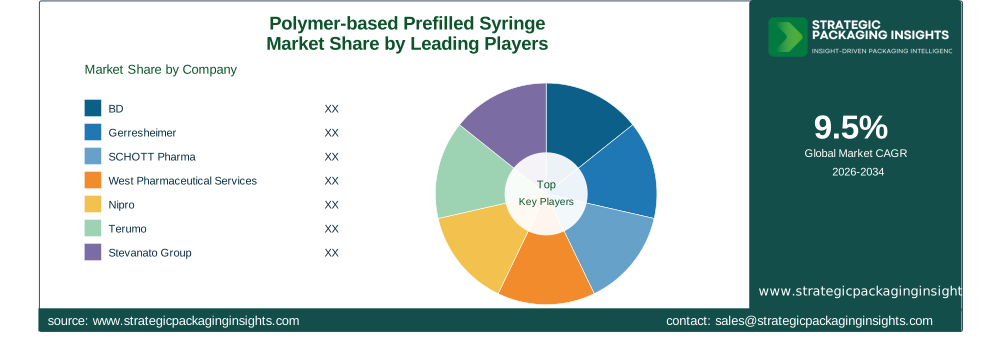
Becton, Dickinson and Company is a leading player in the market, known for its advanced syringe technologies and extensive product portfolio. Gerresheimer AG is focusing on expanding its product offerings and enhancing operational efficiency through technology investments. SCHOTT Pharma is leveraging its expertise in glass and polymer technologies to offer innovative solutions for drug delivery.
Terumo Corporation is focusing on expanding its market presence through strategic partnerships and capacity expansion. Stevanato Group is investing in new technologies to enhance product offerings and improve operational efficiency. West Pharmaceutical Services, Inc. is known for its advanced drug delivery systems and focus on sustainability.
Baxter International Inc. is focusing on expanding its product portfolio and enhancing market reach through strategic partnerships and acquisitions. These companies are expected to drive market growth and create new opportunities for innovation and development in the polymer-based prefilled syringe market.
Key Highlights
- Largest Region: North America
- Fastest-Growing Region: Asia Pacific
- Largest Segment: Biologics
- Fastest-Growing Segment: Vaccines
- Base-year market size: $2.4 Billion
- Forecast-year market size: $4.0 Billion
- CAGR: 5.2%
- Important application: Biologics
- Major end-use industry: Hospitals
- Major market driver: Increasing demand for biologics and vaccines
Regional Insights
The global polymer-based prefilled syringe market is segmented into five major regions: North America, Europe, Asia Pacific, Latin America, and the Middle East & Africa. North America is the largest market, driven by advanced healthcare infrastructure and high demand for biologics and vaccines. Asia Pacific is the fastest-growing region, with expanding healthcare infrastructure and rising pharmaceutical production.
North America
North America is the largest market for polymer-based prefilled syringes, driven by advanced healthcare infrastructure and high demand for biologics and vaccines. The presence of major pharmaceutical companies and a strong focus on innovation and technology are supporting market growth. Regulatory compliance and sustainability initiatives are influencing material choices and production processes.
The U.S. is the largest contributor to the market, with a focus on advanced drug delivery systems and patient-centric solutions. Canada is also a significant market, with a growing emphasis on sustainability and eco-friendly materials. The region is expected to maintain its leading position during the forecast period.
Europe
Europe is a significant market for polymer-based prefilled syringes, driven by a strong focus on innovation and sustainability. The presence of major pharmaceutical companies and advanced healthcare infrastructure are supporting market growth. Regulatory compliance and sustainability initiatives are influencing material choices and production processes.
Germany, France, and the UK are the largest contributors to the market, with a focus on advanced drug delivery systems and patient-centric solutions. The region is expected to maintain its strong position during the forecast period, with a focus on innovation and sustainability.
Asia Pacific
Asia Pacific is the fastest-growing region for polymer-based prefilled syringes, driven by expanding healthcare infrastructure and rising pharmaceutical production. The region is witnessing significant investments in healthcare and pharmaceutical sectors, supporting market growth. Regulatory compliance and sustainability initiatives are influencing material choices and production processes.
China, India, and Japan are the largest contributors to the market, with a focus on advanced drug delivery systems and patient-centric solutions. The region is expected to witness significant growth during the forecast period, with a focus on innovation and sustainability.
Latin America
Latin America is a growing market for polymer-based prefilled syringes, driven by expanding healthcare infrastructure and rising pharmaceutical production. The region is witnessing significant investments in healthcare and pharmaceutical sectors, supporting market growth. Regulatory compliance and sustainability initiatives are influencing material choices and production processes.
Brazil and Mexico are the largest contributors to the market, with a focus on advanced drug delivery systems and patient-centric solutions. The region is expected to witness moderate growth during the forecast period, with a focus on innovation and sustainability.
Middle East & Africa
The Middle East & Africa is a growing market for polymer-based prefilled syringes, driven by expanding healthcare infrastructure and rising pharmaceutical production. The region is witnessing significant investments in healthcare and pharmaceutical sectors, supporting market growth. Regulatory compliance and sustainability initiatives are influencing material choices and production processes.
Saudi Arabia, UAE, and South Africa are the largest contributors to the market, with a focus on advanced drug delivery systems and patient-centric solutions. The region is expected to witness moderate growth during the forecast period, with a focus on innovation and sustainability.
Polymer-Based Prefilled Syringe Market Segments Insights

By Material Analysis
The polymer-based prefilled syringe market is segmented by material into cyclic olefin polymer (COP) and cyclic olefin copolymer (COC). COP is preferred for its excellent barrier properties and chemical resistance, making it suitable for sensitive pharmaceutical applications. COC offers similar benefits with added flexibility and transparency, catering to diverse pharmaceutical needs.
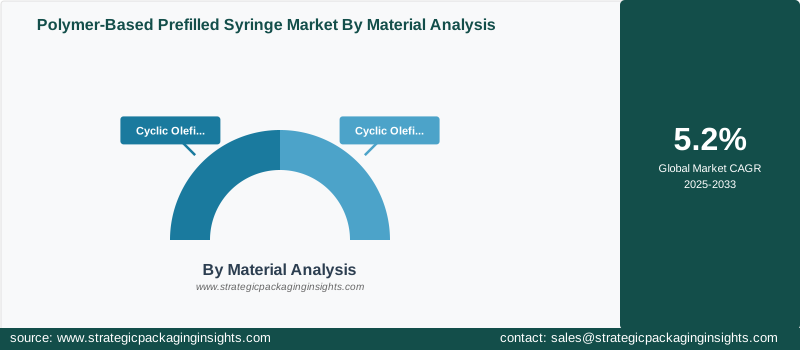
The demand for COP and COC is driven by the increasing need for safe and effective drug delivery systems. The shift towards self-administration of drugs is further boosting demand for these materials. Companies are focusing on innovation and sustainability, exploring bio-based polymers and recyclable materials to enhance market competitiveness.
By Capacity Analysis
The market is segmented by capacity into up to 5 ml, 6 ml to 20 ml, 21 ml to 40 ml, and above 40 ml. The up to 5 ml segment is the largest, driven by the demand for small-volume syringes for vaccines and biologics. The 6 ml to 20 ml segment is witnessing significant growth, catering to a wide range of pharmaceutical applications.
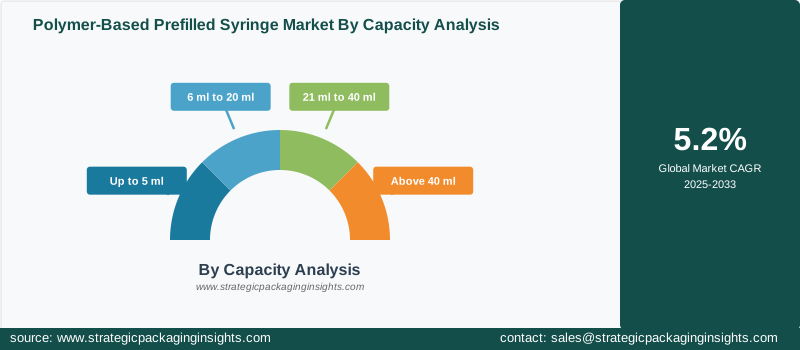
The demand for larger capacity syringes is driven by the need for efficient drug delivery systems for chronic diseases. Companies are focusing on innovation and capacity expansion to meet the growing demand for diverse syringe capacities. The focus on patient-centric solutions is driving innovation and creating new market opportunities.
By Application Analysis
The market is segmented by application into biologics, vaccines, anticoagulants, and other pharmaceutical drugs. The biologics segment is the largest, driven by the increasing demand for advanced drug delivery systems for complex biologic therapies. The vaccines segment is the fastest-growing, driven by the global focus on immunization and disease prevention.
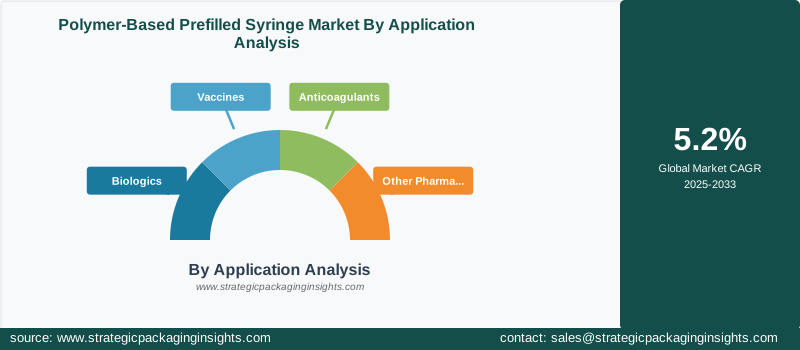
The demand for anticoagulants and other pharmaceutical drugs is driven by the rising prevalence of chronic diseases and the need for efficient treatment options. Companies are focusing on innovation and sustainability, exploring bio-based polymers and recyclable materials to enhance market competitiveness.
By End Use Analysis
The market is segmented by end use into hospitals, clinics, ambulatory surgery centers, research laboratories, drug manufacturing, and clinical research centers. Hospitals are the largest end-use segment, driven by the demand for advanced drug delivery systems and patient-centric solutions. Clinics and ambulatory surgery centers are witnessing significant growth, catering to the increasing demand for efficient treatment options.
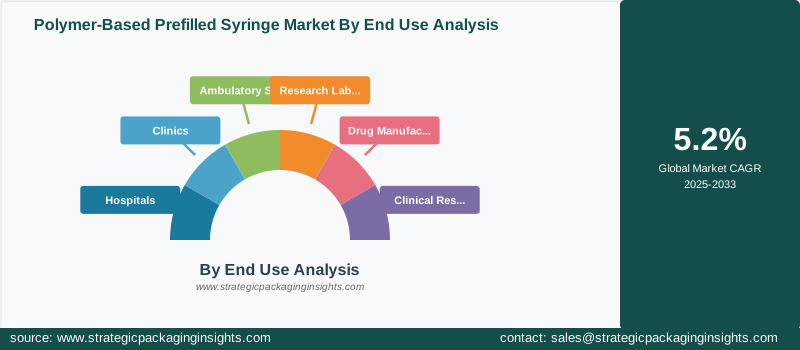
The demand for research laboratories, drug manufacturing, and clinical research centers is driven by the focus on innovation and development of new pharmaceutical products. Companies are focusing on capacity expansion and strategic partnerships to enhance market competitiveness and meet the growing demand for diverse end-use applications.
Polymer-Based Prefilled Syringe Market Segments
The Polymer-Based Prefilled Syringe market has been segmented on the basis ofBy Material
- Cyclic Olefin Polymer (COP)
- Cyclic Olefin Copolymer (COC)
By Capacity
- Up to 5 ml
- 6 ml to 20 ml
- 21 ml to 40 ml
- Above 40 ml
By Application
- Biologics
- Vaccines
- Anticoagulants
- Other Pharmaceutical Drugs
By End Use
- Hospitals
- Clinics
- Ambulatory Surgery Centers
- Research Laboratories
- Drug Manufacturing
- Clinical Research Centers
By Region
- North America
- Latin America
- Europe
- Asia-Pacific
- Middle East and Africa




