


Polyethylene (PE) Thermoform Packaging Market Outlook
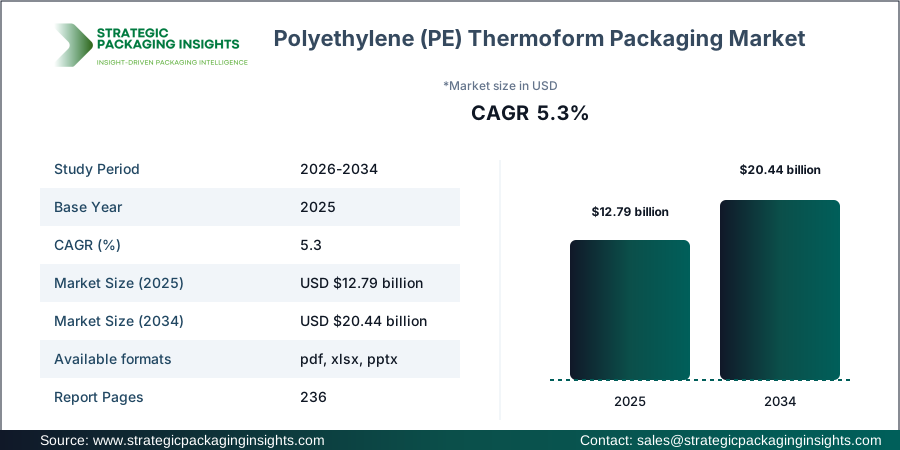
The Polyethylene (PE) Thermoform Packaging market was valued at $12.79 billion in 2025 and is projected to reach $20.44 billion by 2034, growing at a CAGR of 5.3% during the forecast period 2026-2034. This market is experiencing robust growth driven by the increasing demand for lightweight and cost-effective packaging solutions across various industries. The versatility of PE thermoform packaging, which includes blister packs and trays, makes it a preferred choice for manufacturers looking to enhance product visibility and shelf appeal. The food and medical sectors are particularly significant contributors to this market, as they require high-quality, hygienic packaging solutions that PE thermoform packaging can provide. Additionally, advancements in manufacturing processes, such as inline and roll-fed techniques, are further propelling market growth by improving efficiency and reducing production costs.
Despite the promising growth trajectory, the PE thermoform packaging market faces certain challenges that could restrain its expansion. Environmental concerns regarding plastic waste and stringent regulations on plastic usage are significant hurdles. However, the industry is responding with innovations in recyclable and biodegradable PE materials, which are expected to mitigate some of these concerns. The market also holds substantial growth potential due to the increasing adoption of sustainable packaging solutions and the rising demand for packaged food products in emerging economies. As consumer preferences shift towards eco-friendly options, companies are investing in research and development to create more sustainable PE thermoform packaging solutions, which is anticipated to open new avenues for market growth.
Report Scope
| Attributes | Details |
| Report Title | Polyethylene (PE) Thermoform Packaging Market Size, Future Growth and Forecast 2034 |
| Type | Blister, Trays |
| PE Grade | LDPE, HDPE |
| Application | Food, Medical |
| Process | Inline, Roll-fed |
| Region | Asia Pacific, North America, Latin America, Europe, Middle East & Africa |
| Base Year | 2025 |
| Historic Period | 2018-2024 |
| Forecast Period | 2026-2034 |
| Number of Pages | 236 |
| Customization Available | Yes* |
Opportunities & Threats
The Polyethylene (PE) Thermoform Packaging market presents numerous opportunities for growth, particularly in the realm of sustainable packaging solutions. As environmental awareness increases globally, there is a significant push towards reducing plastic waste and adopting eco-friendly materials. This shift is driving innovation in the development of recyclable and biodegradable PE thermoform packaging, which not only meets regulatory requirements but also aligns with consumer preferences for sustainable products. Companies that invest in these innovations are likely to gain a competitive edge, as they can offer environmentally responsible packaging solutions that appeal to a growing segment of eco-conscious consumers.
Another opportunity lies in the expanding food and beverage industry, which is a major consumer of PE thermoform packaging. The demand for convenient, ready-to-eat meals and packaged food products is on the rise, driven by changing lifestyles and increasing urbanization. This trend is expected to boost the demand for PE thermoform packaging, as it provides an effective solution for preserving the freshness and quality of food products. Additionally, the medical sector's need for sterile and secure packaging solutions presents further growth prospects, as PE thermoform packaging is well-suited to meet these stringent requirements.
However, the market also faces threats that could impede its growth. One of the primary challenges is the increasing regulatory pressure to reduce plastic usage and promote sustainable alternatives. Governments worldwide are implementing stricter regulations on plastic packaging, which could limit the use of traditional PE materials. Furthermore, the volatility in raw material prices, particularly for polyethylene, poses a risk to manufacturers, as it can impact production costs and profit margins. Companies must navigate these challenges by adopting innovative solutions and exploring alternative materials to ensure continued growth in the PE thermoform packaging market.
Drivers & Challenges
The growth of the Polyethylene (PE) Thermoform Packaging market is primarily driven by the increasing demand for lightweight and cost-effective packaging solutions. PE thermoform packaging offers several advantages, including durability, flexibility, and transparency, making it an ideal choice for various applications. The food and beverage industry, in particular, is a significant driver of market growth, as it requires packaging solutions that can preserve product freshness and extend shelf life. Additionally, the medical sector's demand for sterile and secure packaging solutions is contributing to the market's expansion, as PE thermoform packaging meets the stringent requirements of this industry.
Technological advancements in manufacturing processes are also playing a crucial role in driving market growth. Innovations such as inline and roll-fed thermoforming techniques have improved production efficiency and reduced costs, making PE thermoform packaging more accessible to a wider range of industries. These advancements have enabled manufacturers to produce high-quality packaging solutions at competitive prices, further fueling market demand. Moreover, the increasing focus on sustainability and the development of recyclable and biodegradable PE materials are expected to drive future growth, as they address environmental concerns and align with consumer preferences for eco-friendly products.
Despite these drivers, the PE thermoform packaging market faces several challenges that could hinder its growth. One of the primary challenges is the environmental impact of plastic waste, which has led to increased regulatory scrutiny and consumer demand for sustainable alternatives. Companies must invest in research and development to create innovative, eco-friendly packaging solutions that comply with regulations and meet consumer expectations. Additionally, fluctuations in raw material prices, particularly for polyethylene, can impact production costs and profit margins, posing a risk to manufacturers. To overcome these challenges, companies must adopt strategies that focus on sustainability, cost-efficiency, and innovation to ensure continued growth in the PE thermoform packaging market.
Market Share Analysis
The competitive landscape of the Polyethylene (PE) Thermoform Packaging market is characterized by the presence of several key players who are actively engaged in product innovation and strategic partnerships to strengthen their market position. Companies such as Amcor, Huhtamaki, Sonoco, and Sealed Air are leading the market with their extensive product portfolios and strong distribution networks. These companies are focusing on expanding their product offerings to cater to the growing demand for sustainable and high-performance packaging solutions. Additionally, they are investing in research and development to create innovative packaging materials that meet the evolving needs of consumers and comply with regulatory requirements.
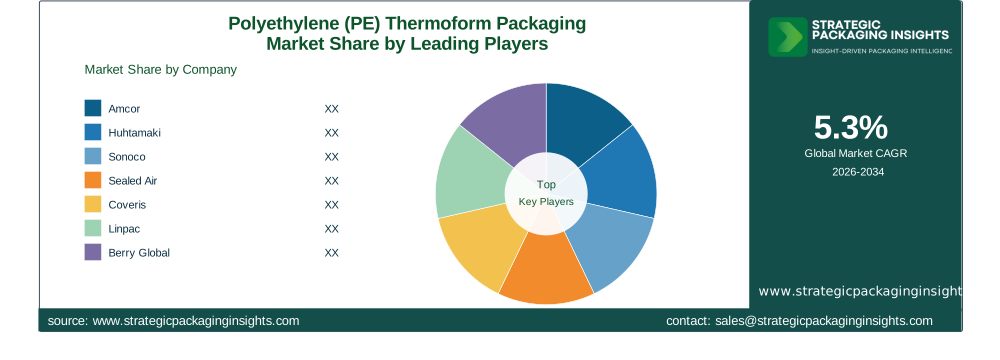
Amcor, a global leader in packaging solutions, holds a significant market share due to its comprehensive range of PE thermoform packaging products and its commitment to sustainability. The company has been at the forefront of developing recyclable and biodegradable packaging materials, which has helped it maintain a competitive edge in the market. Similarly, Huhtamaki, known for its innovative packaging solutions, has been expanding its presence in emerging markets to capitalize on the growing demand for packaged food products. The company's focus on sustainability and innovation has enabled it to capture a substantial share of the market.
Sonoco and Sealed Air are also prominent players in the PE thermoform packaging market, with a strong emphasis on product innovation and customer-centric solutions. Sonoco's extensive experience in the packaging industry and its commitment to sustainability have positioned it as a key player in the market. Sealed Air, on the other hand, is known for its advanced packaging technologies and solutions that enhance product protection and extend shelf life. The company's focus on research and development has enabled it to introduce innovative packaging solutions that cater to the diverse needs of its customers.
Other notable companies in the market include Coveris, Linpac, Berry Global, Constantia Flexibles, ProAmpac, and Klöckner Pentaplast. These companies are actively engaged in expanding their product portfolios and strengthening their market presence through strategic acquisitions and partnerships. Coveris, for instance, has been focusing on expanding its footprint in the European market, while Linpac is known for its innovative packaging solutions that cater to the food industry. Berry Global's extensive product range and strong distribution network have helped it capture a significant share of the market, while Constantia Flexibles and ProAmpac are recognized for their commitment to sustainability and innovation in packaging solutions.
Key Highlights
- The PE thermoform packaging market is projected to grow from $12.79 billion in 2025 to $20.44 billion by 2034, at a CAGR of 5.3%.
- Increasing demand for lightweight and cost-effective packaging solutions is driving market growth.
- Technological advancements in manufacturing processes, such as inline and roll-fed techniques, are enhancing production efficiency.
- The food and medical sectors are significant contributors to market demand.
- Environmental concerns and regulatory pressures are driving innovations in recyclable and biodegradable PE materials.
- Key players include Amcor, Huhtamaki, Sonoco, Sealed Air, and Coveris.
- Companies are focusing on sustainability and innovation to gain a competitive edge.
- Emerging markets present significant growth opportunities due to rising demand for packaged food products.
- Fluctuations in raw material prices pose a challenge to manufacturers.
Top Countries Insights
In the Polyethylene (PE) Thermoform Packaging market, the United States stands out as a leading country with a market size of approximately $3.5 billion and a CAGR of 4%. The country's growth is driven by the robust demand from the food and beverage industry, which requires high-quality packaging solutions to preserve product freshness and extend shelf life. Additionally, the increasing focus on sustainability and the development of recyclable PE materials are contributing to market growth in the United States.
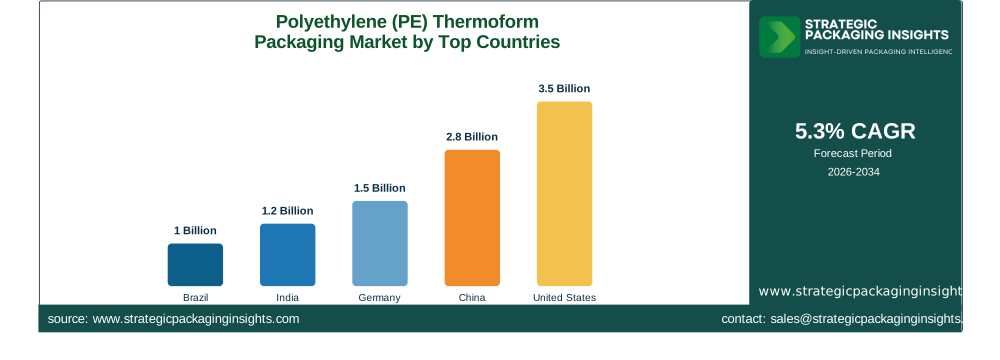
China is another significant player in the market, with a market size of around $2.8 billion and a CAGR of 6%. The country's rapid urbanization and growing middle class are driving the demand for packaged food products, which in turn is boosting the demand for PE thermoform packaging. Furthermore, government initiatives to promote sustainable packaging solutions are encouraging companies to invest in eco-friendly materials, further propelling market growth.
Germany, with a market size of approximately $1.5 billion and a CAGR of 5%, is a key market in Europe. The country's strong manufacturing base and emphasis on sustainability are driving the demand for innovative packaging solutions. The food and beverage industry is a major contributor to market growth, as it requires packaging solutions that meet stringent quality and safety standards.
India, with a market size of around $1.2 billion and a CAGR of 7%, is experiencing rapid growth in the PE thermoform packaging market. The country's expanding food processing industry and increasing consumer preference for packaged food products are driving market demand. Additionally, government initiatives to promote sustainable packaging solutions are encouraging companies to invest in recyclable and biodegradable materials.
Brazil, with a market size of approximately $1 billion and a CAGR of 5%, is a key market in Latin America. The country's growing food and beverage industry and increasing urbanization are driving the demand for PE thermoform packaging. Furthermore, the rising awareness of environmental issues is encouraging companies to adopt sustainable packaging solutions, contributing to market growth.
Polyethylene (PE) Thermoform Packaging Market Segments Insights

Type Analysis
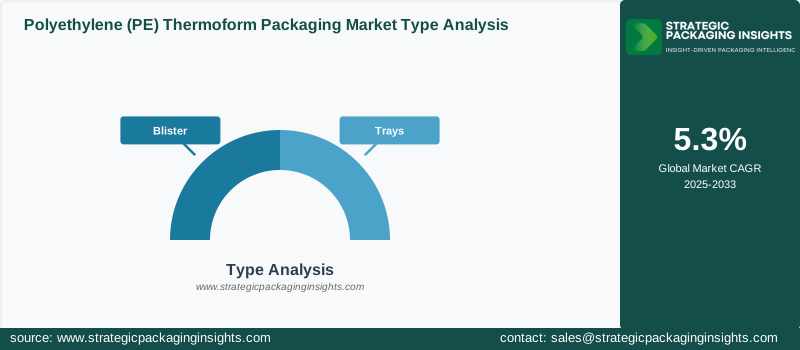
The Polyethylene (PE) Thermoform Packaging market is segmented by type into blister packs and trays. Blister packs are widely used in the pharmaceutical and consumer goods industries due to their ability to provide excellent product protection and visibility. The demand for blister packs is driven by the need for tamper-evident packaging solutions that ensure product safety and integrity. Additionally, the growing demand for convenient and portable packaging solutions in the food industry is boosting the demand for blister packs. Trays, on the other hand, are extensively used in the food and beverage industry for packaging fresh produce, meat, and ready-to-eat meals. The demand for trays is driven by the need for packaging solutions that can preserve product freshness and extend shelf life.
Technological advancements in manufacturing processes, such as inline and roll-fed thermoforming techniques, are enhancing the production efficiency of blister packs and trays. These advancements have enabled manufacturers to produce high-quality packaging solutions at competitive prices, further fueling market demand. Additionally, the increasing focus on sustainability and the development of recyclable and biodegradable materials are expected to drive future growth in the blister packs and trays segments, as they address environmental concerns and align with consumer preferences for eco-friendly products.
PE Grade Analysis
The PE thermoform packaging market is segmented by PE grade into LDPE and HDPE. LDPE is widely used in the packaging industry due to its flexibility, durability, and resistance to moisture and chemicals. The demand for LDPE is driven by its ability to provide excellent product protection and its suitability for a wide range of applications, including food and medical packaging. HDPE, on the other hand, is known for its strength and rigidity, making it ideal for packaging solutions that require high impact resistance and durability. The demand for HDPE is driven by its ability to provide superior product protection and its suitability for applications that require high-performance packaging solutions.
The increasing focus on sustainability and the development of recyclable and biodegradable PE materials are expected to drive future growth in the LDPE and HDPE segments. Companies are investing in research and development to create innovative PE materials that meet regulatory requirements and align with consumer preferences for eco-friendly products. Additionally, technological advancements in manufacturing processes are enhancing the production efficiency of LDPE and HDPE, further fueling market demand.
Application Analysis
The PE thermoform packaging market is segmented by application into food and medical packaging. The food industry is a major consumer of PE thermoform packaging, as it requires packaging solutions that can preserve product freshness and extend shelf life. The demand for food packaging is driven by the increasing demand for convenient, ready-to-eat meals and packaged food products, which are becoming increasingly popular due to changing lifestyles and increasing urbanization. The medical industry, on the other hand, requires packaging solutions that meet stringent quality and safety standards. The demand for medical packaging is driven by the need for sterile and secure packaging solutions that ensure product safety and integrity.
The increasing focus on sustainability and the development of recyclable and biodegradable PE materials are expected to drive future growth in the food and medical packaging segments. Companies are investing in research and development to create innovative packaging solutions that meet regulatory requirements and align with consumer preferences for eco-friendly products. Additionally, technological advancements in manufacturing processes are enhancing the production efficiency of food and medical packaging, further fueling market demand.
Process Analysis
The PE thermoform packaging market is segmented by process into inline and roll-fed thermoforming techniques. Inline thermoforming is a highly efficient manufacturing process that allows for the continuous production of thermoformed products. The demand for inline thermoforming is driven by its ability to produce high-quality packaging solutions at competitive prices, making it an ideal choice for large-scale production. Roll-fed thermoforming, on the other hand, is a versatile manufacturing process that allows for the production of a wide range of thermoformed products. The demand for roll-fed thermoforming is driven by its ability to produce high-quality packaging solutions with intricate designs and complex shapes.
Technological advancements in inline and roll-fed thermoforming techniques are enhancing the production efficiency of PE thermoform packaging, further fueling market demand. These advancements have enabled manufacturers to produce high-quality packaging solutions at competitive prices, making PE thermoform packaging more accessible to a wider range of industries. Additionally, the increasing focus on sustainability and the development of recyclable and biodegradable materials are expected to drive future growth in the inline and roll-fed thermoforming segments, as they address environmental concerns and align with consumer preferences for eco-friendly products.
Polyethylene (PE) Thermoform Packaging Market Segments
The Polyethylene (PE) Thermoform Packaging market has been segmented on the basis ofType
- Blister
- Trays
PE Grade
- LDPE
- HDPE
Application
- Food
- Medical
Process
- Inline
- Roll-fed
Region
- Asia Pacific
- North America
- Latin America
- Europe
- Middle East & Africa




