


Poly Pallets Market Outlook
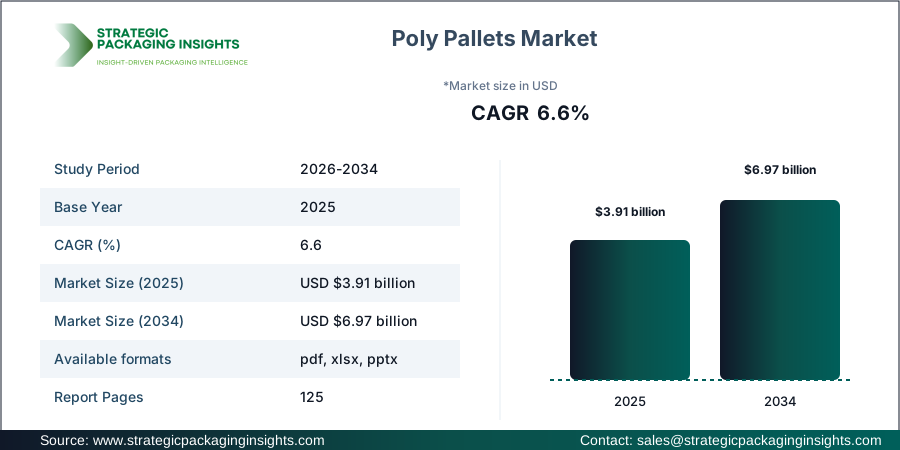
The Poly Pallets market was valued at $3.91 billion in 2025 and is projected to reach $6.97 billion by 2034, growing at a CAGR of 6.6% during the forecast period 2026-2034. This growth is driven by the increasing demand for sustainable and durable packaging solutions across various industries. Poly pallets, known for their lightweight, durability, and recyclability, are becoming the preferred choice over traditional wooden pallets. The market is witnessing a surge in demand from sectors such as food, pharmaceuticals, and retail, where hygiene and safety are paramount. Additionally, the rise in global trade and the expansion of the e-commerce sector are further propelling the demand for poly pallets, as they offer superior handling and storage capabilities.
However, the market faces certain restraints, including the high initial cost of poly pallets compared to wooden pallets, which can deter small and medium-sized enterprises from adopting them. Regulatory challenges related to plastic usage and environmental concerns also pose significant hurdles. Despite these challenges, the market holds immense growth potential, driven by technological advancements in pallet manufacturing and the increasing adoption of recycled plastic pallets. The focus on reducing carbon footprints and enhancing supply chain efficiency is expected to create lucrative opportunities for market players in the coming years.
Report Scope
| Attributes | Details |
| Report Title | Poly Pallets Market Size, Future Growth and Forecast 2034 |
| By Material Type | HDPE pallets, PP pallets, recycled plastic pallets |
| By Product Type | rackable pallets, nestable pallets, stackable pallets |
| By Application | food, pharma, retail, industrial logistics |
| By End Use | warehousing, manufacturing, cold chain, exports |
| Region | Asia Pacific, North America, Latin America, Europe, Middle East & Africa |
| Base Year | 2025 |
| Historic Period | 2018-2024 |
| Forecast Period | 2026-2034 |
| Number of Pages | 125 |
| Customization Available | Yes* |
Opportunities & Threats
The poly pallets market presents numerous opportunities, particularly in the realm of sustainability and environmental responsibility. As industries worldwide shift towards eco-friendly practices, the demand for recycled plastic pallets is on the rise. These pallets not only help in reducing plastic waste but also offer cost advantages in the long run due to their durability and reusability. Moreover, the growing emphasis on supply chain optimization and efficiency is driving the adoption of poly pallets, which are known for their lightweight and easy handling. This trend is particularly evident in the food and pharmaceutical sectors, where hygiene and safety are critical. The increasing globalization and expansion of international trade also present significant opportunities for the poly pallets market, as these pallets are ideal for export purposes due to their compliance with international shipping standards.
Another opportunity lies in the technological advancements in pallet manufacturing. Innovations such as RFID-enabled pallets and smart pallets are gaining traction, offering enhanced tracking and inventory management capabilities. These advancements are particularly beneficial for industries with complex supply chains, such as retail and industrial logistics. Furthermore, the rise of e-commerce and the need for efficient warehousing solutions are driving the demand for poly pallets, as they offer superior stacking and nesting capabilities, optimizing storage space. As companies continue to seek ways to enhance their operational efficiency and reduce costs, the adoption of poly pallets is expected to increase significantly.
Despite the promising opportunities, the poly pallets market faces certain threats that could hinder its growth. One of the primary challenges is the high initial cost of poly pallets compared to traditional wooden pallets. This cost factor can be a significant deterrent for small and medium-sized enterprises, which may not have the financial resources to invest in poly pallets. Additionally, regulatory challenges related to plastic usage and environmental concerns pose significant hurdles for market players. Governments worldwide are implementing stringent regulations to curb plastic waste, which could impact the production and adoption of poly pallets. Moreover, the volatility in raw material prices, particularly for virgin plastics, can affect the profitability of manufacturers, posing a threat to market growth.
Drivers & Challenges
The poly pallets market is primarily driven by the increasing demand for sustainable and durable packaging solutions across various industries. As companies strive to reduce their carbon footprint and enhance supply chain efficiency, poly pallets have emerged as a preferred choice due to their lightweight, durability, and recyclability. The food and pharmaceutical sectors, in particular, are witnessing a surge in demand for poly pallets, as they offer superior hygiene and safety compared to traditional wooden pallets. Additionally, the rise in global trade and the expansion of the e-commerce sector are further propelling the demand for poly pallets, as they offer superior handling and storage capabilities. The growing emphasis on supply chain optimization and efficiency is also driving the adoption of poly pallets, which are known for their lightweight and easy handling.
Technological advancements in pallet manufacturing are another significant driver of the poly pallets market. Innovations such as RFID-enabled pallets and smart pallets are gaining traction, offering enhanced tracking and inventory management capabilities. These advancements are particularly beneficial for industries with complex supply chains, such as retail and industrial logistics. Furthermore, the rise of e-commerce and the need for efficient warehousing solutions are driving the demand for poly pallets, as they offer superior stacking and nesting capabilities, optimizing storage space. As companies continue to seek ways to enhance their operational efficiency and reduce costs, the adoption of poly pallets is expected to increase significantly.
However, the market faces several challenges that could hinder its growth. One of the primary challenges is the high initial cost of poly pallets compared to traditional wooden pallets. This cost factor can be a significant deterrent for small and medium-sized enterprises, which may not have the financial resources to invest in poly pallets. Additionally, regulatory challenges related to plastic usage and environmental concerns pose significant hurdles for market players. Governments worldwide are implementing stringent regulations to curb plastic waste, which could impact the production and adoption of poly pallets. Moreover, the volatility in raw material prices, particularly for virgin plastics, can affect the profitability of manufacturers, posing a threat to market growth.
Market Share Analysis
The poly pallets market is characterized by a competitive landscape with several key players vying for market share. Companies such as ORBIS Corporation, Schoeller Allibert, Rehrig Pacific, CABKA Group, Craemer Group, Greystone Logistics, Myers Industries, Monoflo International, IPL Plastics, and Nilkamal are some of the prominent players in the market. These companies are focusing on product innovation, strategic partnerships, and mergers and acquisitions to strengthen their market position and expand their product offerings. The competitive landscape is further intensified by the presence of numerous regional players, which are catering to the specific needs of local markets.
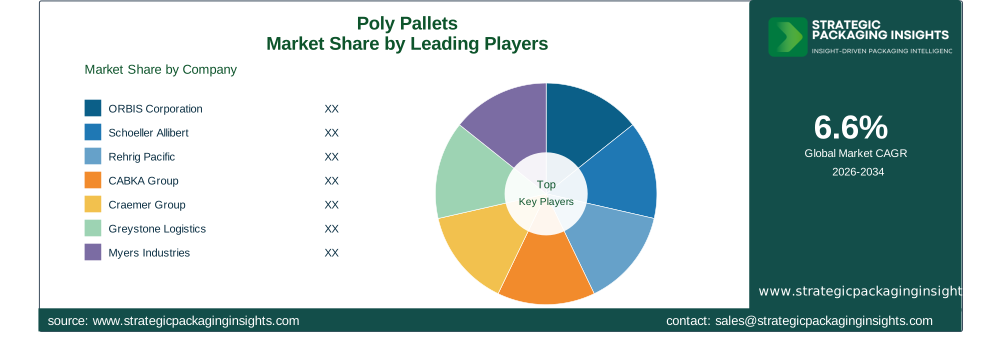
ORBIS Corporation is a leading player in the poly pallets market, known for its innovative and sustainable packaging solutions. The company has a strong presence in North America and is expanding its footprint in other regions through strategic partnerships and acquisitions. Schoeller Allibert, another key player, is focusing on product innovation and sustainability to enhance its market position. The company offers a wide range of poly pallets catering to various industries, including food, pharmaceuticals, and retail. Rehrig Pacific is also a prominent player in the market, known for its durable and cost-effective poly pallets. The company is focusing on expanding its product portfolio and enhancing its manufacturing capabilities to meet the growing demand for poly pallets.
CABKA Group is a leading manufacturer of recycled plastic pallets, offering sustainable and cost-effective solutions for various industries. The company is focusing on expanding its production capacity and enhancing its product offerings to cater to the growing demand for recycled plastic pallets. Craemer Group is another key player in the market, known for its high-quality and durable poly pallets. The company is focusing on product innovation and expanding its distribution network to enhance its market presence. Greystone Logistics is a prominent player in the recycled plastic pallets segment, offering a wide range of sustainable and cost-effective solutions for various industries.
Myers Industries, Monoflo International, IPL Plastics, and Nilkamal are also significant players in the poly pallets market, focusing on product innovation and strategic partnerships to enhance their market position. These companies are investing in research and development to develop innovative and sustainable packaging solutions that cater to the specific needs of various industries. The competitive landscape of the poly pallets market is expected to remain dynamic, with companies focusing on product innovation, strategic partnerships, and mergers and acquisitions to strengthen their market position and expand their product offerings.
Key Highlights
- The poly pallets market is projected to grow at a CAGR of 6.6% from 2026 to 2034.
- Increasing demand for sustainable and durable packaging solutions is driving market growth.
- Technological advancements in pallet manufacturing are enhancing tracking and inventory management capabilities.
- The rise of e-commerce and the need for efficient warehousing solutions are boosting demand for poly pallets.
- High initial cost and regulatory challenges related to plastic usage are significant market restraints.
- Key players in the market include ORBIS Corporation, Schoeller Allibert, and Rehrig Pacific.
- Recycled plastic pallets are gaining traction due to their cost advantages and sustainability.
- The food and pharmaceutical sectors are witnessing a surge in demand for poly pallets.
- Global trade expansion and international shipping standards compliance are driving market growth.
Top Countries Insights
In the poly pallets market, the United States stands out as a key player, with a market size of approximately $1.2 billion and a CAGR of 5%. The country's robust logistics and warehousing infrastructure, coupled with the growing emphasis on sustainability, are driving the demand for poly pallets. The presence of major market players and technological advancements in pallet manufacturing are further contributing to market growth. However, regulatory challenges related to plastic usage and environmental concerns pose significant hurdles for market players in the United States.
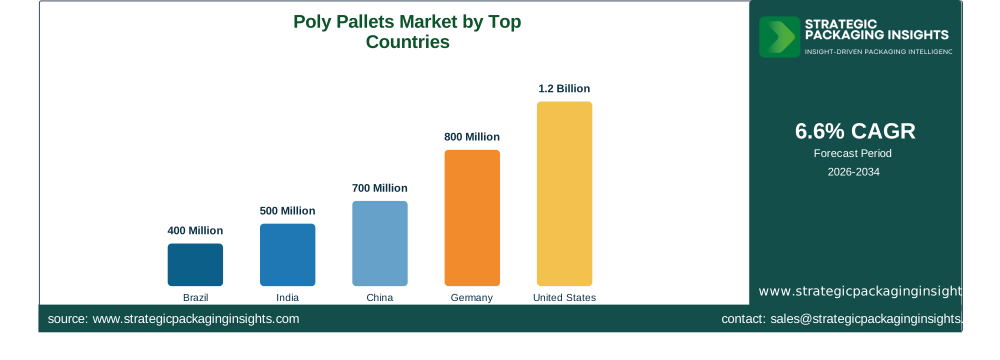
Germany is another significant market for poly pallets, with a market size of around $800 million and a CAGR of 4%. The country's strong manufacturing sector and emphasis on sustainability are driving the demand for poly pallets. The rise of e-commerce and the need for efficient warehousing solutions are also boosting market growth. However, the high initial cost of poly pallets and regulatory challenges related to plastic usage are significant restraints for market players in Germany.
China is a rapidly growing market for poly pallets, with a market size of approximately $700 million and a CAGR of 8%. The country's expanding manufacturing sector and increasing emphasis on supply chain optimization are driving the demand for poly pallets. The rise of e-commerce and the need for efficient warehousing solutions are also contributing to market growth. However, regulatory challenges related to plastic usage and environmental concerns pose significant hurdles for market players in China.
India is another emerging market for poly pallets, with a market size of around $500 million and a CAGR of 7%. The country's growing manufacturing sector and emphasis on sustainability are driving the demand for poly pallets. The rise of e-commerce and the need for efficient warehousing solutions are also boosting market growth. However, the high initial cost of poly pallets and regulatory challenges related to plastic usage are significant restraints for market players in India.
Brazil is a key market for poly pallets in Latin America, with a market size of approximately $400 million and a CAGR of 6%. The country's expanding manufacturing sector and increasing emphasis on supply chain optimization are driving the demand for poly pallets. The rise of e-commerce and the need for efficient warehousing solutions are also contributing to market growth. However, regulatory challenges related to plastic usage and environmental concerns pose significant hurdles for market players in Brazil.
Poly Pallets Market Segments Insights

Material Type Analysis
The poly pallets market is segmented by material type into HDPE pallets, PP pallets, and recycled plastic pallets. HDPE pallets are gaining popularity due to their high strength-to-density ratio, making them ideal for heavy-duty applications. These pallets are widely used in industries such as food and pharmaceuticals, where hygiene and safety are critical. PP pallets, on the other hand, are known for their chemical resistance and durability, making them suitable for industrial logistics and manufacturing applications. The demand for recycled plastic pallets is also on the rise, driven by the increasing emphasis on sustainability and environmental responsibility. These pallets offer cost advantages in the long run due to their durability and reusability, making them an attractive option for companies looking to reduce their carbon footprint.
The growing demand for sustainable and durable packaging solutions is driving the adoption of poly pallets across various industries. The food and pharmaceutical sectors, in particular, are witnessing a surge in demand for poly pallets, as they offer superior hygiene and safety compared to traditional wooden pallets. Additionally, the rise in global trade and the expansion of the e-commerce sector are further propelling the demand for poly pallets, as they offer superior handling and storage capabilities. The increasing globalization and expansion of international trade also present significant opportunities for the poly pallets market, as these pallets are ideal for export purposes due to their compliance with international shipping standards.
Product Type Analysis
The poly pallets market is segmented by product type into rackable pallets, nestable pallets, and stackable pallets. Rackable pallets are designed for use in racking systems, offering superior load-bearing capacity and stability. These pallets are widely used in industries such as warehousing and manufacturing, where efficient storage and handling are critical. Nestable pallets, on the other hand, are designed to save space when not in use, making them ideal for applications where storage space is limited. These pallets are commonly used in the retail and food sectors, where efficient space utilization is essential. Stackable pallets offer the advantage of being able to stack on top of each other, optimizing storage space and reducing transportation costs. These pallets are widely used in industries such as industrial logistics and exports, where efficient storage and transportation are critical.
The rise of e-commerce and the need for efficient warehousing solutions are driving the demand for poly pallets, as they offer superior stacking and nesting capabilities, optimizing storage space. As companies continue to seek ways to enhance their operational efficiency and reduce costs, the adoption of poly pallets is expected to increase significantly. Technological advancements in pallet manufacturing are also enhancing the capabilities of poly pallets, offering enhanced tracking and inventory management capabilities. These advancements are particularly beneficial for industries with complex supply chains, such as retail and industrial logistics.
Application Analysis
The poly pallets market is segmented by application into food, pharma, retail, and industrial logistics. The food and pharmaceutical sectors are witnessing a surge in demand for poly pallets, as they offer superior hygiene and safety compared to traditional wooden pallets. These pallets are ideal for applications where hygiene and safety are critical, such as food processing and pharmaceutical manufacturing. The retail sector is also witnessing a growing demand for poly pallets, driven by the rise of e-commerce and the need for efficient warehousing solutions. Poly pallets offer superior stacking and nesting capabilities, optimizing storage space and reducing transportation costs.
The industrial logistics sector is another significant application area for poly pallets, driven by the increasing emphasis on supply chain optimization and efficiency. Poly pallets offer superior handling and storage capabilities, making them ideal for applications where efficient storage and transportation are critical. The growing demand for sustainable and durable packaging solutions is also driving the adoption of poly pallets across various industries. As companies continue to seek ways to enhance their operational efficiency and reduce costs, the adoption of poly pallets is expected to increase significantly.
End Use Analysis
The poly pallets market is segmented by end use into warehousing, manufacturing, cold chain, and exports. The warehousing sector is witnessing a growing demand for poly pallets, driven by the rise of e-commerce and the need for efficient storage solutions. Poly pallets offer superior stacking and nesting capabilities, optimizing storage space and reducing transportation costs. The manufacturing sector is also witnessing a growing demand for poly pallets, driven by the increasing emphasis on supply chain optimization and efficiency. Poly pallets offer superior handling and storage capabilities, making them ideal for applications where efficient storage and transportation are critical.
The cold chain sector is another significant end-use area for poly pallets, driven by the increasing demand for temperature-sensitive products such as food and pharmaceuticals. Poly pallets offer superior hygiene and safety compared to traditional wooden pallets, making them ideal for applications where hygiene and safety are critical. The exports sector is also witnessing a growing demand for poly pallets, driven by the increasing globalization and expansion of international trade. Poly pallets are ideal for export purposes due to their compliance with international shipping standards, making them an attractive option for companies looking to expand their global footprint.
Poly Pallets Market Segments
The Poly Pallets market has been segmented on the basis ofBy Material Type
- HDPE pallets
- PP pallets
- recycled plastic pallets
By Product Type
- rackable pallets
- nestable pallets
- stackable pallets
By Application
- food
- pharma
- retail
- industrial logistics
By End Use
- warehousing
- manufacturing
- cold chain
- exports
Region
- Asia Pacific
- North America
- Latin America
- Europe
- Middle East & Africa




