


Plastic Vial Market Outlook
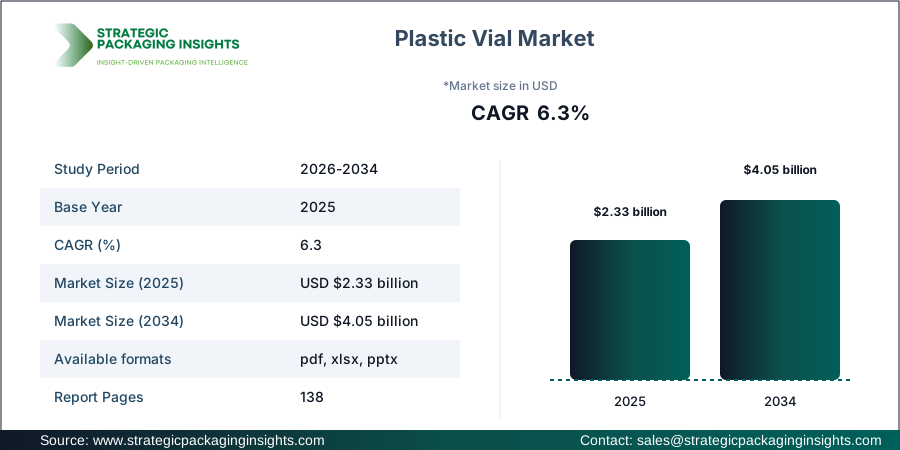
The plastic vial market was valued at $2.33 billion in 2025 and is projected to reach $4.05 billion by 2034, growing at a CAGR of 6.3% during the forecast period 2026-2034. This growth trajectory is primarily driven by the increasing demand for lightweight, durable, and cost-effective packaging solutions in the pharmaceutical and healthcare sectors. The rising prevalence of chronic diseases and the subsequent increase in diagnostic and laboratory testing have further fueled the demand for plastic vials. Additionally, advancements in material technology, such as the development of cyclic olefin polymers, have enhanced the performance characteristics of plastic vials, making them more suitable for a wide range of applications.
Despite the promising growth prospects, the plastic vial market faces certain challenges that could hinder its expansion. Regulatory restrictions on plastic usage due to environmental concerns are a significant restraint. Governments worldwide are implementing stringent regulations to reduce plastic waste, which could impact the production and usage of plastic vials. However, the market holds substantial growth potential, driven by the increasing adoption of eco-friendly and recyclable materials. Innovations in biodegradable plastics and the development of sustainable packaging solutions are expected to create new opportunities for market players. Furthermore, the growing focus on personalized medicine and the expansion of the biotechnology sector are likely to drive the demand for specialized plastic vials in the coming years.
Report Scope
| Attributes | Details |
| Report Title | Plastic Vial Market Size, Future Growth and Forecast 2034 |
| Product Type | Sample Vials, Diagnostic Vials, Pharma Vials, Cryogenic Vials |
| Material Type | PP, PE, Cyclic Olefin Polymer, PET |
| Application | Diagnostics, Laboratory Storage, Pharma, Research |
| End Use | Labs, Hospitals, Pharma, Diagnostics |
| Region | Asia Pacific, North America, Latin America, Europe, Middle East & Africa |
| Base Year | 2025 |
| Historic Period | 2018-2024 |
| Forecast Period | 2026-2034 |
| Number of Pages | 138 |
| Customization Available | Yes* |
Opportunities & Threats
The plastic vial market presents numerous opportunities for growth, particularly in the realm of personalized medicine and biotechnology. As the healthcare industry shifts towards more personalized treatment approaches, the demand for specialized packaging solutions, such as plastic vials, is expected to rise. These vials are essential for storing and transporting small quantities of biological samples and pharmaceuticals, which are critical in personalized medicine. Additionally, the increasing focus on research and development activities in the pharmaceutical sector is likely to boost the demand for plastic vials, as they are widely used in laboratory settings for sample storage and analysis.
Another significant opportunity lies in the development of eco-friendly and sustainable packaging solutions. With growing environmental concerns and regulatory pressures to reduce plastic waste, there is a rising demand for biodegradable and recyclable plastic vials. Companies that invest in the development of sustainable materials and innovative packaging designs are likely to gain a competitive edge in the market. Furthermore, the expansion of the biotechnology sector, driven by advancements in genetic research and drug development, is expected to create new avenues for growth in the plastic vial market.
However, the market also faces certain threats that could impede its growth. One of the primary challenges is the increasing regulatory scrutiny on plastic usage due to environmental concerns. Governments worldwide are implementing stringent regulations to curb plastic waste, which could impact the production and usage of plastic vials. Additionally, the volatility in raw material prices, particularly petroleum-based plastics, poses a threat to market stability. Fluctuations in crude oil prices can lead to increased production costs, affecting the profitability of manufacturers. To mitigate these threats, companies need to focus on developing cost-effective and sustainable packaging solutions that comply with regulatory standards.
Drivers & Challenges
The plastic vial market is driven by several key factors, including the increasing demand for lightweight and durable packaging solutions in the healthcare sector. Plastic vials offer numerous advantages over traditional glass vials, such as reduced weight, lower breakage risk, and cost-effectiveness. These benefits have led to their widespread adoption in pharmaceutical and diagnostic applications. Additionally, the rising prevalence of chronic diseases and the subsequent increase in diagnostic and laboratory testing have further fueled the demand for plastic vials. The growing focus on personalized medicine and the expansion of the biotechnology sector are also significant drivers of market growth.
Technological advancements in material science have played a crucial role in driving the plastic vial market. The development of advanced materials, such as cyclic olefin polymers, has enhanced the performance characteristics of plastic vials, making them more suitable for a wide range of applications. These materials offer superior chemical resistance, clarity, and barrier properties, which are essential for storing sensitive pharmaceutical and biological samples. Furthermore, the increasing adoption of automation and digitalization in laboratory settings has boosted the demand for plastic vials, as they are compatible with automated systems and provide reliable sample storage solutions.
Despite the positive growth drivers, the plastic vial market faces several challenges that could hinder its expansion. One of the primary challenges is the increasing regulatory scrutiny on plastic usage due to environmental concerns. Governments worldwide are implementing stringent regulations to reduce plastic waste, which could impact the production and usage of plastic vials. Additionally, the volatility in raw material prices, particularly petroleum-based plastics, poses a threat to market stability. Fluctuations in crude oil prices can lead to increased production costs, affecting the profitability of manufacturers. To overcome these challenges, companies need to focus on developing sustainable packaging solutions and investing in research and development to enhance product performance and compliance with regulatory standards.
Market Share Analysis
The competitive landscape of the plastic vial market is characterized by the presence of several key players, each striving to gain a significant share of the market. Companies such as Thermo Fisher Scientific, Corning, DWK Life Sciences, Greiner Bio-One, and Sarstedt are among the leading players in the market. These companies have established a strong foothold in the market through strategic partnerships, mergers and acquisitions, and continuous product innovation. Their extensive product portfolios and global distribution networks have enabled them to cater to a wide range of customer needs and maintain a competitive edge in the market.
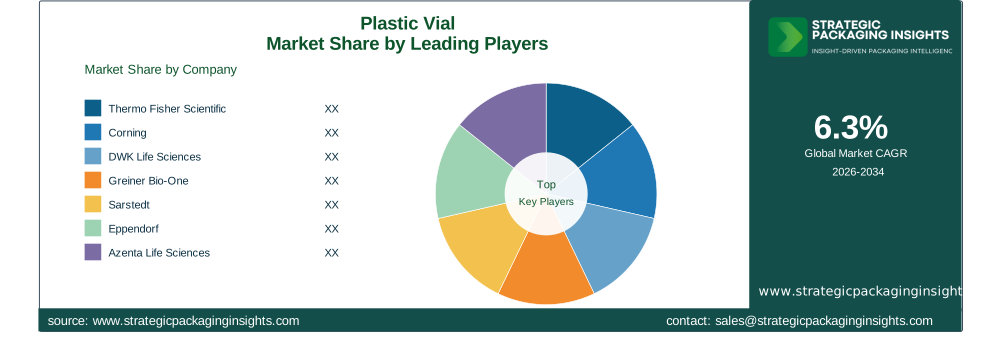
Thermo Fisher Scientific is a prominent player in the plastic vial market, known for its comprehensive range of laboratory products and solutions. The company has a strong presence in the healthcare and life sciences sectors, offering a wide array of plastic vials for various applications. Corning, another key player, is renowned for its expertise in material science and innovation. The company's focus on developing advanced materials and sustainable packaging solutions has positioned it as a leader in the market. DWK Life Sciences, with its extensive product portfolio and global reach, is also a significant player in the plastic vial market.
Greiner Bio-One and Sarstedt are well-established companies in the plastic vial market, known for their high-quality products and innovative solutions. Greiner Bio-One's focus on research and development has enabled it to introduce cutting-edge products that meet the evolving needs of the healthcare and pharmaceutical industries. Sarstedt, with its strong emphasis on customer satisfaction and product quality, has built a loyal customer base and a robust market presence. Eppendorf, Azenta Life Sciences, Gerresheimer, Nipro, and Berry Global are other notable players in the market, each contributing to the competitive landscape with their unique offerings and strategic initiatives.
Key Highlights
- The plastic vial market is projected to grow from $2.33 billion in 2025 to $4.05 billion by 2034, at a CAGR of 6.3%.
- Increasing demand for lightweight and durable packaging solutions in the healthcare sector is a major growth driver.
- Technological advancements in material science, such as cyclic olefin polymers, are enhancing the performance of plastic vials.
- Regulatory restrictions on plastic usage due to environmental concerns pose a significant challenge to market growth.
- The development of eco-friendly and sustainable packaging solutions presents new opportunities for market players.
- Key players in the market include Thermo Fisher Scientific, Corning, DWK Life Sciences, Greiner Bio-One, and Sarstedt.
- The expansion of the biotechnology sector is expected to drive the demand for specialized plastic vials.
- Fluctuations in raw material prices, particularly petroleum-based plastics, pose a threat to market stability.
- The growing focus on personalized medicine is likely to boost the demand for plastic vials in the coming years.
Top Countries Insights
The United States is a leading market for plastic vials, with a current market size of approximately $1.2 billion and a CAGR of 5%. The country's well-established healthcare infrastructure and the presence of major pharmaceutical companies drive the demand for plastic vials. Additionally, the increasing focus on research and development activities in the pharmaceutical sector contributes to market growth. However, regulatory restrictions on plastic usage and environmental concerns pose challenges to market expansion.
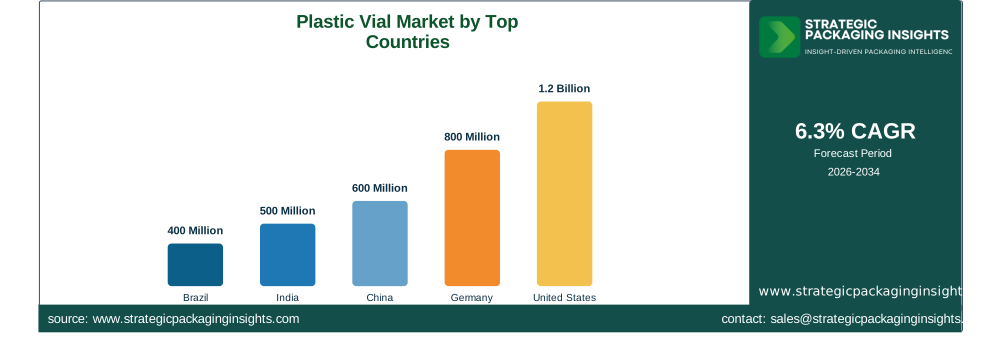
Germany is another significant market for plastic vials, with a market size of around $800 million and a CAGR of 4%. The country's strong emphasis on innovation and sustainability has led to the development of advanced materials and eco-friendly packaging solutions. The presence of leading pharmaceutical and biotechnology companies further boosts the demand for plastic vials. However, stringent regulations on plastic waste management and recycling present challenges to market growth.
China is experiencing rapid growth in the plastic vial market, with a market size of approximately $600 million and a CAGR of 8%. The country's expanding healthcare sector and increasing investments in biotechnology and pharmaceutical research drive the demand for plastic vials. Additionally, government initiatives to promote sustainable packaging solutions and reduce plastic waste are expected to create new opportunities for market players.
India is emerging as a key market for plastic vials, with a market size of around $500 million and a CAGR of 7%. The country's growing pharmaceutical industry and increasing focus on healthcare infrastructure development contribute to market growth. However, challenges such as regulatory restrictions on plastic usage and the lack of advanced recycling facilities pose obstacles to market expansion.
Brazil is a notable market for plastic vials, with a market size of approximately $400 million and a CAGR of 6%. The country's expanding healthcare sector and increasing demand for diagnostic and laboratory testing drive the demand for plastic vials. However, economic instability and regulatory challenges related to plastic waste management present hurdles to market growth.
Plastic Vial Market Segments Insights

Product Type Analysis
The plastic vial market is segmented by product type into sample vials, diagnostic vials, pharma vials, and cryogenic vials. Sample vials are widely used in laboratory settings for storing and transporting small quantities of samples. The increasing focus on research and development activities in the pharmaceutical and biotechnology sectors is driving the demand for sample vials. Diagnostic vials, on the other hand, are essential for storing and transporting diagnostic samples, such as blood and urine, in healthcare settings. The rising prevalence of chronic diseases and the subsequent increase in diagnostic testing are fueling the demand for diagnostic vials.
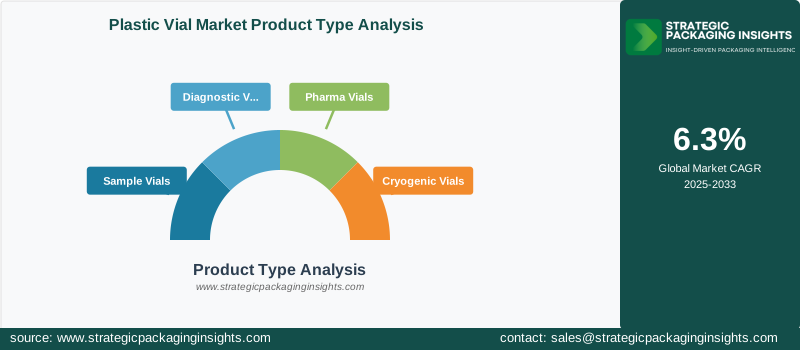
Pharma vials are primarily used for storing and transporting pharmaceutical products, such as vaccines and injectable drugs. The growing pharmaceutical industry and the increasing demand for vaccines and biologics are driving the demand for pharma vials. Cryogenic vials are designed for storing and transporting biological samples at extremely low temperatures. The expansion of the biotechnology sector and the increasing focus on genetic research and drug development are expected to boost the demand for cryogenic vials in the coming years.
Material Type Analysis
The plastic vial market is segmented by material type into PP, PE, cyclic olefin polymer, and PET. Polypropylene (PP) is widely used in the production of plastic vials due to its excellent chemical resistance and durability. The increasing demand for lightweight and cost-effective packaging solutions in the healthcare sector is driving the demand for PP vials. Polyethylene (PE) is another commonly used material, known for its flexibility and impact resistance. The growing focus on sustainable packaging solutions is expected to boost the demand for PE vials.
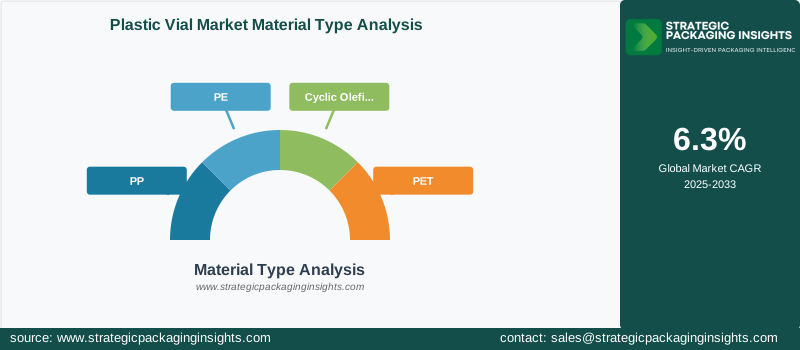
Cyclic olefin polymer is gaining popularity in the plastic vial market due to its superior clarity, chemical resistance, and barrier properties. The development of advanced materials and the increasing demand for high-performance packaging solutions are driving the demand for cyclic olefin polymer vials. Polyethylene terephthalate (PET) is also used in the production of plastic vials, particularly for applications requiring high clarity and strength. The increasing adoption of PET vials in the pharmaceutical and diagnostic sectors is expected to drive market growth.
Application Analysis
The plastic vial market is segmented by application into diagnostics, laboratory storage, pharma, and research. Diagnostics is a major application segment, driven by the increasing demand for diagnostic testing and the rising prevalence of chronic diseases. Plastic vials are essential for storing and transporting diagnostic samples, such as blood and urine, in healthcare settings. Laboratory storage is another significant application segment, as plastic vials are widely used for storing and transporting samples in laboratory settings.
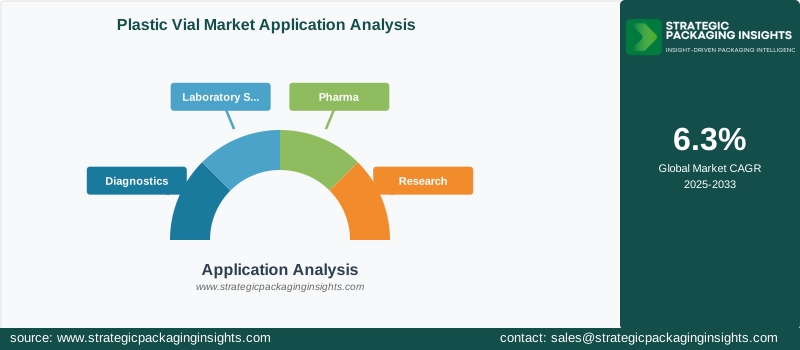
The pharmaceutical sector is a key application segment, driven by the growing demand for vaccines, biologics, and injectable drugs. Plastic vials are essential for storing and transporting pharmaceutical products, ensuring their safety and efficacy. Research is another important application segment, as plastic vials are widely used in research and development activities in the pharmaceutical and biotechnology sectors. The increasing focus on genetic research and drug development is expected to drive the demand for plastic vials in research applications.
End Use Analysis
The plastic vial market is segmented by end use into labs, hospitals, pharma, and diagnostics. Laboratories are a major end-use segment, as plastic vials are widely used for storing and transporting samples in laboratory settings. The increasing focus on research and development activities in the pharmaceutical and biotechnology sectors is driving the demand for plastic vials in laboratories. Hospitals are another significant end-use segment, as plastic vials are essential for storing and transporting diagnostic samples and pharmaceutical products in healthcare settings.
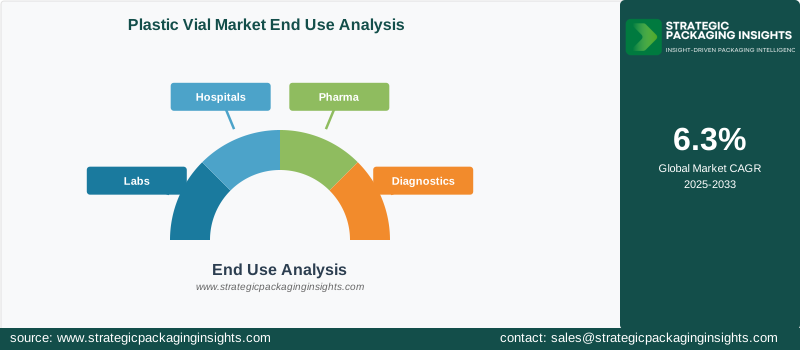
The pharmaceutical sector is a key end-use segment, driven by the growing demand for vaccines, biologics, and injectable drugs. Plastic vials are essential for storing and transporting pharmaceutical products, ensuring their safety and efficacy. Diagnostics is another important end-use segment, as plastic vials are widely used for storing and transporting diagnostic samples, such as blood and urine, in healthcare settings. The rising prevalence of chronic diseases and the subsequent increase in diagnostic testing are fueling the demand for plastic vials in diagnostics.
Plastic Vial Market Segments
The Plastic Vial market has been segmented on the basis ofProduct Type
- Sample Vials
- Diagnostic Vials
- Pharma Vials
- Cryogenic Vials
Material Type
- PP
- PE
- Cyclic Olefin Polymer
- PET
Application
- Diagnostics
- Laboratory Storage
- Pharma
- Research
End Use
- Labs
- Hospitals
- Pharma
- Diagnostics
Region
- Asia Pacific
- North America
- Latin America
- Europe
- Middle East & Africa




