


Plastic Resins Market Outlook
The plastic resins market was valued at $722.54 billion in 2025 and is projected to reach $1, 145.28 billion by 2034, growing at a CAGR of 5.3% during the forecast period 2026-2034. This growth trajectory is driven by the increasing demand for plastic resins across various industries such as packaging, automotive, and construction. The versatility and adaptability of plastic resins make them a preferred choice for manufacturers looking to innovate and improve product performance. The market is also benefiting from advancements in resin technology, which are enhancing the properties of plastics, making them more durable, lightweight, and environmentally friendly. As industries continue to seek sustainable solutions, the demand for bio-based and recyclable plastic resins is expected to rise, further propelling market growth.
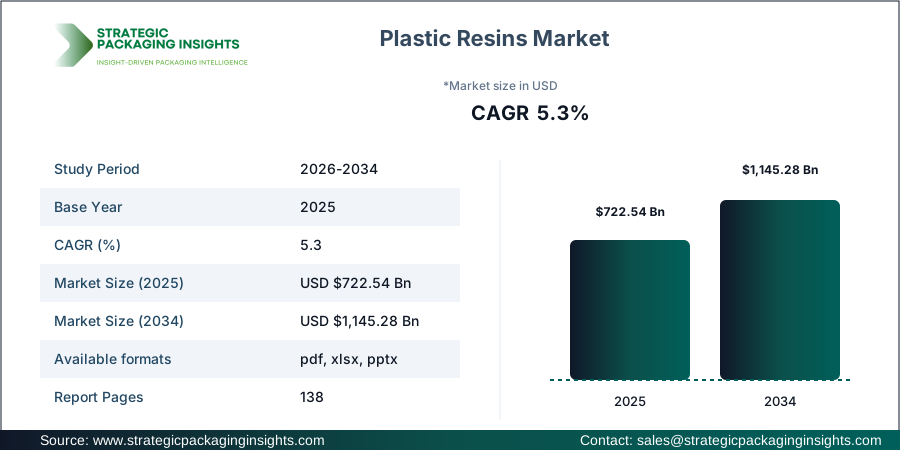
However, the plastic resins market faces several challenges that could hinder its growth potential. Regulatory restrictions on plastic usage, particularly in single-use applications, are becoming more stringent worldwide. Governments are implementing policies to reduce plastic waste and promote recycling, which could impact the demand for traditional plastic resins. Additionally, fluctuations in raw material prices and supply chain disruptions pose significant risks to market stability. Despite these challenges, the market holds substantial growth potential, driven by the increasing adoption of advanced manufacturing techniques and the development of new applications for plastic resins in emerging industries.
Report Scope
| Attributes | Details |
| Report Title | Plastic Resins Market Size, Future Growth and Forecast 2034 |
| By Resin Type | Polyethylene, Polypropylene, PVC, PET, Polystyrene, Engineering Plastics |
| By Application | Packaging, Automotive, Construction, Consumer Goods, Electronics |
| By Processing Method | Injection Molding, Extrusion, Blow Molding, Thermoforming |
| By End Use | Packaging, Building & Construction, Automotive, Healthcare, Electrical & Electronics |
| Region | Asia Pacific, North America, Latin America, Europe, Middle East & Africa |
| Base Year | 2025 |
| Historic Period | 2018-2024 |
| Forecast Period | 2026-2034 |
| Number of Pages | 138 |
| Customization Available | Yes* |
Opportunities & Threats
The plastic resins market presents numerous opportunities for growth, particularly in the development of sustainable and eco-friendly materials. As environmental concerns continue to rise, there is a growing demand for biodegradable and bio-based resins that can reduce the environmental impact of plastic products. Companies that invest in research and development to create innovative, sustainable resin solutions are likely to gain a competitive edge in the market. Additionally, the expansion of the e-commerce sector is driving demand for packaging materials, providing further opportunities for growth in the plastic resins market.
Another significant opportunity lies in the automotive industry, where the demand for lightweight materials is increasing. Plastic resins offer a cost-effective solution for reducing vehicle weight, improving fuel efficiency, and lowering emissions. As automotive manufacturers continue to prioritize sustainability and efficiency, the demand for high-performance plastic resins is expected to grow. Furthermore, the construction industry is increasingly adopting plastic resins for applications such as insulation, piping, and window frames, driven by their durability and cost-effectiveness.
Despite these opportunities, the plastic resins market faces several threats that could impact its growth. One of the primary threats is the increasing regulatory pressure to reduce plastic waste and promote recycling. Governments worldwide are implementing policies to limit the use of single-use plastics and encourage the development of circular economies. These regulations could lead to a decline in demand for traditional plastic resins, particularly in packaging applications. Additionally, the volatility of raw material prices and supply chain disruptions pose significant risks to market stability, potentially affecting the profitability of resin manufacturers.
Drivers & Challenges
The plastic resins market is driven by several key factors, including the growing demand for lightweight and durable materials across various industries. In the automotive sector, the need for fuel-efficient vehicles is driving the adoption of plastic resins, which offer a lightweight alternative to traditional materials. Similarly, the construction industry is increasingly utilizing plastic resins for applications such as insulation and piping, due to their durability and cost-effectiveness. The packaging industry also plays a significant role in driving market growth, as the demand for flexible and rigid packaging solutions continues to rise.
Technological advancements in resin production are another major driver of market growth. Innovations in polymer chemistry and processing techniques are enhancing the properties of plastic resins, making them more versatile and environmentally friendly. The development of bio-based and recyclable resins is gaining traction, as companies seek to meet the growing demand for sustainable materials. Additionally, the expansion of the e-commerce sector is boosting demand for packaging materials, further driving the growth of the plastic resins market.
However, the market faces several challenges that could hinder its growth. One of the primary challenges is the increasing regulatory pressure to reduce plastic waste and promote recycling. Governments worldwide are implementing policies to limit the use of single-use plastics and encourage the development of circular economies. These regulations could lead to a decline in demand for traditional plastic resins, particularly in packaging applications. Additionally, the volatility of raw material prices and supply chain disruptions pose significant risks to market stability, potentially affecting the profitability of resin manufacturers.
Market Share Analysis
The competitive landscape of the plastic resins market is characterized by the presence of several key players, each striving to enhance their market share through strategic initiatives such as mergers and acquisitions, partnerships, and product innovations. ExxonMobil, a leading player in the market, holds a significant share due to its extensive product portfolio and strong global presence. The company focuses on developing high-performance resins that cater to the evolving needs of various industries.
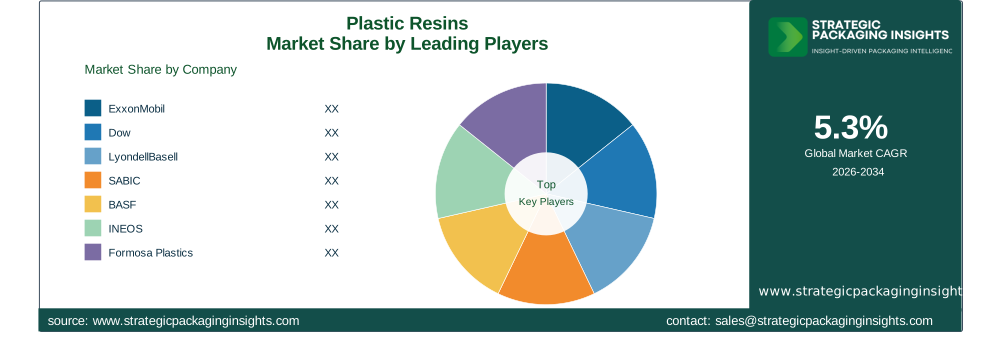
Dow is another major player in the plastic resins market, known for its innovative solutions and commitment to sustainability. The company invests heavily in research and development to create advanced resin technologies that offer improved performance and environmental benefits. LyondellBasell, with its strong focus on operational excellence and customer-centric approach, also holds a substantial market share. The company's extensive distribution network and diverse product offerings contribute to its competitive advantage.
SABIC, a global leader in the chemical industry, is a key player in the plastic resins market, known for its comprehensive range of high-quality resins. The company's strategic partnerships and focus on innovation have helped it maintain a strong market position. BASF, with its emphasis on sustainability and innovation, is another prominent player in the market. The company's extensive research capabilities and commitment to developing eco-friendly solutions have bolstered its market presence.
INEOS, Formosa Plastics, LG Chem, Mitsubishi Chemical Group, and Covestro are other notable players in the plastic resins market. These companies are actively engaged in expanding their product portfolios and enhancing their production capabilities to meet the growing demand for plastic resins. Their strategic initiatives, such as collaborations and acquisitions, are aimed at strengthening their market positions and driving growth in the competitive landscape.
Key Highlights
- The plastic resins market is projected to grow at a CAGR of 5.3% from 2026 to 2034.
- Increasing demand for sustainable and eco-friendly resins is driving market growth.
- The automotive industry is a key driver, with a focus on lightweight materials for fuel efficiency.
- Technological advancements in resin production are enhancing product performance.
- Regulatory pressures to reduce plastic waste pose challenges to market growth.
- Key players are focusing on strategic initiatives to enhance market share.
- The packaging industry remains a significant contributor to market demand.
- Emerging markets in Asia Pacific are expected to drive significant growth.
- Bio-based and recyclable resins are gaining traction in the market.
- Supply chain disruptions and raw material price volatility are key challenges.
Top Countries Insights
In the plastic resins market, the United States holds a significant position, with a market size of approximately $150 billion and a CAGR of 4%. The country's robust manufacturing sector and strong demand for packaging materials are key growth drivers. Additionally, the focus on sustainability and the development of bio-based resins are contributing to market expansion. However, regulatory pressures to reduce plastic waste pose challenges to growth.
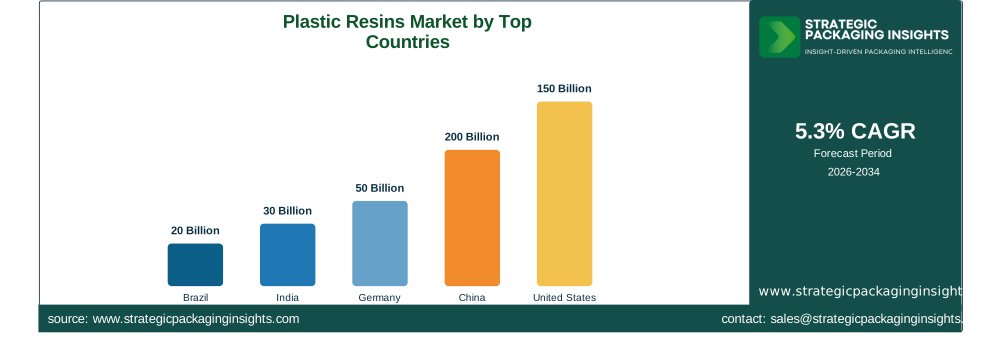
China is a major player in the plastic resins market, with a market size of around $200 billion and a CAGR of 6%. The country's rapid industrialization and urbanization are driving demand for plastic resins across various industries, including automotive and construction. Government initiatives to promote recycling and reduce plastic waste are also influencing market dynamics. However, environmental concerns and regulatory challenges remain significant hurdles.
Germany, with a market size of approximately $50 billion and a CAGR of 3%, is a key player in the European plastic resins market. The country's strong automotive and packaging industries are driving demand for high-performance resins. Additionally, the focus on sustainability and the development of eco-friendly materials are contributing to market growth. However, regulatory pressures and environmental concerns pose challenges to the market.
India is an emerging market in the plastic resins industry, with a market size of around $30 billion and a CAGR of 7%. The country's growing population and increasing demand for consumer goods are driving market growth. Additionally, government initiatives to promote manufacturing and reduce plastic waste are influencing market dynamics. However, challenges such as supply chain disruptions and raw material price volatility remain significant hurdles.
Brazil, with a market size of approximately $20 billion and a CAGR of 5%, is a key player in the Latin American plastic resins market. The country's expanding construction and automotive industries are driving demand for plastic resins. Additionally, government initiatives to promote recycling and reduce plastic waste are contributing to market growth. However, economic instability and regulatory challenges pose significant hurdles to market expansion.
Plastic Resins Market Segments Insights

Resin Type Analysis
The resin type segment of the plastic resins market is diverse, encompassing a range of materials such as polyethylene, polypropylene, PVC, PET, polystyrene, and engineering plastics. Polyethylene and polypropylene are among the most widely used resins, driven by their versatility and cost-effectiveness. These resins are extensively used in packaging applications, where their lightweight and durable properties are highly valued. The demand for PET is also rising, particularly in the beverage industry, due to its excellent clarity and recyclability. Engineering plastics, known for their superior mechanical properties, are gaining traction in high-performance applications across automotive and electronics industries.
Trends in the resin type segment are influenced by the growing demand for sustainable materials. Bio-based and recyclable resins are gaining popularity as industries seek to reduce their environmental impact. Companies are investing in research and development to create innovative resin solutions that offer improved performance and sustainability. The competition in this segment is intense, with key players focusing on expanding their product portfolios and enhancing their production capabilities to meet the evolving needs of various industries.
Application Analysis
The application segment of the plastic resins market is broad, covering industries such as packaging, automotive, construction, consumer goods, and electronics. Packaging remains the largest application segment, driven by the increasing demand for flexible and rigid packaging solutions. The rise of e-commerce and the need for efficient packaging materials are further boosting demand in this segment. In the automotive industry, the focus on lightweight materials for fuel efficiency is driving the adoption of plastic resins. The construction industry is also a significant contributor, with resins being used in applications such as insulation, piping, and window frames.
Trends in the application segment are shaped by the growing emphasis on sustainability and innovation. Companies are developing advanced resin technologies that offer improved performance and environmental benefits. The demand for bio-based and recyclable resins is rising, as industries seek to meet regulatory requirements and consumer preferences for sustainable materials. The competition in this segment is fierce, with key players focusing on strategic initiatives to enhance their market positions and drive growth.
Processing Method Analysis
The processing method segment of the plastic resins market includes techniques such as injection molding, extrusion, blow molding, and thermoforming. Injection molding is one of the most widely used processing methods, known for its efficiency and ability to produce complex shapes with high precision. Extrusion is another popular method, used extensively in the production of pipes, films, and sheets. Blow molding is commonly used for manufacturing hollow plastic products, such as bottles and containers. Thermoforming is gaining traction in the packaging industry, due to its cost-effectiveness and versatility.
Trends in the processing method segment are driven by technological advancements and the increasing demand for high-performance materials. Companies are investing in advanced processing technologies to enhance product quality and reduce production costs. The competition in this segment is intense, with key players focusing on expanding their production capabilities and developing innovative processing techniques to meet the evolving needs of various industries.
End Use Analysis
The end use segment of the plastic resins market encompasses industries such as packaging, building & construction, automotive, healthcare, and electrical & electronics. Packaging is the largest end use segment, driven by the increasing demand for efficient and sustainable packaging solutions. The building & construction industry is also a significant contributor, with plastic resins being used in applications such as insulation, piping, and window frames. In the automotive industry, the focus on lightweight materials for fuel efficiency is driving the adoption of plastic resins.
Trends in the end use segment are shaped by the growing emphasis on sustainability and innovation. Companies are developing advanced resin technologies that offer improved performance and environmental benefits. The demand for bio-based and recyclable resins is rising, as industries seek to meet regulatory requirements and consumer preferences for sustainable materials. The competition in this segment is fierce, with key players focusing on strategic initiatives to enhance their market positions and drive growth.
Plastic Resins Market Segments
The Plastic Resins market has been segmented on the basis ofBy Resin Type
- Polyethylene
- Polypropylene
- PVC
- PET
- Polystyrene
- Engineering Plastics
By Application
- Packaging
- Automotive
- Construction
- Consumer Goods
- Electronics
By Processing Method
- Injection Molding
- Extrusion
- Blow Molding
- Thermoforming
By End Use
- Packaging
- Building & Construction
- Automotive
- Healthcare
- Electrical & Electronics
Region
- Asia Pacific
- North America
- Latin America
- Europe
- Middle East & Africa




