


Plastic Funnel Market Outlook
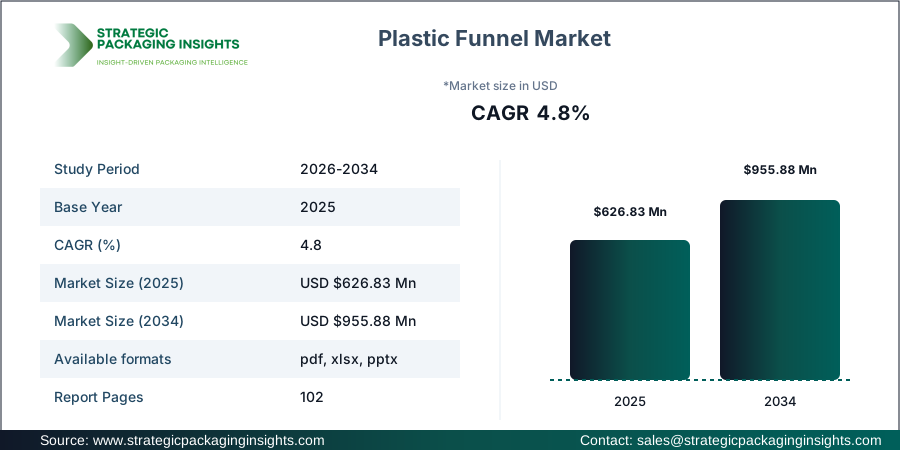
The Plastic Funnel market size was valued at USD 626.83 million in 2025 and is anticipated to reach USD 955.88 million by 2034, growing at a CAGR of 4.8% during the forecast period according to Strategic Packaging Insights. The market is witnessing significant growth due to the increasing demand for efficient and cost-effective solutions in fluid transfer across various industries. Companies like Thermo Fisher Scientific and Bel-Art are leading the charge by innovating in product design and material usage, which is driving the market forward. The versatility of plastic funnels in applications ranging from automotive fluids to laboratory settings is a key factor contributing to their growing popularity.
One of the most impactful drivers of the Plastic Funnel market is the rising demand for laboratory equipment and automotive maintenance tools. As industries continue to expand, the need for precise and reliable fluid transfer solutions becomes more critical. According to industry reports, the automotive sector's growth, coupled with advancements in chemical processing, is expected to bolster the demand for plastic funnels. Companies like Dynalon and VWR International are capitalizing on this trend by offering a wide range of products tailored to specific industry needs, thereby enhancing their market presence and driving overall market growth.
Report Scope
| Attributes | Details |
| Report Title | Plastic Funnel Market Size, Future Growth and Forecast 2034 |
| Material Type | PP, HDPE, LDPE, PVC |
| Product Type | Standard Funnels, Filter Funnels, Dispensing Funnels, Laboratory Funnels |
| Application | Automotive Fluids, Chemicals, Food, Laboratory |
| End Use | Industrial, Automotive, Laboratories, Households |
| Region | Asia Pacific, North America, Latin America, Europe, Middle East & Africa |
| Base Year | 2025 |
| Historic Period | 2018-2024 |
| Forecast Period | 2026-2034 |
| Number of Pages | 102 |
| Customization Available | Yes* |
Sustainability & Circular Economy Analysis
Sustainability initiatives are increasingly shaping the Plastic Funnel market, with a strong emphasis on recyclable materials and eco-friendly innovations. Companies are investing in the development of funnels made from biodegradable plastics and recycled materials to reduce environmental impact. This shift towards sustainable practices is not only driven by consumer preferences but also by stringent packaging regulations and extended producer responsibility (EPR) policies. As a result, manufacturers are focusing on lightweight packaging solutions that minimize waste and lower carbon footprints, thereby enhancing their competitive edge in the market.
The integration of circular economy principles is influencing packaging design and manufacturing processes within the Plastic Funnel market. By adopting waste reduction strategies and promoting the reuse of materials, companies are able to optimize their supply chains and reduce costs. This approach is particularly beneficial for brand owners and converters who are looking to align their operations with ESG initiatives. As a result, investment decisions are increasingly being guided by sustainability metrics, which are becoming a key determinant of long-term market competitiveness.
Consumer preferences for sustainable products are also driving innovation in the Plastic Funnel market. As awareness of environmental issues grows, there is a heightened demand for products that offer both functionality and eco-friendliness. This trend is prompting manufacturers to explore new materials and technologies that meet these criteria, thereby influencing supply chain strategies and regulatory compliance. By prioritizing sustainability, companies can not only meet consumer expectations but also position themselves as leaders in the evolving packaging landscape.
Packaging Value Chain & Supply Chain Analysis
The Plastic Funnel market's value chain is a complex ecosystem involving raw material sourcing, manufacturing, and distribution. Raw materials such as PP, HDPE, LDPE, and PVC are critical to the production of plastic funnels, and their availability significantly impacts market dynamics. Packaging converters and manufacturers play a pivotal role in transforming these materials into finished products, with companies like Nalgene and Cole-Parmer leading the way in innovation and production capabilities. Efficient logistics and distribution channels are essential for ensuring timely delivery to brand owners and retailers, thereby enhancing market performance.
Supply chain efficiency is a key factor influencing the competitiveness of the Plastic Funnel market. Strategic partnerships and collaborations between manufacturers, suppliers, and logistics providers are crucial for optimizing procurement strategies and inventory management. By leveraging global sourcing and localization, companies can mitigate risks associated with raw material shortages and transportation disruptions. This approach not only enhances supply chain resilience but also enables businesses to respond swiftly to changing market demands and consumer preferences.
Recycling networks and waste management systems are integral components of the Plastic Funnel market's supply chain. As sustainability becomes a priority, companies are increasingly focusing on the end-of-life management of their products. By implementing recycling initiatives and promoting the reuse of materials, manufacturers can reduce their environmental impact and comply with regulatory requirements. This focus on sustainability is driving innovation in packaging design and manufacturing processes, ultimately contributing to the long-term success and competitiveness of the market.
Opportunities & Threats
The Plastic Funnel market presents numerous opportunities for growth, particularly in emerging economies where industrialization and urbanization are on the rise. The increasing demand for automotive maintenance tools and laboratory equipment in these regions offers significant potential for market expansion. Companies like Justrite and Kartell Labware are well-positioned to capitalize on these opportunities by expanding their product portfolios and enhancing their distribution networks. Additionally, advancements in material science and manufacturing technologies are enabling the development of innovative products that cater to diverse industry needs, further driving market growth.
Another opportunity lies in the growing emphasis on sustainability and eco-friendly practices. As consumers become more environmentally conscious, there is a rising demand for products made from recyclable and biodegradable materials. This trend is prompting manufacturers to invest in research and development to create sustainable solutions that meet consumer expectations. By aligning their operations with sustainability goals, companies can not only enhance their brand image but also gain a competitive advantage in the market.
However, the Plastic Funnel market also faces certain threats, such as fluctuating raw material prices and stringent regulatory requirements. The volatility in the prices of plastics like PP and HDPE can impact production costs and profit margins, posing a challenge for manufacturers. Additionally, compliance with environmental regulations and standards can be complex and costly, particularly for small and medium-sized enterprises. To mitigate these threats, companies need to adopt proactive strategies, such as diversifying their raw material sources and investing in sustainable technologies.
Drivers & Challenges
The Plastic Funnel market is driven by several key factors, including the growing demand for efficient fluid transfer solutions across various industries. The automotive sector, in particular, is a major driver of market growth, as the need for reliable and precise tools for fluid handling continues to rise. Companies like DWK Life Sciences are capitalizing on this trend by offering a wide range of products that cater to the specific needs of the automotive industry. Additionally, the increasing focus on laboratory research and chemical processing is boosting the demand for plastic funnels, further propelling market growth.
Another significant driver is the advancement in material technologies, which is enabling the development of innovative and high-performance products. Manufacturers are investing in research and development to create funnels that offer enhanced durability, chemical resistance, and ease of use. This focus on innovation is not only meeting the evolving needs of consumers but also driving competition among market players. As a result, companies are continuously striving to improve their product offerings and expand their market presence.
Despite these drivers, the Plastic Funnel market faces several challenges, such as the environmental impact of plastic waste and the need for regulatory compliance. The growing concern over plastic pollution is prompting governments and regulatory bodies to implement stricter regulations on plastic usage and disposal. This poses a challenge for manufacturers, who must adapt their operations to meet these requirements while maintaining profitability. Additionally, the competitive landscape of the market requires companies to continuously innovate and differentiate their products to stay ahead of the competition.
Market Share Analysis
The Plastic Funnel market is characterized by a competitive landscape with several key players vying for market share. Companies like Thermo Fisher Scientific, Bel-Art, and Dynalon are leading the market with their extensive product portfolios and strong distribution networks. These companies have established themselves as leaders in the industry by consistently delivering high-quality products and innovative solutions that meet the diverse needs of consumers. Their focus on research and development, coupled with strategic partnerships and collaborations, has enabled them to maintain a competitive edge in the market.
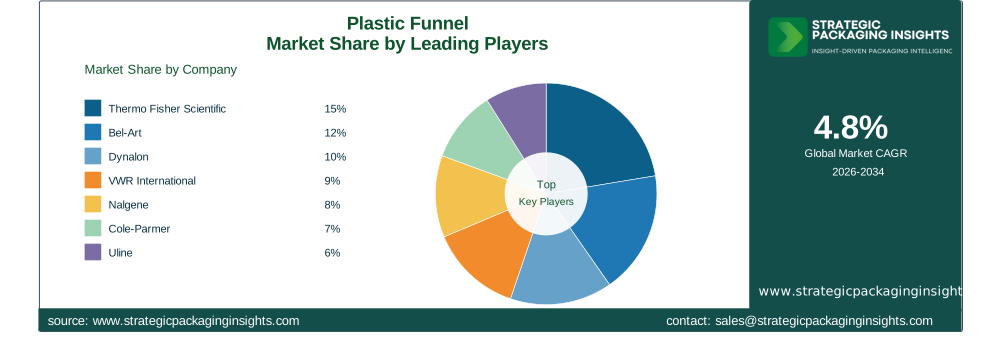
Thermo Fisher Scientific is a prominent player in the Plastic Funnel market, known for its comprehensive range of laboratory equipment and supplies. The company's commitment to innovation and quality has earned it a strong reputation among consumers and industry professionals alike. Similarly, Bel-Art is recognized for its diverse product offerings and focus on customer satisfaction. The company's ability to adapt to changing market trends and consumer preferences has contributed to its success in the market.
Dynalon is another key player in the Plastic Funnel market, offering a wide range of products that cater to various industries, including automotive, laboratory, and industrial applications. The company's emphasis on product innovation and quality assurance has enabled it to build a loyal customer base and expand its market presence. VWR International, Nalgene, and Cole-Parmer are also notable players in the market, known for their extensive product lines and commitment to sustainability.
Uline, Justrite, Kartell Labware, and DWK Life Sciences are other significant players in the Plastic Funnel market, each with its unique strengths and market strategies. These companies have established themselves as leaders in the industry by consistently delivering high-quality products and innovative solutions that meet the diverse needs of consumers. Their focus on research and development, coupled with strategic partnerships and collaborations, has enabled them to maintain a competitive edge in the market.
Key Highlights
- Market Size: The Plastic Funnel market was valued at USD 626.83 million in 2025 and is projected to reach USD 955.88 million by 2034.
- Growth Rate: The market is expected to grow at a CAGR of 4.8% during the forecast period.
- Leading Companies: Key players include Thermo Fisher Scientific, Bel-Art, Dynalon, and VWR International.
- Material Type: PP, HDPE, LDPE, and PVC are the primary materials used in manufacturing plastic funnels.
- Product Type: The market includes standard funnels, filter funnels, dispensing funnels, and laboratory funnels.
- Application Areas: Major applications include automotive fluids, chemicals, food, and laboratory settings.
- Regional Insights: Asia Pacific is expected to witness significant growth due to industrialization and urbanization.
Plastic Funnel Market Segments Insights

Material Type Analysis
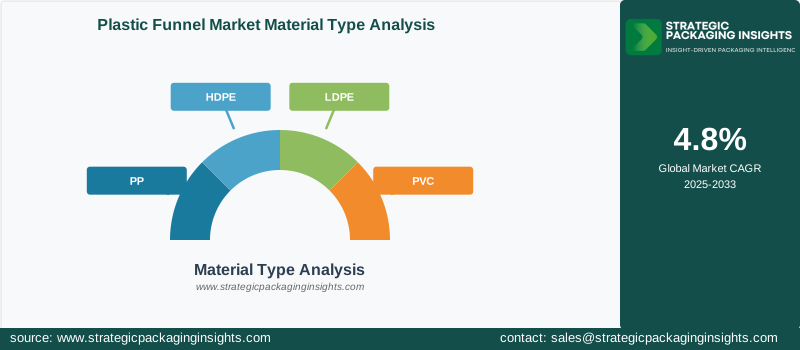
The Plastic Funnel market is segmented by material type, including PP, HDPE, LDPE, and PVC. Each material offers unique properties that cater to specific industry needs. PP is favored for its chemical resistance and durability, making it ideal for laboratory and industrial applications. HDPE is known for its high strength-to-density ratio, which is beneficial for automotive and chemical applications. LDPE, with its flexibility and transparency, is often used in food and household applications. PVC, on the other hand, is valued for its versatility and cost-effectiveness, making it a popular choice across various sectors. The demand for these materials is driven by their ability to meet the diverse requirements of different applications, thereby contributing to the overall growth of the market.
Manufacturers are continuously exploring new material technologies to enhance the performance and sustainability of plastic funnels. The focus on eco-friendly materials and recyclable options is gaining traction, as companies aim to reduce their environmental impact and comply with regulatory standards. This trend is prompting innovation in material science, leading to the development of advanced materials that offer improved functionality and sustainability. As a result, the material type segment is expected to witness significant growth, driven by the increasing demand for high-performance and sustainable solutions.
Product Type Analysis
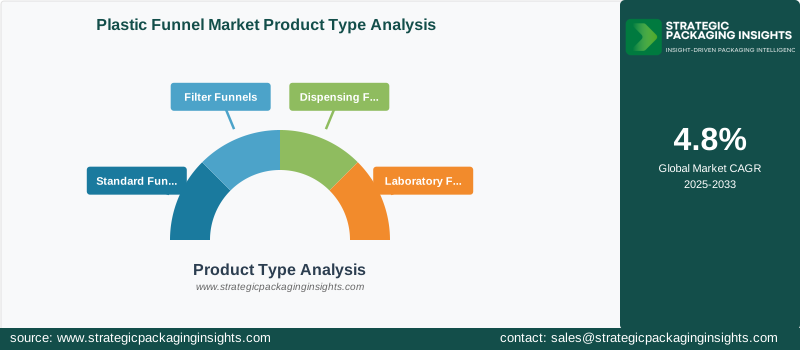
The Plastic Funnel market is categorized by product type, including standard funnels, filter funnels, dispensing funnels, and laboratory funnels. Standard funnels are widely used for general fluid transfer applications, while filter funnels are designed for separating solids from liquids. Dispensing funnels are equipped with features that allow for precise and controlled pouring, making them ideal for automotive and laboratory settings. Laboratory funnels, on the other hand, are specifically designed for scientific and research applications, offering high precision and reliability. The diverse range of product types caters to the specific needs of various industries, driving the demand for plastic funnels.
Innovation in product design and functionality is a key trend in the product type segment. Manufacturers are focusing on developing funnels with enhanced features, such as ergonomic designs, anti-spill mechanisms, and chemical resistance, to meet the evolving needs of consumers. This focus on innovation is driving competition among market players, as companies strive to differentiate their products and expand their market presence. As a result, the product type segment is expected to experience robust growth, fueled by the increasing demand for specialized and high-performance solutions.
Application Analysis
The Plastic Funnel market is segmented by application, including automotive fluids, chemicals, food, and laboratory settings. The automotive industry is a major consumer of plastic funnels, as they are essential for fluid transfer and maintenance tasks. The chemical industry also relies heavily on plastic funnels for handling and transferring various chemicals safely and efficiently. In the food industry, plastic funnels are used for transferring liquids and powders, ensuring hygiene and precision. Laboratory settings require high-quality funnels for scientific experiments and research, where accuracy and reliability are paramount. The diverse applications of plastic funnels across these industries are driving their demand and contributing to market growth.
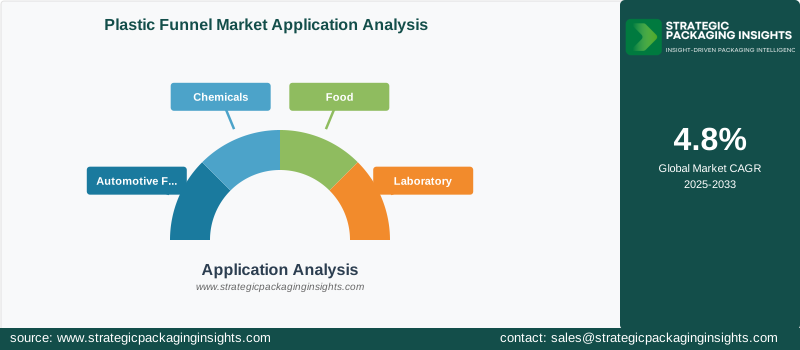
As industries continue to expand and evolve, the demand for plastic funnels is expected to rise. The increasing focus on efficiency and precision in fluid handling is prompting companies to invest in advanced funnel technologies that offer enhanced performance and safety. This trend is driving innovation in the application segment, as manufacturers develop products that cater to the specific needs of different industries. As a result, the application segment is poised for significant growth, driven by the increasing demand for reliable and high-performance fluid transfer solutions.
End Use Analysis
The Plastic Funnel market is segmented by end use, including industrial, automotive, laboratories, and households. Industrial applications require durable and reliable funnels for handling various fluids and chemicals, making them a significant consumer of plastic funnels. The automotive sector also relies heavily on plastic funnels for maintenance and repair tasks, where precision and efficiency are crucial. Laboratories require high-quality funnels for scientific experiments and research, where accuracy and reliability are paramount. Households use plastic funnels for everyday tasks, such as transferring liquids and powders, where convenience and ease of use are important factors. The diverse end-use applications of plastic funnels are driving their demand and contributing to market growth.
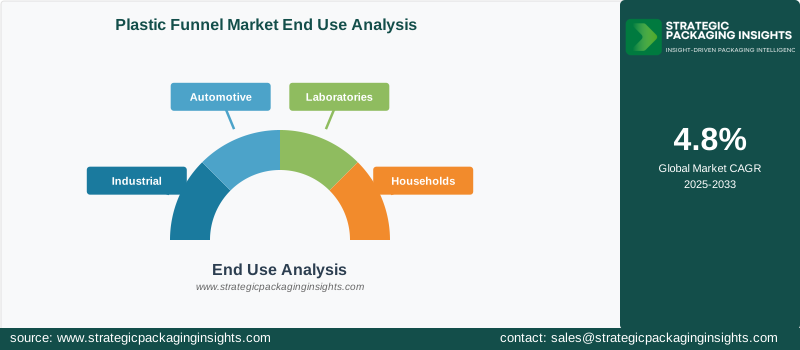
Manufacturers are focusing on developing funnels that cater to the specific needs of different end-use applications. This focus on customization and specialization is driving innovation in the end-use segment, as companies strive to meet the evolving needs of consumers. As a result, the end-use segment is expected to experience robust growth, fueled by the increasing demand for specialized and high-performance solutions. The growing emphasis on sustainability and eco-friendly practices is also influencing the development of end-use products, as companies aim to reduce their environmental impact and comply with regulatory standards.
Plastic Funnel Market Segments
The Plastic Funnel market has been segmented on the basis ofMaterial Type
- PP
- HDPE
- LDPE
- PVC
Product Type
- Standard Funnels
- Filter Funnels
- Dispensing Funnels
- Laboratory Funnels
Application
- Automotive Fluids
- Chemicals
- Food
- Laboratory
End Use
- Industrial
- Automotive
- Laboratories
- Households
Region
- Asia Pacific
- North America
- Latin America
- Europe
- Middle East & Africa




