


Plastic Fillers Market Outlook
The Plastic Fillers market was valued at $1.42 billion in 2025 and is projected to reach $2.45 billion by 2034, growing at a CAGR of 5.7% during the forecast period 2026-2034. This growth is driven by the increasing demand for lightweight and cost-effective materials in various industries such as automotive, construction, and packaging. The use of plastic fillers enhances the mechanical properties of polymers, making them more suitable for a wide range of applications. The market is also benefiting from advancements in filler technology, which are leading to the development of new and improved filler materials that offer better performance and environmental benefits.
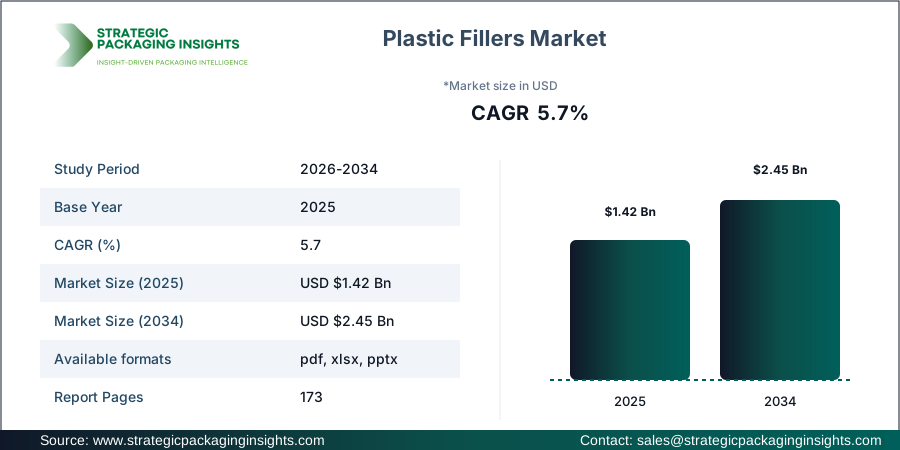
However, the market faces certain restraints, including stringent environmental regulations regarding the use of plastics and fillers. These regulations are pushing manufacturers to develop eco-friendly alternatives, which could increase production costs. Despite these challenges, the market holds significant growth potential due to the rising demand for sustainable and recyclable materials. The increasing focus on reducing carbon footprints and enhancing the durability of plastic products is expected to create new opportunities for market players. Additionally, the growing trend of using fillers in 3D printing and other advanced manufacturing processes is likely to further boost market growth.
Report Scope
| Attributes | Details |
| Report Title | Plastic Fillers Market Size, Future Growth and Forecast 2034 |
| Filler Type | Calcium Carbonate, Talc, Glass Fibers, Silica, Mica |
| Polymer Type | PP, PE, PVC, Engineering Plastics |
| Application | Packaging, Automotive, Construction, Consumer Goods |
| End Use | Compounders, Plastics Processors, Packaging Manufacturers, Automotive Suppliers |
| Region | Asia Pacific, North America, Latin America, Europe, Middle East & Africa |
| Base Year | 2025 |
| Historic Period | 2018-2024 |
| Forecast Period | 2026-2034 |
| Number of Pages | 173 |
| Customization Available | Yes* |
Opportunities & Threats
The Plastic Fillers market presents numerous opportunities, particularly in the development of eco-friendly and sustainable filler materials. As environmental concerns continue to rise, there is a growing demand for biodegradable and recyclable fillers that can reduce the environmental impact of plastic products. This trend is encouraging manufacturers to invest in research and development to create innovative filler solutions that meet these sustainability criteria. Furthermore, the increasing adoption of plastic fillers in emerging markets, where industrialization and urbanization are rapidly progressing, offers significant growth prospects. These regions are witnessing a surge in demand for lightweight and durable materials, which is expected to drive the market for plastic fillers.
Another opportunity lies in the expanding applications of plastic fillers in advanced manufacturing technologies such as 3D printing. The ability of fillers to enhance the properties of 3D printed materials is opening new avenues for market growth. As industries continue to explore the potential of 3D printing for mass production, the demand for high-performance fillers is expected to rise. Additionally, the automotive industry's shift towards electric vehicles is creating a need for lightweight materials, further boosting the demand for plastic fillers. This trend is likely to continue as manufacturers seek to improve the efficiency and performance of electric vehicles.
Despite these opportunities, the market faces threats from regulatory challenges and fluctuating raw material prices. Stringent regulations on the use of certain fillers, particularly those that are not environmentally friendly, could hinder market growth. Manufacturers are under pressure to comply with these regulations, which may require significant investments in new technologies and processes. Additionally, the volatility in raw material prices can impact the profitability of filler manufacturers, as they may struggle to pass on cost increases to customers. These challenges highlight the need for strategic planning and innovation to navigate the complex regulatory landscape and maintain competitiveness in the market.
Drivers & Challenges
The primary drivers of the Plastic Fillers market include the increasing demand for lightweight and cost-effective materials across various industries. The automotive sector, in particular, is a major driver, as manufacturers seek to reduce vehicle weight to improve fuel efficiency and meet stringent emission standards. Plastic fillers play a crucial role in achieving these objectives by enhancing the mechanical properties of polymers, making them suitable for use in automotive components. Additionally, the construction industry's growing focus on sustainable building materials is driving the demand for plastic fillers, as they offer improved durability and performance.
Technological advancements in filler materials are also driving market growth. Innovations in filler technology are leading to the development of new materials that offer superior performance and environmental benefits. These advancements are enabling manufacturers to produce high-quality fillers that meet the evolving needs of various industries. Furthermore, the increasing use of fillers in packaging applications is contributing to market growth, as they help reduce material costs and improve the strength and durability of packaging products. The rising demand for flexible and lightweight packaging solutions is expected to further boost the market for plastic fillers.
However, the market faces several challenges, including regulatory pressures and environmental concerns. Stringent regulations on the use of certain fillers, particularly those that are not environmentally friendly, pose a significant challenge for manufacturers. Compliance with these regulations requires substantial investments in research and development to develop eco-friendly alternatives. Additionally, the market is challenged by the fluctuating prices of raw materials, which can impact the profitability of filler manufacturers. These challenges underscore the importance of innovation and strategic planning to navigate the complex regulatory landscape and maintain competitiveness in the market.
Market Share Analysis
The competitive landscape of the Plastic Fillers market is characterized by the presence of several key players who are actively engaged in product development and innovation to maintain their market position. Companies such as Imerys, Omya, and Minerals Technologies hold significant market shares due to their extensive product portfolios and strong distribution networks. These companies are focused on expanding their product offerings and enhancing their production capabilities to meet the growing demand for plastic fillers. Additionally, they are investing in research and development to create innovative filler solutions that offer superior performance and environmental benefits.
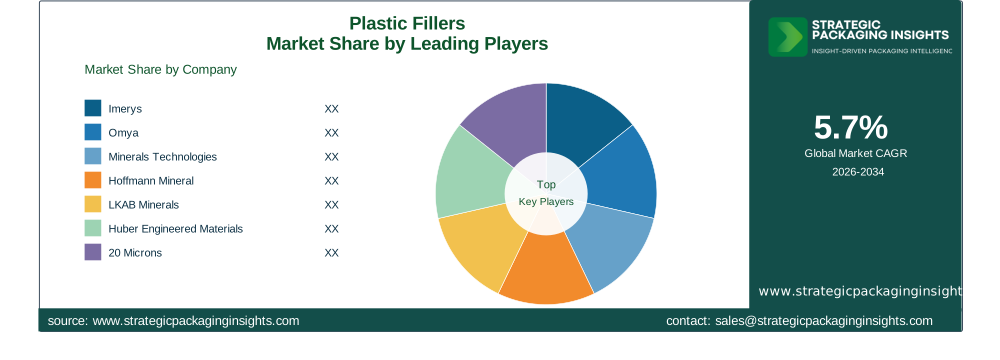
Imerys is a leading player in the market, known for its wide range of high-performance fillers that cater to various industries. The company has a strong presence in the global market and is continuously expanding its product portfolio to include eco-friendly and sustainable filler solutions. Omya, another major player, is recognized for its expertise in calcium carbonate fillers, which are widely used in the plastics industry. The company is focused on developing innovative filler materials that meet the evolving needs of its customers.
Minerals Technologies is a prominent player in the market, offering a diverse range of filler products that are used in various applications. The company is committed to sustainability and is actively working on developing eco-friendly filler solutions. Hoffmann Mineral and LKAB Minerals are also key players in the market, known for their high-quality filler products and strong customer relationships. These companies are focused on expanding their market presence through strategic partnerships and collaborations.
Huber Engineered Materials, 20 Microns, and Quarzwerke Group are other notable players in the market, each with a strong focus on innovation and product development. These companies are investing in research and development to create advanced filler materials that offer enhanced performance and environmental benefits. Nippon Talc and Sibelco are also key players in the market, known for their high-quality talc and silica fillers, respectively. These companies are focused on expanding their product offerings and enhancing their production capabilities to meet the growing demand for plastic fillers.
Key Highlights
- The Plastic Fillers market is projected to grow at a CAGR of 5.7% from 2026 to 2034.
- Increasing demand for lightweight and cost-effective materials is driving market growth.
- Technological advancements in filler materials are leading to the development of new and improved products.
- Stringent environmental regulations are pushing manufacturers to develop eco-friendly filler solutions.
- The automotive industry's shift towards electric vehicles is boosting the demand for plastic fillers.
- Emerging markets are witnessing a surge in demand for plastic fillers due to rapid industrialization and urbanization.
- The use of fillers in 3D printing is opening new avenues for market growth.
- Fluctuating raw material prices pose a challenge for filler manufacturers.
- Key players are focused on expanding their product portfolios and enhancing their production capabilities.
Top Countries Insights
In the Plastic Fillers market, the United States holds a significant share, driven by the strong demand from the automotive and packaging industries. The market in the U.S. is expected to grow at a CAGR of 5%, supported by technological advancements and the increasing focus on sustainable materials. Government policies promoting the use of eco-friendly materials are also contributing to market growth. However, challenges such as stringent environmental regulations and fluctuating raw material prices may impact market dynamics.
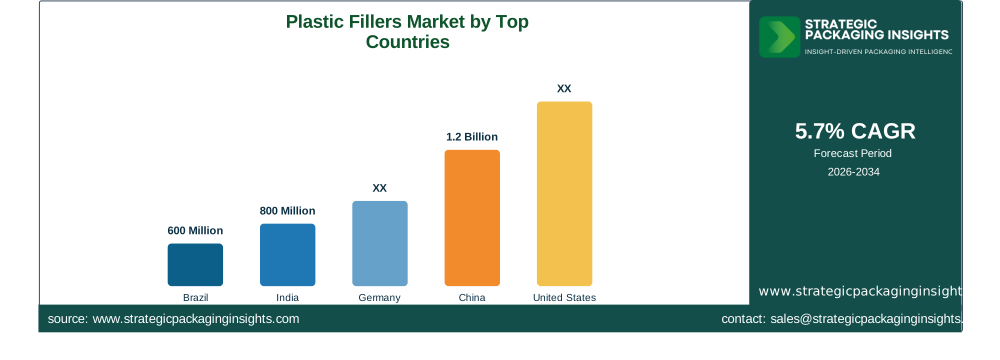
China is another major player in the Plastic Fillers market, with a market size of approximately $1.2 billion. The country's rapid industrialization and urbanization are driving the demand for plastic fillers, particularly in the construction and automotive sectors. The market in China is projected to grow at a CAGR of 7%, supported by government initiatives to promote sustainable development and reduce carbon emissions. However, the market faces challenges from regulatory pressures and the need for technological advancements.
Germany is a key market for plastic fillers in Europe, with a strong focus on innovation and sustainability. The market in Germany is expected to grow at a CAGR of 4%, driven by the demand from the automotive and packaging industries. The country's stringent environmental regulations are pushing manufacturers to develop eco-friendly filler solutions, which is creating opportunities for market growth. However, the market faces challenges from fluctuating raw material prices and the need for technological advancements.
India is emerging as a significant market for plastic fillers, with a market size of approximately $800 million. The country's rapid industrialization and urbanization are driving the demand for plastic fillers, particularly in the construction and automotive sectors. The market in India is projected to grow at a CAGR of 8%, supported by government initiatives to promote sustainable development and reduce carbon emissions. However, the market faces challenges from regulatory pressures and the need for technological advancements.
Brazil is another important market for plastic fillers, with a market size of approximately $600 million. The country's growing construction and automotive industries are driving the demand for plastic fillers. The market in Brazil is expected to grow at a CAGR of 6%, supported by government initiatives to promote sustainable development and reduce carbon emissions. However, the market faces challenges from regulatory pressures and the need for technological advancements.
Plastic Fillers Market Segments Insights

Filler Type Analysis
The filler type segment of the Plastic Fillers market is dominated by calcium carbonate, which is widely used due to its cost-effectiveness and ability to enhance the mechanical properties of polymers. Calcium carbonate fillers are extensively used in the packaging and construction industries, where they help reduce material costs and improve product durability. The demand for talc fillers is also significant, particularly in the automotive industry, where they are used to improve the stiffness and heat resistance of plastic components. Glass fibers are gaining traction in high-performance applications, offering superior strength and durability.
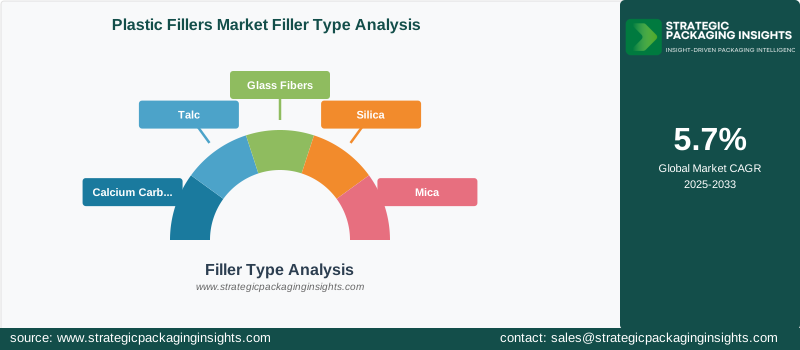
Silica fillers are increasingly being used in advanced manufacturing processes, such as 3D printing, due to their ability to enhance the properties of printed materials. The demand for mica fillers is also growing, driven by their use in applications requiring high thermal and electrical insulation. The market for filler types is characterized by continuous innovation, with manufacturers focusing on developing new and improved filler materials that offer better performance and environmental benefits. The increasing focus on sustainability is driving the demand for eco-friendly fillers, which is expected to create new opportunities for market growth.
Polymer Type Analysis
The polymer type segment of the Plastic Fillers market is led by polypropylene (PP), which is widely used due to its versatility and cost-effectiveness. PP fillers are extensively used in the automotive and packaging industries, where they help reduce material costs and improve product performance. Polyethylene (PE) fillers are also in high demand, particularly in the construction industry, where they are used to enhance the durability and strength of building materials. The demand for polyvinyl chloride (PVC) fillers is significant, driven by their use in applications requiring high chemical resistance and durability.
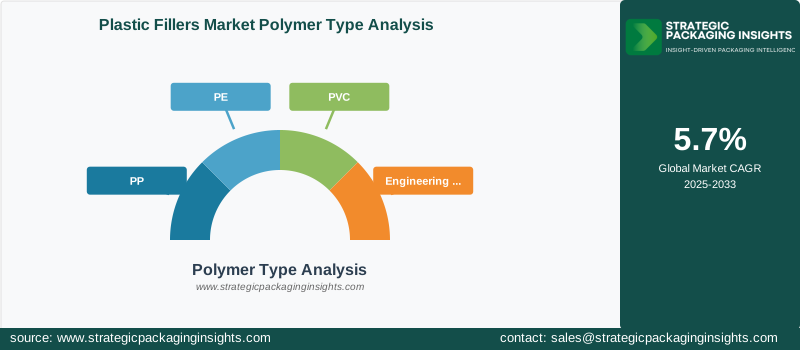
Engineering plastics are gaining traction in high-performance applications, offering superior mechanical properties and thermal stability. The market for polymer types is characterized by continuous innovation, with manufacturers focusing on developing new and improved filler materials that offer better performance and environmental benefits. The increasing focus on sustainability is driving the demand for eco-friendly fillers, which is expected to create new opportunities for market growth. The growing trend of using fillers in advanced manufacturing processes, such as 3D printing, is also contributing to the demand for high-performance polymer fillers.
Application Analysis
The application segment of the Plastic Fillers market is dominated by the packaging industry, which is the largest consumer of plastic fillers. The demand for fillers in packaging applications is driven by the need for lightweight and durable materials that can reduce material costs and improve product performance. The automotive industry is another major consumer of plastic fillers, where they are used to enhance the mechanical properties of plastic components and reduce vehicle weight. The construction industry is also a significant consumer of plastic fillers, where they are used to improve the durability and strength of building materials.
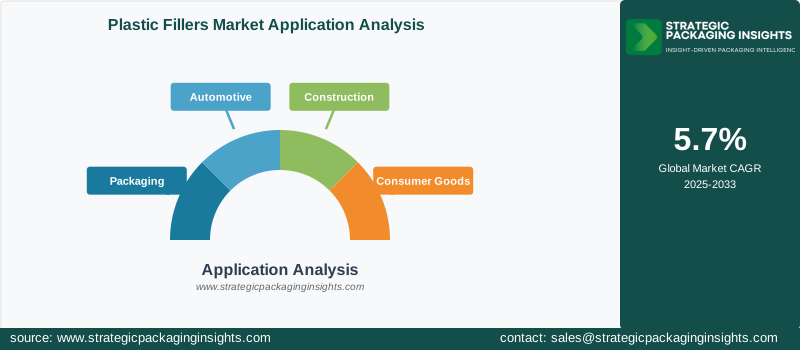
The consumer goods industry is witnessing a growing demand for plastic fillers, driven by the need for lightweight and cost-effective materials that can enhance product performance. The market for applications is characterized by continuous innovation, with manufacturers focusing on developing new and improved filler materials that offer better performance and environmental benefits. The increasing focus on sustainability is driving the demand for eco-friendly fillers, which is expected to create new opportunities for market growth. The growing trend of using fillers in advanced manufacturing processes, such as 3D printing, is also contributing to the demand for high-performance application fillers.
End Use Analysis
The end use segment of the Plastic Fillers market is led by compounders, who are the largest consumers of plastic fillers. Compounders use fillers to enhance the mechanical properties of polymers and reduce material costs. Plastics processors are also significant consumers of plastic fillers, where they are used to improve the performance and durability of plastic products. Packaging manufacturers are another major consumer of plastic fillers, where they are used to reduce material costs and improve the strength and durability of packaging products.
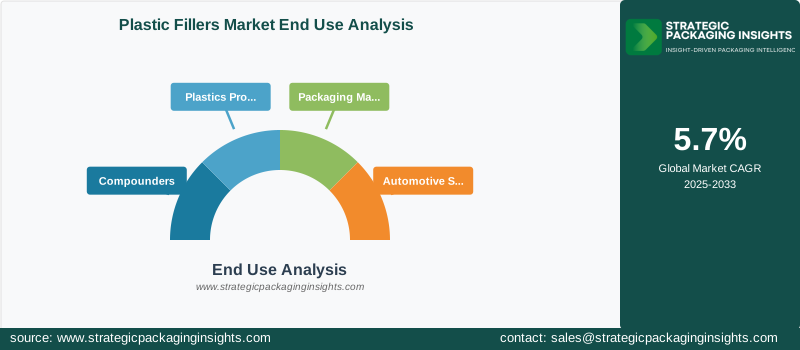
Automotive suppliers are witnessing a growing demand for plastic fillers, driven by the need for lightweight and cost-effective materials that can enhance the performance of automotive components. The market for end uses is characterized by continuous innovation, with manufacturers focusing on developing new and improved filler materials that offer better performance and environmental benefits. The increasing focus on sustainability is driving the demand for eco-friendly fillers, which is expected to create new opportunities for market growth. The growing trend of using fillers in advanced manufacturing processes, such as 3D printing, is also contributing to the demand for high-performance end use fillers.
Plastic Fillers Market Segments
The Plastic Fillers market has been segmented on the basis ofFiller Type
- Calcium Carbonate
- Talc
- Glass Fibers
- Silica
- Mica
Polymer Type
- PP
- PE
- PVC
- Engineering Plastics
Application
- Packaging
- Automotive
- Construction
- Consumer Goods
End Use
- Compounders
- Plastics Processors
- Packaging Manufacturers
- Automotive Suppliers
Region
- Asia Pacific
- North America
- Latin America
- Europe
- Middle East & Africa




