


Plastic Caulk Tube Market Outlook
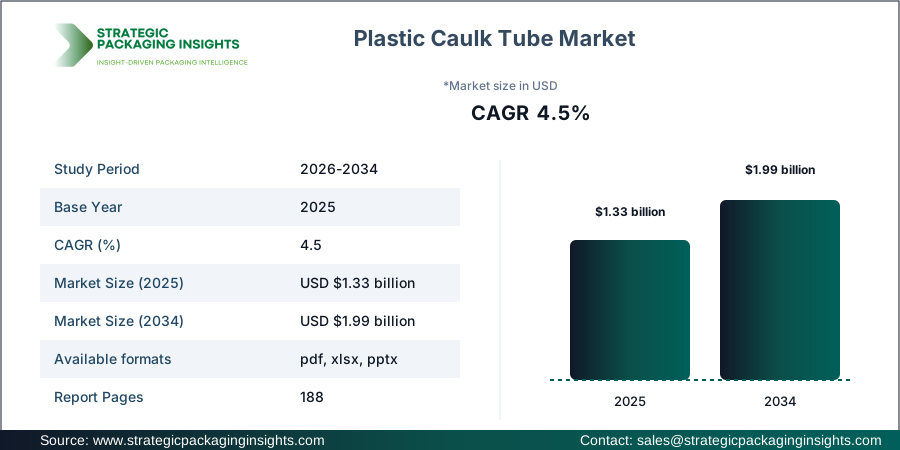
The Plastic Caulk Tube market was valued at $1.33 billion in 2025 and is projected to reach $1.99 billion by 2034, growing at a CAGR of 4.5% during the forecast period 2026-2034. This growth is driven by increasing demand in the construction and DIY sectors, where plastic caulk tubes are extensively used for sealing and adhesive applications. The market is also benefiting from advancements in material technology, which are enhancing the durability and performance of plastic caulk tubes. Additionally, the rise in renovation and remodeling activities across residential and commercial spaces is further propelling market demand. The shift towards sustainable and recyclable materials is also influencing market dynamics, as manufacturers are increasingly focusing on eco-friendly solutions.
Despite the promising growth prospects, the market faces certain challenges. Regulatory constraints related to plastic usage and environmental concerns are significant restraining factors. Governments worldwide are implementing stringent regulations to curb plastic waste, which could impact the production and usage of plastic caulk tubes. However, the market holds potential for growth through innovations in biodegradable and recycled plastic materials. Companies are investing in research and development to create sustainable alternatives that comply with environmental standards. The increasing adoption of green building practices is also expected to create new opportunities for market expansion.
Report Scope
| Attributes | Details |
| Report Title | Plastic Caulk Tube Market Size, Future Growth and Forecast 2034 |
| By Material Type | HDPE, PP, PE, Recycled Plastic |
| By Capacity | Below 300 ml, 300–500 ml, Above 500 ml |
| By Application | Sealants, Adhesives, Construction Chemicals, Industrial Compounds |
| By End Use | Construction, DIY, Industrial, Automotive |
| Region | Asia Pacific, North America, Latin America, Europe, Middle East & Africa |
| Base Year | 2025 |
| Historic Period | 2018-2024 |
| Forecast Period | 2026-2034 |
| Number of Pages | 188 |
| Customization Available | Yes* |
Opportunities & Threats
The Plastic Caulk Tube market presents numerous opportunities, particularly in the realm of sustainable packaging solutions. As environmental awareness grows, there is a significant push towards reducing plastic waste and enhancing recyclability. This trend is encouraging manufacturers to innovate and develop caulk tubes made from recycled plastics or biodegradable materials. Such advancements not only align with global sustainability goals but also cater to the increasing consumer demand for eco-friendly products. Additionally, the expanding construction industry, especially in emerging economies, offers a lucrative opportunity for market players to expand their footprint and increase their market share.
Another opportunity lies in the customization and diversification of product offerings. With the rise of DIY culture and home improvement projects, there is a growing demand for caulk tubes that cater to specific consumer needs, such as varying capacities and specialized applications. Companies that can offer a wide range of products tailored to different end-use applications stand to gain a competitive edge. Furthermore, the integration of advanced technologies in manufacturing processes can lead to cost efficiencies and improved product quality, further driving market growth.
However, the market is not without its threats. One of the primary challenges is the fluctuating prices of raw materials, which can impact production costs and profit margins. Additionally, the increasing regulatory scrutiny on plastic products poses a threat to market stability. Companies must navigate complex compliance requirements and adapt to changing regulations, which can be resource-intensive. The competitive landscape is also intensifying, with numerous players vying for market share, leading to price wars and reduced profitability.
Drivers & Challenges
The Plastic Caulk Tube market is primarily driven by the robust growth of the construction industry. As urbanization accelerates and infrastructure projects multiply, the demand for construction materials, including caulk tubes, is on the rise. These tubes are essential for sealing and bonding applications, making them indispensable in construction activities. Additionally, the increasing trend of home renovation and remodeling is further boosting the demand for caulk tubes, as consumers seek to enhance the aesthetics and functionality of their living spaces. The DIY culture, fueled by online tutorials and home improvement shows, is also contributing to market growth.
Technological advancements in material science are another significant driver. Innovations in plastic formulations have led to the development of caulk tubes that offer superior performance, such as enhanced durability, flexibility, and resistance to environmental factors. These advancements are attracting consumers who prioritize quality and longevity in their purchases. Moreover, the shift towards sustainable materials is driving manufacturers to explore eco-friendly alternatives, which is expected to open new avenues for market growth.
Despite these drivers, the market faces several challenges. Environmental concerns regarding plastic waste and pollution are major hurdles. Governments and environmental organizations are advocating for reduced plastic usage, which could impact the production and consumption of plastic caulk tubes. Additionally, the market is highly competitive, with numerous players offering similar products, leading to price competition and margin pressures. Companies must continuously innovate and differentiate their offerings to maintain a competitive edge. The volatility in raw material prices also poses a challenge, as it can affect production costs and pricing strategies.
Market Share Analysis
The competitive landscape of the Plastic Caulk Tube market is characterized by the presence of several key players who are actively engaged in product innovation and strategic partnerships to enhance their market position. Berry Global, a leading player in the market, holds a significant share due to its extensive product portfolio and strong distribution network. The company is known for its focus on sustainability and innovation, which has helped it maintain a competitive edge. Sonoco, another major player, is recognized for its diverse range of packaging solutions and commitment to environmental responsibility.
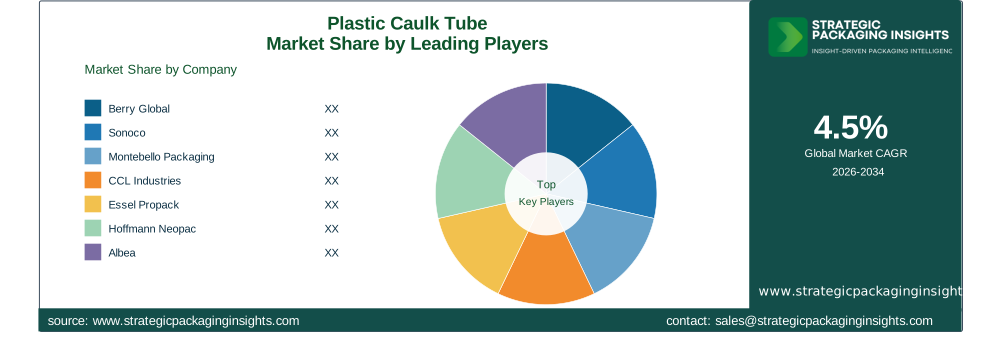
Montebello Packaging and CCL Industries are also prominent players in the market, known for their high-quality products and customer-centric approach. Montebello Packaging specializes in aluminum and laminate tubes, while CCL Industries offers a wide range of packaging solutions, including plastic caulk tubes. Essel Propack, a global leader in laminated plastic tubes, is expanding its presence in the caulk tube market by leveraging its expertise in tube manufacturing and innovation.
Hoffmann Neopac and Albea are key players focusing on sustainable packaging solutions. Hoffmann Neopac is known for its eco-design initiatives and commitment to reducing environmental impact, while Albea offers a comprehensive range of packaging solutions with a focus on sustainability. Linhardt, Kaufman Container, and Berlin Packaging are also significant contributors to the market, each bringing unique strengths and capabilities to the table. Linhardt is recognized for its innovative packaging designs, Kaufman Container for its extensive product customization options, and Berlin Packaging for its robust supply chain and customer service excellence.
Key Highlights
- The Plastic Caulk Tube market is projected to grow at a CAGR of 4.5% from 2026 to 2034.
- Increasing demand from the construction and DIY sectors is a major growth driver.
- Advancements in material technology are enhancing product performance and durability.
- Regulatory constraints on plastic usage pose a significant challenge to market growth.
- Manufacturers are focusing on developing eco-friendly and recyclable caulk tubes.
- Customization and diversification of product offerings are key strategies for market players.
- Fluctuating raw material prices can impact production costs and profit margins.
- The competitive landscape is characterized by numerous players and intense competition.
- Technological advancements in manufacturing processes are leading to cost efficiencies.
- Environmental concerns and regulatory scrutiny are influencing market dynamics.
Top Countries Insights
In the Plastic Caulk Tube market, the United States stands out as a leading country, with a market size of approximately $350 million and a CAGR of 5%. The growth is driven by the robust construction industry and the increasing trend of DIY home improvement projects. The presence of major manufacturers and a strong distribution network further bolster the market. However, regulatory challenges related to plastic usage and environmental concerns are key issues that need addressing.
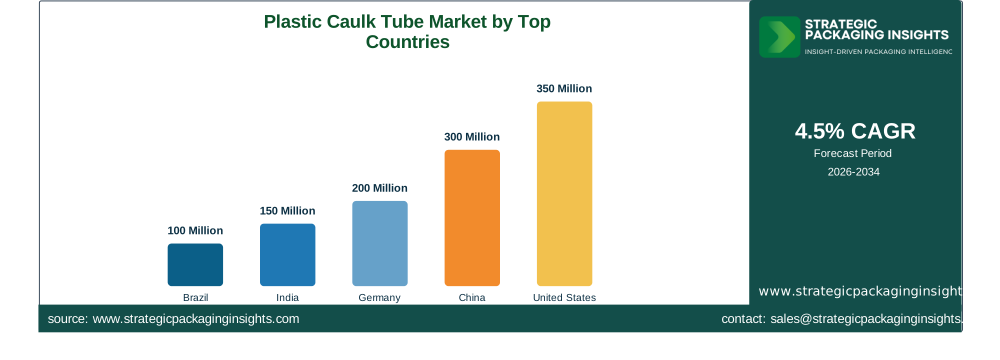
China is another significant player in the market, with a market size of around $300 million and a CAGR of 6%. The country's rapid urbanization and infrastructure development are major growth drivers. Additionally, the government's focus on sustainable development and environmental protection is encouraging the adoption of eco-friendly packaging solutions. However, the market faces challenges related to regulatory compliance and the need for technological advancements in manufacturing processes.
Germany, with a market size of approximately $200 million and a CAGR of 4%, is a key market in Europe. The country's strong industrial base and emphasis on quality and innovation are driving market growth. The increasing adoption of green building practices and sustainable materials is also contributing to the market's expansion. However, stringent regulations on plastic usage and environmental concerns pose challenges to market players.
India, with a market size of about $150 million and a CAGR of 7%, is an emerging market with significant growth potential. The country's booming construction industry and rising consumer awareness about sustainable products are key growth drivers. However, the market faces challenges related to infrastructure development and regulatory compliance. The government's initiatives to promote sustainable development and reduce plastic waste are expected to create new opportunities for market players.
Brazil, with a market size of approximately $100 million and a CAGR of 5%, is a key market in Latin America. The country's growing construction industry and increasing demand for DIY products are driving market growth. However, economic instability and regulatory challenges related to plastic usage are significant hurdles. The market is expected to benefit from the government's focus on sustainable development and environmental protection.
Plastic Caulk Tube Market Segments Insights

By Material Type Analysis
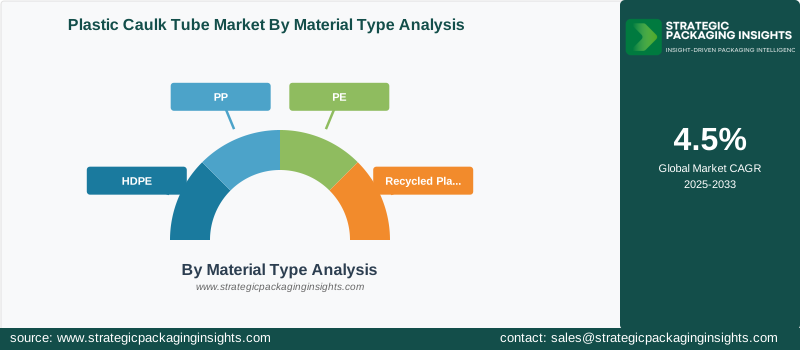
The Plastic Caulk Tube market is segmented by material type into HDPE, PP, PE, and Recycled Plastic. HDPE is widely used due to its high strength-to-density ratio, making it ideal for heavy-duty applications. The demand for HDPE caulk tubes is driven by their durability and resistance to environmental stressors. PP and PE are also popular choices, offering flexibility and cost-effectiveness. The growing emphasis on sustainability is boosting the demand for recycled plastic caulk tubes, as manufacturers and consumers alike seek eco-friendly alternatives. The development of advanced recycling technologies is expected to further enhance the quality and performance of recycled plastic tubes.
Manufacturers are focusing on material innovations to improve the performance and sustainability of plastic caulk tubes. The use of bio-based plastics is gaining traction, as it offers a renewable and biodegradable alternative to traditional plastics. This trend is expected to drive market growth, as consumers become more environmentally conscious and demand sustainable products. Additionally, the integration of advanced manufacturing technologies is enabling the production of high-quality caulk tubes with enhanced properties, such as improved adhesion and resistance to temperature fluctuations.
By Capacity Analysis
The market is segmented by capacity into Below 300 ml, 300-500 ml, and Above 500 ml. The 300-500 ml segment is the most popular, as it offers a balance between convenience and capacity, making it suitable for a wide range of applications. The demand for caulk tubes in this capacity range is driven by their versatility and ease of use, particularly in DIY and home improvement projects. The Below 300 ml segment is gaining traction among consumers who require smaller quantities for specific applications, such as touch-ups and minor repairs.

The Above 500 ml segment is primarily used in industrial and construction applications, where larger quantities are needed for extensive projects. The demand for caulk tubes in this segment is driven by the growing construction industry and the increasing trend of large-scale infrastructure projects. Manufacturers are focusing on developing caulk tubes with enhanced performance characteristics, such as improved adhesion and resistance to environmental factors, to meet the demands of these applications. The integration of advanced manufacturing technologies is also enabling the production of high-quality caulk tubes with consistent performance and reliability.
By Application Analysis
The Plastic Caulk Tube market is segmented by application into Sealants, Adhesives, Construction Chemicals, and Industrial Compounds. Sealants and adhesives are the dominant segments, driven by their widespread use in construction and DIY projects. The demand for sealants is particularly high, as they are essential for preventing leaks and ensuring airtight seals in various applications. Adhesives are also in high demand, as they provide strong bonding solutions for a wide range of materials.

Construction chemicals and industrial compounds are also significant segments, driven by the growing construction industry and the increasing demand for specialized solutions. The use of construction chemicals is essential for enhancing the performance and durability of building materials, while industrial compounds are used in various manufacturing processes. Manufacturers are focusing on developing innovative solutions that offer superior performance and sustainability, as consumers become more environmentally conscious and demand eco-friendly products.
By End Use Analysis
The market is segmented by end use into Construction, DIY, Industrial, and Automotive. The construction segment is the largest, driven by the robust growth of the construction industry and the increasing demand for sealing and bonding solutions. The DIY segment is also significant, as consumers increasingly engage in home improvement projects and seek convenient and easy-to-use products. The demand for caulk tubes in the DIY segment is driven by the growing trend of home renovation and remodeling, as consumers seek to enhance the aesthetics and functionality of their living spaces.
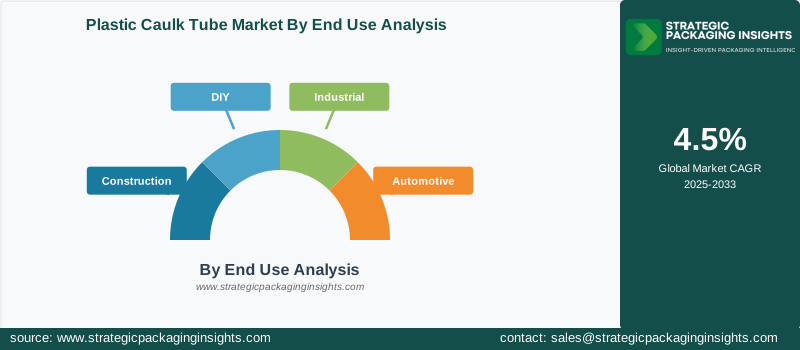
The industrial and automotive segments are also important, driven by the increasing demand for specialized solutions in various manufacturing processes. The use of caulk tubes in the automotive industry is essential for ensuring airtight seals and preventing leaks in various components. Manufacturers are focusing on developing high-performance caulk tubes that offer superior adhesion and resistance to environmental factors, to meet the demands of these applications. The integration of advanced manufacturing technologies is also enabling the production of high-quality caulk tubes with consistent performance and reliability.
Plastic Caulk Tube Market Segments
The Plastic Caulk Tube market has been segmented on the basis ofBy Material Type
- HDPE
- PP
- PE
- Recycled Plastic
By Capacity
- Below 300 ml
- 300–500 ml
- Above 500 ml
By Application
- Sealants
- Adhesives
- Construction Chemicals
- Industrial Compounds
By End Use
- Construction
- DIY
- Industrial
- Automotive
Region
- Asia Pacific
- North America
- Latin America
- Europe
- Middle East & Africa




