


Plant-Based Bioplastic Shrink Packaging Market Outlook
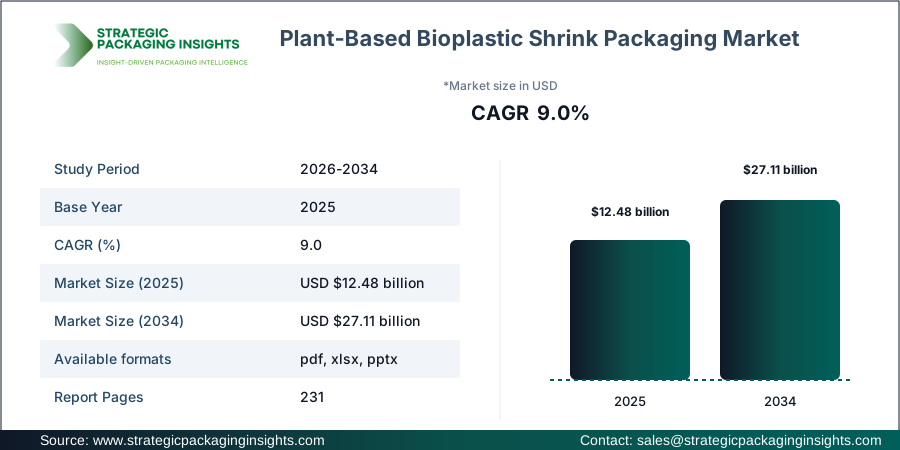
The Plant-Based Bioplastic Shrink Packaging market was valued at $12.48 billion in 2025 and is projected to reach $27.11 billion by 2034, growing at a CAGR of 9.0% during the forecast period 2026-2034. This market is witnessing significant growth due to the increasing demand for sustainable packaging solutions. The shift towards eco-friendly materials is driven by consumer awareness and stringent environmental regulations. The food and beverage industry, in particular, is a major contributor to this growth, as companies seek to reduce their carbon footprint and appeal to environmentally conscious consumers. The versatility and biodegradability of plant-based bioplastics make them an attractive alternative to traditional plastics, further fueling market expansion.
Despite the promising growth trajectory, the Plant-Based Bioplastic Shrink Packaging market faces several challenges. High production costs and limited availability of raw materials are significant restraints. Additionally, the market is subject to regulatory hurdles, as governments worldwide implement policies to control plastic waste. However, these challenges also present opportunities for innovation and investment in research and development. Companies are exploring new materials and production techniques to overcome these barriers and capitalize on the growing demand for sustainable packaging. The potential for growth in emerging markets, where environmental concerns are becoming more prominent, also offers a promising avenue for expansion.
Report Scope
| Attributes | Details |
| Report Title | Plant-Based Bioplastic Shrink Packaging Market Size, Future Growth and Forecast 2034 |
| By Material | PLA, PHA, Starch-based |
| By End Use | Food & Beverage, Cosmetics, Pharmaceuticals |
| By Packaging Type | Shrink Wrap, Films |
| Region | Asia Pacific, North America, Latin America, Europe, Middle East & Africa |
| Base Year | 2025 |
| Historic Period | 2018-2024 |
| Forecast Period | 2026-2034 |
| Number of Pages | 231 |
| Customization Available | Yes* |
Opportunities & Threats
The Plant-Based Bioplastic Shrink Packaging market presents numerous opportunities for growth, particularly in the food and beverage sector. As consumers become more environmentally conscious, there is a growing demand for sustainable packaging solutions. This shift in consumer preferences is driving companies to adopt plant-based bioplastics, which offer a biodegradable and eco-friendly alternative to traditional plastics. Additionally, advancements in bioplastic technology are enabling the development of new materials with improved properties, such as enhanced durability and flexibility. These innovations are expanding the range of applications for plant-based bioplastics, creating new opportunities for market growth.
Another significant opportunity lies in the expansion of the market in emerging economies. As these regions experience rapid industrialization and urbanization, there is an increasing need for sustainable packaging solutions to address environmental concerns. Governments in these countries are also implementing policies to reduce plastic waste, further driving the demand for plant-based bioplastics. Companies that can establish a strong presence in these markets stand to benefit from the growing demand for eco-friendly packaging solutions. Furthermore, collaborations and partnerships with local manufacturers can help companies navigate regulatory challenges and gain a competitive edge.
However, the market also faces threats that could hinder its growth. One of the primary challenges is the high cost of production, which can limit the adoption of plant-based bioplastics. The limited availability of raw materials, such as corn and sugarcane, also poses a threat to the market. Additionally, the market is subject to regulatory challenges, as governments worldwide implement policies to control plastic waste. These regulations can create barriers to entry for new players and increase compliance costs for existing companies. To mitigate these threats, companies must invest in research and development to improve production efficiency and explore alternative raw materials.
Drivers & Challenges
The Plant-Based Bioplastic Shrink Packaging market is driven by several key factors. One of the primary drivers is the increasing consumer awareness of environmental issues and the demand for sustainable packaging solutions. As consumers become more conscious of their environmental impact, they are seeking products that align with their values. This shift in consumer preferences is driving companies to adopt plant-based bioplastics, which offer a biodegradable and eco-friendly alternative to traditional plastics. Additionally, advancements in bioplastic technology are enabling the development of new materials with improved properties, such as enhanced durability and flexibility. These innovations are expanding the range of applications for plant-based bioplastics, creating new opportunities for market growth.
Another significant driver is the implementation of stringent environmental regulations by governments worldwide. These regulations are aimed at reducing plastic waste and promoting the use of sustainable materials. As a result, companies are being compelled to adopt eco-friendly packaging solutions, such as plant-based bioplastics, to comply with these regulations. The food and beverage industry, in particular, is a major contributor to this growth, as companies seek to reduce their carbon footprint and appeal to environmentally conscious consumers. The versatility and biodegradability of plant-based bioplastics make them an attractive alternative to traditional plastics, further fueling market expansion.
Despite the promising growth trajectory, the Plant-Based Bioplastic Shrink Packaging market faces several challenges. High production costs and limited availability of raw materials are significant restraints. The cost of producing plant-based bioplastics is higher than that of traditional plastics, which can limit their adoption. Additionally, the market is subject to regulatory hurdles, as governments worldwide implement policies to control plastic waste. These regulations can create barriers to entry for new players and increase compliance costs for existing companies. To overcome these challenges, companies must invest in research and development to improve production efficiency and explore alternative raw materials.
Market Share Analysis
The competitive landscape of the Plant-Based Bioplastic Shrink Packaging market is characterized by the presence of several key players. These companies are actively engaged in research and development to innovate and expand their product offerings. The market is highly competitive, with companies vying for market share through strategic partnerships, mergers, and acquisitions. The focus on sustainability and eco-friendly packaging solutions has led to increased competition, as companies strive to meet the growing demand for plant-based bioplastics.
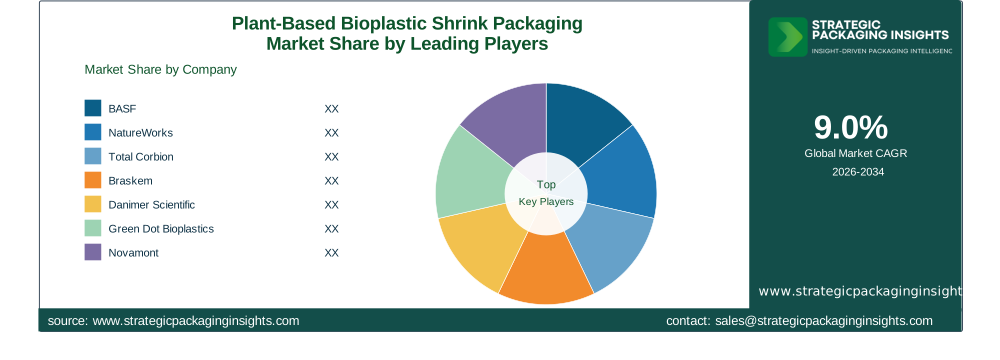
BASF is one of the leading companies in the market, known for its extensive portfolio of bioplastic products. The company has a strong presence in the market, with a significant share attributed to its innovative solutions and commitment to sustainability. NatureWorks is another major player, recognized for its Ingeo brand of polylactic acid (PLA) bioplastics. The company's focus on research and development has enabled it to maintain a competitive edge in the market.
Total Corbion is a key player in the market, known for its Luminy brand of PLA bioplastics. The company has a strong focus on sustainability and has established itself as a leader in the production of plant-based bioplastics. Braskem, a Brazilian company, is also a significant player in the market, with its I'm green brand of bioplastics. The company's commitment to sustainability and innovation has helped it capture a substantial share of the market.
Danimer Scientific is another prominent player in the market, known for its Nodax brand of polyhydroxyalkanoate (PHA) bioplastics. The company's focus on innovation and sustainability has enabled it to establish a strong presence in the market. Green Dot Bioplastics, Novamont, Avantium, Plantic, and Danone are also key players in the market, each contributing to the growth and development of the plant-based bioplastic shrink packaging industry.
Key Highlights
- The Plant-Based Bioplastic Shrink Packaging market is projected to grow at a CAGR of 9.0% from 2026 to 2034.
- The market was valued at $12.48 billion in 2025 and is expected to reach $27.11 billion by 2034.
- Key drivers include increasing consumer awareness of environmental issues and stringent environmental regulations.
- High production costs and limited availability of raw materials are significant challenges for the market.
- The food and beverage industry is a major contributor to market growth, driven by the demand for sustainable packaging solutions.
- Advancements in bioplastic technology are expanding the range of applications for plant-based bioplastics.
- Emerging markets present significant opportunities for growth, driven by rapid industrialization and urbanization.
- Key players in the market include BASF, NatureWorks, Total Corbion, Braskem, and Danimer Scientific.
- Strategic partnerships, mergers, and acquisitions are common strategies employed by companies to gain a competitive edge.
- The market is characterized by intense competition, with companies striving to meet the growing demand for eco-friendly packaging solutions.
Top Countries Insights
In the Plant-Based Bioplastic Shrink Packaging market, the United States is a leading player, with a market size of approximately $3.5 billion and a CAGR of 8%. The country's strong focus on sustainability and environmental regulations has driven the demand for plant-based bioplastics. The food and beverage industry is a major contributor to this growth, as companies seek to reduce their carbon footprint and appeal to environmentally conscious consumers. Additionally, advancements in bioplastic technology are enabling the development of new materials with improved properties, further fueling market expansion.
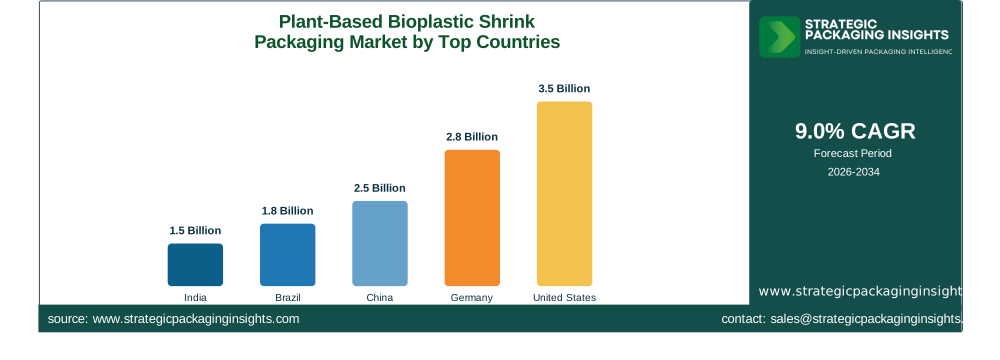
Germany is another key market, with a market size of around $2.8 billion and a CAGR of 7%. The country's stringent environmental regulations and focus on sustainability have driven the demand for plant-based bioplastics. The cosmetics and pharmaceuticals industries are significant contributors to this growth, as companies seek to adopt eco-friendly packaging solutions. Additionally, the presence of key players in the market, such as BASF and Total Corbion, has further strengthened Germany's position in the market.
China is a rapidly growing market, with a market size of approximately $2.5 billion and a CAGR of 10%. The country's rapid industrialization and urbanization have driven the demand for sustainable packaging solutions. The food and beverage industry is a major contributor to this growth, as companies seek to reduce their environmental impact and comply with government regulations. Additionally, the increasing consumer awareness of environmental issues is driving the demand for plant-based bioplastics.
Brazil is another significant market, with a market size of around $1.8 billion and a CAGR of 9%. The country's focus on sustainability and environmental regulations has driven the demand for plant-based bioplastics. The food and beverage industry is a major contributor to this growth, as companies seek to reduce their carbon footprint and appeal to environmentally conscious consumers. Additionally, the presence of key players in the market, such as Braskem, has further strengthened Brazil's position in the market.
India is an emerging market, with a market size of approximately $1.5 billion and a CAGR of 11%. The country's rapid industrialization and urbanization have driven the demand for sustainable packaging solutions. The food and beverage industry is a major contributor to this growth, as companies seek to reduce their environmental impact and comply with government regulations. Additionally, the increasing consumer awareness of environmental issues is driving the demand for plant-based bioplastics.
Plant-Based Bioplastic Shrink Packaging Market Segments Insights

By Material Analysis
The Plant-Based Bioplastic Shrink Packaging market is segmented by material into PLA, PHA, and starch-based bioplastics. PLA, or polylactic acid, is one of the most widely used materials in the market due to its biodegradability and versatility. It is derived from renewable resources such as corn starch and sugarcane, making it an attractive alternative to traditional plastics. The demand for PLA is driven by its wide range of applications, particularly in the food and beverage industry, where it is used for packaging and disposable products. The increasing consumer awareness of environmental issues and the demand for sustainable packaging solutions are key drivers for the growth of the PLA segment.
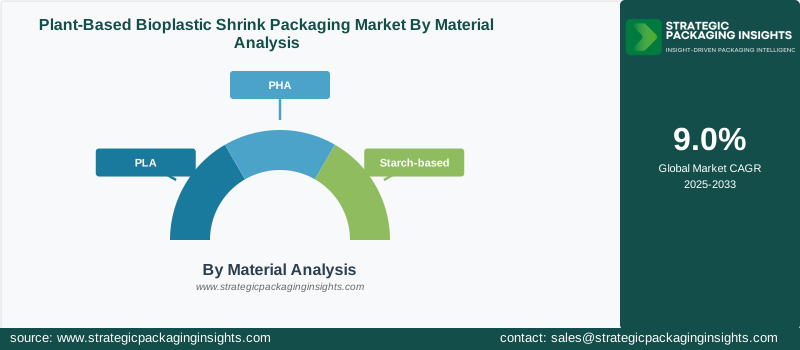
PHA, or polyhydroxyalkanoate, is another significant material in the market. It is a biodegradable polymer produced by microbial fermentation of sugars and lipids. PHA is known for its excellent biodegradability and compatibility with various applications, including packaging, agriculture, and medical devices. The demand for PHA is driven by its unique properties, such as high thermal stability and resistance to moisture, making it suitable for a wide range of applications. The increasing focus on sustainability and the development of new production techniques are expected to drive the growth of the PHA segment.
Starch-based bioplastics are also gaining traction in the market due to their biodegradability and cost-effectiveness. These bioplastics are derived from renewable resources such as corn, potatoes, and wheat, making them an attractive alternative to traditional plastics. The demand for starch-based bioplastics is driven by their wide range of applications, particularly in the packaging industry, where they are used for films, bags, and containers. The increasing consumer awareness of environmental issues and the demand for sustainable packaging solutions are key drivers for the growth of the starch-based segment.
By End Use Analysis
The Plant-Based Bioplastic Shrink Packaging market is segmented by end use into food and beverage, cosmetics, and pharmaceuticals. The food and beverage industry is a major contributor to the market, driven by the demand for sustainable packaging solutions. As consumers become more environmentally conscious, there is a growing demand for eco-friendly packaging materials that align with their values. Plant-based bioplastics offer a biodegradable and sustainable alternative to traditional plastics, making them an attractive option for food and beverage companies. The increasing focus on reducing carbon footprints and complying with environmental regulations is expected to drive the growth of the food and beverage segment.
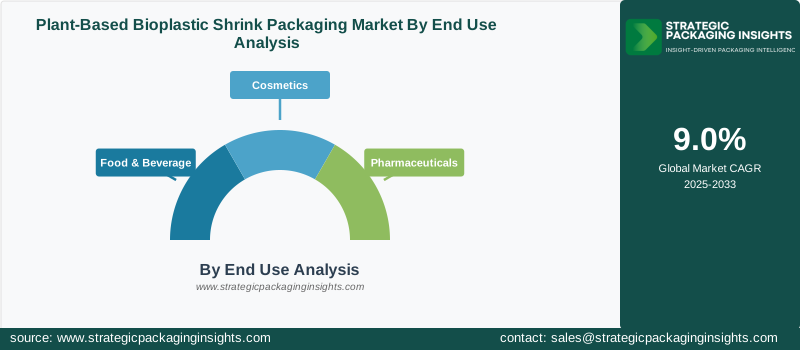
The cosmetics industry is another significant end-use segment in the market. The demand for plant-based bioplastics in this industry is driven by the increasing consumer awareness of environmental issues and the demand for sustainable packaging solutions. As consumers become more conscious of their environmental impact, they are seeking products that align with their values. Plant-based bioplastics offer a biodegradable and eco-friendly alternative to traditional plastics, making them an attractive option for cosmetics companies. The increasing focus on sustainability and the development of new materials with improved properties are expected to drive the growth of the cosmetics segment.
The pharmaceuticals industry is also a key end-use segment in the market. The demand for plant-based bioplastics in this industry is driven by the increasing focus on sustainability and the need for eco-friendly packaging solutions. As pharmaceutical companies seek to reduce their environmental impact and comply with regulatory requirements, there is a growing demand for plant-based bioplastics. These materials offer a biodegradable and sustainable alternative to traditional plastics, making them an attractive option for pharmaceutical companies. The increasing focus on reducing carbon footprints and the development of new materials with improved properties are expected to drive the growth of the pharmaceuticals segment.
By Packaging Type Analysis
The Plant-Based Bioplastic Shrink Packaging market is segmented by packaging type into shrink wrap and films. Shrink wrap is one of the most widely used packaging types in the market due to its versatility and cost-effectiveness. It is used for a wide range of applications, including food and beverage packaging, consumer goods, and industrial products. The demand for shrink wrap is driven by its ability to provide a secure and protective packaging solution, making it an attractive option for companies seeking to reduce their environmental impact. The increasing focus on sustainability and the development of new materials with improved properties are expected to drive the growth of the shrink wrap segment.
Films are another significant packaging type in the market. They are used for a wide range of applications, including food and beverage packaging, consumer goods, and industrial products. The demand for films is driven by their ability to provide a flexible and lightweight packaging solution, making them an attractive option for companies seeking to reduce their environmental impact. The increasing focus on sustainability and the development of new materials with improved properties are expected to drive the growth of the films segment. Additionally, advancements in bioplastic technology are enabling the development of new films with enhanced durability and flexibility, further fueling market expansion.
Region Analysis
The Plant-Based Bioplastic Shrink Packaging market is segmented by region into Asia Pacific, North America, Latin America, Europe, and Middle East & Africa. Asia Pacific is one of the largest and fastest-growing regions in the market, driven by the increasing demand for sustainable packaging solutions. The region's rapid industrialization and urbanization have led to a growing need for eco-friendly materials, making plant-based bioplastics an attractive option. The food and beverage industry is a major contributor to this growth, as companies seek to reduce their environmental impact and comply with government regulations. Additionally, the increasing consumer awareness of environmental issues is driving the demand for plant-based bioplastics in the region.
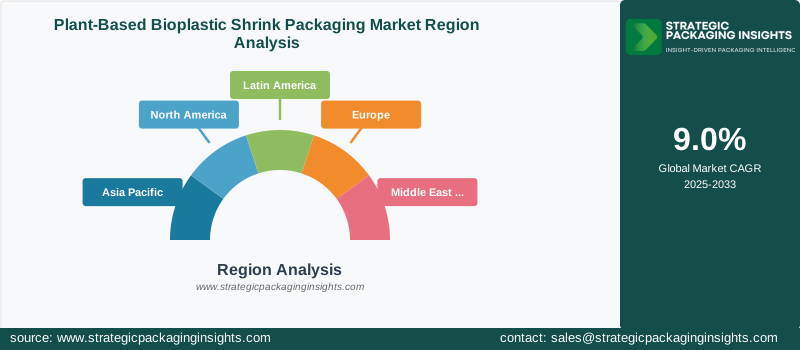
North America is another significant region in the market, driven by the strong focus on sustainability and environmental regulations. The United States, in particular, is a leading player in the market, with a significant share attributed to its innovative solutions and commitment to sustainability. The food and beverage industry is a major contributor to this growth, as companies seek to reduce their carbon footprint and appeal to environmentally conscious consumers. Additionally, advancements in bioplastic technology are enabling the development of new materials with improved properties, further fueling market expansion in the region.
Europe is also a key region in the market, driven by the stringent environmental regulations and focus on sustainability. Germany, in particular, is a leading player in the market, with a significant share attributed to its innovative solutions and commitment to sustainability. The cosmetics and pharmaceuticals industries are significant contributors to this growth, as companies seek to adopt eco-friendly packaging solutions. Additionally, the presence of key players in the market, such as BASF and Total Corbion, has further strengthened Europe's position in the market.
Plant-Based Bioplastic Shrink Packaging Market Segments
The Plant-Based Bioplastic Shrink Packaging market has been segmented on the basis ofBy Material
- PLA
- PHA
- Starch-based
By End Use
- Food & Beverage
- Cosmetics
- Pharmaceuticals
By Packaging Type
- Shrink Wrap
- Films
Region
- Asia Pacific
- North America
- Latin America
- Europe
- Middle East & Africa




