


Photographic Paper Market Outlook
The photographic paper market was valued at $1.09 billion in 2025 and is projected to reach $1.52 billion by 2034, growing at a CAGR of 3.8% during the forecast period 2026-2034. This market is driven by the increasing demand for high-quality photo prints, both in professional and consumer segments. The resurgence of interest in analog photography and the growing popularity of instant cameras have also contributed to the market's growth. Additionally, advancements in printing technology have enhanced the quality and durability of photographic paper, making it a preferred choice for photographers and printing services. The market is also witnessing a shift towards eco-friendly and sustainable paper options, which is expected to open new avenues for growth.
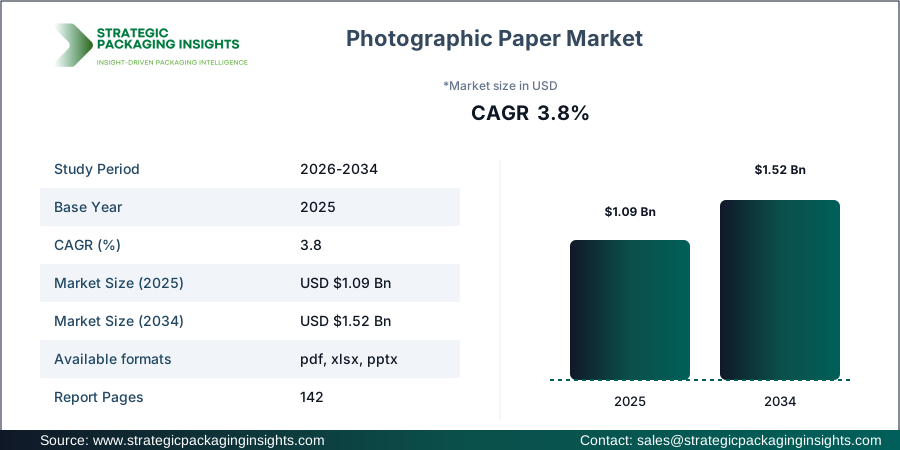
However, the market faces challenges such as the increasing digitization of photography and the growing preference for digital storage solutions. These factors have led to a decline in the demand for traditional photographic paper. Moreover, the high cost of premium photographic paper and the availability of cheaper digital alternatives pose significant restraints. Despite these challenges, the market holds potential for growth, particularly in emerging economies where the demand for high-quality prints is on the rise. The market is also expected to benefit from the increasing trend of personalized photo products, such as photo books and custom prints, which require high-quality photographic paper.
Report Scope
| Attributes | Details |
| Report Title | Photographic Paper Market Size, Future Growth and Forecast 2034 |
| Product Type | Glossy Paper, Matte Paper, Resin-Coated Paper |
| Application | Photo Printing, Commercial Printing, Studio Prints |
| Grade | Consumer, Professional, Premium |
| End Use | Photographers, Labs, Printing Services, Consumers |
| Region | Asia Pacific, North America, Latin America, Europe, Middle East & Africa |
| Base Year | 2025 |
| Historic Period | 2018-2024 |
| Forecast Period | 2026-2034 |
| Number of Pages | 142 |
| Customization Available | Yes* |
Opportunities & Threats
The photographic paper market presents numerous opportunities, particularly with the growing trend of personalized photo products. Consumers are increasingly seeking unique and customized photo items, such as photo books, calendars, and greeting cards, which require high-quality photographic paper. This trend is expected to drive demand in both consumer and professional segments. Additionally, the rise of e-commerce platforms has made it easier for consumers to access a wide range of photographic paper products, further boosting market growth. The increasing popularity of instant cameras and the resurgence of interest in analog photography also present significant opportunities for market expansion.
Another opportunity lies in the development of eco-friendly and sustainable photographic paper options. With growing environmental concerns, consumers and businesses are increasingly seeking sustainable alternatives. Companies that invest in the development of recyclable and biodegradable photographic paper are likely to gain a competitive edge in the market. Furthermore, advancements in printing technology, such as the development of high-resolution printers, are expected to enhance the quality and appeal of photographic paper, driving demand across various applications.
Despite these opportunities, the market faces threats from the increasing digitization of photography. The widespread use of smartphones and digital cameras has led to a decline in the demand for traditional photographic paper. Consumers are increasingly opting for digital storage solutions, such as cloud services and digital photo frames, which offer convenience and cost-effectiveness. Additionally, the high cost of premium photographic paper and the availability of cheaper digital alternatives pose significant challenges to market growth. Companies need to innovate and offer value-added products to remain competitive in this evolving landscape.
Drivers & Challenges
One of the primary drivers of the photographic paper market is the increasing demand for high-quality photo prints. Both professional photographers and consumers are seeking superior print quality, which has led to a rise in the demand for premium photographic paper. The resurgence of interest in analog photography and the growing popularity of instant cameras have also contributed to market growth. These trends have led to an increased demand for traditional photographic paper, particularly among photography enthusiasts and professionals who value the tactile experience of printed photos.
Another significant driver is the advancement in printing technology. The development of high-resolution printers and improved ink formulations has enhanced the quality and durability of photographic prints. This has made photographic paper a preferred choice for various applications, including photo printing, commercial printing, and studio prints. Additionally, the increasing trend of personalized photo products, such as photo books and custom prints, has driven demand for high-quality photographic paper. The market is also benefiting from the rise of e-commerce platforms, which have made it easier for consumers to access a wide range of photographic paper products.
However, the market faces several challenges, including the increasing digitization of photography. The widespread use of smartphones and digital cameras has led to a decline in the demand for traditional photographic paper. Consumers are increasingly opting for digital storage solutions, such as cloud services and digital photo frames, which offer convenience and cost-effectiveness. Additionally, the high cost of premium photographic paper and the availability of cheaper digital alternatives pose significant challenges to market growth. Companies need to innovate and offer value-added products to remain competitive in this evolving landscape.
Market Share Analysis
The photographic paper market is characterized by intense competition, with several key players dominating the landscape. Companies such as Fujifilm, Canon, Epson, HP, and Kodak hold significant market shares, driven by their strong brand presence and extensive product portfolios. These companies have established themselves as leaders in the market by offering a wide range of high-quality photographic paper products that cater to various consumer needs. Their focus on innovation and technological advancements has enabled them to maintain a competitive edge in the market.
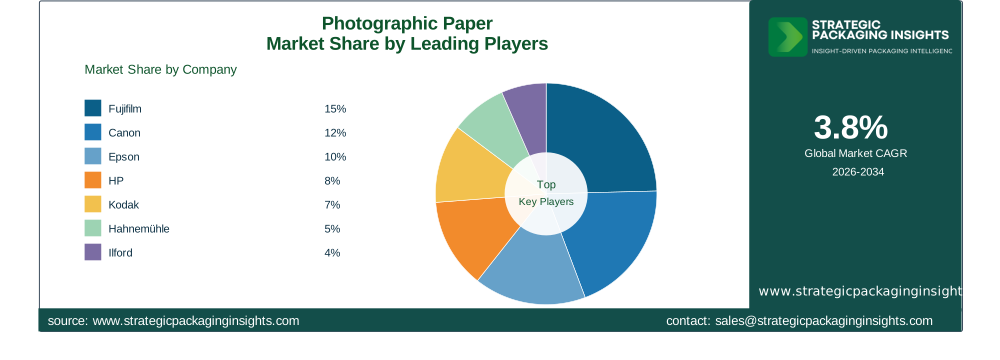
Fujifilm, for instance, is a major player in the photographic paper market, known for its high-quality products and innovative solutions. The company has a strong presence in both consumer and professional segments, offering a diverse range of photographic paper options. Canon and Epson are also prominent players, known for their advanced printing technologies and high-quality paper products. These companies have leveraged their expertise in imaging and printing to offer superior photographic paper solutions that meet the demands of professional photographers and consumers alike.
Kodak, another key player, has a long-standing reputation in the photographic industry. The company offers a wide range of photographic paper products, catering to various applications and consumer preferences. HP, known for its advanced printing technologies, has also made significant strides in the photographic paper market. The company's focus on innovation and sustainability has enabled it to offer high-quality, eco-friendly photographic paper options that appeal to environmentally conscious consumers.
Other notable players in the market include Hahnemühle, Ilford, Mitsubishi Paper Mills, Felix Schoeller, and Foma Bohemia. These companies have carved out niches in the market by offering specialized photographic paper products that cater to specific consumer needs. Hahnemühle, for example, is known for its premium fine art paper, while Ilford is recognized for its high-quality black and white photographic paper. Mitsubishi Paper Mills and Felix Schoeller have also established themselves as key players, offering a range of photographic paper products that cater to both consumer and professional segments.
Key Highlights
- The photographic paper market is projected to grow at a CAGR of 3.8% from 2026 to 2034.
- Increasing demand for high-quality photo prints is driving market growth.
- Advancements in printing technology are enhancing the quality and durability of photographic paper.
- The rise of personalized photo products is boosting demand for photographic paper.
- Eco-friendly and sustainable photographic paper options are gaining popularity.
- The market faces challenges from the increasing digitization of photography.
- Key players include Fujifilm, Canon, Epson, HP, and Kodak.
- Emerging economies present significant growth opportunities for the market.
- The resurgence of interest in analog photography is contributing to market growth.
- E-commerce platforms are facilitating easier access to photographic paper products.
Top Countries Insights
In the photographic paper market, the United States holds a significant share, driven by the high demand for professional and consumer photo prints. The market in the U.S. is characterized by a strong presence of key players such as Fujifilm, Canon, and Kodak, who offer a wide range of high-quality photographic paper products. The country's advanced printing technology and the growing trend of personalized photo products are key growth drivers. However, the market faces challenges from the increasing digitization of photography and the preference for digital storage solutions.

China is another major market for photographic paper, with a growing demand for high-quality photo prints. The country's large population and increasing disposable income levels have contributed to the rising demand for photographic paper products. The market in China is also benefiting from the growing popularity of instant cameras and the resurgence of interest in analog photography. However, the market faces challenges from the increasing digitization of photography and the availability of cheaper digital alternatives.
In Europe, Germany is a key market for photographic paper, driven by the high demand for professional photo prints. The country's strong presence of key players such as Hahnemühle and Ilford, known for their premium photographic paper products, is a significant growth driver. The market in Germany is also benefiting from the growing trend of personalized photo products and the increasing popularity of eco-friendly and sustainable photographic paper options.
Japan is another important market for photographic paper, characterized by a strong presence of key players such as Fujifilm and Mitsubishi Paper Mills. The country's advanced printing technology and the growing demand for high-quality photo prints are key growth drivers. The market in Japan is also benefiting from the increasing trend of personalized photo products and the resurgence of interest in analog photography.
In the Middle East & Africa, the photographic paper market is witnessing growth, driven by the increasing demand for high-quality photo prints. The market in this region is characterized by a growing trend of personalized photo products and the rising popularity of instant cameras. However, the market faces challenges from the increasing digitization of photography and the availability of cheaper digital alternatives.
Photographic Paper Market Segments Insights

Product Type Analysis
The photographic paper market is segmented by product type into glossy paper, matte paper, and resin-coated paper. Glossy paper is highly popular due to its vibrant color reproduction and shiny finish, making it ideal for photo albums and display prints. Matte paper, on the other hand, is favored for its non-reflective surface, which is suitable for professional and artistic prints. Resin-coated paper offers durability and water resistance, making it a preferred choice for outdoor and high-moisture environments. The demand for these product types is driven by consumer preferences for high-quality prints and the specific requirements of different applications.

Glossy paper continues to dominate the market due to its widespread use in consumer photo printing and commercial applications. The vibrant colors and sharp details offered by glossy paper make it a popular choice for photo enthusiasts and professionals alike. Matte paper, while less common, is gaining traction in the professional segment due to its ability to produce high-quality prints without glare. Resin-coated paper is also seeing increased demand, particularly in applications where durability and water resistance are critical. The market for these product types is expected to grow as consumers continue to seek high-quality photographic prints.
Application Analysis
The photographic paper market is segmented by application into photo printing, commercial printing, and studio prints. Photo printing is the largest segment, driven by the increasing demand for high-quality prints among consumers and professionals. The rise of personalized photo products, such as photo books and custom prints, has further boosted demand in this segment. Commercial printing, which includes advertising and promotional materials, is also a significant market, driven by the need for high-quality prints in marketing and branding efforts. Studio prints, which cater to professional photographers and artists, represent a niche but growing segment.
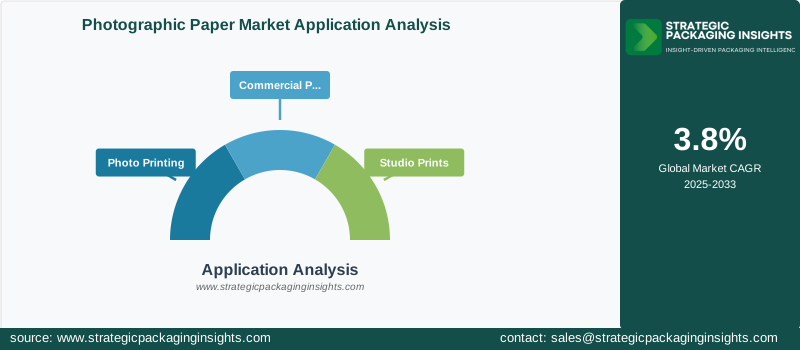
Photo printing remains the dominant application, with consumers and professionals seeking high-quality prints for personal and commercial use. The growing trend of personalized photo products has further fueled demand in this segment, as consumers seek unique and customized photo items. Commercial printing is also a significant market, driven by the need for high-quality prints in advertising and promotional materials. Studio prints, while smaller in scale, represent a growing segment as professional photographers and artists seek high-quality paper for their work. The market for these applications is expected to grow as consumers and businesses continue to seek high-quality photographic prints.
Grade Analysis
The photographic paper market is segmented by grade into consumer, professional, and premium. Consumer-grade photographic paper is widely used for everyday photo printing, offering a balance of quality and affordability. Professional-grade paper is designed for photographers and artists who require superior print quality and durability. Premium-grade paper, which offers the highest quality and durability, is used for fine art prints and high-end applications. The demand for these grades is driven by consumer preferences for high-quality prints and the specific requirements of different applications.

Consumer-grade photographic paper is the most widely used, offering a balance of quality and affordability for everyday photo printing. Professional-grade paper, while more expensive, is favored by photographers and artists who require superior print quality and durability. Premium-grade paper, which offers the highest quality and durability, is used for fine art prints and high-end applications. The market for these grades is expected to grow as consumers and professionals continue to seek high-quality photographic prints. The increasing trend of personalized photo products and the growing popularity of instant cameras are also expected to drive demand for these grades.
End Use Analysis
The photographic paper market is segmented by end use into photographers, labs, printing services, and consumers. Photographers represent a significant market, driven by the demand for high-quality prints for professional and artistic purposes. Labs and printing services, which cater to both consumer and professional segments, are also a significant market, driven by the need for high-quality prints in various applications. Consumers, who use photographic paper for personal photo printing, represent a growing segment, driven by the increasing trend of personalized photo products.

Photographers represent a significant market, driven by the demand for high-quality prints for professional and artistic purposes. Labs and printing services, which cater to both consumer and professional segments, are also a significant market, driven by the need for high-quality prints in various applications. Consumers, who use photographic paper for personal photo printing, represent a growing segment, driven by the increasing trend of personalized photo products. The market for these end uses is expected to grow as consumers and professionals continue to seek high-quality photographic prints.
Photographic Paper Market Segments
The Photographic Paper market has been segmented on the basis ofProduct Type
- Glossy Paper
- Matte Paper
- Resin-Coated Paper
Application
- Photo Printing
- Commercial Printing
- Studio Prints
Grade
- Consumer
- Professional
- Premium
End Use
- Photographers
- Labs
- Printing Services
- Consumers
Region
- Asia Pacific
- North America
- Latin America
- Europe
- Middle East & Africa




