


Pharmaceutical Track and Trace Systems Market Outlook
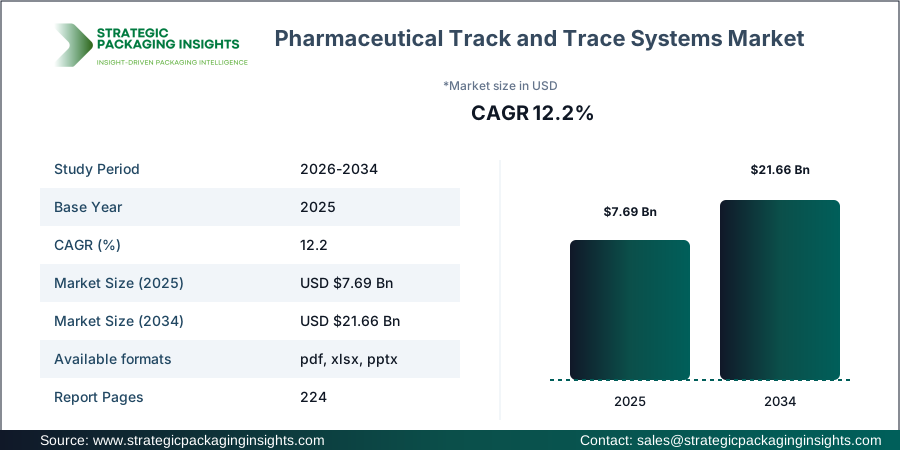
The Pharmaceutical Track and Trace Systems market was valued at $7.69 billion in 2025 and is projected to reach $21.66 billion by 2034, growing at a CAGR of 12.2% during the forecast period 2026-2034. This market is witnessing significant growth due to the increasing need for secure and efficient pharmaceutical supply chains. The rising incidences of counterfeit drugs and stringent regulations imposed by governments worldwide are driving the demand for advanced track and trace systems. These systems ensure the authenticity and safety of pharmaceutical products, thereby enhancing patient safety and reducing the risk of drug fraud. The adoption of technologies such as RFID and barcode systems is further propelling market growth, as they offer real-time tracking and improved inventory management.
Despite the promising growth prospects, the market faces challenges such as high implementation costs and the complexity of integrating track and trace systems with existing infrastructure. However, the potential benefits, including enhanced operational efficiency and compliance with regulatory standards, outweigh these challenges. The market is also witnessing a shift towards cloud-based solutions, which offer scalability and flexibility, making them an attractive option for pharmaceutical companies. As the industry continues to evolve, the demand for innovative and cost-effective track and trace solutions is expected to rise, providing lucrative opportunities for market players.
Report Scope
| Attributes | Details |
| Report Title | Pharmaceutical Track and Trace Systems Market Size, Future Growth and Forecast 2034 |
| Technology | Barcode, RFID, Vision Systems |
| Application | Serialization, Aggregation, Compliance |
| Deployment | Cloud, On-Premise, Hybrid |
| End Use | Pharma, Biotech, CMOs |
| Region | Asia Pacific, North America, Latin America, Europe, Middle East & Africa |
| Base Year | 2025 |
| Historic Period | 2018-2024 |
| Forecast Period | 2026-2034 |
| Number of Pages | 224 |
| Customization Available | Yes* |
Opportunities & Threats
The Pharmaceutical Track and Trace Systems market presents numerous opportunities for growth, driven by the increasing focus on patient safety and the need to combat counterfeit drugs. Governments and regulatory bodies worldwide are implementing stringent regulations to ensure the authenticity and safety of pharmaceutical products. This has led to a surge in demand for advanced track and trace systems that can provide real-time tracking and verification of drugs throughout the supply chain. Additionally, the growing adoption of digital technologies such as IoT and blockchain is creating new avenues for innovation in the market. These technologies offer enhanced security and transparency, enabling pharmaceutical companies to streamline their operations and improve supply chain efficiency.
Another significant opportunity lies in the expansion of the pharmaceutical industry in emerging markets. Countries in Asia Pacific, Latin America, and the Middle East & Africa are witnessing rapid growth in their pharmaceutical sectors, driven by increasing healthcare expenditure and rising demand for quality healthcare services. This is creating a favorable environment for the adoption of track and trace systems, as companies seek to comply with international standards and regulations. Furthermore, the increasing trend of outsourcing pharmaceutical manufacturing to contract manufacturing organizations (CMOs) is boosting the demand for track and trace solutions, as these organizations need to ensure compliance with regulatory requirements and maintain the integrity of their supply chains.
However, the market also faces certain threats, primarily related to the high costs associated with the implementation and maintenance of track and trace systems. Small and medium-sized pharmaceutical companies may find it challenging to invest in these systems due to budget constraints. Additionally, the complexity of integrating track and trace solutions with existing IT infrastructure can pose significant challenges, leading to potential disruptions in operations. Moreover, the lack of standardization in track and trace technologies and regulations across different regions can create hurdles for market players, as they need to adapt their solutions to meet varying requirements.
Drivers & Challenges
One of the primary drivers of the Pharmaceutical Track and Trace Systems market is the increasing regulatory pressure to ensure the safety and authenticity of pharmaceutical products. Governments and regulatory bodies worldwide are implementing stringent regulations to combat the growing threat of counterfeit drugs. These regulations mandate the use of track and trace systems to monitor the movement of drugs throughout the supply chain, ensuring their authenticity and safety. As a result, pharmaceutical companies are increasingly adopting advanced track and trace solutions to comply with these regulations and protect their brand reputation. Additionally, the rising incidences of drug recalls and the need for efficient inventory management are further driving the demand for track and trace systems.
Another significant driver is the growing adoption of digital technologies such as IoT, blockchain, and AI in the pharmaceutical industry. These technologies offer enhanced security, transparency, and efficiency, enabling companies to streamline their operations and improve supply chain management. IoT devices, for instance, can provide real-time tracking and monitoring of drugs, ensuring their safety and quality throughout the supply chain. Blockchain technology, on the other hand, offers a secure and tamper-proof record of transactions, enhancing transparency and trust among stakeholders. The integration of AI and machine learning algorithms can further optimize supply chain operations, reducing costs and improving efficiency.
Despite the promising growth prospects, the market faces several challenges, primarily related to the high costs and complexity of implementing track and trace systems. The initial investment required for deploying these systems can be substantial, particularly for small and medium-sized pharmaceutical companies. Additionally, the integration of track and trace solutions with existing IT infrastructure can be complex and time-consuming, leading to potential disruptions in operations. The lack of standardization in track and trace technologies and regulations across different regions can also create hurdles for market players, as they need to adapt their solutions to meet varying requirements. Furthermore, concerns related to data privacy and security can pose significant challenges, as companies need to ensure the protection of sensitive information throughout the supply chain.
Market Share Analysis
The Pharmaceutical Track and Trace Systems market is characterized by intense competition, with several key players vying for market share. The competitive landscape is shaped by the presence of established companies as well as emerging players, all striving to offer innovative and cost-effective solutions to meet the evolving needs of the pharmaceutical industry. The market is dominated by a few major players, including Optel, Antares Vision, Zebra Technologies, Systech, and Körber, who hold significant market shares due to their extensive product portfolios and strong customer base. These companies are continuously investing in research and development to enhance their product offerings and maintain their competitive edge.
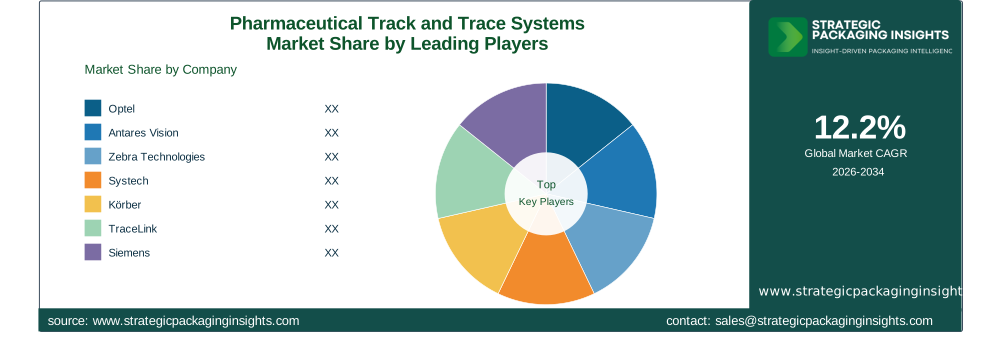
Optel is a leading player in the market, known for its comprehensive range of track and trace solutions that cater to the diverse needs of the pharmaceutical industry. The company has a strong presence in North America and Europe, and its solutions are widely adopted by pharmaceutical companies to ensure compliance with regulatory standards. Antares Vision is another prominent player, offering a wide range of serialization and aggregation solutions that enable companies to track and verify the authenticity of their products throughout the supply chain. The company's solutions are highly regarded for their accuracy and reliability, making them a preferred choice for pharmaceutical companies worldwide.
Zebra Technologies is a key player in the market, known for its advanced barcode and RFID solutions that provide real-time tracking and monitoring of pharmaceutical products. The company's solutions are widely used by pharmaceutical companies to improve inventory management and enhance supply chain efficiency. Systech is another major player, offering a range of serialization and track and trace solutions that enable companies to comply with regulatory requirements and protect their brand reputation. The company's solutions are highly customizable, allowing pharmaceutical companies to tailor them to their specific needs.
Körber is a leading provider of track and trace solutions, offering a comprehensive range of products and services that cater to the diverse needs of the pharmaceutical industry. The company's solutions are widely adopted by pharmaceutical companies to ensure compliance with regulatory standards and improve supply chain efficiency. TraceLink is another prominent player, known for its cloud-based track and trace solutions that offer scalability and flexibility, making them an attractive option for pharmaceutical companies. The company's solutions are highly regarded for their ease of use and reliability, making them a preferred choice for companies looking to streamline their operations and improve supply chain management.
Key Highlights
- The Pharmaceutical Track and Trace Systems market is projected to grow at a CAGR of 12.2% from 2026 to 2034.
- Increasing regulatory pressure to combat counterfeit drugs is driving the demand for track and trace systems.
- The adoption of digital technologies such as IoT and blockchain is creating new opportunities for innovation in the market.
- Emerging markets in Asia Pacific, Latin America, and the Middle East & Africa are witnessing rapid growth in the pharmaceutical sector.
- Cloud-based track and trace solutions are gaining popularity due to their scalability and flexibility.
- High implementation costs and complexity of integration are major challenges for market players.
- Lack of standardization in track and trace technologies and regulations across regions can create hurdles for companies.
- Key players in the market include Optel, Antares Vision, Zebra Technologies, Systech, and Körber.
- The market is characterized by intense competition, with several key players vying for market share.
- Increasing trend of outsourcing pharmaceutical manufacturing to CMOs is boosting the demand for track and trace solutions.
Top Countries Insights
In the Pharmaceutical Track and Trace Systems market, the United States holds a significant share, driven by stringent regulatory requirements and a well-established pharmaceutical industry. The market in the U.S. is valued at approximately $3.5 billion, with a CAGR of 10%. The Drug Supply Chain Security Act (DSCSA) mandates the implementation of track and trace systems, ensuring the safety and authenticity of pharmaceutical products. The presence of major market players and the adoption of advanced technologies further contribute to the market's growth.
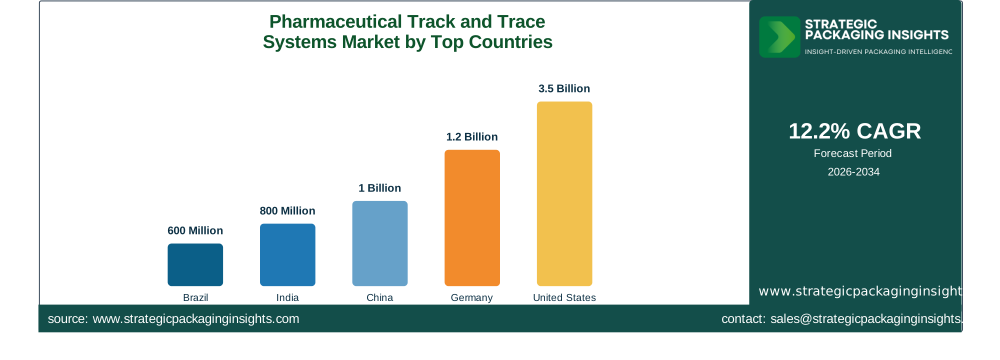
Germany is another key market, with a market size of around $1.2 billion and a CAGR of 9%. The country's strong regulatory framework and focus on patient safety drive the demand for track and trace systems. The implementation of the Falsified Medicines Directive (FMD) has further accelerated the adoption of these systems, ensuring compliance with European standards. Germany's advanced healthcare infrastructure and the presence of leading pharmaceutical companies also contribute to the market's growth.
China is witnessing rapid growth in the Pharmaceutical Track and Trace Systems market, with a market size of approximately $1 billion and a CAGR of 15%. The country's expanding pharmaceutical industry and increasing focus on quality and safety drive the demand for track and trace solutions. The Chinese government's efforts to combat counterfeit drugs and improve supply chain transparency further boost the market's growth. The adoption of digital technologies and the presence of a large number of pharmaceutical manufacturers also contribute to the market's expansion.
India is another emerging market, with a market size of around $800 million and a CAGR of 14%. The country's growing pharmaceutical industry and increasing regulatory pressure to ensure drug safety drive the demand for track and trace systems. The implementation of the Drugs and Cosmetics Act, which mandates the use of track and trace solutions, further accelerates the market's growth. India's large population and rising healthcare expenditure also contribute to the market's expansion.
Brazil is witnessing steady growth in the Pharmaceutical Track and Trace Systems market, with a market size of approximately $600 million and a CAGR of 12%. The country's regulatory framework and focus on combating counterfeit drugs drive the demand for track and trace solutions. The implementation of the National System for Drug Control (SNCM) ensures compliance with international standards, further boosting the market's growth. Brazil's expanding pharmaceutical industry and increasing healthcare expenditure also contribute to the market's expansion.
Pharmaceutical Track and Trace Systems Market Segments Insights

Technology Analysis
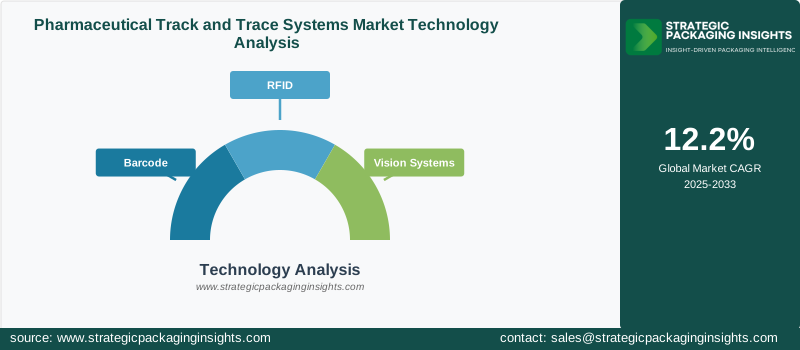
The technology segment of the Pharmaceutical Track and Trace Systems market is primarily driven by the adoption of barcode and RFID technologies. Barcode systems are widely used due to their cost-effectiveness and ease of implementation. They provide accurate and reliable tracking of pharmaceutical products, ensuring compliance with regulatory standards. RFID technology, on the other hand, offers real-time tracking and monitoring of drugs, enhancing supply chain efficiency and reducing the risk of counterfeit drugs. The integration of vision systems further enhances the capabilities of track and trace solutions, enabling companies to verify the authenticity of products and ensure their safety throughout the supply chain.
The growing adoption of digital technologies such as IoT and blockchain is also driving innovation in the technology segment. IoT devices provide real-time tracking and monitoring of pharmaceutical products, ensuring their safety and quality throughout the supply chain. Blockchain technology offers a secure and tamper-proof record of transactions, enhancing transparency and trust among stakeholders. The integration of AI and machine learning algorithms can further optimize supply chain operations, reducing costs and improving efficiency. As the industry continues to evolve, the demand for advanced and cost-effective track and trace technologies is expected to rise, providing lucrative opportunities for market players.
Application Analysis
The application segment of the Pharmaceutical Track and Trace Systems market is dominated by serialization and aggregation solutions. Serialization involves assigning a unique identifier to each product, enabling companies to track and verify the authenticity of their products throughout the supply chain. This ensures compliance with regulatory standards and protects the brand reputation of pharmaceutical companies. Aggregation, on the other hand, involves grouping individual products into larger units, such as cases or pallets, for easier tracking and management. This enhances supply chain efficiency and reduces the risk of counterfeit drugs.
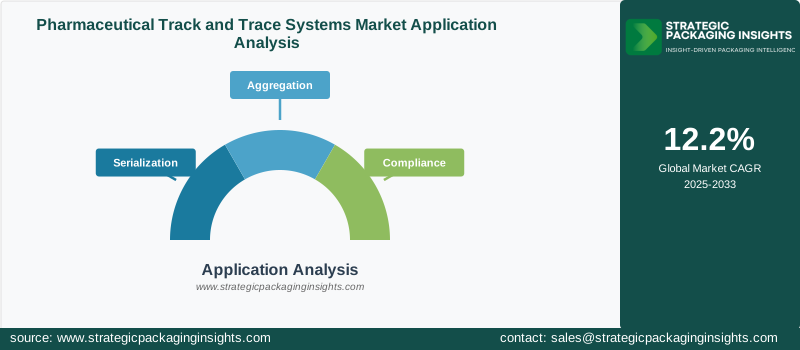
Compliance solutions are also gaining traction in the market, driven by the increasing regulatory pressure to ensure the safety and authenticity of pharmaceutical products. These solutions enable companies to comply with international standards and regulations, ensuring the safety and quality of their products. The growing adoption of digital technologies such as IoT and blockchain is further driving innovation in the application segment, enabling companies to streamline their operations and improve supply chain management. As the industry continues to evolve, the demand for advanced and cost-effective application solutions is expected to rise, providing lucrative opportunities for market players.
Deployment Analysis
The deployment segment of the Pharmaceutical Track and Trace Systems market is characterized by the growing adoption of cloud-based solutions. Cloud-based track and trace solutions offer scalability and flexibility, making them an attractive option for pharmaceutical companies. They enable companies to streamline their operations and improve supply chain management, reducing costs and enhancing efficiency. The integration of digital technologies such as IoT and blockchain further enhances the capabilities of cloud-based solutions, enabling companies to track and verify the authenticity of their products in real-time.
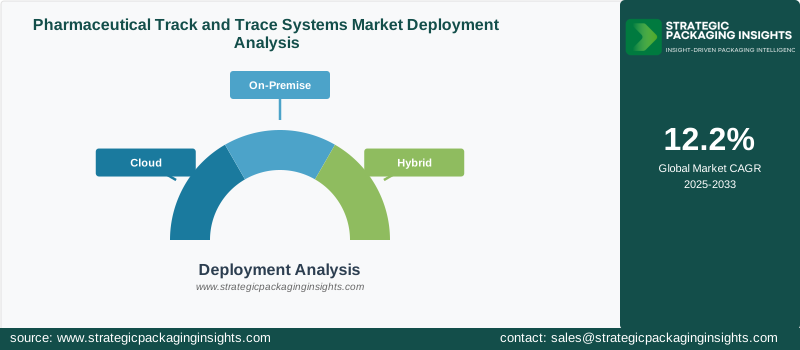
On-premise solutions are also widely used in the market, particularly by large pharmaceutical companies with established IT infrastructure. These solutions offer enhanced security and control, enabling companies to protect their sensitive information and ensure compliance with regulatory standards. Hybrid solutions, which combine the benefits of cloud-based and on-premise solutions, are also gaining traction in the market. They offer a flexible and cost-effective option for companies looking to enhance their track and trace capabilities. As the industry continues to evolve, the demand for advanced and cost-effective deployment solutions is expected to rise, providing lucrative opportunities for market players.
End Use Analysis
The end-use segment of the Pharmaceutical Track and Trace Systems market is dominated by the pharmaceutical industry, driven by the increasing regulatory pressure to ensure the safety and authenticity of pharmaceutical products. Pharmaceutical companies are increasingly adopting track and trace solutions to comply with international standards and regulations, ensuring the safety and quality of their products. The growing adoption of digital technologies such as IoT and blockchain is further driving innovation in the end-use segment, enabling companies to streamline their operations and improve supply chain management.
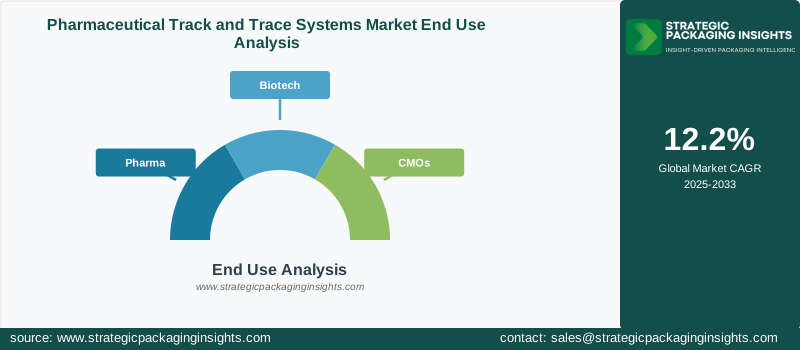
The biotech industry is also witnessing significant growth in the adoption of track and trace solutions, driven by the increasing focus on patient safety and the need to combat counterfeit drugs. Contract manufacturing organizations (CMOs) are also adopting track and trace solutions to ensure compliance with regulatory requirements and maintain the integrity of their supply chains. As the industry continues to evolve, the demand for advanced and cost-effective end-use solutions is expected to rise, providing lucrative opportunities for market players.
Pharmaceutical Track and Trace Systems Market Segments
The Pharmaceutical Track and Trace Systems market has been segmented on the basis ofTechnology
- Barcode
- RFID
- Vision Systems
Application
- Serialization
- Aggregation
- Compliance
Deployment
- Cloud
- On-Premise
- Hybrid
End Use
- Pharma
- Biotech
- CMOs
Region
- Asia Pacific
- North America
- Latin America
- Europe
- Middle East & Africa




