


Pharmaceutical Glass Tubing Market Outlook
The Pharmaceutical Glass Tubing market size was valued at USD 15.86 billion in 2025 and is anticipated to reach USD 28.42 billion by 2034, growing at a CAGR of 6.7% during the forecast period according to Strategic Packaging Insights. This growth is driven by the increasing demand for high-quality glass tubing in the pharmaceutical industry, particularly for applications such as vials, ampoules, and syringes. Companies like Schott and Corning are at the forefront, leveraging advanced technologies to enhance the durability and chemical resistance of glass tubing, which is crucial for maintaining the integrity of pharmaceutical products. The rising prevalence of chronic diseases and the subsequent increase in pharmaceutical production are further propelling the market forward.
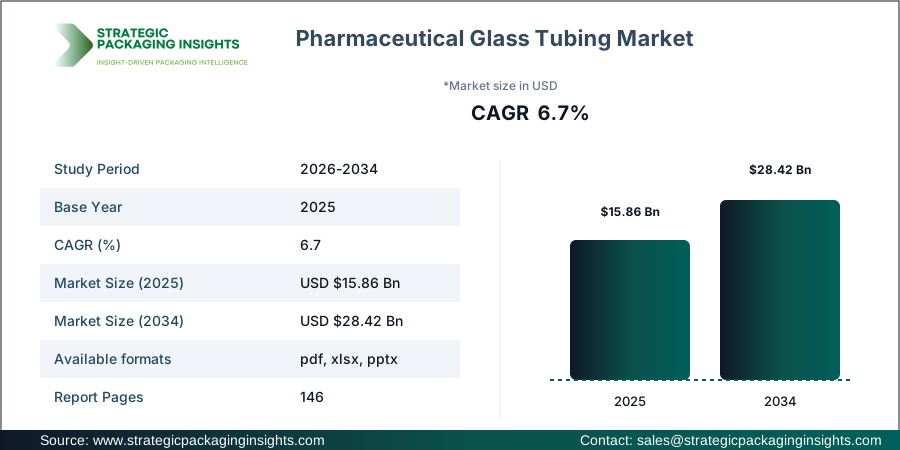
One of the most impactful drivers of the Pharmaceutical Glass Tubing market is the stringent regulatory standards imposed by health authorities worldwide. These regulations ensure that pharmaceutical packaging materials meet high safety and quality standards, which in turn drives the demand for superior glass tubing solutions. According to the U.S. Food and Drug Administration (FDA), the use of high-quality glass tubing is essential to prevent contamination and ensure the safety of pharmaceutical products. This regulatory emphasis on quality and safety is encouraging manufacturers to invest in research and development to produce innovative glass tubing solutions that comply with international standards, thereby boosting market growth.
Report Scope
| Attributes | Details |
| Report Title | Pharmaceutical Glass Tubing Market Size, Future Growth and Forecast 2034 |
| By Glass Type | Borosilicate Glass, Aluminosilicate Glass, Soda-Lime Glass |
| By Application | Vials, Ampoules, Cartridges, Syringes |
| By End Use | Pharma Packaging, Biologics, Vaccines, Diagnostics |
| By Processing Type | Converted Tubing, Ready-to-Convert Tubing |
| Region | Asia Pacific, North America, Latin America, Europe, Middle East & Africa |
| Base Year | 2025 |
| Historic Period | 2018-2024 |
| Forecast Period | 2026-2034 |
| Number of Pages | 146 |
| Customization Available | Yes* |
Sustainability & Circular Economy Analysis
Sustainability initiatives are increasingly shaping the Pharmaceutical Glass Tubing market, as manufacturers and brand owners strive to reduce their environmental impact. The adoption of recyclable materials and eco-friendly innovations in glass tubing production is becoming a priority. Companies are investing in lightweight packaging solutions that not only reduce material usage but also lower transportation emissions. This shift towards sustainable practices is driven by consumer preferences for environmentally responsible products and stringent packaging regulations that mandate waste reduction and carbon footprint minimization.
The circular economy model is gaining traction in the pharmaceutical packaging sector, with extended producer responsibility (EPR) playing a pivotal role. EPR policies require manufacturers to take responsibility for the entire lifecycle of their products, including post-consumer waste management. This has led to the development of recycling networks and partnerships aimed at enhancing the recyclability of glass tubing. As a result, companies like Schott and Gerresheimer are focusing on designing packaging solutions that are not only functional but also environmentally sustainable, thereby enhancing their market competitiveness.
These sustainability trends are influencing investment decisions and supply chain strategies within the Pharmaceutical Glass Tubing market. Manufacturers are prioritizing investments in eco-friendly technologies and processes to align with ESG initiatives and meet regulatory compliance. This focus on sustainability is not only a response to regulatory pressures but also a strategic move to capture the growing market of environmentally conscious consumers. By integrating sustainable practices into their operations, companies are positioning themselves for long-term success and competitiveness in the global market.
Packaging Value Chain & Supply Chain Analysis
The packaging value chain for pharmaceutical glass tubing is complex, involving multiple stakeholders from raw material suppliers to end-users. Raw material sourcing is a critical component, with manufacturers relying on high-quality silica and other materials to produce durable and chemically resistant glass tubing. Packaging converters and manufacturers play a vital role in transforming these raw materials into finished products that meet the stringent requirements of the pharmaceutical industry. Companies like Corning and Nipro are investing in advanced manufacturing technologies to enhance production capabilities and ensure consistent quality.
Supply chain efficiency is paramount in the Pharmaceutical Glass Tubing market, as it directly impacts market performance and competitiveness. Strategic partnerships and collaborations between manufacturers, logistics providers, and distribution channels are essential for ensuring timely delivery and reducing lead times. The availability of raw materials and transportation capabilities are critical factors that influence supply chain resilience. Companies are adopting localization strategies to mitigate risks associated with global sourcing and enhance supply chain agility.
Recycling networks and procurement strategies are becoming increasingly important in the pharmaceutical packaging sector. Manufacturers are focusing on developing closed-loop systems that facilitate the recycling and reuse of glass tubing, thereby reducing waste and environmental impact. Inventory management and strategic sourcing are also key considerations, as companies strive to optimize their supply chains and reduce costs. By enhancing supply chain efficiency and resilience, manufacturers can improve their market competitiveness and meet the growing demand for high-quality pharmaceutical glass tubing.
Opportunities & Threats
The Pharmaceutical Glass Tubing market presents significant opportunities for growth, driven by the increasing demand for innovative packaging solutions in the pharmaceutical industry. The rise in biologics and vaccines production is creating a need for specialized glass tubing that can withstand the unique requirements of these products. Companies that invest in research and development to create advanced glass tubing solutions that meet these needs are well-positioned to capture a larger market share. Additionally, the growing focus on sustainability and eco-friendly packaging presents opportunities for manufacturers to differentiate themselves by offering environmentally responsible products.
Another opportunity lies in the expansion of the pharmaceutical industry in emerging markets. As countries in Asia Pacific and Latin America continue to develop their healthcare infrastructure, the demand for pharmaceutical products and packaging solutions is expected to increase. Manufacturers that establish a strong presence in these regions can benefit from the growing market potential. Strategic partnerships and collaborations with local companies can also provide a competitive advantage by facilitating market entry and expanding distribution networks.
However, the Pharmaceutical Glass Tubing market also faces threats that could impact growth. One of the primary challenges is the volatility in raw material prices, which can affect production costs and profit margins. Manufacturers must develop strategies to mitigate these risks, such as diversifying their supplier base and implementing cost-effective production processes. Additionally, the stringent regulatory environment poses a threat, as non-compliance can result in significant penalties and damage to brand reputation. Companies must stay abreast of regulatory changes and invest in compliance to ensure continued market success.
Drivers & Challenges
The Pharmaceutical Glass Tubing market is driven by several key factors, including the increasing demand for high-quality packaging solutions in the pharmaceutical industry. The rise in chronic diseases and the subsequent increase in pharmaceutical production are major drivers of market growth. As the demand for pharmaceutical products continues to rise, so does the need for reliable and durable packaging solutions that can ensure product safety and integrity. Companies like Schott and Corning are leading the way by developing innovative glass tubing solutions that meet the stringent requirements of the pharmaceutical industry.
Technological advancements in glass tubing production are also driving market growth. Manufacturers are investing in research and development to create glass tubing that offers enhanced durability, chemical resistance, and transparency. These innovations are essential for meeting the evolving needs of the pharmaceutical industry and maintaining a competitive edge in the market. Additionally, the growing focus on sustainability and eco-friendly packaging is driving demand for recyclable and lightweight glass tubing solutions, further propelling market growth.
Despite these drivers, the Pharmaceutical Glass Tubing market faces several challenges that could impact growth. One of the primary challenges is the high cost of production, which can affect profit margins and limit market expansion. Manufacturers must develop strategies to optimize production processes and reduce costs without compromising quality. Additionally, the stringent regulatory environment poses a challenge, as companies must ensure compliance with international standards to avoid penalties and maintain market access. Staying abreast of regulatory changes and investing in compliance is essential for overcoming these challenges and achieving long-term market success.
Market Share Analysis
The Pharmaceutical Glass Tubing market is characterized by a competitive landscape with several key players vying for market share. Companies like Schott, Corning, and Nipro are leading the market, leveraging their expertise and advanced technologies to offer high-quality glass tubing solutions. These companies have established a strong presence in the market through strategic partnerships, collaborations, and investments in research and development. Their focus on innovation and quality has enabled them to capture a significant share of the market and maintain a competitive edge.
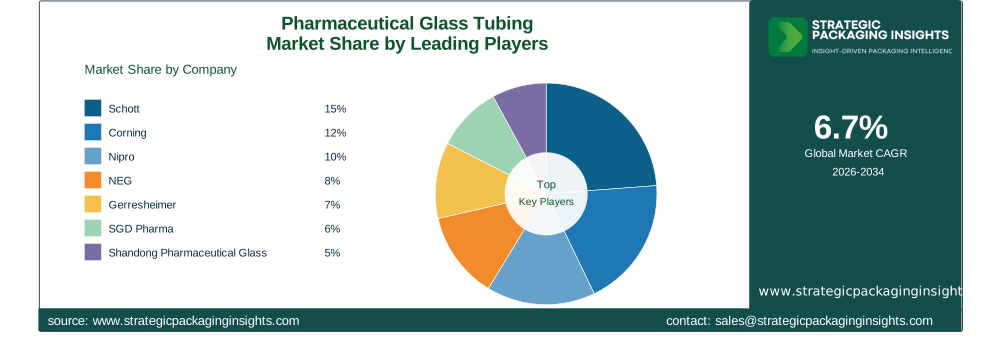
Schott is a major player in the Pharmaceutical Glass Tubing market, known for its high-quality borosilicate glass tubing solutions. The company has a strong global presence, with manufacturing facilities and distribution networks in key regions. Schott's commitment to innovation and sustainability has enabled it to maintain a leading position in the market. Similarly, Corning is a prominent player, offering a wide range of glass tubing solutions for pharmaceutical applications. The company's focus on research and development and strategic partnerships has helped it expand its market presence and capture a significant share of the market.
Nipro is another key player in the Pharmaceutical Glass Tubing market, known for its high-quality glass tubing solutions for vials, ampoules, and syringes. The company has a strong presence in Asia Pacific and is expanding its operations in other regions to capture the growing market potential. Nipro's focus on quality and innovation has enabled it to maintain a competitive edge in the market. Other notable players in the market include NEG, Gerresheimer, SGD Pharma, Shandong Pharmaceutical Glass, Stevanato Group, DWK Life Sciences, and Stoelzle Glass, each contributing to the market's growth through their unique offerings and strategic initiatives.
The competitive landscape of the Pharmaceutical Glass Tubing market is characterized by a focus on innovation, quality, and sustainability. Companies are investing in research and development to create advanced glass tubing solutions that meet the evolving needs of the pharmaceutical industry. Strategic partnerships and collaborations are also playing a crucial role in expanding market presence and enhancing competitiveness. As the market continues to grow, companies that prioritize innovation and sustainability are well-positioned to capture a larger share of the market and achieve long-term success.
Key Highlights
- Market Size: The Pharmaceutical Glass Tubing market was valued at USD 15.86 billion in 2025 and is projected to reach USD 28.42 billion by 2034.
- Growth Rate: The market is expected to grow at a CAGR of 6.7% during the forecast period.
- Leading Companies: Key players include Schott, Corning, Nipro, and Gerresheimer.
- Glass Type Segment: Borosilicate Glass is the most widely used type due to its superior chemical resistance.
- Application Segment: Vials and ampoules are the largest application segments, driven by the demand for injectable drugs.
- Regional Growth: Asia Pacific is expected to witness the highest growth rate due to expanding pharmaceutical production.
- Sustainability Focus: Increasing emphasis on eco-friendly and recyclable packaging solutions.
Pharmaceutical Glass Tubing Market Segments Insights

By Glass Type Analysis
The Pharmaceutical Glass Tubing market is segmented by glass type into Borosilicate Glass, Aluminosilicate Glass, and Soda-Lime Glass. Borosilicate Glass is the most widely used type due to its superior chemical resistance and durability, making it ideal for pharmaceutical applications. Companies like Schott and Corning are leading the market by offering high-quality borosilicate glass tubing solutions that meet the stringent requirements of the pharmaceutical industry. The demand for Aluminosilicate Glass is also growing, driven by its high thermal resistance and strength, which are essential for certain pharmaceutical applications.
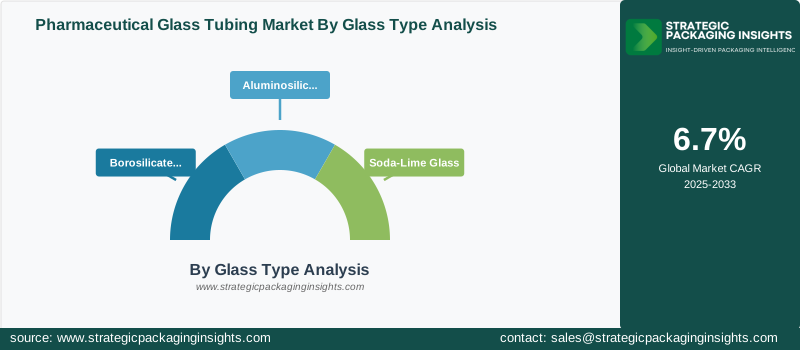
Soda-Lime Glass is another important segment, known for its cost-effectiveness and versatility. While it is not as chemically resistant as borosilicate glass, it is suitable for certain pharmaceutical applications where chemical resistance is not a primary concern. The demand for soda-lime glass tubing is driven by its affordability and availability, making it a popular choice for cost-sensitive applications. Overall, the glass type segment is characterized by a focus on quality and innovation, with manufacturers investing in research and development to create advanced glass tubing solutions that meet the evolving needs of the pharmaceutical industry.
By Application Analysis
The Pharmaceutical Glass Tubing market is segmented by application into Vials, Ampoules, Cartridges, and Syringes. Vials and ampoules are the largest application segments, driven by the increasing demand for injectable drugs and vaccines. The rise in chronic diseases and the subsequent increase in pharmaceutical production are major drivers of demand for vials and ampoules. Companies like Nipro and Gerresheimer are leading the market by offering high-quality glass tubing solutions for these applications, ensuring product safety and integrity.
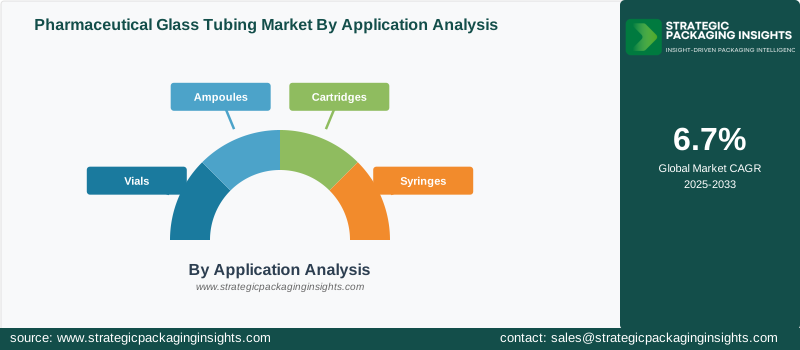
Cartridges and syringes are also important application segments, driven by the growing demand for pre-filled syringes and auto-injectors. The convenience and safety offered by these packaging solutions are driving their adoption in the pharmaceutical industry. Manufacturers are investing in research and development to create advanced glass tubing solutions that meet the unique requirements of these applications, such as enhanced durability and chemical resistance. Overall, the application segment is characterized by a focus on innovation and quality, with manufacturers striving to meet the evolving needs of the pharmaceutical industry.
By End Use Analysis
The Pharmaceutical Glass Tubing market is segmented by end use into Pharma Packaging, Biologics, Vaccines, and Diagnostics. Pharma Packaging is the largest end-use segment, driven by the increasing demand for high-quality packaging solutions in the pharmaceutical industry. The rise in pharmaceutical production and the growing focus on product safety and integrity are major drivers of demand for pharma packaging solutions. Companies like Schott and Corning are leading the market by offering innovative glass tubing solutions that meet the stringent requirements of the pharmaceutical industry.
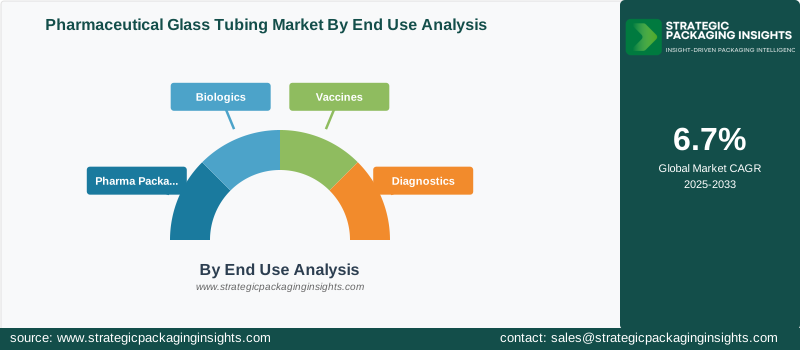
Biologics and vaccines are also important end-use segments, driven by the increasing production of biologic drugs and vaccines. The unique requirements of these products, such as enhanced durability and chemical resistance, are driving demand for specialized glass tubing solutions. Manufacturers are investing in research and development to create advanced glass tubing solutions that meet the needs of these end-use segments. Overall, the end-use segment is characterized by a focus on quality and innovation, with manufacturers striving to meet the evolving needs of the pharmaceutical industry.
By Processing Type Analysis
The Pharmaceutical Glass Tubing market is segmented by processing type into Converted Tubing and Ready-to-Convert Tubing. Converted Tubing is the largest processing type segment, driven by the increasing demand for customized glass tubing solutions in the pharmaceutical industry. Manufacturers are investing in advanced manufacturing technologies to enhance production capabilities and ensure consistent quality. Companies like Schott and Corning are leading the market by offering high-quality converted tubing solutions that meet the unique requirements of the pharmaceutical industry.
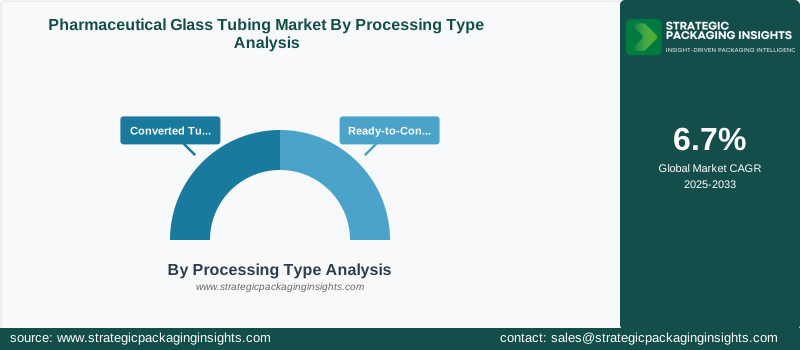
Ready-to-Convert Tubing is also an important processing type segment, driven by the growing demand for flexible and cost-effective packaging solutions. The convenience and efficiency offered by ready-to-convert tubing are driving its adoption in the pharmaceutical industry. Manufacturers are investing in research and development to create advanced ready-to-convert tubing solutions that meet the evolving needs of the pharmaceutical industry. Overall, the processing type segment is characterized by a focus on innovation and quality, with manufacturers striving to meet the evolving needs of the pharmaceutical industry.
Pharmaceutical Glass Tubing Market Segments
The Pharmaceutical Glass Tubing market has been segmented on the basis ofBy Glass Type
- Borosilicate Glass
- Aluminosilicate Glass
- Soda-Lime Glass
By Application
- Vials
- Ampoules
- Cartridges
- Syringes
By End Use
- Pharma Packaging
- Biologics
- Vaccines
- Diagnostics
By Processing Type
- Converted Tubing
- Ready-to-Convert Tubing
Region
- Asia Pacific
- North America
- Latin America
- Europe
- Middle East & Africa




