


Pharmaceutical Containers Market Outlook
The pharmaceutical containers market was valued at $107.26 billion in 2025 and is projected to reach $246.77 billion by 2034, growing at a CAGR of 9.7% during the forecast period 2026-2034. This market is experiencing significant growth due to the increasing demand for safe and reliable packaging solutions in the pharmaceutical industry. The rise in chronic diseases, coupled with the aging population, has led to an increased consumption of pharmaceutical products, thereby driving the demand for pharmaceutical containers. Additionally, advancements in packaging technologies and the introduction of innovative materials are further propelling market growth. The market is also benefiting from stringent regulations regarding drug safety and packaging, which are encouraging pharmaceutical companies to adopt high-quality packaging solutions.
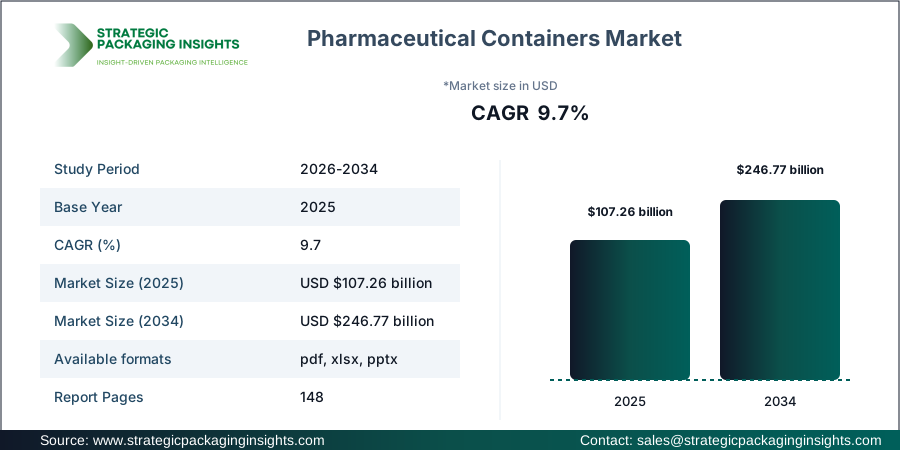
However, the market faces certain challenges that could hinder its growth potential. The high cost of raw materials, particularly glass and specialized plastics, poses a significant restraint. Additionally, the stringent regulatory landscape, while beneficial for ensuring safety, can also lead to increased compliance costs for manufacturers. Despite these challenges, the market holds substantial growth potential, driven by the increasing focus on sustainable packaging solutions and the rising demand for personalized medicine. The development of eco-friendly and biodegradable packaging materials is expected to create new opportunities for market players, as environmental concerns continue to influence consumer preferences and regulatory policies.
Report Scope
| Attributes | Details |
| Report Title | Pharmaceutical Containers Market Size, Future Growth and Forecast 2034 |
| Type | Vials, Bottles, Blisters |
| Material | Glass, Plastic |
| Capacity | Small, Large |
| Sterile | Yes, No |
| Region | Asia Pacific, North America, Latin America, Europe, Middle East & Africa |
| Base Year | 2025 |
| Historic Period | 2018-2024 |
| Forecast Period | 2026-2034 |
| Number of Pages | 148 |
| Customization Available | Yes* |
Opportunities & Threats
The pharmaceutical containers market presents numerous opportunities for growth, primarily driven by the increasing demand for innovative and sustainable packaging solutions. As the pharmaceutical industry continues to expand, there is a growing need for containers that not only ensure the safety and efficacy of drugs but also meet environmental standards. This has led to the development of eco-friendly packaging materials, such as biodegradable plastics and recyclable glass, which are gaining traction among manufacturers and consumers alike. Furthermore, the rise of personalized medicine and biologics is creating a demand for specialized containers that can accommodate unique drug formulations and delivery methods. Companies that can offer customized packaging solutions are likely to gain a competitive edge in the market.
Another significant opportunity lies in the growing pharmaceutical markets of emerging economies. Countries in Asia Pacific, Latin America, and the Middle East & Africa are witnessing rapid growth in their pharmaceutical sectors, driven by increasing healthcare expenditure and improving access to healthcare services. This presents a lucrative opportunity for pharmaceutical container manufacturers to expand their presence in these regions and tap into the growing demand for high-quality packaging solutions. Additionally, advancements in technology, such as smart packaging and track-and-trace systems, are opening new avenues for innovation and differentiation in the market.
Despite the promising opportunities, the pharmaceutical containers market faces several threats that could impact its growth trajectory. One of the primary threats is the volatility in raw material prices, particularly for glass and specialized plastics, which can lead to increased production costs and affect profit margins. Additionally, the market is subject to stringent regulatory requirements, which can pose compliance challenges for manufacturers, especially those operating in multiple regions with varying regulations. The risk of counterfeit products and the need for robust anti-counterfeiting measures also present a significant challenge for the industry, as ensuring the integrity and authenticity of pharmaceutical products is paramount.
Drivers & Challenges
The pharmaceutical containers market is driven by several key factors, including the increasing demand for pharmaceutical products and the need for safe and reliable packaging solutions. The rise in chronic diseases, such as diabetes and cardiovascular disorders, has led to an increased consumption of medications, thereby driving the demand for pharmaceutical containers. Additionally, the aging population and the growing focus on preventive healthcare are contributing to the market's growth. The introduction of innovative packaging materials and technologies, such as child-resistant and tamper-evident packaging, is also playing a crucial role in driving market expansion. These advancements not only enhance the safety and efficacy of pharmaceutical products but also improve patient compliance and convenience.
Another significant driver is the stringent regulatory landscape governing pharmaceutical packaging. Regulatory bodies, such as the FDA and EMA, have established strict guidelines to ensure the safety and quality of pharmaceutical products, which has led to increased adoption of high-quality packaging solutions. The growing emphasis on sustainability and environmental responsibility is also driving the demand for eco-friendly packaging materials, as consumers and regulators alike are becoming more conscious of the environmental impact of packaging waste. This has prompted manufacturers to invest in the development of biodegradable and recyclable packaging solutions, further fueling market growth.
Despite the positive drivers, the pharmaceutical containers market faces several challenges that could hinder its growth. One of the primary challenges is the high cost of raw materials, particularly glass and specialized plastics, which can lead to increased production costs and affect profit margins. Additionally, the market is subject to stringent regulatory requirements, which can pose compliance challenges for manufacturers, especially those operating in multiple regions with varying regulations. The risk of counterfeit products and the need for robust anti-counterfeiting measures also present a significant challenge for the industry, as ensuring the integrity and authenticity of pharmaceutical products is paramount. Furthermore, the increasing competition among market players is leading to price pressures, which could impact profitability.
Market Share Analysis
The pharmaceutical containers market is characterized by a highly competitive landscape, with several key players vying for market share. Companies such as Schott, Corning, and West Pharmaceutical are among the leading players in the market, known for their extensive product portfolios and strong global presence. These companies have established themselves as leaders in the industry by consistently investing in research and development to introduce innovative packaging solutions that meet the evolving needs of the pharmaceutical sector. Their focus on quality, safety, and sustainability has enabled them to maintain a competitive edge in the market.
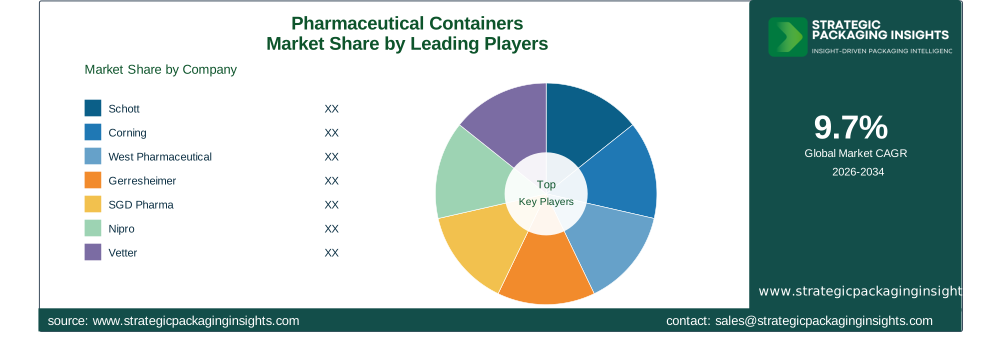
Gerresheimer and SGD Pharma are also prominent players in the pharmaceutical containers market, known for their expertise in glass packaging solutions. These companies have a strong foothold in the market, driven by their commitment to quality and innovation. They have been actively expanding their product offerings to include eco-friendly and sustainable packaging solutions, in response to the growing demand for environmentally responsible packaging. Nipro and Vetter are other key players in the market, recognized for their advanced packaging technologies and focus on customer-centric solutions.
Stevanda, Piramal Glass, and Bharat Glass are notable players in the market, with a strong presence in the Asia Pacific region. These companies have been leveraging their regional expertise and manufacturing capabilities to cater to the growing demand for pharmaceutical containers in emerging markets. Their focus on cost-effective and high-quality packaging solutions has enabled them to capture a significant share of the market. The competitive landscape is further intensified by the presence of numerous small and medium-sized enterprises, which are continuously striving to innovate and differentiate their offerings to gain a foothold in the market.
Overall, the pharmaceutical containers market is characterized by intense competition, with companies focusing on strategic partnerships, mergers, and acquisitions to strengthen their market position. The emphasis on sustainability and innovation is driving companies to invest in research and development to introduce new and improved packaging solutions. As the market continues to evolve, companies that can effectively address the challenges of regulatory compliance, cost pressures, and environmental concerns are likely to emerge as leaders in the industry.
Key Highlights
- The pharmaceutical containers market is projected to grow at a CAGR of 9.7% from 2026 to 2034.
- Increasing demand for eco-friendly and sustainable packaging solutions is driving market growth.
- Stringent regulatory requirements are encouraging the adoption of high-quality packaging solutions.
- Emerging markets in Asia Pacific and Latin America present significant growth opportunities.
- Advancements in packaging technologies, such as smart packaging, are opening new avenues for innovation.
- The market is characterized by intense competition, with key players focusing on strategic partnerships and acquisitions.
- Volatility in raw material prices poses a significant challenge for manufacturers.
- The rise of personalized medicine is creating a demand for specialized packaging solutions.
- Companies are investing in research and development to introduce innovative packaging solutions.
Top Countries Insights
The United States is one of the leading markets for pharmaceutical containers, with a market size of approximately $30 billion and a CAGR of 8%. The country's well-established pharmaceutical industry, coupled with stringent regulatory requirements, drives the demand for high-quality packaging solutions. The focus on sustainability and the adoption of advanced packaging technologies are key growth drivers in the U.S. market. However, the high cost of raw materials and regulatory compliance pose challenges for manufacturers.
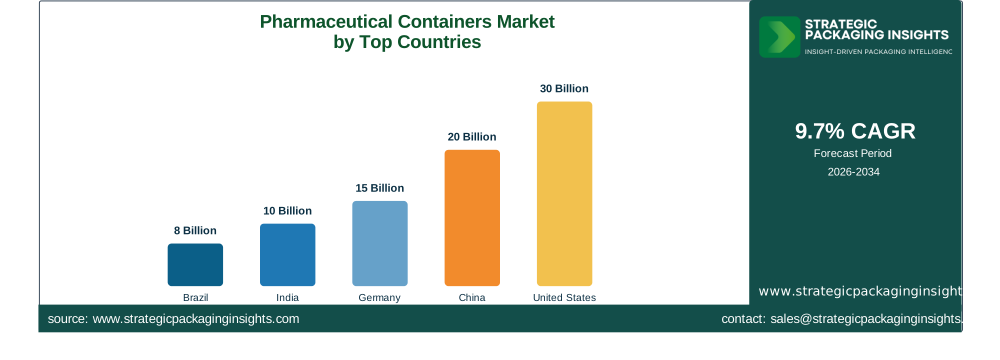
China is another significant market for pharmaceutical containers, with a market size of around $20 billion and a CAGR of 12%. The country's rapidly growing pharmaceutical industry, driven by increasing healthcare expenditure and improving access to healthcare services, is fueling the demand for pharmaceutical containers. The government's focus on promoting domestic manufacturing and the adoption of eco-friendly packaging solutions are key growth drivers in the Chinese market. However, the market faces challenges related to regulatory compliance and the risk of counterfeit products.
Germany is a key market in Europe, with a market size of approximately $15 billion and a CAGR of 7%. The country's strong pharmaceutical industry, coupled with stringent regulatory requirements, drives the demand for high-quality packaging solutions. The focus on sustainability and the adoption of advanced packaging technologies are key growth drivers in the German market. However, the high cost of raw materials and regulatory compliance pose challenges for manufacturers.
India is an emerging market for pharmaceutical containers, with a market size of around $10 billion and a CAGR of 15%. The country's rapidly growing pharmaceutical industry, driven by increasing healthcare expenditure and improving access to healthcare services, is fueling the demand for pharmaceutical containers. The government's focus on promoting domestic manufacturing and the adoption of eco-friendly packaging solutions are key growth drivers in the Indian market. However, the market faces challenges related to regulatory compliance and the risk of counterfeit products.
Brazil is a significant market in Latin America, with a market size of approximately $8 billion and a CAGR of 10%. The country's growing pharmaceutical industry, driven by increasing healthcare expenditure and improving access to healthcare services, is fueling the demand for pharmaceutical containers. The focus on sustainability and the adoption of advanced packaging technologies are key growth drivers in the Brazilian market. However, the market faces challenges related to regulatory compliance and the risk of counterfeit products.
Pharmaceutical Containers Market Segments Insights

Type Analysis
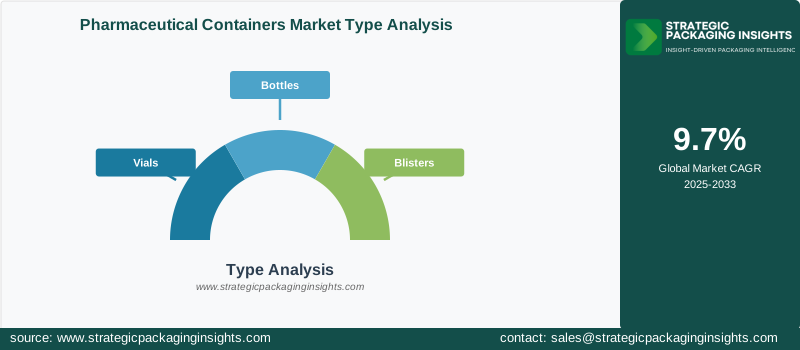
The pharmaceutical containers market is segmented by type into vials, bottles, and blisters. Vials are a critical component in the pharmaceutical industry, particularly for injectable drugs and vaccines. The demand for vials is driven by the increasing prevalence of chronic diseases and the growing focus on preventive healthcare. Vials offer excellent protection against contamination and are preferred for their durability and ease of use. Bottles, on the other hand, are widely used for liquid and solid oral medications. The demand for bottles is driven by their versatility and cost-effectiveness, making them a popular choice among pharmaceutical manufacturers. Blisters are gaining popularity due to their ability to provide unit-dose packaging, which enhances patient compliance and safety.
The increasing demand for personalized medicine and biologics is creating a need for specialized containers that can accommodate unique drug formulations and delivery methods. This trend is driving innovation in the type segment, with manufacturers focusing on developing customized packaging solutions to meet the evolving needs of the pharmaceutical industry. The introduction of smart packaging technologies, such as RFID tags and QR codes, is also gaining traction, enabling better tracking and monitoring of pharmaceutical products throughout the supply chain.
Material Analysis
The pharmaceutical containers market is segmented by material into glass and plastic. Glass is a preferred material for pharmaceutical containers due to its excellent barrier properties and chemical resistance. It is widely used for packaging injectable drugs and vaccines, where product integrity and safety are paramount. The demand for glass containers is driven by the increasing focus on drug safety and the stringent regulatory requirements governing pharmaceutical packaging. However, the high cost of glass and its susceptibility to breakage pose challenges for manufacturers.
Plastic containers are gaining popularity due to their lightweight, cost-effectiveness, and versatility. They are widely used for packaging oral medications, such as tablets and capsules, as well as liquid formulations. The demand for plastic containers is driven by their ease of handling and the growing emphasis on sustainability. Manufacturers are increasingly focusing on developing eco-friendly plastic materials, such as biodegradable and recyclable plastics, to address environmental concerns and meet regulatory requirements. The introduction of advanced plastic materials with enhanced barrier properties is also contributing to the growth of the plastic segment.
Capacity Analysis
The pharmaceutical containers market is segmented by capacity into small and large containers. Small containers are widely used for packaging unit-dose medications, such as vials and blisters, which are preferred for their convenience and safety. The demand for small containers is driven by the increasing focus on patient compliance and the growing trend of personalized medicine. Small containers offer precise dosing and reduce the risk of medication errors, making them a popular choice among healthcare providers and patients.
Large containers are used for packaging bulk medications, such as bottles and jars, which are preferred for their cost-effectiveness and ease of storage. The demand for large containers is driven by the increasing consumption of over-the-counter medications and the growing focus on preventive healthcare. Large containers offer the advantage of bulk packaging, which reduces packaging waste and lowers production costs. Manufacturers are focusing on developing innovative packaging solutions that offer both convenience and sustainability, such as refillable and reusable containers.
Sterile Analysis
The pharmaceutical containers market is segmented by sterile into sterile and non-sterile containers. Sterile containers are essential for packaging injectable drugs and vaccines, where product safety and integrity are critical. The demand for sterile containers is driven by the increasing prevalence of chronic diseases and the growing focus on preventive healthcare. Sterile containers offer excellent protection against contamination and are preferred for their durability and ease of use.
Non-sterile containers are used for packaging oral medications, such as tablets and capsules, where sterility is not a primary concern. The demand for non-sterile containers is driven by their cost-effectiveness and versatility, making them a popular choice among pharmaceutical manufacturers. Manufacturers are focusing on developing innovative packaging solutions that offer both convenience and sustainability, such as child-resistant and tamper-evident packaging. The introduction of advanced packaging technologies, such as smart packaging and track-and-trace systems, is also gaining traction, enabling better tracking and monitoring of pharmaceutical products throughout the supply chain.
Pharmaceutical Containers Market Segments
The Pharmaceutical Containers market has been segmented on the basis ofType
- Vials
- Bottles
- Blisters
Material
- Glass
- Plastic
Capacity
- Small
- Large
Sterile
- Yes
- No
Region
- Asia Pacific
- North America
- Latin America
- Europe
- Middle East & Africa




