


PET Material Packaging Market Outlook
The PET Material Packaging market was valued at $46.87 billion in 2025 and is projected to reach $80.55 billion by 2034, growing at a CAGR of 6.2% during the forecast period 2026-2034. This market is experiencing significant growth due to the increasing demand for sustainable and recyclable packaging solutions. The versatility of PET materials, which are lightweight, durable, and transparent, makes them highly desirable across various industries. The beverage sector, in particular, is a major driver of this market, with PET bottles being the preferred choice for packaging due to their excellent barrier properties and cost-effectiveness. Additionally, the growing awareness of environmental issues and the push for eco-friendly packaging solutions are further propelling the market forward.
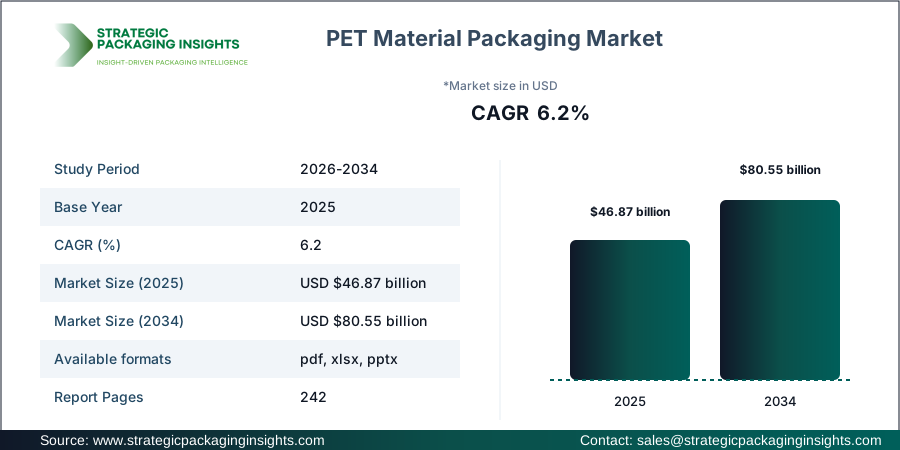
Despite the promising growth prospects, the PET Material Packaging market faces certain challenges. Regulatory restrictions on plastic usage and the increasing emphasis on reducing plastic waste are significant restraints. Governments worldwide are implementing stringent regulations to curb plastic pollution, which could impact the growth of the PET packaging market. However, the development of bio-based PET and increased recycling efforts present substantial growth opportunities. Companies are investing in research and development to create innovative, sustainable PET solutions that comply with environmental standards, thereby enhancing their market position and opening new avenues for growth.
Report Scope
| Attributes | Details |
| Report Title | PET Material Packaging Market Size, Future Growth and Forecast 2034 |
| By Packaging Type | Bottles, Trays, Films, Jars |
| By Material Type | Virgin PET, rPET, Bio-PET |
| By Application | Beverages, Food, Personal Care, Pharma |
| By End Use | FMCG, Healthcare, Retail, Foodservice |
| Region | Asia Pacific, North America, Latin America, Europe, Middle East & Africa |
| Base Year | 2025 |
| Historic Period | 2018-2024 |
| Forecast Period | 2026-2034 |
| Number of Pages | 242 |
| Customization Available | Yes* |
Opportunities & Threats
The PET Material Packaging market is ripe with opportunities, particularly in the realm of sustainable packaging solutions. As consumers become more environmentally conscious, there is a growing demand for packaging that minimizes environmental impact. This trend is driving the development of bio-PET and recycled PET (rPET) materials, which offer the same benefits as traditional PET but with a reduced carbon footprint. Companies that can innovate in this space stand to gain a competitive advantage, as they can cater to the increasing demand for eco-friendly packaging options. Additionally, the expansion of the e-commerce sector is creating new opportunities for PET packaging, as it requires durable and lightweight materials to ensure product safety during transportation.
Another significant opportunity lies in the emerging markets of Asia Pacific and Latin America, where rapid urbanization and increasing disposable incomes are driving demand for packaged goods. These regions are witnessing a surge in the consumption of beverages and personal care products, which are major applications of PET packaging. Companies that can establish a strong presence in these markets and adapt to local consumer preferences will likely experience substantial growth. Furthermore, advancements in PET recycling technologies are opening new avenues for market expansion, as they enable the production of high-quality rPET that meets the stringent requirements of various industries.
However, the market is not without its threats. The increasing regulatory pressure to reduce plastic waste poses a significant challenge to the PET Material Packaging market. Governments around the world are implementing policies to limit plastic usage and promote recycling, which could impact the demand for PET packaging. Additionally, the volatility in raw material prices, particularly for virgin PET, can affect the profitability of manufacturers. Companies need to navigate these challenges by investing in sustainable practices and diversifying their material sources to mitigate risks associated with price fluctuations.
Drivers & Challenges
The PET Material Packaging market is driven by several key factors, including the growing demand for lightweight and durable packaging solutions. PET materials offer excellent strength-to-weight ratios, making them ideal for packaging applications that require durability without adding significant weight. This is particularly important in the beverage industry, where PET bottles are favored for their ability to withstand pressure and protect contents. Additionally, the transparency of PET materials enhances product visibility, which is a crucial factor for consumer appeal in retail environments. The recyclability of PET also contributes to its popularity, as it aligns with the increasing consumer preference for sustainable packaging options.
Another major driver of the PET Material Packaging market is the increasing consumption of packaged beverages and food products. The convenience and safety offered by PET packaging make it a preferred choice for manufacturers and consumers alike. The rise of on-the-go lifestyles and the growing popularity of ready-to-eat meals are further boosting the demand for PET packaging. Moreover, technological advancements in PET production and recycling processes are enhancing the quality and performance of PET materials, making them more competitive against alternative packaging solutions. These advancements are enabling manufacturers to produce PET packaging that meets the evolving needs of various industries.
Despite these drivers, the PET Material Packaging market faces several challenges. One of the primary challenges is the environmental impact of plastic waste, which has led to increased scrutiny and regulatory pressure on the use of PET materials. Companies are under pressure to develop sustainable solutions that minimize environmental impact while maintaining the functional benefits of PET packaging. Additionally, the market is highly competitive, with numerous players vying for market share. This competition can lead to price wars and margin pressures, making it essential for companies to differentiate themselves through innovation and value-added services. Furthermore, fluctuations in raw material prices can impact production costs and profitability, necessitating effective supply chain management strategies.
Market Share Analysis
The competitive landscape of the PET Material Packaging market is characterized by the presence of several key players who are driving innovation and growth in the industry. Companies such as Amcor, ALPLA, Berry Global, and Plastipak are leading the market with their extensive product portfolios and strong global presence. These companies are investing heavily in research and development to create innovative PET packaging solutions that meet the evolving needs of consumers and comply with environmental regulations. Their focus on sustainability and recycling initiatives is helping them maintain a competitive edge in the market.
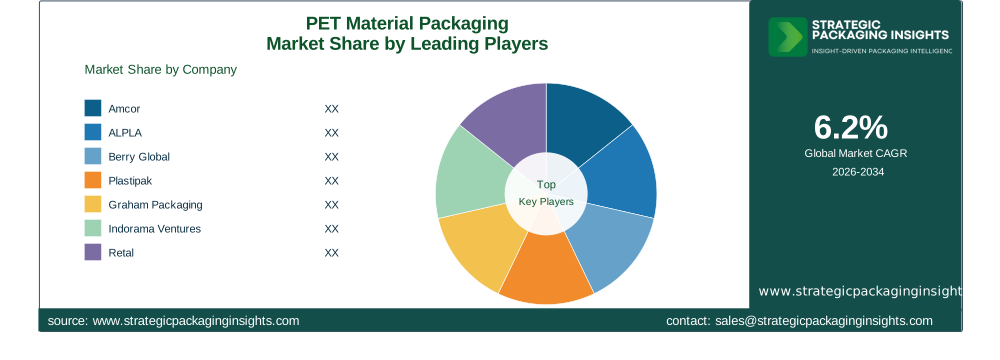
Amcor is a prominent player in the PET Material Packaging market, known for its commitment to sustainability and innovation. The company offers a wide range of PET packaging solutions for various industries, including beverages, food, and personal care. Amcor's focus on developing lightweight and recyclable packaging options has positioned it as a leader in the market. Similarly, ALPLA is recognized for its expertise in PET bottle production and its efforts to promote circular economy practices. The company's investment in recycling technologies and sustainable packaging solutions is driving its growth in the market.
Berry Global is another key player in the PET Material Packaging market, offering a diverse range of packaging solutions for the food and beverage industry. The company's focus on innovation and customer-centric solutions has helped it capture a significant share of the market. Plastipak, known for its advanced PET packaging technologies, is also a major player in the market. The company's emphasis on sustainability and its investment in recycling infrastructure are contributing to its success in the industry. Other notable players include Graham Packaging, Indorama Ventures, Retal, Klöckner Pentaplast, Gerresheimer, and Sonoco, each of which brings unique strengths and capabilities to the market.
Indorama Ventures, a leading producer of PET resins, plays a crucial role in the supply chain of the PET Material Packaging market. The company's extensive production capabilities and global reach make it a key supplier to many packaging manufacturers. Retal, known for its innovative PET preform and closure solutions, is also a significant player in the market. The company's focus on quality and customer satisfaction has helped it establish a strong presence in the industry. Klöckner Pentaplast, with its expertise in rigid plastic packaging, is another important player, offering a range of PET packaging solutions for the healthcare and food industries.
Key Highlights
- The PET Material Packaging market is projected to grow from $46.87 billion in 2025 to $80.55 billion by 2034, at a CAGR of 6.2%.
- Increasing demand for sustainable and recyclable packaging solutions is driving market growth.
- The beverage sector is a major driver, with PET bottles being the preferred choice for packaging.
- Regulatory restrictions on plastic usage pose a challenge to market growth.
- Emerging markets in Asia Pacific and Latin America offer significant growth opportunities.
- Advancements in PET recycling technologies are opening new avenues for market expansion.
- Key players include Amcor, ALPLA, Berry Global, and Plastipak, among others.
- Companies are investing in research and development to create innovative, sustainable PET solutions.
- The market is highly competitive, with numerous players vying for market share.
- Fluctuations in raw material prices can impact production costs and profitability.
Top Countries Insights
In the PET Material Packaging market, the United States stands out as a key player, with a market size of approximately $12 billion and a CAGR of 5%. The country's robust demand for packaged beverages and food products, coupled with a strong focus on sustainability, drives the market. The U.S. government’s initiatives to promote recycling and reduce plastic waste further support market growth. However, regulatory challenges and the need for innovation in sustainable packaging solutions remain critical factors for continued expansion.
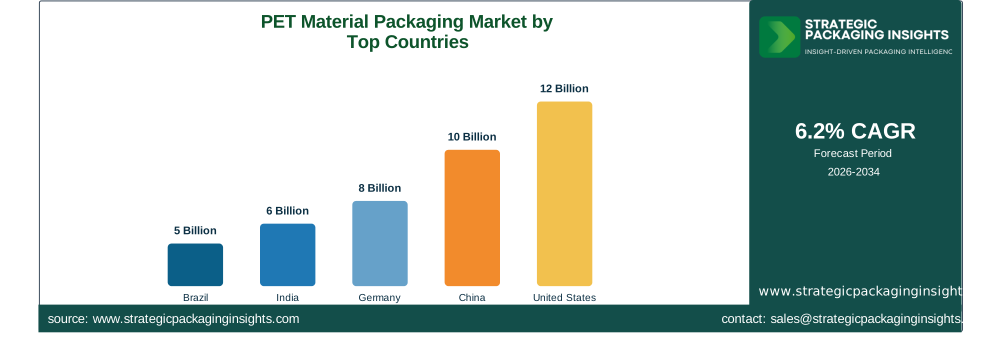
China, with its rapidly growing economy and increasing urbanization, is another significant market for PET Material Packaging. The market size in China is estimated at $10 billion, with a CAGR of 8%. The country's large population and rising disposable incomes are driving demand for packaged goods, particularly in the beverage and personal care sectors. Government policies promoting environmental sustainability and the development of recycling infrastructure are key growth drivers. However, the market faces challenges related to regulatory compliance and the need for advanced recycling technologies.
Germany, as a leading market in Europe, has a market size of $8 billion and a CAGR of 4%. The country's strong emphasis on sustainability and recycling, along with its advanced manufacturing capabilities, supports the growth of the PET Material Packaging market. Germany's stringent environmental regulations and consumer preference for eco-friendly packaging solutions are driving demand. However, the market faces challenges related to high production costs and competition from alternative packaging materials.
India, with its burgeoning middle class and increasing consumption of packaged goods, presents significant growth opportunities for the PET Material Packaging market. The market size in India is approximately $6 billion, with a CAGR of 9%. The country's young population and rapid urbanization are driving demand for beverages and personal care products, which are major applications of PET packaging. Government initiatives to promote recycling and reduce plastic waste are also contributing to market growth. However, challenges related to infrastructure and regulatory compliance remain.
Brazil, as a key market in Latin America, has a market size of $5 billion and a CAGR of 7%. The country's growing economy and increasing consumer demand for packaged beverages and food products are driving the market. Brazil's focus on sustainability and the development of recycling infrastructure are key growth drivers. However, the market faces challenges related to economic volatility and regulatory compliance. Companies operating in Brazil need to navigate these challenges while capitalizing on the growing demand for PET packaging solutions.
PET Material Packaging Market Segments Insights

Packaging Type Analysis
The PET Material Packaging market is segmented by packaging type into bottles, trays, films, and jars. Bottles dominate the market due to their widespread use in the beverage industry. The demand for PET bottles is driven by their lightweight nature, durability, and excellent barrier properties, which make them ideal for carbonated and non-carbonated drinks. Trays and films are also gaining traction, particularly in the food packaging sector, where they offer convenience and product protection. Jars, while a smaller segment, are used in personal care and food applications, where transparency and resealability are important factors.
Trends in the packaging type segment indicate a growing preference for lightweight and sustainable solutions. Companies are focusing on reducing the weight of PET bottles without compromising their strength, which helps in reducing material costs and environmental impact. The development of multi-layer films with enhanced barrier properties is also a key trend, as it extends the shelf life of packaged products. In the jars segment, the demand for innovative designs and resealable options is driving growth, particularly in the personal care industry. Overall, the packaging type segment is characterized by innovation and a focus on sustainability.
Material Type Analysis
The material type segment of the PET Material Packaging market includes virgin PET, rPET, and bio-PET. Virgin PET remains the most widely used material due to its clarity, strength, and cost-effectiveness. However, the increasing focus on sustainability is driving the demand for rPET and bio-PET. rPET, made from recycled PET materials, is gaining popularity as it reduces the environmental impact of packaging and aligns with circular economy principles. Bio-PET, derived from renewable resources, is also gaining traction as companies seek to reduce their carbon footprint.
In the material type segment, the trend towards sustainable materials is evident. Companies are investing in advanced recycling technologies to increase the availability and quality of rPET. The development of bio-PET is also a focus area, with research efforts aimed at improving its performance and cost competitiveness. The shift towards sustainable materials is driven by consumer demand for eco-friendly packaging and regulatory pressures to reduce plastic waste. As a result, the material type segment is expected to see significant growth in rPET and bio-PET usage in the coming years.
Application Analysis
The application segment of the PET Material Packaging market includes beverages, food, personal care, and pharma. The beverage industry is the largest application segment, with PET bottles being the preferred choice for packaging due to their lightweight, durability, and excellent barrier properties. The food industry is also a significant segment, with PET trays and films used for packaging ready-to-eat meals and fresh produce. In the personal care sector, PET packaging is favored for its transparency and resealability, which enhance product appeal and convenience.
Trends in the application segment indicate a growing demand for convenience and sustainability. In the beverage industry, the demand for lightweight and recyclable PET bottles is driving innovation. The food industry is seeing a shift towards packaging solutions that extend shelf life and reduce food waste. In the personal care sector, the demand for innovative designs and sustainable materials is driving growth. The pharma industry, while a smaller segment, is also adopting PET packaging for its safety and barrier properties. Overall, the application segment is characterized by a focus on convenience, sustainability, and innovation.
End Use Analysis
The end-use segment of the PET Material Packaging market includes FMCG, healthcare, retail, and foodservice. The FMCG sector is the largest end-use segment, driven by the demand for packaged beverages and food products. The healthcare sector is also a significant segment, with PET packaging used for pharmaceutical products due to its safety and barrier properties. The retail sector is seeing a growing demand for PET packaging solutions that enhance product visibility and appeal. The foodservice industry is also adopting PET packaging for its convenience and durability.
Trends in the end-use segment indicate a growing demand for sustainable and innovative packaging solutions. In the FMCG sector, the demand for lightweight and recyclable PET packaging is driving growth. The healthcare sector is seeing a shift towards packaging solutions that ensure product safety and compliance with regulatory standards. In the retail sector, the demand for packaging solutions that enhance product visibility and appeal is driving innovation. The foodservice industry is also adopting PET packaging for its convenience and durability. Overall, the end-use segment is characterized by a focus on sustainability, innovation, and consumer appeal.
PET Material Packaging Market Segments
The PET Material Packaging market has been segmented on the basis ofBy Packaging Type
- Bottles
- Trays
- Films
- Jars
By Material Type
- Virgin PET
- rPET
- Bio-PET
By Application
- Beverages
- Food
- Personal Care
- Pharma
By End Use
- FMCG
- Healthcare
- Retail
- Foodservice
Region
- Asia Pacific
- North America
- Latin America
- Europe
- Middle East & Africa




