


PET Hinged Containers Market Outlook
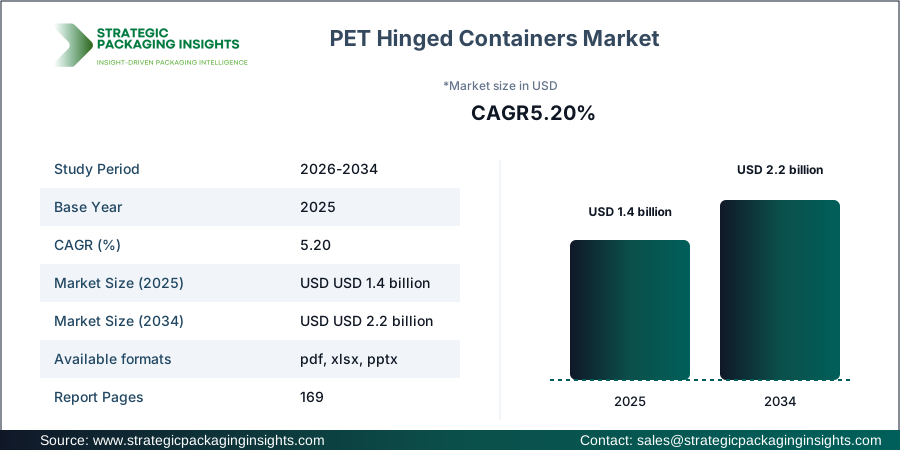
The PET Hinged Containers market size was valued at USD 1.4 billion in 2025 and is anticipated to reach USD 2.2 billion by 2034, growing at a CAGR of 5.20% during the forecast period according to Strategic Packaging Insights. Inline Plastics, a leading player in this market, has been instrumental in driving growth through innovative packaging solutions that cater to the evolving needs of the foodservice and retail sectors. The increasing demand for convenient and sustainable packaging options is a significant driver, as consumers and businesses alike seek products that offer both functionality and environmental benefits.
One of the most impactful drivers of the PET Hinged Containers market is the growing emphasis on sustainability and eco-friendly packaging solutions. According to recent government initiatives and environmental regulations, there is a strong push towards reducing plastic waste and promoting the use of recyclable materials. This trend is supported by the increasing consumer preference for products that minimize environmental impact, which in turn drives the demand for PET Hinged Containers made from recycled PET (rPET) and hybrid rPET blends. Companies like Anchor Packaging are responding to this demand by investing in advanced recycling technologies and sustainable material sourcing, further propelling market growth.
Report Scope
| Attributes | Details |
| Report Title | PET Hinged Containers Market Size, Future Growth and Forecast 2034 |
| By Material | Virgin PET, rPET (Post-Consumer), Hybrid rPET Blends |
| By Shape | Rectangular, Round, Square, Compartmented |
| By Capacity | Below 12 oz, 12-24 oz, 24-48 oz, Above 48 oz |
| By End Use | Fresh-Cut Produce & Salads, Bakery, Deli & Prepared Foods, Berries & Fruits, Foodservice Takeaway |
| By Region | North America (U.S., Canada, Mexico), Europe (Germany, UK, France, Italy, Spain, Rest of Europe), Asia Pacific (China, India, Japan, South Korea, Australia, Rest of Asia Pacific), Latin America (Brazil, Argentina, Rest of Latin America), Middle East & Africa (GCC Countries, South Africa, Rest of MEA) |
| Base Year | 2025 |
| Historic Period | 2018-2024 |
| Forecast Period | 2026-2034 |
| Number of Pages | 169 |
| Customization Available | Yes* |
Sustainability & Circular Economy Analysis
Sustainability initiatives and circular economy practices are significantly shaping the PET Hinged Containers market. The integration of recyclable materials, such as rPET, is becoming a standard practice among manufacturers aiming to reduce their carbon footprint and align with consumer sustainability preferences. This shift is driven by the increasing awareness of environmental issues and the demand for packaging solutions that support waste reduction strategies. Companies like Placon are leading the charge by developing innovative packaging designs that utilize eco-friendly materials, thereby enhancing their market competitiveness.
The influence of sustainability trends extends beyond material selection to impact packaging design, manufacturing processes, and supply chain strategies. Lightweight packaging and reusable designs are gaining traction as they offer cost savings in transportation and align with extended producer responsibility (EPR) regulations. These trends are prompting companies to rethink their investment decisions, focusing on technologies that enhance production efficiency while minimizing environmental impact. As a result, the PET Hinged Containers market is witnessing increased investment in R&D for sustainable packaging solutions.
Regulatory compliance and ESG initiatives are also playing a crucial role in shaping the market landscape. Governments worldwide are implementing stricter packaging regulations to curb plastic pollution, which is driving manufacturers to adopt sustainable practices. This regulatory pressure, combined with consumer demand for eco-friendly products, is encouraging companies to innovate and differentiate their offerings. As a result, the PET Hinged Containers market is poised for long-term growth, with sustainability serving as a key competitive advantage for forward-thinking companies.
Packaging Value Chain & Supply Chain Analysis
The packaging value chain for PET Hinged Containers involves a complex ecosystem of raw material suppliers, packaging converters, manufacturers, and logistics providers. Raw material sourcing is a critical component, with companies like Dart focusing on securing high-quality PET and rPET to ensure product consistency and sustainability. The availability of raw materials directly impacts production capabilities and supply chain efficiency, influencing overall market performance. Strategic partnerships with suppliers and converters are essential for maintaining a steady supply of materials and optimizing production processes.
Manufacturers and packaging converters play a pivotal role in transforming raw materials into finished products. Companies such as Genpak and Direct Pack are investing in advanced packaging machinery and technologies to enhance production efficiency and meet the growing demand for PET Hinged Containers. These investments are crucial for maintaining competitive pricing and ensuring timely delivery to retailers and brand owners. Efficient logistics and distribution channels further support market growth by facilitating the seamless movement of products from manufacturers to end-users.
Recycling networks and procurement strategies are integral to the supply chain, particularly in the context of sustainability. Companies are increasingly focusing on building robust recycling networks to support the circular economy and reduce waste. This involves collaborating with local and global partners to enhance recycling capabilities and ensure the availability of recycled materials. Inventory management and supply chain resilience are also key considerations, as companies strive to balance cost efficiency with the need for flexibility and responsiveness in a dynamic market environment.
Opportunities & Threats
The PET Hinged Containers market presents numerous opportunities for growth, driven by the increasing demand for sustainable and convenient packaging solutions. One significant opportunity lies in the expansion of the foodservice and retail sectors, where the need for durable and eco-friendly packaging is paramount. Companies like Faerch are capitalizing on this trend by developing innovative packaging designs that cater to the specific needs of these industries. Additionally, the growing popularity of online food delivery services is creating new avenues for market expansion, as consumers seek packaging that ensures product freshness and safety during transit.
Another opportunity for market growth is the rising consumer awareness of environmental issues and the demand for products that align with sustainable practices. This trend is encouraging manufacturers to invest in R&D for eco-friendly materials and packaging designs, such as hybrid rPET blends and lightweight packaging. Companies that can effectively communicate their sustainability credentials and offer innovative solutions are likely to gain a competitive edge in the market. Furthermore, the implementation of extended producer responsibility (EPR) regulations is prompting companies to adopt circular economy practices, creating additional opportunities for growth and differentiation.
Despite the promising opportunities, the PET Hinged Containers market faces several threats that could hinder growth. One of the primary challenges is the volatility in raw material prices, particularly for virgin PET and rPET. Fluctuations in material costs can impact production expenses and profit margins, posing a risk to manufacturers. Additionally, the increasing regulatory pressure to reduce plastic waste and promote recycling presents a challenge for companies that have yet to fully embrace sustainable practices. To mitigate these threats, companies must focus on building resilient supply chains and investing in sustainable technologies to remain competitive in the evolving market landscape.
Drivers & Challenges
The PET Hinged Containers market is driven by several key factors, including the growing demand for convenient and sustainable packaging solutions. The rise of the foodservice and retail sectors is a significant driver, as these industries require packaging that offers both functionality and environmental benefits. Companies like Lacerta are responding to this demand by developing innovative packaging designs that cater to the specific needs of these sectors. Additionally, the increasing consumer preference for eco-friendly products is driving the adoption of rPET and hybrid rPET blends, further propelling market growth.
Another major driver of the market is the emphasis on sustainability and circular economy practices. Governments worldwide are implementing stricter packaging regulations to curb plastic pollution, which is encouraging manufacturers to adopt sustainable practices. This regulatory pressure, combined with consumer demand for eco-friendly products, is prompting companies to innovate and differentiate their offerings. As a result, the PET Hinged Containers market is witnessing increased investment in R&D for sustainable packaging solutions, positioning it for long-term growth.
However, the market also faces several challenges that could impact growth. One of the primary challenges is the volatility in raw material prices, particularly for virgin PET and rPET. Fluctuations in material costs can impact production expenses and profit margins, posing a risk to manufacturers. Additionally, the increasing regulatory pressure to reduce plastic waste and promote recycling presents a challenge for companies that have yet to fully embrace sustainable practices. To overcome these challenges, companies must focus on building resilient supply chains and investing in sustainable technologies to remain competitive in the evolving market landscape.
Market Share Analysis
The competitive landscape of the PET Hinged Containers market is characterized by the presence of several key players, each striving to capture a significant share of the market. Inline Plastics, a leading company in this sector, has established a strong foothold through its innovative packaging solutions and commitment to sustainability. The company's focus on developing eco-friendly products has resonated well with consumers and businesses alike, contributing to its market dominance. Similarly, Anchor Packaging has gained a competitive edge by investing in advanced recycling technologies and sustainable material sourcing, further strengthening its market position.
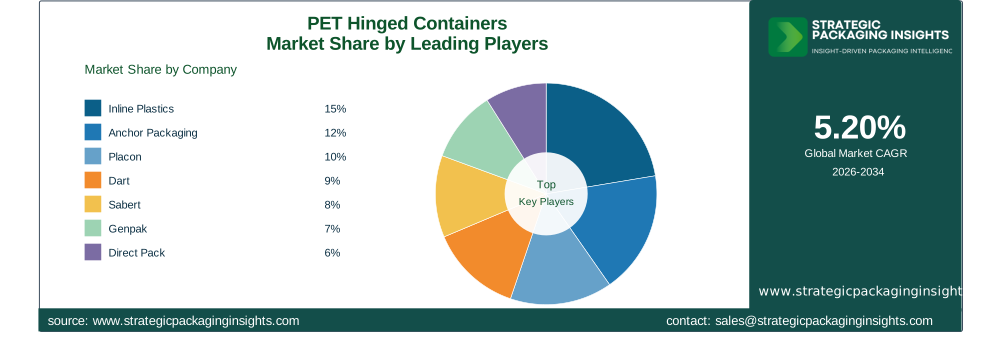
Placon is another prominent player in the PET Hinged Containers market, known for its innovative packaging designs and commitment to sustainability. The company's focus on using recycled materials and developing lightweight packaging solutions has helped it capture a significant share of the market. Dart, a major player in the industry, has also made significant strides in expanding its product portfolio and enhancing its production capabilities to meet the growing demand for PET Hinged Containers. These strategic initiatives have enabled Dart to maintain a strong market presence and compete effectively with other leading companies.
Sabert and Genpak are also key players in the market, each leveraging their expertise in packaging design and manufacturing to capture a significant share of the market. Sabert's focus on developing sustainable packaging solutions and its commitment to reducing its carbon footprint have positioned it as a leader in the industry. Genpak, on the other hand, has invested heavily in R&D to develop innovative packaging solutions that cater to the evolving needs of the foodservice and retail sectors. These efforts have enabled both companies to maintain a competitive edge and drive market growth.
Other notable companies in the PET Hinged Containers market include Direct Pack, Faerch, Lacerta, and Alpha Pak. Each of these companies has carved out a niche in the market by focusing on specific segments and leveraging their strengths in packaging design and manufacturing. Direct Pack, for example, has gained recognition for its innovative packaging solutions that cater to the foodservice industry, while Faerch has focused on developing sustainable packaging solutions for the retail sector. Lacerta and Alpha Pak have also made significant contributions to the market through their commitment to sustainability and innovation, further enhancing their market positions.
Key Highlights
- Market Size: The PET Hinged Containers market was valued at USD 1.4 billion in 2025 and is projected to reach USD 2.2 billion by 2034.
- Growth Rate: The market is expected to grow at a CAGR of 5.20% during the forecast period.
- Material Trends: Increasing demand for rPET and hybrid rPET blends due to sustainability initiatives.
- Regional Insights: Asia Pacific is expected to witness the highest growth rate, driven by rising demand in emerging markets.
- End-Use Applications: Significant growth in the foodservice takeaway and fresh-cut produce segments.
- Key Players: Inline Plastics, Anchor Packaging, Placon, Dart, Sabert, Genpak, Direct Pack, Faerch, Lacerta, Alpha Pak.
- Sustainability Focus: Emphasis on eco-friendly packaging solutions and circular economy practices.
PET Hinged Containers Market Segments Insights

By Material Analysis
The PET Hinged Containers market is segmented by material into Virgin PET, rPET (Post-Consumer), and Hybrid rPET Blends. Virgin PET remains a popular choice due to its clarity and strength, making it ideal for showcasing products. However, the increasing focus on sustainability is driving the demand for rPET and hybrid rPET blends. These materials offer environmental benefits by reducing reliance on virgin plastics and supporting recycling initiatives. Companies like Anchor Packaging are investing in advanced recycling technologies to enhance the quality and availability of rPET, further boosting its adoption in the market.
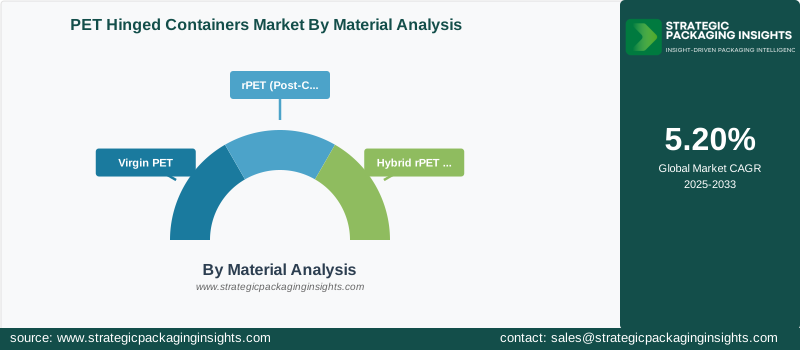
Hybrid rPET blends are gaining traction as they combine the benefits of virgin PET and rPET, offering a balance of performance and sustainability. This trend is particularly evident in regions with stringent environmental regulations, where companies are seeking innovative solutions to meet compliance requirements. The growing consumer preference for eco-friendly products is also driving the demand for rPET and hybrid rPET blends, as consumers increasingly prioritize sustainability in their purchasing decisions. As a result, manufacturers are focusing on developing new formulations and technologies to enhance the performance and appeal of these materials.
By Shape Analysis
The PET Hinged Containers market is segmented by shape into Rectangular, Round, Square, and Compartmented. Rectangular containers are widely used due to their versatility and efficient use of space, making them ideal for a variety of applications, including fresh-cut produce and bakery items. Round containers are popular in the foodservice industry, particularly for salads and deli items, as they offer a convenient and attractive presentation. Square containers are favored for their stackability and space-saving design, making them suitable for retail and foodservice applications.
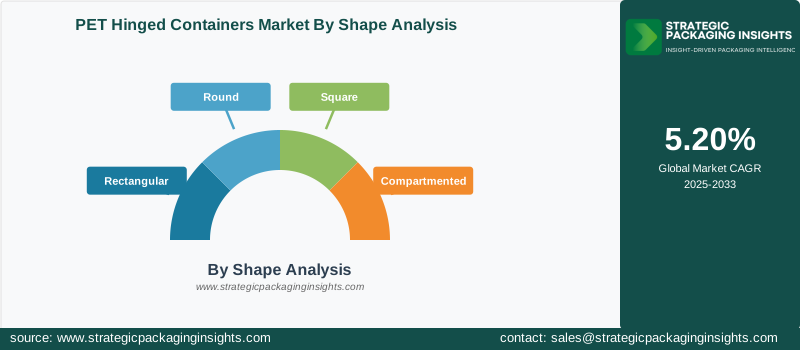
Compartmented containers are gaining popularity in the market, driven by the growing demand for convenience and portion control. These containers are ideal for meal prep and takeaway applications, as they allow for the separation of different food items, maintaining freshness and preventing cross-contamination. The increasing focus on convenience and functionality is driving the demand for innovative container shapes that cater to specific consumer needs. Manufacturers are responding to this trend by developing new designs and features that enhance the usability and appeal of their products.
By Capacity Analysis
The PET Hinged Containers market is segmented by capacity into Below 12 oz, 12-24 oz, 24-48 oz, and Above 48 oz. Containers with a capacity of 12-24 oz are the most popular, as they cater to a wide range of applications, including salads, deli items, and fresh-cut produce. These containers offer a balance of convenience and portion control, making them ideal for both retail and foodservice applications. The demand for containers with a capacity of 24-48 oz is also growing, driven by the increasing popularity of family-sized and bulk packaging options.
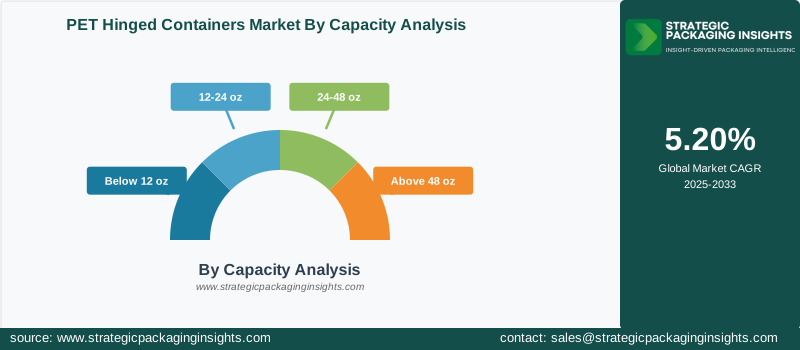
Containers with a capacity of Below 12 oz are commonly used for single-serve applications, such as snacks and desserts, while those with a capacity of Above 48 oz are favored for bulk and family-sized packaging. The growing demand for convenience and portion control is driving the development of new container sizes and designs that cater to specific consumer needs. Manufacturers are focusing on enhancing the functionality and appeal of their products by offering a variety of sizes and features that meet the diverse requirements of their customers.
By End Use Analysis
The PET Hinged Containers market is segmented by end use into Fresh-Cut Produce & Salads, Bakery, Deli & Prepared Foods, Berries & Fruits, and Foodservice Takeaway. The Fresh-Cut Produce & Salads segment is experiencing significant growth, driven by the increasing demand for convenient and healthy food options. Consumers are seeking packaging solutions that maintain the freshness and quality of their products, leading to the growing popularity of PET Hinged Containers in this segment. The Bakery segment is also witnessing growth, as these containers offer an attractive and functional packaging solution for a variety of baked goods.
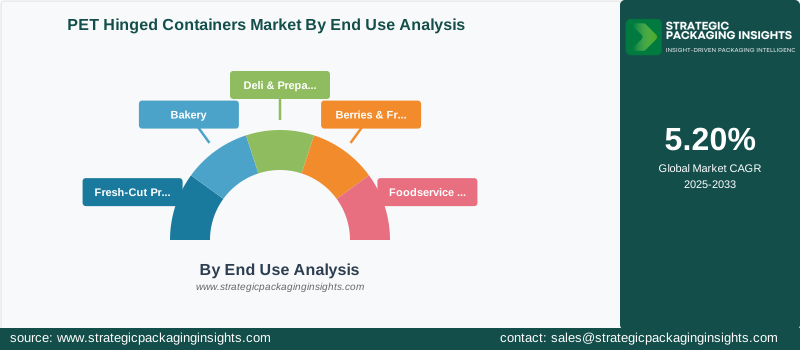
The Deli & Prepared Foods segment is benefiting from the rising demand for ready-to-eat meals and convenience foods, as consumers seek packaging that offers both functionality and sustainability. The Berries & Fruits segment is experiencing growth due to the increasing popularity of fresh and healthy snacks, with PET Hinged Containers providing an ideal packaging solution that maintains product freshness and extends shelf life. The Foodservice Takeaway segment is also expanding, driven by the growing popularity of online food delivery services and the need for packaging that ensures product safety and freshness during transit.
PET Hinged Containers Market Segments
The PET Hinged Containers market has been segmented on the basis ofBy Material
- Virgin PET
- rPET (Post-Consumer)
- Hybrid rPET Blends
By Shape
- Rectangular
- Round
- Square
- Compartmented
By Capacity
- Below 12 oz
- 12-24 oz
- 24-48 oz
- Above 48 oz
By End Use
- Fresh-Cut Produce & Salads
- Bakery
- Deli & Prepared Foods
- Berries & Fruits
- Foodservice Takeaway
By Region
- North America (U.S., Canada, Mexico)
- Europe (Germany, UK, France, Italy, Spain, Rest of Europe)
- Asia Pacific (China, India, Japan, South Korea, Australia, Rest of Asia Pacific)
- Latin America (Brazil, Argentina, Rest of Latin America)
- Middle East & Africa (GCC Countries, South Africa, Rest of MEA)




