


Perfume Packaging Market Outlook
The Perfume Packaging market size was valued at USD 5.5 billion in 2025 and is anticipated to reach USD 8.9 billion by 2034, growing at a CAGR of 5.50% during the forecast period according to Strategic Packaging Insights. The market is witnessing a significant surge in demand driven by the increasing consumer preference for premium and luxury fragrances, which is propelling the need for innovative and aesthetically appealing packaging solutions. Companies like Verescence and Stoelzle are at the forefront, offering cutting-edge designs and sustainable packaging options that cater to the evolving consumer tastes and preferences. The growing trend of personalization and customization in fragrance packaging is further fueling market growth, as brands strive to create unique identities and enhance consumer engagement.
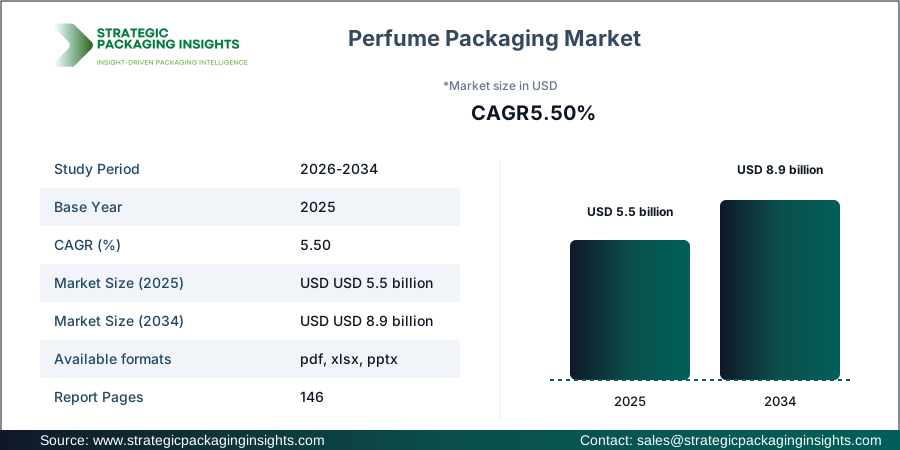
One of the most impactful drivers of the Perfume Packaging market is the rising awareness and demand for sustainable and eco-friendly packaging solutions. Governments and environmental organizations worldwide are advocating for reduced plastic usage and promoting recyclable materials, which is encouraging manufacturers to adopt greener practices. This shift is supported by the increasing consumer inclination towards environmentally responsible products, as highlighted by various environmental agencies. Companies like Gerresheimer and Bormioli Luigi are investing in research and development to create sustainable packaging solutions that not only meet regulatory standards but also appeal to eco-conscious consumers. This trend is expected to significantly influence the market dynamics, driving innovation and fostering competitive advantage among key players.
Report Scope
| Attributes | Details |
| Report Title | Perfume Packaging Market Size, Future Growth and Forecast 2034 |
| By Material | Glass, Plastic, Metal (Caps, Collars), Paperboard (Secondary) |
| By Component | Primary Bottles, Pumps & Sprayers, Caps & Closures, Secondary Boxes, Labels & Decoration |
| By Capacity | Below 30 ml, 30-50 ml, 50-100 ml, Above 100 ml |
| By End Use | Prestige / Luxury Fragrance, Mass Fragrance, Niche & Artisanal, Travel & Miniatures |
| By Region | North America (U.S., Canada, Mexico), Europe (Germany, UK, France, Italy, Spain, Rest of Europe), Asia Pacific (China, India, Japan, South Korea, Australia, Rest of Asia Pacific), Latin America (Brazil, Argentina, Rest of Latin America), Middle East & Africa (GCC Countries, South Africa, Rest of MEA) |
| Base Year | 2025 |
| Historic Period | 2018-2024 |
| Forecast Period | 2026-2034 |
| Number of Pages | 146 |
| Customization Available | Yes* |
Sustainability & Circular Economy Analysis
Sustainability initiatives and circular economy practices are reshaping the perfume packaging market, with a strong emphasis on reducing environmental impact. The adoption of recyclable materials and reusable packaging is becoming increasingly prevalent, as companies strive to minimize waste and enhance their environmental credentials. Lightweight packaging solutions are gaining traction, as they not only reduce material usage but also lower transportation costs and carbon emissions. Eco-friendly material innovation is at the forefront, with companies exploring biodegradable and compostable options to meet consumer demand for sustainable products.
These sustainability trends are influencing packaging design and manufacturing processes, as companies seek to align with consumer preferences and regulatory requirements. Investment decisions are increasingly being guided by environmental, social, and governance (ESG) initiatives, as businesses recognize the long-term benefits of sustainable practices. Packaging regulations are becoming more stringent, with extended producer responsibility (EPR) frameworks encouraging manufacturers to take greater accountability for their products' lifecycle. This shift is driving companies to adopt waste reduction strategies and explore innovative solutions to enhance their sustainability credentials.
The focus on sustainability is also impacting supply chain strategies, as companies prioritize sourcing eco-friendly materials and establishing partnerships with suppliers who share their environmental values. Regulatory compliance is becoming a key consideration, as businesses navigate evolving packaging regulations and strive to maintain market competitiveness. The emphasis on sustainability is expected to drive long-term growth in the perfume packaging market, as companies that embrace these trends are likely to gain a competitive edge and enhance their brand reputation among environmentally conscious consumers.
Packaging Value Chain & Supply Chain Analysis
The perfume packaging value chain is a complex ecosystem that involves multiple stakeholders, from raw material suppliers to brand owners and retailers. Raw material sourcing is a critical component, as the availability and cost of materials like glass, plastic, and metal directly impact production capabilities and pricing strategies. Packaging converters and manufacturers play a pivotal role in transforming these materials into finished products, with a focus on quality, design, and sustainability. Companies like Verescence and Gerresheimer are leading the way in innovative packaging solutions, leveraging advanced technologies and sustainable practices to meet market demands.
Logistics and distribution channels are essential for ensuring the efficient movement of products from manufacturers to end consumers. Supply chain efficiency is a key determinant of market performance, as it influences lead times, inventory management, and overall cost-effectiveness. Strategic partnerships and collaborations are becoming increasingly important, as companies seek to enhance their supply chain resilience and mitigate risks associated with global sourcing. Localization strategies are gaining traction, as businesses aim to reduce transportation costs and carbon emissions by sourcing materials and manufacturing products closer to their target markets.
Recycling networks are an integral part of the perfume packaging supply chain, as companies strive to enhance their sustainability credentials and comply with regulatory requirements. Extended producer responsibility (EPR) frameworks are encouraging manufacturers to take greater accountability for their products' end-of-life, driving investment in recycling infrastructure and waste reduction initiatives. The focus on sustainability is influencing procurement strategies, as companies prioritize eco-friendly materials and seek to establish partnerships with suppliers who share their environmental values. This shift is expected to drive long-term growth and competitiveness in the perfume packaging market, as businesses that embrace sustainable practices are likely to gain a competitive edge and enhance their brand reputation.
Opportunities & Threats
The perfume packaging market presents numerous opportunities for growth, driven by the increasing demand for premium and luxury fragrances. The trend towards personalization and customization is creating new avenues for innovation, as brands seek to differentiate themselves and enhance consumer engagement. Companies that invest in cutting-edge design and sustainable packaging solutions are likely to gain a competitive edge, as consumers increasingly prioritize eco-friendly products. The growing popularity of niche and artisanal fragrances is also creating opportunities for market expansion, as consumers seek unique and exclusive scent experiences.
Emerging markets in Asia Pacific and Latin America offer significant growth potential, as rising disposable incomes and changing consumer preferences drive demand for premium fragrances. Companies that establish a strong presence in these regions are likely to benefit from the expanding middle class and increasing consumer spending on luxury goods. The focus on sustainability is also creating opportunities for innovation, as businesses explore new materials and technologies to meet regulatory requirements and consumer expectations. Companies that embrace sustainable practices are likely to enhance their brand reputation and gain a competitive advantage in the market.
However, the perfume packaging market also faces several threats, including regulatory challenges and supply chain disruptions. Stringent packaging regulations and extended producer responsibility (EPR) frameworks are increasing compliance costs and placing pressure on manufacturers to adopt sustainable practices. Supply chain disruptions, such as raw material shortages and transportation delays, can impact production capabilities and lead to increased costs. Companies that fail to adapt to these challenges may face competitive disadvantages and risk losing market share to more agile and innovative competitors.
Drivers & Challenges
The perfume packaging market is driven by several key factors, including the increasing demand for premium and luxury fragrances. Consumers are seeking unique and high-quality scent experiences, which is driving the need for innovative and aesthetically appealing packaging solutions. The trend towards personalization and customization is also a significant driver, as brands strive to create unique identities and enhance consumer engagement. Companies that invest in cutting-edge design and sustainable packaging solutions are likely to gain a competitive edge, as consumers increasingly prioritize eco-friendly products.
The focus on sustainability is another major driver of the perfume packaging market, as companies seek to align with consumer preferences and regulatory requirements. The adoption of recyclable materials and reusable packaging is becoming increasingly prevalent, as businesses strive to minimize waste and enhance their environmental credentials. Investment in eco-friendly material innovation is at the forefront, with companies exploring biodegradable and compostable options to meet consumer demand for sustainable products. This shift is expected to drive long-term growth and competitiveness in the market.
Despite these drivers, the perfume packaging market faces several challenges, including regulatory compliance and supply chain disruptions. Stringent packaging regulations and extended producer responsibility (EPR) frameworks are increasing compliance costs and placing pressure on manufacturers to adopt sustainable practices. Supply chain disruptions, such as raw material shortages and transportation delays, can impact production capabilities and lead to increased costs. Companies that fail to adapt to these challenges may face competitive disadvantages and risk losing market share to more agile and innovative competitors.
Market Share Analysis
The competitive landscape of the perfume packaging market is characterized by the presence of several key players, each striving to gain a competitive edge through innovation and sustainability. Companies like Verescence, Stoelzle, and Gerresheimer are leading the market with their advanced packaging solutions and commitment to eco-friendly practices. These companies are investing in research and development to create innovative designs and sustainable materials that meet the evolving demands of consumers and regulatory requirements. The focus on sustainability is a key differentiator, as companies seek to enhance their brand reputation and gain a competitive advantage in the market.
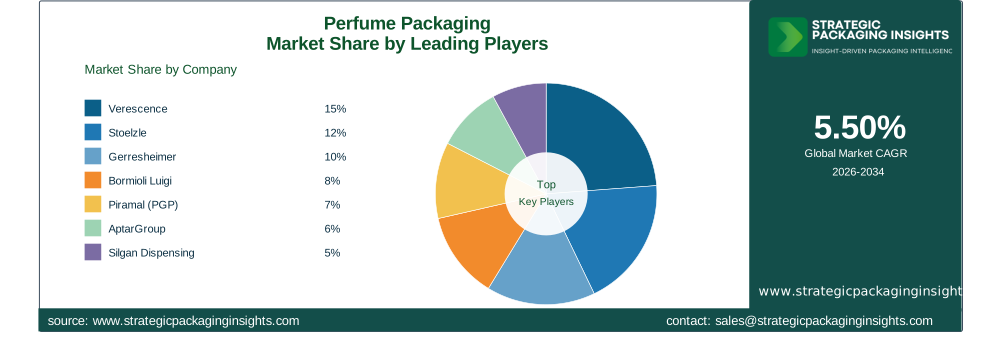
Verescence is a prominent player in the perfume packaging market, known for its high-quality glass packaging solutions. The company is committed to sustainability, with a focus on reducing its carbon footprint and enhancing its environmental credentials. Stoelzle is another leading player, offering a wide range of glass packaging solutions for the fragrance industry. The company is investing in advanced technologies and sustainable practices to meet the growing demand for eco-friendly packaging solutions.
Gerresheimer is a key player in the perfume packaging market, known for its innovative designs and commitment to sustainability. The company is investing in research and development to create cutting-edge packaging solutions that meet the evolving demands of consumers and regulatory requirements. Bormioli Luigi is another prominent player, offering a wide range of glass packaging solutions for the fragrance industry. The company is focused on sustainability, with a commitment to reducing its environmental impact and enhancing its brand reputation.
Piramal (PGP) is a leading player in the perfume packaging market, known for its high-quality glass packaging solutions. The company is committed to sustainability, with a focus on reducing its carbon footprint and enhancing its environmental credentials. AptarGroup is another key player, offering a wide range of pumps and sprayers for the fragrance industry. The company is investing in advanced technologies and sustainable practices to meet the growing demand for eco-friendly packaging solutions.
Key Highlights
- The Perfume Packaging market size was valued at USD 5.5 billion in 2025.
- Forecasted to reach USD 8.9 billion by 2034, growing at a CAGR of 5.50%.
- Significant growth driven by demand for premium and luxury fragrances.
- Increasing focus on sustainable and eco-friendly packaging solutions.
- Emerging markets in Asia Pacific and Latin America offer growth potential.
- Key players include Verescence, Stoelzle, and Gerresheimer.
- Personalization and customization trends driving market innovation.
Perfume Packaging Market Segments Insights

By Material Analysis
The material segment of the perfume packaging market is dominated by glass, which is favored for its premium look and feel, making it the material of choice for luxury fragrances. Glass packaging is not only aesthetically appealing but also offers excellent barrier properties, preserving the fragrance's integrity. Companies like Verescence and Stoelzle are leading the way in glass packaging innovation, focusing on sustainability and eco-friendly practices. Plastic is another significant material, offering versatility and cost-effectiveness, particularly for mass-market fragrances. However, the environmental impact of plastic is driving manufacturers to explore recyclable and biodegradable alternatives.
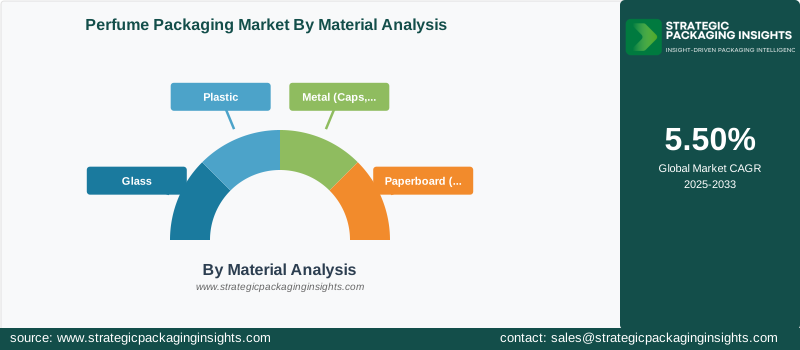
Metal components, such as caps and collars, are gaining popularity for their durability and premium appearance. These components are often used in conjunction with glass bottles to enhance the overall aesthetic appeal of the packaging. Paperboard is primarily used for secondary packaging, providing an additional layer of protection and an opportunity for branding and decoration. The focus on sustainability is driving innovation in paperboard packaging, with companies exploring recycled and FSC-certified materials to meet consumer demand for eco-friendly products.
By Component Analysis
The component segment of the perfume packaging market includes primary bottles, pumps and sprayers, caps and closures, secondary boxes, and labels and decoration. Primary bottles are the most critical component, as they directly impact the fragrance's presentation and consumer perception. Companies like Gerresheimer and Bormioli Luigi are investing in innovative designs and sustainable materials to enhance the appeal of their primary bottles. Pumps and sprayers are essential for fragrance application, with companies like AptarGroup leading the market with their advanced dispensing solutions.
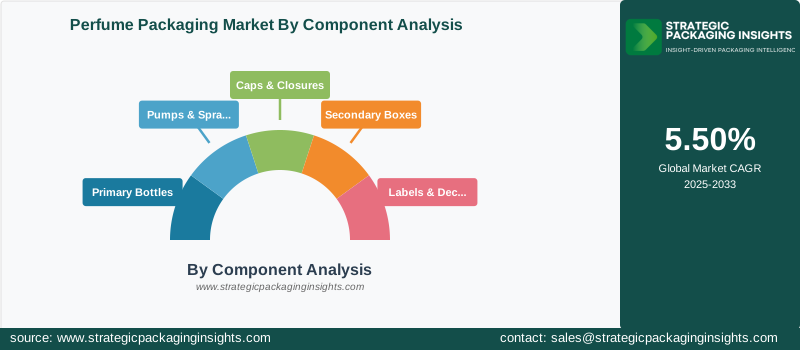
Caps and closures play a crucial role in preserving the fragrance's integrity and enhancing the packaging's aesthetic appeal. Metal and plastic are the most common materials used for caps and closures, with a growing focus on sustainable alternatives. Secondary boxes provide an additional layer of protection and an opportunity for branding and decoration. Labels and decoration are essential for conveying brand identity and product information, with companies exploring innovative printing techniques and sustainable materials to enhance their appeal.
By Capacity Analysis
The capacity segment of the perfume packaging market is categorized into below 30 ml, 30-50 ml, 50-100 ml, and above 100 ml. The below 30 ml segment is primarily driven by the growing demand for travel-sized and miniature fragrances, which offer convenience and portability. The 30-50 ml and 50-100 ml segments are the most popular, catering to both mass-market and luxury fragrances. These sizes offer a balance between affordability and luxury, making them appealing to a wide range of consumers.
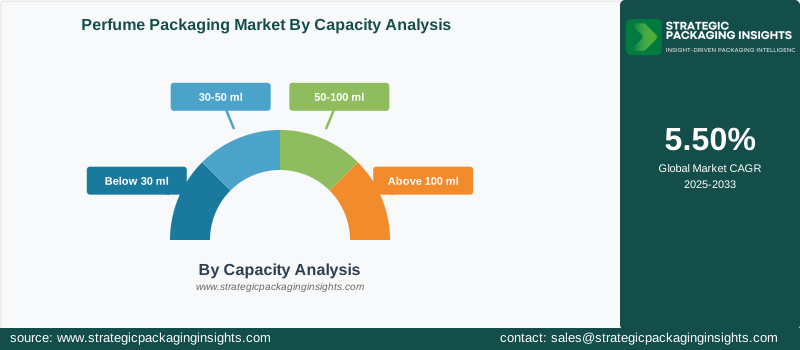
The above 100 ml segment is primarily driven by the demand for luxury and niche fragrances, which often come in larger sizes to enhance their premium appeal. Companies are focusing on innovative designs and sustainable materials to enhance the appeal of their packaging across all capacity segments. The growing trend towards personalization and customization is also influencing capacity choices, as brands seek to create unique and exclusive offerings that cater to individual consumer preferences.
By End Use Analysis
The end-use segment of the perfume packaging market is categorized into prestige/luxury fragrance, mass fragrance, niche and artisanal, and travel and miniatures. The prestige/luxury fragrance segment is the largest, driven by the increasing demand for high-quality and exclusive scent experiences. Companies are investing in innovative designs and sustainable materials to enhance the appeal of their luxury packaging solutions. The mass fragrance segment is characterized by affordability and accessibility, with a focus on cost-effective materials and designs.
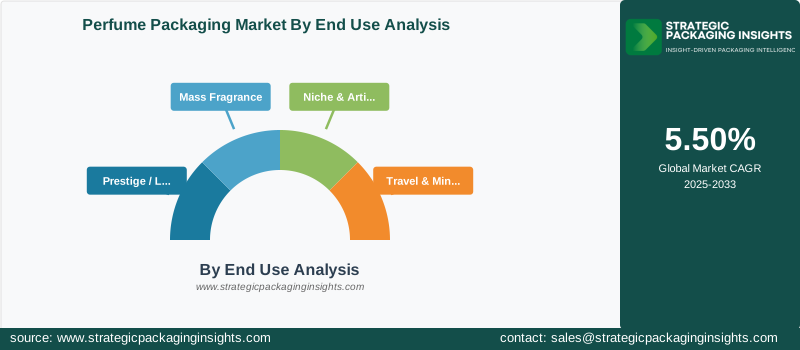
The niche and artisanal segment is gaining popularity, driven by the growing consumer preference for unique and exclusive fragrances. Companies are focusing on innovative designs and sustainable materials to enhance the appeal of their niche packaging solutions. The travel and miniatures segment is driven by the demand for convenient and portable fragrance options, with a focus on lightweight and compact packaging solutions. The growing trend towards personalization and customization is also influencing end-use choices, as brands seek to create unique and exclusive offerings that cater to individual consumer preferences.
Perfume Packaging Market Segments
The Perfume Packaging market has been segmented on the basis ofBy Material
- Glass
- Plastic
- Metal (Caps, Collars)
- Paperboard (Secondary)
By Component
- Primary Bottles
- Pumps & Sprayers
- Caps & Closures
- Secondary Boxes
- Labels & Decoration
By Capacity
- Below 30 ml
- 30-50 ml
- 50-100 ml
- Above 100 ml
By End Use
- Prestige / Luxury Fragrance
- Mass Fragrance
- Niche & Artisanal
- Travel & Miniatures
By Region
- North America (U.S., Canada, Mexico)
- Europe (Germany, UK, France, Italy, Spain, Rest of Europe)
- Asia Pacific (China, India, Japan, South Korea, Australia, Rest of Asia Pacific)
- Latin America (Brazil, Argentina, Rest of Latin America)
- Middle East & Africa (GCC Countries, South Africa, Rest of MEA)




