


PE Resins Market Outlook
The PE Resins market was valued at $69.02 billion in 2025 and is projected to reach $96.80 billion by 2034, growing at a CAGR of 3.8% during the forecast period 2026-2034. This growth is driven by the increasing demand for polyethylene resins across various industries, including packaging, automotive, and industrial applications. The versatility and cost-effectiveness of PE resins make them a preferred choice for manufacturers looking to produce durable and lightweight products. Additionally, advancements in polymer technology and the development of bio-based PE resins are expected to further fuel market growth, as companies strive to meet the rising demand for sustainable and environmentally friendly materials.
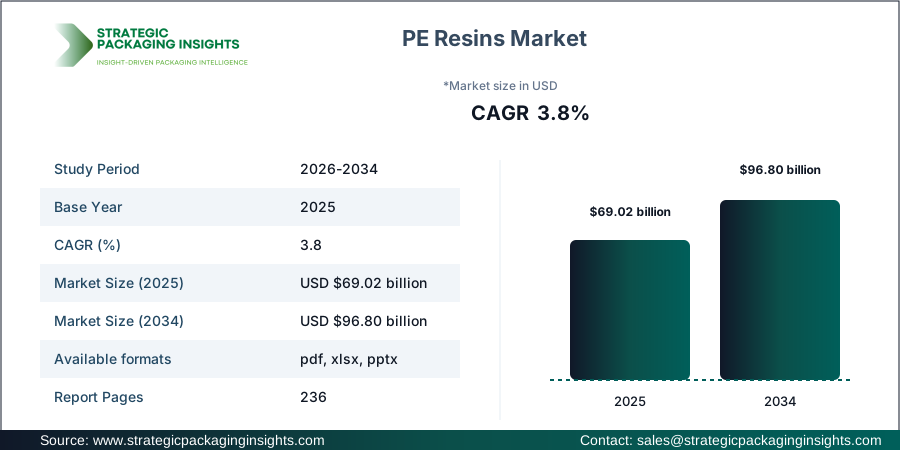
Despite the promising growth prospects, the PE Resins market faces several challenges that could hinder its expansion. Regulatory restrictions on plastic usage, particularly in developed regions, pose a significant threat to market growth. Governments worldwide are implementing stringent regulations to curb plastic pollution, which could impact the demand for PE resins. However, the market holds potential for growth through the development of recyclable and biodegradable PE resins, which align with global sustainability goals. Companies investing in research and development to innovate eco-friendly solutions are likely to gain a competitive edge in the market.
Report Scope
| Attributes | Details |
| Report Title | PE Resins Market Size, Future Growth and Forecast 2034 |
| Type | HDPE, LDPE, LLDPE |
| Application | Packaging, Automotive, Industrial |
| End Use | Consumer Goods, Industrial Applications |
| Region | Asia Pacific, North America, Latin America, Europe, Middle East & Africa |
| Base Year | 2025 |
| Historic Period | 2018-2024 |
| Forecast Period | 2026-2034 |
| Number of Pages | 236 |
| Customization Available | Yes* |
Opportunities & Threats
The PE Resins market presents numerous opportunities for growth, particularly in emerging economies where industrialization and urbanization are on the rise. The increasing demand for packaged goods, driven by changing consumer lifestyles and preferences, is expected to boost the demand for PE resins in the packaging sector. Additionally, the automotive industry is witnessing a shift towards lightweight materials to improve fuel efficiency and reduce emissions, creating a significant opportunity for PE resins. The development of advanced PE resin grades with enhanced properties, such as improved strength and thermal resistance, is likely to open new avenues for market expansion.
Another opportunity lies in the growing trend of sustainability and the circular economy. As consumers and industries become more environmentally conscious, there is a rising demand for recyclable and biodegradable materials. PE resins, being highly recyclable, are well-positioned to capitalize on this trend. Companies that focus on developing bio-based PE resins and enhancing recycling technologies are expected to benefit from this shift towards sustainable practices. Furthermore, collaborations and partnerships between resin manufacturers and recycling companies can create synergies that drive market growth.
However, the PE Resins market is not without its threats. The increasing regulatory pressure to reduce plastic waste and the growing popularity of alternative materials, such as bioplastics and paper-based packaging, pose significant challenges to market growth. Additionally, fluctuations in raw material prices, particularly crude oil, can impact the profitability of PE resin manufacturers. Companies need to adopt strategies to mitigate these risks, such as diversifying their raw material sources and investing in research and development to innovate new products that meet regulatory standards and consumer preferences.
Drivers & Challenges
The PE Resins market is primarily driven by the robust demand from the packaging industry, which accounts for a significant share of the market. The increasing consumption of packaged food and beverages, coupled with the growth of e-commerce, is fueling the demand for PE resins. The material's excellent barrier properties, flexibility, and durability make it ideal for packaging applications. Additionally, the automotive industry's shift towards lightweight materials to enhance fuel efficiency and reduce emissions is driving the demand for PE resins. The development of high-performance PE resin grades with improved mechanical properties is further propelling market growth.
Technological advancements in polymer processing and the development of bio-based PE resins are also significant drivers of the market. Companies are investing in research and development to innovate new resin grades that offer superior performance and sustainability. The growing awareness of environmental issues and the need for sustainable materials are encouraging manufacturers to develop recyclable and biodegradable PE resins. These innovations are expected to create new growth opportunities for the market, as companies strive to meet the evolving demands of consumers and regulatory bodies.
Despite the positive growth drivers, the PE Resins market faces several challenges that could impede its expansion. One of the primary challenges is the increasing regulatory pressure to reduce plastic waste and promote sustainable materials. Governments worldwide are implementing stringent regulations to curb plastic pollution, which could impact the demand for PE resins. Additionally, the volatility in raw material prices, particularly crude oil, poses a significant challenge for resin manufacturers. Companies need to adopt strategies to mitigate these risks, such as diversifying their raw material sources and investing in research and development to innovate new products that meet regulatory standards and consumer preferences.
Market Share Analysis
The competitive landscape of the PE Resins market is characterized by the presence of several key players who dominate the market. These companies are focusing on strategic initiatives such as mergers and acquisitions, partnerships, and collaborations to strengthen their market position and expand their product portfolio. The market is highly competitive, with companies striving to innovate new products and technologies to meet the evolving demands of consumers and regulatory bodies. The development of bio-based and recyclable PE resins is a key focus area for many companies, as they seek to capitalize on the growing trend of sustainability and the circular economy.
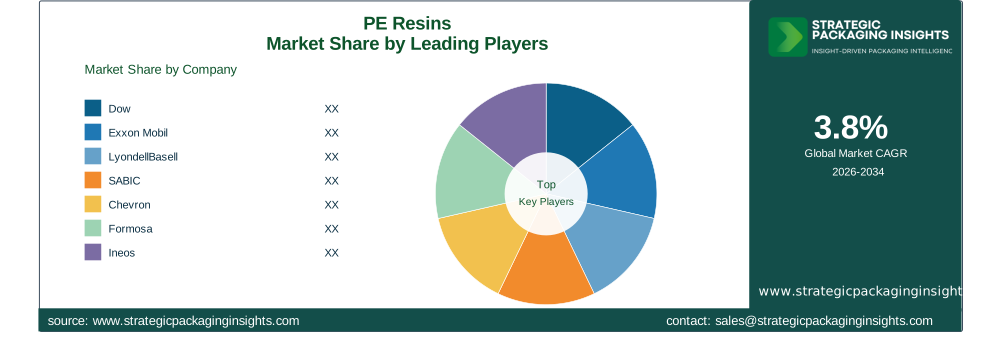
Dow is one of the leading players in the PE Resins market, with a significant market share. The company is known for its innovative product offerings and strong focus on sustainability. Dow has been investing in research and development to develop bio-based and recyclable PE resins, which align with global sustainability goals. Exxon Mobil is another major player in the market, with a strong presence in the packaging and automotive sectors. The company is focusing on expanding its product portfolio and enhancing its production capabilities to meet the growing demand for PE resins.
LyondellBasell is a key player in the PE Resins market, known for its advanced polymer technologies and strong focus on sustainability. The company has been investing in research and development to innovate new resin grades with enhanced properties, such as improved strength and thermal resistance. SABIC is another major player in the market, with a strong presence in the Middle East and Africa region. The company is focusing on expanding its production capabilities and enhancing its product portfolio to meet the growing demand for PE resins in the region.
Chevron, Formosa, Ineos, Braskem, Total, and Borealis are other significant players in the PE Resins market. These companies are focusing on strategic initiatives such as mergers and acquisitions, partnerships, and collaborations to strengthen their market position and expand their product portfolio. The development of bio-based and recyclable PE resins is a key focus area for many companies, as they seek to capitalize on the growing trend of sustainability and the circular economy. The competitive landscape of the PE Resins market is expected to remain dynamic, with companies striving to innovate new products and technologies to meet the evolving demands of consumers and regulatory bodies.
Key Highlights
- The PE Resins market is projected to grow from $69.02 billion in 2025 to $96.80 billion by 2034, at a CAGR of 3.8%.
- Packaging is the largest application segment, driven by the increasing demand for packaged goods and e-commerce growth.
- Technological advancements in polymer processing are driving the development of high-performance PE resin grades.
- The automotive industry's shift towards lightweight materials is boosting the demand for PE resins.
- Regulatory restrictions on plastic usage pose a significant challenge to market growth.
- The development of bio-based and recyclable PE resins is a key focus area for many companies.
- Asia Pacific is the largest regional market, driven by rapid industrialization and urbanization.
- Key players in the market include Dow, Exxon Mobil, LyondellBasell, SABIC, Chevron, Formosa, Ineos, Braskem, Total, and Borealis.
- The market is highly competitive, with companies focusing on strategic initiatives to strengthen their market position.
- The growing trend of sustainability and the circular economy presents significant growth opportunities for the market.
Top Countries Insights
In the PE Resins market, China stands out as a dominant player, with a market size of approximately $20 billion and a CAGR of 5%. The country's rapid industrialization and urbanization are key growth drivers, along with the increasing demand for packaged goods and automotive applications. Government policies promoting sustainable materials and recycling initiatives are also contributing to market growth. However, challenges such as regulatory restrictions on plastic usage and environmental concerns need to be addressed to sustain growth.
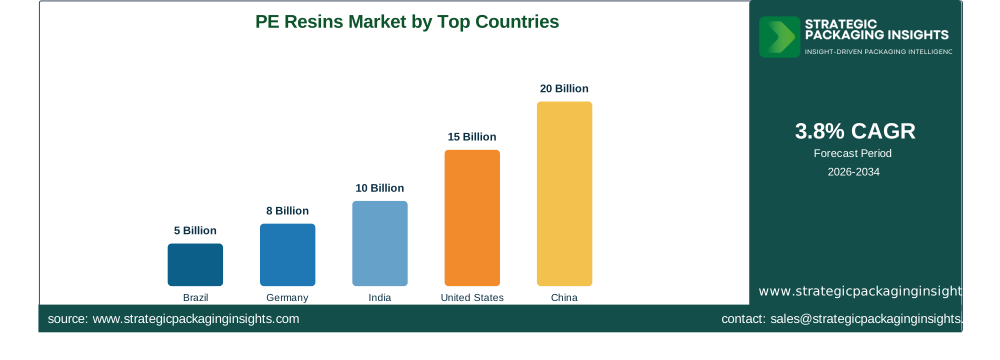
The United States is another significant market for PE resins, with a market size of around $15 billion and a CAGR of 3%. The country's well-established packaging and automotive industries are major contributors to market growth. The increasing demand for lightweight materials in the automotive sector and the growing trend of e-commerce are driving the demand for PE resins. However, regulatory restrictions on plastic usage and the availability of alternative materials pose challenges to market growth.
India is emerging as a key market for PE resins, with a market size of approximately $10 billion and a CAGR of 6%. The country's rapid industrialization and urbanization, along with the increasing demand for packaged goods, are driving market growth. Government initiatives promoting sustainable materials and recycling are also contributing to market expansion. However, challenges such as regulatory restrictions on plastic usage and environmental concerns need to be addressed to sustain growth.
Germany is a significant market for PE resins in Europe, with a market size of around $8 billion and a CAGR of 2%. The country's well-established automotive and packaging industries are major contributors to market growth. The increasing demand for lightweight materials in the automotive sector and the growing trend of sustainability are driving the demand for PE resins. However, regulatory restrictions on plastic usage and the availability of alternative materials pose challenges to market growth.
Brazil is a key market for PE resins in Latin America, with a market size of approximately $5 billion and a CAGR of 4%. The country's growing packaging and automotive industries are major contributors to market growth. The increasing demand for lightweight materials in the automotive sector and the growing trend of e-commerce are driving the demand for PE resins. However, regulatory restrictions on plastic usage and the availability of alternative materials pose challenges to market growth.
PE Resins Market Segments Insights

Type Analysis
The PE Resins market is segmented by type into HDPE, LDPE, and LLDPE. High-Density Polyethylene (HDPE) is widely used due to its excellent strength-to-density ratio, making it ideal for applications requiring durability and resistance to impact. The demand for HDPE is driven by its extensive use in packaging, particularly for containers and bottles, as well as in the construction industry for pipes and fittings. The development of advanced HDPE grades with enhanced properties is expected to further boost its demand.
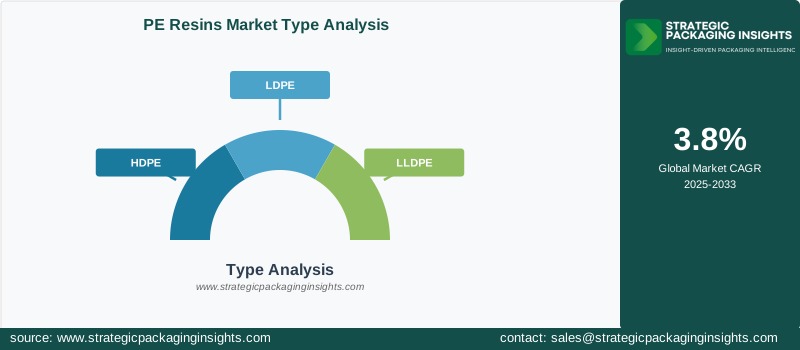
Low-Density Polyethylene (LDPE) is favored for its flexibility and transparency, making it suitable for applications such as film and sheet packaging. The increasing demand for flexible packaging solutions in the food and beverage industry is driving the growth of the LDPE segment. Linear Low-Density Polyethylene (LLDPE) offers a balance between strength and flexibility, making it ideal for applications such as stretch films and bags. The growing demand for LLDPE in the packaging industry, driven by the need for lightweight and durable materials, is expected to fuel its growth.
Application Analysis
The PE Resins market is segmented by application into packaging, automotive, and industrial. The packaging segment is the largest application segment, driven by the increasing demand for packaged goods and the growth of e-commerce. PE resins are widely used in packaging applications due to their excellent barrier properties, flexibility, and durability. The development of advanced packaging solutions, such as multi-layer films and recyclable materials, is expected to further boost the demand for PE resins in this segment.

The automotive segment is witnessing significant growth, driven by the industry's shift towards lightweight materials to improve fuel efficiency and reduce emissions. PE resins are used in various automotive applications, including interior and exterior components, due to their excellent mechanical properties and resistance to impact. The development of high-performance PE resin grades with enhanced properties is expected to further drive the demand for PE resins in the automotive sector.
End Use Analysis
The PE Resins market is segmented by end use into consumer goods and industrial applications. The consumer goods segment is driven by the increasing demand for durable and lightweight materials in products such as toys, household items, and electronics. PE resins are favored for their versatility and cost-effectiveness, making them a preferred choice for manufacturers in the consumer goods industry. The development of advanced PE resin grades with enhanced properties is expected to further boost the demand for PE resins in this segment.

The industrial applications segment is driven by the increasing demand for durable and lightweight materials in applications such as pipes, fittings, and containers. PE resins are widely used in industrial applications due to their excellent mechanical properties and resistance to impact. The development of high-performance PE resin grades with enhanced properties is expected to further drive the demand for PE resins in the industrial applications segment.
PE Resins Market Segments
The PE Resins market has been segmented on the basis ofType
- HDPE
- LDPE
- LLDPE
Application
- Packaging
- Automotive
- Industrial
End Use
- Consumer Goods
- Industrial Applications
Region
- Asia Pacific
- North America
- Latin America
- Europe
- Middle East & Africa




