


PCR Shrink and Stretch Film Market Outlook
The PCR Shrink and Stretch Film market was valued at $1.59 billion in 2025 and is projected to reach $3.61 billion by 2034, growing at a CAGR of 9.6% during the forecast period 2026-2034. This market is witnessing significant growth due to the increasing demand for sustainable packaging solutions. The shift towards eco-friendly materials is driven by stringent environmental regulations and consumer awareness about plastic waste. The adoption of PCR (Post-Consumer Recycled) materials in shrink and stretch films is a key factor propelling market growth. These films are extensively used in various industries such as logistics, food & beverage, and retail, where packaging efficiency and sustainability are paramount.
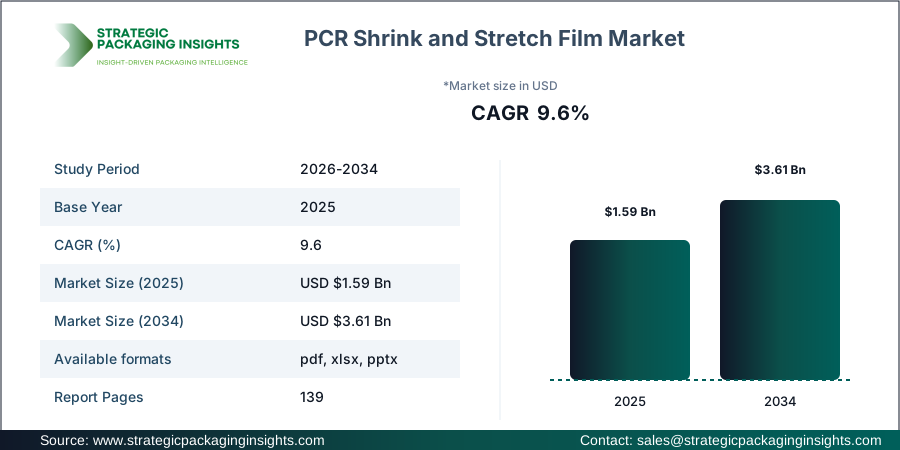
Despite the promising growth trajectory, the PCR Shrink and Stretch Film market faces challenges such as fluctuating raw material prices and the high cost of recycling processes. However, advancements in recycling technologies and government incentives for sustainable practices offer potential growth opportunities. The market is also influenced by the increasing trend of e-commerce, which demands efficient packaging solutions to ensure product safety during transit. As companies continue to innovate and develop cost-effective recycling methods, the market is expected to overcome these challenges and expand further.
Report Scope
| Attributes | Details |
| Report Title | PCR Shrink and Stretch Film Market Size, Future Growth and Forecast 2034 |
| Product Type | PCR Shrink Film, PCR Stretch Film, PCR Bundling Film |
| Resin Type | rPE, rLLDPE, rPET Blends |
| Application | Pallet Wrapping, Beverage Bundling, Retail Multipacks |
| End Use | Logistics, Food & Beverage, Retail, Manufacturing |
| Region | Asia Pacific, North America, Latin America, Europe, Middle East & Africa |
| Base Year | 2025 |
| Historic Period | 2018-2024 |
| Forecast Period | 2026-2034 |
| Number of Pages | 139 |
| Customization Available | Yes* |
Opportunities & Threats
The PCR Shrink and Stretch Film market presents numerous opportunities, particularly in the realm of sustainability. As global awareness about environmental issues rises, there is a growing demand for packaging solutions that minimize environmental impact. This trend is driving companies to invest in the development of films made from post-consumer recycled materials, which not only reduce waste but also lower carbon footprints. Additionally, the increasing adoption of these films in the food and beverage industry, where packaging plays a crucial role in product preservation and safety, is expected to boost market growth. The shift towards circular economy practices, where materials are reused and recycled, further enhances the market's potential.
Another significant opportunity lies in the technological advancements in recycling processes. Innovations in recycling technologies are making it easier and more cost-effective to produce high-quality PCR films. This is encouraging more companies to adopt these sustainable materials, thereby expanding the market. Furthermore, government regulations and incentives aimed at promoting sustainable packaging solutions are providing a favorable environment for market growth. As more countries implement policies to reduce plastic waste, the demand for PCR shrink and stretch films is expected to rise significantly.
However, the market also faces certain threats that could hinder its growth. One of the primary challenges is the high cost associated with the recycling process, which can deter companies from adopting PCR materials. Additionally, the fluctuating prices of raw materials used in the production of these films can impact profit margins. The market also faces competition from alternative sustainable packaging solutions, which could limit its growth potential. Companies need to continuously innovate and improve their recycling processes to remain competitive in this evolving market.
Drivers & Challenges
The PCR Shrink and Stretch Film market is primarily driven by the increasing demand for sustainable packaging solutions. As consumers become more environmentally conscious, there is a growing preference for products that use recycled materials. This shift in consumer behavior is encouraging companies to adopt PCR films, which are made from post-consumer recycled materials. The use of these films not only helps reduce plastic waste but also aligns with corporate sustainability goals, making them an attractive option for businesses across various industries. Additionally, the rise of e-commerce and the need for efficient packaging solutions to ensure product safety during transit are further driving the demand for PCR shrink and stretch films.
Another key driver of the market is the stringent environmental regulations imposed by governments worldwide. These regulations are pushing companies to adopt sustainable packaging solutions to comply with legal requirements and avoid penalties. The increasing focus on reducing carbon footprints and promoting circular economy practices is also contributing to the market's growth. As companies strive to meet these regulatory standards, the demand for PCR films is expected to rise. Furthermore, advancements in recycling technologies are making it easier and more cost-effective to produce high-quality PCR films, which is encouraging more companies to adopt these sustainable materials.
Despite the positive drivers, the PCR Shrink and Stretch Film market faces several challenges that could impact its growth. One of the main challenges is the high cost associated with the recycling process, which can deter companies from adopting PCR materials. Additionally, the fluctuating prices of raw materials used in the production of these films can impact profit margins. The market also faces competition from alternative sustainable packaging solutions, which could limit its growth potential. Companies need to continuously innovate and improve their recycling processes to remain competitive in this evolving market.
Market Share Analysis
The competitive landscape of the PCR Shrink and Stretch Film market is characterized by the presence of several key players who are actively investing in research and development to enhance their product offerings. Berry Global, a leading player in the market, holds a significant share due to its extensive product portfolio and strong distribution network. The company is known for its innovative solutions and commitment to sustainability, which have helped it maintain a competitive edge. Amcor, another major player, is recognized for its focus on developing eco-friendly packaging solutions. The company's strategic acquisitions and partnerships have further strengthened its market position.
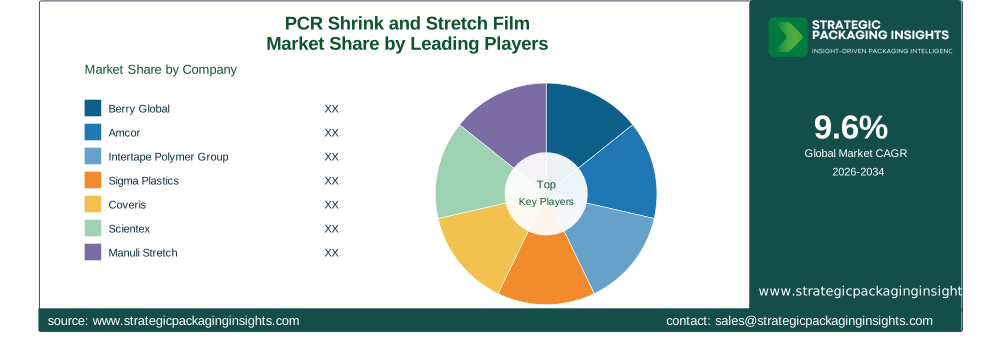
Intertape Polymer Group is also a prominent player in the market, known for its diverse range of packaging products. The company's emphasis on sustainability and innovation has enabled it to capture a substantial market share. Sigma Plastics, with its wide array of packaging solutions, is another key player contributing to the market's growth. The company's focus on quality and customer satisfaction has helped it build a strong reputation in the industry. Coveris, a global leader in packaging solutions, is known for its commitment to sustainability and innovation, which has helped it maintain a competitive position in the market.
Scientex, a leading manufacturer of stretch films, is recognized for its focus on sustainability and innovation. The company's strategic investments in research and development have enabled it to expand its product offerings and capture a significant market share. Manuli Stretch, known for its high-quality stretch films, is another key player in the market. The company's emphasis on customer satisfaction and innovation has helped it maintain a strong market presence. Paragon Films, with its focus on developing innovative packaging solutions, is also a major player contributing to the market's growth.
DUO Plast and Trioworld are other notable players in the PCR Shrink and Stretch Film market. DUO Plast is known for its high-quality packaging solutions and commitment to sustainability, which have helped it capture a significant market share. Trioworld, with its focus on innovation and customer satisfaction, is recognized for its diverse range of packaging products. These companies, along with others, are actively investing in research and development to enhance their product offerings and maintain a competitive edge in the market.
Key Highlights
- The PCR Shrink and Stretch Film market is projected to grow at a CAGR of 9.6% from 2026 to 2034.
- Increasing demand for sustainable packaging solutions is a major driver of market growth.
- Technological advancements in recycling processes are enhancing the quality of PCR films.
- Stringent environmental regulations are encouraging the adoption of PCR materials.
- The rise of e-commerce is boosting the demand for efficient packaging solutions.
- Fluctuating raw material prices pose a challenge to market growth.
- Key players are investing in research and development to enhance their product offerings.
- Government incentives for sustainable practices are providing growth opportunities.
- Competition from alternative sustainable packaging solutions is a potential threat.
- Companies are focusing on innovation to remain competitive in the market.
Top Countries Insights
In the PCR Shrink and Stretch Film market, the United States holds a significant share, driven by the increasing demand for sustainable packaging solutions. The market in the U.S. is valued at approximately $1.2 billion, with a CAGR of 8%. The country's stringent environmental regulations and consumer awareness about plastic waste are key growth drivers. Additionally, the rise of e-commerce and the need for efficient packaging solutions are boosting the demand for PCR films. However, the market faces challenges such as fluctuating raw material prices and competition from alternative packaging solutions.
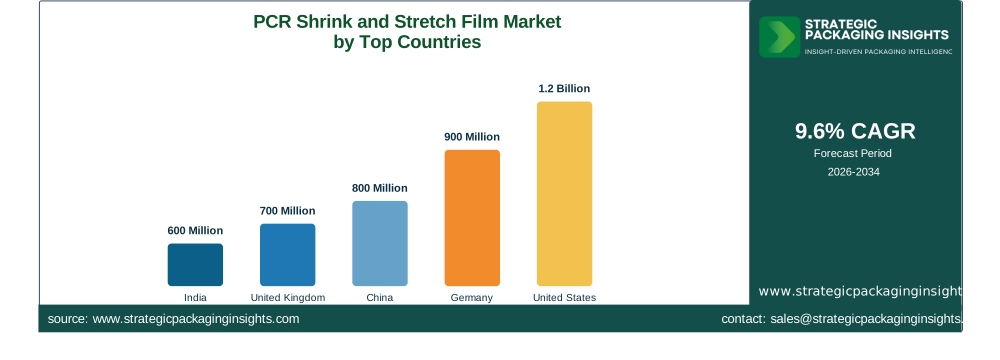
Germany is another key market for PCR Shrink and Stretch Films, with a market size of around $900 million and a CAGR of 7%. The country's strong focus on sustainability and circular economy practices is driving the demand for PCR materials. Government incentives for sustainable packaging solutions and advancements in recycling technologies are further supporting market growth. However, the high cost of recycling processes and competition from other sustainable packaging options pose challenges to the market.
China is experiencing rapid growth in the PCR Shrink and Stretch Film market, with a market size of approximately $800 million and a CAGR of 12%. The country's large manufacturing sector and increasing focus on sustainability are key growth drivers. The government's initiatives to reduce plastic waste and promote eco-friendly packaging solutions are also contributing to market growth. However, the market faces challenges such as fluctuating raw material prices and the need for technological advancements in recycling processes.
In the United Kingdom, the PCR Shrink and Stretch Film market is valued at around $700 million, with a CAGR of 6%. The country's strong focus on sustainability and consumer awareness about environmental issues are driving the demand for PCR materials. Government regulations and incentives for sustainable packaging solutions are also supporting market growth. However, the market faces challenges such as competition from alternative packaging solutions and the high cost of recycling processes.
India is emerging as a key market for PCR Shrink and Stretch Films, with a market size of approximately $600 million and a CAGR of 10%. The country's growing manufacturing sector and increasing focus on sustainability are key growth drivers. Government initiatives to promote eco-friendly packaging solutions and advancements in recycling technologies are further supporting market growth. However, the market faces challenges such as fluctuating raw material prices and the need for technological advancements in recycling processes.
PCR Shrink and Stretch Film Market Segments Insights

Product Type Analysis
The PCR Shrink and Stretch Film market is segmented by product type into PCR shrink film, PCR stretch film, and PCR bundling film. PCR shrink films are widely used in the packaging industry due to their ability to conform tightly to the shape of the packaged item, providing excellent protection and stability. The demand for PCR shrink films is driven by their application in various industries such as food and beverage, logistics, and retail. These films are particularly popular in the food and beverage industry, where they are used to package products like bottled beverages and canned goods. The increasing focus on sustainability and the use of recycled materials are further boosting the demand for PCR shrink films.
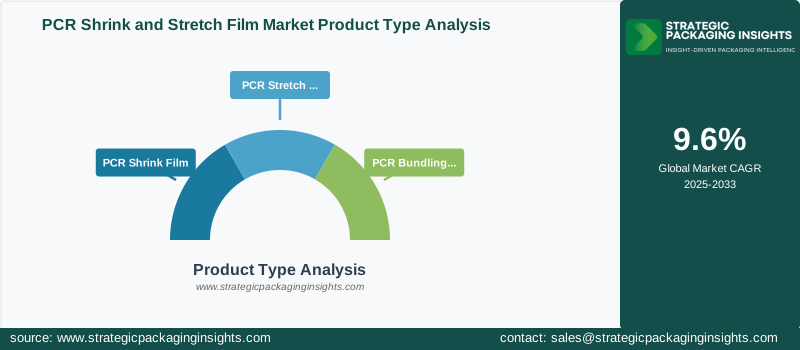
PCR stretch films, on the other hand, are primarily used for pallet wrapping and securing goods during transportation. These films offer excellent load stability and protection, making them ideal for use in the logistics and manufacturing industries. The demand for PCR stretch films is driven by the rise of e-commerce and the need for efficient packaging solutions to ensure product safety during transit. Additionally, the increasing adoption of these films in the manufacturing sector, where they are used to secure raw materials and finished goods, is contributing to market growth. The use of recycled materials in PCR stretch films aligns with corporate sustainability goals, further driving their demand.
PCR bundling films are used to bundle multiple items together, providing a cost-effective and efficient packaging solution. These films are commonly used in the retail industry, where they are used to package products like multipacks of beverages and household goods. The demand for PCR bundling films is driven by their ability to reduce packaging waste and improve packaging efficiency. The use of recycled materials in these films also aligns with sustainability goals, making them an attractive option for businesses looking to reduce their environmental impact. As companies continue to focus on sustainability and efficiency, the demand for PCR bundling films is expected to grow.
Resin Type Analysis
The PCR Shrink and Stretch Film market is segmented by resin type into rPE, rLLDPE, and rPET blends. rPE (recycled polyethylene) is one of the most commonly used resins in the production of PCR films due to its excellent strength and durability. The demand for rPE-based films is driven by their application in various industries such as logistics, food and beverage, and retail. These films offer excellent protection and stability, making them ideal for use in packaging applications where durability is crucial. The use of recycled materials in rPE films aligns with sustainability goals, further driving their demand.
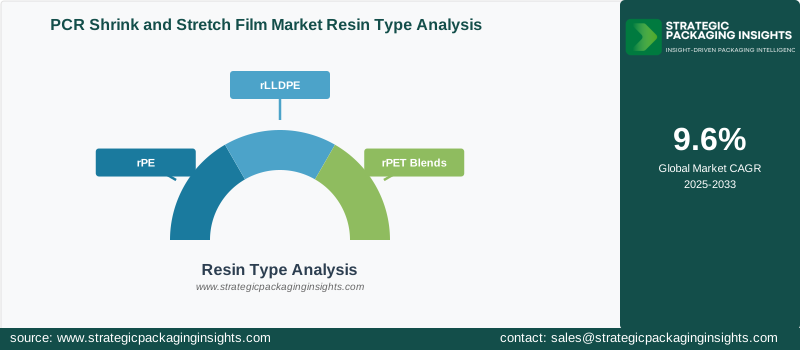
rLLDPE (recycled linear low-density polyethylene) is another popular resin used in the production of PCR films. rLLDPE-based films offer excellent flexibility and stretchability, making them ideal for use in applications such as pallet wrapping and bundling. The demand for rLLDPE films is driven by their ability to provide excellent load stability and protection, making them ideal for use in the logistics and manufacturing industries. Additionally, the use of recycled materials in rLLDPE films aligns with corporate sustainability goals, further driving their demand.
rPET blends (recycled polyethylene terephthalate) are used in the production of PCR films due to their excellent clarity and strength. The demand for rPET-based films is driven by their application in the food and beverage industry, where they are used to package products like bottled beverages and canned goods. The use of recycled materials in rPET films aligns with sustainability goals, making them an attractive option for businesses looking to reduce their environmental impact. As companies continue to focus on sustainability and efficiency, the demand for rPET-based films is expected to grow.
Application Analysis
The PCR Shrink and Stretch Film market is segmented by application into pallet wrapping, beverage bundling, and retail multipacks. Pallet wrapping is one of the most common applications of PCR films, where they are used to secure goods during transportation. The demand for PCR films in pallet wrapping is driven by the rise of e-commerce and the need for efficient packaging solutions to ensure product safety during transit. Additionally, the use of recycled materials in PCR films aligns with corporate sustainability goals, further driving their demand.
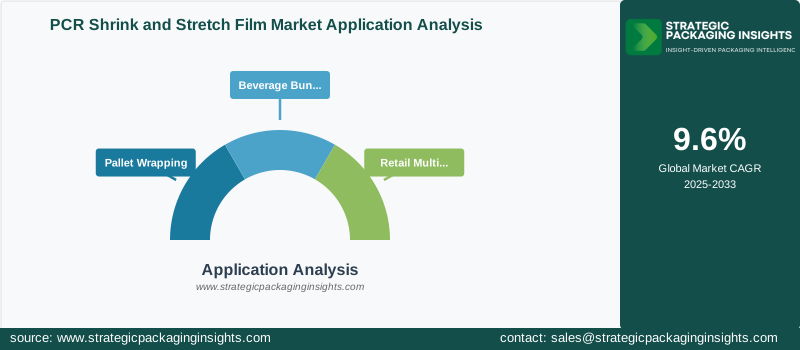
Beverage bundling is another key application of PCR films, where they are used to package products like bottled beverages and canned goods. The demand for PCR films in beverage bundling is driven by their ability to provide excellent protection and stability, making them ideal for use in the food and beverage industry. The use of recycled materials in PCR films also aligns with sustainability goals, making them an attractive option for businesses looking to reduce their environmental impact.
Retail multipacks are another important application of PCR films, where they are used to package products like multipacks of beverages and household goods. The demand for PCR films in retail multipacks is driven by their ability to reduce packaging waste and improve packaging efficiency. The use of recycled materials in PCR films also aligns with sustainability goals, making them an attractive option for businesses looking to reduce their environmental impact. As companies continue to focus on sustainability and efficiency, the demand for PCR films in retail multipacks is expected to grow.
End Use Analysis
The PCR Shrink and Stretch Film market is segmented by end use into logistics, food & beverage, retail, and manufacturing. The logistics industry is one of the largest end users of PCR films, where they are used to secure goods during transportation. The demand for PCR films in logistics is driven by the rise of e-commerce and the need for efficient packaging solutions to ensure product safety during transit. Additionally, the use of recycled materials in PCR films aligns with corporate sustainability goals, further driving their demand.
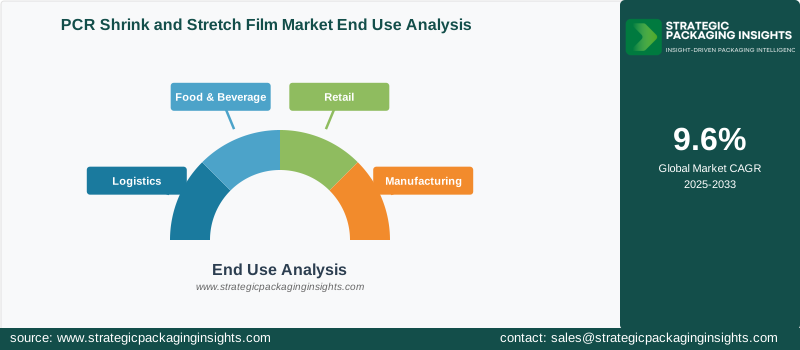
The food & beverage industry is another major end user of PCR films, where they are used to package products like bottled beverages and canned goods. The demand for PCR films in the food & beverage industry is driven by their ability to provide excellent protection and stability, making them ideal for use in packaging applications where product preservation is crucial. The use of recycled materials in PCR films also aligns with sustainability goals, making them an attractive option for businesses looking to reduce their environmental impact.
The retail industry is another important end user of PCR films, where they are used to package products like multipacks of beverages and household goods. The demand for PCR films in the retail industry is driven by their ability to reduce packaging waste and improve packaging efficiency. The use of recycled materials in PCR films also aligns with sustainability goals, making them an attractive option for businesses looking to reduce their environmental impact. As companies continue to focus on sustainability and efficiency, the demand for PCR films in the retail industry is expected to grow.
PCR Shrink and Stretch Film Market Segments
The PCR Shrink and Stretch Film market has been segmented on the basis ofProduct Type
- PCR Shrink Film
- PCR Stretch Film
- PCR Bundling Film
Resin Type
- rPE
- rLLDPE
- rPET Blends
Application
- Pallet Wrapping
- Beverage Bundling
- Retail Multipacks
End Use
- Logistics
- Food & Beverage
- Retail
- Manufacturing
Region
- Asia Pacific
- North America
- Latin America
- Europe
- Middle East & Africa




