


PCR Plastic Packaging Market Outlook
The PCR Plastic Packaging market was valued at $54.46 billion in 2025 and is projected to reach $104.03 billion by 2034, growing at a CAGR of 7.5% during the forecast period 2026-2034. This market is witnessing significant growth due to the increasing demand for sustainable packaging solutions. The shift towards eco-friendly packaging materials is driven by stringent environmental regulations and consumer awareness regarding the environmental impact of plastic waste. The adoption of PCR (Post-Consumer Recycled) plastics is gaining momentum as companies strive to reduce their carbon footprint and meet sustainability goals. The market is also benefiting from technological advancements in recycling processes, which enhance the quality and performance of recycled plastics, making them suitable for a wider range of applications.
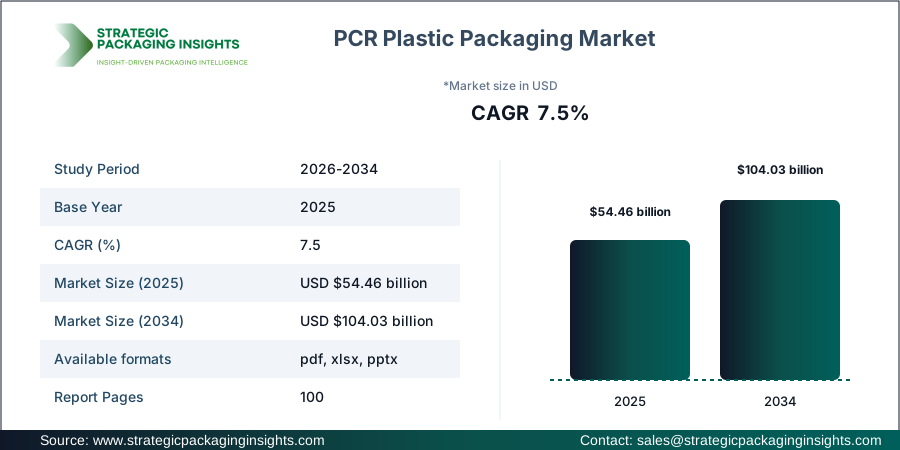
Despite the promising growth prospects, the PCR Plastic Packaging market faces challenges such as the high cost of recycled materials compared to virgin plastics and the limited availability of high-quality recycled plastics. Regulatory frameworks and policies promoting the use of recycled materials are expected to play a crucial role in overcoming these challenges. Additionally, the market is poised for growth opportunities in emerging economies where the demand for sustainable packaging is on the rise. The increasing investments in recycling infrastructure and the development of advanced recycling technologies are expected to further boost the market growth. Companies are also focusing on strategic collaborations and partnerships to expand their product offerings and strengthen their market presence.
Report Scope
| Attributes | Details |
| Report Title | PCR Plastic Packaging Market Size, Future Growth and Forecast 2034 |
| Plastic Type | PET, HDPE |
| Source | Post-consumer, Post-industrial |
| Application | Bottles, Films |
| End Use | Food, Non-food |
| Region | Asia Pacific, North America, Latin America, Europe, Middle East & Africa |
| Base Year | 2025 |
| Historic Period | 2018-2024 |
| Forecast Period | 2026-2034 |
| Number of Pages | 100 |
| Customization Available | Yes* |
Opportunities & Threats
The PCR Plastic Packaging market presents numerous opportunities for growth, primarily driven by the increasing consumer preference for sustainable and eco-friendly packaging solutions. As environmental concerns continue to rise, consumers are becoming more conscious of their purchasing decisions, favoring products that contribute to environmental sustainability. This shift in consumer behavior is encouraging manufacturers to adopt PCR plastics in their packaging solutions, thereby creating a significant demand for these materials. Additionally, the growing emphasis on circular economy principles is pushing companies to incorporate recycled materials into their production processes, further driving the market growth.
Another opportunity lies in the technological advancements in recycling processes, which are enhancing the quality and performance of PCR plastics. Innovations in sorting and processing technologies are enabling the production of high-quality recycled plastics that can compete with virgin materials in terms of performance and aesthetics. This is opening up new avenues for the application of PCR plastics in various industries, including food and beverage, personal care, and consumer goods. Furthermore, government initiatives and policies promoting the use of recycled materials are expected to provide a favorable regulatory environment for the growth of the PCR Plastic Packaging market.
However, the market also faces certain threats that could hinder its growth. One of the primary challenges is the high cost associated with the production of PCR plastics compared to traditional virgin plastics. The recycling process involves significant energy consumption and technological investments, which can drive up the cost of the final product. Additionally, the limited availability of high-quality recycled plastics poses a challenge for manufacturers looking to incorporate these materials into their packaging solutions. The market also faces competition from alternative sustainable packaging materials, such as biodegradable plastics and paper-based packaging, which could impact the demand for PCR plastics.
Drivers & Challenges
The PCR Plastic Packaging market is primarily driven by the increasing demand for sustainable packaging solutions across various industries. As consumers become more environmentally conscious, there is a growing preference for products that are packaged using recycled materials. This shift in consumer behavior is encouraging manufacturers to adopt PCR plastics in their packaging solutions, thereby driving the market growth. Additionally, the implementation of stringent environmental regulations and policies promoting the use of recycled materials is further propelling the demand for PCR plastics. Governments and regulatory bodies worldwide are emphasizing the importance of reducing plastic waste and promoting the use of recycled materials, creating a favorable environment for the growth of the PCR Plastic Packaging market.
Technological advancements in recycling processes are also playing a crucial role in driving the market growth. Innovations in sorting and processing technologies are enabling the production of high-quality recycled plastics that can compete with virgin materials in terms of performance and aesthetics. This is opening up new avenues for the application of PCR plastics in various industries, including food and beverage, personal care, and consumer goods. Furthermore, the increasing investments in recycling infrastructure and the development of advanced recycling technologies are expected to further boost the market growth. Companies are also focusing on strategic collaborations and partnerships to expand their product offerings and strengthen their market presence.
Despite the promising growth prospects, the PCR Plastic Packaging market faces several challenges that could hinder its growth. One of the primary challenges is the high cost associated with the production of PCR plastics compared to traditional virgin plastics. The recycling process involves significant energy consumption and technological investments, which can drive up the cost of the final product. Additionally, the limited availability of high-quality recycled plastics poses a challenge for manufacturers looking to incorporate these materials into their packaging solutions. The market also faces competition from alternative sustainable packaging materials, such as biodegradable plastics and paper-based packaging, which could impact the demand for PCR plastics.
Market Share Analysis
The competitive landscape of the PCR Plastic Packaging market is characterized by the presence of several key players who are actively engaged in expanding their market share through strategic initiatives. Companies such as Amcor, Berry Global, Altium Packaging, Indorama Ventures, Loop Industries, PureCycle, Plastipak, ALPLA, Resilux, and Ester Industries are at the forefront of the market, leveraging their expertise and resources to drive innovation and growth. These companies are focusing on enhancing their product offerings, expanding their production capacities, and strengthening their distribution networks to cater to the growing demand for PCR plastics.
Amcor, a leading player in the PCR Plastic Packaging market, is known for its commitment to sustainability and innovation. The company is actively investing in research and development to enhance the quality and performance of its recycled plastic products. Berry Global, another major player, is focusing on expanding its production capabilities and strengthening its presence in key markets. The company is also investing in advanced recycling technologies to improve the efficiency and quality of its PCR plastics.
Indorama Ventures, a global leader in the production of PET and other polymers, is actively engaged in expanding its recycling capabilities to meet the growing demand for PCR plastics. The company is focusing on strategic acquisitions and partnerships to enhance its market position and expand its product portfolio. Loop Industries, known for its innovative recycling technologies, is leveraging its proprietary processes to produce high-quality recycled plastics that meet the stringent requirements of various industries.
PureCycle, Plastipak, ALPLA, Resilux, and Ester Industries are also key players in the market, each with its unique strengths and strategies. These companies are focusing on enhancing their production capabilities, expanding their product offerings, and strengthening their distribution networks to cater to the growing demand for PCR plastics. The competitive landscape of the PCR Plastic Packaging market is expected to remain dynamic, with companies continuously striving to innovate and differentiate themselves in the market.
Key Highlights
- The PCR Plastic Packaging market is projected to grow at a CAGR of 7.5% from 2026 to 2034.
- Technological advancements in recycling processes are enhancing the quality and performance of PCR plastics.
- Government initiatives and policies promoting the use of recycled materials are driving market growth.
- The market faces challenges such as the high cost of recycled materials and limited availability of high-quality recycled plastics.
- Key players in the market include Amcor, Berry Global, Altium Packaging, Indorama Ventures, Loop Industries, PureCycle, Plastipak, ALPLA, Resilux, and Ester Industries.
- The market is witnessing significant growth due to the increasing demand for sustainable packaging solutions.
- Companies are focusing on strategic collaborations and partnerships to expand their product offerings and strengthen their market presence.
Top Countries Insights
In the PCR Plastic Packaging market, the United States stands out as a key player, with a market size of approximately $12 billion and a CAGR of 6%. The country's growth is driven by strong consumer demand for sustainable packaging solutions and supportive government policies promoting the use of recycled materials. The presence of major industry players and advanced recycling infrastructure further bolsters the market's growth prospects.
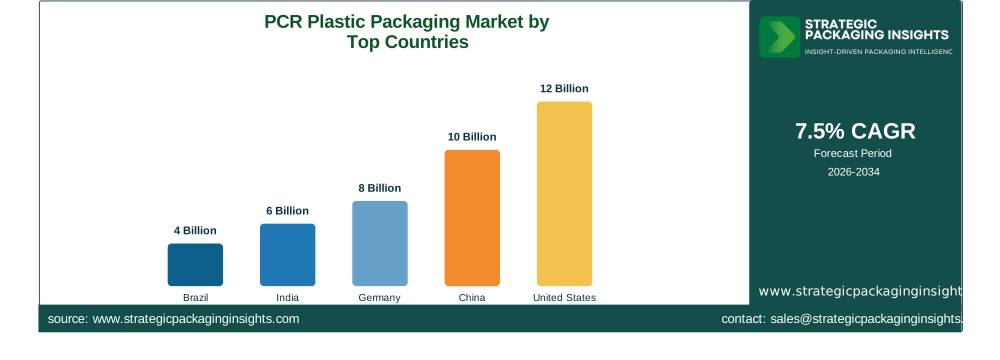
China, with a market size of around $10 billion and a CAGR of 8%, is another significant contributor to the PCR Plastic Packaging market. The country's rapid industrialization and increasing environmental awareness among consumers are driving the demand for sustainable packaging solutions. Government initiatives aimed at reducing plastic waste and promoting recycling are also playing a crucial role in the market's growth.
Germany, with a market size of approximately $8 billion and a CAGR of 7%, is a leading market in Europe for PCR Plastic Packaging. The country's strong emphasis on sustainability and environmental protection, coupled with stringent regulations on plastic waste, is driving the demand for recycled packaging materials. The presence of advanced recycling technologies and infrastructure further supports the market's growth.
India, with a market size of around $6 billion and a CAGR of 9%, is emerging as a key market for PCR Plastic Packaging in the Asia Pacific region. The country's growing population and increasing consumer awareness about environmental issues are driving the demand for sustainable packaging solutions. Government initiatives promoting recycling and waste management are also contributing to the market's growth.
Brazil, with a market size of approximately $4 billion and a CAGR of 5%, is a significant market for PCR Plastic Packaging in Latin America. The country's increasing focus on sustainability and environmental protection is driving the demand for recycled packaging materials. The presence of a large consumer base and supportive government policies further enhance the market's growth prospects.
PCR Plastic Packaging Market Segments Insights

Plastic Type Analysis
The PCR Plastic Packaging market is segmented by plastic type into PET and HDPE. PET, or polyethylene terephthalate, is widely used in the packaging industry due to its excellent clarity, strength, and recyclability. The demand for PET in PCR plastic packaging is driven by its widespread application in the beverage industry, particularly for bottled water and soft drinks. The increasing consumer preference for sustainable packaging solutions is further boosting the demand for PET in the market. HDPE, or high-density polyethylene, is another popular choice for PCR plastic packaging due to its durability and resistance to impact and moisture. The demand for HDPE is driven by its application in various industries, including food and beverage, personal care, and household products.
The market for PET and HDPE in PCR plastic packaging is expected to grow significantly during the forecast period, driven by the increasing demand for sustainable packaging solutions and the implementation of stringent environmental regulations. Companies are focusing on enhancing the quality and performance of their recycled PET and HDPE products to meet the growing demand from various industries. The development of advanced recycling technologies is also expected to play a crucial role in driving the growth of the PET and HDPE segments in the PCR Plastic Packaging market.
Source Analysis
The PCR Plastic Packaging market is segmented by source into post-consumer and post-industrial. Post-consumer recycled plastics are derived from products that have been used and discarded by consumers, such as plastic bottles and containers. The demand for post-consumer recycled plastics is driven by the increasing consumer awareness about environmental issues and the growing emphasis on sustainability. Companies are focusing on incorporating post-consumer recycled plastics into their packaging solutions to meet the growing demand for sustainable products.
Post-industrial recycled plastics, on the other hand, are derived from industrial waste generated during the manufacturing process. The demand for post-industrial recycled plastics is driven by the increasing focus on waste reduction and resource efficiency in the manufacturing sector. Companies are leveraging advanced recycling technologies to enhance the quality and performance of their post-industrial recycled plastics, making them suitable for a wide range of applications. The market for post-consumer and post-industrial recycled plastics is expected to grow significantly during the forecast period, driven by the increasing demand for sustainable packaging solutions and the implementation of stringent environmental regulations.
Application Analysis
The PCR Plastic Packaging market is segmented by application into bottles and films. Bottles are one of the most common applications of PCR plastics, particularly in the beverage industry. The demand for PCR plastic bottles is driven by the increasing consumer preference for sustainable packaging solutions and the growing emphasis on reducing plastic waste. Companies are focusing on enhancing the quality and performance of their PCR plastic bottles to meet the stringent requirements of the beverage industry.
Films, on the other hand, are widely used in various industries, including food and beverage, personal care, and consumer goods. The demand for PCR plastic films is driven by their versatility and ability to provide excellent barrier properties, making them suitable for a wide range of applications. The market for PCR plastic bottles and films is expected to grow significantly during the forecast period, driven by the increasing demand for sustainable packaging solutions and the implementation of stringent environmental regulations.
End Use Analysis
The PCR Plastic Packaging market is segmented by end use into food and non-food. The demand for PCR plastic packaging in the food industry is driven by the increasing consumer preference for sustainable packaging solutions and the growing emphasis on food safety and hygiene. Companies are focusing on enhancing the quality and performance of their PCR plastic packaging products to meet the stringent requirements of the food industry.
In the non-food segment, the demand for PCR plastic packaging is driven by its application in various industries, including personal care, household products, and consumer goods. The increasing consumer awareness about environmental issues and the growing emphasis on sustainability are driving the demand for PCR plastic packaging in the non-food segment. The market for PCR plastic packaging in the food and non-food segments is expected to grow significantly during the forecast period, driven by the increasing demand for sustainable packaging solutions and the implementation of stringent environmental regulations.
PCR Plastic Packaging Market Segments
The PCR Plastic Packaging market has been segmented on the basis ofPlastic Type
- PET
- HDPE
Source
- Post-consumer
- Post-industrial
Application
- Bottles
- Films
End Use
- Food
- Non-food
Region
- Asia Pacific
- North America
- Latin America
- Europe
- Middle East & Africa




