


PCR Bottles Market Outlook
The PCR Bottles market size was valued at USD 15.80 billion in 2025 and is anticipated to reach USD 34.33 billion by 2034, growing at a CAGR of 9.0% during the forecast period according to Strategic Packaging Insights. The market is witnessing significant growth due to the increasing demand for sustainable packaging solutions. Companies like Alpla and Berry Global are leading the charge by innovating in the production of PCR bottles, which are gaining traction across various industries. The shift towards eco-friendly packaging is driven by consumer awareness and regulatory pressures, making PCR bottles a preferred choice for brands aiming to reduce their carbon footprint.
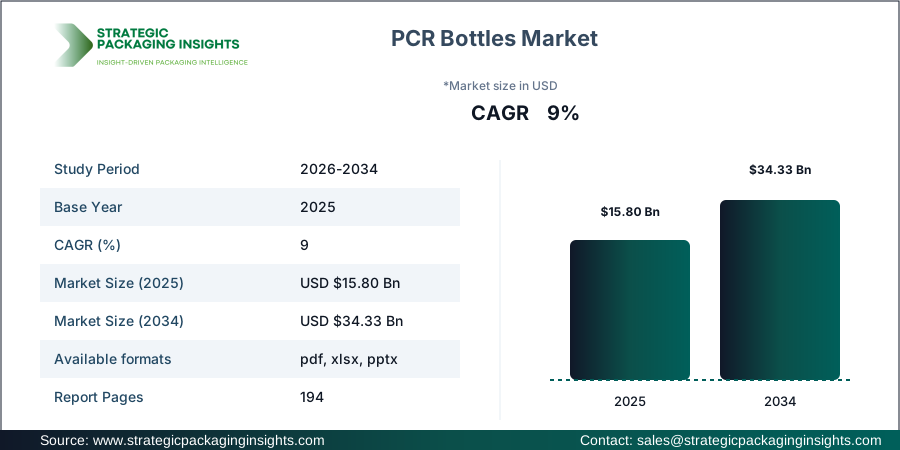
One of the most impactful drivers of the PCR Bottles market is the growing emphasis on sustainability and environmental responsibility. Governments worldwide are implementing stringent regulations to curb plastic waste, which is propelling the demand for PCR bottles. For instance, the European Union's directive on single-use plastics is pushing manufacturers to adopt recycled materials. This regulatory landscape, coupled with consumer preference for green products, is encouraging companies like Amcor and Plastipak to invest in PCR technology. The market is poised for robust growth as brands increasingly prioritize sustainability in their packaging strategies.
Report Scope
| Attributes | Details |
| Report Title | PCR Bottles Market Size, Future Growth and Forecast 2034 |
| By Material Type | PCR PET, PCR HDPE, PCR PP |
| By Bottle Type | Beverage Bottles, Personal Care Bottles, Household Bottles, Pharma Bottles |
| By PCR Content | Below 30%, 30–70%, Above 70% |
| By End Use | Food & Beverage, Personal Care, Homecare, Healthcare |
| Region | Asia Pacific, North America, Latin America, Europe, Middle East & Africa |
| Base Year | 2025 |
| Historic Period | 2018-2024 |
| Forecast Period | 2026-2034 |
| Number of Pages | 194 |
| Customization Available | Yes* |
Sustainability & Circular Economy Analysis
Sustainability initiatives are reshaping the packaging industry, with PCR bottles at the forefront of this transformation. The use of recyclable materials is becoming a standard practice, as companies strive to meet consumer demand for eco-friendly products. Reusable packaging and lightweight designs are gaining popularity, reducing the environmental impact of packaging waste. Innovations in eco-friendly materials are driving the development of PCR bottles, which are designed to minimize carbon footprints and support circular economy practices. These trends are influencing packaging design and manufacturing, encouraging investment in sustainable technologies.
Extended Producer Responsibility (EPR) is a key component of the circular economy, compelling manufacturers to take responsibility for the entire lifecycle of their products. This has led to the adoption of waste reduction strategies and ESG initiatives, which are critical for regulatory compliance and long-term market competitiveness. Companies are focusing on reducing their carbon footprint by optimizing supply chain strategies and investing in sustainable packaging solutions. As consumer preferences shift towards sustainability, brands are compelled to innovate and adapt, ensuring their packaging aligns with environmental standards.
The influence of sustainability trends extends beyond packaging design to impact investment decisions and supply chain strategies. Companies are prioritizing eco-friendly materials and processes, which are essential for maintaining a competitive edge in the market. Regulatory compliance is a driving force behind these changes, as governments enforce stricter packaging regulations. The shift towards sustainable practices is not only beneficial for the environment but also enhances brand reputation and consumer loyalty. As the market evolves, companies that embrace sustainability will be better positioned to succeed in the competitive landscape.
Packaging Value Chain & Supply Chain Analysis
The packaging value chain is a complex ecosystem involving raw material sourcing, packaging converters, manufacturers, and logistics providers. Efficient supply chain management is crucial for the success of the PCR Bottles market. Raw material availability and strategic partnerships play a significant role in ensuring a steady supply of PCR materials. Companies like Silgan Holdings and Alpha Packaging are optimizing their procurement strategies to enhance supply chain resilience and meet the growing demand for PCR bottles. Localization and global sourcing are key strategies for maintaining a competitive edge in the market.
Transportation and logistics are critical components of the packaging supply chain, influencing market performance and business competitiveness. Efficient distribution channels are essential for delivering products to brand owners and retailers in a timely manner. Companies are investing in advanced packaging machinery to improve production capabilities and meet the increasing demand for PCR bottles. Inventory management is another crucial aspect, as it ensures the availability of products while minimizing costs. By optimizing these elements, companies can enhance their market position and drive growth in the PCR Bottles market.
Recycling networks are an integral part of the packaging value chain, supporting the circular economy and sustainability initiatives. Companies are collaborating with recycling partners to ensure the efficient collection and processing of PCR materials. This collaboration is essential for meeting regulatory requirements and consumer expectations for sustainable packaging. As the market evolves, companies that prioritize supply chain efficiency and sustainability will be better positioned to capitalize on growth opportunities. Strategic partnerships and investments in sustainable technologies are key to maintaining a competitive advantage in the dynamic PCR Bottles market.
Opportunities & Threats
The PCR Bottles market presents numerous opportunities for growth, driven by the increasing demand for sustainable packaging solutions. The shift towards eco-friendly products is creating a favorable environment for companies to innovate and expand their product offerings. Brands that invest in PCR technology can capitalize on the growing consumer preference for green products. Additionally, the implementation of stringent regulations on plastic waste is encouraging manufacturers to adopt recycled materials, further boosting the demand for PCR bottles. Companies that align their strategies with sustainability trends are well-positioned to capture market share and drive growth.
Emerging markets offer significant growth potential for the PCR Bottles market, as developing regions are increasingly adopting sustainable packaging practices. The rising awareness of environmental issues and the implementation of government initiatives to reduce plastic waste are driving demand for PCR bottles in these regions. Companies that expand their operations and establish a presence in emerging markets can benefit from the growing demand for eco-friendly packaging solutions. Strategic partnerships and investments in local production facilities can enhance market penetration and provide a competitive advantage in these high-growth regions.
Despite the opportunities, the PCR Bottles market faces several threats that could hinder growth. The high cost of PCR materials and the complexity of recycling processes pose challenges for manufacturers. Additionally, the lack of standardized regulations across regions can create barriers to market entry and limit the adoption of PCR bottles. Companies must navigate these challenges by investing in research and development to improve recycling technologies and reduce production costs. By addressing these threats, companies can mitigate risks and ensure long-term success in the competitive PCR Bottles market.
Drivers & Challenges
The PCR Bottles market is driven by several key factors, including the growing demand for sustainable packaging solutions and the implementation of stringent regulations on plastic waste. Consumer awareness of environmental issues is increasing, leading to a shift in preferences towards eco-friendly products. This trend is encouraging companies to invest in PCR technology and develop innovative packaging solutions that meet consumer expectations. Additionally, government initiatives to reduce plastic waste are driving the adoption of PCR bottles, as manufacturers seek to comply with regulatory requirements and enhance their sustainability credentials.
Technological advancements in recycling processes are also driving the growth of the PCR Bottles market. Innovations in material science and recycling technologies are enabling manufacturers to produce high-quality PCR bottles that meet industry standards. Companies are investing in research and development to improve the efficiency of recycling processes and reduce production costs. These advancements are essential for maintaining a competitive edge in the market and meeting the growing demand for sustainable packaging solutions. As technology continues to evolve, companies that embrace innovation will be better positioned to capitalize on growth opportunities in the PCR Bottles market.
Despite the drivers, the PCR Bottles market faces several challenges that could impact growth. The high cost of PCR materials and the complexity of recycling processes are significant barriers for manufacturers. Additionally, the lack of standardized regulations across regions can create challenges for companies seeking to expand their operations globally. To overcome these challenges, companies must invest in research and development to improve recycling technologies and reduce production costs. By addressing these challenges, companies can enhance their market position and drive growth in the competitive PCR Bottles market.
Market Share Analysis
The competitive landscape of the PCR Bottles market is characterized by the presence of several key players, each striving to capture a significant share of the market. Companies like Alpla, Berry Global, and Amcor are leading the market with their innovative packaging solutions and strong focus on sustainability. These companies are investing heavily in research and development to enhance their product offerings and meet the growing demand for PCR bottles. The market is highly competitive, with companies vying for market share through strategic partnerships, mergers, and acquisitions.
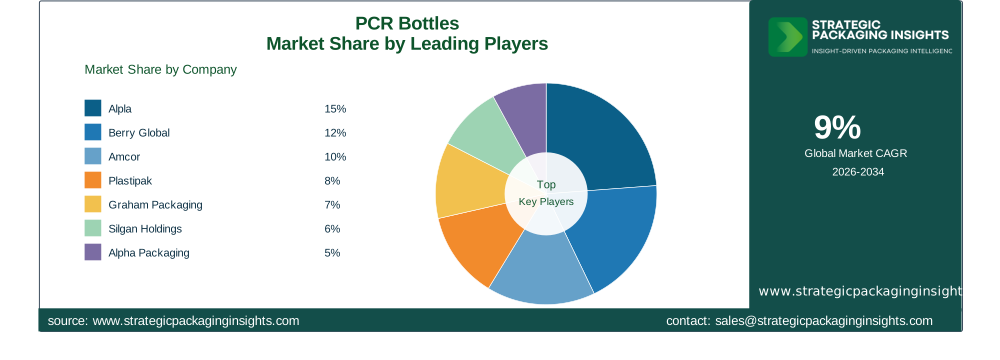
Alpla is a prominent player in the PCR Bottles market, known for its commitment to sustainability and innovation. The company offers a wide range of PCR bottles, catering to various industries such as food and beverage, personal care, and healthcare. Berry Global is another key player, leveraging its extensive manufacturing capabilities and global presence to deliver high-quality PCR bottles. The company's focus on sustainability and customer-centric solutions has helped it maintain a strong position in the market.
Amcor is a leading provider of sustainable packaging solutions, with a strong emphasis on innovation and environmental responsibility. The company offers a comprehensive range of PCR bottles, designed to meet the diverse needs of its customers. Plastipak is also a major player in the market, known for its advanced recycling technologies and commitment to sustainability. The company's focus on innovation and customer satisfaction has helped it establish a strong foothold in the PCR Bottles market.
Graham Packaging and Silgan Holdings are other notable players in the market, each offering a diverse range of PCR bottles to meet the needs of various industries. These companies are investing in research and development to enhance their product offerings and maintain a competitive edge in the market. The competitive landscape of the PCR Bottles market is dynamic, with companies continuously striving to innovate and expand their market presence.
Key Highlights
- Market Size: The PCR Bottles market was valued at USD 15.80 billion in 2025 and is projected to reach USD 34.33 billion by 2034.
- Growth Rate: The market is expected to grow at a CAGR of 9.0% during the forecast period.
- Leading Companies: Key players include Alpla, Berry Global, Amcor, and Plastipak.
- Material Type: PCR PET, PCR HDPE, and PCR PP are the primary materials used in PCR bottles.
- End Use: Major end-use industries include food & beverage, personal care, homecare, and healthcare.
- Regional Growth: Asia Pacific is expected to witness significant growth due to increasing demand for sustainable packaging.
- Regulatory Impact: Stringent regulations on plastic waste are driving the adoption of PCR bottles.
PCR Bottles Market Segments Insights

By Material Type Analysis
The PCR Bottles market is segmented by material type into PCR PET, PCR HDPE, and PCR PP. PCR PET is the most widely used material due to its excellent clarity and recyclability, making it a preferred choice for beverage and personal care bottles. Companies like Alpla and Berry Global are focusing on enhancing the quality and performance of PCR PET bottles to meet the growing demand for sustainable packaging solutions. PCR HDPE is gaining traction in the market, particularly in the household and healthcare sectors, due to its durability and resistance to chemicals. The demand for PCR PP is also increasing, driven by its versatility and cost-effectiveness.
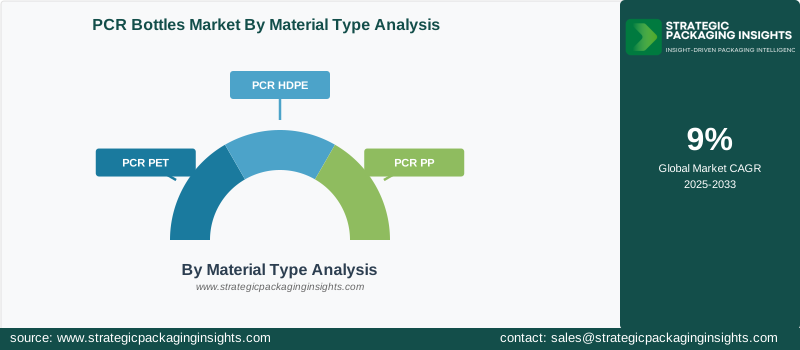
The adoption of PCR materials is driven by the increasing emphasis on sustainability and the need to reduce plastic waste. Companies are investing in advanced recycling technologies to improve the quality and performance of PCR materials, ensuring they meet industry standards. The growing consumer preference for eco-friendly products is encouraging manufacturers to expand their PCR material offerings and develop innovative packaging solutions. As the market evolves, companies that prioritize sustainability and innovation will be better positioned to capture market share and drive growth in the PCR Bottles market.
By Bottle Type Analysis
The PCR Bottles market is segmented by bottle type into beverage bottles, personal care bottles, household bottles, and pharma bottles. Beverage bottles are the largest segment, driven by the increasing demand for sustainable packaging solutions in the food and beverage industry. Companies like Amcor and Plastipak are focusing on developing high-quality PCR beverage bottles that meet the stringent requirements of the industry. Personal care bottles are also witnessing significant growth, as consumers increasingly prefer eco-friendly packaging for their personal care products.
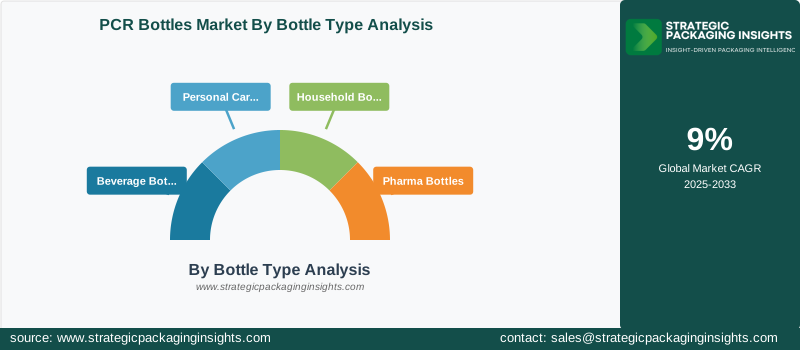
Household bottles are gaining popularity in the market, driven by the growing awareness of environmental issues and the need for sustainable packaging solutions. The demand for pharma bottles is also increasing, as the healthcare industry seeks to reduce its environmental impact. Companies are investing in research and development to enhance the quality and performance of PCR bottles across various segments, ensuring they meet the diverse needs of their customers. As the market evolves, companies that focus on innovation and sustainability will be better positioned to capitalize on growth opportunities in the PCR Bottles market.
By PCR Content Analysis
The PCR Bottles market is segmented by PCR content into below 30%, 30-70%, and above 70%. The demand for bottles with higher PCR content is increasing, driven by the growing emphasis on sustainability and the need to reduce plastic waste. Companies are focusing on developing bottles with higher PCR content to meet the stringent requirements of regulatory bodies and consumer expectations. The below 30% segment is primarily driven by cost considerations, as companies seek to balance sustainability with affordability.
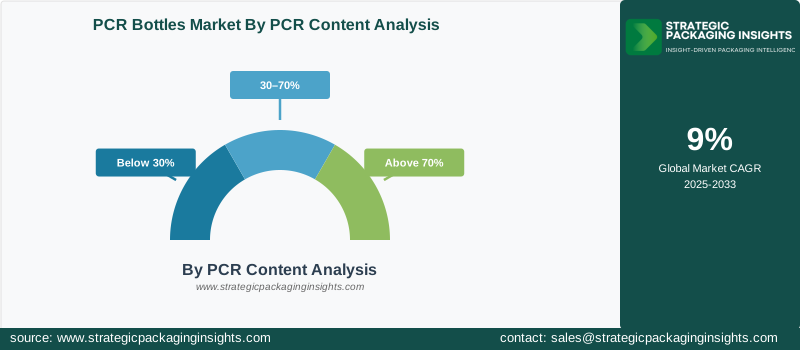
The 30-70% segment is witnessing significant growth, as companies strive to enhance the sustainability of their packaging solutions while maintaining product quality and performance. The above 70% segment is gaining traction in the market, driven by the increasing demand for highly sustainable packaging solutions. Companies are investing in advanced recycling technologies to improve the quality and performance of high PCR content bottles, ensuring they meet industry standards. As the market evolves, companies that prioritize sustainability and innovation will be better positioned to capture market share and drive growth in the PCR Bottles market.
By End Use Analysis
The PCR Bottles market is segmented by end use into food & beverage, personal care, homecare, and healthcare. The food & beverage industry is the largest end-use segment, driven by the increasing demand for sustainable packaging solutions. Companies like Alpla and Berry Global are focusing on developing high-quality PCR bottles that meet the stringent requirements of the food and beverage industry. The personal care segment is also witnessing significant growth, as consumers increasingly prefer eco-friendly packaging for their personal care products.
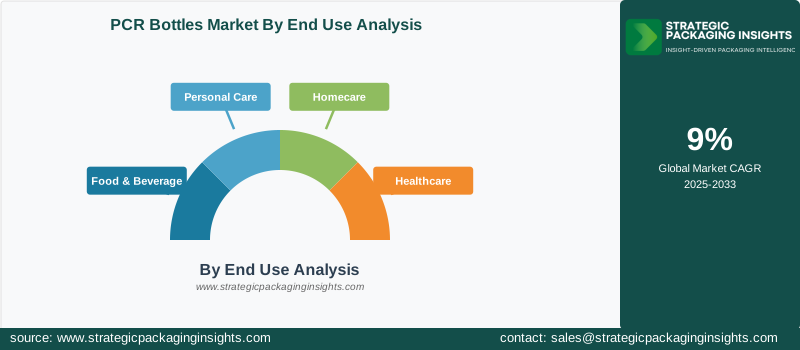
The homecare segment is gaining popularity in the market, driven by the growing awareness of environmental issues and the need for sustainable packaging solutions. The healthcare segment is also experiencing growth, as the industry seeks to reduce its environmental impact. Companies are investing in research and development to enhance the quality and performance of PCR bottles across various end-use segments, ensuring they meet the diverse needs of their customers. As the market evolves, companies that focus on innovation and sustainability will be better positioned to capitalize on growth opportunities in the PCR Bottles market.
PCR Bottles Market Segments
The PCR Bottles market has been segmented on the basis ofBy Material Type
- PCR PET
- PCR HDPE
- PCR PP
By Bottle Type
- Beverage Bottles
- Personal Care Bottles
- Household Bottles
- Pharma Bottles
By PCR Content
- Below 30%
- 30–70%
- Above 70%
By End Use
- Food & Beverage
- Personal Care
- Homecare
- Healthcare
Region
- Asia Pacific
- North America
- Latin America
- Europe
- Middle East & Africa




