


Paper Recycling Market Outlook
The paper recycling market was valued at $8.34 billion in 2025 and is projected to reach $13.73 billion by 2034, growing at a CAGR of 5.7% during the forecast period 2026-2034. This growth is driven by increasing environmental awareness and stringent regulations promoting sustainable practices. The demand for recycled paper products is rising as industries and consumers alike seek eco-friendly alternatives to reduce their carbon footprint. The market is also benefiting from technological advancements in recycling processes, which enhance efficiency and output quality. As a result, the paper recycling market is poised for significant expansion, with opportunities for innovation and investment in new recycling technologies.
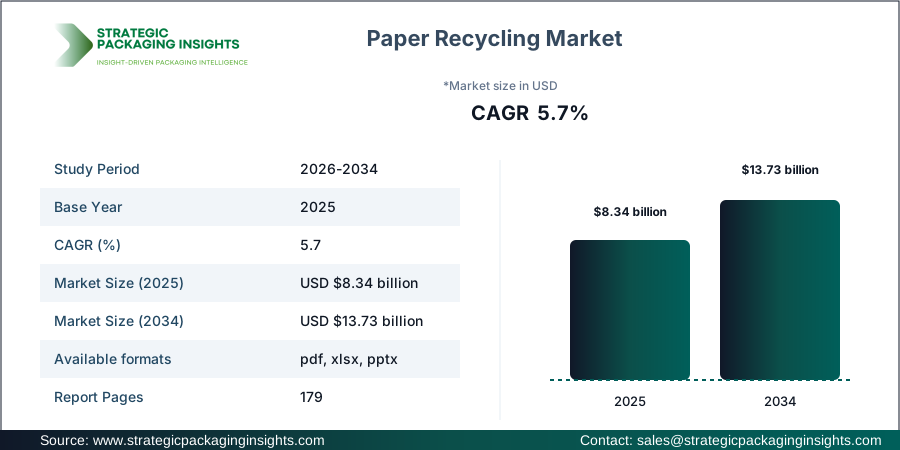
Despite the promising growth prospects, the paper recycling market faces challenges such as fluctuating raw material prices and the high cost of recycling infrastructure. Regulatory constraints and the need for compliance with environmental standards can also pose barriers to market entry. However, these challenges are offset by the growing demand for recycled paper in various applications, including packaging, printing, and hygiene products. The market's potential is further bolstered by government incentives and initiatives aimed at promoting recycling and waste reduction. As the industry continues to evolve, companies are focusing on developing sustainable business models and enhancing their recycling capabilities to capitalize on the growing demand for recycled paper products.
Report Scope
| Attributes | Details |
| Report Title | Paper Recycling Market Size, Future Growth and Forecast 2034 |
| By Grade | Old Corrugated Containers, Mixed Paper, Office Paper, Newspaper |
| By Process Type | Collection, Sorting, Deinking, Pulping |
| By Application | Containerboard, Tissue, Packaging Paper, Printing Paper |
| By End Use | Paper Mills, Packaging, Hygiene, Printing |
| Region | Asia Pacific, North America, Latin America, Europe, Middle East & Africa |
| Base Year | 2025 |
| Historic Period | 2018-2024 |
| Forecast Period | 2026-2034 |
| Number of Pages | 179 |
| Customization Available | Yes* |
Opportunities & Threats
The paper recycling market presents numerous opportunities for growth, driven by the increasing demand for sustainable and eco-friendly products. As consumers become more environmentally conscious, there is a growing preference for recycled paper products, which offer a lower carbon footprint compared to virgin paper. This shift in consumer behavior is encouraging businesses to adopt sustainable practices and invest in recycling technologies. Additionally, government regulations and policies promoting recycling and waste reduction are creating a favorable environment for market expansion. Companies that can innovate and develop efficient recycling processes stand to gain a competitive edge in this evolving market.
Another significant opportunity lies in the development of advanced recycling technologies that can enhance the efficiency and quality of recycled paper products. Innovations in sorting, deinking, and pulping processes are enabling companies to produce high-quality recycled paper that meets the demands of various industries. Furthermore, the growing trend of circular economy practices is encouraging businesses to adopt closed-loop recycling systems, which can reduce waste and improve resource efficiency. As the market continues to evolve, companies that can leverage these opportunities and invest in sustainable practices are likely to experience significant growth and success.
However, the paper recycling market also faces several threats that could hinder its growth. One of the primary challenges is the fluctuating prices of raw materials, which can impact the profitability of recycling operations. Additionally, the high cost of recycling infrastructure and the need for compliance with stringent environmental regulations can pose barriers to market entry. Companies must also contend with competition from alternative materials, such as digital media and electronic communication, which are reducing the demand for traditional paper products. To overcome these challenges, businesses must focus on innovation, efficiency, and sustainability to remain competitive in the paper recycling market.
Drivers & Challenges
The paper recycling market is driven by several key factors, including the increasing demand for sustainable and eco-friendly products. As environmental awareness grows, consumers and businesses are seeking alternatives to traditional paper products that have a lower environmental impact. This shift in consumer behavior is encouraging companies to adopt sustainable practices and invest in recycling technologies. Additionally, government regulations and policies promoting recycling and waste reduction are creating a favorable environment for market expansion. These factors are driving the growth of the paper recycling market and encouraging companies to innovate and develop efficient recycling processes.
Technological advancements in recycling processes are also playing a significant role in driving the growth of the paper recycling market. Innovations in sorting, deinking, and pulping processes are enabling companies to produce high-quality recycled paper that meets the demands of various industries. Furthermore, the growing trend of circular economy practices is encouraging businesses to adopt closed-loop recycling systems, which can reduce waste and improve resource efficiency. As the market continues to evolve, companies that can leverage these opportunities and invest in sustainable practices are likely to experience significant growth and success.
Despite the promising growth prospects, the paper recycling market faces several challenges that could hinder its expansion. One of the primary challenges is the fluctuating prices of raw materials, which can impact the profitability of recycling operations. Additionally, the high cost of recycling infrastructure and the need for compliance with stringent environmental regulations can pose barriers to market entry. Companies must also contend with competition from alternative materials, such as digital media and electronic communication, which are reducing the demand for traditional paper products. To overcome these challenges, businesses must focus on innovation, efficiency, and sustainability to remain competitive in the paper recycling market.
Market Share Analysis
The paper recycling market is characterized by a competitive landscape with several key players dominating the industry. Companies such as Waste Management, Republic Services, International Paper, and Smurfit Kappa hold significant market shares due to their extensive recycling operations and strong market presence. These companies have invested heavily in recycling infrastructure and technologies, enabling them to offer high-quality recycled paper products to a wide range of industries. Their commitment to sustainability and innovation has positioned them as leaders in the paper recycling market.
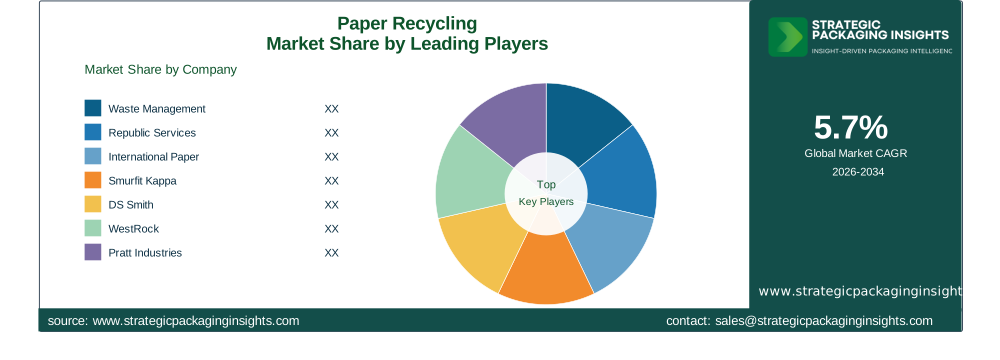
Other notable players in the market include DS Smith, WestRock, Pratt Industries, Stora Enso, Mondi, and Cascades. These companies have established themselves as key players in the industry by focusing on sustainable practices and investing in advanced recycling technologies. Their ability to produce high-quality recycled paper products that meet the demands of various industries has contributed to their success in the market. Additionally, these companies have expanded their operations globally, allowing them to tap into new markets and increase their market share.
Waste Management, for example, is a leading provider of comprehensive waste management services, including recycling. The company has a strong focus on sustainability and has invested in advanced recycling technologies to enhance its operations. Republic Services, another major player, offers a wide range of recycling services and has a strong commitment to environmental stewardship. International Paper, one of the largest paper and packaging companies in the world, has a significant presence in the paper recycling market and is known for its sustainable practices and innovative recycling solutions.
Smurfit Kappa, a leading provider of paper-based packaging solutions, has a strong focus on sustainability and has invested in recycling technologies to enhance its operations. DS Smith, a global leader in sustainable packaging, has a strong presence in the paper recycling market and is known for its innovative recycling solutions. WestRock, Pratt Industries, Stora Enso, Mondi, and Cascades are also key players in the market, each with a strong commitment to sustainability and innovation. These companies have established themselves as leaders in the paper recycling market by focusing on sustainable practices and investing in advanced recycling technologies.
Key Highlights
- The paper recycling market is projected to grow at a CAGR of 5.7% from 2026 to 2034.
- Technological advancements in recycling processes are enhancing efficiency and output quality.
- Government regulations and policies are promoting recycling and waste reduction.
- Increasing demand for sustainable and eco-friendly products is driving market growth.
- Fluctuating raw material prices pose a challenge to market profitability.
- High cost of recycling infrastructure can be a barrier to market entry.
- Competition from alternative materials is impacting the demand for traditional paper products.
- Key players in the market include Waste Management, Republic Services, and International Paper.
- Companies are focusing on innovation and sustainability to remain competitive.
- The market is characterized by a competitive landscape with several key players dominating the industry.
Top Countries Insights
In the paper recycling market, the United States stands out as a leading country with a market size of approximately $2.5 billion and a CAGR of 4%. The country's strong regulatory framework and consumer demand for sustainable products drive the market. The U.S. government has implemented various policies to promote recycling and waste reduction, creating a favorable environment for market growth. Additionally, technological advancements in recycling processes are enhancing efficiency and output quality, further boosting the market.
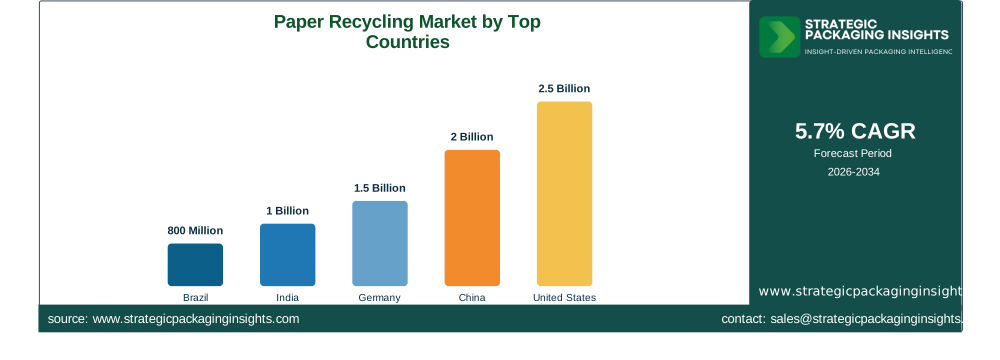
China is another significant player in the paper recycling market, with a market size of around $2 billion and a CAGR of 6%. The country's rapid industrialization and urbanization have led to increased demand for recycled paper products. The Chinese government has implemented strict regulations to promote recycling and reduce waste, driving market growth. Additionally, the country's focus on sustainable development and circular economy practices is encouraging businesses to adopt recycling technologies and processes.
Germany is a key market in Europe, with a market size of approximately $1.5 billion and a CAGR of 5%. The country's strong environmental policies and commitment to sustainability drive the paper recycling market. Germany has implemented various initiatives to promote recycling and waste reduction, creating a favorable environment for market growth. Additionally, the country's focus on innovation and technological advancements in recycling processes is enhancing efficiency and output quality.
India is an emerging market in the paper recycling industry, with a market size of around $1 billion and a CAGR of 7%. The country's growing population and increasing demand for sustainable products drive the market. The Indian government has implemented various policies to promote recycling and waste reduction, creating a favorable environment for market growth. Additionally, the country's focus on sustainable development and circular economy practices is encouraging businesses to adopt recycling technologies and processes.
Brazil is a significant player in the Latin American paper recycling market, with a market size of approximately $800 million and a CAGR of 5%. The country's strong regulatory framework and consumer demand for sustainable products drive the market. The Brazilian government has implemented various policies to promote recycling and waste reduction, creating a favorable environment for market growth. Additionally, technological advancements in recycling processes are enhancing efficiency and output quality, further boosting the market.
Paper Recycling Market Segments Insights

By Grade Analysis
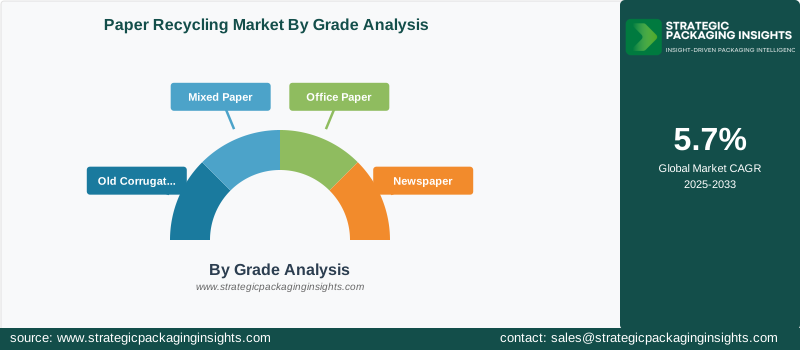
The paper recycling market is segmented by grade into old corrugated containers, mixed paper, office paper, and newspaper. Old corrugated containers hold a significant share due to their widespread use in packaging and shipping industries. The demand for recycled corrugated containers is driven by the increasing need for sustainable packaging solutions. Mixed paper, which includes various types of paper products, is also a major segment, driven by the growing demand for recycled paper in printing and packaging applications. Office paper and newspaper segments are witnessing steady growth as businesses and consumers seek eco-friendly alternatives to traditional paper products.
Technological advancements in sorting and deinking processes are enhancing the quality of recycled paper products, making them more competitive with virgin paper. Companies are investing in advanced recycling technologies to improve efficiency and output quality, which is driving the growth of the paper recycling market. Additionally, government regulations and policies promoting recycling and waste reduction are creating a favorable environment for market expansion. As the market continues to evolve, companies that can innovate and develop efficient recycling processes are likely to experience significant growth and success.
By Process Type Analysis
The paper recycling market is segmented by process type into collection, sorting, deinking, and pulping. Collection is a critical step in the recycling process, as it involves gathering used paper products for recycling. Sorting is essential for separating different types of paper products, ensuring that the recycling process is efficient and effective. Deinking is a crucial step in the recycling process, as it removes ink and other contaminants from the paper, allowing for the production of high-quality recycled paper products. Pulping is the final step in the recycling process, where the paper is broken down into fibers and processed into new paper products.
Technological advancements in recycling processes are enhancing efficiency and output quality, driving the growth of the paper recycling market. Companies are investing in advanced recycling technologies to improve efficiency and output quality, which is driving the growth of the paper recycling market. Additionally, government regulations and policies promoting recycling and waste reduction are creating a favorable environment for market expansion. As the market continues to evolve, companies that can innovate and develop efficient recycling processes are likely to experience significant growth and success.
By Application Analysis
The paper recycling market is segmented by application into containerboard, tissue, packaging paper, and printing paper. Containerboard is a major segment, driven by the increasing demand for sustainable packaging solutions. The growing trend of e-commerce and online shopping is driving the demand for recycled containerboard, as businesses seek eco-friendly packaging options. Tissue is another significant segment, driven by the increasing demand for recycled tissue products in hygiene and personal care applications. Packaging paper and printing paper segments are also witnessing steady growth, driven by the growing demand for recycled paper products in various industries.
Technological advancements in recycling processes are enhancing efficiency and output quality, driving the growth of the paper recycling market. Companies are investing in advanced recycling technologies to improve efficiency and output quality, which is driving the growth of the paper recycling market. Additionally, government regulations and policies promoting recycling and waste reduction are creating a favorable environment for market expansion. As the market continues to evolve, companies that can innovate and develop efficient recycling processes are likely to experience significant growth and success.
By End Use Analysis
The paper recycling market is segmented by end use into paper mills, packaging, hygiene, and printing. Paper mills are a major segment, driven by the increasing demand for recycled paper products in various industries. The growing trend of sustainable practices and circular economy is encouraging paper mills to adopt recycling technologies and processes. Packaging is another significant segment, driven by the increasing demand for sustainable packaging solutions. The growing trend of e-commerce and online shopping is driving the demand for recycled packaging products, as businesses seek eco-friendly packaging options.
Hygiene and printing segments are also witnessing steady growth, driven by the growing demand for recycled paper products in various applications. Technological advancements in recycling processes are enhancing efficiency and output quality, driving the growth of the paper recycling market. Companies are investing in advanced recycling technologies to improve efficiency and output quality, which is driving the growth of the paper recycling market. Additionally, government regulations and policies promoting recycling and waste reduction are creating a favorable environment for market expansion. As the market continues to evolve, companies that can innovate and develop efficient recycling processes are likely to experience significant growth and success.
Paper Recycling Market Segments
The Paper Recycling market has been segmented on the basis ofBy Grade
- Old Corrugated Containers
- Mixed Paper
- Office Paper
- Newspaper
By Process Type
- Collection
- Sorting
- Deinking
- Pulping
By Application
- Containerboard
- Tissue
- Packaging Paper
- Printing Paper
By End Use
- Paper Mills
- Packaging
- Hygiene
- Printing
Region
- Asia Pacific
- North America
- Latin America
- Europe
- Middle East & Africa




