


Paper Core Cutting Machine Market Outlook
The Paper Core Cutting Machine market was valued at $687.60 million in 2025 and is projected to reach $1.13 billion by 2034, growing at a CAGR of 5.7% during the forecast period 2026-2034. This market is witnessing significant growth due to the increasing demand for efficient and precise cutting solutions in various industries such as paper, textile, and packaging. The rise in e-commerce and the need for sustainable packaging solutions are further propelling the demand for paper core cutting machines. Additionally, advancements in automation and the integration of CNC technology are enhancing the operational efficiency and precision of these machines, making them more appealing to end-users.
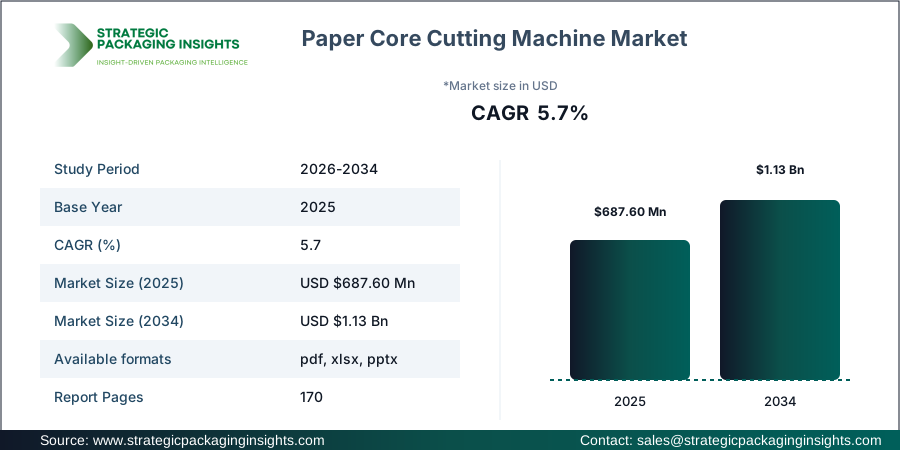
Despite the promising growth prospects, the market faces certain challenges such as high initial investment costs and the need for skilled operators to manage advanced machinery. However, the potential for growth remains substantial as manufacturers continue to innovate and develop cost-effective solutions. Regulatory frameworks promoting sustainable practices and the increasing adoption of automation in manufacturing processes are expected to drive market expansion. The market's growth potential is further bolstered by the increasing demand for customized solutions tailored to specific industry needs, which is encouraging manufacturers to invest in research and development.
Report Scope
| Attributes | Details |
| Report Title | Paper Core Cutting Machine Market Size, Future Growth and Forecast 2034 |
| Machine Type | Manual Core Cutters, Automatic Core Cutters, CNC Core Cutters |
| Application | Paper Cores, Film Cores, Textile Cores, Tape Cores |
| End Use | Paper Mills, Converters, Packaging Plants, Textile Producers |
| Automation | Manual, Semi-Automatic, Automatic |
| Region | Asia Pacific, North America, Latin America, Europe, Middle East & Africa |
| Base Year | 2025 |
| Historic Period | 2018-2024 |
| Forecast Period | 2026-2034 |
| Number of Pages | 170 |
| Customization Available | Yes* |
Opportunities & Threats
The Paper Core Cutting Machine market presents numerous opportunities, particularly in the realm of technological advancements. The integration of IoT and AI in machinery is opening new avenues for innovation, allowing for real-time monitoring and predictive maintenance, which can significantly reduce downtime and enhance productivity. Additionally, the growing trend towards automation in manufacturing processes is creating a demand for more sophisticated and efficient core cutting machines. This shift is particularly evident in emerging markets where industrialization is on the rise, providing a fertile ground for market expansion.
Another opportunity lies in the increasing demand for sustainable and eco-friendly packaging solutions. As environmental concerns continue to rise, industries are seeking alternatives to traditional packaging materials, leading to a surge in demand for paper cores. This trend is expected to drive the adoption of paper core cutting machines, as they are essential in the production of paper-based packaging solutions. Furthermore, the customization capabilities of these machines allow manufacturers to cater to specific customer requirements, thereby enhancing their competitive edge in the market.
However, the market is not without its threats. One of the primary challenges is the high cost associated with the acquisition and maintenance of advanced machinery. Small and medium-sized enterprises may find it difficult to invest in such equipment, which could limit market growth. Additionally, the need for skilled operators to manage and maintain these machines poses a challenge, as there is a shortage of trained personnel in the industry. This could potentially hinder the adoption of advanced technologies and slow down market growth.
Drivers & Challenges
The Paper Core Cutting Machine market is driven by several key factors, including the increasing demand for efficient and precise cutting solutions across various industries. The rise in e-commerce and the subsequent need for sustainable packaging solutions are significant drivers of market growth. As online shopping continues to gain popularity, the demand for packaging materials, including paper cores, is expected to rise, thereby boosting the demand for core cutting machines. Additionally, advancements in technology, such as the integration of CNC and automation, are enhancing the operational efficiency and precision of these machines, making them more appealing to end-users.
Another major driver is the growing trend towards automation in manufacturing processes. Industries are increasingly adopting automated solutions to enhance productivity and reduce operational costs. This shift is particularly evident in emerging markets where industrialization is on the rise, providing a fertile ground for market expansion. The ability of paper core cutting machines to offer customized solutions tailored to specific industry needs is also driving their adoption, as manufacturers seek to differentiate themselves in a competitive market.
Despite these drivers, the market faces several challenges. One of the primary challenges is the high cost associated with the acquisition and maintenance of advanced machinery. Small and medium-sized enterprises may find it difficult to invest in such equipment, which could limit market growth. Additionally, the need for skilled operators to manage and maintain these machines poses a challenge, as there is a shortage of trained personnel in the industry. This could potentially hinder the adoption of advanced technologies and slow down market growth. Furthermore, the market is subject to regulatory frameworks that promote sustainable practices, which could impact the production and use of paper core cutting machines.
Market Share Analysis
The competitive landscape of the Paper Core Cutting Machine market is characterized by the presence of several key players who are actively engaged in product innovation and strategic partnerships to enhance their market position. Companies such as Core Link, Jota Machinery, and Zenith Cutter are leading the market with their extensive product portfolios and strong distribution networks. These companies are focusing on expanding their geographical presence and enhancing their product offerings to cater to the growing demand for paper core cutting machines.
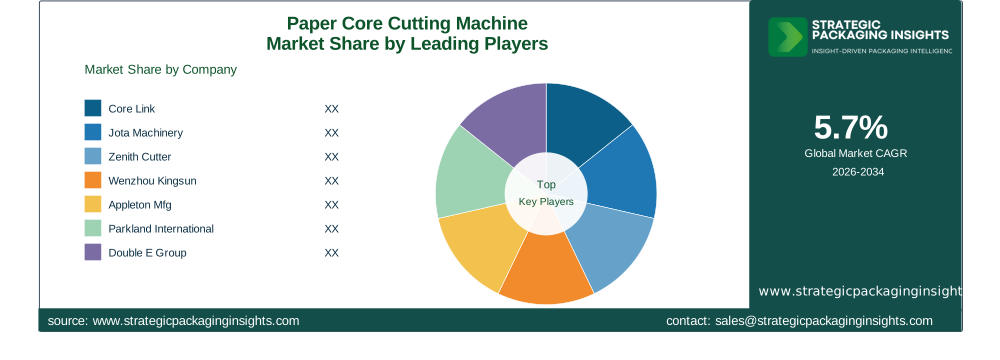
Core Link is a prominent player in the market, known for its innovative solutions and commitment to quality. The company holds a significant market share and is continuously investing in research and development to introduce advanced technologies in its product line. Jota Machinery is another key player, renowned for its high-performance machines and customer-centric approach. The company has a strong presence in the Asia Pacific region and is expanding its operations to other parts of the world.
Zenith Cutter, a well-established name in the industry, is known for its precision cutting solutions and robust machinery. The company has a diverse product portfolio and is focusing on enhancing its manufacturing capabilities to meet the increasing demand for paper core cutting machines. Wenzhou Kingsun and Appleton Mfg are also key players in the market, offering a wide range of machines that cater to various industry needs. These companies are leveraging their expertise and technological advancements to strengthen their market position.
Other notable players in the market include Parkland International, Double E Group, Schlumpf, Kunshan Dapeng, and Elsner Engineering. These companies are actively engaged in strategic collaborations and partnerships to expand their market reach and enhance their product offerings. The competitive landscape is dynamic, with companies focusing on innovation and customer satisfaction to gain a competitive edge in the market.
Key Highlights
- The Paper Core Cutting Machine market is projected to grow at a CAGR of 5.7% from 2026 to 2034.
- Technological advancements, such as the integration of CNC and automation, are driving market growth.
- The rise in e-commerce is boosting the demand for sustainable packaging solutions, thereby increasing the demand for paper core cutting machines.
- High initial investment costs and the need for skilled operators are major challenges for market growth.
- Key players in the market include Core Link, Jota Machinery, and Zenith Cutter.
- The Asia Pacific region is expected to witness significant growth due to increasing industrialization and demand for packaging solutions.
- Customization capabilities of paper core cutting machines are enhancing their adoption across various industries.
- Regulatory frameworks promoting sustainable practices are influencing market dynamics.
- Strategic partnerships and collaborations are key strategies adopted by market players to enhance their market position.
Top Countries Insights
In the Paper Core Cutting Machine market, the United States holds a significant share, driven by the robust demand for packaging solutions and the presence of key market players. The market size in the U.S. is substantial, with a CAGR of 4% expected over the forecast period. The country's focus on automation and technological advancements in manufacturing processes is a major growth driver. However, regulatory challenges related to environmental sustainability could pose a challenge to market growth.
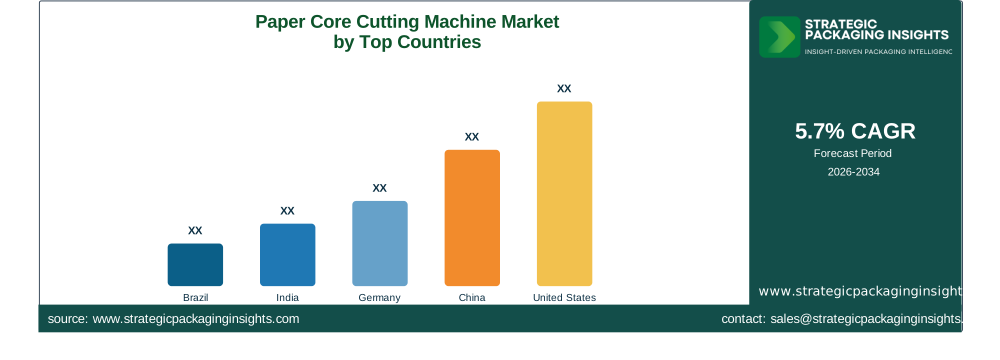
China is another major player in the market, with a high demand for paper core cutting machines due to its booming manufacturing sector. The market in China is expected to grow at a CAGR of 6%, driven by the increasing industrialization and demand for efficient packaging solutions. Government initiatives promoting sustainable practices and the adoption of advanced technologies are further propelling market growth in the region.
Germany is a key market in Europe, with a strong focus on innovation and technological advancements. The market in Germany is projected to grow at a CAGR of 5%, supported by the country's emphasis on automation and precision engineering. The demand for customized solutions and the presence of leading market players are significant growth drivers in the region.
India is witnessing rapid growth in the Paper Core Cutting Machine market, with a CAGR of 7% expected over the forecast period. The country's expanding manufacturing sector and increasing demand for packaging solutions are major growth drivers. Government initiatives promoting industrialization and the adoption of advanced technologies are further boosting market growth.
Brazil is a key market in Latin America, with a growing demand for paper core cutting machines driven by the expanding packaging industry. The market in Brazil is expected to grow at a CAGR of 5%, supported by the country's focus on sustainable practices and the adoption of automation in manufacturing processes. However, economic challenges and regulatory hurdles could impact market growth.
Paper Core Cutting Machine Market Segments Insights

Machine Type Analysis
The Paper Core Cutting Machine market is segmented by machine type into manual core cutters, automatic core cutters, and CNC core cutters. Manual core cutters are traditionally used in small-scale operations due to their cost-effectiveness and simplicity. However, the demand for automatic and CNC core cutters is on the rise, driven by the need for precision and efficiency in large-scale manufacturing processes. Automatic core cutters offer enhanced productivity and reduced labor costs, making them a preferred choice for large enterprises. CNC core cutters, on the other hand, provide unparalleled precision and customization capabilities, catering to industries that require high accuracy and complex cutting patterns.
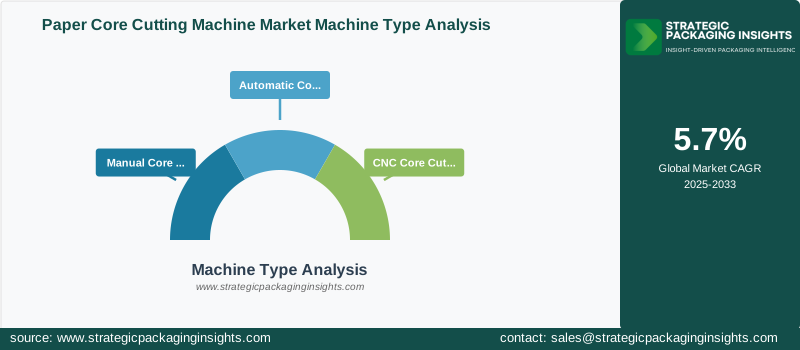
The increasing adoption of automation in manufacturing processes is a significant driver for the growth of automatic and CNC core cutters. These machines are equipped with advanced features such as programmable logic controllers (PLCs) and human-machine interfaces (HMIs), which enhance their operational efficiency and ease of use. The integration of IoT and AI technologies is further revolutionizing the market, enabling real-time monitoring and predictive maintenance of machinery. This trend is particularly evident in developed regions where industrial automation is a key focus area.
Application Analysis
The application segment of the Paper Core Cutting Machine market includes paper cores, film cores, textile cores, and tape cores. Paper cores are the most widely used application, driven by the increasing demand for sustainable packaging solutions. The rise in e-commerce and the need for eco-friendly packaging materials are significant growth drivers for this segment. Film cores and textile cores are also witnessing substantial growth, supported by the expanding film and textile industries. The demand for tape cores is driven by the packaging and adhesive industries, where precision and efficiency are critical.
The customization capabilities of paper core cutting machines are a major factor driving their adoption across various applications. Manufacturers are increasingly seeking machines that can cater to specific industry needs, offering customized solutions that enhance their competitive edge. The integration of advanced technologies such as CNC and automation is further enhancing the versatility and efficiency of these machines, making them suitable for a wide range of applications. This trend is particularly evident in emerging markets where industrialization is on the rise, providing ample opportunities for market expansion.
End Use Analysis
The end-use segment of the Paper Core Cutting Machine market includes paper mills, converters, packaging plants, and textile producers. Paper mills are the largest end-users of core cutting machines, driven by the increasing demand for paper-based packaging solutions. The rise in e-commerce and the need for sustainable packaging materials are significant growth drivers for this segment. Converters and packaging plants are also key end-users, supported by the expanding packaging industry and the demand for customized solutions.
Textile producers are increasingly adopting paper core cutting machines to enhance their operational efficiency and reduce production costs. The integration of advanced technologies such as CNC and automation is further enhancing the capabilities of these machines, making them suitable for a wide range of end-use applications. The demand for precision and efficiency in manufacturing processes is a major factor driving the adoption of paper core cutting machines across various end-use industries. This trend is particularly evident in developed regions where industrial automation is a key focus area.
Automation Analysis
The automation segment of the Paper Core Cutting Machine market includes manual, semi-automatic, and automatic machines. Manual machines are traditionally used in small-scale operations due to their cost-effectiveness and simplicity. However, the demand for semi-automatic and automatic machines is on the rise, driven by the need for precision and efficiency in large-scale manufacturing processes. Semi-automatic machines offer a balance between cost and efficiency, making them a preferred choice for medium-sized enterprises.
Automatic machines, on the other hand, provide enhanced productivity and reduced labor costs, making them suitable for large enterprises. The integration of advanced technologies such as PLCs and HMIs is further enhancing the capabilities of these machines, enabling real-time monitoring and predictive maintenance. The increasing adoption of automation in manufacturing processes is a significant driver for the growth of semi-automatic and automatic machines. This trend is particularly evident in developed regions where industrial automation is a key focus area.
Paper Core Cutting Machine Market Segments
The Paper Core Cutting Machine market has been segmented on the basis ofMachine Type
- Manual Core Cutters
- Automatic Core Cutters
- CNC Core Cutters
Application
- Paper Cores
- Film Cores
- Textile Cores
- Tape Cores
End Use
- Paper Mills
- Converters
- Packaging Plants
- Textile Producers
Automation
- Manual
- Semi-Automatic
- Automatic
Region
- Asia Pacific
- North America
- Latin America
- Europe
- Middle East & Africa




