


Paper-based Blister Pack Market Outlook
The Paper-based Blister Pack market was valued at $4.32 billion in 2025 and is projected to reach $8.01 billion by 2034, growing at a CAGR of 7.1% during the forecast period 2026-2034. This market is witnessing significant growth due to the increasing demand for sustainable packaging solutions. As consumers and industries alike become more environmentally conscious, the shift towards eco-friendly packaging options like paper-based blister packs is gaining momentum. These packs offer a biodegradable alternative to traditional plastic blister packs, aligning with global sustainability goals and regulations. The market is further driven by advancements in material technology, which enhance the durability and functionality of paper-based blister packs, making them suitable for a wide range of applications.
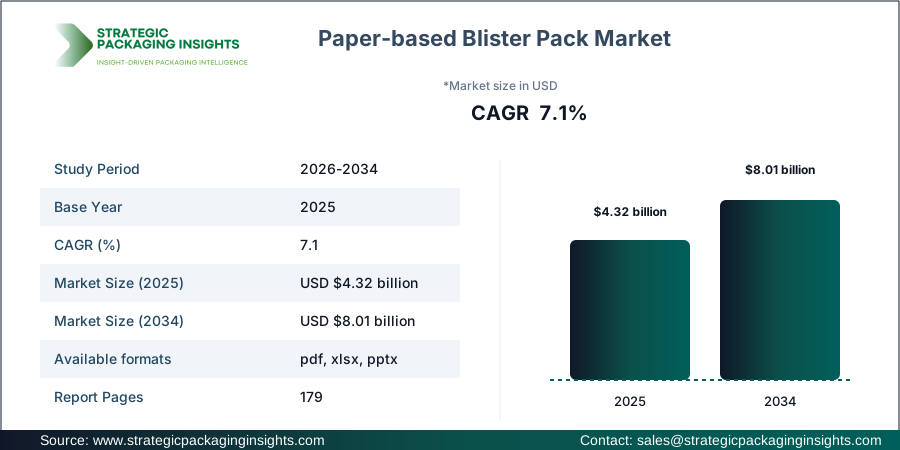
Despite the promising growth trajectory, the Paper-based Blister Pack market faces certain challenges. The primary restraint is the higher cost associated with the production of paper-based materials compared to conventional plastic options. Additionally, the market is subject to stringent regulatory standards that govern packaging materials, particularly in the pharmaceutical sector. However, the potential for growth remains substantial as innovations in material science continue to reduce costs and improve the performance of paper-based blister packs. The increasing adoption of these packs in various industries, coupled with supportive government policies promoting sustainable practices, is expected to drive market expansion over the forecast period.
Report Scope
| Attributes | Details |
| Report Title | Paper-based Blister Pack Market Size, Future Growth and Forecast 2034 |
| By Product Type | paper blister cards, fiber-based blisters, hybrid blister packs |
| By Material Type | paperboard, molded fiber, barrier-coated paper |
| By Application | pharmaceuticals, consumer goods, electronics, personal care |
| By End Use | pharma companies, retailers, packaging converters, FMCG brands |
| Region | Asia Pacific, North America, Latin America, Europe, Middle East & Africa |
| Base Year | 2025 |
| Historic Period | 2018-2024 |
| Forecast Period | 2026-2034 |
| Number of Pages | 179 |
| Customization Available | Yes* |
Opportunities & Threats
The Paper-based Blister Pack market presents numerous opportunities, particularly in the realm of sustainability. As global awareness of environmental issues rises, there is a growing demand for packaging solutions that minimize ecological impact. Paper-based blister packs, being biodegradable and recyclable, are well-positioned to capitalize on this trend. Companies that invest in developing innovative, cost-effective paper-based packaging solutions stand to gain a competitive edge. Additionally, the increasing regulatory pressure on reducing plastic waste provides a favorable environment for the adoption of paper-based alternatives. This shift is further supported by consumer preferences for eco-friendly products, creating a robust market opportunity for manufacturers.
Another significant opportunity lies in the technological advancements in material science. Innovations in barrier coatings and fiber technology are enhancing the performance of paper-based blister packs, making them more competitive with traditional plastic options. These advancements are expanding the application scope of paper-based blister packs, particularly in sectors like pharmaceuticals and electronics, where product protection and shelf life are critical. Companies that leverage these technological developments can tap into new market segments and drive growth.
However, the market also faces threats, primarily from the cost perspective. The production of paper-based blister packs can be more expensive than plastic alternatives, posing a challenge for widespread adoption. Additionally, the market is highly competitive, with numerous players vying for market share. This competition can lead to price wars and margin pressures, particularly for smaller companies. Furthermore, the market is subject to regulatory challenges, as packaging materials must comply with stringent standards, especially in the pharmaceutical industry. These factors could potentially hinder market growth if not addressed effectively.
Drivers & Challenges
The primary driver of the Paper-based Blister Pack market is the increasing demand for sustainable packaging solutions. As environmental concerns become more pronounced, both consumers and industries are seeking alternatives to traditional plastic packaging. Paper-based blister packs offer a viable solution, being both biodegradable and recyclable. This shift towards eco-friendly packaging is further supported by regulatory initiatives aimed at reducing plastic waste and promoting sustainable practices. Additionally, the growing awareness of the environmental impact of packaging materials is driving demand for paper-based solutions across various industries, including pharmaceuticals, consumer goods, and electronics.
Technological advancements in material science are another key driver of market growth. Innovations in barrier coatings and fiber technology are enhancing the performance and durability of paper-based blister packs, making them more competitive with plastic alternatives. These advancements are expanding the application scope of paper-based blister packs, particularly in sectors where product protection and shelf life are critical. Companies that invest in research and development to improve the functionality and cost-effectiveness of paper-based packaging solutions are well-positioned to capitalize on these growth opportunities.
Despite these drivers, the market faces several challenges. One of the primary challenges is the higher cost associated with the production of paper-based materials compared to conventional plastic options. This cost differential can be a barrier to adoption, particularly for price-sensitive industries. Additionally, the market is subject to stringent regulatory standards that govern packaging materials, particularly in the pharmaceutical sector. Compliance with these regulations can be complex and costly, posing a challenge for manufacturers. Furthermore, the market is highly competitive, with numerous players vying for market share, leading to price pressures and margin challenges.
Market Share Analysis
The competitive landscape of the Paper-based Blister Pack market is characterized by the presence of several key players who are actively engaged in product innovation and strategic partnerships to enhance their market position. Companies such as Amcor, Sonoco Products Company, and Huhtamaki are leading the charge in developing sustainable packaging solutions that meet the evolving needs of consumers and industries. These companies are leveraging their extensive research and development capabilities to introduce innovative products that offer superior performance and environmental benefits.
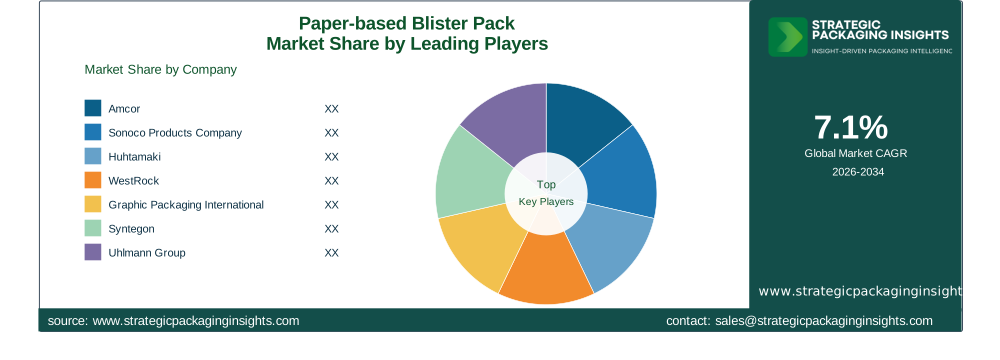
Amcor, a global leader in packaging solutions, holds a significant market share due to its strong focus on sustainability and innovation. The company has been at the forefront of developing eco-friendly packaging solutions, including paper-based blister packs, to meet the growing demand for sustainable alternatives. Similarly, Sonoco Products Company is a major player in the market, known for its commitment to sustainability and its extensive portfolio of paper-based packaging solutions. The company's focus on innovation and customer-centric solutions has helped it maintain a strong market position.
Huhtamaki, another key player, is renowned for its expertise in fiber-based packaging solutions. The company's emphasis on sustainability and innovation has enabled it to capture a significant share of the paper-based blister pack market. WestRock and Graphic Packaging International are also prominent players, known for their comprehensive range of packaging solutions and strong focus on sustainability. These companies are investing heavily in research and development to enhance the performance and cost-effectiveness of their paper-based packaging solutions.
Other notable players in the market include Syntegon, Uhlmann Group, ACG, SÜDPACK, and Klöckner Pentaplast. These companies are actively engaged in expanding their product portfolios and strengthening their market presence through strategic partnerships and acquisitions. The competitive landscape is characterized by intense competition, with companies striving to differentiate themselves through innovation and sustainability. As the demand for eco-friendly packaging solutions continues to grow, these companies are well-positioned to capitalize on the emerging opportunities in the paper-based blister pack market.
Key Highlights
- The Paper-based Blister Pack market is projected to grow at a CAGR of 7.1% from 2026 to 2034.
- Increasing demand for sustainable packaging solutions is a major driver of market growth.
- Technological advancements in material science are enhancing the performance of paper-based blister packs.
- Regulatory initiatives aimed at reducing plastic waste are supporting market expansion.
- The market is characterized by intense competition, with key players focusing on innovation and sustainability.
- Higher production costs compared to plastic alternatives pose a challenge for market adoption.
- Key players include Amcor, Sonoco Products Company, Huhtamaki, and WestRock.
- The market is witnessing significant growth in the pharmaceuticals and consumer goods sectors.
- Asia Pacific is expected to be the fastest-growing region, driven by increasing demand for eco-friendly packaging solutions.
Top Countries Insights
In the Paper-based Blister Pack market, the United States stands out as a key player, with a market size of approximately $1.2 billion and a CAGR of 6%. The country's strong focus on sustainability and regulatory support for eco-friendly packaging solutions are major growth drivers. The demand for paper-based blister packs is particularly high in the pharmaceuticals and consumer goods sectors, where environmental concerns are driving the shift towards sustainable packaging.
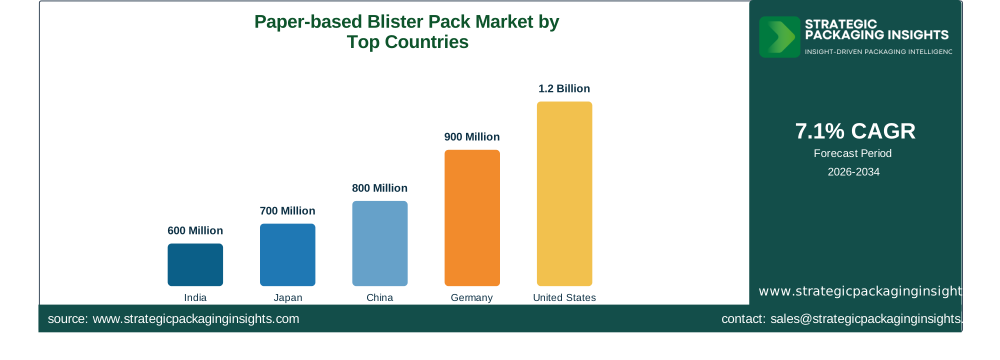
Germany is another significant market, with a market size of around $900 million and a CAGR of 5%. The country's stringent environmental regulations and strong emphasis on sustainability are key factors driving the adoption of paper-based blister packs. The market is also benefiting from technological advancements in material science, which are enhancing the performance and cost-effectiveness of paper-based packaging solutions.
China is expected to be the fastest-growing market, with a CAGR of 9% and a market size of approximately $800 million. The country's rapid industrialization and increasing awareness of environmental issues are driving the demand for sustainable packaging solutions. The government's focus on reducing plastic waste and promoting eco-friendly practices is further supporting market growth.
In Japan, the market is valued at around $700 million, with a CAGR of 4%. The country's strong focus on innovation and technology is driving the development of advanced paper-based blister packs. The demand for these packs is particularly high in the electronics and personal care sectors, where product protection and sustainability are key considerations.
India is also emerging as a significant market, with a market size of approximately $600 million and a CAGR of 8%. The country's growing population and increasing consumer awareness of environmental issues are driving the demand for sustainable packaging solutions. The market is also benefiting from government initiatives aimed at promoting eco-friendly practices and reducing plastic waste.
Paper-based Blister Pack Market Segments Insights

Product Type Analysis
The Paper-based Blister Pack market is segmented by product type into paper blister cards, fiber-based blisters, and hybrid blister packs. Paper blister cards are gaining popularity due to their lightweight and cost-effective nature, making them ideal for a wide range of applications. These cards offer excellent printability, allowing for high-quality graphics and branding, which is a significant advantage for consumer goods and personal care products. Fiber-based blisters, on the other hand, provide enhanced protection and durability, making them suitable for more demanding applications such as pharmaceuticals and electronics. Hybrid blister packs, which combine the benefits of both paper and plastic, are also gaining traction as they offer a balance between sustainability and performance.
The demand for paper blister cards is driven by the increasing focus on sustainability and the need for cost-effective packaging solutions. These cards are particularly popular in the consumer goods and personal care sectors, where branding and aesthetics play a crucial role. Fiber-based blisters are witnessing significant growth in the pharmaceuticals and electronics sectors, where product protection and shelf life are critical considerations. Hybrid blister packs are gaining popularity in applications where a balance between sustainability and performance is required, such as in the packaging of high-value consumer electronics.
Material Type Analysis
The market is also segmented by material type into paperboard, molded fiber, and barrier-coated paper. Paperboard is the most commonly used material due to its versatility and cost-effectiveness. It is widely used in the production of paper blister cards and fiber-based blisters, offering excellent printability and structural integrity. Molded fiber, on the other hand, provides superior protection and cushioning, making it ideal for applications where product protection is a priority. Barrier-coated paper is gaining popularity due to its enhanced moisture and oxygen barrier properties, making it suitable for applications in the pharmaceuticals and food sectors.
The demand for paperboard is driven by its cost-effectiveness and versatility, making it the material of choice for a wide range of applications. Molded fiber is witnessing significant growth in the electronics and personal care sectors, where product protection and sustainability are key considerations. Barrier-coated paper is gaining traction in the pharmaceuticals and food sectors, where moisture and oxygen barrier properties are critical for product preservation. Companies that invest in developing innovative material solutions that enhance the performance and sustainability of paper-based blister packs are well-positioned to capitalize on these growth opportunities.
Application Analysis
The Paper-based Blister Pack market is segmented by application into pharmaceuticals, consumer goods, electronics, and personal care. The pharmaceuticals sector is the largest application segment, driven by the increasing demand for sustainable packaging solutions that comply with stringent regulatory standards. Paper-based blister packs offer a viable alternative to traditional plastic packaging, providing the necessary protection and compliance with environmental regulations. The consumer goods sector is also a significant application segment, driven by the growing demand for eco-friendly packaging solutions that enhance brand image and appeal to environmentally conscious consumers.
The electronics sector is witnessing significant growth in the adoption of paper-based blister packs, driven by the need for sustainable packaging solutions that provide adequate protection for high-value products. The personal care sector is also a key application segment, where branding and aesthetics play a crucial role in packaging decisions. Companies that focus on developing innovative packaging solutions that meet the specific needs of these application segments are well-positioned to capture market share and drive growth.
End Use Analysis
The market is segmented by end use into pharma companies, retailers, packaging converters, and FMCG brands. Pharma companies are the largest end-use segment, driven by the need for sustainable packaging solutions that comply with stringent regulatory standards. Paper-based blister packs offer a viable alternative to traditional plastic packaging, providing the necessary protection and compliance with environmental regulations. Retailers are also a significant end-use segment, driven by the growing demand for eco-friendly packaging solutions that enhance brand image and appeal to environmentally conscious consumers.
Packaging converters play a crucial role in the market, as they are responsible for transforming raw materials into finished packaging products. These companies are investing in advanced manufacturing technologies and material innovations to enhance the performance and sustainability of paper-based blister packs. FMCG brands are also a key end-use segment, where branding and aesthetics play a crucial role in packaging decisions. Companies that focus on developing innovative packaging solutions that meet the specific needs of these end-use segments are well-positioned to capture market share and drive growth.
Paper-based Blister Pack Market Segments
The Paper-based Blister Pack market has been segmented on the basis ofBy Product Type
- paper blister cards
- fiber-based blisters
- hybrid blister packs
By Material Type
- paperboard
- molded fiber
- barrier-coated paper
By Application
- pharmaceuticals
- consumer goods
- electronics
- personal care
By End Use
- pharma companies
- retailers
- packaging converters
- FMCG brands
Region
- Asia Pacific
- North America
- Latin America
- Europe
- Middle East & Africa




