


Pallet Labelling System Market Outlook
The Pallet Labelling System market was valued at $906.40 million in 2025 and is projected to reach $1.86 billion by 2034, growing at a CAGR of 8.3% during the forecast period 2026-2034. This market is experiencing significant growth due to the increasing demand for efficient supply chain management solutions. The rise in e-commerce and the need for accurate inventory tracking are driving the adoption of advanced labelling systems. Companies are investing in innovative technologies such as RFID and barcode systems to enhance operational efficiency and reduce errors in logistics and warehousing. The market is also benefiting from the growing trend of automation in manufacturing and logistics sectors, which is further propelling the demand for sophisticated labelling solutions.
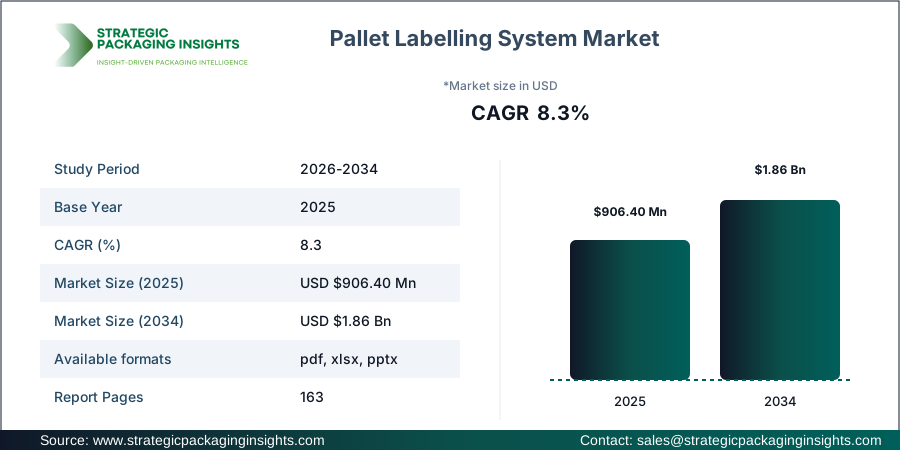
Despite the promising growth prospects, the Pallet Labelling System market faces certain challenges. Regulatory constraints and the high initial investment required for advanced labelling technologies can act as barriers to market entry for new players. However, the potential for cost savings and improved accuracy in inventory management offers significant growth opportunities. The market is also witnessing a shift towards eco-friendly labelling solutions, driven by increasing environmental concerns and stringent regulations. This trend is expected to create new avenues for growth, as companies seek sustainable alternatives to traditional labelling methods. Overall, the Pallet Labelling System market holds substantial potential for growth, driven by technological advancements and the increasing need for efficient supply chain solutions.
Report Scope
| Attributes | Details |
| Report Title | Pallet Labelling System Market Size, Future Growth and Forecast 2034 |
| By System Type | Print-and-Apply Systems, RFID Pallet Labelers, Barcode Pallet Labelers |
| By Application | Warehousing, Logistics, Manufacturing, Cold Chain |
| By Technology | Thermal Transfer, Direct Thermal, RFID |
| By End Use | 3PLs, Retail, Food, Pharma |
| Region | Asia Pacific, North America, Latin America, Europe, Middle East & Africa |
| Base Year | 2025 |
| Historic Period | 2018-2024 |
| Forecast Period | 2026-2034 |
| Number of Pages | 163 |
| Customization Available | Yes* |
Opportunities & Threats
The Pallet Labelling System market presents numerous opportunities for growth, primarily driven by the increasing demand for automation in logistics and supply chain management. As businesses strive to enhance operational efficiency and reduce human errors, the adoption of advanced labelling systems is on the rise. The integration of technologies such as RFID and barcode systems is enabling companies to achieve real-time tracking and monitoring of inventory, thereby improving accuracy and reducing costs. Additionally, the growing trend of e-commerce and the need for efficient warehousing solutions are further propelling the demand for pallet labelling systems. Companies are increasingly investing in innovative labelling technologies to stay competitive and meet the evolving needs of their customers.
Another significant opportunity lies in the development of eco-friendly labelling solutions. With increasing environmental concerns and stringent regulations, there is a growing demand for sustainable alternatives to traditional labelling methods. Companies are focusing on developing biodegradable and recyclable labelling materials to reduce their environmental footprint. This trend is expected to create new avenues for growth in the Pallet Labelling System market, as businesses seek to align their operations with sustainability goals. Furthermore, the rise of Industry 4.0 and the increasing adoption of IoT technologies are expected to drive the demand for smart labelling solutions, offering significant growth potential for market players.
However, the market also faces certain threats that could hinder its growth. One of the primary challenges is the high initial investment required for advanced labelling technologies. Small and medium-sized enterprises may find it difficult to afford these systems, limiting their adoption. Additionally, regulatory constraints and compliance requirements can pose challenges for market players, as they need to ensure that their products meet industry standards. The market is also susceptible to economic fluctuations, which can impact the purchasing power of businesses and affect the demand for labelling systems. Despite these challenges, the Pallet Labelling System market holds significant potential for growth, driven by technological advancements and the increasing need for efficient supply chain solutions.
Drivers & Challenges
The Pallet Labelling System market is primarily driven by the increasing demand for efficient supply chain management solutions. As businesses strive to enhance operational efficiency and reduce human errors, the adoption of advanced labelling systems is on the rise. The integration of technologies such as RFID and barcode systems is enabling companies to achieve real-time tracking and monitoring of inventory, thereby improving accuracy and reducing costs. Additionally, the growing trend of e-commerce and the need for efficient warehousing solutions are further propelling the demand for pallet labelling systems. Companies are increasingly investing in innovative labelling technologies to stay competitive and meet the evolving needs of their customers.
Another significant driver is the rise of Industry 4.0 and the increasing adoption of IoT technologies. These advancements are enabling the development of smart labelling solutions, which offer real-time data and analytics capabilities. This is helping businesses to optimize their supply chain operations and improve decision-making processes. Furthermore, the growing focus on sustainability and the development of eco-friendly labelling solutions are expected to drive market growth. Companies are focusing on developing biodegradable and recyclable labelling materials to reduce their environmental footprint, aligning their operations with sustainability goals.
Despite the promising growth prospects, the Pallet Labelling System market faces certain challenges. One of the primary challenges is the high initial investment required for advanced labelling technologies. Small and medium-sized enterprises may find it difficult to afford these systems, limiting their adoption. Additionally, regulatory constraints and compliance requirements can pose challenges for market players, as they need to ensure that their products meet industry standards. The market is also susceptible to economic fluctuations, which can impact the purchasing power of businesses and affect the demand for labelling systems. Despite these challenges, the Pallet Labelling System market holds significant potential for growth, driven by technological advancements and the increasing need for efficient supply chain solutions.
Market Share Analysis
The Pallet Labelling System market is characterized by a competitive landscape with several key players vying for market share. Companies such as Zebra Technologies, Videojet Technologies, Markem-Imaje, Domino Printing Sciences, and SATO are some of the prominent players in the market. These companies are focusing on product innovation and strategic partnerships to strengthen their market position. The market is also witnessing the entry of new players, which is intensifying the competition. To stay competitive, companies are investing in research and development to introduce advanced labelling solutions that cater to the evolving needs of their customers.
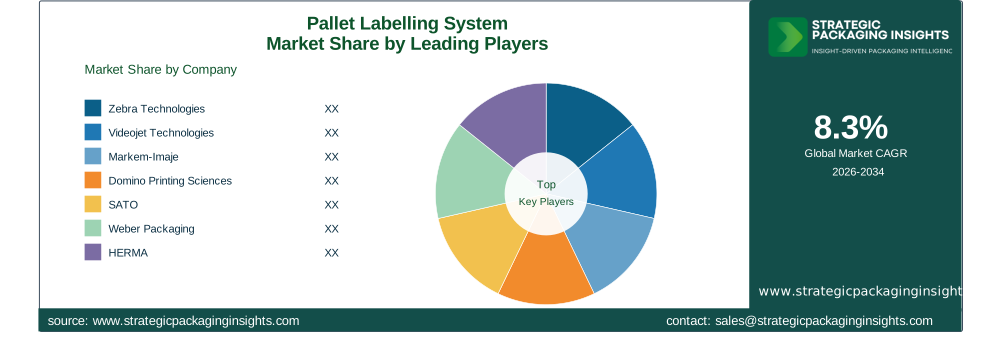
Zebra Technologies is a leading player in the Pallet Labelling System market, known for its innovative labelling solutions and strong market presence. The company offers a wide range of products, including RFID and barcode labelling systems, which are widely used in various industries. Videojet Technologies is another key player, specializing in coding and marking solutions. The company is focusing on expanding its product portfolio and enhancing its distribution network to capture a larger market share. Markem-Imaje, a subsidiary of Dover Corporation, is known for its comprehensive range of labelling solutions, catering to diverse industry needs.
Domino Printing Sciences, a subsidiary of Brother Industries, is a prominent player in the market, offering a wide range of labelling and coding solutions. The company is focusing on expanding its global footprint and strengthening its product offerings to enhance its market position. SATO, a leading provider of auto-ID solutions, is known for its innovative labelling technologies and strong customer base. The company is investing in research and development to introduce advanced labelling solutions that cater to the evolving needs of its customers. Other notable players in the market include Weber Packaging, HERMA, Avery Dennison, Brady Corporation, and Accraply, each contributing to the competitive landscape of the Pallet Labelling System market.
Key Highlights
- The Pallet Labelling System market is projected to grow at a CAGR of 8.3% from 2026 to 2034.
- Increasing demand for efficient supply chain management solutions is driving market growth.
- Technological advancements such as RFID and barcode systems are enhancing operational efficiency.
- The rise of e-commerce is propelling the demand for advanced labelling solutions.
- Companies are focusing on developing eco-friendly labelling materials to reduce environmental impact.
- Regulatory constraints and high initial investment are key challenges for market players.
- Industry 4.0 and IoT technologies are driving the demand for smart labelling solutions.
- Key players in the market include Zebra Technologies, Videojet Technologies, and Markem-Imaje.
- The market is witnessing the entry of new players, intensifying competition.
- Companies are investing in research and development to introduce innovative labelling solutions.
Top Countries Insights
In the Pallet Labelling System market, the United States holds a significant share, driven by the presence of major players and the high adoption of advanced labelling technologies. The market in the U.S. is valued at approximately $300 million, with a CAGR of 7%. The demand for efficient supply chain solutions and the rise of e-commerce are key growth drivers in the country. Additionally, the focus on sustainability and the development of eco-friendly labelling solutions are contributing to market growth.
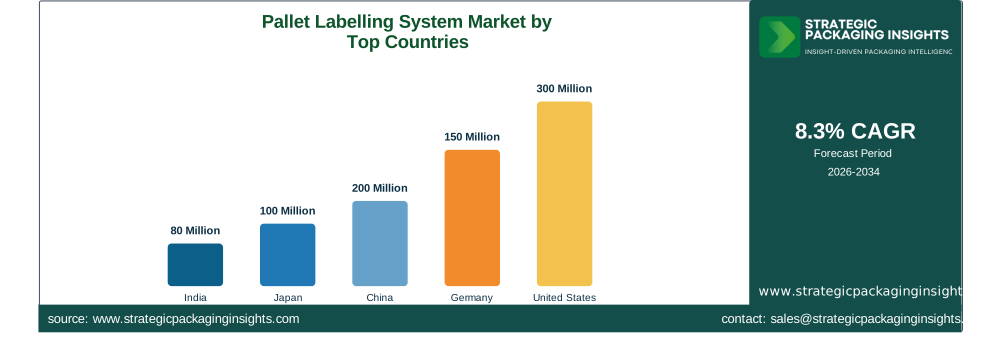
Germany is another key market for pallet labelling systems, with a market size of around $150 million and a CAGR of 6%. The country's strong manufacturing sector and the increasing adoption of automation technologies are driving the demand for advanced labelling solutions. The focus on Industry 4.0 and the integration of IoT technologies are further propelling market growth in Germany. Additionally, the emphasis on sustainability and the development of eco-friendly labelling materials are creating new growth opportunities.
China is witnessing rapid growth in the Pallet Labelling System market, with a market size of approximately $200 million and a CAGR of 10%. The country's booming e-commerce sector and the increasing demand for efficient warehousing solutions are key growth drivers. The adoption of advanced labelling technologies such as RFID and barcode systems is enhancing operational efficiency and reducing errors in logistics and supply chain management. Additionally, the focus on sustainability and the development of eco-friendly labelling solutions are contributing to market growth.
Japan is another significant market for pallet labelling systems, with a market size of around $100 million and a CAGR of 5%. The country's strong manufacturing sector and the increasing adoption of automation technologies are driving the demand for advanced labelling solutions. The focus on Industry 4.0 and the integration of IoT technologies are further propelling market growth in Japan. Additionally, the emphasis on sustainability and the development of eco-friendly labelling materials are creating new growth opportunities.
India is experiencing significant growth in the Pallet Labelling System market, with a market size of approximately $80 million and a CAGR of 12%. The country's rapidly growing e-commerce sector and the increasing demand for efficient supply chain solutions are key growth drivers. The adoption of advanced labelling technologies such as RFID and barcode systems is enhancing operational efficiency and reducing errors in logistics and supply chain management. Additionally, the focus on sustainability and the development of eco-friendly labelling solutions are contributing to market growth.
Pallet Labelling System Market Segments Insights

System Type Analysis
The Pallet Labelling System market is segmented by system type into print-and-apply systems, RFID pallet labelers, and barcode pallet labelers. Print-and-apply systems are widely used due to their ability to automate the labelling process, reducing manual errors and increasing efficiency. These systems are particularly popular in industries such as manufacturing and logistics, where high-volume labelling is required. RFID pallet labelers are gaining traction due to their ability to provide real-time tracking and monitoring of inventory. This technology is particularly beneficial in industries such as warehousing and cold chain, where accurate inventory management is crucial. Barcode pallet labelers remain a popular choice due to their cost-effectiveness and ease of use, making them suitable for small and medium-sized enterprises.
The demand for advanced labelling systems is driven by the increasing need for efficient supply chain management solutions. Companies are investing in innovative technologies to enhance operational efficiency and reduce errors in logistics and warehousing. The integration of RFID and barcode systems is enabling real-time tracking and monitoring of inventory, improving accuracy and reducing costs. Additionally, the growing trend of automation in manufacturing and logistics sectors is further propelling the demand for sophisticated labelling solutions. The market is also witnessing a shift towards eco-friendly labelling solutions, driven by increasing environmental concerns and stringent regulations.
Application Analysis
The Pallet Labelling System market is segmented by application into warehousing, logistics, manufacturing, and cold chain. Warehousing is a major application segment, driven by the increasing demand for efficient inventory management solutions. The rise of e-commerce and the need for accurate tracking of goods are propelling the demand for advanced labelling systems in warehousing. Logistics is another key application segment, where the focus is on enhancing operational efficiency and reducing errors in supply chain management. The integration of RFID and barcode systems is enabling real-time tracking and monitoring of inventory, improving accuracy and reducing costs.
Manufacturing is a significant application segment, driven by the increasing adoption of automation technologies. The demand for efficient labelling solutions is on the rise, as companies strive to enhance operational efficiency and reduce human errors. Cold chain is another important application segment, where accurate inventory management is crucial. The adoption of advanced labelling technologies such as RFID and barcode systems is enhancing operational efficiency and reducing errors in logistics and supply chain management. The market is also witnessing a shift towards eco-friendly labelling solutions, driven by increasing environmental concerns and stringent regulations.
Technology Analysis
The Pallet Labelling System market is segmented by technology into thermal transfer, direct thermal, and RFID. Thermal transfer technology is widely used due to its ability to produce durable and high-quality labels. This technology is particularly popular in industries such as manufacturing and logistics, where high-volume labelling is required. Direct thermal technology is gaining traction due to its cost-effectiveness and ease of use, making it suitable for small and medium-sized enterprises. RFID technology is gaining popularity due to its ability to provide real-time tracking and monitoring of inventory, enhancing operational efficiency and reducing errors in logistics and supply chain management.
The demand for advanced labelling technologies is driven by the increasing need for efficient supply chain management solutions. Companies are investing in innovative technologies to enhance operational efficiency and reduce errors in logistics and warehousing. The integration of RFID and barcode systems is enabling real-time tracking and monitoring of inventory, improving accuracy and reducing costs. Additionally, the growing trend of automation in manufacturing and logistics sectors is further propelling the demand for sophisticated labelling solutions. The market is also witnessing a shift towards eco-friendly labelling solutions, driven by increasing environmental concerns and stringent regulations.
End Use Analysis
The Pallet Labelling System market is segmented by end use into 3PLs, retail, food, and pharma. 3PLs are a major end-use segment, driven by the increasing demand for efficient supply chain management solutions. The rise of e-commerce and the need for accurate tracking of goods are propelling the demand for advanced labelling systems in 3PLs. Retail is another key end-use segment, where the focus is on enhancing operational efficiency and reducing errors in inventory management. The integration of RFID and barcode systems is enabling real-time tracking and monitoring of inventory, improving accuracy and reducing costs.
Food is a significant end-use segment, driven by the increasing adoption of automation technologies. The demand for efficient labelling solutions is on the rise, as companies strive to enhance operational efficiency and reduce human errors. Pharma is another important end-use segment, where accurate inventory management is crucial. The adoption of advanced labelling technologies such as RFID and barcode systems is enhancing operational efficiency and reducing errors in logistics and supply chain management. The market is also witnessing a shift towards eco-friendly labelling solutions, driven by increasing environmental concerns and stringent regulations.
Pallet Labelling System Market Segments
The Pallet Labelling System market has been segmented on the basis ofBy System Type
- Print-and-Apply Systems
- RFID Pallet Labelers
- Barcode Pallet Labelers
By Application
- Warehousing
- Logistics
- Manufacturing
- Cold Chain
By Technology
- Thermal Transfer
- Direct Thermal
- RFID
By End Use
- 3PLs
- Retail
- Food
- Pharma
Region
- Asia Pacific
- North America
- Latin America
- Europe
- Middle East & Africa




