


Paint Protection Film Market Outlook
The Paint Protection Film market size was valued at USD 1.10 billion in 2025 and is anticipated to reach USD 2.09 billion by 2034, growing at a CAGR of 7.3% during the forecast period according to Strategic Packaging Insights. The market is witnessing significant growth due to the increasing demand for durable and aesthetic automotive solutions. Companies like 3M and XPEL are leading the charge by offering innovative products that cater to the evolving needs of consumers. The rise in disposable income and the growing automotive industry are further propelling the demand for paint protection films, especially in emerging markets.
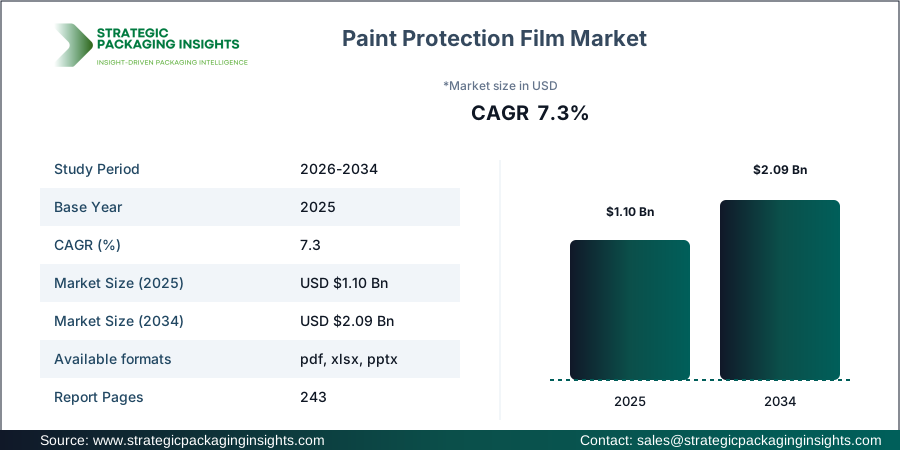
One of the most impactful drivers of the Paint Protection Film market is the increasing consumer awareness regarding vehicle maintenance and longevity. As consumers become more conscious of the long-term benefits of protecting their vehicles from scratches, UV rays, and environmental pollutants, the demand for high-quality paint protection films is on the rise. According to industry reports, the automotive sector is the largest application segment, with companies like Eastman Chemical and Avery Dennison investing heavily in R&D to develop advanced films that offer superior protection and aesthetic appeal. This trend is expected to continue, driving market growth over the forecast period.
Report Scope
| Attributes | Details |
| Report Title | Paint Protection Film Market Size, Future Growth and Forecast 2034 |
| By Material Type | TPU, PVC, Polyurethane, Hybrid Films |
| By Product Type | Clear Film, Matte Film, Colored Film, Self-Healing Film |
| By Application | Automotive, Electronics, Aerospace, Industrial Surfaces |
| By Distribution Channel | OEM, Aftermarket, Online, Installers |
| Region | Asia Pacific, North America, Latin America, Europe, Middle East & Africa |
| Base Year | 2025 |
| Historic Period | 2018-2024 |
| Forecast Period | 2026-2034 |
| Number of Pages | 243 |
| Customization Available | Yes* |
Sustainability & Circular Economy Analysis
Sustainability initiatives are increasingly shaping the Paint Protection Film market, as manufacturers and consumers alike prioritize eco-friendly solutions. The use of recyclable materials and the development of biodegradable films are becoming more prevalent, driven by consumer demand for sustainable products. Companies are investing in R&D to create films that not only protect surfaces but also minimize environmental impact. This shift towards sustainability is influencing packaging design and manufacturing processes, as companies strive to reduce their carbon footprint and comply with stringent environmental regulations.
The circular economy is also playing a crucial role in the Paint Protection Film market, with a focus on waste reduction and resource efficiency. Manufacturers are adopting strategies such as closed-loop recycling and extended producer responsibility (EPR) to enhance their sustainability credentials. These practices are not only beneficial for the environment but also offer cost savings and improve brand reputation. As a result, companies are increasingly incorporating circular economy principles into their business models, which is expected to drive long-term market competitiveness.
Consumer preferences for sustainable products are further influencing investment decisions and supply chain strategies in the Paint Protection Film market. Companies are prioritizing the use of eco-friendly materials and lightweight packaging solutions to meet consumer expectations and regulatory requirements. This trend is leading to increased collaboration between manufacturers, suppliers, and retailers to develop innovative solutions that align with sustainability goals. As the market continues to evolve, sustainability will remain a key driver of growth and innovation.
Packaging Value Chain & Supply Chain Analysis
The Paint Protection Film market's value chain is complex, involving multiple stakeholders from raw material suppliers to end-users. Raw material sourcing is a critical component, with manufacturers relying on high-quality polymers such as TPU and PVC to produce durable films. Packaging converters and manufacturers play a vital role in transforming these materials into finished products, utilizing advanced machinery and technology to ensure precision and quality. Strategic partnerships with suppliers and converters are essential for maintaining a steady supply of raw materials and optimizing production capabilities.
Logistics and distribution channels are integral to the Paint Protection Film market, ensuring that products reach consumers efficiently and cost-effectively. Companies are leveraging both traditional and online distribution channels to expand their reach and cater to diverse consumer needs. The rise of e-commerce has further enhanced market accessibility, allowing consumers to purchase products directly from manufacturers or authorized dealers. Effective inventory management and supply chain resilience are crucial for minimizing disruptions and maintaining competitive advantage in a dynamic market environment.
Recycling networks and procurement strategies are becoming increasingly important in the Paint Protection Film market, as companies seek to enhance sustainability and reduce waste. By implementing closed-loop recycling systems and collaborating with recycling partners, manufacturers can recover valuable materials and reduce their environmental impact. Localization and global sourcing strategies are also being employed to optimize supply chain efficiency and mitigate risks associated with geopolitical uncertainties. These efforts are essential for ensuring long-term market success and meeting the evolving demands of consumers and regulators.
Opportunities & Threats
The Paint Protection Film market presents numerous opportunities for growth, driven by technological advancements and increasing consumer demand for high-performance products. The development of self-healing films, which can repair minor scratches and abrasions, is a significant innovation that is gaining traction in the market. Companies like STEK and PremiumShield are at the forefront of this trend, offering products that enhance vehicle aesthetics and longevity. Additionally, the growing popularity of electric vehicles and the expansion of the automotive industry in emerging markets present lucrative opportunities for market players to expand their product offerings and capture new customer segments.
Another opportunity lies in the diversification of application areas beyond the automotive sector. The use of paint protection films in electronics, aerospace, and industrial surfaces is gaining momentum, driven by the need for durable and protective solutions in these industries. Companies are exploring new applications and developing specialized films to cater to the unique requirements of different sectors. This diversification not only broadens the market scope but also mitigates risks associated with reliance on a single industry, enhancing overall market resilience.
Despite the promising growth prospects, the Paint Protection Film market faces several challenges that could hinder its expansion. One of the primary threats is the volatility in raw material prices, which can impact production costs and profit margins. Manufacturers must navigate these fluctuations by implementing effective procurement strategies and exploring alternative materials to maintain cost competitiveness. Additionally, stringent environmental regulations and the need for compliance with sustainability standards pose challenges for market players, requiring continuous investment in R&D and innovation to meet regulatory requirements and consumer expectations.
Drivers & Challenges
The Paint Protection Film market is driven by several key factors, including the increasing demand for vehicle aesthetics and protection. As consumers become more aware of the benefits of paint protection films, such as scratch resistance and UV protection, the demand for these products is on the rise. Companies like 3M and XPEL are capitalizing on this trend by offering innovative solutions that cater to the evolving needs of consumers. The growth of the automotive industry, particularly in emerging markets, is also a significant driver, as rising disposable incomes and urbanization lead to increased vehicle ownership and demand for protective solutions.
Technological advancements are another major driver of the Paint Protection Film market, with companies investing in R&D to develop advanced films that offer superior performance and durability. The introduction of self-healing films, which can repair minor scratches and abrasions, is a notable innovation that is gaining traction in the market. This technology not only enhances the aesthetic appeal of vehicles but also extends their lifespan, making it an attractive option for consumers. As a result, companies are focusing on product differentiation and innovation to maintain a competitive edge and capture a larger market share.
However, the Paint Protection Film market also faces several challenges that could impact its growth trajectory. One of the primary challenges is the high cost of advanced films, which can limit their adoption among price-sensitive consumers. Manufacturers must balance the need for innovation with cost-effectiveness to ensure widespread adoption of their products. Additionally, the market is highly competitive, with numerous players vying for market share. Companies must continuously innovate and differentiate their offerings to stand out in a crowded marketplace and maintain their competitive advantage.
Market Share Analysis
The Paint Protection Film market is characterized by intense competition, with several key players dominating the landscape. Companies like 3M, XPEL, and Eastman Chemical hold significant market shares, leveraging their extensive product portfolios and strong brand recognition to maintain their competitive positions. These companies are continuously investing in R&D to develop innovative solutions that cater to the evolving needs of consumers and enhance their market presence. The competitive landscape is further intensified by the presence of regional players, who offer cost-effective solutions and cater to local market demands.
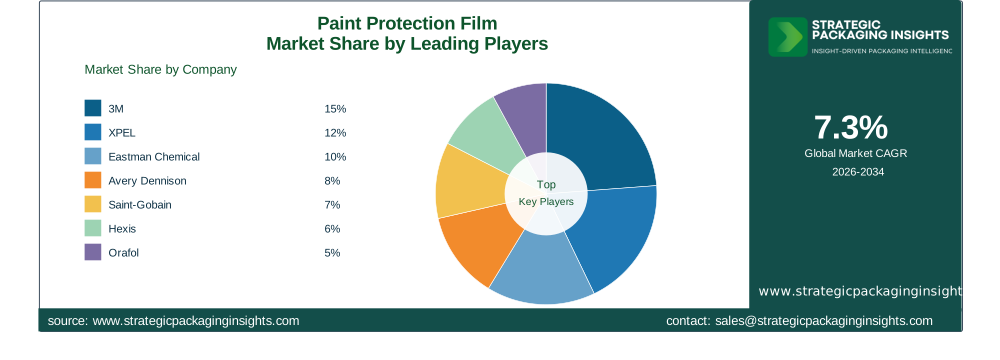
3M is a leading player in the Paint Protection Film market, known for its high-quality products and extensive distribution network. The company offers a wide range of films that cater to various applications, including automotive, electronics, and industrial surfaces. XPEL is another major player, renowned for its innovative self-healing films that offer superior protection and aesthetic appeal. The company's focus on product differentiation and customer satisfaction has helped it capture a significant market share and establish a strong brand presence.
Eastman Chemical is a prominent player in the market, offering a diverse range of paint protection films that cater to different industries. The company's commitment to sustainability and innovation has enabled it to maintain a competitive edge and expand its market reach. Avery Dennison is also a key player, known for its advanced film technologies and strong focus on R&D. The company's extensive product portfolio and global presence have helped it capture a significant share of the market and enhance its competitive position.
Other notable players in the Paint Protection Film market include Saint-Gobain, Hexis, Orafol, STEK, PremiumShield, and Garware Hi-Tech Films. These companies are leveraging their expertise and resources to develop innovative solutions that cater to the diverse needs of consumers. The competitive landscape is characterized by continuous innovation and product differentiation, as companies strive to capture a larger share of the market and enhance their brand reputation.
Key Highlights
- Market Size: The Paint Protection Film market was valued at USD 1.10 billion in 2025 and is projected to reach USD 2.09 billion by 2034.
- Growth Rate: The market is expected to grow at a CAGR of 7.3% during the forecast period.
- Leading Companies: Key players include 3M, XPEL, Eastman Chemical, and Avery Dennison.
- Emerging Markets: Asia Pacific is anticipated to witness significant growth due to rising automotive demand.
- Innovative Products: Self-healing films are gaining traction for their superior protection and aesthetic appeal.
- Sustainability Focus: Companies are prioritizing eco-friendly materials and circular economy practices.
- Diverse Applications: The market is expanding beyond automotive to include electronics, aerospace, and industrial surfaces.
Paint Protection Film Market Segments Insights

By Material Type Analysis
The Paint Protection Film market is segmented by material type, with TPU, PVC, Polyurethane, and Hybrid Films being the primary categories. TPU films are gaining popularity due to their superior flexibility and resistance to abrasion, making them ideal for automotive applications. Companies like 3M and XPEL are focusing on developing advanced TPU films that offer enhanced protection and durability. PVC films, on the other hand, are known for their cost-effectiveness and ease of installation, making them a popular choice among price-sensitive consumers. Polyurethane films offer excellent clarity and resistance to yellowing, making them suitable for high-end applications where aesthetics are a priority.
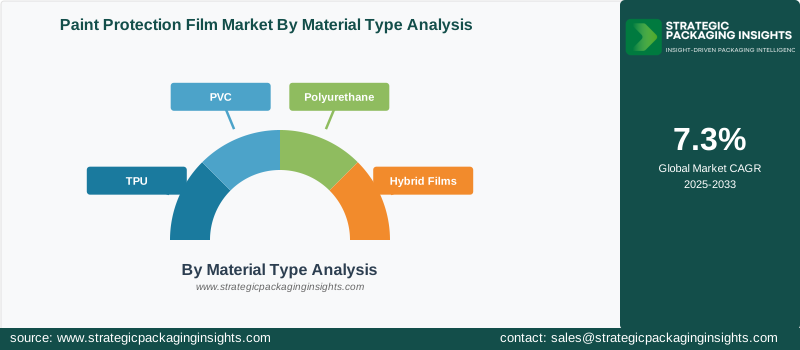
Hybrid films, which combine the benefits of different materials, are emerging as a promising segment in the Paint Protection Film market. These films offer a balance of performance, durability, and cost-effectiveness, making them an attractive option for a wide range of applications. Companies are investing in R&D to develop innovative hybrid films that cater to the evolving needs of consumers and enhance their market competitiveness. The growing demand for high-performance films is driving the adoption of advanced materials, with manufacturers focusing on product differentiation and innovation to capture a larger market share.
By Product Type Analysis
The Paint Protection Film market is also segmented by product type, with clear film, matte film, colored film, and self-healing film being the primary categories. Clear films are the most popular choice among consumers, offering a transparent protective layer that preserves the original appearance of surfaces. Companies like Eastman Chemical and Avery Dennison are leading the market with their high-quality clear films that offer superior protection and aesthetic appeal. Matte films, on the other hand, are gaining traction for their unique finish and ability to reduce glare, making them a popular choice for automotive and electronic applications.
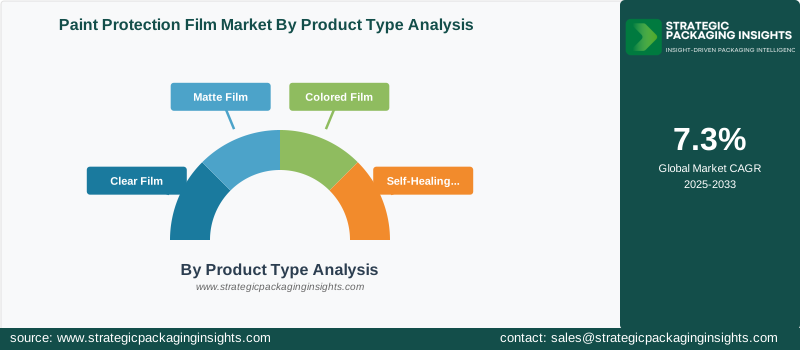
Colored films are also gaining popularity, offering consumers the ability to customize the appearance of their vehicles and surfaces. These films are available in a wide range of colors and finishes, allowing for greater personalization and aesthetic appeal. Self-healing films, which can repair minor scratches and abrasions, are a significant innovation in the market, offering enhanced protection and longevity. Companies are focusing on developing advanced self-healing films that cater to the growing demand for high-performance products and enhance their competitive position in the market.
By Application Analysis
The Paint Protection Film market is segmented by application, with automotive, electronics, aerospace, and industrial surfaces being the primary categories. The automotive sector is the largest application segment, driven by the increasing demand for vehicle aesthetics and protection. Companies like 3M and XPEL are leading the market with their innovative solutions that cater to the evolving needs of consumers. The electronics sector is also witnessing significant growth, with the increasing use of paint protection films in smartphones, tablets, and other electronic devices to enhance durability and longevity.
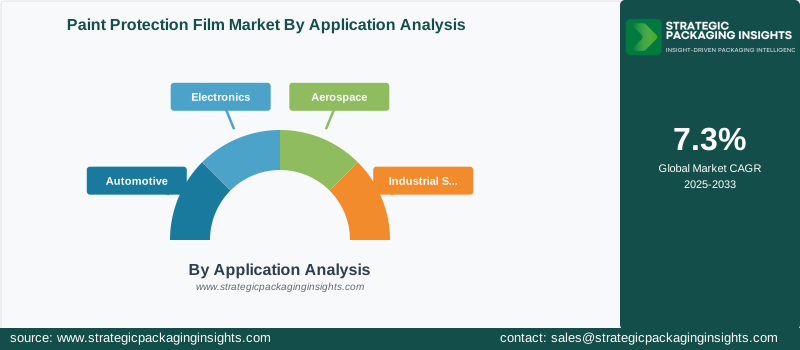
The aerospace industry is another key application area, with paint protection films being used to protect aircraft surfaces from environmental damage and wear. Companies are developing specialized films that cater to the unique requirements of the aerospace sector, offering superior protection and performance. The industrial surfaces segment is also gaining momentum, driven by the need for durable and protective solutions in various industrial applications. The diversification of application areas is broadening the market scope and enhancing overall market resilience.
By Distribution Channel Analysis
The Paint Protection Film market is segmented by distribution channel, with OEM, aftermarket, online, and installers being the primary categories. OEMs are a significant distribution channel, with manufacturers partnering with automotive companies to offer paint protection films as part of the vehicle package. This channel offers a steady demand for high-quality films and enhances brand visibility. The aftermarket segment is also a key distribution channel, with consumers purchasing films for installation on existing vehicles. Companies are focusing on expanding their aftermarket presence to capture a larger share of the market.
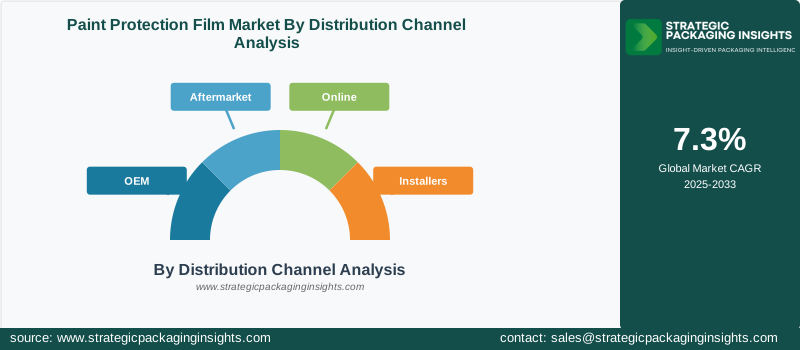
Online distribution channels are gaining popularity, offering consumers the convenience of purchasing products directly from manufacturers or authorized dealers. The rise of e-commerce has enhanced market accessibility and expanded the reach of paint protection films to a broader consumer base. Installers are also a crucial distribution channel, providing professional installation services that ensure optimal performance and longevity of the films. Companies are collaborating with installers to enhance their service offerings and provide consumers with a seamless purchasing experience.
Paint Protection Film Market Segments
The Paint Protection Film market has been segmented on the basis ofBy Material Type
- TPU
- PVC
- Polyurethane
- Hybrid Films
By Product Type
- Clear Film
- Matte Film
- Colored Film
- Self-Healing Film
By Application
- Automotive
- Electronics
- Aerospace
- Industrial Surfaces
By Distribution Channel
- OEM
- Aftermarket
- Online
- Installers
Region
- Asia Pacific
- North America
- Latin America
- Europe
- Middle East & Africa




